×

South Sudan🇸🇸 | townsLeerRiek Machar hometown, floodplain channels, decorated horns | things to do and best time to go

Explore MundriExplore Akobo

Backpacking in Leer
👌 Worth visitingtown ranked #15
By Johan Kruseman 🇳🇱 | Updated October 22, 2026

Leer is known as the hometown of Riek Machar and a county seat in Unity State, but travelers should know it is a place with almost no visitor infrastructure. It sits in the north of South Sudan, in the Nile floodplain south of Bentiu, where roads turn to mud in the rains. Don’t come for sightseeing; there is none worth a detour. Come for the Nuer cattle camps and the quiet river-edge life, where a morning of walking gets you real conversations. Expect no hostels and few other backpackers. Before going, arrange permits, a local contact and security advice in Juba or Bentiu.

Discover everything you want to know in the 📖 South Sudan Travel Guide.
Safety warning

The current risk level for South Sudan is high. Check the advice before going.


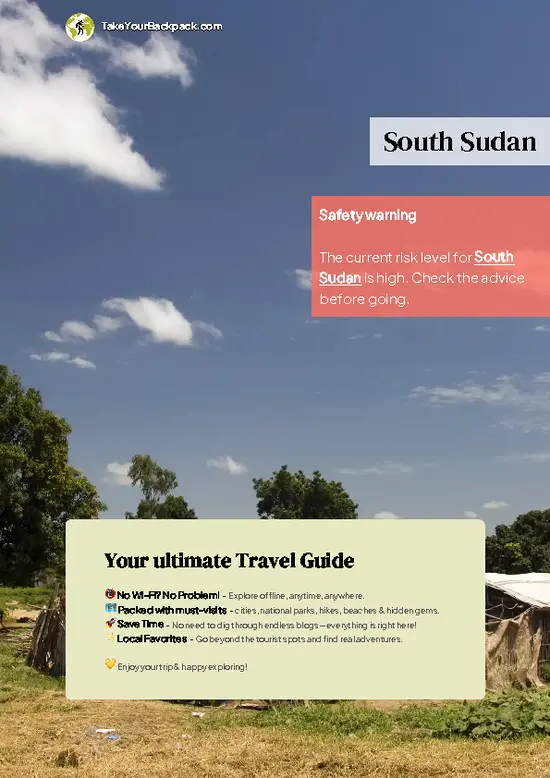
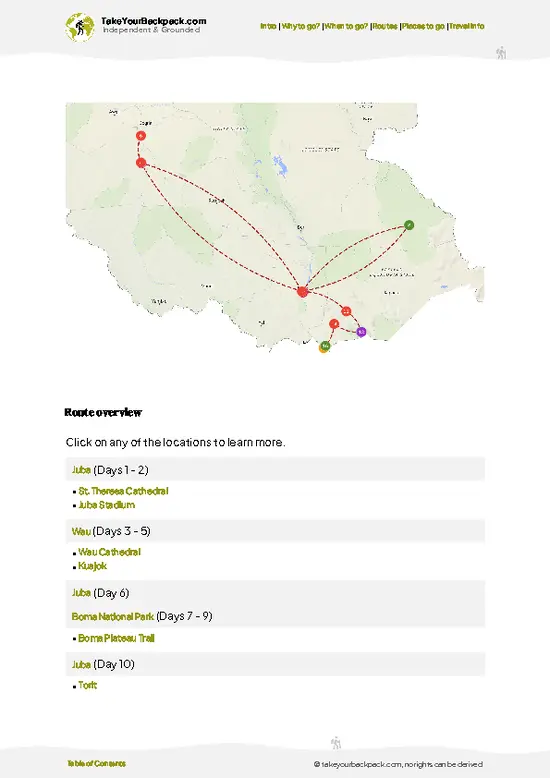
example page 0 from our offline Travel Guide for South Sudan
example page 1 from our offline Travel Guide for South Sudan
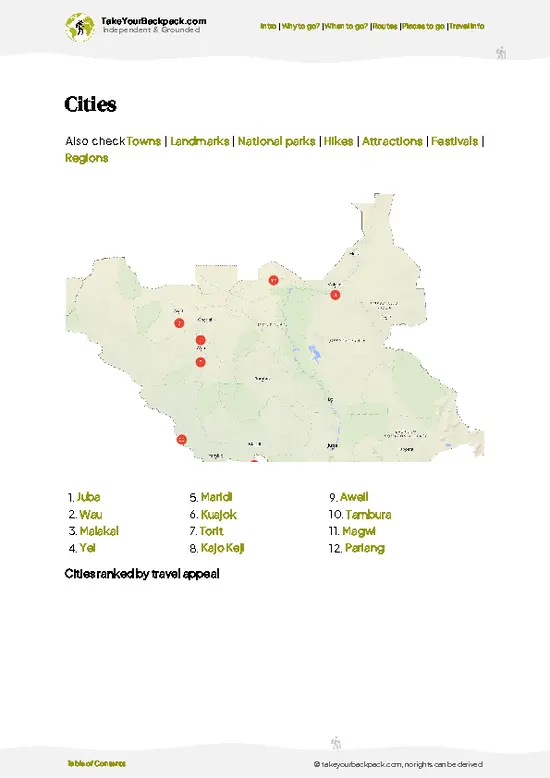
example page 2 from our offline Travel Guide for South Sudan
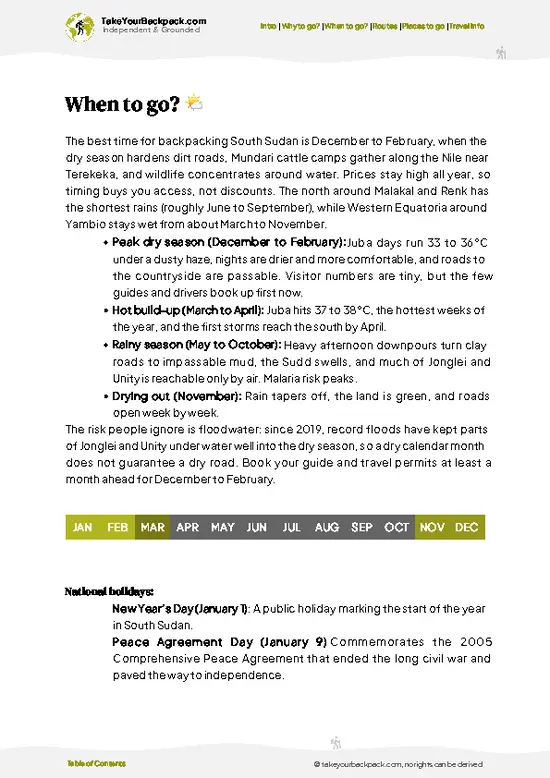
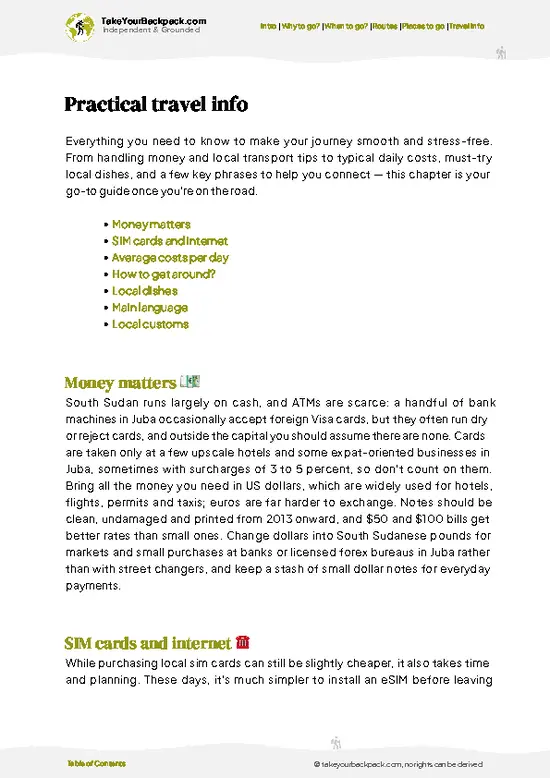
example page 3 from our offline Travel Guide for South Sudan
example page 4 from our offline Travel Guide for South Sudan
example page 5 from our offline Travel Guide for South Sudan
example page 6 from our offline Travel Guide for South Sudan
example page 7 from our offline Travel Guide for South Sudan
Loading the map 🌍
CLICK TO FILTER
cities
towns
landmarks
national parks
hikes
attractions
festivals
regions
SHOW COUNTRY’S BESTSHOW ALL

✨ Why go?
Ranked #15 town in South Sudan
The unique appeal for travelers

Leer suits the rare, well-prepared traveler who wants rural Nuer life rather than a checklist. There are no beds aimed at backpackers, so you stay through a host, church or aid-linked compound, and that is where the experience comes from. Mornings mean cattle driven out across the grasslands, smoke from dung fires and long greetings in Nuer. You won’t find nightlife or cafés, and you shouldn’t expect them. Slow, patient solo travelers with humanitarian, journalism or research contacts get the most from it. Most people stay a night or two. It works as a deliberate stop deep in the Nile floodplain, near Unity State cattle country, not as a casual add-on.

💡 HighlightsPlaces and moments you shouldn't skip

  1. Leer town center and market: A small cluster of stalls selling grain, tea, fish and basic goods, with the pace set by cattle and river traffic. Go in the morning when stocks arrive. Free to walk through, 1 hour. Ask permission before taking photos.
  2. Leer Catholic mission area: A long-standing church presence in the area, giving a window into local community life and services. Sunday mornings are the most lively. Free, 1 hour, with a respectful dress code.
  3. Leer Hospital area: The hospital has been central to local life for decades and is a landmark most residents will point you to. It is a working facility, so visit only with a host. Free, 30 minutes.
  4. Nuer cattle camps near town: Herders gather cattle at dung-fire camps on the grasslands, and the animals’ decorated horns are a sight in themselves.
… read more 👉
  1. Leer town center and market: A small cluster of stalls selling grain, tea, fish and basic goods, with the pace set by cattle and river traffic. Go in the morning when stocks arrive. Free to walk through, 1 hour. Ask permission before taking photos.
  2. Leer Catholic mission area: A long-standing church presence in the area, giving a window into local community life and services. Sunday mornings are the most lively. Free, 1 hour, with a respectful dress code.
  3. Leer Hospital area: The hospital has been central to local life for decades and is a landmark most residents will point you to. It is a working facility, so visit only with a host. Free, 30 minutes.
  4. Nuer cattle camps near town: Herders gather cattle at dung-fire camps on the grasslands, and the animals’ decorated horns are a sight in themselves. Go at dawn or late afternoon with a local guide. Costs depend on your guide and gift to the family, about US$10 to 25, 2 to 3 hours.
  5. Riverside paths: Quiet channels and floodplain edges where fishing and washing happen. Walk in the cooler morning hours. Free, 1 hour.
Leer has few formal day trips, but Bentiu and the wider Unity State wetlands can be reached with local arrangements. None of these items needs a ticket, though your visit needs a host and permission booked ahead.
Spotted a mistake or missing something? Contact us.

🏘️ NeighborhoodsUnderstanding the local layout

Leer is small enough to cover on foot in an afternoon, and the useful areas sit within a short walk of each other.
  • Market area: A dusty strip of open stalls and tea shacks selling sorghum, dried fish, onions, sugar and phone credit. Spend an hour here, buy a sweet milky tea and you will learn more about town life than anywhere else.
  • Riverside and Nuer cattle camps nearby: Paths lead through grass and mud toward the wetlands, where herders tend long-horned cattle and burn dung fires to keep off mosquitoes. Go with a local guide, and you get the best views of the Sudd edge.
  • Church and mission quarter: Quiet lanes and schools, with the old church compound as the main landmark. Little to see, so give it fifteen minutes and a greeting.
  • Airstrip side: Flat, open and empty outside flight times. Skip
… read more 👉
Leer is small enough to cover on foot in an afternoon, and the useful areas sit within a short walk of each other.
  • Market area: A dusty strip of open stalls and tea shacks selling sorghum, dried fish, onions, sugar and phone credit. Spend an hour here, buy a sweet milky tea and you will learn more about town life than anywhere else.
  • Riverside and Nuer cattle camps nearby: Paths lead through grass and mud toward the wetlands, where herders tend long-horned cattle and burn dung fires to keep off mosquitoes. Go with a local guide, and you get the best views of the Sudd edge.
  • Church and mission quarter: Quiet lanes and schools, with the old church compound as the main landmark. Little to see, so give it fifteen minutes and a greeting.
  • Airstrip side: Flat, open and empty outside flight times. Skip it unless you are arriving or leaving, since there is no nightlife and nothing to eat.

⌛️ 1 daySeeing the highlights in 24 hours

A quiet, slow village day built around cattle and river life, with a host along throughout.
6:30 AM: Cattle camp edge Walk out with your guide to a camp on the grassland. Smoke, ash-rubbed cattle and herders singing to their animals make this the best hour. Greet elders first and accept tea or milk if offered.
9:00 AM: Leer market Head back on foot and browse the stalls for tea, sweets and dried fish. Buy a small item, since it opens conversations.
11:30 AM: Catholic mission grounds Rest in the shade and talk with staff about local history, with permission.
2:00 PM: Riverside channels Skip the main road and take the lesser-used paths toward the water, where fishers mend nets. Few outsiders ever come here.
4:30 PM: Hospital area and town lanes Stroll past the hospital and back to your host before … read more 👉
A quiet, slow village day built around cattle and river life, with a host along throughout.
6:30 AM: Cattle camp edge Walk out with your guide to a camp on the grassland. Smoke, ash-rubbed cattle and herders singing to their animals make this the best hour. Greet elders first and accept tea or milk if offered.
9:00 AM: Leer market Head back on foot and browse the stalls for tea, sweets and dried fish. Buy a small item, since it opens conversations.
11:30 AM: Catholic mission grounds Rest in the shade and talk with staff about local history, with permission.
2:00 PM: Riverside channels Skip the main road and take the lesser-used paths toward the water, where fishers mend nets. Few outsiders ever come here.
4:30 PM: Hospital area and town lanes Stroll past the hospital and back to your host before dusk. Share a meal and ask about the next day’s plans.

🌤️ When to go?Choosing the right time of year

Leer is easiest from December to March, when roads dry out and daytime highs run 33 to 38°C (91 to 100°F).
  • Dry Season (December to March): Tracks are passable, nights drop to about 20°C (68°F), and humanitarian flights run most reliably. Transport prices climb slightly.
  • Early Rains (April to June): Storms arrive, 30 to 35°C (86 to 95°F), and mud starts closing roads.
  • Peak Rains (July to October): Flooding is common, mosquitoes swarm, and overland travel often stops.
Daylight stays near 12 hours all year, so plan arrivals to finish before dusk.

source: climatestotravel.comJANJanuary: excellent for travelingFEBFebruary: excellent for travelingMARMarch: fair for travelingAPRApril: below average for travelingMAYMay: below average for travelingJUNJune: below average for travelingJULJuly: below average for travelingAUGAugust: below average for travelingSEPSeptember: fair for travelingOCTOctober: good for travelingNOVNovember: highly recommended for travelingDECDecember: excellent for traveling
when-to-go

✈️ The backpacker research shortcutSouth Sudan Travel Guide

An offline-friendly backpacking guide with optimized travel routes, ranked highlights, transport advice, and the best areas to stay.
example page 0 from our offline Travel Guide for South Sudan
example page 1 from our offline Travel Guide for South Sudan
example page 2 from our offline Travel Guide for South Sudan
example page 3 from our offline Travel Guide for South Sudan
example page 4 from our offline Travel Guide for South Sudan
example page 5 from our offline Travel Guide for South Sudan
example page 6 from our offline Travel Guide for South Sudan
example page 7 from our offline Travel Guide for South Sudan
The digital guide (242 pages) contains:
✅ 57 highlights, ranked by travel appeal
✅ Optimized 5, 10 & 15-day travel routes
✅ Cities, national parks, landmarks, beaches
✅ How to get around
✅ Offline-friendly for travel without Wi-Fi
👉 Click to see all 30+ guide features

📅 Plan smarter in minutes, not weeks
✅ Month by month travel advice
✅ Festivals & national holidays
✅ Budget expectations

🗺️ Go to the right places, skip the overrated ones
✅ Honest pros & cons of destinations
✅ Top hikes, parks & viewpoints
✅ Lesser-known places most travelers miss
✅ Clear “worth it vs skip it” guidance

🛏️ Travel smoothly without rookie mistakes
✅ Best areas to stay
✅ Transport systems explained simply
✅ Common scams & safety advice
✅ SIM cards, money & practical tips

🌍 Understand the country, not just visit it
✅ Culture & traditions
✅ 52 Essential phrases & customs
✅ Festivals worth planning around
✅ Traveler-friendly historical context
✅ Insights that make places more meaningful

📱 Built for real travel conditions
✅ Fully downloadable PDF
✅ Works completely offline
✅ Optimized for phone use
✅ Useful in remote areas & buses
✅ Everything in one place
Stop searching, start planning
Get instant access to your full guide. 30‑day money-back guarantee.
+ Add another guide for just

By proceeding you agree to our terms.
Sent to your inbox immediately after payment • 100% Secure Checkout
Best Backpacking Travel Advisor 2025 tourism awardBest Backpacking
Travel Advisor
2025
What others say about Take Your Backpack Guides:
⭐⭐⭐⭐⭐
Fantastic, amazing amount of information!
⭐⭐⭐⭐⭐
My goodness this is amazing, it's what I've been looking for hats off too you!
⭐⭐⭐⭐⭐
I think this is absolutely BRILLIANT
⭐⭐⭐⭐
Very complete and informative. It's still missing places, but I gotta to commend you
⭐⭐⭐⭐⭐
This is truly amazing, thank you, can't wait to explore it with my kids!
⭐⭐⭐⭐⭐
Awesome resource, thank you!
⭐⭐⭐⭐⭐
This is amazing! Can't wait to explore the ones I haven't seen
⭐⭐⭐⭐
I love this! Well done, great idea.
⭐⭐⭐⭐⭐
Thanks for taking the time to make this gem!
⭐⭐⭐⭐⭐
This might be the best website I've ever seen.
⭐⭐⭐⭐⭐
Congratulations, and thank you so much for your work; it's incredibly valuable.
⭐⭐⭐⭐
In all seriousness I think you did a great job pointing out the important spots
⭐⭐⭐⭐⭐
10/10 very good
⭐⭐⭐⭐⭐
As someone who's only just starting to visit regularly this is awesome, thank you.
⭐⭐⭐⭐
Thank you very much! I'm going to visit my dad, it's going to be very useful!
⭐⭐⭐⭐⭐
This is really cool! We'll be travelling for the first time and this definitely come in handy.
⭐⭐⭐⭐⭐
You are now our minister of culture, congratulations 👨‍💼
⭐⭐⭐⭐⭐
Just wanted to tell you that this is a pearl! Going to follow your recommendations.
⭐⭐⭐⭐⭐
This is so cool. I'll definitely be using the resource for my travels soon.
⭐⭐⭐⭐⭐
This is very impressive! Good work.
⭐⭐⭐⭐⭐
This is an amazing and informative site. Very well done!

🛏️ Where to stay?How to pick the right area

Stay close to the market area in Leer, where basic guesthouses and compound rooms with a bed, a mosquito net and bucket washing cost roughly US$10 to 30 a night. There are no true hostels, so dorm-style beds are rare and a private room is the norm. Being near the market means shops, food and boda-boda drivers are a short walk away, and neighbors keep an eye on the street. Noise from generators and early-morning trading is the main drawback. A second option is a church or humanitarian-linked compound, where available, which is usually quieter and better lit at night but depends on a local contact. … read more 👉
Stay close to the market area in Leer, where basic guesthouses and compound rooms with a bed, a mosquito net and bucket washing cost roughly US$10 to 30 a night. There are no true hostels, so dorm-style beds are rare and a private room is the norm. Being near the market means shops, food and boda-boda drivers are a short walk away, and neighbors keep an eye on the street. Noise from generators and early-morning trading is the main drawback. A second option is a church or humanitarian-linked compound, where available, which is usually quieter and better lit at night but depends on a local contact. Arrange it before dark, and bring your own net and a power bank.

🚌 Getting aroundGetting around like a local

Leer’s common ride is a boda-boda motorbike taxi at about US$0.50 to 2 for a short hop, paid in cash South Sudanese pounds or sometimes US dollars, with the fare agreed before you climb on. Roads are mostly dirt, and the town is compact, so you rarely need more than a few minutes of riding.
  • Walking: Most of town takes 20 to 30 minutes end to end. Paths turn to thick mud in the rains, but on foot you can stop for tea and chat with market sellers.
  • Boda-boda: Fast and cheap, though you grip the seat over ruts and puddles. Worth it for the airstrip or outskirts, but carry a small pack only and agree the fare first.
  • Flights: Small charter and humanitarian flights use the airstrip, typically US$100 to 250 one way depending on route, and seats are limited. Skip them if you only need to reach nearby
… read more 👉
Leer’s common ride is a boda-boda motorbike taxi at about US$0.50 to 2 for a short hop, paid in cash South Sudanese pounds or sometimes US dollars, with the fare agreed before you climb on. Roads are mostly dirt, and the town is compact, so you rarely need more than a few minutes of riding.
  • Walking: Most of town takes 20 to 30 minutes end to end. Paths turn to thick mud in the rains, but on foot you can stop for tea and chat with market sellers.
  • Boda-boda: Fast and cheap, though you grip the seat over ruts and puddles. Worth it for the airstrip or outskirts, but carry a small pack only and agree the fare first.
  • Flights: Small charter and humanitarian flights use the airstrip, typically US$100 to 250 one way depending on route, and seats are limited. Skip them if you only need to reach nearby villages.
  • Shared vehicles and trucks: Occasional trucks and pickups run to Bentiu or Adok on dry-season tracks, often US$15 to 40 and taking half a day or more. Departure times are loose, so ask at the market and be ready to wait.
  • Boats: Canoes and small motorboats cross the river and wetlands, usually US$2 to 10 locally. You get a quiet water-level view of reed channels and fishermen.

👛 Costs (as of 22 October 2026)What things cost and how to budget

Leer costs roughly US$26 to 70 a day for a basic traveler, with accommodation taking the largest share. Supplies are limited and imported goods are pricey.
CategoryBudget RangeLocal Reality
Dorm accommodationUS$10 to 25Dorms are rare, so expect a simple private room with a net.
MealsUS$6 to 15Beans, fish, porridge, flatbread and tea at market eateries.
Local transportUS$2 to 8Boda-boda short hops, with boats costing more.
Basic activities/entry feesUS$5 to 15Guide fees for cattle camps or wetland visits.
MiscellaneousUS$3 to 7Phone credit, water and charging.
Total Daily BudgetUS$26 to 70About US$45 a day in high season.
Buy bottled water and staples in bulk at the market to avoid repeated markups.
⚠️ Prices can change and everyone travels differently, so take this as a rough guide. Hope it helps you plan your adventure!

🚌 Day tripsBest day trips from Leer

Leer works as a base for short local outings, but distances are long and roads poor, so keep trips close.
Nuer Cattle Camps: Walk or ride out to nearby camps where herders move cattle between grazing and wetlands. Expect 1 to 2 hours each way, with a guide and small gifts costing about US$5 to 15 total. Go in the dry season, and ask permission before photographing anyone.

Sudd Wetland Edge: Boat or hike to reed channels, birds and fishing sites on the edge of the vast swamp. Allow half a day, with about US$10 to 25 for a boat and guide. Beginners often start too late and miss the cooler hours.

Adok: A river-side settlement reached by track or boat in the dry season, about half a day each way. Budget US$20 to 50 for transport, and bring water. Check the road situation first, because wet-season trips often fail.

🛡️ SafetyScams, Hazards, and Annoyances

Leer is a remote area of South Sudan where security can change quickly, so check with local authorities or aid organizations before arriving. Inside town, daytime is generally calm, but avoid walking alone after dark, since lighting is minimal. Carry cash discreetly and expect informal checkpoints on roads, where polite greetings and patience help. Ask permission before photographing people or officials. Malaria is common, so sleep under a net.

FAQCommon questions from travelers

Leer is worth a visit only for travelers seeking remote Nuer culture and Sudd wetland scenery, not for conventional sights. Expect cattle camps, river life and markets rather than monuments. Access is difficult, and flights run US$100 to 250 one way.
Plan 2 to 3 days in Leer. One day covers the market and town, and another suits a cattle camp or wetland outing for about US$10 to 25. Add buffer days, because flights and tracks can be delayed by weather.
Leer is not realistic as a day trip from a nearby city, since roads are rough and often flooded, and the nearest larger centers such as Bentiu are half a day or more away. Flights are the practical option but usually mean staying overnight. Plan on at least one night in a basic guesthouse costing about US$10 to 30.
⚠️ Things can change over time, so always validate details locally before you go.

Other South Sudanese towns near Leer

Explore more nearby:

  • Panyijar—Sudd edge, dugout canoes, drying fish| 92 km away
  • Yirol—Lakes cattle camps, wetland birds, fish landings| 197 km away
  • Tonj—Dinka cattle, mango-shaded lanes, river washing| 199 km away

💡 Not sure where to go next?
Create a personalized itinerary for South Sudan including Leer and the places that fit your trip.

Generate my itinerary

👉 Discover all towns

Or checkout all South Sudan has to offer (think cities, towns, villages, national parks, hikes, beaches, festivals)
Country photo of South Sudan

We 💚 feedbackWhat to keep in mind

Leer rewards greetings more than itineraries; first visitors overlook how much goodwill a proper, unhurried hello with elders buys. I would carry small gifts like tea and sugar for hosts, and skip any plan that depends on tight schedules or road timing.

✍️ Help improve this page!
The information on this page is based on in-depth research, insights shared by experienced travelers, and feedback from the local travel community in South Sudan. While every effort is made to keep the information accurate and current, conditions can change — so if you spot anything incorrect or outdated, please get in touch.


🙋‍♂️ Give feedback

👋 Meet the founderWho’s Behind Take Your Backpack?

Johan, backpacker and founder of TakeYourBackpackHi, I’m Johan (Netherlands 🇳🇱), the creator of TakeYourBackpack. Over the past 3 decades, I’ve backpacked through 90+ countries across six continents, gaining extensive experience with independent travel, long-term trips, and overland routes.

This site is built on a combination of firsthand travel experience and carefully curated insights from other backpackers. Many guides are based on places I’ve personally visited, while others bring together tips, observations, and practical advice shared by trusted travelers I’ve met along the way.

The goal is to provide realistic, experience-driven guidance — not generic itineraries — so you can explore destinations with better context, clearer expectations, and more confidence.