×

South Sudan🇸🇸 | townsPanyijarSudd edge, dugout canoes, drying fish | things to do and best time to go

Explore RagaExplore Kodok

Backpacking in Panyijar
👀 For curious travelerstown ranked #19
By Johan Kruseman 🇳🇱 | Updated October 22, 2026

Dugout canoes slide past the reeds at the edge of the Sudd while fish dry on racks and cattle bells clank somewhere behind the huts. That is Panyijar, a county town in Unity State, in South Sudan’s swampy center-south. Facilities are minimal and there are no hostels, so skip it if you want sights. Come for Nuer and Dinka river life, the market, and quiet evenings. Seasoned, self-sufficient travelers with local contacts will like it most; anyone wanting comfort or easy company won’t.

Discover everything you want to know in the 📖 South Sudan Travel Guide.
Safety warning

The current risk level for South Sudan is high. Check the advice before going.


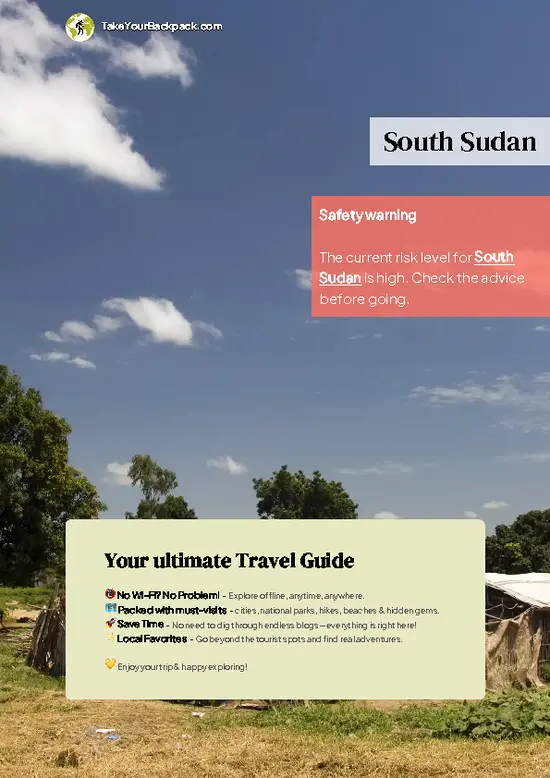
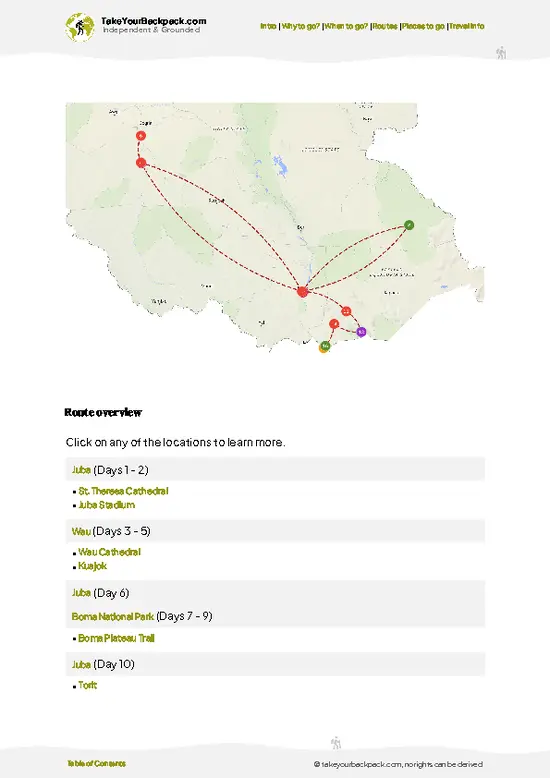
example page 0 from our offline Travel Guide for South Sudan
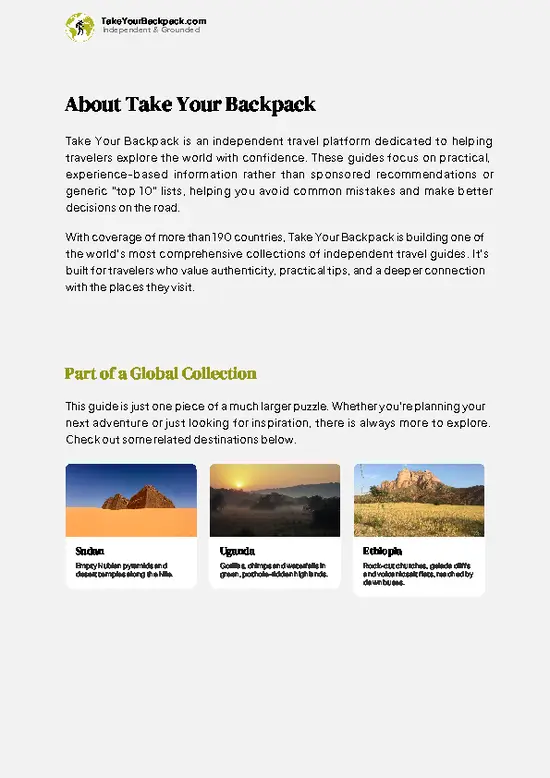
example page 1 from our offline Travel Guide for South Sudan
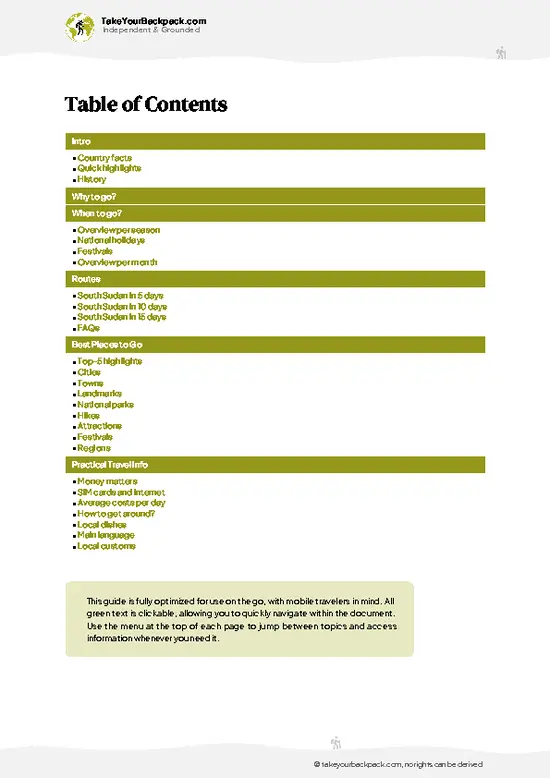
example page 2 from our offline Travel Guide for South Sudan
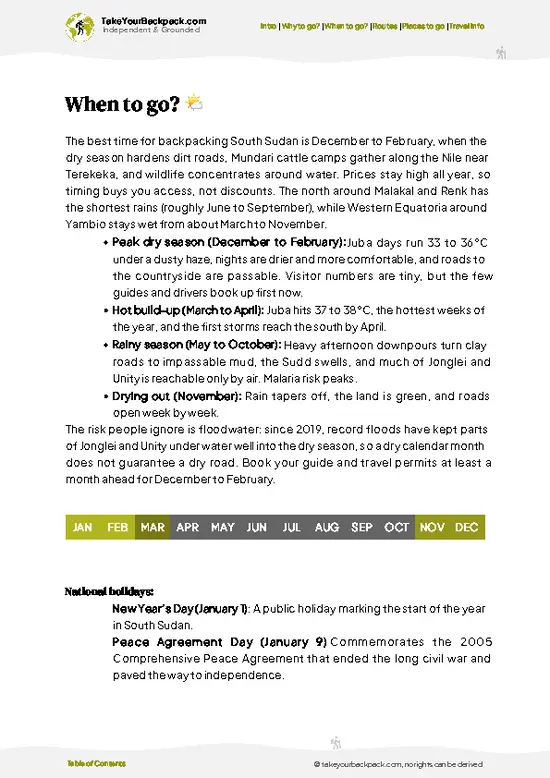
example page 3 from our offline Travel Guide for South Sudan
example page 4 from our offline Travel Guide for South Sudan
example page 5 from our offline Travel Guide for South Sudan
example page 6 from our offline Travel Guide for South Sudan
example page 7 from our offline Travel Guide for South Sudan
Loading the map 🌍
CLICK TO FILTER
cities
towns
landmarks
national parks
hikes
attractions
festivals
regions
SHOW COUNTRY’S BESTSHOW ALL

✨ Why go?
Ranked #19 town in South Sudan
What makes this town worth visiting

Panyijar suits travelers who want the Sudd wetland edge and the Nuer and Dinka cattle-keeping world of Unity State without any tour infrastructure. This is a county seat of a few thousand people, not a resort, so expect no hostels, a handful of basic guesthouses or a bed arranged through a local official or aid-agency contact, and grilled Nile fish bought from the riverside. Most people pass through briefly. Slow, self-reliant, solo or small-group travelers who are happy to wait on boats and trucks will get the most from the White Nile floodplain and its herding camps. Nightlife is absent, so evenings are quiet and conversations come from neighbors rather than other backpackers.

💡 HighlightsKey sights and experiences for travelers

  1. Panyijar town market: Fish, grain, tobacco and cloth change hands under makeshift stalls. Mornings are liveliest. Free to walk through, about 1 hour.
  2. River landing: Dugout canoes load and unload here, and fishermen mend nets. Go at first light for the catch. Free, 45 minutes.
  3. Cattle camps on the outskirts: Herders tend decorated long-horned cattle and burn dung fires for smoke against insects. Go with a local guide and ask permission first. A small gift or guide fee of roughly US$5 to 10 is customary, 1 to 2 hours.
  4. Local church grounds: Sunday services bring singing and community gatherings, and visitors are generally welcomed if they are respectful. Free, 1 to 2 hours.
  5. Edge of the Sudd wetland: Papyrus, birds and still channels stretch to the horizon. Visit in the dry months when paths are firmer.
… read more 👉
  1. Panyijar town market: Fish, grain, tobacco and cloth change hands under makeshift stalls. Mornings are liveliest. Free to walk through, about 1 hour.
  2. River landing: Dugout canoes load and unload here, and fishermen mend nets. Go at first light for the catch. Free, 45 minutes.
  3. Cattle camps on the outskirts: Herders tend decorated long-horned cattle and burn dung fires for smoke against insects. Go with a local guide and ask permission first. A small gift or guide fee of roughly US$5 to 10 is customary, 1 to 2 hours.
  4. Local church grounds: Sunday services bring singing and community gatherings, and visitors are generally welcomed if they are respectful. Free, 1 to 2 hours.
  5. Edge of the Sudd wetland: Papyrus, birds and still channels stretch to the horizon. Visit in the dry months when paths are firmer. A canoe with a boatman might cost US$10 to 20, 2 to 3 hours.
For day trips, Bentiu and the wider Unity State wetlands are the nearest places to explore, though access depends on conditions. All five fit comfortably into one long day or a relaxed two.
Spotted a mistake or missing something? Contact us.

🏘️ NeighborhoodsNeighborhood guide to Panyijar

Panyijar is a county seat on the swampy western bank of the Nile system in Unity State, so expect a few dispersed clusters, not districts. All of it is walkable on foot paths, though the rains turn them to mud.
  • Payam headquarters area: Government offices, a few shops and the best chance of meeting officials who can advise on movement. Skip it for sightseeing; go to register and ask about conditions.
  • Market area: Small stalls selling dried fish, sorghum, onions, tea and phone credit. Worth an hour for tea and a chat with traders.
  • Riverside and wetland edge: Fishing canoes, cattle herders and wide flat horizons of the Sudd. This is the area worth your time, especially for watching herds come in at dusk.
  • Outlying cattle camps: Reached only with a local host. Visit only by invitation; the reward is real pastoral Nuer and Dinka life.

⌛️ 1 daySeeing the highlights in 24 hours

6:00 AM, River landing: Watch canoes push off and fishermen haul nets in the cool light. This is the stop not to skip, and it costs nothing. Walk inland afterward.
8:00 AM, Town market: Have tea and bread, then browse fish, grain and cloth stalls. Greet traders first and ask before taking photos.
10:30 AM, Cattle camp outskirts: With a local guide, walk out to see herders and their painted horns. This is off the usual path and gives context for local life.
1:00 PM, Rest and lunch: Shelter from the heat and eat simple local food.
4:00 PM, Sudd wetland edge: Take a canoe through the papyrus channels and watch birds settle for the evening.

🌤️ When to go?Choosing the right time of year

  • Dry Season (December to March): Roads and paths firm up, and days reach 34 to 38°C (93 to 100°F). Cattle move toward the water, so camps are most active. Transport costs are lowest then.
  • Early Rains (April to June): Hot and humid at 30 to 35°C (86 to 95°F), with tracks turning to mud.
  • Peak Rains (July to October): Flooding cuts roads, 25 to 31°C (77 to 88°F), and fuel prices climb.
Aim for January, when the ground is dry and the wetlands are still green at the edges.

source: climatestotravel.comJANJanuary: excellent for travelingFEBFebruary: excellent for travelingMARMarch: good for travelingAPRApril: good for travelingMAYMay: below average for travelingJUNJune: below average for travelingJULJuly: below average for travelingAUGAugust: below average for travelingSEPSeptember: below average for travelingOCTOctober: below average for travelingNOVNovember: highly recommended for travelingDECDecember: excellent for traveling
when-to-go

✈️ The backpacker research shortcutSouth Sudan Travel Guide

An offline-friendly backpacking guide with optimized travel routes, ranked highlights, transport advice, and the best areas to stay.
example page 0 from our offline Travel Guide for South Sudan
example page 1 from our offline Travel Guide for South Sudan
example page 2 from our offline Travel Guide for South Sudan
example page 3 from our offline Travel Guide for South Sudan
example page 4 from our offline Travel Guide for South Sudan
example page 5 from our offline Travel Guide for South Sudan
example page 6 from our offline Travel Guide for South Sudan
example page 7 from our offline Travel Guide for South Sudan
The digital guide (242 pages) contains:
✅ 57 highlights, ranked by travel appeal
✅ Optimized 5, 10 & 15-day travel routes
✅ Cities, national parks, landmarks, beaches
✅ How to get around
✅ Offline-friendly for travel without Wi-Fi
👉 Click to see all 30+ guide features

📅 Plan smarter in minutes, not weeks
✅ Month by month travel advice
✅ Festivals & national holidays
✅ Budget expectations

🗺️ Go to the right places, skip the overrated ones
✅ Honest pros & cons of destinations
✅ Top hikes, parks & viewpoints
✅ Lesser-known places most travelers miss
✅ Clear “worth it vs skip it” guidance

🛏️ Travel smoothly without rookie mistakes
✅ Best areas to stay
✅ Transport systems explained simply
✅ Common scams & safety advice
✅ SIM cards, money & practical tips

🌍 Understand the country, not just visit it
✅ Culture & traditions
✅ 52 Essential phrases & customs
✅ Festivals worth planning around
✅ Traveler-friendly historical context
✅ Insights that make places more meaningful

📱 Built for real travel conditions
✅ Fully downloadable PDF
✅ Works completely offline
✅ Optimized for phone use
✅ Useful in remote areas & buses
✅ Everything in one place
Stop searching, start planning
Get instant access to your full guide. 30‑day money-back guarantee.
+ Add another guide for just

By proceeding you agree to our terms.
Sent to your inbox immediately after payment • 100% Secure Checkout
Best Backpacking Travel Advisor 2025 tourism awardBest Backpacking
Travel Advisor
2025
What others say about Take Your Backpack Guides:
⭐⭐⭐⭐⭐
Fantastic, amazing amount of information!
⭐⭐⭐⭐⭐
My goodness this is amazing, it's what I've been looking for hats off too you!
⭐⭐⭐⭐⭐
I think this is absolutely BRILLIANT
⭐⭐⭐⭐
Very complete and informative. It's still missing places, but I gotta to commend you
⭐⭐⭐⭐⭐
This is truly amazing, thank you, can't wait to explore it with my kids!
⭐⭐⭐⭐⭐
Awesome resource, thank you!
⭐⭐⭐⭐⭐
This is amazing! Can't wait to explore the ones I haven't seen
⭐⭐⭐⭐
I love this! Well done, great idea.
⭐⭐⭐⭐⭐
Thanks for taking the time to make this gem!
⭐⭐⭐⭐⭐
This might be the best website I've ever seen.
⭐⭐⭐⭐⭐
Congratulations, and thank you so much for your work; it's incredibly valuable.
⭐⭐⭐⭐
In all seriousness I think you did a great job pointing out the important spots
⭐⭐⭐⭐⭐
10/10 very good
⭐⭐⭐⭐⭐
As someone who's only just starting to visit regularly this is awesome, thank you.
⭐⭐⭐⭐
Thank you very much! I'm going to visit my dad, it's going to be very useful!
⭐⭐⭐⭐⭐
This is really cool! We'll be travelling for the first time and this definitely come in handy.
⭐⭐⭐⭐⭐
You are now our minister of culture, congratulations 👨‍💼
⭐⭐⭐⭐⭐
Just wanted to tell you that this is a pearl! Going to follow your recommendations.
⭐⭐⭐⭐⭐
This is so cool. I'll definitely be using the resource for my travels soon.
⭐⭐⭐⭐⭐
This is very impressive! Good work.
⭐⭐⭐⭐⭐
This is an amazing and informative site. Very well done!

🛏️ Where to stay?Choosing the right base

Panyijar has no hostel scene, so the best budget option is a basic guesthouse or a simple room near the payam headquarters and market. Staying close to the center keeps you near officials, shops and any vehicle departures, and it is the safest area to walk at night because people are around. Riverside spots are quieter but have more mosquitoes. Expect a basic bed with a net for roughly US$10 to 25, and bring your own sleeping sheet. Arranging a stay through a local contact or humanitarian organization is often easier than turning up unannounced.

🚌 Getting aroundTransportation options and practical tips

Panyijar punishes anyone who sets out by road in the rainy season without a fixed plan, because a day’s trip can stretch to several days and fares double when vehicles bog down. Panyijar itself is tiny and you cover it on foot in minutes. Beyond that, public transport is informal and thin.
  • Walking: Free, and the only sensible way to see the market and riverside. You get to meet people as you pass.
  • Boda-boda motorbike: Where available, about US$1 to 3 for a local hop and US$10 to 25 for longer runs to nearby villages. Dusty in dry months, with open views of the flat grassland.
  • Shared pickup or truck: Run to Bentiu and other towns when full, often with no fixed timetable. Expect US$20 to 50 and a long, rough day. Leave at dawn, since there are few departures after midday.
  • Canoe or boat: Local fishermen
… read more 👉
Panyijar punishes anyone who sets out by road in the rainy season without a fixed plan, because a day’s trip can stretch to several days and fares double when vehicles bog down. Panyijar itself is tiny and you cover it on foot in minutes. Beyond that, public transport is informal and thin.
  • Walking: Free, and the only sensible way to see the market and riverside. You get to meet people as you pass.
  • Boda-boda motorbike: Where available, about US$1 to 3 for a local hop and US$10 to 25 for longer runs to nearby villages. Dusty in dry months, with open views of the flat grassland.
  • Shared pickup or truck: Run to Bentiu and other towns when full, often with no fixed timetable. Expect US$20 to 50 and a long, rough day. Leave at dawn, since there are few departures after midday.
  • Canoe or boat: Local fishermen sometimes ferry passengers across channels for US$1 to 5. Slow, but you glide past birds and floating papyrus.

👛 Costs (as of 22 October 2026)Money, prices, and spending tips

Panyijar costs backpackers roughly US$30 to 45 a day, and that total is almost all food, a basic bed and the occasional boat or motorbike ride. Prices run higher than elsewhere in South Sudan because goods arrive by long, rough roads or by river. Pay in South Sudanese pounds or US dollars cash, since there are no ATMs.
CategoryBudget RangeLocal Reality
Dorm accommodationUS$10 to 20No hostels exist. A basic room or a bed in a simple guesthouse or mission compound is what you get.
MealsUS$6 to 10Fish, beans, porridge and flatbread at small tea stalls and local eateries.
Local transportUS$3 to 8Motorbike taxis for short hops, occasional canoe crossings.
Basic activities/entry feesUS$0 to 5Wetland and village walks are free, though a local guide costs a few dollars.
Miscellaneous expensesUS$3 to 5Bottled
… read more 👉
Panyijar costs backpackers roughly US$30 to 45 a day, and that total is almost all food, a basic bed and the occasional boat or motorbike ride. Prices run higher than elsewhere in South Sudan because goods arrive by long, rough roads or by river. Pay in South Sudanese pounds or US dollars cash, since there are no ATMs.
CategoryBudget RangeLocal Reality
Dorm accommodationUS$10 to 20No hostels exist. A basic room or a bed in a simple guesthouse or mission compound is what you get.
MealsUS$6 to 10Fish, beans, porridge and flatbread at small tea stalls and local eateries.
Local transportUS$3 to 8Motorbike taxis for short hops, occasional canoe crossings.
Basic activities/entry feesUS$0 to 5Wetland and village walks are free, though a local guide costs a few dollars.
Miscellaneous expensesUS$3 to 5Bottled water, phone credit, mosquito repellent.
Total Daily BudgetUS$37Mid-range of the figures above, with one bed counted.
Bring small US dollar notes in good condition, and buy water and supplies in bulk when you pass through a larger town, as prices in Panyijar are noticeably higher.
⚠️ Prices can change and everyone travels differently, so take this as a rough guide. Hope it helps you plan your adventure!

🚌 Day tripsBest day trips from Panyijar

Panyijar works as a base only for short local outings, since roads are poor and onward travel is slow.Nile Wetland Edge: A few hours on foot or by canoe takes you through the Sudd margins with fishermen and wading birds. Budget US$5 to 15 for a local guide or boat. Go in the dry months; first-timers often forget water and sun protection.
Cattle Camp Visit: Nearby camps are a half-day outing with a local host, who may expect a small gift or US$5 to 10. Go late in the afternoon when herds return and smoke fires keep insects away. The common mistake is photographing people without asking.
Bentiu: This is a long, hard journey, typically a full day each way by shared truck for US$20 to 50, so only go if you have business. Dry season only.

🛡️ SafetyStaying Safe: What Travelers Should Know

Panyijar sits in a region with a history of conflict, cattle raiding and flooding, so check conditions with local officials and humanitarian contacts before you arrive. Travel permits and registration are expected. Avoid moving at night, and do not wander outside the settlement alone. Petty theft is uncommon, but keep valuables out of sight. Ask before photographing people or security personnel. Malaria is a daily risk, so use a net and repellent.

FAQCommon questions from travelers

Panyijar is worth visiting only if you want remote Nile wetland life and have time and local contacts. It has no sights in the usual sense, but the Sudd edges and Dinka and Nuer cattle camps are unlike anywhere else. Plan on a rough journey and costs of roughly US$45 to 95 a day.
Panyijar needs two to three days, which gives time for the market, a wetland trip and a cattle camp visit. Add extra buffer days for delays, since transport is irregular and the rains can strand you. Most travelers who come with a purpose spend three to five days.
Panyijar is not realistic as a day trip from a nearby city, because roads are poor and shared trucks from Bentiu take most of a day for US$20 to 50. Plan to stay at least a night or two. In the rainy season, the trip can take much longer.
⚠️ Things can change over time, so always validate details locally before you go.

Other South Sudanese towns near Panyijar

Explore more nearby:

  • Leer—Riek Machar hometown, floodplain channels, decorated horns| 92 km away
  • Yirol—Lakes cattle camps, wetland birds, fish landings| 105 km away
  • Tali—Mundari roadside herds, Nile bank, Terekeka road| 184 km away

💡 Not sure where to go next?
Create a personalized itinerary for South Sudan including Panyijar and the places that fit your trip.

Generate my itinerary

👉 Discover all towns

Or checkout all South Sudan has to offer (think cities, towns, villages, national parks, hikes, beaches, festivals)
Country photo of South Sudan

We 💚 feedbackSumming up the experience

Panyijar suits patient, self-reliant travelers who value local connection over comfort. Arrange a trusted host first, carry water purification and cash in small bills, and skip rushing. Slow conversations by the river are the real highlight.

✍️ Help improve this page!
The information on this page is based on in-depth research, insights shared by experienced travelers, and feedback from the local travel community in South Sudan. While every effort is made to keep the information accurate and current, conditions can change — so if you spot anything incorrect or outdated, please get in touch.


🙋‍♂️ Give feedback

👋 Meet the founderWho’s Behind Take Your Backpack?

Johan, backpacker and founder of TakeYourBackpackHi, I’m Johan (Netherlands 🇳🇱), the creator of TakeYourBackpack. Over the past 3 decades, I’ve backpacked through 90+ countries across six continents, gaining extensive experience with independent travel, long-term trips, and overland routes.

This site is built on a combination of firsthand travel experience and carefully curated insights from other backpackers. Many guides are based on places I’ve personally visited, while others bring together tips, observations, and practical advice shared by trusted travelers I’ve met along the way.

The goal is to provide realistic, experience-driven guidance — not generic itineraries — so you can explore destinations with better context, clearer expectations, and more confidence.