×

South Sudan🇸🇸 | citiesMagwifarming settlements, Acholi communities, rolling hills | things to do and best time to go

Explore Aweil EastExplore Tambura

Backpacking in Magwi
👌 Worth visitingcity ranked #11
By Johan Kruseman 🇳🇱 | Updated September 4, 2026

If you crave nightlife, boutique cafés, or a parade of Instagrammable landmarks, Magwi will leave you restless. But if you’re the kind of backpacker who finds meaning in the raw, unfiltered edges of travel, Magwi rewards patience. Tucked in South Sudan’s southeast, near the Ugandan border, the town is more crossroads than destination—dusty, sun-bleached, and honest. The rhythm here is slow: market stalls with the scent of groundnuts, kids playing football on red earth, and the occasional boda-boda rumbling by. Magwi works best as a launchpad for exploring rural life or as a practical stop between Nimule’s wildlife and Juba’s chaos. Transport is basic—expect shared minibuses and plenty of waiting. Social scenes are subdued; you’ll find more conversation at a tea stall than in a hostel. Costs are low, but so is infrastructure. Safety is reasonable by local standards, though vigilance is wise. Compared to Nimule, Magwi is quieter and less scenic, but it offers a rare, unvarnished glimpse into South Sudanese daily life—if you’re willing to trade comfort for authenticity.

Discover everything you want to know in the 📖 South Sudan Travel Guide.
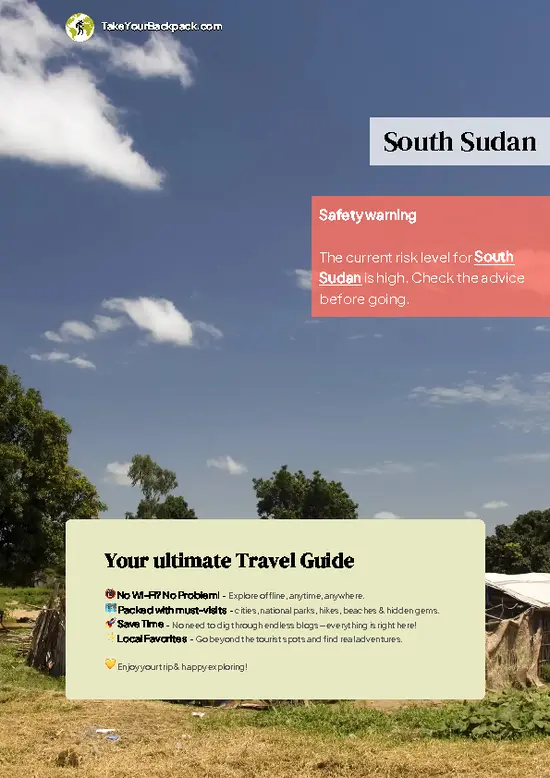
Safety warning

The current risk level for South Sudan is high. Check the advice before going.


Get your South Sudan guide
68 ranked highlights, routes & tips, works offline (270 pages)
Loading the map 🌍
CLICK TO FILTER
cities
towns
landmarks
national parks
hikes
attractions
festivals
regions
SHOW COUNTRY’S BESTSHOW ALL

✨ Why go?
Ranked #11 city in South Sudan
What makes it a must-see city

Magwi serves as a gateway for backpackers exploring South Sudan. Its walkable streets make it easy to navigate, and the small-scale guesthouses offer a cozy, intimate vibe. Here, you can savor local dishes that burst with flavor, connecting you to the culture. The nearby hiking trails and river beaches draw in those seeking adventure, while the friendly atmosphere encourages social interactions among travelers. Most stay a few days, soaking in the laid-back charm. This town suits slow travelers and solo adventurers looking for a genuine experience, rather than a quick stopover.
Want to include Magwi in your South Sudan route?
Create a personalized South Sudan itinerary that includes Magwi and the places that fit your trip — based on your travel style, budget, and available time. Get your route in seconds.

Generate my trip

💡 HighlightsMust-see experiences and standout moments

  • Magwi Central Market — the town’s busiest place: open-air stalls, fresh produce, second-hand clothes and local chatter; ideal for practicing bargaining, tasting roadside snacks and watching daily life up close.
  • Main Parish Church (the town’s largest church) — more than a building: a social anchor where Sunday services, weddings and community meetings give real insight into local rhythms and faith life.
  • Traditional Chief’s Compound — the home/meeting place of local elders: a window into customary leadership, oral history and occasional public ceremonies (ask for permission before visiting).
  • Magwi County Administration Complex — the local government hub: useful for understanding county-level administration, public notices, and how services are organized after the conflict years.
  • Community
read more 👉
  • Magwi Central Market — the town’s busiest place: open-air stalls, fresh produce, second-hand clothes and local chatter; ideal for practicing bargaining, tasting roadside snacks and watching daily life up close.
  • Main Parish Church (the town’s largest church) — more than a building: a social anchor where Sunday services, weddings and community meetings give real insight into local rhythms and faith life.
  • Traditional Chief’s Compound — the home/meeting place of local elders: a window into customary leadership, oral history and occasional public ceremonies (ask for permission before visiting).
  • Magwi County Administration Complex — the local government hub: useful for understanding county-level administration, public notices, and how services are organized after the conflict years.
  • Community Health Centre — a frontline medical post and public-health focal point where outreach programmes, vaccination drives and maternal clinics illustrate community resilience and priorities.
  • Magwi Secondary School (or large local school compound) — schoolyards are where community energy is palpable: sports, classrooms, and student projects reveal daily life and are great for short, respectful visits.
  • Roadside Tea Stalls and Eateries — tiny, informal places along the main road serving tea, roasted maize or simple stews; perfect for low-cost food, conversation and people-watching.
  • Local Craft and Repair Workshops — timber carpenters, bicycle mechanics and blacksmiths who turn scrap into useful tools; visiting these workshops shows practical skills and local entrepreneurship.
  • Market Square at Night — when the daytime bustle quiets and traders linger, the square becomes a place for storytelling, music and informal gatherings—an authentic cultural vibe that doesn’t appear on postcards.
  • Seasonal Riverbank / Town Wash Areas — simple, everyday stretches of water where washing, fishing and small-scale irrigation happen; these spots are great for seeing how people use and manage local natural resources.
A few real day-trip options outside Magwi worth considering: Nimule town and Nimule National Park, the nearby stretches of the Gilo River and wetlands, and the lower foothills of the Imatong Mountains.
Spotted a mistake or missing something? Contact us.

🏘️ NeighborhoodsWhere things are and how it's laid out

Magwi offers a unique blend of culture and community, perfect for backpackers seeking authentic experiences.

Central Market Area: This bustling hub is alive with the scent of spices and fresh produce. It’s walkable and vibrant, ideal for short stays. Expect low costs and a lively atmosphere, especially in the evenings when locals gather.

Residential Quarter: Quieter and more laid-back, this area is great for longer stays. You’ll find friendly locals and a more authentic feel. Transport options are limited, but the peaceful vibe makes it worth it.

Riverfront District: Perfect for sunset views and leisurely strolls. It’s a bit pricier, but the scenery and relaxed pace make it a worthwhile splurge. Nightlife is minimal, focusing more on social gatherings than bars.

⌛️ 1 dayA smart one-day plan

Magwi, a lively town in South Sudan, pulses with the rhythm of daily life and the warmth of its people. Start your morning at the local market, where the air is thick with the scent of spices and fresh produce. Engage with vendors selling everything from colorful fabrics to handmade crafts. This isn’t just shopping; it’s a cultural immersion.

As the sun climbs higher, head to the banks of the Nile. The shimmering water reflects the blue sky, and you can often spot fishermen casting their nets. Take a moment to breathe in the earthy scent of the riverbank and listen to the sounds of nature. This spot is often overlooked by tourists, but it offers a serene escape.

In the afternoon, wander through the neighborhoods, where you can see traditional mud-brick homes and children playing in the streets. … read more 👉
Magwi, a lively town in South Sudan, pulses with the rhythm of daily life and the warmth of its people. Start your morning at the local market, where the air is thick with the scent of spices and fresh produce. Engage with vendors selling everything from colorful fabrics to handmade crafts. This isn’t just shopping; it’s a cultural immersion.

As the sun climbs higher, head to the banks of the Nile. The shimmering water reflects the blue sky, and you can often spot fishermen casting their nets. Take a moment to breathe in the earthy scent of the riverbank and listen to the sounds of nature. This spot is often overlooked by tourists, but it offers a serene escape.

In the afternoon, wander through the neighborhoods, where you can see traditional mud-brick homes and children playing in the streets. Stop by a local café for a cup of strong Sudanese coffee; the rich aroma will energize you for the evening ahead.

As dusk approaches, make your way to the town square. The atmosphere buzzes with laughter and chatter as families gather. Enjoy a simple meal from a street vendor, perhaps some grilled meat or a spicy stew. This is where the heart of Magwi truly beats, and you’ll feel the community spirit envelop you.
Turn your Magwi visit into an South Sudan adventure
Build a complete South Sudan route with Magwi, hidden gems, must-see destinations, and realistic travel times included.

Generate my trip

🌤️ When to go?Best time to visit Magwi


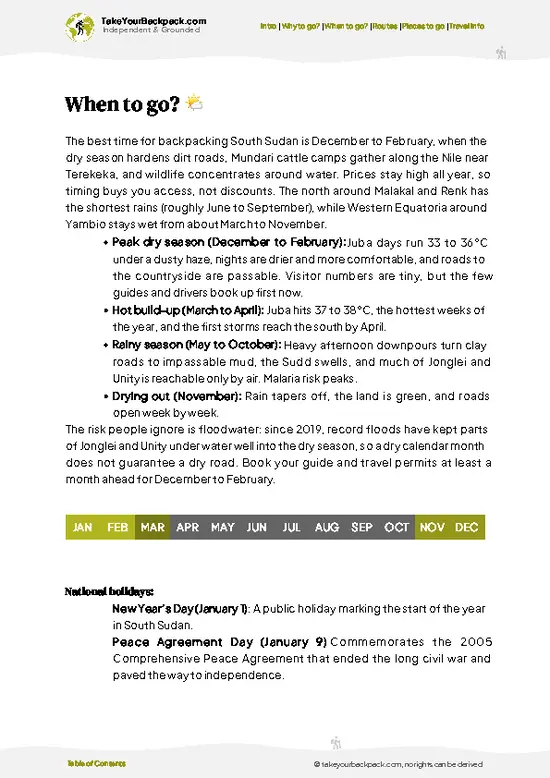
  • Weather: Magwi’s climate swings between a wet season from April to October and a dry season from November to March. The wet months bring heavy rains that turn roads into mud traps, making travel tough but the landscape lush and alive.

  • Temperature: Expect highs around 32-35°C (90-95°F) during the dry season, with nights cooling to 20-22°C (68-72°F). The wet season feels slightly cooler but stickier, thanks to humidity.

  • Daylight Hours: Daylight remains fairly steady year-round, roughly 12 hours, but the dry season offers clearer skies for longer evening light—perfect for lingering hikes or village strolls.

  • Crowds: Magwi is off the beaten path, so crowds are minimal year-round. However, local festivals during the dry season can bring a burst of activity and cultural immersion.

  • Seasonal
read more 👉

  • Weather: Magwi’s climate swings between a wet season from April to October and a dry season from November to March. The wet months bring heavy rains that turn roads into mud traps, making travel tough but the landscape lush and alive.

  • Temperature: Expect highs around 32-35°C (90-95°F) during the dry season, with nights cooling to 20-22°C (68-72°F). The wet season feels slightly cooler but stickier, thanks to humidity.

  • Daylight Hours: Daylight remains fairly steady year-round, roughly 12 hours, but the dry season offers clearer skies for longer evening light—perfect for lingering hikes or village strolls.

  • Crowds: Magwi is off the beaten path, so crowds are minimal year-round. However, local festivals during the dry season can bring a burst of activity and cultural immersion.

  • Seasonal Activities: Dry months are best for trekking and exploring without the risk of sudden downpours. The wet season, while challenging, reveals vibrant birdlife and swollen rivers, rewarding those willing to brave the mud.

  • Price Fluctuations: Costs tend to rise slightly in the dry season due to easier access and increased demand, but overall, Magwi remains affordable compared to more touristy spots.


Pro-tip: Aim for late dry season—March offers warm, dry days and a chance to catch local events before the rains return, balancing comfort with authentic encounters.


source: climatestotravel.comJANJanuary: excellent for travelingFEBFebruary: excellent for travelingMARMarch: excellent for travelingAPRApril: good for travelingMAYMay: fair for travelingJUNJune: fair for travelingJULJuly: fair for travelingAUGAugust: fair for travelingSEPSeptember: good for travelingOCTOctober: good for travelingNOVNovember: highly recommended for travelingDECDecember: highly recommended for traveling
when-to-go

✈️ The backpacker research shortcutSouth Sudan Travel Guide

An offline-friendly backpacking guide with optimized travel routes, ranked highlights, transport advice, and the best areas to stay.
example page 0 from our offline Travel Guide for South Sudan
example page 1 from our offline Travel Guide for South Sudan
example page 2 from our offline Travel Guide for South Sudan
example page 3 from our offline Travel Guide for South Sudan
example page 4 from our offline Travel Guide for South Sudan
example page 5 from our offline Travel Guide for South Sudan
example page 6 from our offline Travel Guide for South Sudan
example page 7 from our offline Travel Guide for South Sudan
The digital guide (270 pages) contains:
68 highlights, ranked by travel appeal
Optimized 5, 10 & 15-day travel routes
Cities, national parks, landmarks, beaches
How to get around
Offline-friendly for travel without Wi-Fi
👉 Click to see all 30+ guide features

📅 Plan smarter in minutes, not weeks
Month by month travel advice
Festivals & national holidays
Budget expectations

🗺️ Go to the right places, skip the overrated ones
Honest pros & cons of destinations
Top hikes, parks & viewpoints
Lesser-known places most travelers miss
Clear “worth it vs skip it” guidance

🛏️ Travel smoothly without rookie mistakes
Best areas to stay
Transport systems explained simply
Common scams & safety advice
SIM cards, money & practical tips

🌍 Understand the country, not just visit it
Culture & traditions
52 Essential phrases & customs
Festivals worth planning around
Traveler-friendly historical context
Insights that make places more meaningful

📱 Built for real travel conditions
Fully downloadable PDF
Works completely offline
Optimized for phone use
Useful in remote areas & buses
Everything in one place
Save weeks of stressful planning
Get instant access to your full guide. 30‑day money-back guarantee.
+ Add another guide for just US$7.80

By proceeding you agree to our terms.
Sent to your inbox immediately after payment • 100% Secure Checkout
Best Backpacking Travel Advisor 2025 tourism awardBest Backpacking
Travel Advisor
2025
What others say about Take Your Backpack Guides:
⭐⭐⭐⭐⭐
Fantastic, amazing amount of information!
⭐⭐⭐⭐⭐
My goodness this is amazing, it's what I've been looking for hats off too you!
⭐⭐⭐⭐⭐
I think this is absolutely BRILLIANT
⭐⭐⭐⭐
Very complete and informative. It's still missing places, but I gotta to commend you
⭐⭐⭐⭐⭐
This is truly amazing, thank you, can't wait to explore it with my kids!
⭐⭐⭐⭐⭐
Awesome resource, thank you!
⭐⭐⭐⭐⭐
This is amazing! Can't wait to explore the ones I haven't seen
⭐⭐⭐⭐
I love this! Well done, great idea.
⭐⭐⭐⭐⭐
Thanks for taking the time to make this gem!
⭐⭐⭐⭐⭐
This might be the best website I've ever seen.
⭐⭐⭐⭐⭐
Congratulations, and thank you so much for your work; it's incredibly valuable.
⭐⭐⭐⭐
In all seriousness I think you did a great job pointing out the important spots
⭐⭐⭐⭐⭐
10/10 very good
⭐⭐⭐⭐⭐
As someone who's only just starting to visit regularly this is awesome, thank you.
⭐⭐⭐⭐
Thank you very much! I'm going to visit my dad, it's going to be very useful!
⭐⭐⭐⭐⭐
This is really cool! We'll be travelling for the first time and this definitely come in handy.
⭐⭐⭐⭐⭐
You are now our minister of culture, congratulations 👨‍💼
⭐⭐⭐⭐⭐
Just wanted to tell you that this is a pearl! Going to follow your recommendations.
⭐⭐⭐⭐⭐
This is so cool. I'll definitely be using the resource for my travels soon.
⭐⭐⭐⭐⭐
This is very impressive! Good work.
⭐⭐⭐⭐⭐
This is an amazing and informative site. Very well done!

🛏️ Where to stay?Best areas and accommodation options

Magwi’s heart for backpackers pulses strongest near the town center, where the streets hum with daily markets and local chatter. This area is your best bet—not just for safety, but for the chance to plug into the community vibe. Here, the light filters through acacia trees, dust swirling gently as vendors call out their wares, creating a sensory backdrop that’s both grounding and energizing after a long day on the road.

Compared to the quieter, more residential outskirts, the center offers a social atmosphere where budget travelers naturally gravitate. Hostels are scarce but tend to cluster … read more 👉
Magwi’s heart for backpackers pulses strongest near the town center, where the streets hum with daily markets and local chatter. This area is your best bet—not just for safety, but for the chance to plug into the community vibe. Here, the light filters through acacia trees, dust swirling gently as vendors call out their wares, creating a sensory backdrop that’s both grounding and energizing after a long day on the road.

Compared to the quieter, more residential outskirts, the center offers a social atmosphere where budget travelers naturally gravitate. Hostels are scarce but tend to cluster here, making it easier to meet fellow adventurers without wandering into less secure neighborhoods. The trade-off is a bit of noise and bustle, but that’s part of the charm—it’s where you feel the pulse of Magwi’s everyday life. Staying here means you’re not just passing through; you’re stepping into the rhythm of the town, with easy access to local eateries and transport links that keep your journey moving smoothly.

🚌 Getting aroundGetting around like a local

Magwi moves at its own rhythm—less a clock-driven town and more a place where the sun’s position and the chatter of locals set the pace. You won’t find strict timetables here; instead, expect a blend of spontaneous departures and informal gatherings where transport waits until it’s full or the driver feels ready. The air carries the scent of earth and smoke from cooking fires, and the streets hum with the shuffle of feet and the occasional honk of a motorbike. This is a place where patience isn’t just a virtue—it’s your ticket to a smoother journey.


  • Walking: The most reliable and free way to navigate Magwi, especially within the town center. Streets are unpaved but manageable, with plenty of shade from acacia trees. Walking lets you soak in the local sounds and smells—don’t rush it.

read more 👉
Magwi moves at its own rhythm—less a clock-driven town and more a place where the sun’s position and the chatter of locals set the pace. You won’t find strict timetables here; instead, expect a blend of spontaneous departures and informal gatherings where transport waits until it’s full or the driver feels ready. The air carries the scent of earth and smoke from cooking fires, and the streets hum with the shuffle of feet and the occasional honk of a motorbike. This is a place where patience isn’t just a virtue—it’s your ticket to a smoother journey.


  • Walking: The most reliable and free way to navigate Magwi, especially within the town center. Streets are unpaved but manageable, with plenty of shade from acacia trees. Walking lets you soak in the local sounds and smells—don’t rush it.

  • Bicycle Taxi (Boda Boda): Available from dawn until dusk, these motorbike taxis are quick and nimble, perfect for short hops or reaching outskirts. Expect to negotiate fares upfront; prices hover around $0.50 to $1.00 depending on distance. They’re faster than walking but can be bumpy on uneven roads.

  • Shared Minibus (Matatu): The backbone of regional travel, these minibuses run irregularly but often start filling up mid-morning. Fares are low, roughly $1 to $2 for nearby towns. Comfort is basic—expect crowded seats and frequent stops—but it’s the best way to blend in with locals and cover longer distances.

  • Private Car Hire: Less common and pricier, but an option if you want control over timing and routes. Negotiated rates vary widely; expect to pay $30 or more for a half-day. Roads can be rough, so a sturdy vehicle is essential.

👛 Costs (as of 4 September 2026)Typical daily expenses

Backpacking in Magwi, South Sudan, means stepping into a place where infrastructure is sparse and prices reflect the challenge of supply rather than tourist demand. Expect a raw, unpolished experience that requires preparation and flexibility.
  • Dorm Accommodation: Options are extremely limited. You’re likely to find basic guesthouses rather than formal hostels. Prices hover around $5 to $10 USD per night, often in shared rooms with minimal amenities. Prepare for simple bedding and sometimes inconsistent electricity.
  • Meals: Food comes mostly from local markets or small roadside eateries. A basic meal of staple grains, vegetables, and occasionally meat will cost between $2 and $4 USD. Fresh fruit and bottled water add to the daily food budget, but expect limited variety and simple preparation.
  • Local
read more 👉
Backpacking in Magwi, South Sudan, means stepping into a place where infrastructure is sparse and prices reflect the challenge of supply rather than tourist demand. Expect a raw, unpolished experience that requires preparation and flexibility.
  • Dorm Accommodation: Options are extremely limited. You’re likely to find basic guesthouses rather than formal hostels. Prices hover around $5 to $10 USD per night, often in shared rooms with minimal amenities. Prepare for simple bedding and sometimes inconsistent electricity.
  • Meals: Food comes mostly from local markets or small roadside eateries. A basic meal of staple grains, vegetables, and occasionally meat will cost between $2 and $4 USD. Fresh fruit and bottled water add to the daily food budget, but expect limited variety and simple preparation.
  • Local Transport: Public transport is informal and infrequent. Motorbike taxis or shared minibuses are your main options, costing roughly $1 to $3 USD per short trip within town. Walking is often the best way to get around, given the town’s small size and rough roads.
  • Basic Activities/Entry Fees: Magwi is not a tourist hotspot, so there are no formal entry fees or organized activities. Any cultural visits or local guides will be negotiated directly and might cost around $5 to $10 USD, depending on the arrangement.
  • Miscellaneous Expenses: This includes essentials like SIM cards, toiletries, and occasional tips. Budget around $1 to $3 USD daily, but keep cash handy as card payments are rare and ATMs nonexistent.

The total daily budget for backpacking in Magwi typically ranges from $10 to $25 USD. This reflects the town’s limited infrastructure and the need to be self-sufficient. The payoff is a genuine encounter with a place off the beaten path, where every dollar spent supports local livelihoods directly.
⚠️ Prices can change and everyone travels differently, so take this as a rough guide. Hope it helps you plan your adventure!

🚌 Day tripsEasy escapes and nearby places

Magwi is a fantastic launchpad for exploring the heart of South Sudan. With its vibrant local culture and proximity to stunning landscapes, you’ll find plenty of rewarding day trips that make the effort worthwhile.

Trip to the Nile
A short ride from Magwi, the Nile offers a refreshing escape. Picture yourself standing on the riverbank, the sun glinting off the water, while fishermen cast their nets. You can take a boat ride to soak in the scenery or simply relax with a local meal. The journey takes about 30 minutes, costing around $5 for transport. Early morning is best, as the light is soft and the air is cool. A common mistake? Underestimating the power of the sun; bring sunscreen and a hat.


Visit to the Kidepo Valley
This trip is a bit longer, roughly two hours by car, but the … read more 👉
Magwi is a fantastic launchpad for exploring the heart of South Sudan. With its vibrant local culture and proximity to stunning landscapes, you’ll find plenty of rewarding day trips that make the effort worthwhile.

Trip to the Nile
A short ride from Magwi, the Nile offers a refreshing escape. Picture yourself standing on the riverbank, the sun glinting off the water, while fishermen cast their nets. You can take a boat ride to soak in the scenery or simply relax with a local meal. The journey takes about 30 minutes, costing around $5 for transport. Early morning is best, as the light is soft and the air is cool. A common mistake? Underestimating the power of the sun; bring sunscreen and a hat.


Visit to the Kidepo Valley
This trip is a bit longer, roughly two hours by car, but the wildlife and landscapes are worth every minute. The valley is alive with the sounds of nature, and you might spot elephants or antelopes roaming freely. Expect to spend around $15 on transport and park fees. The dry season, from December to February, is ideal for wildlife sightings. Many first-timers forget to pack binoculars; don’t make that mistake!
👉 Explore Kidepo Valley

Exploring Juba
Just an hour away, Juba is a bustling city with a unique blend of cultures. Stroll through the markets, where the air is rich with the scent of spices and fresh produce. You can grab a local lunch for about $3. The best time to visit is during the cooler months, from November to February. A rookie error? Skipping the local dishes; try the grilled meat skewers!
👉 Explore Juba
Want to know what more South Sudan offers?
The South Sudan Travel Guide describes 68 highlights, from cities to national parks, from beaches to hikes

Get the Travel Guide -

🍲 FoodLocal Cuisine & Drinks

In Magwi, food is a straightforward, hearty affair that roots you in the rhythms of South Sudanese life. The standout dish here is kisra with beef stew—a sourdough flatbread that’s both a utensil and a flavor carrier, soaked in rich, spiced meat sauce. It’s simple but deeply satisfying, the kind of meal that sticks with you. For drinks, don’t miss out on millet beer, a traditional brew that locals sip slowly, often in communal settings that invite conversation and connection.

Backpackers will find themselves drawn to the bustling local markets and street stalls, where the air is thick with the scent of grilled meats and fresh spices. These spots are less about polished menus and more about authentic, no-frills nourishment. Casual eateries nearby offer a chance to sit and watch daily life … read more 👉
In Magwi, food is a straightforward, hearty affair that roots you in the rhythms of South Sudanese life. The standout dish here is kisra with beef stew—a sourdough flatbread that’s both a utensil and a flavor carrier, soaked in rich, spiced meat sauce. It’s simple but deeply satisfying, the kind of meal that sticks with you. For drinks, don’t miss out on millet beer, a traditional brew that locals sip slowly, often in communal settings that invite conversation and connection.

Backpackers will find themselves drawn to the bustling local markets and street stalls, where the air is thick with the scent of grilled meats and fresh spices. These spots are less about polished menus and more about authentic, no-frills nourishment. Casual eateries nearby offer a chance to sit and watch daily life unfold, but the real pulse is in the open-air hustle.

Eating here means embracing a hands-on approach—using your fingers to scoop up food is not just accepted, it’s expected. Sharing dishes is common, a quiet nod to community that turns every meal into a social event.

🛡️ SafetySafety Tips and Common Scams in Magwi

Magwi is generally safe, but stay aware in crowded areas, especially markets. Keep your belongings close; petty theft can happen. If you’re solo, avoid wandering after dark. The streets can feel different at night, and it’s best to stick to well-lit paths.

Watch for common scams, like inflated prices from vendors who see a foreign face. Always negotiate and ask locals for fair rates. Carry yourself confidently, and engage with the community; a friendly demeanor often disarms potential annoyances.

FAQTraveler FAQ

2 to 3 days is sufficient to explore Magwi, allowing time to visit local markets and nearby villages. The town is small, so most key sights can be covered quickly. Additional days may be needed if planning to travel to surrounding rural areas.
No, Magwi is generally not considered safe for solo backpackers due to ongoing regional instability and limited security infrastructure. Travelers should avoid solo travel here and seek local guidance or join group tours. Night travel is especially risky.
Magwi is known for its role as a regional trade center and its proximity to the Imatong Mountains. It is also recognized for its cultural diversity, with several ethnic groups residing in the area. The town serves as a gateway for trekking and nature exploration in Eastern Equatoria.
⚠️ Things can change over time, so always validate details locally before you go.

Other South Sudanese cities near Magwi

Explore more nearby:

  • Torit—Imatong foothills, local markets, farming center| 44 km away
  • Kajo Keji—borderland hills, farming villages, forest edges| 78 km away
  • Juba—Nile riverfront, bustling markets, government district, expat enclaves| 113 km away

💡 Not sure where to go next?
Create a personalized itinerary for South Sudan including Magwi and the places that fit your trip.

Generate my itinerary

👉 Discover all cities

Or checkout all South Sudan has to offer (think cities, towns, villages, national parks, hikes, beaches, festivals)
Country photo of South Sudan

We 💚 feedbackIs it worth it?

Magwi pulses with a raw energy that’s hard to shake off. The scent of earth after rain lingers, and the laughter of locals fills the air. Just be ready for the heat; it’s relentless. Embrace it, and you’ll find a warmth that’s truly welcoming.

✍️ Help improve this page!
The information on this page is based on in-depth research, insights shared by experienced travelers, and feedback from the local travel community in South Sudan. While every effort is made to keep the information accurate and current, conditions can change — so if you spot anything incorrect or outdated, please get in touch.


🙋‍♂️ Give feedback

👋 Meet the founderWho’s Behind Take Your Backpack?

Johan, backpacker and founder of TakeYourBackpackHi, I’m Johan (Netherlands 🇳🇱), the creator of TakeYourBackpack. Over the past decade, I’ve backpacked through 80+ countries across six continents, gaining extensive experience with independent travel, long-term trips, and overland routes.

This site is built on a combination of firsthand travel experience and carefully curated insights from other backpackers. Many guides are based on places I’ve personally visited, while others bring together tips, observations, and practical advice shared by trusted travelers I’ve met along the way.

The goal is to provide realistic, experience-driven guidance — not generic itineraries — so you can explore destinations with better context, clearer expectations, and more confidence.

Get full country guide •
Instant download • 68 highlights • Full Offline guide