×

South Sudan🇸🇸 | citiesMaridiCoffee and teak country, mission-era brick churches, red dirt streets, evening football | things to do and best time to go

Explore ToritExplore Kuajok

Backpacking in Maridi
🌟 Highlightcity ranked #5
By Johan Kruseman 🇳🇱 | Updated October 22, 2026

Years ago Maridi was a green, productive corner of Western Equatoria, known for coffee, teak and the mission-era brick buildings of a settled market town. Today it is a quiet, recovering place with few services and almost no tourist infrastructure. It lies in the south-west of South Sudan, in Western Equatoria State, on the road between Yambio and Juba. Expect red dirt streets, motorbike taxis, a busy central market and farmland that reaches the edge of town. The market and the surrounding countryside deserve your time. Do not expect museums, nightlife or polished sights, because there are none worth planning around. Reliable internet and card payments are also missing. It suits seasoned, self-sufficient travelers, aid workers and anyone curious about rural Equatoria. It won't suit first-timers who want comfort, easy logistics or a checklist of attractions.

Discover everything you want to know in the 📖 South Sudan Travel Guide.
Safety warning

The current risk level for South Sudan is high. Check the advice before going.


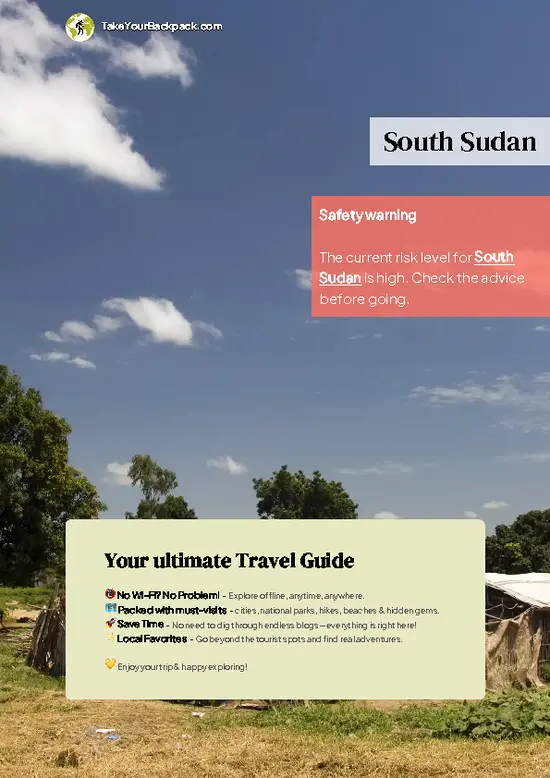
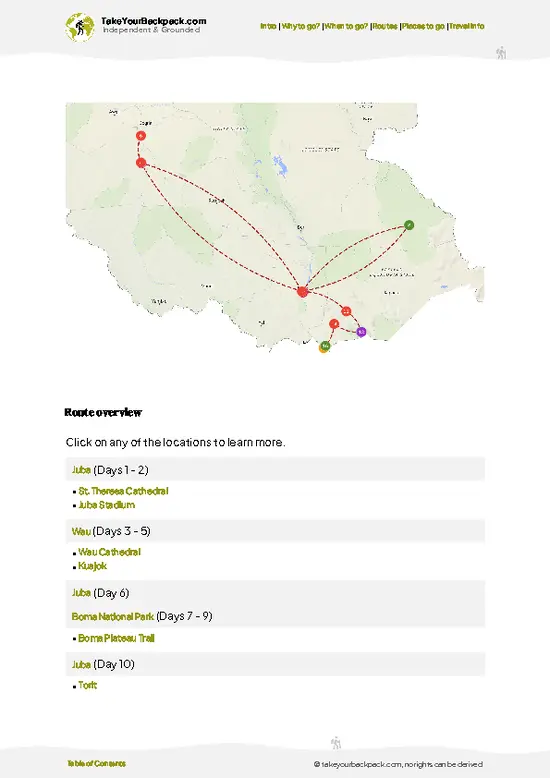
example page 0 from our offline Travel Guide for South Sudan
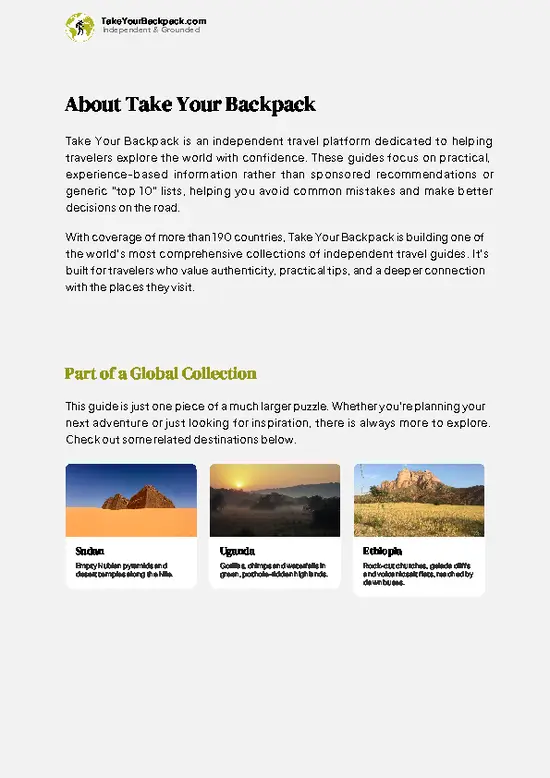
example page 1 from our offline Travel Guide for South Sudan
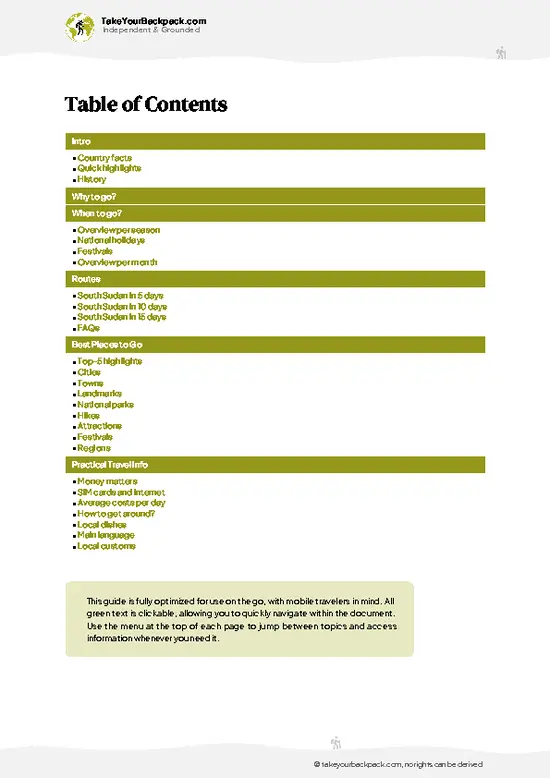
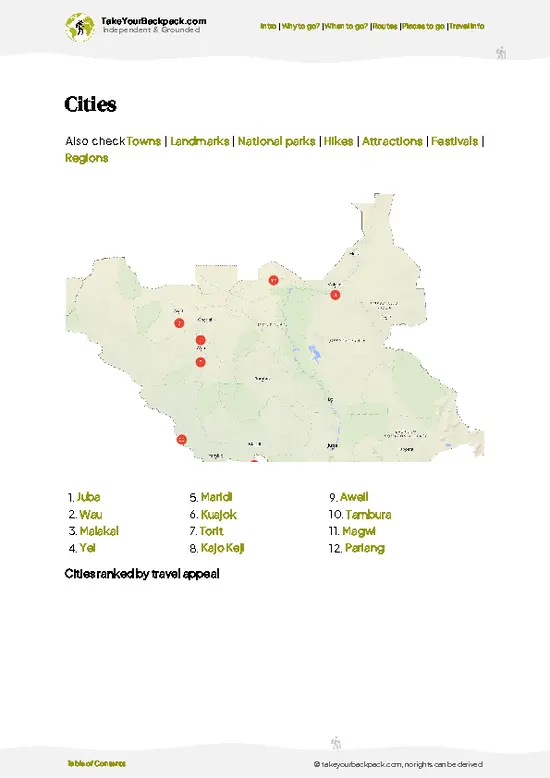
example page 2 from our offline Travel Guide for South Sudan
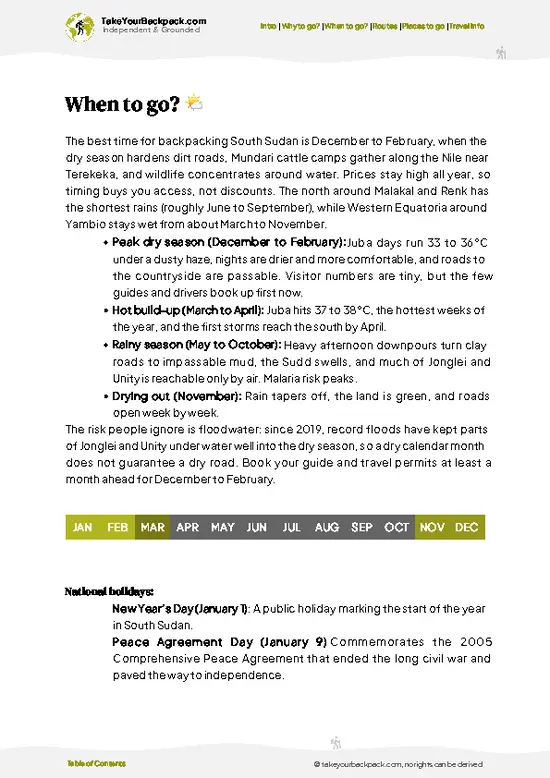
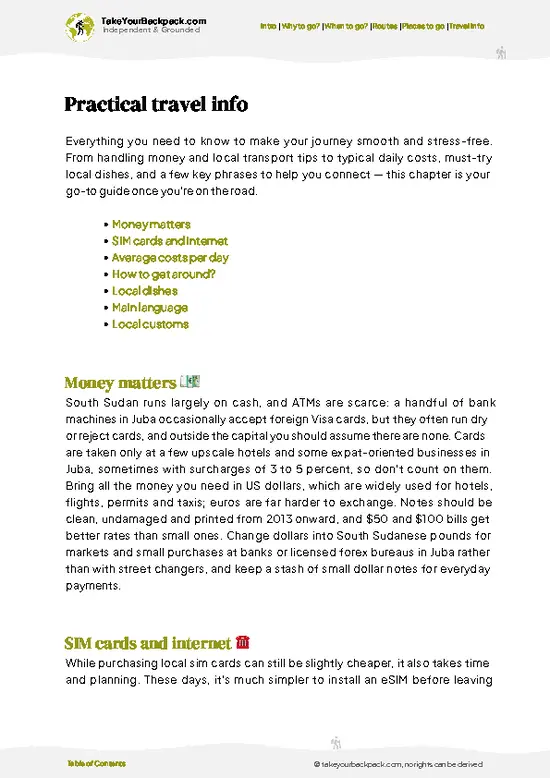
example page 3 from our offline Travel Guide for South Sudan
example page 4 from our offline Travel Guide for South Sudan
example page 5 from our offline Travel Guide for South Sudan
example page 6 from our offline Travel Guide for South Sudan
example page 7 from our offline Travel Guide for South Sudan
Loading the map 🌍
CLICK TO FILTER
cities
towns
landmarks
national parks
hikes
attractions
festivals
regions
SHOW COUNTRY’S BESTSHOW ALL

✨ Why go?
Ranked #5 city in South Sudan
Reasons people choose to visit here

Maridi attracts a very small number of travelers, and the reason is access to the green south-west rather than a list of sights. The town sits in Western Equatoria, where the climate is wetter and the fields far lusher than in the dry north, and you notice it at once in the mango trees, cassava plots and forest edges. For a backpacker the value is a real look at everyday rural life without any tourist layer. Food is simple and local, mostly stews, grilled fish and fresh fruit from the central market. Sleeping options are basic guesthouses, so go with low expectations and bring cash in US dollars. It works best as a short, deliberate stop on a slow overland route toward Yambio or Juba, with time to talk to people and watch the market work. Anyone who needs a packed schedule will be bored within a day.

💡 HighlightsThe experiences that define the visit

  1. Maridi Central Market: The town’s main attraction is simply its daily trade, with piles of cassava, groundnuts, tomatoes, smoked fish and secondhand clothes. Go in the morning when stock is freshest. Entry is free and an hour or two is plenty.
  2. Old mission-era church buildings: Brick churches and compounds recall the long Christian presence here. Sunday services fill with choir singing and are the best time to hear it. Visitors are usually welcome if they dress modestly and stay respectful. Allow one hour; donations of US$1 to 2 are appreciated.
  3. Maridi River banks: Walk the green edges where women wash clothes and children fish. Mornings are cooler and quieter. It is free and takes about an hour.
  4. Farm and plantation walks: The surrounding land grows coffee, mangoes, bananas and teak. A local guide
… read more 👉
  1. Maridi Central Market: The town’s main attraction is simply its daily trade, with piles of cassava, groundnuts, tomatoes, smoked fish and secondhand clothes. Go in the morning when stock is freshest. Entry is free and an hour or two is plenty.
  2. Old mission-era church buildings: Brick churches and compounds recall the long Christian presence here. Sunday services fill with choir singing and are the best time to hear it. Visitors are usually welcome if they dress modestly and stay respectful. Allow one hour; donations of US$1 to 2 are appreciated.
  3. Maridi River banks: Walk the green edges where women wash clothes and children fish. Mornings are cooler and quieter. It is free and takes about an hour.
  4. Farm and plantation walks: The surrounding land grows coffee, mangoes, bananas and teak. A local guide or host can take you through plots and explain the harvest. Expect to pay US$3 to 8 for a half-day guide and allow 2 to 3 hours. Dry mornings are best.
  5. Roadside tea and food stalls: Sitting at a tea stall near the main road is the easiest way to meet people. Tea and a snack run US$1 to 2, and an hour is enough.
  6. Evening football on open grounds: Informal matches draw crowds as the day cools. Spectating is free and you can stay for an hour or so.
Beyond town, travelers sometimes continue to Mundri, Yambio and the forest country of Western Equatoria, and Juba is the usual onward hub. The cheapest item is the market, along with the river walk and the football, which all cost nothing.
Spotted a mistake or missing something? Contact us.

🏘️ NeighborhoodsKey areas and districts to know

Maridi is a compact county town in Western Equatoria, and you can cover all of it on foot in an afternoon. Here is where your time is worth spending.
  • Main market area: This is the one place to spend real time. Stalls sell cassava, groundnuts, tomatoes, dried fish, fruit and secondhand clothes, and a few tea shacks serve sweet tea and fried dough. Go in the morning when stock is fresh and everyone is out. Fully walkable.
  • Town center along the main road: A strip of small shops, mobile money kiosks, NGO compounds and simple eateries. Useful for cash, SIM cards and supplies, but there is little to see, so do your errands and move on.
  • Residential quarters and church areas: Tidy lanes of mud-brick and tin-roof homes among mango and teak trees. Pleasant for a slow walk and a chance to greet people,
… read more 👉
Maridi is a compact county town in Western Equatoria, and you can cover all of it on foot in an afternoon. Here is where your time is worth spending.
  • Main market area: This is the one place to spend real time. Stalls sell cassava, groundnuts, tomatoes, dried fish, fruit and secondhand clothes, and a few tea shacks serve sweet tea and fried dough. Go in the morning when stock is fresh and everyone is out. Fully walkable.
  • Town center along the main road: A strip of small shops, mobile money kiosks, NGO compounds and simple eateries. Useful for cash, SIM cards and supplies, but there is little to see, so do your errands and move on.
  • Residential quarters and church areas: Tidy lanes of mud-brick and tin-roof homes among mango and teak trees. Pleasant for a slow walk and a chance to greet people, and Sunday services bring strong singing. Skip it after dark, since there is no lighting and nothing open.
  • Edges of town and farmland: Fields, forest patches and streams just past the last houses. This is the best reason to be here if you like green countryside, but go with a local guide, as paths are unmarked.
Nightlife is minimal. A couple of bars with warm drinks and a radio are all you will find, and they are fine for an hour.

⌛️ 1 day1-day itinerary for Maridi

The day works best on foot, with a motorbike taxi for any longer hops and a long rest through the hot early afternoon.
7:00 AM: Tea stall near the main road Start with sweet tea and a fried snack while the town wakes up. It is the easiest place to chat and ask about the day's conditions.
8:00 AM: Maridi Central Market Walk in as stalls fill. Look at fresh produce and smoked fish, then move on before the heat builds.
10:00 AM: Maridi River banks A short stroll leads to the water, where people wash clothes and fish. It is a quiet, green contrast to the market.
11:30 AM: Farm walk outside town This is the part off the standard path. Ask your host to introduce a farmer growing coffee, bananas or cassava, and see how food gets from field to plate. Hire a local guide and a motorbike if the plot is far. … read more 👉
The day works best on foot, with a motorbike taxi for any longer hops and a long rest through the hot early afternoon.
7:00 AM: Tea stall near the main road Start with sweet tea and a fried snack while the town wakes up. It is the easiest place to chat and ask about the day's conditions.
8:00 AM: Maridi Central Market Walk in as stalls fill. Look at fresh produce and smoked fish, then move on before the heat builds.
10:00 AM: Maridi River banks A short stroll leads to the water, where people wash clothes and fish. It is a quiet, green contrast to the market.
11:30 AM: Farm walk outside town This is the part off the standard path. Ask your host to introduce a farmer growing coffee, bananas or cassava, and see how food gets from field to plate. Hire a local guide and a motorbike if the plot is far.
1:00 PM: Lunch and rest Eat stew with rice or cassava, then rest in the shade during the hottest hours.
4:00 PM: Mission-era church compound Walk through the old brick grounds as the light softens. If there is choir practice, listen from outside.
5:30 PM: Football on the open ground Join the crowd and watch a local match. Head back before dark and keep the evening quiet.

🌤️ When to go?Best time to visit Maridi

Maridi sits in the greener, wetter southwest of the country, so timing matters for roads more than for comfort.
  • Dry Season (December to February): Days run 30 to 35°C (86 to 95°F), nights about 18 to 21°C (64 to 70°F). Dirt roads are firmest and dust is the main nuisance. Transport prices stay steadiest.
  • Early Rains (March to May): Showers build, humidity rises and temperatures ease to 27 to 32°C (81 to 90°F). Roads start to churn, and fruit like mango arrives in markets.
  • Peak Rains (June to October): Heavy downpours are frequent, with highs of 25 to 29°C (77 to 84°F). Tracks can turn impassable, trucks slow down and fares rise. Forest and farmland are at their greenest.
  • Late Rains (November): Showers thin out and roads begin to dry.
Crowds are never an issue here, so schedule around road conditions: … read more 👉
Maridi sits in the greener, wetter southwest of the country, so timing matters for roads more than for comfort.
  • Dry Season (December to February): Days run 30 to 35°C (86 to 95°F), nights about 18 to 21°C (64 to 70°F). Dirt roads are firmest and dust is the main nuisance. Transport prices stay steadiest.
  • Early Rains (March to May): Showers build, humidity rises and temperatures ease to 27 to 32°C (81 to 90°F). Roads start to churn, and fruit like mango arrives in markets.
  • Peak Rains (June to October): Heavy downpours are frequent, with highs of 25 to 29°C (77 to 84°F). Tracks can turn impassable, trucks slow down and fares rise. Forest and farmland are at their greenest.
  • Late Rains (November): Showers thin out and roads begin to dry.
Crowds are never an issue here, so schedule around road conditions: arrive in December or January and you will rarely get stuck.


source: climatestotravel.comJANJanuary: highly recommended for travelingFEBFebruary: excellent for travelingMARMarch: excellent for travelingAPRApril: good for travelingMAYMay: fair for travelingJUNJune: fair for travelingJULJuly: fair for travelingAUGAugust: fair for travelingSEPSeptember: good for travelingOCTOctober: good for travelingNOVNovember: highly recommended for travelingDECDecember: highly recommended for traveling
when-to-go

✈️ The backpacker research shortcutSouth Sudan Travel Guide

An offline-friendly backpacking guide with optimized travel routes, ranked highlights, transport advice, and the best areas to stay.
example page 0 from our offline Travel Guide for South Sudan
example page 1 from our offline Travel Guide for South Sudan
example page 2 from our offline Travel Guide for South Sudan
example page 3 from our offline Travel Guide for South Sudan
example page 4 from our offline Travel Guide for South Sudan
example page 5 from our offline Travel Guide for South Sudan
example page 6 from our offline Travel Guide for South Sudan
example page 7 from our offline Travel Guide for South Sudan
The digital guide (242 pages) contains:
✅ 57 highlights, ranked by travel appeal
✅ Optimized 5, 10 & 15-day travel routes
✅ Cities, national parks, landmarks, beaches
✅ How to get around
✅ Offline-friendly for travel without Wi-Fi
👉 Click to see all 30+ guide features

📅 Plan smarter in minutes, not weeks
✅ Month by month travel advice
✅ Festivals & national holidays
✅ Budget expectations

🗺️ Go to the right places, skip the overrated ones
✅ Honest pros & cons of destinations
✅ Top hikes, parks & viewpoints
✅ Lesser-known places most travelers miss
✅ Clear “worth it vs skip it” guidance

🛏️ Travel smoothly without rookie mistakes
✅ Best areas to stay
✅ Transport systems explained simply
✅ Common scams & safety advice
✅ SIM cards, money & practical tips

🌍 Understand the country, not just visit it
✅ Culture & traditions
✅ 52 Essential phrases & customs
✅ Festivals worth planning around
✅ Traveler-friendly historical context
✅ Insights that make places more meaningful

📱 Built for real travel conditions
✅ Fully downloadable PDF
✅ Works completely offline
✅ Optimized for phone use
✅ Useful in remote areas & buses
✅ Everything in one place
Stop searching, start planning
Get instant access to your full guide. 30‑day money-back guarantee.
+ Add another guide for just

By proceeding you agree to our terms.
Sent to your inbox immediately after payment • 100% Secure Checkout
Best Backpacking Travel Advisor 2025 tourism awardBest Backpacking
Travel Advisor
2025
What others say about Take Your Backpack Guides:
⭐⭐⭐⭐⭐
Fantastic, amazing amount of information!
⭐⭐⭐⭐⭐
My goodness this is amazing, it's what I've been looking for hats off too you!
⭐⭐⭐⭐⭐
I think this is absolutely BRILLIANT
⭐⭐⭐⭐
Very complete and informative. It's still missing places, but I gotta to commend you
⭐⭐⭐⭐⭐
This is truly amazing, thank you, can't wait to explore it with my kids!
⭐⭐⭐⭐⭐
Awesome resource, thank you!
⭐⭐⭐⭐⭐
This is amazing! Can't wait to explore the ones I haven't seen
⭐⭐⭐⭐
I love this! Well done, great idea.
⭐⭐⭐⭐⭐
Thanks for taking the time to make this gem!
⭐⭐⭐⭐⭐
This might be the best website I've ever seen.
⭐⭐⭐⭐⭐
Congratulations, and thank you so much for your work; it's incredibly valuable.
⭐⭐⭐⭐
In all seriousness I think you did a great job pointing out the important spots
⭐⭐⭐⭐⭐
10/10 very good
⭐⭐⭐⭐⭐
As someone who's only just starting to visit regularly this is awesome, thank you.
⭐⭐⭐⭐
Thank you very much! I'm going to visit my dad, it's going to be very useful!
⭐⭐⭐⭐⭐
This is really cool! We'll be travelling for the first time and this definitely come in handy.
⭐⭐⭐⭐⭐
You are now our minister of culture, congratulations 👨‍💼
⭐⭐⭐⭐⭐
Just wanted to tell you that this is a pearl! Going to follow your recommendations.
⭐⭐⭐⭐⭐
This is so cool. I'll definitely be using the resource for my travels soon.
⭐⭐⭐⭐⭐
This is very impressive! Good work.
⭐⭐⭐⭐⭐
This is an amazing and informative site. Very well done!

🛏️ Where to stay?Choosing the right base

Stay in or just off the main road near the market, because that is where the few budget beds in Maridi are clustered. Choices are limited to basic guesthouses and simple lodges, and dorm-style hostels do not exist, so expect a private room at roughly US$15 to 40 a night. Many rooms have a fan and a shared or basic bathroom, and power often depends on a generator in the evening.
The central location helps for practical reasons. You can reach the market, mobile money agents and the spot where vehicles load for onward travel on foot, which matters when you leave at dawn. Boda-boda riders gather there … read more 👉
Stay in or just off the main road near the market, because that is where the few budget beds in Maridi are clustered. Choices are limited to basic guesthouses and simple lodges, and dorm-style hostels do not exist, so expect a private room at roughly US$15 to 40 a night. Many rooms have a fan and a shared or basic bathroom, and power often depends on a generator in the evening.
The central location helps for practical reasons. You can reach the market, mobile money agents and the spot where vehicles load for onward travel on foot, which matters when you leave at dawn. Boda-boda riders gather there too, so getting around needs no planning.
Noise is moderate: roosters, church singing on Sundays and the odd generator. Nights are quiet, and the street is dark, so choose a place where you will not need to walk far after sunset.
A second option is the quieter residential side of town, a few minutes from the center. It is calmer and good if you want sleep, though you will rely more on motorbikes in the dark and have fewer food options nearby.
Book ahead if you can through a local contact, as rooms fill when aid workers are in town. Bring cash in US dollars, a mosquito net and a flashlight.

🚌 Getting aroundTransportation options and practical tips

Maridi is a town where paying a driver for a vehicle before confirming the route and the road condition is the costliest error, because a rainy-season breakdown can strand you for a day and double your fare. Agree the price and destination up front, and ask other passengers how the road looks. The town itself is tiny and walkable, traffic is light, and there is no formal public transport at all.
  • Walking: Free, and the right choice for the market, the main road and nearby lanes. Everything in town sits within about 20 minutes on foot. Carry water, since midday heat is strong.
  • Boda-boda (motorbike taxi): The workhorse for short hops and rough tracks, usually US$1 to 3 within town and US$3 to 10 for villages further out. Settle the fare before you climb on, and insist on a helmet if the rider has
… read more 👉
Maridi is a town where paying a driver for a vehicle before confirming the route and the road condition is the costliest error, because a rainy-season breakdown can strand you for a day and double your fare. Agree the price and destination up front, and ask other passengers how the road looks. The town itself is tiny and walkable, traffic is light, and there is no formal public transport at all.
  • Walking: Free, and the right choice for the market, the main road and nearby lanes. Everything in town sits within about 20 minutes on foot. Carry water, since midday heat is strong.
  • Boda-boda (motorbike taxi): The workhorse for short hops and rough tracks, usually US$1 to 3 within town and US$3 to 10 for villages further out. Settle the fare before you climb on, and insist on a helmet if the rider has one. Operating hours follow daylight, and few run after dark.
  • Shared minibus or pickup truck to Juba or Yambio: The practical way to leave town. Expect roughly US$20 to 40 per seat depending on the destination and season, with departures in the morning when the vehicle fills. Juba can take 8 to 12 hours or much longer in the rains, and Yambio is a shorter run. Sit near the front for less dust and bumps.
  • Hired 4x4 with driver: Costly, often US$100 to 200 a day including fuel, but it is the only dependable option for reaching remote villages or forest areas. Split it with other travelers, and book through an NGO contact or your guesthouse. It is not worth it for anything inside town.
Do not count on a timetable. Vehicles leave when full, so arrive early and keep a spare day in your plan. Flights do not serve Maridi regularly, so most arrivals come by road from Juba or from Mundri and Yambio.

👛 Costs (as of 22 October 2026)What things cost and how to budget

Maridi costs roughly US$44 to 67 a day for a backpacker, driven mainly by private rooms and transport rather than food. The table shows typical prices.
CategoryBudget RangeLocal Reality
Dorm accommodation (high season)US$20 to 30No dorms exist, so this is a basic private room in a guesthouse with fan or net.
Dorm accommodation (off-season)US$15 to 25Rooms are easier to bargain for when few aid workers are in town.
MealsUS$6 to 12Market plates of beans, greens and porridge, plus tea and fried dough.
Local transportUS$3 to 10Boda-boda rides within town and to nearby villages.
City transport passNot availableNo pass system exists; you pay each ride in cash.
Basic activities/entry feesUS$0 to 5Walks and markets are free, with a small tip for a local guide.
MiscellaneousUS$5 to 10Water, SIM data, repellent
… read more 👉
Maridi costs roughly US$44 to 67 a day for a backpacker, driven mainly by private rooms and transport rather than food. The table shows typical prices.
CategoryBudget RangeLocal Reality
Dorm accommodation (high season)US$20 to 30No dorms exist, so this is a basic private room in a guesthouse with fan or net.
Dorm accommodation (off-season)US$15 to 25Rooms are easier to bargain for when few aid workers are in town.
MealsUS$6 to 12Market plates of beans, greens and porridge, plus tea and fried dough.
Local transportUS$3 to 10Boda-boda rides within town and to nearby villages.
City transport passNot availableNo pass system exists; you pay each ride in cash.
Basic activities/entry feesUS$0 to 5Walks and markets are free, with a small tip for a local guide.
MiscellaneousUS$5 to 10Water, SIM data, repellent and small gifts.
Total Daily BudgetUS$44 to 67Per person, per day, in high season.
Save money by eating at the market and sharing boda-boda or vehicle fares with other travelers. Carry small US dollar bills, as change is hard to find.
⚠️ Prices can change and everyone travels differently, so take this as a rough guide. Hope it helps you plan your adventure!

🚌 Day tripsWhere to go beyond the main area

Maridi works as a base for short rural outings, though everything depends on road conditions and a local guide or driver, so plan in the dry months.
Maridi Forest and Farm Villages:
The countryside beyond town is a patchwork of cassava, coffee and teak plots with forest edges and streams. Hire a boda-boda for the morning, about US$5 to 12 return, and ask a local to walk you through the fields. Go from December to February, and avoid the heavy rains when tracks are slick. First-timers often start too late, so leave at dawn before the heat arrives.

Mundri:
This larger town on the road toward Juba is a doable outing, around 1.5 to 3 hours each way by shared vehicle for US$8 to 15 return. You see more markets, riverside life and a different feel to the landscape. Vehicles leave when full, and … read more 👉
Maridi works as a base for short rural outings, though everything depends on road conditions and a local guide or driver, so plan in the dry months.
Maridi Forest and Farm Villages:
The countryside beyond town is a patchwork of cassava, coffee and teak plots with forest edges and streams. Hire a boda-boda for the morning, about US$5 to 12 return, and ask a local to walk you through the fields. Go from December to February, and avoid the heavy rains when tracks are slick. First-timers often start too late, so leave at dawn before the heat arrives.

Mundri:
This larger town on the road toward Juba is a doable outing, around 1.5 to 3 hours each way by shared vehicle for US$8 to 15 return. You see more markets, riverside life and a different feel to the landscape. Vehicles leave when full, and the common mistake is arranging no return ride, which can leave you stuck. Confirm a seat back before the afternoon.
👉 Explore Mundri
Mvolo:
A longer day, often 3 to 5 hours each way in good weather, with costs near US$15 to 30 return when you share transport. It suits those who want to see how people live along the main route and enjoy open countryside. Dry months only, and start early so you are not driving at dusk.

🍲 FoodWhat to Eat & Drink

Maridi sits in the fertile green belt, so meals lean on cassava, sweet potato, groundnuts and fresh vegetables more than the sorghum and meat dishes of the north. Cassava leaves cooked with groundnut paste are a local favorite, often served with a firm cassava or maize porridge you eat by hand. Look for fresh mangoes, pineapples, bananas and avocados in season, plus honey and coffee grown in the surrounding hills.
For drinks, tea shacks near the market serve sweet spiced tea and fried dough in the morning, and local brews appear at small bars. Treat water carefully and buy sealed bottles. Fish from nearby streams sometimes turns up grilled or dried, with a smoky, salty bite.
Most backpackers eat at the market stalls and at simple roadside eateries, where a plate of beans, greens and porridge … read more 👉
Maridi sits in the fertile green belt, so meals lean on cassava, sweet potato, groundnuts and fresh vegetables more than the sorghum and meat dishes of the north. Cassava leaves cooked with groundnut paste are a local favorite, often served with a firm cassava or maize porridge you eat by hand. Look for fresh mangoes, pineapples, bananas and avocados in season, plus honey and coffee grown in the surrounding hills.
For drinks, tea shacks near the market serve sweet spiced tea and fried dough in the morning, and local brews appear at small bars. Treat water carefully and buy sealed bottles. Fish from nearby streams sometimes turns up grilled or dried, with a smoky, salty bite.
Most backpackers eat at the market stalls and at simple roadside eateries, where a plate of beans, greens and porridge or rice is typically US$2 to 5. Cooking takes time, so order early in the evening, since many kitchens close soon after dark. Eating is communal, and you are often offered a share, so wash your hands and accept with the right hand.

🛡️ SafetyTraveler Safety Guide

Maridi is generally calm, and the everyday problems are practical rather than criminal. Petty theft is uncommon, but keep phone and cash out of sight in the market and carry only what you need. The streets have no lighting, so avoid walking far after dark and use a boda-boda with a rider your guesthouse knows. Solo travelers, including women, usually receive curiosity and greetings, though dressing modestly and being polite about photographs matters; ask before you shoot, and never photograph soldiers, police or official buildings. Carry your passport copy and any travel permits, since you may be stopped at checkpoints on the roads, where patience and a friendly tone work best. Prices for foreigners can start high, so agree fares first. Malaria is the more realistic danger, so use a net and … read more 👉
Maridi is generally calm, and the everyday problems are practical rather than criminal. Petty theft is uncommon, but keep phone and cash out of sight in the market and carry only what you need. The streets have no lighting, so avoid walking far after dark and use a boda-boda with a rider your guesthouse knows. Solo travelers, including women, usually receive curiosity and greetings, though dressing modestly and being polite about photographs matters; ask before you shoot, and never photograph soldiers, police or official buildings. Carry your passport copy and any travel permits, since you may be stopped at checkpoints on the roads, where patience and a friendly tone work best. Prices for foreigners can start high, so agree fares first. Malaria is the more realistic danger, so use a net and repellent. Check the current security situation with locals or aid contacts before moving between towns, and keep your plans flexible.

FAQTraveler FAQ

Two days is enough for Maridi, and a third only makes sense if you plan to explore the farm villages or add a trip to Mundri. The town itself takes half a day on foot, centered on the market and the main road. Add a morning for countryside walks with a local guide, around US$5 to 12 by boda-boda.
Maridi is considered reasonably calm for solo backpackers, though conditions can change and you should ask locals or aid contacts before arriving. Avoid walking in the unlit streets after dark and use a boda-boda from a rider your guesthouse trusts. Carry a passport copy for checkpoints, and expect petty theft to be rare while malaria is the more common risk.
Maridi is known for its fertile, green setting in Western Equatoria, where cassava, groundnuts, coffee, mangoes and teak grow around town. It sits on the road between Juba and Yambio, roughly 8 to 12 hours from Juba in good weather. Travelers come for the market, the countryside walks and a quieter side of South Sudan.
⚠️ Things can change over time, so always validate details locally before you go.

Other South Sudanese cities near Maridi

Explore more nearby:

  • Yei—Teak plantations, mango lanes, coffee stalls, rainy southwest| 163 km away
  • Tambura—Zande villages, granaries, far-west frontier, long church choirs| 233 km away
  • Juba—Garang mausoleum, Konyokonyo Market, White Nile terraces, Jebel Kujur| 236 km away

💡 Not sure where to go next?
Create a personalized itinerary for South Sudan including Maridi and the places that fit your trip.

Generate my itinerary

👉 Discover all cities

Or checkout all South Sudan has to offer (think cities, towns, villages, national parks, hikes, beaches, festivals)
Country photo of South Sudan

We 💚 feedbackFinal thoughts on visiting Maridi

Maridi suits patient, self-sufficient travelers who enjoy rural life and conversation more than sightseeing, and it is a poor fit for anyone who needs structure. I would bring cash in small US dollar notes, a good book and plenty of curiosity, and I would skip any plan that depends on fast connections.

✍️ Help improve this page!
The information on this page is based on in-depth research, insights shared by experienced travelers, and feedback from the local travel community in South Sudan. While every effort is made to keep the information accurate and current, conditions can change — so if you spot anything incorrect or outdated, please get in touch.


🙋‍♂️ Give feedback

👋 Meet the founderWho’s Behind Take Your Backpack?

Johan, backpacker and founder of TakeYourBackpackHi, I’m Johan (Netherlands 🇳🇱), the creator of TakeYourBackpack. Over the past 3 decades, I’ve backpacked through 90+ countries across six continents, gaining extensive experience with independent travel, long-term trips, and overland routes.

This site is built on a combination of firsthand travel experience and carefully curated insights from other backpackers. Many guides are based on places I’ve personally visited, while others bring together tips, observations, and practical advice shared by trusted travelers I’ve met along the way.

The goal is to provide realistic, experience-driven guidance — not generic itineraries — so you can explore destinations with better context, clearer expectations, and more confidence.