×

South Sudan🇸🇸 | townsTaliMundari roadside herds, Nile bank, Terekeka road | things to do and best time to go

Explore LainyaExplore Yirol

Backpacking in Tali
👀 For curious travelerstown ranked #18
By Johan Kruseman 🇳🇱 | Updated October 22, 2026

Whether to treat Tali as a destination or a pass-through depends on your appetite for rough, unpolished travel, and for most people it is a brief stop. It sits in Central Equatoria in the north of South Sudan’s capital region, on the road toward Terekeka and Mundari cattle country. Tourist infrastructure barely exists, so skip expecting sights and go for rural life and local contact. Evenings are quiet and other backpackers are rare. Arrange transport and a local contact in Juba first, because nothing here can be booked on arrival.

Discover everything you want to know in the 📖 South Sudan Travel Guide.
Safety warning

The current risk level for South Sudan is high. Check the advice before going.


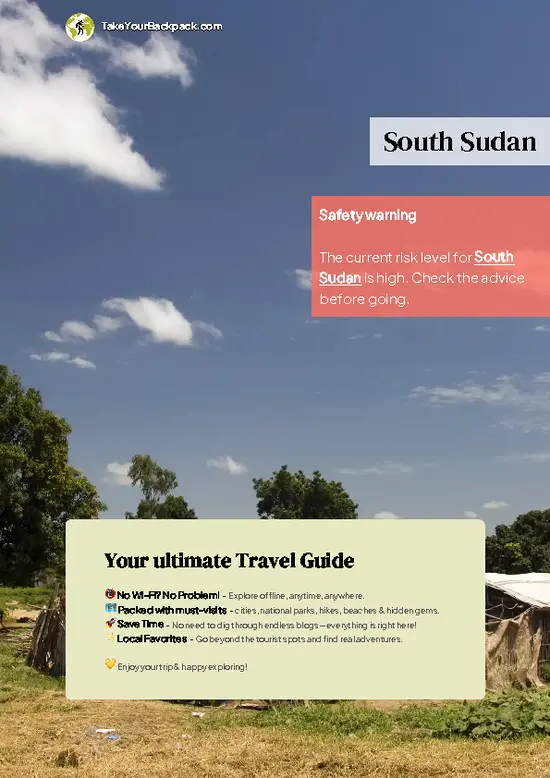
example page 0 from our offline Travel Guide for South Sudan
example page 1 from our offline Travel Guide for South Sudan
example page 2 from our offline Travel Guide for South Sudan
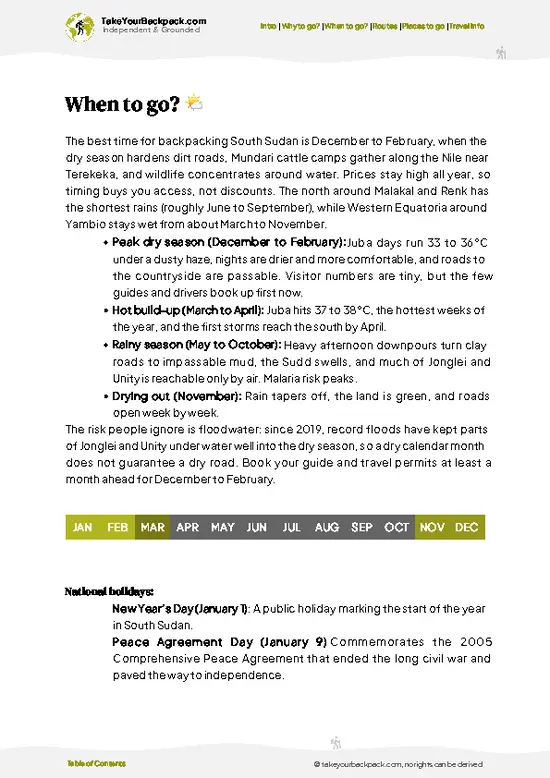
example page 3 from our offline Travel Guide for South Sudan
example page 4 from our offline Travel Guide for South Sudan
example page 5 from our offline Travel Guide for South Sudan
example page 6 from our offline Travel Guide for South Sudan
example page 7 from our offline Travel Guide for South Sudan
Loading the map 🌍
CLICK TO FILTER
cities
towns
landmarks
national parks
hikes
attractions
festivals
regions
SHOW COUNTRY’S BESTSHOW ALL

✨ Why go?
Ranked #18 town in South Sudan
Why visitors keep coming back

Tali works for the traveler who wants Mundari country without the crowds of a known stop. It is a small riverside settlement where daily life centers on cattle, fishing and the road, and that is the draw. You come to watch it, not to tick sights. A short stay of one night, perhaps two, fits best. It suits slow, self-reliant solo travelers and small groups with a Juba guide. Expect cattle herding culture, the White Nile nearby and almost no tourist scene, which means conversation rather than nightlife.

💡 HighlightsDon't-miss highlights and experiences

  1. Tali Post market: The place to see what people here buy and sell, from fish and grain to household goods. Go in the morning when stalls are busiest. Entry is free and an hour is plenty.
  2. The road-side Mundari cattle herds: Long-horned Ankole-Watusi style cattle are driven along the road and paddocks near town, often with herders carrying staffs. Mornings and late afternoons are best. Free to watch from a respectful distance, 30 to 60 minutes.
  3. The White Nile bank: A quiet place to see fishing canoes and river life. Early morning is calmest. Free, around 45 minutes, and ask permission before photographing people.
  4. Local tea stalls along the main road: Sit with a sweet tea and talk to locals, the easiest way to hear how the area lives. Cost is roughly US$0.50 to 1 and an hour passes easily.
Around … read more 👉
  1. Tali Post market: The place to see what people here buy and sell, from fish and grain to household goods. Go in the morning when stalls are busiest. Entry is free and an hour is plenty.
  2. The road-side Mundari cattle herds: Long-horned Ankole-Watusi style cattle are driven along the road and paddocks near town, often with herders carrying staffs. Mornings and late afternoons are best. Free to watch from a respectful distance, 30 to 60 minutes.
  3. The White Nile bank: A quiet place to see fishing canoes and river life. Early morning is calmest. Free, around 45 minutes, and ask permission before photographing people.
  4. Local tea stalls along the main road: Sit with a sweet tea and talk to locals, the easiest way to hear how the area lives. Cost is roughly US$0.50 to 1 and an hour passes easily.
Around Tali, the Mundari cattle camps near Terekeka, Jebel Kujur outside Juba and the Nile waterfront in Juba all make workable day trips with a local driver. All of Tali’s sights together take about half a day.
Spotted a mistake or missing something? Contact us.

🏘️ NeighborhoodsHow different areas shape the experience

Tali is a small, spread-out settlement in Central Equatoria, so think in clusters, not districts. Services are thin, and that shapes how you use it.
  • Main road and market area: This is where you eat and shop. Stalls sell tea, fried dough, beans, grilled fish and basic supplies, because trucks and boda-bodas stop here. Go in the morning when stock is freshest. Walking is easy.
  • Residential outskirts: Compounds, farm plots and quiet paths. Nothing to see and no cafes, so don’t cross them just to sightsee. Ask a local before wandering, as land use is not obvious.
  • Riverside and farmland edges: The best place for a slow look at rural life. Hire a local guide, because paths are unmarked and distances are longer than they look.

⌛️ 1 daySeeing the highlights in 24 hours

A slow rural morning that settles into a river afternoon. 7:00 AM, Tali Post market: Arrive as stalls open, buy tea and watch fish and grain change hands. Walk on foot to the next stop.
9:00 AM, Roadside cattle herds: Follow the road out of the center and watch herders move cattle, keeping a polite distance and asking before taking photos.
11:30 AM, Local tea stall: Rest in the shade, talk with locals and ask about the area. This unlisted pause is often the best part of the day.
2:00 PM, White Nile bank: Walk down to the water, watch canoes and fishing, then head back before dusk with your driver.

🌤️ When to go?Best time to visit Tali

Tali is easiest from December to February, when roads are firm and days run about 32 to 36°C (90 to 97°F). March to October brings rain, 24 to 32°C (75 to 90°F), and mud that can stall vehicles for days. Daylight stays near 12 hours all year. Prices for fuel and transport climb when roads are bad.
  • Dry Season: Reliable travel, dust, and the highest transport demand.
  • Rainy Season: Cheaper but slow, with washed-out tracks.
Carry a buffer of two extra days if you travel in the rains.

source: climatestotravel.comJANJanuary: excellent for travelingFEBFebruary: excellent for travelingMARMarch: highly recommended for travelingAPRApril: good for travelingMAYMay: fair for travelingJUNJune: below average for travelingJULJuly: below average for travelingAUGAugust: below average for travelingSEPSeptember: fair for travelingOCTOctober: fair for travelingNOVNovember: highly recommended for travelingDECDecember: excellent for traveling
when-to-go

✈️ The backpacker research shortcutSouth Sudan Travel Guide

An offline-friendly backpacking guide with optimized travel routes, ranked highlights, transport advice, and the best areas to stay.
example page 0 from our offline Travel Guide for South Sudan
example page 1 from our offline Travel Guide for South Sudan
example page 2 from our offline Travel Guide for South Sudan
example page 3 from our offline Travel Guide for South Sudan
example page 4 from our offline Travel Guide for South Sudan
example page 5 from our offline Travel Guide for South Sudan
example page 6 from our offline Travel Guide for South Sudan
example page 7 from our offline Travel Guide for South Sudan
The digital guide (242 pages) contains:
✅ 57 highlights, ranked by travel appeal
✅ Optimized 5, 10 & 15-day travel routes
✅ Cities, national parks, landmarks, beaches
✅ How to get around
✅ Offline-friendly for travel without Wi-Fi
👉 Click to see all 30+ guide features

📅 Plan smarter in minutes, not weeks
✅ Month by month travel advice
✅ Festivals & national holidays
✅ Budget expectations

🗺️ Go to the right places, skip the overrated ones
✅ Honest pros & cons of destinations
✅ Top hikes, parks & viewpoints
✅ Lesser-known places most travelers miss
✅ Clear “worth it vs skip it” guidance

🛏️ Travel smoothly without rookie mistakes
✅ Best areas to stay
✅ Transport systems explained simply
✅ Common scams & safety advice
✅ SIM cards, money & practical tips

🌍 Understand the country, not just visit it
✅ Culture & traditions
✅ 52 Essential phrases & customs
✅ Festivals worth planning around
✅ Traveler-friendly historical context
✅ Insights that make places more meaningful

📱 Built for real travel conditions
✅ Fully downloadable PDF
✅ Works completely offline
✅ Optimized for phone use
✅ Useful in remote areas & buses
✅ Everything in one place
Stop searching, start planning
Get instant access to your full guide. 30‑day money-back guarantee.
+ Add another guide for just

By proceeding you agree to our terms.
Sent to your inbox immediately after payment • 100% Secure Checkout
Best Backpacking Travel Advisor 2025 tourism awardBest Backpacking
Travel Advisor
2025
What others say about Take Your Backpack Guides:
⭐⭐⭐⭐⭐
Fantastic, amazing amount of information!
⭐⭐⭐⭐⭐
My goodness this is amazing, it's what I've been looking for hats off too you!
⭐⭐⭐⭐⭐
I think this is absolutely BRILLIANT
⭐⭐⭐⭐
Very complete and informative. It's still missing places, but I gotta to commend you
⭐⭐⭐⭐⭐
This is truly amazing, thank you, can't wait to explore it with my kids!
⭐⭐⭐⭐⭐
Awesome resource, thank you!
⭐⭐⭐⭐⭐
This is amazing! Can't wait to explore the ones I haven't seen
⭐⭐⭐⭐
I love this! Well done, great idea.
⭐⭐⭐⭐⭐
Thanks for taking the time to make this gem!
⭐⭐⭐⭐⭐
This might be the best website I've ever seen.
⭐⭐⭐⭐⭐
Congratulations, and thank you so much for your work; it's incredibly valuable.
⭐⭐⭐⭐
In all seriousness I think you did a great job pointing out the important spots
⭐⭐⭐⭐⭐
10/10 very good
⭐⭐⭐⭐⭐
As someone who's only just starting to visit regularly this is awesome, thank you.
⭐⭐⭐⭐
Thank you very much! I'm going to visit my dad, it's going to be very useful!
⭐⭐⭐⭐⭐
This is really cool! We'll be travelling for the first time and this definitely come in handy.
⭐⭐⭐⭐⭐
You are now our minister of culture, congratulations 👨‍💼
⭐⭐⭐⭐⭐
Just wanted to tell you that this is a pearl! Going to follow your recommendations.
⭐⭐⭐⭐⭐
This is so cool. I'll definitely be using the resource for my travels soon.
⭐⭐⭐⭐⭐
This is very impressive! Good work.
⭐⭐⭐⭐⭐
This is an amazing and informative site. Very well done!

🛏️ Where to stay?Where staying makes the most sense

Stay near the main road and market area, where the few guesthouses and basic rooms sit. Beds are limited and there are no true hostels, so expect simple rooms at roughly US$15 to 35 a night. Transport links are best here, since minibuses and boda-bodas pass by, and evenings are livelier and safer with people around. Noise from traffic and generators is normal. The quiet outskirts are calmer but dark at night and far from food, so they suit you only if you have a local host. Book ahead through contacts in Juba, because rooms fill when aid workers are in town.

🚌 Getting aroundMoving around without the hassle

Tali has no bus or train station, so you arrive at the roadside stop on the main road, and the market area is a few minutes on foot. Public transport is informal and runs when vehicles fill, not on a timetable. Roads turn to mud in the rains, which can double travel times. Plan flexible days.
  • Walking: Free, and the only sensible way to cover the central area. Distances are short, but midday heat is heavy, so carry water.
  • Boda-boda: Motorbike taxis cost about US$1 to 3 per local hop. Agree the fare first, because there are no meters, and wear a helmet if the driver has one.
  • Shared minibus or truck: Rides toward Juba cost roughly US$8 to 15 and take 2 to 4 hours in the dry season. They leave when full, usually early morning, so arrive by 7 am.
  • Private hire: A 4x4 with driver costs about US$80 to
… read more 👉
Tali has no bus or train station, so you arrive at the roadside stop on the main road, and the market area is a few minutes on foot. Public transport is informal and runs when vehicles fill, not on a timetable. Roads turn to mud in the rains, which can double travel times. Plan flexible days.
  • Walking: Free, and the only sensible way to cover the central area. Distances are short, but midday heat is heavy, so carry water.
  • Boda-boda: Motorbike taxis cost about US$1 to 3 per local hop. Agree the fare first, because there are no meters, and wear a helmet if the driver has one.
  • Shared minibus or truck: Rides toward Juba cost roughly US$8 to 15 and take 2 to 4 hours in the dry season. They leave when full, usually early morning, so arrive by 7 am.
  • Private hire: A 4x4 with driver costs about US$80 to 150 a day. Pricey, but worth it when roads are poor and you need a reliable return.

👛 Costs (as of 22 October 2026)Typical daily expenses

Tali costs about US$45 to 60 a day for a backpacker, because nearly everything is imported and prices run high.
CategoryBudget RangeLocal Reality
Dorm accommodationUS$15 to 25No dorms exist, so a basic private room is the norm
MealsUS$8 to 15Beans, fish, bread and tea at market stalls
Local transportUS$3 to 8Boda-bodas and shared rides
Basic activities/entry feesUS$5 to 10Guides for village walks, no formal entry fees
MiscellaneousUS$5 to 8Water, phone credit, small gifts
Total Daily BudgetUS$45 to 60Rises sharply in the rains
Eat where locals eat and carry small US dollar notes to avoid poor change.
⚠️ Prices can change and everyone travels differently, so take this as a rough guide. Hope it helps you plan your adventure!

🚌 Day tripsShort trips worth adding

Tali works as a base for rural outings if you hire local help, since public transport is sparse and everything depends on road conditions.Juba: The capital is the realistic big trip, with markets, the Nile riverfront and better food. Allow 2 to 4 hours each way and US$16 to 30 return by shared vehicle. Leave early, and don’t plan to return after dark.
👉 Explore JubaTerekeka: This Nile-side town offers cattle camps and fishing life on the Mundari side. Expect around 1 to 2 hours by hired vehicle and US$40 to 80 shared. Go in the dry months, as tracks flood in the rains. First-timers often go without a local contact, which causes problems.
👉 Explore TerekekaLocal farm villages: Walk to nearby villages with a guide for about US$5 to 10. Visit in the morning, and ask permission before photographing people.

🛡️ SafetyStaying Safe: What Travelers Should Know

Tali is calm in daily life, but South Sudan has real security and road risks, so check current advice before you travel. Carry a copy of your passport and your travel permit, because checkpoints are common and polite patience helps. Ask permission before taking photos, especially of officials or soldiers. Avoid walking after dark, and don’t travel alone on remote roads. Carry cash discreetly, as petty theft happens near markets. Local contacts are your best protection.

FAQFrequently asked questions about Tali

Tali suits travelers who want rural South Sudan more than sights. There is no tourist infrastructure, but you get farm villages, market life and river areas nearby. Budget around US$45 to 60 a day. It is not a quick stop, as the road from Juba takes 2 to 4 hours.
Tali needs about one to two days. One day covers the market and a guided village walk for roughly US$5 to 10. A second day lets you add a trip toward Terekeka, about 1 to 2 hours by hired vehicle. Add buffer days in the rainy season.
Tali can be reached from Juba in 2 to 4 hours, so a day trip is possible in the dry season. Shared transport costs roughly US$8 to 15 each way. Leave by 7 am to be back before dark. In the rains, roads make this unreliable, so stay overnight.
⚠️ Things can change over time, so always validate details locally before you go.

Other South Sudanese towns near Tali

Explore more nearby:

  • Yirol—Lakes cattle camps, wetland birds, fish landings| 80 km away
  • Mundri—Green hills, cassava plots, roadside tea talk| 98 km away
  • Terekeka—Ngundeng cattle, dung-smoke camps, White Nile landings| 118 km away

💡 Not sure where to go next?
Create a personalized itinerary for South Sudan including Tali and the places that fit your trip.

Generate my itinerary

👉 Discover all towns

Or checkout all South Sudan has to offer (think cities, towns, villages, national parks, hikes, beaches, festivals)
Country photo of South Sudan

We 💚 feedbackWhat to keep in mind

The usual mistake is arriving in Tali without a local contact and expecting to sort it out on the spot. Line up a Juba driver or guide beforehand, bring cash and small notes, and ask permission before every photo.

✍️ Help improve this page!
The information on this page is based on in-depth research, insights shared by experienced travelers, and feedback from the local travel community in South Sudan. While every effort is made to keep the information accurate and current, conditions can change — so if you spot anything incorrect or outdated, please get in touch.


🙋‍♂️ Give feedback

👋 Meet the founderWho’s Behind Take Your Backpack?

Johan, backpacker and founder of TakeYourBackpackHi, I’m Johan (Netherlands 🇳🇱), the creator of TakeYourBackpack. Over the past 3 decades, I’ve backpacked through 90+ countries across six continents, gaining extensive experience with independent travel, long-term trips, and overland routes.

This site is built on a combination of firsthand travel experience and carefully curated insights from other backpackers. Many guides are based on places I’ve personally visited, while others bring together tips, observations, and practical advice shared by trusted travelers I’ve met along the way.

The goal is to provide realistic, experience-driven guidance — not generic itineraries — so you can explore destinations with better context, clearer expectations, and more confidence.