×

South Sudan🇸🇸 | townsTerekekaNile banks, fishing camps, Mundari cattle | things to do and best time to go

Explore PiborExplore Nimule

Backpacking in Terekeka
🌟 Highlighttown ranked #5
By Johan Kruseman 🇳🇱 | Updated September 3, 2026

If you crave nightlife, polished cafés, or a parade of backpacker hostels, Terekeka will frustrate you. But that’s exactly why it works for the right traveler. Terekeka sits on the west bank of the White Nile, north of Juba, in South Sudan’s Central Equatoria. The town itself is dusty, honest, and slow—more crossroads than destination, but that’s its charm. Expect a few market stalls, the earthy scent of woodsmoke, and the low hum of river life. It’s a springboard for glimpses of Mundari cattle culture and river landscapes, not a place for urban thrills. Getting here means rough roads and patience; you’ll need private transport or a rare local minibus. Social life is quiet—no hostels, just basic guesthouses and the occasional shared meal with locals or aid workers. Costs are low, but so is comfort. Compared to Juba’s chaos, Terekeka feels stripped-back and real, a pause button on the usual travel circuit.

Discover everything you want to know in the 📖 South Sudan Travel Guide.
Safety warning

The current risk level for South Sudan is high. Check the advice before going.


Get your South Sudan guide
68 ranked highlights, routes & tips, works offline (270 pages)
Loading the map 🌍
CLICK TO FILTER
cities
towns
landmarks
national parks
hikes
attractions
festivals
regions
SHOW COUNTRY’S BESTSHOW ALL

✨ Why go?
Ranked #5 town in South Sudan
Why Terekeka should be on your travel list

Terekeka serves as a gateway for backpackers exploring South Sudan’s rugged beauty. Its walkable streets make it easy to navigate, while small-scale hostels offer a cozy place to recharge. The local food scene is a treat; try the grilled fish from nearby rivers or hearty stews that warm you up after a day of hiking. Many travelers stay a few days, soaking in the friendly atmosphere and connecting with locals. It’s perfect for slow travelers and solo adventurers looking for a blend of culture and nature. Terekeka isn’t just a stop; it’s a chance to immerse yourself in the heart of South Sudan.
Want to include Terekeka in your South Sudan route?
Create a personalized South Sudan itinerary that includes Terekeka and the places that fit your trip — based on your travel style, budget, and available time. Get your route in seconds.

Generate my trip

💡 HighlightsTop highlights of Terekeka

  • Terekeka Central Market — The town’s beating heart: fresh produce, dried fish, household goods and the odd carved trinket. Best in the morning when traders haggle; a great place to watch daily life and pick up cheap snacks. Bring small notes and patience for bargaining.
  • Mundari Cattle Market — Where cattle aren’t just livestock but currency and status. Visiting on market day lets you see Mundari herders trading, judging animals and swapping news. It’s noisy, dusty and utterly revealing of local culture—watch from the edges unless you’re invited in.
  • White Nile riverfront and ferry landing — A low-key riverfront with landing stages, fishermen, and the small car/people ferry that links Terekeka to the far bank. Great for river photography, sunset walks, or arranging a short boat ride downriver
read more 👉
  • Terekeka Central Market — The town’s beating heart: fresh produce, dried fish, household goods and the odd carved trinket. Best in the morning when traders haggle; a great place to watch daily life and pick up cheap snacks. Bring small notes and patience for bargaining.
  • Mundari Cattle Market — Where cattle aren’t just livestock but currency and status. Visiting on market day lets you see Mundari herders trading, judging animals and swapping news. It’s noisy, dusty and utterly revealing of local culture—watch from the edges unless you’re invited in.
  • White Nile riverfront and ferry landing — A low-key riverfront with landing stages, fishermen, and the small car/people ferry that links Terekeka to the far bank. Great for river photography, sunset walks, or arranging a short boat ride downriver with local fishers.
  • Mundari chiefs’ compounds (with permission) — Traditional chiefs still hold court here. If you can be introduced—ask a local fixer—you’ll see ceremonial dress, hear oral histories and may witness stick-fighting demonstrations or cattle-related rituals. Respect and prior permission are essential.
  • Terekeka County Administration Compound — Not glamorous, but useful: where local government business happens and where you can get permits, information, or introductions. Spending time here gives insight into post-conflict administration and local political life.
  • Main parish churches and community centres — Churches in Terekeka double as social hubs: Sunday services, community meetings, aid distributions and schools. Attending a service or visiting a parish-run program is a straightforward way to meet locals and see community resilience in action.
  • Terekeka health clinic / clinic compound — Clinics run by missions or NGOs are open, visitable, and an important slice of town life. They show how healthcare is delivered here and, if you’re volunteering or curious, offer a path to meaningful contact—just check visiting rules first.
  • Local artisan and blacksmith quarter — A small cluster of workshops where blades, spear heads, simple tools and beadwork are still made by hand. Watching a smith at work or buying a locally made bracelet supports livelihoods and is an easy cultural exchange.
  • The community sports field and event ground — Where football matches, public meetings and traditional contests happen. Catching a local match or a communal event gives a raw, cheerful look at everyday life—arrive early and bring coins for small snacks sold by vendors.
  • Riverfront smokehouses and fishing clusters — Along the Nile in town you can watch fish smoked and prepared for market, meet fishing families and learn about seasonal river ecology. It’s sensory, immediate and a good slice of how the river sustains Terekeka.
A few real day-trip options just outside town: the Mundari grazing plains and cattle camps, nearby White Nile islands and seasonal floodplains for birding and boat trips, and the road back to Juba for museums, larger markets and transport connections.
Spotted a mistake or missing something? Contact us.

🏘️ NeighborhoodsWhere things are and how it's laid out

Terekeka offers a unique blend of culture and community, perfect for the adventurous backpacker.

Central Market Area: This bustling hub is where the action is. The vibrant atmosphere is filled with local vendors selling everything from fresh produce to handmade crafts. It’s walkable, making it easy to explore on foot. Prices are generally low, perfect for budget travelers. The nightlife is lively here, with local music often spilling into the streets.

Residential Quarter: A quieter option, this area provides a more authentic experience of daily life in Terekeka. It’s less touristy, allowing for deeper connections with locals. While transport options are limited, it’s a peaceful spot for longer stays. You’ll find cozy guesthouses that offer a glimpse into local culture.

Riverfront District: … read more 👉
Terekeka offers a unique blend of culture and community, perfect for the adventurous backpacker.

Central Market Area: This bustling hub is where the action is. The vibrant atmosphere is filled with local vendors selling everything from fresh produce to handmade crafts. It’s walkable, making it easy to explore on foot. Prices are generally low, perfect for budget travelers. The nightlife is lively here, with local music often spilling into the streets.

Residential Quarter: A quieter option, this area provides a more authentic experience of daily life in Terekeka. It’s less touristy, allowing for deeper connections with locals. While transport options are limited, it’s a peaceful spot for longer stays. You’ll find cozy guesthouses that offer a glimpse into local culture.

Riverfront District: Ideal for those seeking scenic views and relaxation. The river offers a serene backdrop, perfect for unwinding after a day of exploration. While nightlife is minimal, the area is great for short stays, with easy access to transport for day trips.

⌛️ 1 dayHow to make the most of one day

Terekeka, a town in South Sudan, pulses with the rhythm of daily life, where the air is thick with the scent of local spices and the sounds of laughter echo through the streets. Start your morning at the bustling market, where vendors sell fresh produce and handmade crafts. Engage with locals; their stories are as rich as the colors of their wares.

In the afternoon, head to the banks of the Nile. The water glistens under the sun, offering a perfect backdrop for reflection. Rent a small boat and glide along the river, soaking in the serene landscape. This isn’t just a scenic ride; it’s a chance to connect with the heart of South Sudan.

As evening falls, wander through the vibrant neighborhoods, where the aroma of grilled meat fills the air. Stop by a local eatery for a taste of traditional … read more 👉
Terekeka, a town in South Sudan, pulses with the rhythm of daily life, where the air is thick with the scent of local spices and the sounds of laughter echo through the streets. Start your morning at the bustling market, where vendors sell fresh produce and handmade crafts. Engage with locals; their stories are as rich as the colors of their wares.

In the afternoon, head to the banks of the Nile. The water glistens under the sun, offering a perfect backdrop for reflection. Rent a small boat and glide along the river, soaking in the serene landscape. This isn’t just a scenic ride; it’s a chance to connect with the heart of South Sudan.

As evening falls, wander through the vibrant neighborhoods, where the aroma of grilled meat fills the air. Stop by a local eatery for a taste of traditional dishes. The warmth of the community will make you feel at home. Terekeka may not be on every tourist map, but its spirit is a treasure worth discovering.
Turn your Terekeka visit into an South Sudan adventure
Build a complete South Sudan route with Terekeka, hidden gems, must-see destinations, and realistic travel times included.

Generate my trip

🌤️ When to go?Weather, crowds, and seasonal trade-offs


  • Topic: Weather – Terekeka’s climate swings between a scorching dry season and a brief, intense rainy season. The dry months from November to February offer clearer skies and manageable heat, around 25–35°C (77–95°F), making trekking and exploring less grueling.

  • Topic: Temperature – Daytime highs can hit 35°C (95°F) in the dry season but drop sharply at night, sometimes below 15°C (59°F). The rainy season (June to September) brings humidity and unpredictable downpours, turning trails into slippery challenges.

  • Topic: Daylight Hours – Near the equator, daylight is steady year-round, roughly 12 hours. This consistency means you can plan hikes and village visits without worrying about early sunsets cutting your day short.

  • Topic: Crowds – Terekeka isn’t a tourist hotspot, so crowds are
read more 👉

  • Topic: Weather – Terekeka’s climate swings between a scorching dry season and a brief, intense rainy season. The dry months from November to February offer clearer skies and manageable heat, around 25–35°C (77–95°F), making trekking and exploring less grueling.

  • Topic: Temperature – Daytime highs can hit 35°C (95°F) in the dry season but drop sharply at night, sometimes below 15°C (59°F). The rainy season (June to September) brings humidity and unpredictable downpours, turning trails into slippery challenges.

  • Topic: Daylight Hours – Near the equator, daylight is steady year-round, roughly 12 hours. This consistency means you can plan hikes and village visits without worrying about early sunsets cutting your day short.

  • Topic: Crowds – Terekeka isn’t a tourist hotspot, so crowds are minimal year-round. Visiting during the dry season means you’ll mostly share the space with locals, offering a more authentic, unhurried experience.

  • Topic: Seasonal Activities – The dry season aligns with local festivals and cattle markets, vibrant with color and sound. The rainy season, while lush, limits outdoor events and can isolate the town due to muddy roads.

  • Topic: Price Fluctuations – Prices for guides and accommodations tend to rise slightly in the dry season when travel is easier and demand peaks, but the premium is worth the comfort and access.


Pro-tip: Aim for late November to early February—when the air is dry, the light is sharp, and the town’s rhythms pulse with life—so your sweat feels earned, not wasted.


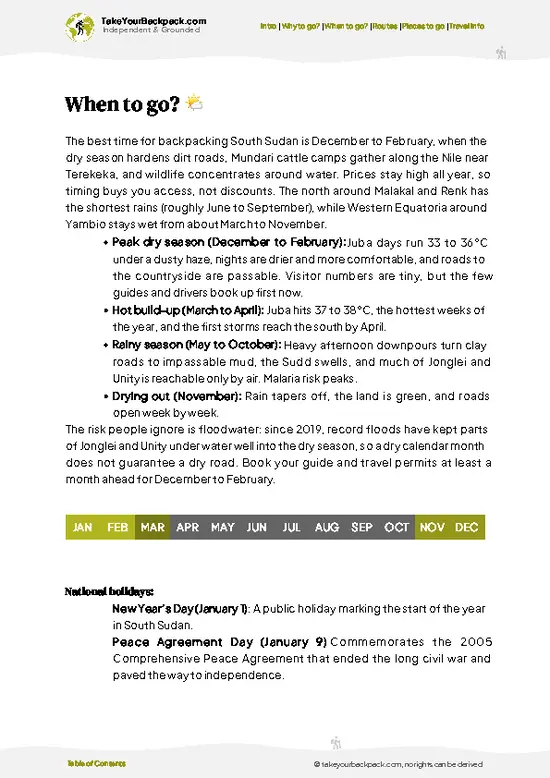
source: climatestotravel.comJANJanuary: excellent for travelingFEBFebruary: excellent for travelingMARMarch: highly recommended for travelingAPRApril: good for travelingMAYMay: fair for travelingJUNJune: fair for travelingJULJuly: below average for travelingAUGAugust: below average for travelingSEPSeptember: fair for travelingOCTOctober: good for travelingNOVNovember: excellent for travelingDECDecember: excellent for traveling
when-to-go

✈️ The backpacker research shortcutSouth Sudan Travel Guide

An offline-friendly backpacking guide with optimized travel routes, ranked highlights, transport advice, and the best areas to stay.
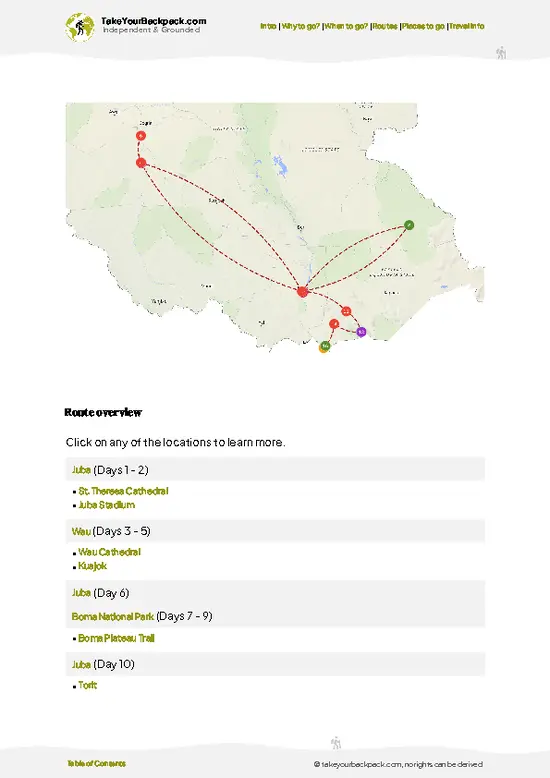
example page 0 from our offline Travel Guide for South Sudan
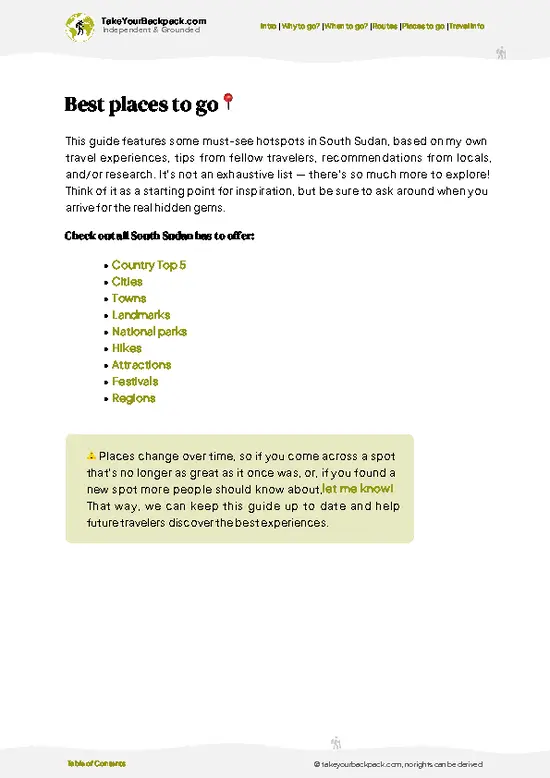
example page 1 from our offline Travel Guide for South Sudan
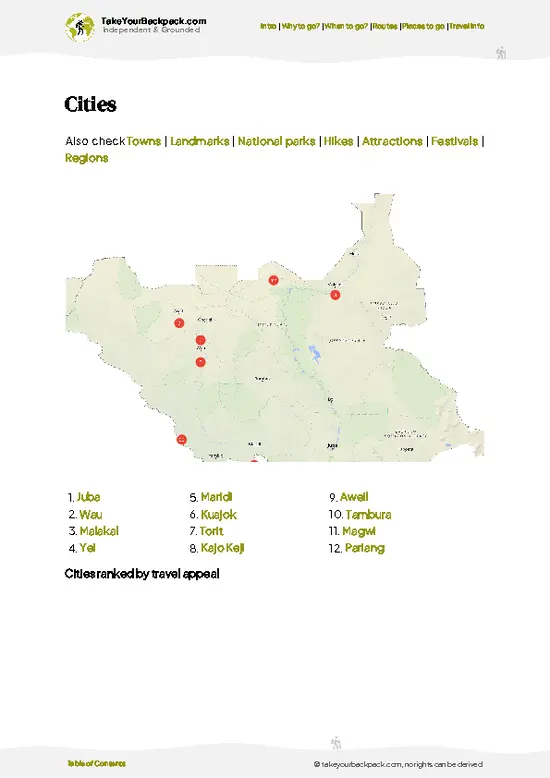
example page 2 from our offline Travel Guide for South Sudan
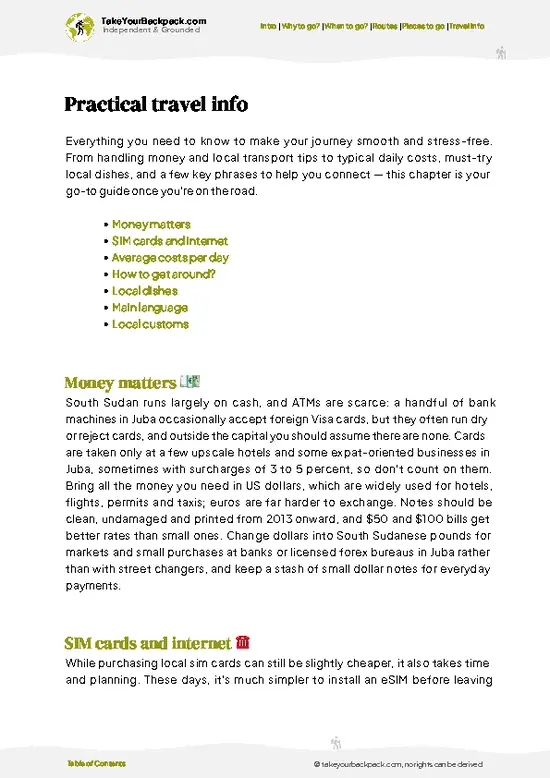
example page 3 from our offline Travel Guide for South Sudan
example page 4 from our offline Travel Guide for South Sudan
example page 5 from our offline Travel Guide for South Sudan
example page 6 from our offline Travel Guide for South Sudan
example page 7 from our offline Travel Guide for South Sudan
The digital guide (270 pages) contains:
68 highlights, ranked by travel appeal
Optimized 5, 10 & 15-day travel routes
Cities, national parks, landmarks, beaches
How to get around
Offline-friendly for travel without Wi-Fi
👉 Click to see all 30+ guide features

📅 Plan smarter in minutes, not weeks
Month by month travel advice
Festivals & national holidays
Budget expectations

🗺️ Go to the right places, skip the overrated ones
Honest pros & cons of destinations
Top hikes, parks & viewpoints
Lesser-known places most travelers miss
Clear “worth it vs skip it” guidance

🛏️ Travel smoothly without rookie mistakes
Best areas to stay
Transport systems explained simply
Common scams & safety advice
SIM cards, money & practical tips

🌍 Understand the country, not just visit it
Culture & traditions
52 Essential phrases & customs
Festivals worth planning around
Traveler-friendly historical context
Insights that make places more meaningful

📱 Built for real travel conditions
Fully downloadable PDF
Works completely offline
Optimized for phone use
Useful in remote areas & buses
Everything in one place
Save weeks of stressful planning
Get instant access to your full guide. 30‑day money-back guarantee.
+ Add another guide for just US$7.80

By proceeding you agree to our terms.
Sent to your inbox immediately after payment • 100% Secure Checkout
Best Backpacking Travel Advisor 2025 tourism awardBest Backpacking
Travel Advisor
2025
What others say about Take Your Backpack Guides:
⭐⭐⭐⭐⭐
Fantastic, amazing amount of information!
⭐⭐⭐⭐⭐
My goodness this is amazing, it's what I've been looking for hats off too you!
⭐⭐⭐⭐⭐
I think this is absolutely BRILLIANT
⭐⭐⭐⭐
Very complete and informative. It's still missing places, but I gotta to commend you
⭐⭐⭐⭐⭐
This is truly amazing, thank you, can't wait to explore it with my kids!
⭐⭐⭐⭐⭐
Awesome resource, thank you!
⭐⭐⭐⭐⭐
This is amazing! Can't wait to explore the ones I haven't seen
⭐⭐⭐⭐
I love this! Well done, great idea.
⭐⭐⭐⭐⭐
Thanks for taking the time to make this gem!
⭐⭐⭐⭐⭐
This might be the best website I've ever seen.
⭐⭐⭐⭐⭐
Congratulations, and thank you so much for your work; it's incredibly valuable.
⭐⭐⭐⭐
In all seriousness I think you did a great job pointing out the important spots
⭐⭐⭐⭐⭐
10/10 very good
⭐⭐⭐⭐⭐
As someone who's only just starting to visit regularly this is awesome, thank you.
⭐⭐⭐⭐
Thank you very much! I'm going to visit my dad, it's going to be very useful!
⭐⭐⭐⭐⭐
This is really cool! We'll be travelling for the first time and this definitely come in handy.
⭐⭐⭐⭐⭐
You are now our minister of culture, congratulations 👨‍💼
⭐⭐⭐⭐⭐
Just wanted to tell you that this is a pearl! Going to follow your recommendations.
⭐⭐⭐⭐⭐
This is so cool. I'll definitely be using the resource for my travels soon.
⭐⭐⭐⭐⭐
This is very impressive! Good work.
⭐⭐⭐⭐⭐
This is an amazing and informative site. Very well done!

🛏️ Where to stay?Best areas and accommodation options

In Terekeka, the best spot for backpackers is the town center near the market area. This neighborhood hums with life from dawn, the scent of fresh produce mixing with the dusty earth. It’s where locals gather, making it easier to strike up conversations and catch the rhythm of daily life. Safety here feels tangible—people know each other, and the presence of vendors and small shops means there’s always a watchful eye.

Compared to the quieter outskirts, this area offers a social pulse that solo travelers crave. Hostels are sparse but tend to cluster around this hub, providing basic but reliable … read more 👉
In Terekeka, the best spot for backpackers is the town center near the market area. This neighborhood hums with life from dawn, the scent of fresh produce mixing with the dusty earth. It’s where locals gather, making it easier to strike up conversations and catch the rhythm of daily life. Safety here feels tangible—people know each other, and the presence of vendors and small shops means there’s always a watchful eye.

Compared to the quieter outskirts, this area offers a social pulse that solo travelers crave. Hostels are sparse but tend to cluster around this hub, providing basic but reliable shelter. Staying here means you’re not just passing through; you’re stepping into the town’s heartbeat, where the light shifts with the chatter and the air carries stories worth hearing.

🚌 Getting aroundHow to get from A to B

Terekeka moves at the pace of the Nile’s slow current—unhurried but deliberate, where time bends around the rhythms of daily life rather than strict schedules. The sun casts long shadows on dusty streets, and the scent of earth and smoke lingers in the air, grounding you in a place where intuition guides your steps more than timetables. Here, transit isn’t about precision; it’s about reading the flow, catching the right moment, and embracing the unpredictability that makes the journey part of the story.


  • Walking: The heart of Terekeka is best explored on foot. Streets are compact and unpaved, so walking lets you soak in the raw textures—the cracked mud walls, the chatter of market vendors, the occasional bleat of goats. It’s free, flexible, and the only way to truly feel the pulse of the
read more 👉
Terekeka moves at the pace of the Nile’s slow current—unhurried but deliberate, where time bends around the rhythms of daily life rather than strict schedules. The sun casts long shadows on dusty streets, and the scent of earth and smoke lingers in the air, grounding you in a place where intuition guides your steps more than timetables. Here, transit isn’t about precision; it’s about reading the flow, catching the right moment, and embracing the unpredictability that makes the journey part of the story.


  • Walking: The heart of Terekeka is best explored on foot. Streets are compact and unpaved, so walking lets you soak in the raw textures—the cracked mud walls, the chatter of market vendors, the occasional bleat of goats. It’s free, flexible, and the only way to truly feel the pulse of the town.


  • Local Boda-Bodas (Motorcycle Taxis): These are the quickest way to cover short distances or escape the midday heat. Expect to negotiate fares upfront—usually around 100-200 SSP per ride. They start early, around 6 a.m., and run until dusk, but reliability depends on the driver’s mood and the road conditions.


  • Shared Minibuses: For trips to nearby villages or the Nile’s edge, minibuses offer a budget-friendly option. They leave when full rather than on a fixed schedule, so patience is key. Fares hover around 300 SSP, and rides can be bumpy but provide a window into local life.


  • Boat Crossings: If your route involves crossing the Nile, small wooden boats operate on demand. They’re slow and weather-dependent but essential for reaching spots inaccessible by road. Prices vary but expect to pay about 500 SSP for a crossing, with departures tied to daylight hours.

👛 Costs (as of 3 September 2026)Typical daily expenses

Backpacking in Terekeka, South Sudan, is a raw experience where costs are modest but the infrastructure is basic. Here’s what you can expect to spend daily as an independent traveler navigating this frontier town.
  • Dorm Accommodation: Options are extremely limited and often informal. Expect to pay around $5 to $10 USD per night for a basic shared room or a simple guesthouse bed. Facilities are sparse, so bring your own sleeping gear if possible.
  • Meals: Food is straightforward and local—think staple grains, fresh vegetables, and occasional meat. Street food or small local eateries will cost about $3 to $7 USD per day. Western-style meals or imported goods are rare and pricey.
  • Local Transport: Transport options are minimal and mostly consist of shared taxis or motorbike rides. Budget roughly
read more 👉
Backpacking in Terekeka, South Sudan, is a raw experience where costs are modest but the infrastructure is basic. Here’s what you can expect to spend daily as an independent traveler navigating this frontier town.
  • Dorm Accommodation: Options are extremely limited and often informal. Expect to pay around $5 to $10 USD per night for a basic shared room or a simple guesthouse bed. Facilities are sparse, so bring your own sleeping gear if possible.
  • Meals: Food is straightforward and local—think staple grains, fresh vegetables, and occasional meat. Street food or small local eateries will cost about $3 to $7 USD per day. Western-style meals or imported goods are rare and pricey.
  • Local Transport: Transport options are minimal and mostly consist of shared taxis or motorbike rides. Budget roughly $1 to $3 USD per trip within town. Walking is often the best way to get around, given the compact size and rough roads.
  • Basic Activities/Entry Fees: Organized tourist activities are nearly nonexistent. Any cultural visits or local markets are free or may ask for a small donation around $1 to $2 USD. The real cost here is time and patience rather than money.
  • Miscellaneous Expenses: This includes bottled water, phone credit, and small incidentals. Water is essential and can cost about $0.50 to $1 USD per liter. Phone credit for local SIM cards is cheap, around $2 to $5 USD for a decent data package.

Overall, plan on spending between $10 and $25 USD per day in Terekeka. The low costs reflect the town’s limited services and infrastructure, but this budget unlocks a genuine, unvarnished experience of South Sudan’s local life.
⚠️ Prices can change and everyone travels differently, so take this as a rough guide. Hope it helps you plan your adventure!

🚌 Day tripsBest day trips from Terekeka

Terekeka is an ideal launchpad for exploring the raw beauty of South Sudan. With its vibrant local culture and stunning landscapes, you can dive into unforgettable day trips that reveal the heart of this region.

Trip to the Nile
A short drive from Terekeka, the Nile offers a refreshing escape. Spend your day fishing or simply soaking in the sun on its banks. The water glistens under the midday sun, and the air is filled with the scent of earth and river. Bring a packed lunch and enjoy it while watching local fishermen at work. The trip takes about an hour, and you can do it for under $10 if you share transport. Just remember, the best time is during the dry season when the river is calm. A common mistake? Forgetting sunscreen; the sun here is relentless.


Trip to Juba
Just an hour … read more 👉
Terekeka is an ideal launchpad for exploring the raw beauty of South Sudan. With its vibrant local culture and stunning landscapes, you can dive into unforgettable day trips that reveal the heart of this region.

Trip to the Nile
A short drive from Terekeka, the Nile offers a refreshing escape. Spend your day fishing or simply soaking in the sun on its banks. The water glistens under the midday sun, and the air is filled with the scent of earth and river. Bring a packed lunch and enjoy it while watching local fishermen at work. The trip takes about an hour, and you can do it for under $10 if you share transport. Just remember, the best time is during the dry season when the river is calm. A common mistake? Forgetting sunscreen; the sun here is relentless.


Trip to Juba
Just an hour away, Juba is a bustling city that contrasts with Terekeka’s tranquility. Explore the local markets, where the aroma of spices fills the air, and the colors of fresh produce pop against the dusty streets. You can grab a local meal for around $5. The vibrant atmosphere is best experienced in the morning. Many first-timers miss the chance to chat with locals; don’t be shy—engage!
👉 Explore Juba

Trip to the Kidepo Valley
For a taste of wildlife, head to Kidepo Valley National Park. It’s a longer haul—about three hours—but the payoff is worth it. Picture vast savannahs dotted with acacia trees and the chance to spot elephants and lions. Entry fees are around $40, but you can share costs with fellow travelers. The dry season is prime for wildlife viewing, but be prepared for a bumpy ride. A rookie mistake? Underestimating the time it takes to get there; leave early!
👉 Explore Kidepo Valley
Want to know what more South Sudan offers?
The South Sudan Travel Guide describes 68 highlights, from cities to national parks, from beaches to hikes

Get the Travel Guide -

🛡️ SafetyScams, Hazards, and Annoyances

Terekeka is generally safe, but awareness is key. Stick to well-lit areas after dark; the streets can feel empty, and a little caution goes a long way. If you’re solo, blend in—avoid flashy gear and keep your phone tucked away.

Watch for friendly faces who might offer unsolicited help; they could be looking for a tip. Local markets can be bustling, so keep an eye on your belongings. Engage with locals, but trust your instincts. A calm demeanor and a friendly smile can open doors, but always stay alert.

FAQCommon questions from travelers

Terekeka is primarily a stopover rather than a destination for extended visits due to limited tourist infrastructure and attractions. It serves as a key transit point on the road between Juba and other parts of South Sudan. Visitors usually pass through rather than stay long.
One day is generally sufficient to experience Terekeka, mainly to rest or explore local markets briefly. There are no major tourist sites requiring multiple days. Travelers often use it as a break before continuing their journey.
Yes, Terekeka can be visited as a day trip from Juba, which is about 75 kilometers away. The drive takes around 2 to 3 hours each way on rough roads, making a day trip feasible but somewhat tiring.
⚠️ Things can change over time, so always validate details locally before you go.

Other South Sudanese towns near Terekeka

Explore more nearby:

  • Lafon—hilltop villages, Lopit communities, seasonal migration| 91 km away
  • Tali—rural outpost, Mundari settlements, open grassland| 118 km away
  • Lainya—forest corridor, smallholder farms, roadside villages| 155 km away

💡 Not sure where to go next?
Create a personalized itinerary for South Sudan including Terekeka and the places that fit your trip.

Generate my itinerary

👉 Discover all towns

Or checkout all South Sudan has to offer (think cities, towns, villages, national parks, hikes, beaches, festivals)
Country photo of South Sudan

We 💚 feedbackKey takeaways before you go

Terekeka pulses with a raw, vibrant energy. The laughter of children echoes as you wander through bustling markets, where the scent of grilled fish mingles with spices. Just be ready for the heat; it’s relentless. But trust me, the warmth of the people makes it all worthwhile.

✍️ Help improve this page!
The information on this page is based on in-depth research, insights shared by experienced travelers, and feedback from the local travel community in South Sudan. While every effort is made to keep the information accurate and current, conditions can change — so if you spot anything incorrect or outdated, please get in touch.


🙋‍♂️ Give feedback

👋 Meet the founderWho’s Behind Take Your Backpack?

Johan, backpacker and founder of TakeYourBackpackHi, I’m Johan (Netherlands 🇳🇱), the creator of TakeYourBackpack. Over the past decade, I’ve backpacked through 80+ countries across six continents, gaining extensive experience with independent travel, long-term trips, and overland routes.

This site is built on a combination of firsthand travel experience and carefully curated insights from other backpackers. Many guides are based on places I’ve personally visited, while others bring together tips, observations, and practical advice shared by trusted travelers I’ve met along the way.

The goal is to provide realistic, experience-driven guidance — not generic itineraries — so you can explore destinations with better context, clearer expectations, and more confidence.

Get full country guide •
Instant download • 68 highlights • Full Offline guide