×

Sri Lanka🇱🇰 | townsKalpitiya
peninsula, kite surfing, dolphin watching | things to do and best time to go

Explore KokkadicholaiExplore Sigiriya

Backpacking in Kalpitiya
🌟 Highlighttown ranked #9
By Johan Kruseman 🇳🇱 | Updated May 4, 2026

Most people picture Kalpitiya as a full-on beach resort strip; in reality it’s a wind-blown sand spit and lagoon town with long, quiet stretches and pockets of development, not a polished seaside city. It sits on Sri Lanka’s northwest coast, on the peninsula that closes off Puttalam Lagoon, a few hours north of Negombo and Colombo. For backpackers, Kalpitiya is more launchpad than landmark: you come for kitesurfing, dolphin trips, and raw, empty beaches, not for museums or nightlife. The town itself is dusty, low-key, and very local, with a few chill guesthouses and kite camps where it’s easy to meet other travelers over rice and curry or a sunset beer. Buses are cheap but slow; tuk-tuks or scooters make life easier once you’re here. Compared with Negombo or Hikkaduwa, Kalpitiya feels wilder, less convenient, and more weather-dependent, but that’s exactly why it hooks people who like their coastlines a bit rough around the edges.

Discover everything you want to know in the 📖 Sri Lanka Travel Guide.
Loading the map 🌍
CLICK TO FILTER
city
town
village
unique site
national park
hike
beach
attraction
festival
region
SHOW COUNTRY‘S BESTSHOW ALL

✨ Why go?
Ranked #9 town in Sri Lanka
Reasons people choose to visit here

Kalpitiya draws backpackers for its convenience as a base for hikes and beaches. The walkable streets invite exploration, with small-scale hostels and guesthouses offering a cozy, friendly vibe. You’ll find local food experiences that burst with flavor, perfect for fueling your adventures. Most travelers linger a few days, soaking in the laid-back atmosphere that suits slow travelers and solo adventurers alike. It’s not a party hub, but the social scene is warm and welcoming, making it easy to connect with fellow wanderers. If you’re after a blend of relaxation and exploration, Kalpitiya is a solid choice.
Get the complete Travel Guide for Sri Lanka
Everything organized for offline planning — routes, highlights, costs & tips

See what’s inside 👉

Get the Travel Guide -

💡 HighlightsEssential experiences to have while visiting Kalpitiya

  • Kalpitiya Jetty & Harbour — The real pulse of the town: fishermen loading boats, morning dolphin- and whale-watch boats leaving from here, and a great spot to watch everyday life unfold on the water.
  • Kalpitiya Fort ruins — Low, weathered ramparts and scattered colonial-era stones that whisper the town’s Portuguese/Dutch past; small, walkable and worth visiting for history and harbour views.
  • Early-morning Fish Market (landing) — Arrive at dawn to see the catch being hauled, traded and sorted; a sensory, very local experience and the best place to taste how Kalpitiya lives off the sea.
  • Kalpitiya Lagoon mangrove channels — Short guided boat or kayak trips into the mangroves right off the town give wildlife, quiet waterways and a real sense of the ecosystem that supports local fishing.
  • Kite-surfing
read more 👉
  • Kalpitiya Jetty & Harbour — The real pulse of the town: fishermen loading boats, morning dolphin- and whale-watch boats leaving from here, and a great spot to watch everyday life unfold on the water.
  • Kalpitiya Fort ruins — Low, weathered ramparts and scattered colonial-era stones that whisper the town’s Portuguese/Dutch past; small, walkable and worth visiting for history and harbour views.
  • Early-morning Fish Market (landing) — Arrive at dawn to see the catch being hauled, traded and sorted; a sensory, very local experience and the best place to taste how Kalpitiya lives off the sea.
  • Kalpitiya Lagoon mangrove channels — Short guided boat or kayak trips into the mangroves right off the town give wildlife, quiet waterways and a real sense of the ecosystem that supports local fishing.
  • Kite-surfing stretch (Dutch Bay) — World-class wind and flat lagoon close to town; even if you’re not learning to kite, watching riders skim the water is uniquely Kalpitiya and oddly addictive.
  • Traditional boatyards & coastal workshops — See outrigger canoes, skiffs and repair crews up close; watching boats being built or patched is hands-on cultural insight, not a museum piece.
  • Local fishing villages and stilt-fishing spots — Walk the shoreline lanes to meet fishermen, watch traditional methods (including stilt fishing where practiced) and get a feel for everyday community life.
  • Shorebird and mudflat watching — The tidal flats and lagoon edges near town host flamingos, herons and migratory waders; take a short guided walk or a late-afternoon stakeout for good bird action.
  • Old cemetery and colonial tombstones — Small, often overlooked stones and inscriptions that map settlers, traders and the island’s layered history — quiet, tangible history within town limits.
  • Waterfront seafood stalls and family-run eateries — Fresh, cheap seafood served the local way; a few plates here tell you more about Kalpitiya than any glossy restaurant menu.
A few easy day trips from Kalpitiya: the Bar Reef marine sanctuary for snorkeling/diving, Wilpattu National Park for wildlife safaris, and the nearby Puttalam salt-pan and lagoon areas for birding and scenic drives.
Spotted a mistake or missing something? Contact us.

🏘️ NeighborhoodsHow different areas shape the experience

Kalpitiya is a laid-back coastal town that offers a mix of adventure and relaxation, perfect for backpackers looking to soak in Sri Lanka’s charm.

Kalpitiya Town: The heart of the action, this area buzzes with local markets and eateries. It’s walkable, making it easy to explore on foot. Budget-friendly guesthouses line the streets, ideal for short stays. Nightlife is low-key, with a few bars offering live music.

Bar Reef: A quieter stretch, perfect for those seeking peace. The beach here is stunning, and the vibe is relaxed. Accommodations range from budget to mid-range. It’s a bit further from town, so transport is necessary, but the serene atmosphere makes it worth it for longer stays.

Dutch Bay: This area combines history with beach life. The remnants of colonial architecture add character. … read more 👉
Kalpitiya is a laid-back coastal town that offers a mix of adventure and relaxation, perfect for backpackers looking to soak in Sri Lanka’s charm.

Kalpitiya Town: The heart of the action, this area buzzes with local markets and eateries. It’s walkable, making it easy to explore on foot. Budget-friendly guesthouses line the streets, ideal for short stays. Nightlife is low-key, with a few bars offering live music.

Bar Reef: A quieter stretch, perfect for those seeking peace. The beach here is stunning, and the vibe is relaxed. Accommodations range from budget to mid-range. It’s a bit further from town, so transport is necessary, but the serene atmosphere makes it worth it for longer stays.

Dutch Bay: This area combines history with beach life. The remnants of colonial architecture add character. It’s walkable, with a few cafes and shops. Ideal for a short visit, but the charm may keep you longer.

⌛️ 1 day1-day itinerary for Kalpitiya

Kalpitiya, a coastal town in Sri Lanka, is a blend of serene beaches and vibrant local culture, perfect for a day of exploration. Start your morning with a stroll along the sandy shores of Kalpitiya Beach, where the salty breeze mingles with the scent of fresh coconut. Grab a breakfast of hoppers from a local vendor; the crispy edges and soft center are a delightful way to fuel up.

In the afternoon, head to the nearby Kalpitiya Lagoon. Rent a kayak and paddle through the mangroves, where the chirping of birds and rustling leaves create a soothing soundtrack. This spot is often overlooked by tourists, but it offers a glimpse into the area’s natural beauty and wildlife.

As evening approaches, visit the local fish market. The vibrant colors and lively banter of fishermen create an authentic … read more 👉
Kalpitiya, a coastal town in Sri Lanka, is a blend of serene beaches and vibrant local culture, perfect for a day of exploration. Start your morning with a stroll along the sandy shores of Kalpitiya Beach, where the salty breeze mingles with the scent of fresh coconut. Grab a breakfast of hoppers from a local vendor; the crispy edges and soft center are a delightful way to fuel up.

In the afternoon, head to the nearby Kalpitiya Lagoon. Rent a kayak and paddle through the mangroves, where the chirping of birds and rustling leaves create a soothing soundtrack. This spot is often overlooked by tourists, but it offers a glimpse into the area’s natural beauty and wildlife.

As evening approaches, visit the local fish market. The vibrant colors and lively banter of fishermen create an authentic atmosphere. Wrap up your day with a sunset at Dutch Bay, where the sky ignites in hues of orange and pink, a perfect backdrop to reflect on your adventures. Each moment in Kalpitiya feels earned, a rewarding blend of nature and culture.
Build the Right Itinerary
Use the Sri Lanka Travel Guide’s 5, 10 & 15-day routes as a starting point to plan a trip that actually works on the ground.

Get the Travel Guide -

🌤️ When to go?Choosing the right time of year


  • Weather: Kalpitiya’s dry season runs from May to September, offering clear skies and calm seas perfect for kite surfing and dolphin spotting. The monsoon hits from October to January, bringing heavy rains and rough waters that can dampen outdoor plans.

  • Temperature: Expect daytime highs around 30-33°C (86-91°F) during the dry months, with nights cooling to a comfortable 24-26°C (75-79°F). The monsoon season feels cooler but more humid, which can sap your energy on long treks.

  • Daylight Hours: Roughly 11 to 12 hours of daylight year-round, but the dry season’s consistent sun means you get reliable light for early starts and late afternoons on the beach.

  • Crowds: Peak backpacker season aligns with the dry months, especially July and August, so expect more fellow travelers but also a livelier
read more 👉

  • Weather: Kalpitiya’s dry season runs from May to September, offering clear skies and calm seas perfect for kite surfing and dolphin spotting. The monsoon hits from October to January, bringing heavy rains and rough waters that can dampen outdoor plans.

  • Temperature: Expect daytime highs around 30-33°C (86-91°F) during the dry months, with nights cooling to a comfortable 24-26°C (75-79°F). The monsoon season feels cooler but more humid, which can sap your energy on long treks.

  • Daylight Hours: Roughly 11 to 12 hours of daylight year-round, but the dry season’s consistent sun means you get reliable light for early starts and late afternoons on the beach.

  • Crowds: Peak backpacker season aligns with the dry months, especially July and August, so expect more fellow travelers but also a livelier vibe and better social opportunities.

  • Seasonal Activities: Kite surfing peaks in the dry season when steady winds blow. Whale and dolphin watching tours run best from November to April, overlapping with some wetter months but still doable on clear days.

  • Price Fluctuations: Accommodation and tours cost more during the dry season’s peak months. The monsoon season offers lower prices but fewer options and less predictable weather.


Pro-tip: Aim for late May or early September—dry enough for adventure, fewer crowds, and better deals. It’s the sweet spot where Kalpitiya’s raw charm feels earned, not rushed.


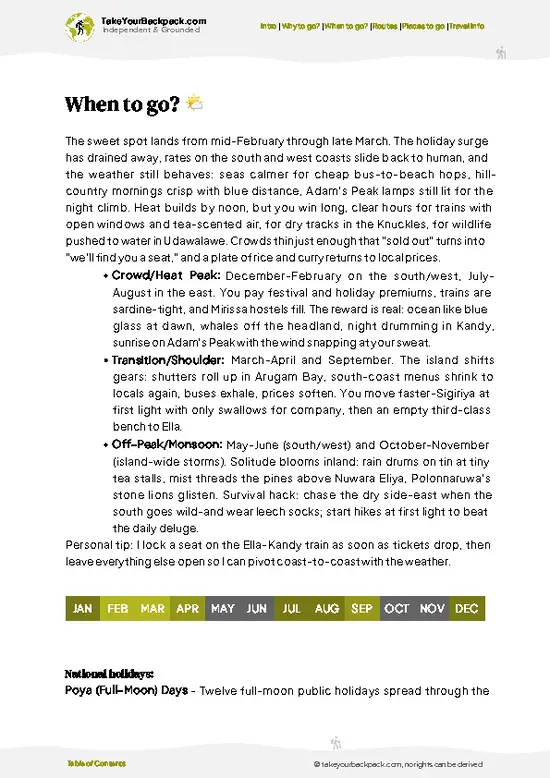
source: climatestotravel.comJANJanuary: fair for travelingFEBFebruary: highly recommended for travelingMARMarch: highly recommended for travelingAPRApril: good for travelingMAYMay: highly recommended for travelingJUNJune: excellent for travelingJULJuly: excellent for travelingAUGAugust: excellent for travelingSEPSeptember: highly recommended for travelingOCTOctober: fair for travelingNOVNovember: good for travelingDECDecember: fair for traveling
when-to-go

✈️ The backpacker research shortcutSri Lanka Travel Guide

An offline-friendly backpacking guide with optimized travel routes, ranked highlights, transport advice, and the best areas to stay.
example page 0 from our offline Travel Guide for Sri Lankaexample page 1 from our offline Travel Guide for Sri Lankaexample page 2 from our offline Travel Guide for Sri Lankaexample page 3 from our offline Travel Guide for Sri Lankaexample page 4 from our offline Travel Guide for Sri Lankaexample page 5 from our offline Travel Guide for Sri Lanka
The digital guide (400 pages) contains:
129 highlights, ranked by travel appeal
Optimized 5, 10 & 15-day travel routes
Best neighborhoods to stay
How to get around
Offline-friendly for travel without Wi-Fi
👉 See all 30+ guide features

📅 Plan smarter in minutes, not weeks
Month by month travel advice
Festivals & national holidays
Budget expectations

🗺️ Go to the right places, skip the overrated ones
Honest pros & cons of destinations
Top hikes, parks & viewpoints
Lesser-known places most travelers miss
Clear “worth it vs skip it” guidance

🛏️ Travel smoothly without rookie mistakes
Best areas to stay
Transport systems explained simply
Common scams & safety advice
SIM cards, money & practical tips

🌍 Understand the country, not just visit it
Culture & traditions
52 Essential phrases & customs
Festivals worth planning around
Traveler-friendly historical context
Insights that make places more meaningful

📱 Built for real travel conditions
Fully downloadable PDF
Works completely offline
Optimized for phone use
Useful in remote areas & buses
Everything in one place
Save weeks of stressful planning
Get instant access to the full guide directly. 30-day money-back guarantee.


Sent to your inbox immediately after payment • 100% Secure Checkout
Best Backpacking Travel Advisor 2025 tourism awardBest Backpacking
Travel Advisor
2025
What others say about Take Your Backpack Guides:
⭐⭐⭐⭐⭐
Fantastic, amazing amount of information!
⭐⭐⭐⭐⭐
My goodness this is amazing, it's what I've been looking for hats off too you!
⭐⭐⭐⭐⭐
I think this is absolutely BRILLIANT
⭐⭐⭐⭐
Very complete and informative. It's still missing places, but I gotta to commend you
⭐⭐⭐⭐⭐
This is truly amazing, thank you, can't wait to explore it with my kids!
⭐⭐⭐⭐⭐
Awesome resource, thank you!
⭐⭐⭐⭐⭐
This is amazing! Can't wait to explore the ones I haven't seen
⭐⭐⭐⭐
I love this! Well done, great idea.
⭐⭐⭐⭐⭐
Thanks for taking the time to make this gem!
⭐⭐⭐⭐⭐
This might be the best website I've ever seen.
⭐⭐⭐⭐⭐
Congratulations, and thank you so much for your work; it's incredibly valuable.
⭐⭐⭐⭐
In all seriousness I think you did a great job pointing out the important spots
⭐⭐⭐⭐⭐
10/10 very good
⭐⭐⭐⭐⭐
As someone who's only just starting to visit regularly this is awesome, thank you.
⭐⭐⭐⭐
Thank you very much! I'm going to visit my dad, it's going to be very useful!
⭐⭐⭐⭐⭐
This is really cool! We'll be travelling for the first time and this definitely come in handy.
⭐⭐⭐⭐⭐
You are now our minister of culture, congratulations 👨‍💼
⭐⭐⭐⭐⭐
Just wanted to tell you that this is a pearl! Going to follow your recommendations.
⭐⭐⭐⭐⭐
This is so cool. I'll definitely be using the resource for my travels soon.
⭐⭐⭐⭐⭐
This is very impressive! Good work.
⭐⭐⭐⭐⭐
This is an amazing and informative site. Very well done!

🛏️ Where to stay?How to pick the right area

Kalpitiya’s real backpacker heartbeat pulses strongest around the town center and the nearby Dutch Bay area. Staying here means you’re close to the bustling fish markets, local eateries, and the ferry point to the islands—places where the air carries the sharp tang of salt and fresh catch, and the chatter of fishermen blends with the calls of seabirds. This zone is compact, safe, and naturally social, making it easy to strike up conversations with fellow travelers or locals over a cup of strong Ceylon tea.

Hostels and guesthouses cluster here, offering budget-friendly beds with a laid-back vibe … read more 👉
Kalpitiya’s real backpacker heartbeat pulses strongest around the town center and the nearby Dutch Bay area. Staying here means you’re close to the bustling fish markets, local eateries, and the ferry point to the islands—places where the air carries the sharp tang of salt and fresh catch, and the chatter of fishermen blends with the calls of seabirds. This zone is compact, safe, and naturally social, making it easy to strike up conversations with fellow travelers or locals over a cup of strong Ceylon tea.

Hostels and guesthouses cluster here, offering budget-friendly beds with a laid-back vibe that encourages mingling without the pretense. Unlike the more remote beachside resorts, this area keeps you plugged into the town’s rhythm, where the streets glow under warm street lamps and the scent of spices drifts from roadside stalls. For solo backpackers, it’s a sweet spot: secure enough to wander after dark, lively enough to never feel alone, and perfectly positioned to explore Kalpitiya’s kite-surfing spots and lagoon tours without needing a car.

🚌 Getting aroundHow to get from A to B

Kalpitiya moves at the pace of the tides—unhurried, with a rhythm that feels more like a slow dance than a race. The sun slants low in the late afternoon, casting long shadows over dusty streets where the scent of salt and spices hangs thick in the air. Here, schedules are more a suggestion than a rule. You’ll find that the best way to get around is to embrace the local flow: a mix of waiting patiently, reading the mood of the moment, and jumping on the next available ride. The town’s transport options reflect this laid-back vibe, but with a little insider know-how, you can navigate efficiently without losing the charm of the place.


  • Walking: Kalpitiya’s compact center is perfect for exploring on foot. The streets are dusty but flat, and walking lets you soak in the salty breeze and catch
read more 👉
Kalpitiya moves at the pace of the tides—unhurried, with a rhythm that feels more like a slow dance than a race. The sun slants low in the late afternoon, casting long shadows over dusty streets where the scent of salt and spices hangs thick in the air. Here, schedules are more a suggestion than a rule. You’ll find that the best way to get around is to embrace the local flow: a mix of waiting patiently, reading the mood of the moment, and jumping on the next available ride. The town’s transport options reflect this laid-back vibe, but with a little insider know-how, you can navigate efficiently without losing the charm of the place.


  • Walking: Kalpitiya’s compact center is perfect for exploring on foot. The streets are dusty but flat, and walking lets you soak in the salty breeze and catch the vibrant street life up close. It’s free, flexible, and the best way to discover tucked-away cafés or local markets.


  • Local Buses: Buses run roughly from 6:00 AM to 6:00 PM, with fares around 30-50 LKR. They’re slow and often crowded, but they connect Kalpitiya to nearby villages and the busier town of Puttalam. If you’re patient and want to travel like a local, this is your cheapest option.


  • Tuk-Tuks: These three-wheeled wonders are everywhere and run on a loose schedule—just flag one down when you need it. Expect to pay about 200-400 LKR for short trips within town. Negotiating the fare upfront is essential; they’re faster than buses but can be bumpy on uneven roads.


  • Motorbike Rentals: For about 1,000-1,500 LKR per day, renting a motorbike gives you freedom to explore the peninsula’s beaches and lagoons at your own pace. Roads can be rough, so a bit of riding experience helps. Early morning rides offer cooler air and softer light, perfect for photography or spotting dolphins offshore.


  • Boat Transfers: If you’re heading to the islands or dolphin-watching tours, small boats depart from the harbor starting around 7:00 AM. Prices vary but expect to pay 1,000-2,000 LKR for a round trip. The sea breeze and open water views make this a memorable way to travel, but check weather conditions—rough seas can delay departures.

👛 Costs (as of 25 November 2025)Money, prices, and spending tips

Backpacking in Kalpitiya, Sri Lanka, offers a mix of laid-back coastal vibes and budget-friendly options that let you stretch your dollar without feeling like you’re missing out. Here’s what you’re realistically looking at day-to-day.
  • Dorm Accommodation: Hostels and guesthouses here typically run between $8 and $15 per night. You’ll find simple, clean dorms with basic amenities—think mosquito nets, ceiling fans, and a breeze carrying the salty air through open windows. It’s not luxury, but it’s comfortable enough to recharge after a day in the sun.
  • Meals: Local eateries serve up fresh seafood, rice, and curry plates for about $2 to $5 per meal. Street food snacks like samosas or fresh fruit cost under a dollar. If you opt for a Western-style café or a smoothie bowl spot, expect to pay closer
read more 👉
Backpacking in Kalpitiya, Sri Lanka, offers a mix of laid-back coastal vibes and budget-friendly options that let you stretch your dollar without feeling like you’re missing out. Here’s what you’re realistically looking at day-to-day.
  • Dorm Accommodation: Hostels and guesthouses here typically run between $8 and $15 per night. You’ll find simple, clean dorms with basic amenities—think mosquito nets, ceiling fans, and a breeze carrying the salty air through open windows. It’s not luxury, but it’s comfortable enough to recharge after a day in the sun.
  • Meals: Local eateries serve up fresh seafood, rice, and curry plates for about $2 to $5 per meal. Street food snacks like samosas or fresh fruit cost under a dollar. If you opt for a Western-style café or a smoothie bowl spot, expect to pay closer to $6 or $7. The flavors are bold, the spices fragrant, and the portions generous.
  • Local Transport: Tuk-tuks are the go-to for short hops around town or to nearby beaches, usually costing $1 to $3 depending on distance. Renting a bicycle for the day is about $5, which is a great way to explore the flat, open landscape at your own pace, soaking in the salty breeze and the distant calls of fishermen.
  • Basic Activities/Entry Fees: Kite surfing lessons, the big draw here, start around $40 for a beginner’s session, but if you’re just watching or strolling the lagoon, entry is free. Visiting local temples or small nature reserves might cost $1 to $3. The real cost is in time and sweat if you’re hiking or exploring remote spots.
  • Miscellaneous Expenses: Bottled water, snacks, and small souvenirs usually add up to $2 to $5 daily. Wi-Fi is often included in accommodations, but if you need a local SIM card with data, expect to pay around $5 to $10 for a decent package.

All told, you’re looking at roughly $20 to $40 per day to cover the essentials without cutting corners. Kalpitiya’s charm is in its simplicity—the light shifts slowly over the lagoon, the air smells of salt and coconut, and the pace invites you to slow down. Spending a bit more on a kite surfing lesson or a fresh seafood meal feels like a reward earned by the easy, affordable rhythm of daily life here.


source: srilanka.travel
⚠️ Prices can change and everyone travels differently, so take this as a rough guide. Hope it helps you plan your adventure!

🚌 Day tripsEasy escapes and nearby places

Kalpitiya is a backpacker’s dream, perfectly positioned for unforgettable day trips that blend adventure with local culture.

Wilpattu National Park
Just a couple of hours from Kalpitiya, this park is a wildlife lover’s paradise. You’ll want to rise early to catch the morning light filtering through the trees. The chance to spot leopards, sloth bears, and a variety of birds makes the bumpy ride worthwhile. Expect to pay around $30 for a jeep safari, plus park fees. The dry season from February to October is ideal, but be prepared for the heat. A common mistake? Skipping the early morning tours; wildlife is most active then.
👉 Explore Wilpattu National Park

Negombo Beach
A quick trip south, Negombo offers a laid-back beach vibe with a lively fish market. Spend your morning wandering … read more 👉
Kalpitiya is a backpacker’s dream, perfectly positioned for unforgettable day trips that blend adventure with local culture.

Wilpattu National Park
Just a couple of hours from Kalpitiya, this park is a wildlife lover’s paradise. You’ll want to rise early to catch the morning light filtering through the trees. The chance to spot leopards, sloth bears, and a variety of birds makes the bumpy ride worthwhile. Expect to pay around $30 for a jeep safari, plus park fees. The dry season from February to October is ideal, but be prepared for the heat. A common mistake? Skipping the early morning tours; wildlife is most active then.
👉 Explore Wilpattu National Park

Negombo Beach
A quick trip south, Negombo offers a laid-back beach vibe with a lively fish market. Spend your morning wandering the market, inhaling the salty air mixed with the scent of fresh catch. You can grab a bus for about $2, and the journey takes just over an hour. The best time to visit is during the dry season, from December to March. Many first-timers miss out on the local eateries; don’t just stick to tourist spots—dive into a local seafood curry!
👉 Explore Negombo Beach

Kalpitiya Lagoon
Right on your doorstep, the lagoon is perfect for kayaking or kite surfing. Rent a kayak for around $10 and paddle through the calm waters, surrounded by mangroves. The best time to go is during the windy season from May to October, when the lagoon comes alive with kite surfers. A common pitfall? Not checking the wind conditions beforehand; it can make or break your experience.
Want to know what more Sri Lanka offers?
The Sri Lanka Travel Guide describes 129 highlights, from cities to national parks, from beaches to hikes

Get the Travel Guide -

🛡️ SafetyScams, Hazards, and Annoyances

Kalpitiya is generally safe, but a few practical tips can enhance your experience. Stay aware near the bus station and markets, where pickpockets might lurk. If you’re solo, avoid wandering too far after dark; stick to well-lit areas and populated streets.

Watch for common scams, like inflated prices for boat rides or tours. Always negotiate beforehand. Carry yourself confidently, and don’t hesitate to ask locals for advice—they’re often more than willing to help. This way, you’ll navigate the town smoothly and soak in its laid-back charm.

Other Sri Lankan towns near Kalpitiya

Explore more nearby:

  • Kalkuda—east coast bay, calm waters, reef snorkeling| 13 km away
  • Anuradhapura—sacred city, ancient tanks, monumental stupas| 71 km away
  • Chilaw—shrimp farms, Hindu festivals, coastal lagoons| 73 km away

👉 Discover all towns

Or checkout all Sri Lanka has to offer (think cities, towns, villages, national parks, hikes, beaches, festivals)
Country photo of Sri Lanka

We 💚 feedbackWhat to keep in mind

Kalpitiya’s charm lies in its untouched beaches and vibrant marine life. Picture yourself diving into crystal-clear waters, surrounded by colorful fish. But be ready for the heat; the sun can be relentless. Hydrate often, and embrace the slower pace—it’s part of the magic.

✈️ When did I visit Sri Lanka?
In December 2025 I visited Sri Lanka.

✍️ Help improve this page!
The information on this page is based on my own backpacking experience in Sri Lanka, supplemented with up-to-date research and feedback from other travelers. Travel details can change, so if you notice anything outdated or incomplete, feel free to let me know.


🙋‍♂️ Give feedback

👋 Meet the founderWho’s Behind Take Your Backpack?

Johan, backpacker and founder of TakeYourBackpackHi, I’m Johan (Netherlands 🇳🇱), the creator of TakeYourBackpack. Over the past decade, I’ve backpacked through 80+ countries across six continents, gaining extensive experience with independent travel, long-term trips, and overland routes.

This site is built on a combination of firsthand travel experience and carefully curated insights from other backpackers. Many guides are based on places I’ve personally visited, while others bring together tips, observations, and practical advice shared by trusted travelers I’ve met along the way.

The goal is to provide realistic, experience-driven guidance — not generic itineraries — so you can explore destinations with better context, clearer expectations, and more confidence.

Get Full Country Guide |
Instant download • 129 highlights • Full Offline guide