×

Sri Lanka🇱🇰 | best townsEssential 10 towns to Explore in Sri Lanka

Towns in Sri Lanka are working places first and postcards second: tuk-tuk horns, the smell of frying curry leaves and diesel, and fruit stalls stacked with king coconuts and rambutan. Distances are short but roads are slow, so the island rewards choosing a character. The hill country is cool, damp and misty, with tea-factory steam and chilly guesthouse nights. The south coast is salt air, surf and the most tourists. The Cultural Triangle is hot, dusty and ruin-heavy. The north and east are quieter and cheaper. For independent travel, guesthouse beds cost US$10 to 30 and trains cost pocket change.

By Johan Kruseman 🇳🇱 | Updated October 19, 2026
Explore the best villages in Sri Lanka

Why go?What Makes Them Special

Sri Lanka packs unusual variety into an island roughly 440 kilometers long, which is why its towns feel so different from one another. Two monsoons mean one coast is baking while the other is soaked, so there is almost always a dry corner to base in. Over two thousand years of Buddhist kingdoms, followed by Portuguese, Dutch and British rule, left sacred cities, sea forts and colonial hill stations in a single small country. Temple drums at dawn, the sour-sweet smell of tea withering, and the sticky heat of lowland markets all sit a few hours apart.

Travelers should know that infrastructure is improving but still slow. Main roads wind and clog behind buses, so even 100 kilometers can take three to four hours. The famous hill-country railway is scenic but crowded, and reserved seats on popular … read more 👉
Sri Lanka packs unusual variety into an island roughly 440 kilometers long, which is why its towns feel so different from one another. Two monsoons mean one coast is baking while the other is soaked, so there is almost always a dry corner to base in. Over two thousand years of Buddhist kingdoms, followed by Portuguese, Dutch and British rule, left sacred cities, sea forts and colonial hill stations in a single small country. Temple drums at dawn, the sour-sweet smell of tea withering, and the sticky heat of lowland markets all sit a few hours apart.

Travelers should know that infrastructure is improving but still slow. Main roads wind and clog behind buses, so even 100 kilometers can take three to four hours. The famous hill-country railway is scenic but crowded, and reserved seats on popular routes sell out weeks ahead. Towns are compact and walkable, with cheap tuk-tuks for the rest, but pavements are patchy and humidity is heavy at sea level. Cash still matters outside tourist hubs. Dress modestly around temples, and expect to remove shoes and hat. Come for variety and close distances, not for speed.
How the List Was Created
The list of best towns in Sri Lanka is created based on charm, local culture, atmosphere, hidden gems, and visitor appeal. If you feel a town is missing in this list, please let us know.

When to go?Seasonal Guide to Visiting

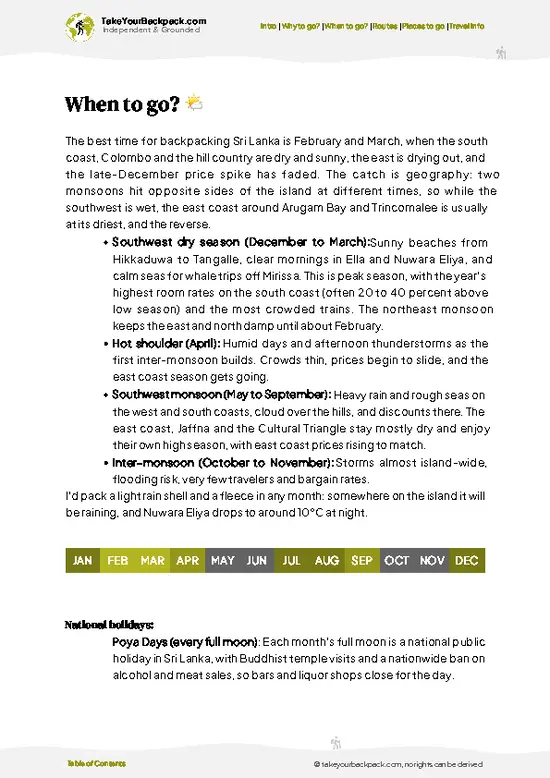
Best months for towns: The best months depend on the coast: December to March suits the south and west coasts and the hill country, while May to September suits the east coast and the Cultural Triangle. In the dry season the south has bright mornings, calm seas and 28 to 32°C heat, and hill towns have clear views with cool nights of 8 to 15°C.

Shoulder seasons and rain: April and October to November are the shoulder months, with steamy afternoons and thunderstorms that arrive almost on schedule. The southwest monsoon from May to September brings heavy rain to the south and west and to the hill country, with rough seas and gray skies. The northeast monsoon from October to January soaks the north and east. Even in wet months rain often comes in short, loud bursts.

Crowds and prices: Peak season … read more 👉
Best months for towns: The best months depend on the coast: December to March suits the south and west coasts and the hill country, while May to September suits the east coast and the Cultural Triangle. In the dry season the south has bright mornings, calm seas and 28 to 32°C heat, and hill towns have clear views with cool nights of 8 to 15°C.

Shoulder seasons and rain: April and October to November are the shoulder months, with steamy afternoons and thunderstorms that arrive almost on schedule. The southwest monsoon from May to September brings heavy rain to the south and west and to the hill country, with rough seas and gray skies. The northeast monsoon from October to January soaks the north and east. Even in wet months rain often comes in short, loud bursts.

Crowds and prices: Peak season from December to February brings full trains, packed buses and guesthouse rates that can run 30 to 50 percent above low-season prices. Book trains and hill-country rooms well ahead then. In June and July, bargains are easier to find, but the dust and heat inland can reach 35°C. Poson in June and the Kandy Esala Perahera in July or August fill towns with pilgrims and pack rooms.

town hoppingPlanning Your Route Efficiently

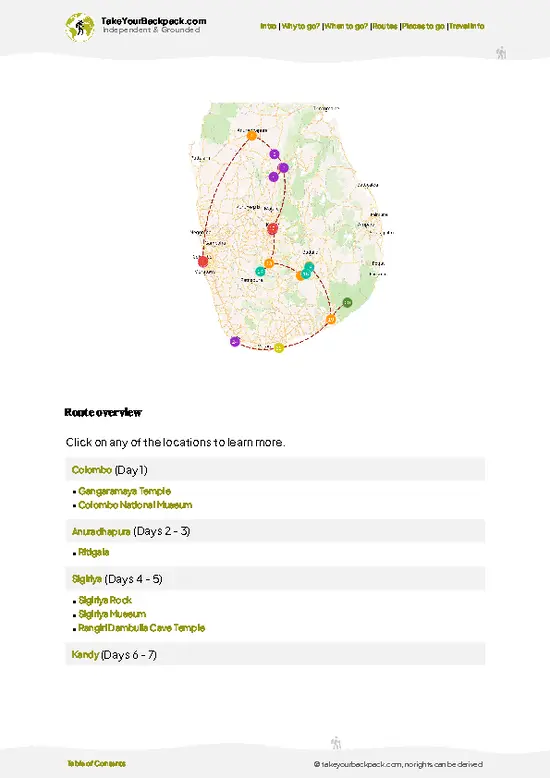
How long to allow: A trip combining several towns in Sri Lanka works best over 10 to 14 days, which leaves room for slow transport. The island divides into the hill country, the Cultural Triangle and the south coast, and each cluster takes two to four days. Travel in a loop rather than a line, starting from Colombo or the airport at Negombo, going inland to the ruins, climbing into the hills, then descending to the beach.

Moving between regions: Allow three to four hours for most links between clusters, and six to eight for the longest. Trains between Kandy and Ella run about six to seven hours with open doors, diesel fumes and tea sellers hopping on at each station. Buses are cheaper and faster on the highways but loud, hot and cramped. Expressways link Colombo to Galle in roughly 1.5 hours. … read more 👉
How long to allow: A trip combining several towns in Sri Lanka works best over 10 to 14 days, which leaves room for slow transport. The island divides into the hill country, the Cultural Triangle and the south coast, and each cluster takes two to four days. Travel in a loop rather than a line, starting from Colombo or the airport at Negombo, going inland to the ruins, climbing into the hills, then descending to the beach.

Moving between regions: Allow three to four hours for most links between clusters, and six to eight for the longest. Trains between Kandy and Ella run about six to seven hours with open doors, diesel fumes and tea sellers hopping on at each station. Buses are cheaper and faster on the highways but loud, hot and cramped. Expressways link Colombo to Galle in roughly 1.5 hours. Hired drivers cost about US$50 to 80 a day.

Common planning mistakes: The biggest mistake is judging distance by the map. Trying a different town every night wastes days in vehicles, so stay two nights minimum per stop. Another is leaving the scenic train unbooked in high season. Choose reserved seats, or leave early for unreserved carriages. Packing the monsoon coast into the wrong months also spoils plans, so match the region to the season.

The ListTop towns of Sri Lanka

1 Ella

railway viaduct, mountain trails, guesthouses

Hike to viewpoints, cross iconic bridges, and unwind in a hill town popular with independent travelers.

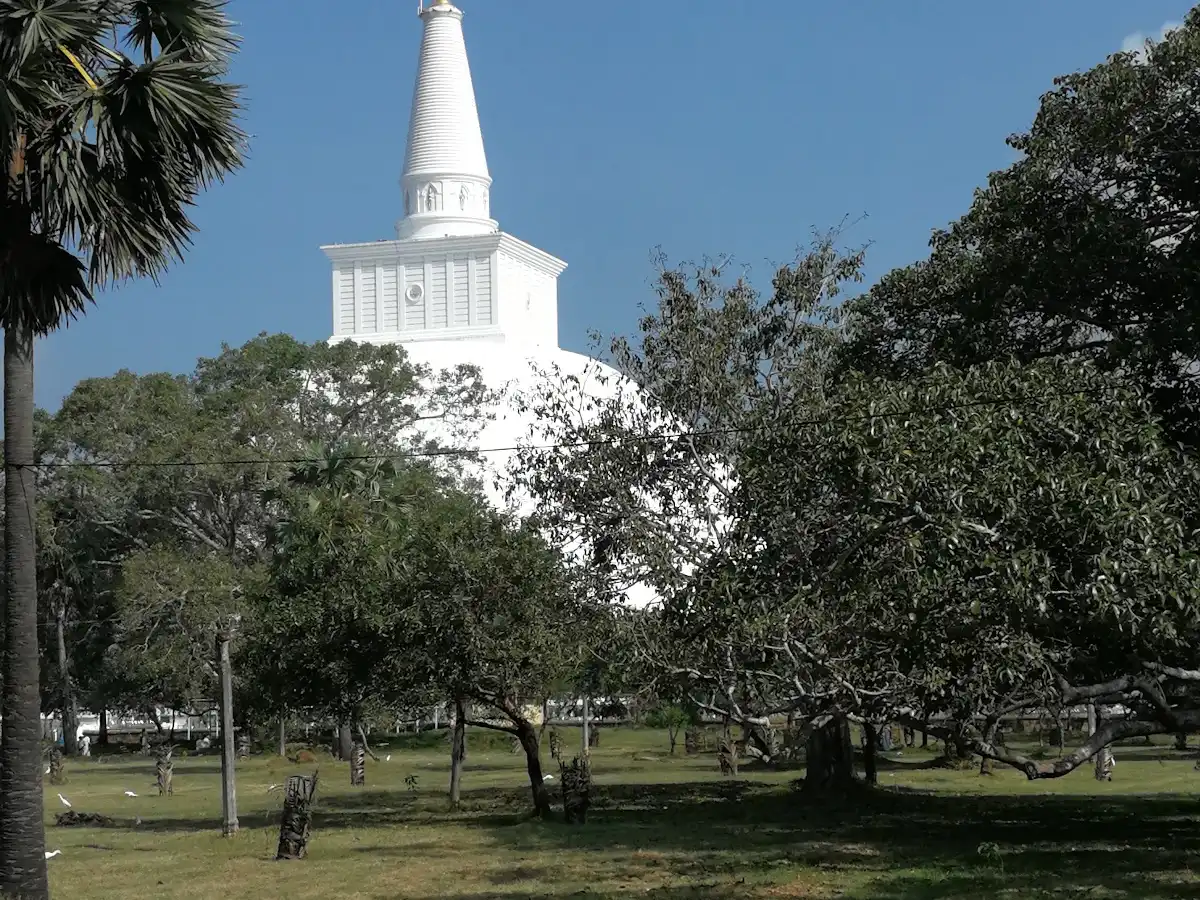
2 Anuradhapura

sacred city, ancient tanks, monumental stupas

Cycle between ruins and reservoirs in a living city where Buddhist rituals and archaeological sites coexist.

sri-lanka-city-anuradhapura
© Google |

3 Sigiriya

ancient rock fortress, frescoes, panoramic summit

Climb a monumental rock to see centuries-old murals and survey the surrounding plains, where history and landscape merge in every direction.

4 Jaffna

Tamil culture, colonial fort, peninsula markets

Experience a distinct northern identity through local cuisine, vibrant temples, and a city shaped by both resilience and tradition.

5 Dambulla

cave temples, golden Buddha, roadside produce

Visit richly painted cave shrines and pause at fruit stalls along the main road, where daily life and pilgrimage intersect.

6 Kataragama

multi-faith shrines, festival grounds, riverbank rituals

Observe pilgrims from across the island as they gather for nightly ceremonies and seasonal processions along the Menik Ganga.

7 Bandarawela

tea estates, cool climate, colonial bungalows

Wake to misty hills, wander among tea bushes, and stay in old planter homes that echo the rhythms of the highlands.

8 Haputale

ridge-top views, cloud forests, tea worker villages

Wake to sweeping panoramas and walk through misty forests, where tea estates and small settlements dot the hills.

9 Kalpitiya

peninsula, kite surfing, dolphin watching

Spend days on sandbars or out at sea, where wind sports and marine life draw travelers to the northwest coast.

10 Tissamaharama

ancient stupas, lakeside walks, safari base

Set out early for wildlife parks or linger by the reservoir, where Buddhist monuments and birdlife shape the local rhythm.

11 Ambalangoda

mask workshops, puppet makers, coastal lagoons

Discover a center for ritual arts, where artisans carve and paint in workshops close to the sea and inland waterways.

12 Beruwala

Muslim quarter, fish market, lighthouse point

Sample fresh seafood, visit mosques, and watch boats depart from a coastal town with deep trading roots.

13 Mannar

arid landscapes, baobab trees, causeway views

Cross a long causeway to find windswept sands, rare trees, and a town marked by isolation and migratory birdlife.

14 Hatton

tea factories, Adam’s Peak access, misty valleys

Base yourself in a working town where early mornings mean mountain ascents and afternoons bring the scent of drying tea.

15 Wadduwa

palm-fringed beach, toddy tapping, coconut groves

Relax on quiet sands, observe traditional coconut harvesting, and explore a coastline shaped by local livelihoods.

16 Chilaw

shrimp farms, Hindu festivals, coastal lagoons

Witness processions at temple festivals, watch fishermen tend to nets, and explore the quiet edges of brackish lagoons.

17 Balangoda

mountain plateau, prehistoric caves, roadside stalls

Stop in a highland town known for ancient human sites and fresh produce, with views stretching across the Sabaragamuwa hills.

18 Wellawaya

lowland crossroads, paddy fields, mountain views

Transition from high country to plains in a town where rice fields meet the southern edge of the central massif.

19 Avissawella

railway junction, rubber plantations, river crossings

Follow winding roads and train lines through plantation country, where rivers and industry define a lesser-visited inland town.

20 Pussellawa

waterfalls, tea slopes, winding roads

Drive through hairpin bends to reach a quiet settlement, where streams tumble down hillsides and tea gardens line the route.

21 Kalkudah

east coast bay, calm waters, reef snorkeling

Swim in sheltered seas and explore offshore reefs in a small town that sees fewer visitors than its neighbors.

22 Vavuniya

transit hub, market streets, northern gateway

Pause in a practical crossroads town where buses converge, local commerce thrives, and the north begins to reveal its character.

23 Mullaitivu

war memorials, quiet beaches, fishing villages

Reflect on recent history in a coastal town marked by resilience, where daily life unfolds beside empty sands and simple harbors.

24 Kokkadicholai

rural Tamil village, paddy fields, Hindu temples

Travel inland to a farming community where temple festivals and rice cultivation shape the pace of daily life.

25 Mattala

airport hub, dry zone landscape, wildlife proximity

Experience a remote outpost where sparse development meets the edge of national parks, offering practical access for overland journeys.

Think you know Sri Lanka?

Prove you’re a true local — uncover 15 lesser-known towns in Sri Lanka that locals tend to keep to themselves.
Loading the map 🌍

Expert viewInsights from Locals and Experts

How many towns to visit: Aim for four to six towns on a trip of two weeks. Roads are slow and the best moments come on the second morning, when the vendors know your face and you can find the good rice-and-curry stall. Fewer stops means more of that and less time on buses. Add one or two if you stay longer than 14 days.

Choosing the kind of town: Match the type to your style. History-minded travelers should prioritize the dry-zone towns with ruins and temples, where mornings begin at 5 a.m. to beat the heat. Hikers and tea fans should favor hill towns, where fog, cold nights and steep lanes are the point. Surfers and beach loungers should head to the south coast, which has the most social atmosphere and the most tourists. For quiet, try the east and north, where there are fewer visitors and … read more 👉
How many towns to visit: Aim for four to six towns on a trip of two weeks. Roads are slow and the best moments come on the second morning, when the vendors know your face and you can find the good rice-and-curry stall. Fewer stops means more of that and less time on buses. Add one or two if you stay longer than 14 days.

Choosing the kind of town: Match the type to your style. History-minded travelers should prioritize the dry-zone towns with ruins and temples, where mornings begin at 5 a.m. to beat the heat. Hikers and tea fans should favor hill towns, where fog, cold nights and steep lanes are the point. Surfers and beach loungers should head to the south coast, which has the most social atmosphere and the most tourists. For quiet, try the east and north, where there are fewer visitors and fewer services. Do not try to cover all four.

What it costs: Budget US$25 to 45 a day for a comfortable independent traveler: a guesthouse room at US$12 to 30, rice and curry at US$2 to 4, and local transport at US$2 to 10. Add US$10 to 20 for a mid-range hotel. Tuk-tuks should cost about LKR 100 to 150 per kilometer, but agree the price before you go. Fees add up. Major ancient sites charge foreign visitors roughly US$25 to 40 each, and the Kandy Temple of the Tooth is around US$15 to 20. Private guides cost US$15 to 40 for half a day, and a day of driver-led transport is US$50 to 80. Train tickets are often under US$5 in second class, while reserved observation-car seats cost more.

Safety and etiquette: Towns are generally safe, and violent crime against travelers is rare. The usual annoyances are touts, gem-shop scams, and inflated tuk-tuk fares at stations. Decline invitations to a gem shop and use ride apps such as PickMe where available. Sri Lankan roads are the biggest danger, so avoid night buses and watch for motorbikes on crowded streets. Swim only where there are lifeguards or posted safe areas, because rip currents are strong on the south and west coasts.

Cultural rules matter here. Cover your shoulders and knees for temples, remove shoes and hats, and never pose with your back to a Buddha statue. Do not wear clothing showing Buddha images, which can lead to arrest or deportation. Public displays of affection draw frowns, and alcohol is not sold on full-moon Poya days, so buy ahead. Monkeys and macaques will grab bags and food, so keep snacks hidden.

✈️ The backpacker research shortcutSri Lanka Travel Guide

An offline-friendly backpacking guide with optimized travel routes, ranked highlights, transport advice, and the best areas to stay.
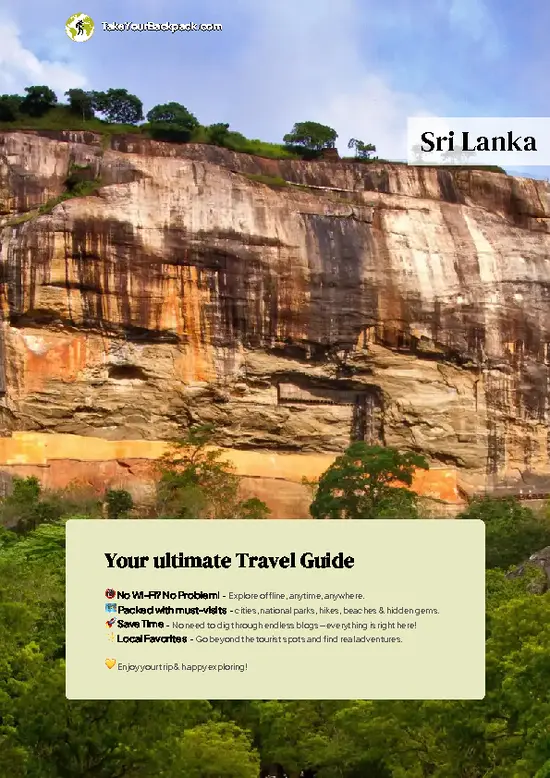
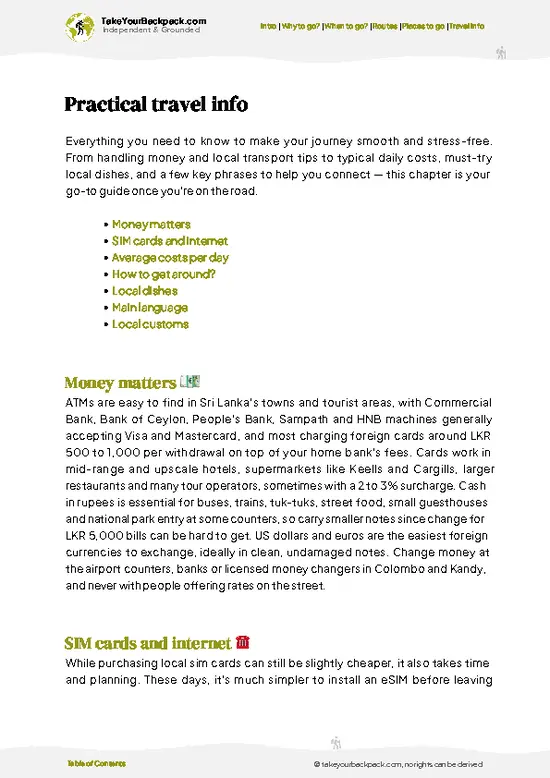
example page 0 from our offline Travel Guide for Sri Lanka
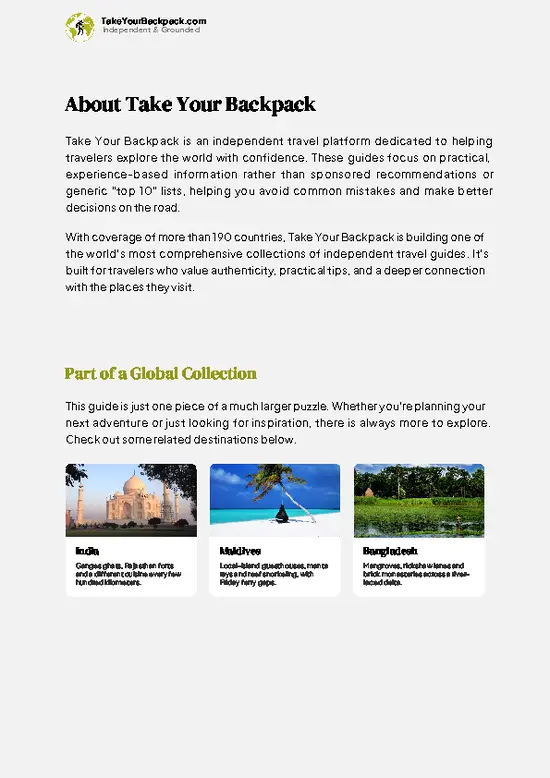
example page 1 from our offline Travel Guide for Sri Lanka
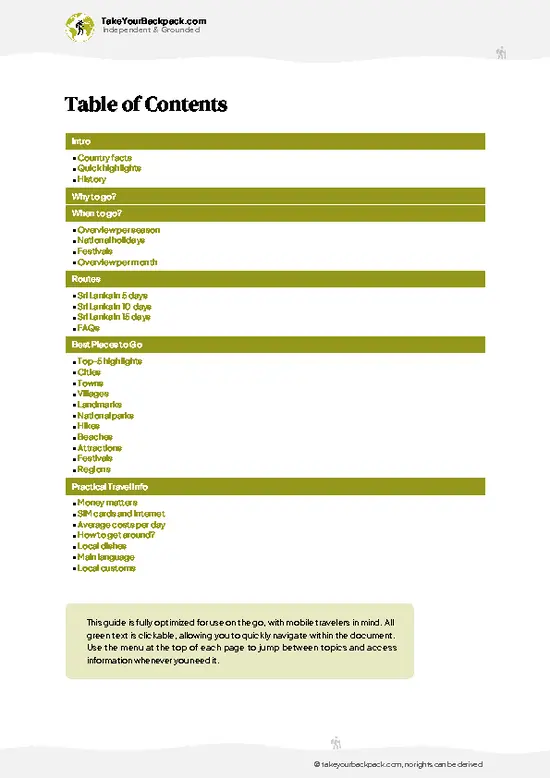
example page 2 from our offline Travel Guide for Sri Lanka
example page 3 from our offline Travel Guide for Sri Lanka
example page 4 from our offline Travel Guide for Sri Lanka
example page 5 from our offline Travel Guide for Sri Lanka
example page 6 from our offline Travel Guide for Sri Lanka
example page 7 from our offline Travel Guide for Sri Lanka
The digital guide (435 pages) contains:
✅ 121 highlights, ranked by travel appeal
✅ Optimized 5, 10 & 15-day travel routes
✅ Cities, national parks, landmarks, beaches
✅ How to get around
✅ Offline-friendly for travel without Wi-Fi
👉 Click to see all 30+ guide features

📅 Plan smarter in minutes, not weeks
✅ Month by month travel advice
✅ Festivals & national holidays
✅ Budget expectations

🗺️ Go to the right places, skip the overrated ones
✅ Honest pros & cons of destinations
✅ Top hikes, parks & viewpoints
✅ Lesser-known places most travelers miss
✅ Clear “worth it vs skip it” guidance

🛏️ Travel smoothly without rookie mistakes
✅ Best areas to stay
✅ Transport systems explained simply
✅ Common scams & safety advice
✅ SIM cards, money & practical tips

🌍 Understand the country, not just visit it
✅ Culture & traditions
✅ 52 Essential phrases & customs
✅ Festivals worth planning around
✅ Traveler-friendly historical context
✅ Insights that make places more meaningful

📱 Built for real travel conditions
✅ Fully downloadable PDF
✅ Works completely offline
✅ Optimized for phone use
✅ Useful in remote areas & buses
✅ Everything in one place
Stop searching, start planning
Get instant access to your full guide. 30‑day money-back guarantee.
+ Add another guide for just

By proceeding you agree to our terms.
Sent to your inbox immediately after payment • 100% Secure Checkout
Best Backpacking Travel Advisor 2025 tourism awardBest Backpacking
Travel Advisor
2025
What others say about Take Your Backpack Guides:
⭐⭐⭐⭐⭐
Fantastic, amazing amount of information!
⭐⭐⭐⭐⭐
My goodness this is amazing, it's what I've been looking for hats off too you!
⭐⭐⭐⭐⭐
I think this is absolutely BRILLIANT
⭐⭐⭐⭐
Very complete and informative. It's still missing places, but I gotta to commend you
⭐⭐⭐⭐⭐
This is truly amazing, thank you, can't wait to explore it with my kids!
⭐⭐⭐⭐⭐
Awesome resource, thank you!
⭐⭐⭐⭐⭐
This is amazing! Can't wait to explore the ones I haven't seen
⭐⭐⭐⭐
I love this! Well done, great idea.
⭐⭐⭐⭐⭐
Thanks for taking the time to make this gem!
⭐⭐⭐⭐⭐
This might be the best website I've ever seen.
⭐⭐⭐⭐⭐
Congratulations, and thank you so much for your work; it's incredibly valuable.
⭐⭐⭐⭐
In all seriousness I think you did a great job pointing out the important spots
⭐⭐⭐⭐⭐
10/10 very good
⭐⭐⭐⭐⭐
As someone who's only just starting to visit regularly this is awesome, thank you.
⭐⭐⭐⭐
Thank you very much! I'm going to visit my dad, it's going to be very useful!
⭐⭐⭐⭐⭐
This is really cool! We'll be travelling for the first time and this definitely come in handy.
⭐⭐⭐⭐⭐
You are now our minister of culture, congratulations 👨‍💼
⭐⭐⭐⭐⭐
Just wanted to tell you that this is a pearl! Going to follow your recommendations.
⭐⭐⭐⭐⭐
This is so cool. I'll definitely be using the resource for my travels soon.
⭐⭐⭐⭐⭐
This is very impressive! Good work.
⭐⭐⭐⭐⭐
This is an amazing and informative site. Very well done!

🛏️ Where to stay?Where to Stay in Sri Lanka

Sri Lanka has plenty of hostels and family-run guesthouses, with dorm beds typically around LKR 2,500 to 4,500 (US$8 to 15) and simple private doubles from about LKR 5,000 to 9,000 (US$17 to 30). In Colombo, Fort puts you next to the main train and bus stations but goes quiet after dark, while Kollupitiya and Bambalapitiya offer more restaurants and bars at slightly higher prices. In the hill country, Ella has the densest cluster of social hostels within walking distance of the main trails, and Kandy concentrates its budget beds on the hillsides around the lake, which are quiet but involve steep walks. On the south coast, Mirissa and Hikkaduwa are the party-leaning beach bases, Unawatuna and … read more 👉
Sri Lanka has plenty of hostels and family-run guesthouses, with dorm beds typically around LKR 2,500 to 4,500 (US$8 to 15) and simple private doubles from about LKR 5,000 to 9,000 (US$17 to 30). In Colombo, Fort puts you next to the main train and bus stations but goes quiet after dark, while Kollupitiya and Bambalapitiya offer more restaurants and bars at slightly higher prices. In the hill country, Ella has the densest cluster of social hostels within walking distance of the main trails, and Kandy concentrates its budget beds on the hillsides around the lake, which are quiet but involve steep walks. On the south coast, Mirissa and Hikkaduwa are the party-leaning beach bases, Unawatuna and Tangalle are calmer, and Arugam Bay on the east coast fills with surfers from roughly April to October, when prices climb.

If you enjoy meeting fellow travelers, consider choosing hostels with high ratings for atmosphere. On the other hand, if you prefer having your own space, a hotel might be a better option.

Sri LankaMore of Sri Lanka

👋 Meet the founderWho’s Behind Take Your Backpack?

Johan, backpacker and founder of TakeYourBackpackHi, I’m Johan (Netherlands 🇳🇱), the creator of TakeYourBackpack. Over the past 3 decades, I’ve backpacked through 90+ countries across six continents, gaining extensive experience with independent travel, long-term trips, and overland routes.

This site is built on a combination of firsthand travel experience and carefully curated insights from other backpackers. Many guides are based on places I’ve personally visited, while others bring together tips, observations, and practical advice shared by trusted travelers I’ve met along the way.

The goal is to provide realistic, experience-driven guidance — not generic itineraries — so you can explore destinations with better context, clearer expectations, and more confidence.