v2.webp)
The Living Room Where History Was Drafted
Forget velvet ropes and sterile glass cases. The living room here isn’t just a set piece—it’s the actual nerve center where Ismail Al Azhari, Sudan’s first Prime Minister, plotted the country’s independence. You can stand where the man himself debated, argued, and, yes, probably spilled tea over the fate of a nation. The furniture is original, worn in all the right places, and the walls radiate the kind of energy you only get from real, consequential decisions. This isn’t a museum that’s been sanitized for Instagram; it’s a time capsule with bite.
The Personal Library (My Personal Favorite)
If you want to understand a leader, look at his books. Al Azhari’s library is a compact but potent collection—Arabic classics, political treatises, and a few dog-eared … read more 👉
Forget velvet ropes and sterile glass cases. The living room here isn’t just a set piece—it’s the actual nerve center where Ismail Al Azhari, Sudan’s first Prime Minister, plotted the country’s independence. You can stand where the man himself debated, argued, and, yes, probably spilled tea over the fate of a nation. The furniture is original, worn in all the right places, and the walls radiate the kind of energy you only get from real, consequential decisions. This isn’t a museum that’s been sanitized for Instagram; it’s a time capsule with bite.
The Personal Library (My Personal Favorite)
If you want to understand a leader, look at his books. Al Azhari’s library is a compact but potent collection—Arabic classics, political treatises, and a few dog-eared … read more 👉
The Living Room Where History Was Drafted
Forget velvet ropes and sterile glass cases. The living room here isn’t just a set piece—it’s the actual nerve center where Ismail Al Azhari, Sudan’s first Prime Minister, plotted the country’s independence. You can stand where the man himself debated, argued, and, yes, probably spilled tea over the fate of a nation. The furniture is original, worn in all the right places, and the walls radiate the kind of energy you only get from real, consequential decisions. This isn’t a museum that’s been sanitized for Instagram; it’s a time capsule with bite.
The Personal Library (My Personal Favorite)
If you want to understand a leader, look at his books. Al Azhari’s library is a compact but potent collection—Arabic classics, political treatises, and a few dog-eared volumes that look like they’ve survived more than one coup attempt. The books are not behind glass. You can see the marginalia, the underlining, the fingerprints of a man who read to lead. It’s intimate, almost voyeuristic, and it’s the closest you’ll get to reading over the shoulder of Sudan’s founding father.
Family Photographs and Private Memorabilia
This isn’t a parade of generic portraits. The photos here are raw: Al Azhari at home, laughing with family, looking exhausted after a long night, or caught mid-conversation with political allies. There are medals, handwritten notes, and even a battered suitcase that looks like it’s seen more border crossings than most passports. These artifacts strip away the myth and show the man—flawed, ambitious, and deeply human.
The Courtyard: Social Heartbeat of the House
Sudanese homes are built around courtyards for a reason, and this one is no exception. It’s not just a pretty patch of shade; it’s where political allies and rivals gathered, where family dramas unfolded, and where the pulse of the household beat loudest. Stand here at midday and you’ll feel the heat, the dust, and the echoes of conversations that shaped a nation. It’s a reminder that history isn’t made in isolation—it’s forged in the open, in the thick of community life.
Original Independence Documents
You want receipts? Here they are. The museum displays actual documents from Sudan’s independence movement—some typed, some scrawled in urgent handwriting. These aren’t facsimiles. You can see the ink, the corrections, the signatures that changed the course of a country. It’s a sobering, electric moment to realize you’re inches from the paperwork that ended colonial rule.
Here’s the bottom line: Al Zaim Al Azhari House Museum isn’t about curated perfection or photo ops. It’s about proximity to the messy, exhilarating reality of nation-building. If you want to feel the weight—and the weird, electric hope—of Sudanese history, this is where you go.
Forget velvet ropes and sterile glass cases. The living room here isn’t just a set piece—it’s the actual nerve center where Ismail Al Azhari, Sudan’s first Prime Minister, plotted the country’s independence. You can stand where the man himself debated, argued, and, yes, probably spilled tea over the fate of a nation. The furniture is original, worn in all the right places, and the walls radiate the kind of energy you only get from real, consequential decisions. This isn’t a museum that’s been sanitized for Instagram; it’s a time capsule with bite.
The Personal Library (My Personal Favorite)
If you want to understand a leader, look at his books. Al Azhari’s library is a compact but potent collection—Arabic classics, political treatises, and a few dog-eared volumes that look like they’ve survived more than one coup attempt. The books are not behind glass. You can see the marginalia, the underlining, the fingerprints of a man who read to lead. It’s intimate, almost voyeuristic, and it’s the closest you’ll get to reading over the shoulder of Sudan’s founding father.
Family Photographs and Private Memorabilia
This isn’t a parade of generic portraits. The photos here are raw: Al Azhari at home, laughing with family, looking exhausted after a long night, or caught mid-conversation with political allies. There are medals, handwritten notes, and even a battered suitcase that looks like it’s seen more border crossings than most passports. These artifacts strip away the myth and show the man—flawed, ambitious, and deeply human.
The Courtyard: Social Heartbeat of the House
Sudanese homes are built around courtyards for a reason, and this one is no exception. It’s not just a pretty patch of shade; it’s where political allies and rivals gathered, where family dramas unfolded, and where the pulse of the household beat loudest. Stand here at midday and you’ll feel the heat, the dust, and the echoes of conversations that shaped a nation. It’s a reminder that history isn’t made in isolation—it’s forged in the open, in the thick of community life.
Original Independence Documents
You want receipts? Here they are. The museum displays actual documents from Sudan’s independence movement—some typed, some scrawled in urgent handwriting. These aren’t facsimiles. You can see the ink, the corrections, the signatures that changed the course of a country. It’s a sobering, electric moment to realize you’re inches from the paperwork that ended colonial rule.
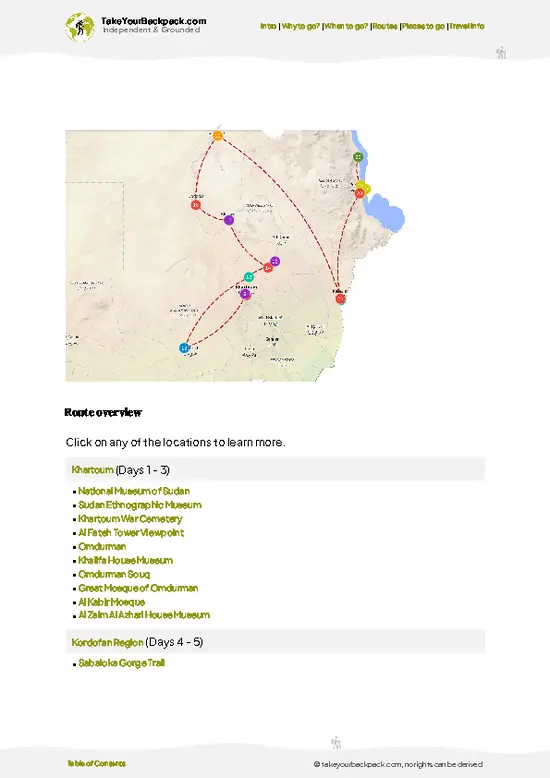
Here’s the bottom line: Al Zaim Al Azhari House Museum isn’t about curated perfection or photo ops. It’s about proximity to the messy, exhilarating reality of nation-building. If you want to feel the weight—and the weird, electric hope—of Sudanese history, this is where you go.
Spotted a mistake or missing something? Contact us.

 Best Backpacking
.jpg) Hi, I’m Johan (Netherlands 🇳🇱), the creator of TakeYourBackpack. Over the past decade, I’ve backpacked through 80+ countries across six continents, gaining extensive experience with independent travel, long-term trips, and overland routes.
Hi, I’m Johan (Netherlands 🇳🇱), the creator of TakeYourBackpack. Over the past decade, I’ve backpacked through 80+ countries across six continents, gaining extensive experience with independent travel, long-term trips, and overland routes.