×

Sudan🇸🇩 | best attractionsYour Guide to the 10 Best attractions in Sudan

Sudan’s best attractions are defined by a rugged blend of ancient history, vast deserts, and vibrant river life along the Nile. The country’s sheer size means experiences vary dramatically from the archaeological treasures in the north to the cultural richness of Khartoum and the remote beauty of the southern regions. For backpackers and independent travelers, choosing the right destination is crucial: it shapes your safety, budget, and the depth of cultural immersion you’ll get. Seasonal extremes—scorching summers and unpredictable rains—can make or break your trip, while infrastructure gaps demand careful planning. Understanding these local nuances lets you avoid wasted time and expense, preserving your energy for what truly matters in Sudan.

By Johan Kruseman 🇳🇱 | Updated June 5, 2026
Explore the best festivals in Sudan

Why go?Why Travelers Love These Spots

Sudan’s attractions stand apart because they demand more than a casual glance—they require commitment. The country’s vast deserts, ancient ruins, and vibrant cultures are not conveniently packaged for quick visits. Instead, they reward those willing to invest time and effort. This means accepting trade-offs: long travel times on rough roads and limited infrastructure can slow your pace, but they also shield these sites from mass tourism, preserving their raw authenticity.

Unlike more developed tourist hubs, Sudan’s attractions often lack easy accessibility. This can be frustrating, but it also means fewer crowds and a deeper connection to the landscape and history. The climate is another factor—intense heat and seasonal rains shape when and how you explore. Planning around these extremes … read more 👉
Sudan’s attractions stand apart because they demand more than a casual glance—they require commitment. The country’s vast deserts, ancient ruins, and vibrant cultures are not conveniently packaged for quick visits. Instead, they reward those willing to invest time and effort. This means accepting trade-offs: long travel times on rough roads and limited infrastructure can slow your pace, but they also shield these sites from mass tourism, preserving their raw authenticity.

Unlike more developed tourist hubs, Sudan’s attractions often lack easy accessibility. This can be frustrating, but it also means fewer crowds and a deeper connection to the landscape and history. The climate is another factor—intense heat and seasonal rains shape when and how you explore. Planning around these extremes is essential to avoid wasting energy on uncomfortable or unsafe conditions.

Culturally and historically, Sudan offers a unique blend of African and Arab influences, with archaeological treasures that rival better-known neighbors but without the tourist gloss. This makes it a prime destination for travelers who value substance over convenience. However, the country’s political and logistical challenges mean that flexibility and patience are not optional—they are prerequisites. Understanding these constraints upfront is the secret to preserving your budget and energy for the moments that truly matter, turning potential frustrations into part of the adventure itself.
Evaluating the Top Choices
The list of best attractions in Sudan is created based on cultural significance or entertainment value. If you feel a attraction is missing in this list, please let us know.

When to go?Timing Your Visit for the Best Experience

Seasonal Realities Shape Every Step

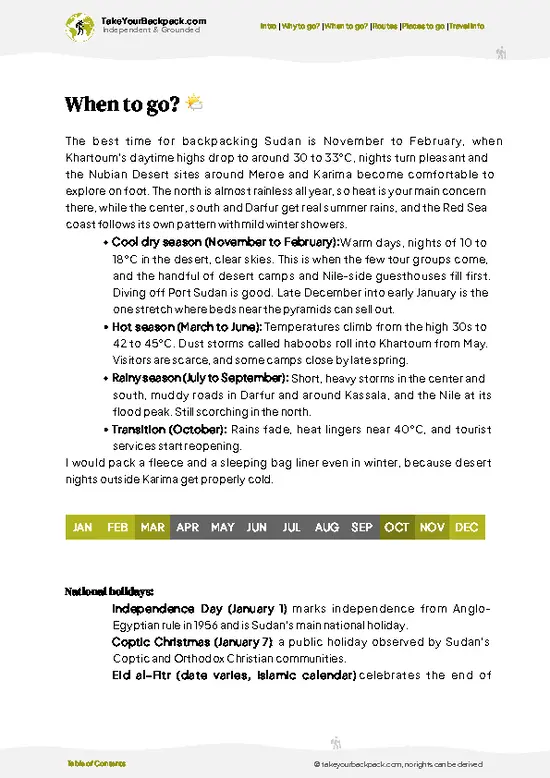
Sudan’s climate is a relentless force that dictates when and how you experience its attractions. The country endures a harsh desert climate for most of the year, with scorching heat dominating the landscape. The window for comfortable exploration is narrow and unforgiving. The cooler months, roughly spanning late autumn through early spring, offer the only viable opportunity to engage with Sudan’s cultural and archaeological treasures without battling oppressive heat that can easily sap your energy and patience.

Optimal Timing: Cooler, Drier Months

Visiting during the cooler season means daytime temperatures are far more manageable, often ranging from mild to warm rather than blistering. This period also coincides with minimal rainfall, which is crucial … read more 👉

Seasonal Realities Shape Every Step

Sudan’s climate is a relentless force that dictates when and how you experience its attractions. The country endures a harsh desert climate for most of the year, with scorching heat dominating the landscape. The window for comfortable exploration is narrow and unforgiving. The cooler months, roughly spanning late autumn through early spring, offer the only viable opportunity to engage with Sudan’s cultural and archaeological treasures without battling oppressive heat that can easily sap your energy and patience.

Optimal Timing: Cooler, Drier Months

Visiting during the cooler season means daytime temperatures are far more manageable, often ranging from mild to warm rather than blistering. This period also coincides with minimal rainfall, which is crucial because even a little rain can turn dirt roads into impassable mud traps, especially in remote areas. The dry air preserves visibility and comfort, making it the prime time to absorb the country’s vast open spaces and intricate historical sites without constant sweat or dust storms.

Shoulder Seasons: Weighing Trade-Offs

The shoulder months, just before or after the cooler season, bring a mixed bag. Temperatures start climbing, and humidity can rise, but crowds remain thin and prices tend to be lower. This is a gamble: you save money and avoid tourists but risk discomfort and limited access to some sites due to weather conditions. If you’re prepared for heat and occasional logistical hiccups, these shoulder periods can stretch your budget without sacrificing the core experience.

Peak Periods and Constraints

Sudan doesn’t have a traditional “peak tourist season” like more trafficked destinations, but the cooler months naturally attract the most visitors. This means accommodations and guided tours fill up faster and can cost more. Planning ahead is essential. Avoid the summer months entirely unless you have a high tolerance for extreme heat and are ready to face the reality that many attractions will be less accessible or enjoyable. The brutal sun and soaring temperatures are not just uncomfortable—they can be dangerous without proper preparation.

Final Word on Timing

Timing your trip to Sudan is about respecting the climate’s demands. The cooler, dry months are the only practical choice for most travelers who want to experience the country’s attractions fully and safely. Shoulder seasons offer a budget-friendly but riskier alternative. Ignoring these seasonal truths is the fastest way to waste energy, money, and precious travel days.

attraction hoppingPlanning Your Route Efficiently

How to Combine the Best Attractions of Sudan Into One Trip


Start by grouping attractions into regional clusters to avoid wasting time on backtracking. Sudan’s vast size demands a logical flow—typically beginning in the north with the ancient pyramids and archaeological sites, then moving southward toward the Nile’s cultural hubs and natural reserves. This north-to-south trajectory minimizes long, costly transfers and maximizes time on the ground.

Allocate at least two full days per major site category—archaeology, cultural towns, and natural landscapes—to avoid the trap of rushing through highlights without absorbing their significance. Many travelers underestimate travel times between stops, especially on Sudan’s rough roads, so build in buffer days for delays and unexpected discoveries. … read more 👉

How to Combine the Best Attractions of Sudan Into One Trip


Start by grouping attractions into regional clusters to avoid wasting time on backtracking. Sudan’s vast size demands a logical flow—typically beginning in the north with the ancient pyramids and archaeological sites, then moving southward toward the Nile’s cultural hubs and natural reserves. This north-to-south trajectory minimizes long, costly transfers and maximizes time on the ground.

Allocate at least two full days per major site category—archaeology, cultural towns, and natural landscapes—to avoid the trap of rushing through highlights without absorbing their significance. Many travelers underestimate travel times between stops, especially on Sudan’s rough roads, so build in buffer days for delays and unexpected discoveries.

Beware the common mistake of trying to cram too many distant sites into a short window. Speed sacrifices depth, turning what should be immersive experiences into a checklist. Conversely, overemphasizing comfort by relying solely on private transport can blow your budget, while public options demand patience and flexibility.

Balancing effort and reward means accepting some trade-offs: a longer journey might lead to a remote, less-visited site that offers a richer encounter, but it requires stamina and planning. Flexibility is your best ally—allow your itinerary to breathe, so you can linger where the moment calls for it and move on when it doesn’t. Strategic pacing, not a rigid schedule, unlocks Sudan’s layered stories without burning out your energy or wallet.

The ListThe Best attractions of Sudan

1 National Museum of Sudan

Nubian statues, ancient temples, archaeological collections

Trace Sudan’s civilizations through galleries displaying millennia-old artifacts, monumental sculptures, and relocated temple facades.

2 Omdurman Souq

spice stalls, textile markets, labyrinthine alleys

Navigate a dense network of vendors selling traditional wares, where bargaining and sensory overload are part of daily commerce.

3 Khalifa House Museum

Mahdist relics, 19th-century residence, period furnishings

Walk through rooms filled with artifacts from the Mahdist era, gaining insight into Omdurman’s pivotal role in Sudanese history.

4 Sudan Ethnographic Museum

tribal costumes, traditional crafts, rural artifacts

Examine displays that document the country’s diverse cultures, with objects illustrating daily life and ceremonial practices.

5 Al-Nilin Mosque

river junction, geometric domes, sunset views

Experience the mosque’s striking design and riverside location, especially atmospheric as daylight fades over the water.

6 Khartoum War Cemetery

Commonwealth graves, quiet memorial, landscaped grounds

Reflect among orderly rows of headstones, where the site’s calm atmosphere honors those lost in regional conflicts.

7 Al-Mogran Family Park

riverfront lawns, playgrounds, weekend picnics

Relax by the water’s edge as families gather for leisure, with shaded areas and open spaces offering respite from the city.

8 Al Fateh Tower Viewpoint

city skyline, Nile confluence, modern architecture

Ascend for a panoramic perspective where the Blue and White Nile meet, offering a rare vantage over Khartoum’s evolving cityscape.

9 Al Kabir Mosque

grand minaret, Friday prayers, central plaza

Witness local religious life as crowds gather beneath ornate arches, with the mosque’s scale and activity reflecting its civic importance.

10 Al Zaim Al Azhari House Museum

independence memorabilia, presidential residence, personal artifacts

Survey the preserved home of Sudan’s first president, where everyday objects and documents trace the nation’s political beginnings.

11 Sudan National Theatre

stage productions, local drama, cultural festivals

Watch performances that showcase Sudanese storytelling, music, and dance in a venue central to the country’s creative scene.

12 Al Kabir Coptic Cathedral

Coptic heritage, stained glass, tranquil nave

Step inside to observe Sudan’s Christian legacy through intricate iconography, quiet chapels, and a distinct architectural presence in central Khartoum.

13 Al Waha Mall & Food Court

air-conditioned shopping, local eateries, modern retail

Browse contemporary shops and sample Sudanese snacks in a climate-controlled setting popular with families and urban professionals.

Think you know Sudan?

Prove you’re a true local — uncover 3 lesser-known attractions in Sudan that locals tend to keep to themselves.
Loading the map 🌍

Expert viewTips and Advice from Travelers

Expert Commentary


Sudan’s attractions don’t come in a convenient cluster you can tick off in a weekend. You’ll want to pick your battles carefully—aim for around three to five major sites to truly absorb the experience without burning out. Trying to cram more is a fast track to exhaustion and disappointment. The country’s vastness and patchy infrastructure mean travel between points can be slow and unpredictable, so pacing yourself is key.

Budget-wise, Sudan isn’t a place to expect cheap thrills everywhere. While some attractions have minimal entry fees, the real costs pile up in transport and guides, which are often essential for safety and context. Factor in a flexible budget that can absorb unexpected expenses—think of it as an investment in your peace of mind and the quality of your … read more 👉

Expert Commentary


Sudan’s attractions don’t come in a convenient cluster you can tick off in a weekend. You’ll want to pick your battles carefully—aim for around three to five major sites to truly absorb the experience without burning out. Trying to cram more is a fast track to exhaustion and disappointment. The country’s vastness and patchy infrastructure mean travel between points can be slow and unpredictable, so pacing yourself is key.

Budget-wise, Sudan isn’t a place to expect cheap thrills everywhere. While some attractions have minimal entry fees, the real costs pile up in transport and guides, which are often essential for safety and context. Factor in a flexible budget that can absorb unexpected expenses—think of it as an investment in your peace of mind and the quality of your experience. The terrain and climate can be punishing, so don’t skimp on gear or local expertise. Cutting corners here is a false economy.

Time is your most precious currency in Sudan. The country’s attractions demand patience. Roads can be rough, and services limited. You’ll spend more hours on the road than you might anticipate. This isn’t a place for rapid-fire sightseeing. Instead, plan for slow, deliberate exploration. Allocate several days per site if you want to appreciate the layers of history and culture. Rushing through will leave you with a checklist, not a story.

Cultural sensitivity isn’t optional here—it’s survival. Sudan’s social fabric is woven with conservative values and complex tribal identities. Dress modestly, respect local customs, and always ask before photographing people or sacred places. Missteps can close doors or worse. I’ve seen travelers lose access to entire regions because they underestimated this. Embrace the local rhythm rather than imposing your own. It’s the only way to gain genuine insight and goodwill.

Safety concerns are real but manageable with preparation. Political tensions and occasional unrest mean you must stay informed and flexible. Avoid traveling after dark and always use trusted local contacts. Solo travel is possible but not recommended in remote areas. Group tours or local guides aren’t just conveniences—they’re lifelines. They also enrich your experience by unlocking stories and access you won’t find on your own.

Infrastructure varies wildly. Some attractions have basic facilities; others are raw and rugged. Don’t expect tourist-level amenities. Bring your own water, snacks, and first aid. Charging points and internet access can be scarce, so prepare for digital detox moments. This roughness is part of Sudan’s appeal but demands respect and readiness.

The payoff for navigating these challenges is profound. Sudan’s attractions offer a window into ancient civilizations and living cultures that have shaped human history. The scale and authenticity here are rare on the global stage. But you have to earn it. The secret is to travel with intention, patience, and respect. This isn’t a place for ticking boxes or chasing Instagram shots. It’s a place to slow down, listen, and let the land and its people reveal themselves on their terms.

In short, don’t overreach. Choose a handful of attractions that resonate with your interests and energy levels. Budget for the unexpected. Respect the culture and prepare for rough roads. Do this, and Sudan’s attractions will reward you with experiences that stay with you long after you’ve left.

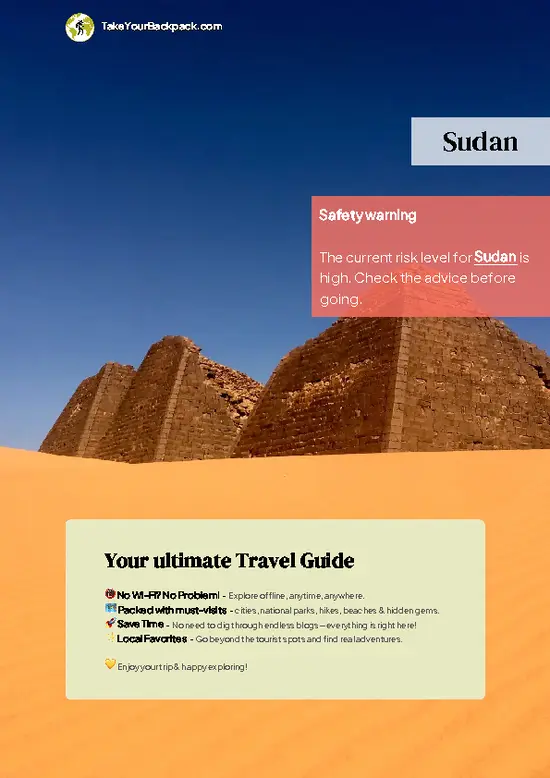
✈️ The backpacker research shortcutSudan Travel Guide

An offline-friendly backpacking guide with optimized travel routes, ranked highlights, transport advice, and the best areas to stay.
example page 0 from our offline Travel Guide for Sudan
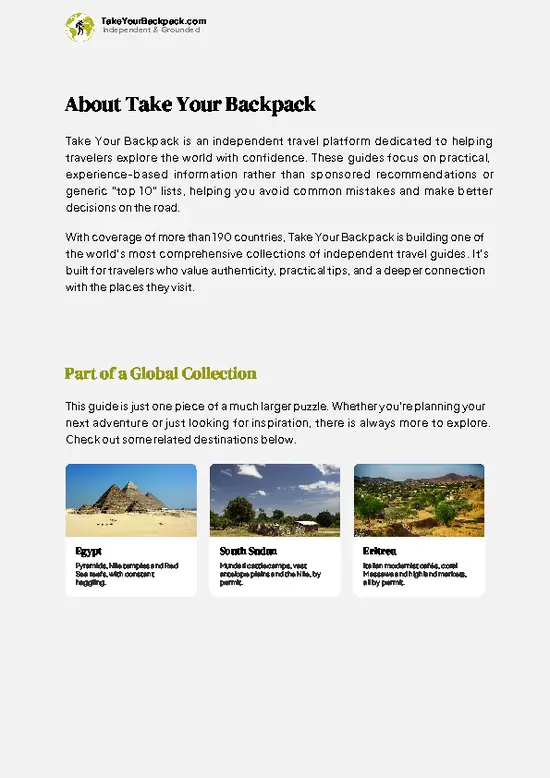
example page 1 from our offline Travel Guide for Sudan
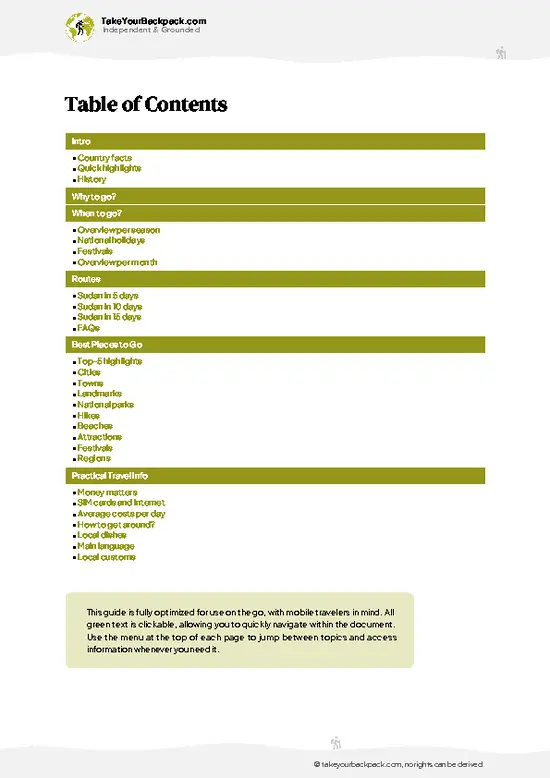
example page 2 from our offline Travel Guide for Sudan
example page 3 from our offline Travel Guide for Sudan
example page 4 from our offline Travel Guide for Sudan
example page 5 from our offline Travel Guide for Sudan
example page 6 from our offline Travel Guide for Sudan
example page 7 from our offline Travel Guide for Sudan
The digital guide (300 pages) contains:
72 highlights, ranked by travel appeal
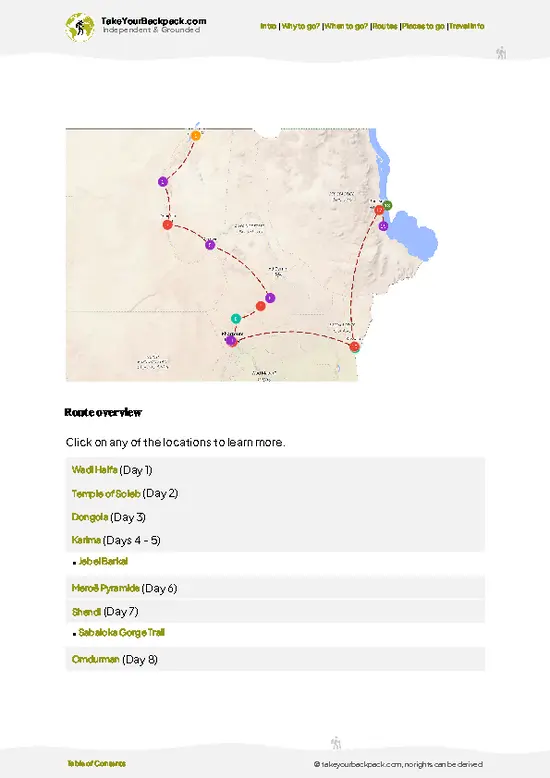
Optimized 5, 10 & 15-day travel routes
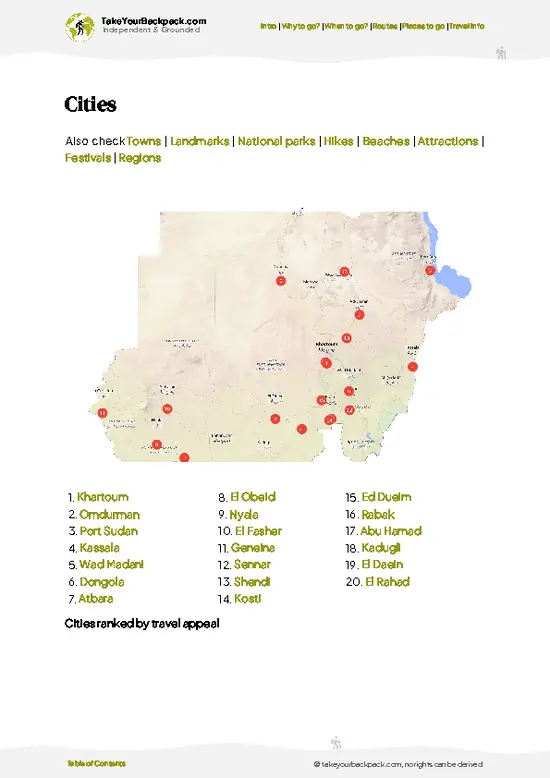
Cities, national parks, landmarks, beaches
How to get around
Offline-friendly for travel without Wi-Fi
👉 Click to see all 30+ guide features

📅 Plan smarter in minutes, not weeks
Month by month travel advice
Festivals & national holidays
Budget expectations

🗺️ Go to the right places, skip the overrated ones
Honest pros & cons of destinations
Top hikes, parks & viewpoints
Lesser-known places most travelers miss
Clear “worth it vs skip it” guidance

🛏️ Travel smoothly without rookie mistakes
Best areas to stay
Transport systems explained simply
Common scams & safety advice
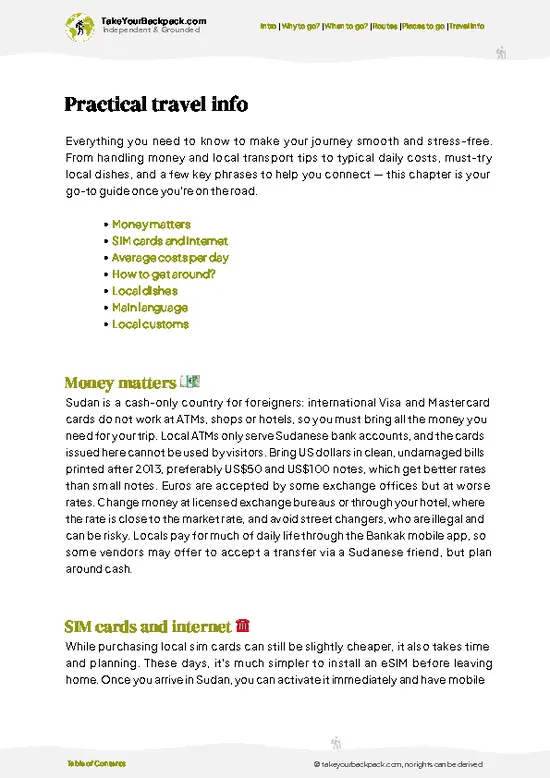
SIM cards, money & practical tips

🌍 Understand the country, not just visit it
Culture & traditions
52 Essential phrases & customs
Festivals worth planning around
Traveler-friendly historical context
Insights that make places more meaningful

📱 Built for real travel conditions
Fully downloadable PDF
Works completely offline
Optimized for phone use
Useful in remote areas & buses
Everything in one place
Save weeks of stressful planning
Get instant access to your full guide. 30‑day money-back guarantee.


By proceeding you agree to our terms.
Sent to your inbox immediately after payment • 100% Secure Checkout
Best Backpacking Travel Advisor 2025 tourism awardBest Backpacking
Travel Advisor
2025
What others say about Take Your Backpack Guides:
⭐⭐⭐⭐⭐
Fantastic, amazing amount of information!
⭐⭐⭐⭐⭐
My goodness this is amazing, it's what I've been looking for hats off too you!
⭐⭐⭐⭐⭐
I think this is absolutely BRILLIANT
⭐⭐⭐⭐
Very complete and informative. It's still missing places, but I gotta to commend you
⭐⭐⭐⭐⭐
This is truly amazing, thank you, can't wait to explore it with my kids!
⭐⭐⭐⭐⭐
Awesome resource, thank you!
⭐⭐⭐⭐⭐
This is amazing! Can't wait to explore the ones I haven't seen
⭐⭐⭐⭐
I love this! Well done, great idea.
⭐⭐⭐⭐⭐
Thanks for taking the time to make this gem!
⭐⭐⭐⭐⭐
This might be the best website I've ever seen.
⭐⭐⭐⭐⭐
Congratulations, and thank you so much for your work; it's incredibly valuable.
⭐⭐⭐⭐
In all seriousness I think you did a great job pointing out the important spots
⭐⭐⭐⭐⭐
10/10 very good
⭐⭐⭐⭐⭐
As someone who's only just starting to visit regularly this is awesome, thank you.
⭐⭐⭐⭐
Thank you very much! I'm going to visit my dad, it's going to be very useful!
⭐⭐⭐⭐⭐
This is really cool! We'll be travelling for the first time and this definitely come in handy.
⭐⭐⭐⭐⭐
You are now our minister of culture, congratulations 👨‍💼
⭐⭐⭐⭐⭐
Just wanted to tell you that this is a pearl! Going to follow your recommendations.
⭐⭐⭐⭐⭐
This is so cool. I'll definitely be using the resource for my travels soon.
⭐⭐⭐⭐⭐
This is very impressive! Good work.
⭐⭐⭐⭐⭐
This is an amazing and informative site. Very well done!

🛏️ Where to stay?Accommodation Highlights

There are budget hotels and guesthouses in Sudan, mainly in Khartoum, but true backpacker hostels with dorms are rare; plan for small guesthouses or budget hotels rather than large hostel chains.

Khartoum City Centre/Nile Corniche: closest to museums, markets and restaurants and reasonably safe with some evening activity; Al‑Amarat: quieter and more residential with better security but slightly higher prices; Omdurman: cheapest local guesthouses and excellent daytime markets but more traditional, less evening infrastructure and quieter at night; Khartoum North (Bahri): most basic and inexpensive options, more industrial and farther from tourist highlights.

Book ahead during busy periods, … read more 👉
There are budget hotels and guesthouses in Sudan, mainly in Khartoum, but true backpacker hostels with dorms are rare; plan for small guesthouses or budget hotels rather than large hostel chains.

Khartoum City Centre/Nile Corniche: closest to museums, markets and restaurants and reasonably safe with some evening activity; Al‑Amarat: quieter and more residential with better security but slightly higher prices; Omdurman: cheapest local guesthouses and excellent daytime markets but more traditional, less evening infrastructure and quieter at night; Khartoum North (Bahri): most basic and inexpensive options, more industrial and farther from tourist highlights.

Book ahead during busy periods, carry cash, expect modest facilities and variable internet, and prioritize central Khartoum or Amarat for convenience and safety while using Omdurman for daytime visits.

If you enjoy meeting fellow travelers, consider choosing hostels with high ratings for atmosphere. On the other hand, if you prefer having your own space, a hotel might be a better option.

SudanSee More of Sudan

👋 Meet the founderWho’s Behind Take Your Backpack?

Johan, backpacker and founder of TakeYourBackpackHi, I’m Johan (Netherlands 🇳🇱), the creator of TakeYourBackpack. Over the past decade, I’ve backpacked through 80+ countries across six continents, gaining extensive experience with independent travel, long-term trips, and overland routes.

This site is built on a combination of firsthand travel experience and carefully curated insights from other backpackers. Many guides are based on places I’ve personally visited, while others bring together tips, observations, and practical advice shared by trusted travelers I’ve met along the way.

The goal is to provide realistic, experience-driven guidance — not generic itineraries — so you can explore destinations with better context, clearer expectations, and more confidence.

Get full Sudan guide •
Instant download • 72 highlights • Full Offline guide