×

Sudan🇸🇩 | landmarksTemple of Solebsandstone pillars, Nile riverside, pharaoh reliefs, remote setting | things to do and best time to go

Explore SuakinExplore National Museum of Sudan

Backpacking in Temple of Soleb
👌 Worth visitingunique site ranked #5
By Johan Kruseman 🇳🇱 | Updated June 6, 2026

Your boots crunch over sun-baked gravel, the only sound for miles, as you run your fingers across sandstone columns carved with hieroglyphs that haven’t seen a tour bus in weeks. The Temple of Soleb sits in northern Sudan, deep in Nubian desert country, on the west bank of the Nile—closer to the Egyptian border than to any city with a cappuccino machine. Here’s the truth: you won’t find crowds, you’ll find silence so thick it feels like trespassing in history’s private chambers. Getting here is a mission—think bone-rattling roads, a ferry or two, and a price tag that’s not exactly shoestring, especially if you want a guide who knows their Amenhotep from their Akhenaten. But the payoff? You get Egypt-level grandeur without the selfie sticks. The columns glow gold at sunset, and you’ll have them all to yourself. This is the kind of place that makes you forget Instagram exists.

Discover everything you want to know in the 📖 Sudan Travel Guide.
Safety warning

The current risk level for Sudan is high. Check the advice before going.


Get your Sudan guide
72 ranked highlights, routes & tips, works offline (300 pages)
Loading the map 🌍
CLICK TO FILTER
cities
towns
landmarks
national parks
hikes
beaches
attractions
festivals
regions
SHOW COUNTRY’S BESTSHOW ALL

✨ Why go?
Ranked #5 unique site in Sudan
What sets this place apart

The Temple of Soleb in Sudan isn’t just another dusty relic; it’s a masterpiece of ancient architecture that’s often overshadowed by its more famous neighbors. Yes, the crowds are thin, and that’s part of its charm. You won’t be elbowing your way through selfie sticks here. Instead, you’ll find a serene atmosphere where the history whispers through the sandstone.

Getting there is a breeze. It’s a short drive from Kerma, making it a perfect pit stop on your journey along the Nile. The cost? Minimal. You can explore this monumental site without breaking the bank, which is a refreshing change from the wallet-draining tourist traps elsewhere.

What makes Soleb special is its uniqueness. Unlike the more commercialized sites, this temple offers a raw glimpse into the Nubian culture and the pharaohsread more 👉
The Temple of Soleb in Sudan isn’t just another dusty relic; it’s a masterpiece of ancient architecture that’s often overshadowed by its more famous neighbors. Yes, the crowds are thin, and that’s part of its charm. You won’t be elbowing your way through selfie sticks here. Instead, you’ll find a serene atmosphere where the history whispers through the sandstone.

Getting there is a breeze. It’s a short drive from Kerma, making it a perfect pit stop on your journey along the Nile. The cost? Minimal. You can explore this monumental site without breaking the bank, which is a refreshing change from the wallet-draining tourist traps elsewhere.

What makes Soleb special is its uniqueness. Unlike the more commercialized sites, this temple offers a raw glimpse into the Nubian culture and the pharaohs who once ruled. The intricate carvings and hieroglyphs tell stories that textbooks can’t capture.

So, if you’re weaving through Sudan, don’t skip Soleb. It’s not just a stop; it’s a connection to a time long past, and that’s worth every ounce of effort.
Want to include Temple of Soleb in your Sudan route?
Create a personalized Sudan itinerary that includes Temple of Soleb and the places that fit your trip — based on your travel style, budget, and available time. Get your route in seconds.

Generate my trip

💡 HighlightsPlaces and moments you shouldn't skip

  • The New Kingdom architecture and scale — A 14th-century BCE temple built under Amenhotep III; the layout (pylon, open courts, successive halls) is a rare, well-preserved example of Egyptian imperial architecture so far south, giving you a real sense of how a royal cult complex was organised in Nubia.
  • Colossal statues and gateways — Big seated king figures and the monumental entrance pieces survive here better than at many nearby sites, so you can stand close to life-size royal sculpture that once dominated the riverbank.
  • Finely carved reliefs and hieroglyphs — The walls still show crisp scenes of the pharaoh, gods and ritual acts; the iconography and inscriptions are a direct window into Egyptian rule in Nubia and make for excellent close looking if you like details.
  • Inner sanctuaries
read more 👉
  • The New Kingdom architecture and scale — A 14th-century BCE temple built under Amenhotep III; the layout (pylon, open courts, successive halls) is a rare, well-preserved example of Egyptian imperial architecture so far south, giving you a real sense of how a royal cult complex was organised in Nubia.
  • Colossal statues and gateways — Big seated king figures and the monumental entrance pieces survive here better than at many nearby sites, so you can stand close to life-size royal sculpture that once dominated the riverbank.
  • Finely carved reliefs and hieroglyphs — The walls still show crisp scenes of the pharaoh, gods and ritual acts; the iconography and inscriptions are a direct window into Egyptian rule in Nubia and make for excellent close looking if you like details.
  • Inner sanctuaries and chapels — Step inside the darker rooms where the cult rituals happened; the scale suddenly feels intimate and you can imagine the sensory contrast between bright courtyards and these quieter, stone-cooled spaces.
  • Nile setting and light (personal favorite) — The temple sits right by the Nile and the way the low sun hits the sandstone at dusk is magical. It’s also one of the simplest, cheapest thrills: sit on the temple steps, watch the river, and let the colors do the rest.
  • Surrounding archaeological landscape and local culture — The temple isn’t isolated: there are nearby tombs, ruined structures and modern Nubian villages. Moving between the ruins and the river gives you a layered sense of history and living culture that most sites don’t offer.
Spotted a mistake or missing something? Contact us.

🌤️ When to go?Best time to visit Temple of Soleb


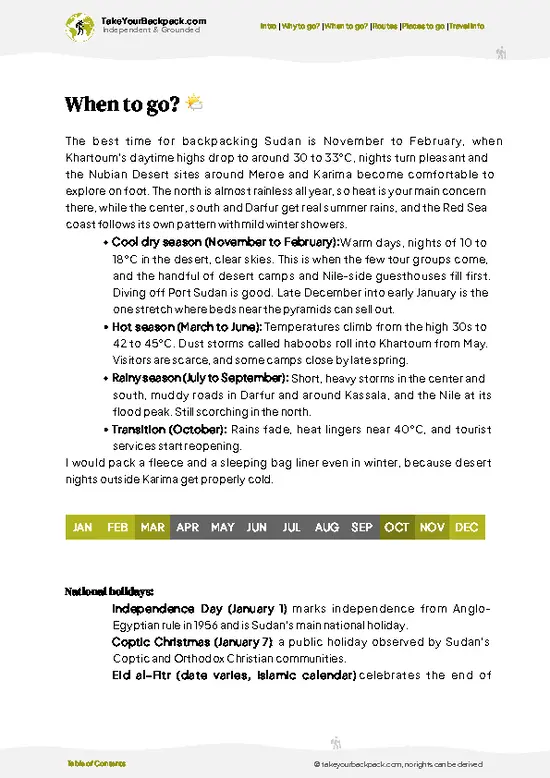
  • Weather: The Temple of Soleb bakes under a brutal sun most of the year. The best window is between November and February when temperatures drop to a bearable 20-30°C (68-86°F). Outside this, expect scorching heat that can fry your enthusiasm and your skin.

  • Temperature: Daytime highs in peak summer can soar above 40°C (104°F), making midday exploration a sweatbox nightmare. Nights cool off but not enough to fully recover. Winter months offer a more forgiving climate, perfect for lingering and soaking in the atmosphere.

  • Daylight Hours: Sudan’s daylight is fairly consistent year-round, roughly 11-12 hours. Early mornings and late afternoons are golden hours for photos and avoiding the harsh sun, regardless of season.

  • Crowds: Don’t expect hordes here; Soleb is off the beaten path. However, the
read more 👉

  • Weather: The Temple of Soleb bakes under a brutal sun most of the year. The best window is between November and February when temperatures drop to a bearable 20-30°C (68-86°F). Outside this, expect scorching heat that can fry your enthusiasm and your skin.

  • Temperature: Daytime highs in peak summer can soar above 40°C (104°F), making midday exploration a sweatbox nightmare. Nights cool off but not enough to fully recover. Winter months offer a more forgiving climate, perfect for lingering and soaking in the atmosphere.

  • Daylight Hours: Sudan’s daylight is fairly consistent year-round, roughly 11-12 hours. Early mornings and late afternoons are golden hours for photos and avoiding the harsh sun, regardless of season.

  • Crowds: Don’t expect hordes here; Soleb is off the beaten path. However, the cooler months see a modest uptick in visitors, mostly serious history buffs and archaeologists. Peak heat months bring near solitude but at a physical cost.

  • Seasonal Activities: The dry season (November to March) is prime for trekking and exploring nearby Nubian villages. The rainy season (June to September) makes access tricky and the site less appealing due to mud and heat.

  • Price Fluctuations: Expect higher costs for guides and transport during the cooler months when demand peaks. Off-season travel can save money but prepare for discomfort and limited services.


Pro-tip: Aim for late November—cool enough to enjoy the ruins without the crowds or inflated prices, and you’ll catch the Nubian villages coming alive with local festivals that add unexpected color to your visit.


source: climatestotravel.comJANJanuary: excellent for travelingFEBFebruary: excellent for travelingMARMarch: highly recommended for travelingAPRApril: fair for travelingMAYMay: fair for travelingJUNJune: below average for travelingJULJuly: below average for travelingAUGAugust: below average for travelingSEPSeptember: fair for travelingOCTOctober: good for travelingNOVNovember: excellent for travelingDECDecember: excellent for traveling
when-to-go

✈️ The backpacker research shortcutSudan Travel Guide

An offline-friendly backpacking guide with optimized travel routes, ranked highlights, transport advice, and the best areas to stay.
example page 0 from our offline Travel Guide for Sudan
example page 1 from our offline Travel Guide for Sudan
example page 2 from our offline Travel Guide for Sudan
example page 3 from our offline Travel Guide for Sudan
example page 4 from our offline Travel Guide for Sudan
example page 5 from our offline Travel Guide for Sudan
example page 6 from our offline Travel Guide for Sudan
example page 7 from our offline Travel Guide for Sudan
The digital guide (300 pages) contains:
72 highlights, ranked by travel appeal
Optimized 5, 10 & 15-day travel routes
Cities, national parks, landmarks, beaches
How to get around
Offline-friendly for travel without Wi-Fi
👉 Click to see all 30+ guide features

📅 Plan smarter in minutes, not weeks
Month by month travel advice
Festivals & national holidays
Budget expectations

🗺️ Go to the right places, skip the overrated ones
Honest pros & cons of destinations
Top hikes, parks & viewpoints
Lesser-known places most travelers miss
Clear “worth it vs skip it” guidance

🛏️ Travel smoothly without rookie mistakes
Best areas to stay
Transport systems explained simply
Common scams & safety advice
SIM cards, money & practical tips

🌍 Understand the country, not just visit it
Culture & traditions
52 Essential phrases & customs
Festivals worth planning around
Traveler-friendly historical context
Insights that make places more meaningful

📱 Built for real travel conditions
Fully downloadable PDF
Works completely offline
Optimized for phone use
Useful in remote areas & buses
Everything in one place
Save weeks of stressful planning
Get instant access to your full guide. 30‑day money-back guarantee.


By proceeding you agree to our terms.
Sent to your inbox immediately after payment • 100% Secure Checkout
Best Backpacking Travel Advisor 2025 tourism awardBest Backpacking
Travel Advisor
2025
What others say about Take Your Backpack Guides:
⭐⭐⭐⭐⭐
Fantastic, amazing amount of information!
⭐⭐⭐⭐⭐
My goodness this is amazing, it's what I've been looking for hats off too you!
⭐⭐⭐⭐⭐
I think this is absolutely BRILLIANT
⭐⭐⭐⭐
Very complete and informative. It's still missing places, but I gotta to commend you
⭐⭐⭐⭐⭐
This is truly amazing, thank you, can't wait to explore it with my kids!
⭐⭐⭐⭐⭐
Awesome resource, thank you!
⭐⭐⭐⭐⭐
This is amazing! Can't wait to explore the ones I haven't seen
⭐⭐⭐⭐
I love this! Well done, great idea.
⭐⭐⭐⭐⭐
Thanks for taking the time to make this gem!
⭐⭐⭐⭐⭐
This might be the best website I've ever seen.
⭐⭐⭐⭐⭐
Congratulations, and thank you so much for your work; it's incredibly valuable.
⭐⭐⭐⭐
In all seriousness I think you did a great job pointing out the important spots
⭐⭐⭐⭐⭐
10/10 very good
⭐⭐⭐⭐⭐
As someone who's only just starting to visit regularly this is awesome, thank you.
⭐⭐⭐⭐
Thank you very much! I'm going to visit my dad, it's going to be very useful!
⭐⭐⭐⭐⭐
This is really cool! We'll be travelling for the first time and this definitely come in handy.
⭐⭐⭐⭐⭐
You are now our minister of culture, congratulations 👨‍💼
⭐⭐⭐⭐⭐
Just wanted to tell you that this is a pearl! Going to follow your recommendations.
⭐⭐⭐⭐⭐
This is so cool. I'll definitely be using the resource for my travels soon.
⭐⭐⭐⭐⭐
This is very impressive! Good work.
⭐⭐⭐⭐⭐
This is an amazing and informative site. Very well done!

🛏️ Where to stay?Best areas and accommodation options

Staying near the Temple of Soleb in Sudan is a unique adventure, but let’s cut through the hype. This isn’t a tourist hub with luxury options. Instead, you’ll find a few areas that cater to budget travelers and solo backpackers, each with its own vibe.

First up, consider the town of Soleb itself. It’s small but welcoming. You’ll find basic accommodations that are safe and often run by locals. This is where you can soak in the authentic Sudanese culture. The conversations over tea can be as enriching as the temple itself.

Another option is to stay in nearby Karima. It’s a bit further from Soleb, … read more 👉
Staying near the Temple of Soleb in Sudan is a unique adventure, but let’s cut through the hype. This isn’t a tourist hub with luxury options. Instead, you’ll find a few areas that cater to budget travelers and solo backpackers, each with its own vibe.

First up, consider the town of Soleb itself. It’s small but welcoming. You’ll find basic accommodations that are safe and often run by locals. This is where you can soak in the authentic Sudanese culture. The conversations over tea can be as enriching as the temple itself.

Another option is to stay in nearby Karima. It’s a bit further from Soleb, but it’s a lively spot with a more social atmosphere. Here, you can connect with other travelers, share stories, and even join local tours. The hospitality is genuine, and you’ll feel the warmth of the community.

Lastly, don’t overlook the banks of the Nile. Camping or finding a simple guesthouse along the river can offer stunning views and a peaceful retreat after a day of exploring. Just be prepared for the occasional crowd, especially during peak seasons. Embrace it; it’s part of the experience.

👛 Costs (as of 20 March 2025)Typical daily expenses

Visiting the Temple of Soleb in Sudan is a journey into ancient history, but it comes with its own set of costs that you need to consider.
  • Entry Fee: Expect to pay around €5 to €10 ($5 to $10) for entry. This fee is relatively low, but it’s essential to have cash on hand, as card payments are often not accepted.
  • Transportation: Getting to Soleb can be a bit of a trek. A taxi from nearby towns like Karima can cost between €20 and €40 ($22 to $44) one way. If you’re feeling adventurous, consider public transport, which is cheaper but less reliable.
  • Guided Tours: If you want deeper insights, hiring a local guide is a good move. Prices range from €15 to €30 ($16 to $33) for a half-day tour. This investment can enhance your experience significantly, as guides often share stories and details that you
read more 👉
Visiting the Temple of Soleb in Sudan is a journey into ancient history, but it comes with its own set of costs that you need to consider.
  • Entry Fee: Expect to pay around €5 to €10 ($5 to $10) for entry. This fee is relatively low, but it’s essential to have cash on hand, as card payments are often not accepted.
  • Transportation: Getting to Soleb can be a bit of a trek. A taxi from nearby towns like Karima can cost between €20 and €40 ($22 to $44) one way. If you’re feeling adventurous, consider public transport, which is cheaper but less reliable.
  • Guided Tours: If you want deeper insights, hiring a local guide is a good move. Prices range from €15 to €30 ($16 to $33) for a half-day tour. This investment can enhance your experience significantly, as guides often share stories and details that you won’t find in guidebooks.
  • Food and Drink: Local eateries offer meals for about €3 to €7 ($3 to $8). Street food is even cheaper, but always check for freshness. Hydration is key, so budget around €1 to €2 ($1 to $2) for bottled water.
  • Accommodation: If you plan to stay overnight, budget accommodations start at around €15 to €30 ($16 to $33) per night. Options can be basic, but they often provide a unique local experience.

Be prepared for a mix of costs, and remember that the real magic lies in the experience, not just the price tag.


source: sudan.gov.sd
⚠️ Prices can change and everyone travels differently, so take this as a rough guide. Hope it helps you plan your adventure!

Other Sudanese landmarks near Temple of Soleb

Explore more nearby:

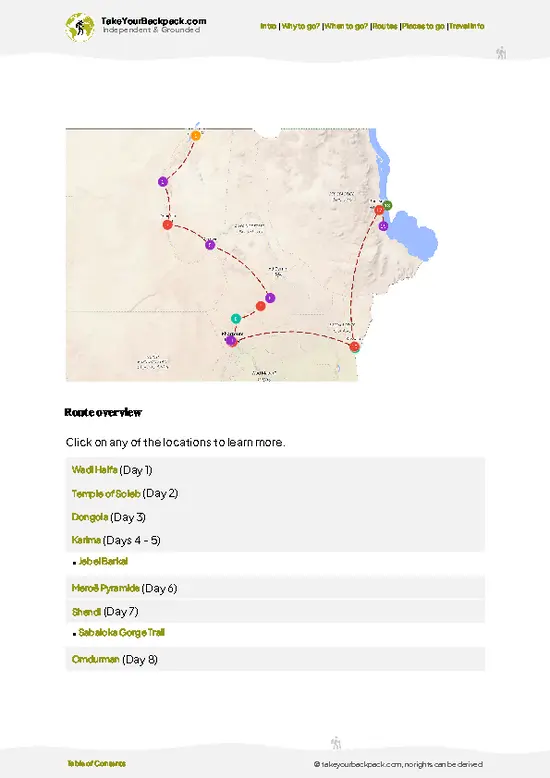
  • Jebel Barkal—sandstone mountain, pharaonic temples, cliffside views, sacred site| 263 km away
  • Meroë Pyramids—steep-sided pyramids, Nubian burial grounds, desert isolation, hieroglyphic carvings| 529 km away
  • Great Mosque of Omdurman—minaret silhouette, Friday market, prayer courtyard, Sufi gatherings| 579 km away

💡 Not sure where to go next?
Create a personalized itinerary for Sudan including Temple of Soleb and the places that fit your trip.

Generate my itinerary

👉 Discover all landmarks

Or checkout all Sudan has to offer (think cities, towns, villages, national parks, hikes, beaches, festivals)
Country photo of Sudan

We 💚 feedbackSumming up the experience

The Temple of Soleb is a treasure trove of ancient history, with its intricate carvings and the serene Nile backdrop that feels like stepping into another era. But let’s be real: it’s remote, and getting there can be a slog, often involving long drives on rough roads. If you’re up for the adventure, the reward is a profound connection to a past that few get to experience. Just be prepared for the journey.

✈️ When did I visit Sudan?
Sudan I visited back in October 2017. I combined the trip with a visit to Ethiopia.

✍️ Help improve this page!
The information on this page is based on my own backpacking experience in Sudan, supplemented with up-to-date research and feedback from other travelers. Travel details can change, so if you notice anything outdated or incomplete, feel free to let me know.


🙋‍♂️ Give feedback

👋 Meet the founderWho’s Behind Take Your Backpack?

Johan, backpacker and founder of TakeYourBackpackHi, I’m Johan (Netherlands 🇳🇱), the creator of TakeYourBackpack. Over the past decade, I’ve backpacked through 80+ countries across six continents, gaining extensive experience with independent travel, long-term trips, and overland routes.

This site is built on a combination of firsthand travel experience and carefully curated insights from other backpackers. Many guides are based on places I’ve personally visited, while others bring together tips, observations, and practical advice shared by trusted travelers I’ve met along the way.

The goal is to provide realistic, experience-driven guidance — not generic itineraries — so you can explore destinations with better context, clearer expectations, and more confidence.

Get full Sudan guide •
Instant download • 72 highlights • Full Offline guide