v2.webp)
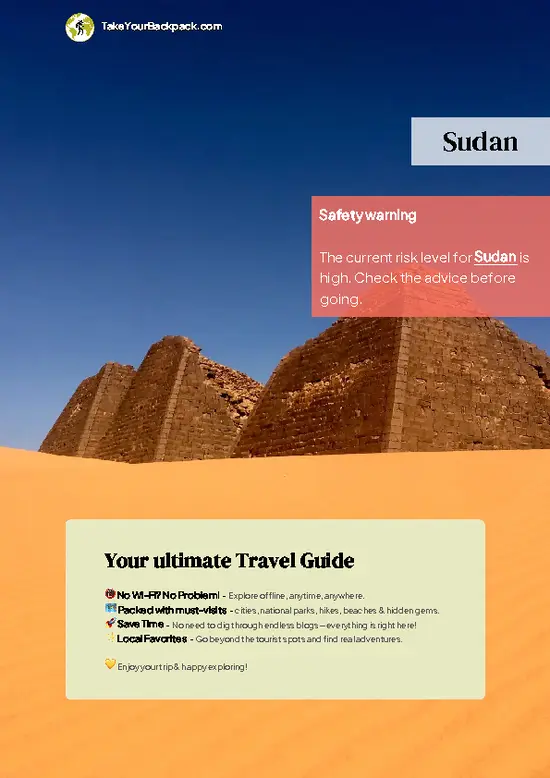
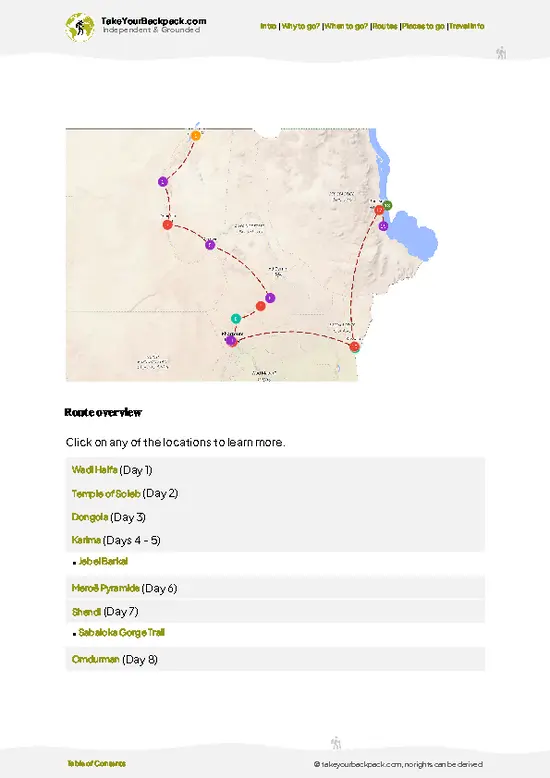
- The steep Meroitic pyramids (North Cemetery) — Those skinny, sharply angled pyramids are nothing like Giza: small, compact and stacked with little chapels at their bases. Seeing row after row of them gives you an immediate sense that this was a powerful African kingdom with its own burial style, not an off-shoot of pharaonic Egypt.
- Royal chapel facades and Meroitic inscriptions — Up close you can make out carved reliefs and the elusive Meroitic script on the chapel fronts. They’re weathered but readable enough to hint at local rituals and royal names — a direct link to a unique written culture that scholars still puzzle over.
- Temple ruins of the royal city — Scattered stone platforms, column fragments and shrine remains show where the capital’s religious life happened. The architecture
- The steep Meroitic pyramids (North Cemetery) — Those skinny, sharply angled pyramids are nothing like Giza: small, compact and stacked with little chapels at their bases. Seeing row after row of them gives you an immediate sense that this was a powerful African kingdom with its own burial style, not an off-shoot of pharaonic Egypt.
- Royal chapel facades and Meroitic inscriptions — Up close you can make out carved reliefs and the elusive Meroitic script on the chapel fronts. They’re weathered but readable enough to hint at local rituals and royal names — a direct link to a unique written culture that scholars still puzzle over.
- Temple ruins of the royal city — Scattered stone platforms, column fragments and shrine remains show where the capital’s religious life happened. The architecture borrows Egyptian motifs but with clear Kushite twists, so you see a local identity trying on and adapting foreign forms.
- The spread of cemeteries — North, South and West — The fact there are multiple necropolises tells you the story changed over centuries. Visit more than one and you’ll notice differences in pyramid size, layout and preservation — a handy way to read time in stone.
- Desert meets river: the landscape around Meroë — Pyramids punctuate a stark desert plain with the Nile’s green ribbon nearby. That contrast — sand, scrub, and distant river palms — makes the site dramatic and very photogenic without trying too hard.
- Sunrise and sunset light over the pyramids — The limestone takes on buttery golds and deep ambers as the sun slides up or down; shadows sharpen the pyramids’ angles. Personal favorite: nothing beats standing on a low dune with the silhouettes stacking into the horizon during golden hour.
- Everyday edge: camels, nomads and market towns — The site isn’t museum-sterile. You’ll likely see camel herds, local shepherds and a nearby market town vibe that reminds you people still live and make a life here. It’s a nice counterpoint to the ancient silence.
Spotted a mistake or missing something? Contact us.

 Best Backpacking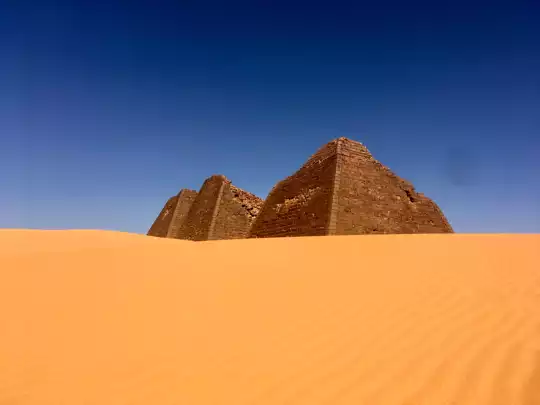
.jpg) Hi, I’m Johan (Netherlands 🇳🇱), the creator of TakeYourBackpack. Over the past 3 decades, I’ve backpacked through 90+ countries across six continents, gaining extensive experience with independent travel, long-term trips, and overland routes.
Hi, I’m Johan (Netherlands 🇳🇱), the creator of TakeYourBackpack. Over the past 3 decades, I’ve backpacked through 90+ countries across six continents, gaining extensive experience with independent travel, long-term trips, and overland routes.