×

Sudan🇸🇩 | citiesSennarBlue Nile crossing, sugar plantations, railway junction | things to do and best time to go

Explore NyalaExplore Kosti

Backpacking in Sennar
👍 Recommendedcity ranked #12
By Johan Kruseman 🇳🇱 | Updated September 3, 2026

If you crave cosmopolitan nightlife, polished museums, or a backpacker scene buzzing with hostel parties, Sennar will feel like a detour into quiet reality. But that’s the point: Sennar rewards travelers who want to see Sudan’s pulse away from the capital’s chaos. Set on the Blue Nile in southeastern Sudan, Sennar is a town where the air smells of river mud and roasting peanuts, and the pace slows to a gentle shuffle. There’s little in the way of headline attractions—no grand ruins or Instagram-famous markets—but that’s its charm. Sennar works best as a practical stopover between Khartoum and the Ethiopian border, or as a base for exploring the Nile’s rural banks and the faded echoes of the old Sennar Sultanate. Transport is straightforward: battered buses and shared taxis connect you to bigger cities, and the town itself is walkable, though you’ll need patience for the heat. Social life is subdued; you’ll find more tea stalls than hostels, and you’re unlikely to stumble into a crowd of fellow travelers. Costs are low, safety is reasonable if you keep your wits, and compared to busier towns like Wad Madani, Sennar feels more authentic, less hurried, and refreshingly unvarnished.

Discover everything you want to know in the 📖 Sudan Travel Guide.
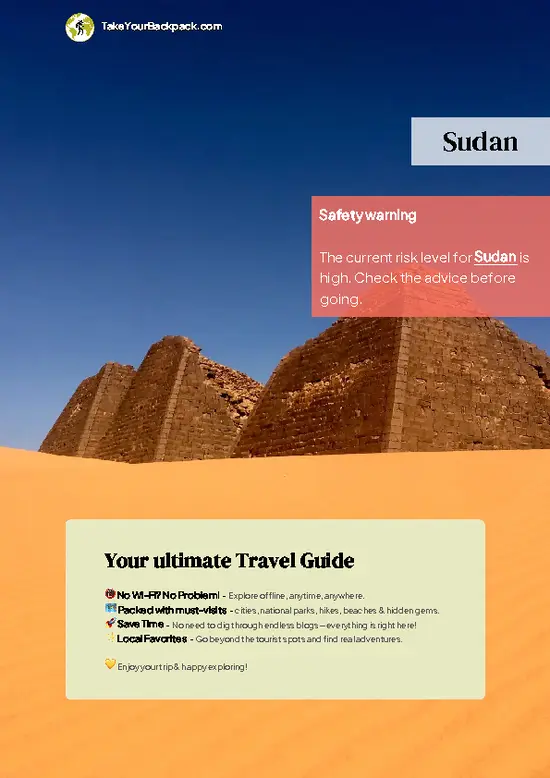
Safety warning

The current risk level for Sudan is high. Check the advice before going.


Get your Sudan guide
72 ranked highlights, routes & tips, works offline (291 pages)
Loading the map 🌍
CLICK TO FILTER
cities
towns
landmarks
national parks
hikes
beaches
attractions
festivals
regions
SHOW COUNTRY’S BESTSHOW ALL

✨ Why go?
Ranked #12 city in Sudan
Why Sennar should be on your travel list

Backpackers flock to Sennar for its strategic location along the route to stunning hikes and cultural sites. The walkable streets invite exploration, while small-scale hostels and guesthouses offer a cozy, intimate vibe. You’ll find local food stalls serving up hearty dishes that fill your belly and warm your spirit. Travelers often linger a few days, soaking in the friendly social atmosphere that fosters connections among solo adventurers and small groups alike. It’s not a party town, but the quiet charm makes it perfect for those who appreciate slow travel and the beauty of shared stories over a simple meal.
Want to include Sennar in your Sudan route?
Create a personalized Sudan itinerary that includes Sennar and the places that fit your trip — based on your travel style, budget, and available time. Get your route in seconds.

Generate my trip

💡 HighlightsPlaces and moments you shouldn't skip

  • Qasr al-Sinnār (Funj royal palace ruins) — The archaeological heart of the old Funj capital: low stone foundations, ruined walls and a few standing fragments that give a real sense of Sudan’s pre-colonial kingdom. Great for slow walks, photos and imagining city life a few centuries back.
  • Sennar Dam (the weir on the Blue Nile) — An impressive piece of river engineering that still shapes local agriculture; the dam and its spillways are a good place to watch the Nile, see fishermen at work and get dramatic sunset views over the water.
  • Blue Nile riverfront and felucca rides — The riverfront is the city’s living room: take a short boat trip to nearby islands, chat with fishermen, or just sit on the bank and watch river traffic and birdlife. Easy, cheap and utterly local.
  • Sennar Central Souq
read more 👉
  • Qasr al-Sinnār (Funj royal palace ruins) — The archaeological heart of the old Funj capital: low stone foundations, ruined walls and a few standing fragments that give a real sense of Sudan’s pre-colonial kingdom. Great for slow walks, photos and imagining city life a few centuries back.
  • Sennar Dam (the weir on the Blue Nile) — An impressive piece of river engineering that still shapes local agriculture; the dam and its spillways are a good place to watch the Nile, see fishermen at work and get dramatic sunset views over the water.
  • Blue Nile riverfront and felucca rides — The riverfront is the city’s living room: take a short boat trip to nearby islands, chat with fishermen, or just sit on the bank and watch river traffic and birdlife. Easy, cheap and utterly local.
  • Sennar Central Souq — A proper Sudanese market: spices, dried fish, leather goods, and cheap textiles. No polished tourist stalls here — real bargaining, real food stalls and a good place to practice Arabic or barter off a friendly price.
  • Old Town (Funj-era neighbourhoods) — Narrow lanes, mud-brick houses and small courtyard scenes that haven’t been sanitised for visitors. Wandering this quarter is the best way to feel the human rhythm of the city — just be respectful and ask before photographing people.
  • Dawn fish market on the Nile — If you’re up early, this is one of the most vivid local experiences: fresh Nile fish being unloaded, weighed and sold to housewives and restaurateurs. Noisy, smelly in the best way, and delicious if you buy a grilled fish from a stall.
  • Traditional boatyards and boatbuilders — Small workshops where feluccas and local boats are made and repaired. Watching the craftsmen at work is a quiet, tactile way to learn about river life and traditional carpentry techniques.
  • Sennar Friday Mosque (the main congregational mosque) — The city’s spiritual center: interesting local mosque architecture, communal life on Fridays and a chance to observe Sudanese religious traditions (dress modestly and visit outside prayer times unless invited).
  • University of Sennar campus and public gardens — A welcome green spot with student cafés, low-key cultural events and people to meet. It’s a relaxed place to swap travel stories, grab a cheap tea and watch day-to-day Sudanese student life.
  • Nile-side palm groves and date farms inside the municipality — Shady walks between date palms, chance to buy fresh fruit from smallholders and see how riverside agriculture works at close range. Quiet, photogenic and good for escaping the city heat.
A few easy day trips outside Sennar: short boat outings to the Blue Nile islands and nearby river villages, the surrounding Funj archaeological sites on the plain, and the larger irrigation canals and palm oases upriver — my personal favourite is taking a slow felucca out to the river islands at sunset.
Spotted a mistake or missing something? Contact us.

🏘️ NeighborhoodsUnderstanding the local layout

Sennar is a captivating blend of history and culture, perfect for backpackers seeking authenticity.

Downtown Sennar: This bustling area is the heart of the town. You’ll find local markets filled with spices and textiles. It’s walkable, with plenty of budget-friendly eateries. The vibe is lively, especially in the evenings, making it ideal for short stays.

Al-Mahdi District: A quieter neighborhood, perfect for those looking to unwind. It’s less touristy, offering a more local experience. Accommodation here is affordable, and you can easily stroll to nearby parks. Great for longer stays if you want to soak in the local culture.

Old Sennar: Rich in history, this area is where you can explore ancient architecture. It’s a bit farther from transport hubs, but the charm makes it worth the trek. … read more 👉
Sennar is a captivating blend of history and culture, perfect for backpackers seeking authenticity.

Downtown Sennar: This bustling area is the heart of the town. You’ll find local markets filled with spices and textiles. It’s walkable, with plenty of budget-friendly eateries. The vibe is lively, especially in the evenings, making it ideal for short stays.

Al-Mahdi District: A quieter neighborhood, perfect for those looking to unwind. It’s less touristy, offering a more local experience. Accommodation here is affordable, and you can easily stroll to nearby parks. Great for longer stays if you want to soak in the local culture.

Old Sennar: Rich in history, this area is where you can explore ancient architecture. It’s a bit farther from transport hubs, but the charm makes it worth the trek. Ideal for history buffs and those wanting a peaceful retreat.

⌛️ 1 day1-day itinerary for Sennar

Sennar, Sudan, pulses with a rich history and vibrant local culture, making it a captivating stop. Start your morning at the bustling local market, where the air is thick with the scent of spices and fresh produce. Engage with vendors selling everything from colorful fabrics to aromatic herbs. This is where you’ll feel the town’s heartbeat.

In the afternoon, head to the nearby Jebel Marra mountains. The hike is rewarding; the views are expansive, with the sun casting golden light over the landscape. It’s a bit of a trek, but the sense of accomplishment is palpable. You might even spot local wildlife if you’re lucky.

As evening falls, stroll through the historic neighborhoods, where the architecture tells stories of the past. Stop by a local café for a cup of strong Sudanese coffee, savoring … read more 👉
Sennar, Sudan, pulses with a rich history and vibrant local culture, making it a captivating stop. Start your morning at the bustling local market, where the air is thick with the scent of spices and fresh produce. Engage with vendors selling everything from colorful fabrics to aromatic herbs. This is where you’ll feel the town’s heartbeat.

In the afternoon, head to the nearby Jebel Marra mountains. The hike is rewarding; the views are expansive, with the sun casting golden light over the landscape. It’s a bit of a trek, but the sense of accomplishment is palpable. You might even spot local wildlife if you’re lucky.

As evening falls, stroll through the historic neighborhoods, where the architecture tells stories of the past. Stop by a local café for a cup of strong Sudanese coffee, savoring the rich flavors while chatting with friendly locals. This isn’t just a day in Sennar; it’s a dive into its soul, where every moment feels earned and every interaction is a connection.
Turn your Sennar visit into an Sudan adventure
Build a complete Sudan route with Sennar, hidden gems, must-see destinations, and realistic travel times included.

Generate my trip

🌤️ When to go?Choosing the right time of year


  • Weather: Sennar bakes under a harsh sun most of the year, with the rainy season from July to September turning the landscape lush but muddy. For backpackers, the dry months from October to March offer clearer skies and manageable dust, making trekking and exploring far more pleasant.

  • Temperature: Expect scorching highs around 40°C (104°F) in peak summer, which can drain your energy fast. The cooler season drops to a comfortable 20-25°C (68-77°F) during the day, perfect for long walks without overheating.

  • Daylight Hours: Daylight remains fairly consistent year-round, roughly 11 to 12 hours. Early mornings and late afternoons provide the best light for photography and cooler temperatures for hiking.

  • Crowds: Sennar isn’t a tourist hotspot, so crowds are minimal year-round. Visiting during
read more 👉

  • Weather: Sennar bakes under a harsh sun most of the year, with the rainy season from July to September turning the landscape lush but muddy. For backpackers, the dry months from October to March offer clearer skies and manageable dust, making trekking and exploring far more pleasant.

  • Temperature: Expect scorching highs around 40°C (104°F) in peak summer, which can drain your energy fast. The cooler season drops to a comfortable 20-25°C (68-77°F) during the day, perfect for long walks without overheating.

  • Daylight Hours: Daylight remains fairly consistent year-round, roughly 11 to 12 hours. Early mornings and late afternoons provide the best light for photography and cooler temperatures for hiking.

  • Crowds: Sennar isn’t a tourist hotspot, so crowds are minimal year-round. Visiting during local festivals, often in the dry season, adds cultural depth but expect more locals around markets and public spaces.

  • Seasonal Activities: The dry season aligns with agricultural cycles and traditional celebrations, offering authentic encounters with local life. The rainy season, while challenging, transforms the Nile banks into vibrant green corridors worth seeing if you’re prepared for the mud.

  • Price Fluctuations: Accommodation and transport costs remain stable due to low tourist volume, but prices can spike slightly during festivals or holidays when locals travel.


Pro-tip: Aim for late October to early March—cooler days, dry trails, and the chance to catch local life in full swing without the oppressive heat or mud slowing you down.


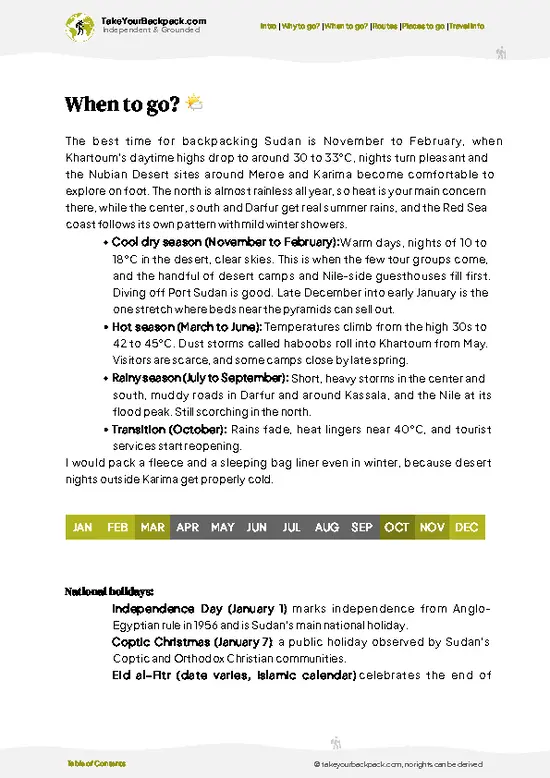
source: climatestotravel.comJANJanuary: excellent for travelingFEBFebruary: excellent for travelingMARMarch: excellent for travelingAPRApril: highly recommended for travelingMAYMay: good for travelingJUNJune: fair for travelingJULJuly: fair for travelingAUGAugust: fair for travelingSEPSeptember: good for travelingOCTOctober: excellent for travelingNOVNovember: excellent for travelingDECDecember: excellent for traveling
when-to-go

✈️ The backpacker research shortcutSudan Travel Guide

An offline-friendly backpacking guide with optimized travel routes, ranked highlights, transport advice, and the best areas to stay.
example page 0 from our offline Travel Guide for Sudan
example page 1 from our offline Travel Guide for Sudan
example page 2 from our offline Travel Guide for Sudan
example page 3 from our offline Travel Guide for Sudan
example page 4 from our offline Travel Guide for Sudan
example page 5 from our offline Travel Guide for Sudan
example page 6 from our offline Travel Guide for Sudan
example page 7 from our offline Travel Guide for Sudan
The digital guide (291 pages) contains:
72 highlights, ranked by travel appeal
Optimized 5, 10 & 15-day travel routes
Cities, national parks, landmarks, beaches
How to get around
Offline-friendly for travel without Wi-Fi
👉 Click to see all 30+ guide features

📅 Plan smarter in minutes, not weeks
Month by month travel advice
Festivals & national holidays
Budget expectations

🗺️ Go to the right places, skip the overrated ones
Honest pros & cons of destinations
Top hikes, parks & viewpoints
Lesser-known places most travelers miss
Clear “worth it vs skip it” guidance

🛏️ Travel smoothly without rookie mistakes
Best areas to stay
Transport systems explained simply
Common scams & safety advice
SIM cards, money & practical tips

🌍 Understand the country, not just visit it
Culture & traditions
52 Essential phrases & customs
Festivals worth planning around
Traveler-friendly historical context
Insights that make places more meaningful

📱 Built for real travel conditions
Fully downloadable PDF
Works completely offline
Optimized for phone use
Useful in remote areas & buses
Everything in one place
Save weeks of stressful planning
Get instant access to your full guide. 30‑day money-back guarantee.
+ Add another guide for just US$7.80

By proceeding you agree to our terms.
Sent to your inbox immediately after payment • 100% Secure Checkout
Best Backpacking Travel Advisor 2025 tourism awardBest Backpacking
Travel Advisor
2025
What others say about Take Your Backpack Guides:
⭐⭐⭐⭐⭐
Fantastic, amazing amount of information!
⭐⭐⭐⭐⭐
My goodness this is amazing, it's what I've been looking for hats off too you!
⭐⭐⭐⭐⭐
I think this is absolutely BRILLIANT
⭐⭐⭐⭐
Very complete and informative. It's still missing places, but I gotta to commend you
⭐⭐⭐⭐⭐
This is truly amazing, thank you, can't wait to explore it with my kids!
⭐⭐⭐⭐⭐
Awesome resource, thank you!
⭐⭐⭐⭐⭐
This is amazing! Can't wait to explore the ones I haven't seen
⭐⭐⭐⭐
I love this! Well done, great idea.
⭐⭐⭐⭐⭐
Thanks for taking the time to make this gem!
⭐⭐⭐⭐⭐
This might be the best website I've ever seen.
⭐⭐⭐⭐⭐
Congratulations, and thank you so much for your work; it's incredibly valuable.
⭐⭐⭐⭐
In all seriousness I think you did a great job pointing out the important spots
⭐⭐⭐⭐⭐
10/10 very good
⭐⭐⭐⭐⭐
As someone who's only just starting to visit regularly this is awesome, thank you.
⭐⭐⭐⭐
Thank you very much! I'm going to visit my dad, it's going to be very useful!
⭐⭐⭐⭐⭐
This is really cool! We'll be travelling for the first time and this definitely come in handy.
⭐⭐⭐⭐⭐
You are now our minister of culture, congratulations 👨‍💼
⭐⭐⭐⭐⭐
Just wanted to tell you that this is a pearl! Going to follow your recommendations.
⭐⭐⭐⭐⭐
This is so cool. I'll definitely be using the resource for my travels soon.
⭐⭐⭐⭐⭐
This is very impressive! Good work.
⭐⭐⭐⭐⭐
This is an amazing and informative site. Very well done!

🛏️ Where to stay?Choosing the right base

In Sennar, the best spot for backpackers is the area around the city center, near the Nile’s edge. This neighborhood hums with local life—vendors calling out, the scent of fresh bread mingling with the dry river breeze. It’s where you’ll find the most budget-friendly guesthouses and a handful of hostels that cater to solo travelers and small groups. The vibe here is relaxed but lively, with enough foot traffic to feel safe after dark without the chaos of a tourist trap.

Why this area? It’s the practical heart of Sennar, close to markets, eateries, and transport hubs. You can walk to the riverbank … read more 👉
In Sennar, the best spot for backpackers is the area around the city center, near the Nile’s edge. This neighborhood hums with local life—vendors calling out, the scent of fresh bread mingling with the dry river breeze. It’s where you’ll find the most budget-friendly guesthouses and a handful of hostels that cater to solo travelers and small groups. The vibe here is relaxed but lively, with enough foot traffic to feel safe after dark without the chaos of a tourist trap.

Why this area? It’s the practical heart of Sennar, close to markets, eateries, and transport hubs. You can walk to the riverbank for a quiet moment or join locals in small cafés where the tea is strong and the conversation easy. Other parts of town tend to be quieter but less connected—more residential and lacking in traveler infrastructure, which means fewer chances to meet fellow backpackers or find affordable lodging.

Choosing the city center means you’re plugged into the rhythm of Sennar, making your stay smoother and richer. You avoid the isolation of outlying districts and the expense of newer developments, trading them for authentic encounters and a genuine sense of place.

🚌 Getting aroundHow to get from A to B

Sennar moves at a pace that feels like the Nile itself—steady, deliberate, and shaped by rhythms older than the town’s dusty streets. It’s not a place where you’ll find strict timetables or polished transit hubs. Instead, the flow here is a blend of local intuition and the slow shuffle of daily life, where the sun’s angle and the call to prayer mark your best cues for timing. The air carries a mix of warm earth and river moisture, and the streets hum with the chatter of vendors and the occasional honk of a shared taxi. To navigate Sennar like a pro, you’ll lean into this organic pulse, knowing when to move fast and when to settle into the slower beat.

Walking: The heart of Sennar is compact enough to explore on foot. Streets are uneven and sometimes dusty, but walking lets you catch the scent … read more 👉
Sennar moves at a pace that feels like the Nile itself—steady, deliberate, and shaped by rhythms older than the town’s dusty streets. It’s not a place where you’ll find strict timetables or polished transit hubs. Instead, the flow here is a blend of local intuition and the slow shuffle of daily life, where the sun’s angle and the call to prayer mark your best cues for timing. The air carries a mix of warm earth and river moisture, and the streets hum with the chatter of vendors and the occasional honk of a shared taxi. To navigate Sennar like a pro, you’ll lean into this organic pulse, knowing when to move fast and when to settle into the slower beat.

Walking: The heart of Sennar is compact enough to explore on foot. Streets are uneven and sometimes dusty, but walking lets you catch the scent of spices from market stalls and the texture of sun-warmed brick walls. It’s free, obviously, and the best way to absorb the town’s character. Just start early or late in the day to avoid the harsh midday sun.

Shared Taxis (Blue Taxis): These are the workhorses of local transit. They don’t run on a strict schedule but cruise main routes continuously from dawn until dusk, costing just a few Sudanese pounds. Expect a tight squeeze and a lively atmosphere—drivers shout destinations and negotiate fares on the fly. They’re faster than walking but still let you soak in the street-level buzz.

Minibuses: Minibuses connect Sennar with nearby villages and the outskirts. They leave when full, so timing is flexible but unpredictable. Fares are low, and the ride is bumpy but authentic, with open windows letting in the dry, dusty air. If you’re heading beyond town, this is your budget lifeline.

Bicycles: Renting a bike is a smart move if you want to cover more ground without losing the freedom of the open air. The roads can be rough, so a sturdy bike is essential. Early mornings are perfect for cycling, when the light softens the landscape and the temperature is kind.

Walking along the Nile banks: Not a transit option per se, but a crucial route for locals and travelers alike. The path is uneven but shaded by acacia trees, offering a cooler, scenic alternative to the sun-baked streets. It’s a slower way to move but one that rewards you with quiet moments and views of fishermen at work.

Mastering Sennar’s transit means tuning into its natural rhythms—there’s no rush, just a steady flow that rewards patience and curiosity. You’ll find that moving through the town this way isn’t just about getting from A to B; it’s about stepping into the daily life that makes Sennar feel real.

👛 Costs (as of 3 September 2026)What things cost and how to budget

Backpacking in Sennar, Sudan, offers a raw, unfiltered experience where costs stay modest but the environment demands a bit of savvy budgeting to keep things smooth.
  • Dorm Accommodation: Options are limited and basic, often guesthouses rather than formal hostels. Expect to pay around $5 to $10 per night. Rooms might be simple, with minimal amenities, but clean enough to rest after a day under the harsh sun.
  • Meals: Local eateries serve hearty, straightforward meals—think stews, bread, and fresh fruit. Street food can be as cheap as $1 to $2 per meal, while a more substantial sit-down meal might run $3 to $5. Water and soft drinks add a small extra cost, so budget accordingly.
  • Local Transport: Transport is mostly informal—shared minibuses or tuk-tuks. A short ride typically costs around $0.
read more 👉
Backpacking in Sennar, Sudan, offers a raw, unfiltered experience where costs stay modest but the environment demands a bit of savvy budgeting to keep things smooth.
  • Dorm Accommodation: Options are limited and basic, often guesthouses rather than formal hostels. Expect to pay around $5 to $10 per night. Rooms might be simple, with minimal amenities, but clean enough to rest after a day under the harsh sun.
  • Meals: Local eateries serve hearty, straightforward meals—think stews, bread, and fresh fruit. Street food can be as cheap as $1 to $2 per meal, while a more substantial sit-down meal might run $3 to $5. Water and soft drinks add a small extra cost, so budget accordingly.
  • Local Transport: Transport is mostly informal—shared minibuses or tuk-tuks. A short ride typically costs around $0.50 to $1. Longer trips or private hires might push closer to $3 to $5. Walking is often the best way to soak in the town’s atmosphere and save cash.
  • Basic Activities/Entry Fees: Sennar’s attractions are mostly natural or historical sites with minimal or no entrance fees. If you visit local markets or cultural spots, expect to pay small fees or tips, usually under $2. Guided tours are rare and can cost $10 or more if arranged privately.
  • Miscellaneous Expenses: This covers essentials like bottled water, snacks, phone credit, and occasional toiletries. Budget around $1 to $3 daily, as some items may be pricier due to limited availability.

All told, you’re looking at roughly $10 to $20 per day to cover the basics in Sennar. It’s a place where every dollar stretches, but the simplicity means you’ll want to bring patience and a readiness to embrace the local pace. The payoff is in the quiet moments along the Blue Nile and the chance to experience a Sudanese town far from the usual tourist routes.


source: sudan.gov.sd
⚠️ Prices can change and everyone travels differently, so take this as a rough guide. Hope it helps you plan your adventure!

🚌 Day tripsExploring the surroundings

Sennar, Sudan, is a backpacker’s dream base for exploring the rich tapestry of the region. With its vibrant local culture and proximity to stunning landscapes, you can dive into unforgettable day trips without the hassle of overnight gear.

Blue Nile Falls
Just a short ride from Sennar, the Blue Nile Falls is a must-see. The roar of the cascading water fills the air, and the mist creates a refreshing chill on a hot day. Plan for about an hour’s travel, and bring around $5 for entry. The best time to visit is during the rainy season when the falls are at their most powerful. A common mistake is underestimating the hike to the viewpoint; sturdy shoes are essential.


Jebel Marra
For the adventurous spirit, Jebel Marra offers breathtaking views and a chance to connect with nature. It takes … read more 👉
Sennar, Sudan, is a backpacker’s dream base for exploring the rich tapestry of the region. With its vibrant local culture and proximity to stunning landscapes, you can dive into unforgettable day trips without the hassle of overnight gear.

Blue Nile Falls
Just a short ride from Sennar, the Blue Nile Falls is a must-see. The roar of the cascading water fills the air, and the mist creates a refreshing chill on a hot day. Plan for about an hour’s travel, and bring around $5 for entry. The best time to visit is during the rainy season when the falls are at their most powerful. A common mistake is underestimating the hike to the viewpoint; sturdy shoes are essential.


Jebel Marra
For the adventurous spirit, Jebel Marra offers breathtaking views and a chance to connect with nature. It takes about two hours to reach the base, and you can expect to spend around $10 on transport. Go during the cooler months, from November to February, to avoid the heat. Many first-timers miss the stunning sunrise views; start early to catch the golden light.


Khartoum
A day trip to Khartoum is a cultural immersion. It’s about three hours by bus, costing around $8. Explore the confluence of the Blue and White Nile, and don’t miss the National Museum. The best time is early morning to beat the heat. A rookie mistake is not trying the local street food; it’s a culinary adventure you can’t afford to miss.
👉 Explore Khartoum
Want to know what more Sudan offers?
The Sudan Travel Guide describes 72 highlights, from cities to national parks, from beaches to hikes

Get the Travel Guide -

🍲 FoodWhat to Eat & Drink

In Sennar, food is a gateway to the heart of Sudanese culture, and as a backpacker, you’ll find the city’s flavors both straightforward and deeply satisfying. The signature dish here is kisra, a thin, sourdough-like flatbread made from fermented sorghum, often served with rich stews like mullah—a spicy, hearty mix of meat, okra, and local greens. It’s not just a meal; it’s a communal experience, where tearing off kisra with your hands connects you directly to the tradition.

Backpackers will mostly eat where locals do: bustling markets and street stalls where the air is thick with the scent of grilled meats and spices. Casual eateries offer simple, filling plates without the fuss—perfect for quick refueling between explorations. Don’t expect bars or cafés like you might in bigger cities; instead, … read more 👉
In Sennar, food is a gateway to the heart of Sudanese culture, and as a backpacker, you’ll find the city’s flavors both straightforward and deeply satisfying. The signature dish here is kisra, a thin, sourdough-like flatbread made from fermented sorghum, often served with rich stews like mullah—a spicy, hearty mix of meat, okra, and local greens. It’s not just a meal; it’s a communal experience, where tearing off kisra with your hands connects you directly to the tradition.

Backpackers will mostly eat where locals do: bustling markets and street stalls where the air is thick with the scent of grilled meats and spices. Casual eateries offer simple, filling plates without the fuss—perfect for quick refueling between explorations. Don’t expect bars or cafés like you might in bigger cities; instead, tea stalls are the social hubs. Here, sweet black tea or hibiscus juice is sipped slowly, often accompanied by lively conversation and the occasional card game.

Eating in Sennar is relaxed but respectful—sharing food is common, and refusing an offered dish can be seen as impolite. Hands-only dining is the norm, so embrace the tactile connection to your meal. This is food that roots you in place, a sensory puzzle that rewards curiosity and openness.

🛡️ SafetySafety Tips and Common Scams in Sennar

Sennar is generally safe, but awareness is key. Stick to well-lit areas at night, especially if you’re solo. The local market can be bustling, and while most vendors are friendly, some may try to inflate prices for tourists. Approach haggling with a smile; it’s part of the culture. Keep your belongings close, especially in crowded spots. A confident demeanor goes a long way—people respond positively when you engage respectfully. Embrace the atmosphere, but stay alert to ensure your experience is smooth and enjoyable.

FAQCommon questions from travelers

2 to 3 days are sufficient to explore Sennar, focusing on its historical sites and the Blue Nile surroundings. Key attractions include the Sennar Dam and local markets. This timeframe allows for a relaxed pace without rushing.
Sennar is generally safe for solo backpackers, but standard precautions are necessary. Avoid traveling at night and keep valuables secure. Local advice suggests staying in well-known guesthouses and using trusted transport options.
Sennar is known for its historical significance as the capital of the Funj Sultanate and its proximity to the Blue Nile. It is also recognized for the Sennar Dam, which supports local agriculture and hydroelectric power. The city has a rich cultural heritage linked to Sudanese history.
⚠️ Things can change over time, so always validate details locally before you go.

Other Sudanese cities near Sennar

Explore more nearby:

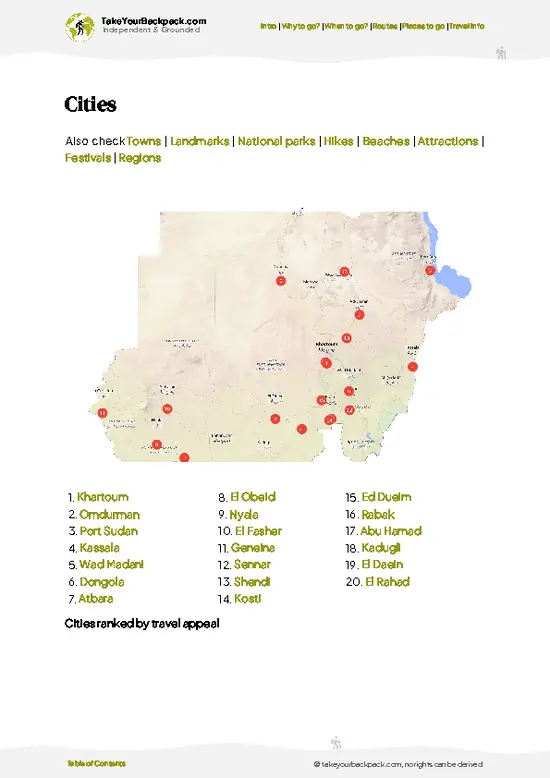
  • Wad Madani—Gezira irrigation, cotton fields, university town| 92 km away
  • Rabak—Industrial zone, White Nile bridge, sugar refinery| 98 km away
  • Kosti—White Nile banks, river port, railway junction| 111 km away

💡 Not sure where to go next?
Create a personalized itinerary for Sudan including Sennar and the places that fit your trip.

Generate my itinerary

👉 Discover all cities

Or checkout all Sudan has to offer (think cities, towns, villages, national parks, hikes, beaches, festivals)
Country photo of Sudan

We 💚 feedbackIs it worth it?

Sennar’s vibrant market is a sensory feast—spices wafting through the air, colors bursting from every stall. But be ready for the heat; it can be oppressive. Embrace the sweat, and you’ll find the real heart of Sudan waiting for you.

✈️ When did I visit Sudan?
Sudan I visited back in October 2017. I combined the trip with a visit to Ethiopia.

✍️ Help improve this page!
The information on this page is based on my own backpacking experience in Sudan, supplemented with up-to-date research and feedback from other travelers. Travel details can change, so if you notice anything outdated or incomplete, feel free to let me know.


🙋‍♂️ Give feedback

👋 Meet the founderWho’s Behind Take Your Backpack?

Johan, backpacker and founder of TakeYourBackpackHi, I’m Johan (Netherlands 🇳🇱), the creator of TakeYourBackpack. Over the past decade, I’ve backpacked through 80+ countries across six continents, gaining extensive experience with independent travel, long-term trips, and overland routes.

This site is built on a combination of firsthand travel experience and carefully curated insights from other backpackers. Many guides are based on places I’ve personally visited, while others bring together tips, observations, and practical advice shared by trusted travelers I’ve met along the way.

The goal is to provide realistic, experience-driven guidance — not generic itineraries — so you can explore destinations with better context, clearer expectations, and more confidence.

Get full Sudan guide •
Instant download • 72 highlights • Full Offline guide