×

Suriname🇸🇷 | national parksWia Wia Nature ReserveScarlet ibis roosts, tidal mudflats, mangrove edge, shell ridges | things to do and best time to go

Explore Raleighvallen Nature ReserveExplore Brownsberg Nature Park

Backpacking in Wia Wia Nature Reserve
👌 Worth visitingnational park ranked #9
By Johan Kruseman 🇳🇱 | Updated October 19, 2026

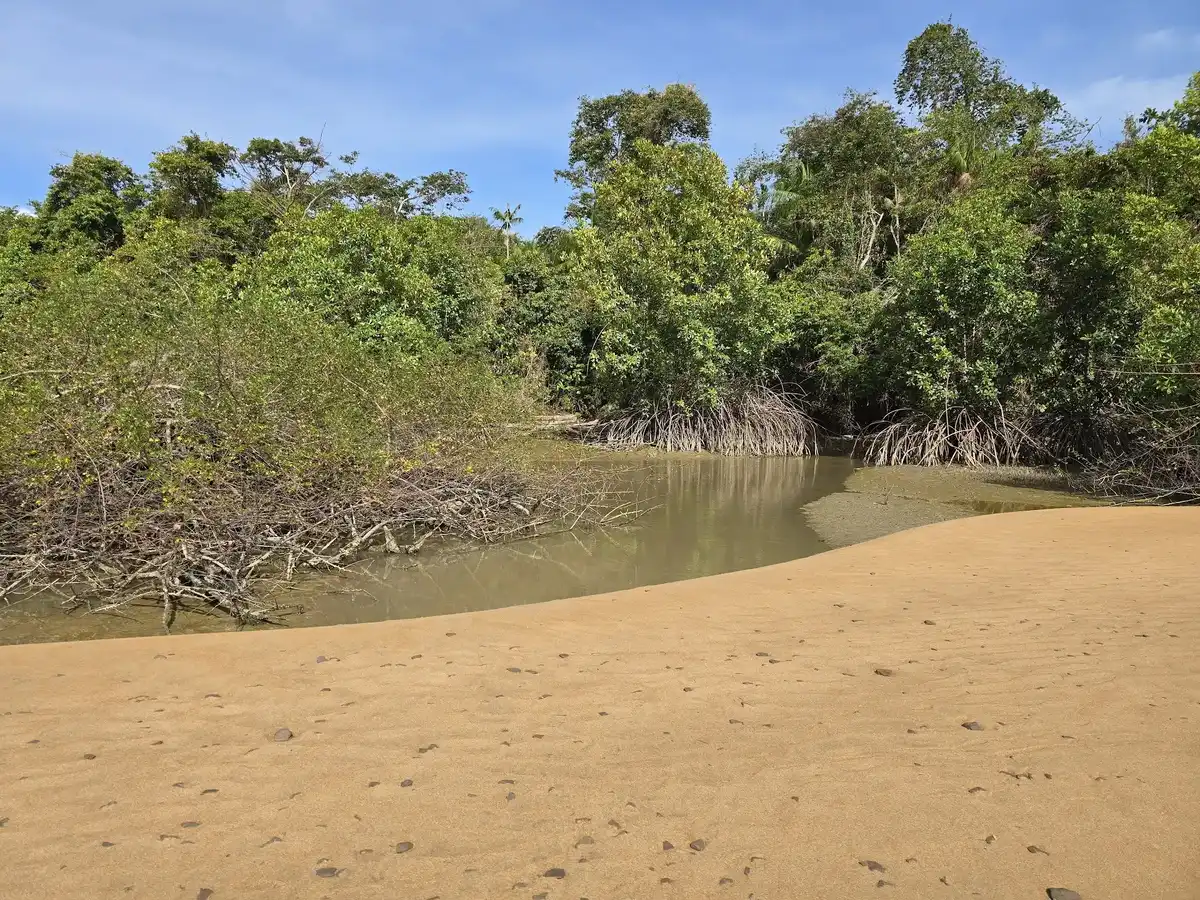
The turtle beach that made Wia Wia famous, Bigi Santi, has eroded away, so nobody comes here for nesting leatherbacks anymore. What remains lies in the north of Suriname, on the Atlantic coast east of the Coppename and Suriname river mouths, and it is a flat, brackish world of mudflats, mangrove and shell ridges. Scarlet ibis flocks, herons and waders crowd the shoreline, the air smells of salt mud, and mosquitoes arrive at dusk in clouds. There are no marked hiking trails, no shops and no easy way in. Boat transfers must be arranged through a tour operator or STINASU, and booking late leaves you stranded or overpaying, so reserve ahead. Tides dictate every landing, so build a spare day into your schedule. Bring all your water. Unlike Galibi, which still draws turtle watchers, Wia Wia is a birding site.

Discover everything you want to know in the 📖 Suriname Travel Guide.


example page 0 from our offline Travel Guide for Suriname
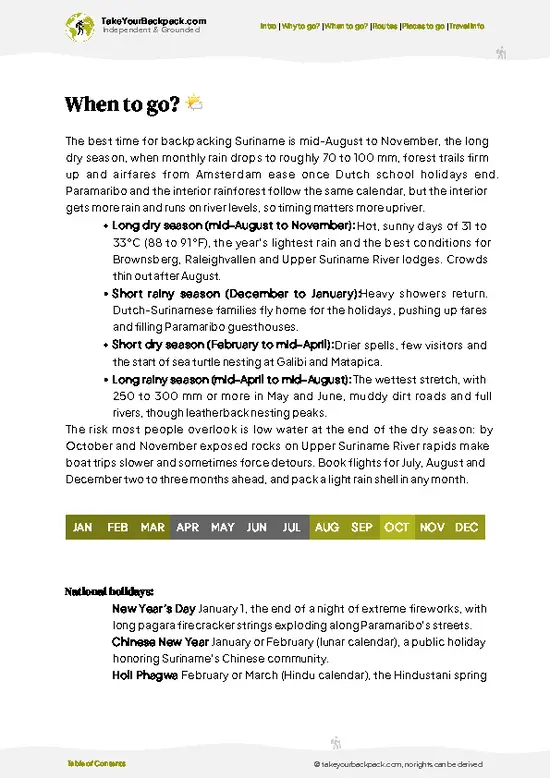
example page 1 from our offline Travel Guide for Suriname
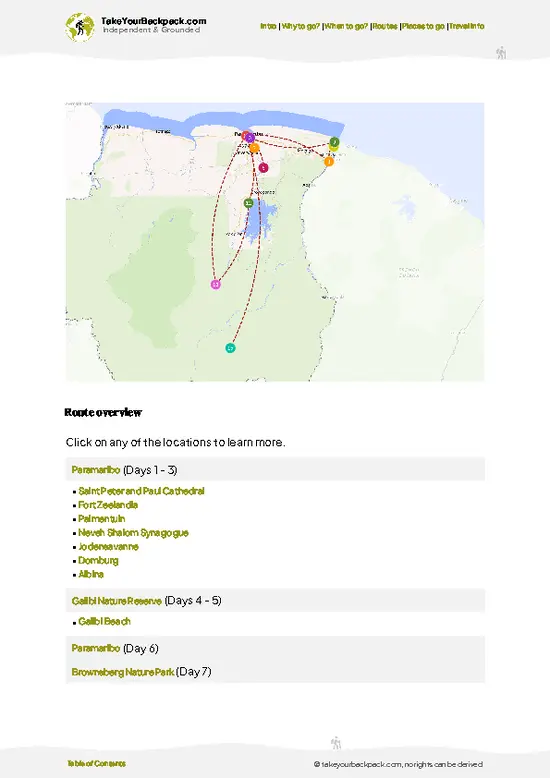
example page 2 from our offline Travel Guide for Suriname
example page 3 from our offline Travel Guide for Suriname
example page 4 from our offline Travel Guide for Suriname
example page 5 from our offline Travel Guide for Suriname
example page 6 from our offline Travel Guide for Suriname
example page 7 from our offline Travel Guide for Suriname
Loading the map 🌍
CLICK TO FILTER
cities
towns
villages
landmarks
national parks
hikes
beaches
attractions
festivals
regions
SHOW COUNTRY’S BESTSHOW ALL

✨ Why go?
Ranked #9 national park in Suriname
The unique appeal for travelers

Wia Wia Nature Reserve suits backpackers who like their wilderness empty and slightly awkward to reach. Nobody queues here. The coast is a working bird nursery, with scarlet ibis flocks and migratory shorebirds feeding on tidal mud, and the mangrove edges and shell ridges along the shoreline give you something no inland park offers. You are not following a signed trail with a tour bus behind you. Planning is hands-on: you deal directly with STINASU, the nature foundation that handles access, and you decide how long to stay and what to carry. Self-guided travelers should know the logistics are boat-dependent, so a guide is practical rather than optional. If you want wide horizons, tidal rhythms and the feeling of being one of very few people on the coast, this is the place. If you need trails and facilities, look elsewhere.

💡 HighlightsDon't-miss highlights and experiences

  1. Scarlet ibis flocks: Red birds against gray mud and green mangrove make the reserve's best-known sight, especially when they gather to roost at dusk.
  2. Coastal mudflats: Tides expose broad flats where sandpipers, plovers and other migrants probe for food, best watched from a boat or the shoreline.
  3. Mangrove shoreline: Black and red mangroves form a tangled edge, with roots, crabs and mudskippers at eye level.
  4. Shell ridges (cheniers): Low ridges of broken shell mark old beach lines and give a firmer footing and a sense of how the coast shifts.
  5. Eroded Bigi Santi beach: Once a major turtle nesting site, it has washed away, and seeing the changed coastline explains why nesting moved east.
  6. Atlantic surf and open horizon: The brown, sediment-heavy sea carried by Amazon currents is unlike any clear-water
… read more 👉
  1. Scarlet ibis flocks: Red birds against gray mud and green mangrove make the reserve's best-known sight, especially when they gather to roost at dusk.
  2. Coastal mudflats: Tides expose broad flats where sandpipers, plovers and other migrants probe for food, best watched from a boat or the shoreline.
  3. Mangrove shoreline: Black and red mangroves form a tangled edge, with roots, crabs and mudskippers at eye level.
  4. Shell ridges (cheniers): Low ridges of broken shell mark old beach lines and give a firmer footing and a sense of how the coast shifts.
  5. Eroded Bigi Santi beach: Once a major turtle nesting site, it has washed away, and seeing the changed coastline explains why nesting moved east.
  6. Atlantic surf and open horizon: The brown, sediment-heavy sea carried by Amazon currents is unlike any clear-water beach.
  7. Waterbird and caiman spotting by boat: Channels and creek mouths hold herons, egrets and the occasional caiman.
Wia Wia Nature Reserve is best started with the scarlet ibis roost, because the birds return at dusk and the whole trip is built around that timing.
Spotted a mistake or missing something? Contact us.

Things to do near Wia Wia Nature Reserve

Ratings based on Tripadvisor reviews. When you book through this link, you support our work at no extra cost to you.

🌤️ When to go?Seasonal considerations and timing

The best window for Wia Wia Nature Reserve is the long dry season from late August to November, when mud flats and channels are easiest to read and rain rarely cancels a boat day.
  • Long Dry Season (Aug to Nov): Days reach 30 to 33°C (86 to 91°F), nights hover near 23°C (73°F). Shorebird counts and boat access are at their best. Guided trips cost the same all year, but the few operators book up.
  • Short Wet Season (Dec to Jan): Showers come in bursts, temperatures stay 26 to 31°C (79 to 88°F). Quiet, humid, and good for birding between downpours.
  • Short Dry Season (Feb to Apr): Warm and fairly settled, around 29 to 32°C (84 to 90°F).
  • Long Wet Season (May to mid-Aug): Heavy rain, rough water, and swarming insects. Some trips are cancelled.
Daylight stays near 12 hours, so plan to be back before dark. … read more 👉
The best window for Wia Wia Nature Reserve is the long dry season from late August to November, when mud flats and channels are easiest to read and rain rarely cancels a boat day.
  • Long Dry Season (Aug to Nov): Days reach 30 to 33°C (86 to 91°F), nights hover near 23°C (73°F). Shorebird counts and boat access are at their best. Guided trips cost the same all year, but the few operators book up.
  • Short Wet Season (Dec to Jan): Showers come in bursts, temperatures stay 26 to 31°C (79 to 88°F). Quiet, humid, and good for birding between downpours.
  • Short Dry Season (Feb to Apr): Warm and fairly settled, around 29 to 32°C (84 to 90°F).
  • Long Wet Season (May to mid-Aug): Heavy rain, rough water, and swarming insects. Some trips are cancelled.
Daylight stays near 12 hours, so plan to be back before dark. Book your STINASU transfer at least two weeks ahead.


source: climatestotravel.comJANJanuary: fair for travelingFEBFebruary: fair for travelingMARMarch: fair for travelingAPRApril: fair for travelingMAYMay: fair for travelingJUNJune: fair for travelingJULJuly: fair for travelingAUGAugust: highly recommended for travelingSEPSeptember: excellent for travelingOCTOctober: excellent for travelingNOVNovember: highly recommended for travelingDECDecember: fair for traveling
suriname-national-park-wia-wia-nature-reserve
© Google | Aspik

✈️ The backpacker research shortcutSuriname Travel Guide

An offline-friendly backpacking guide with optimized travel routes, ranked highlights, transport advice, and the best areas to stay.
example page 0 from our offline Travel Guide for Suriname
example page 1 from our offline Travel Guide for Suriname
example page 2 from our offline Travel Guide for Suriname
example page 3 from our offline Travel Guide for Suriname
example page 4 from our offline Travel Guide for Suriname
example page 5 from our offline Travel Guide for Suriname
example page 6 from our offline Travel Guide for Suriname
example page 7 from our offline Travel Guide for Suriname
The digital guide (153 pages) contains:
✅ 40 highlights, ranked by travel appeal
✅ Optimized 5, 10 & 15-day travel routes
✅ Cities, national parks, landmarks, beaches
✅ How to get around
✅ Offline-friendly for travel without Wi-Fi
👉 Click to see all 30+ guide features

📅 Plan smarter in minutes, not weeks
✅ Month by month travel advice
✅ Festivals & national holidays
✅ Budget expectations

🗺️ Go to the right places, skip the overrated ones
✅ Honest pros & cons of destinations
✅ Top hikes, parks & viewpoints
✅ Lesser-known places most travelers miss
✅ Clear “worth it vs skip it” guidance

🛏️ Travel smoothly without rookie mistakes
✅ Best areas to stay
✅ Transport systems explained simply
✅ Common scams & safety advice
✅ SIM cards, money & practical tips

🌍 Understand the country, not just visit it
✅ Culture & traditions
✅ 52 Essential phrases & customs
✅ Festivals worth planning around
✅ Traveler-friendly historical context
✅ Insights that make places more meaningful

📱 Built for real travel conditions
✅ Fully downloadable PDF
✅ Works completely offline
✅ Optimized for phone use
✅ Useful in remote areas & buses
✅ Everything in one place
Stop searching, start planning
Get instant access to your full guide. 30‑day money-back guarantee.
+ Add another guide for just

By proceeding you agree to our terms.
Sent to your inbox immediately after payment • 100% Secure Checkout
Best Backpacking Travel Advisor 2025 tourism awardBest Backpacking
Travel Advisor
2025
What others say about Take Your Backpack Guides:
⭐⭐⭐⭐⭐
Fantastic, amazing amount of information!
⭐⭐⭐⭐⭐
My goodness this is amazing, it's what I've been looking for hats off too you!
⭐⭐⭐⭐⭐
I think this is absolutely BRILLIANT
⭐⭐⭐⭐
Very complete and informative. It's still missing places, but I gotta to commend you
⭐⭐⭐⭐⭐
This is truly amazing, thank you, can't wait to explore it with my kids!
⭐⭐⭐⭐⭐
Awesome resource, thank you!
⭐⭐⭐⭐⭐
This is amazing! Can't wait to explore the ones I haven't seen
⭐⭐⭐⭐
I love this! Well done, great idea.
⭐⭐⭐⭐⭐
Thanks for taking the time to make this gem!
⭐⭐⭐⭐⭐
This might be the best website I've ever seen.
⭐⭐⭐⭐⭐
Congratulations, and thank you so much for your work; it's incredibly valuable.
⭐⭐⭐⭐
In all seriousness I think you did a great job pointing out the important spots
⭐⭐⭐⭐⭐
10/10 very good
⭐⭐⭐⭐⭐
As someone who's only just starting to visit regularly this is awesome, thank you.
⭐⭐⭐⭐
Thank you very much! I'm going to visit my dad, it's going to be very useful!
⭐⭐⭐⭐⭐
This is really cool! We'll be travelling for the first time and this definitely come in handy.
⭐⭐⭐⭐⭐
You are now our minister of culture, congratulations 👨‍💼
⭐⭐⭐⭐⭐
Just wanted to tell you that this is a pearl! Going to follow your recommendations.
⭐⭐⭐⭐⭐
This is so cool. I'll definitely be using the resource for my travels soon.
⭐⭐⭐⭐⭐
This is very impressive! Good work.
⭐⭐⭐⭐⭐
This is an amazing and informative site. Very well done!

🛏️ Where to stay?Best areas and accommodation options

Most backpackers sleep in Paramaribo and visit Wia Wia Nature Reserve as a guided trip, because the reserve has no regular guesthouses and no public transport. Paramaribo hostels and guesthouses around the historic center run roughly US$15 to 35 for a dorm bed or simple private room, and that is where you will find tour operators, ATMs, and supplies. STINASU, the nature conservation foundation that manages the reserve, can arrange permits and boat logistics, and any overnight stay in the reserve itself is organized through them, usually in basic hammock or ranger-post style accommodation, so bring … read more 👉
Most backpackers sleep in Paramaribo and visit Wia Wia Nature Reserve as a guided trip, because the reserve has no regular guesthouses and no public transport. Paramaribo hostels and guesthouses around the historic center run roughly US$15 to 35 for a dorm bed or simple private room, and that is where you will find tour operators, ATMs, and supplies. STINASU, the nature conservation foundation that manages the reserve, can arrange permits and boat logistics, and any overnight stay in the reserve itself is organized through them, usually in basic hammock or ranger-post style accommodation, so bring your own hammock, net, and food. Albina, on the Marowijne River, and the Commewijne district across the river from Paramaribo are the closest towns with a few simple guesthouses. Commewijne is also home to the Matapica turtle camp, where STINASU runs a base. For flexibility, sleep in Paramaribo and treat the reserve as a one or two day outing.

👛 Costs (as of 19 October 2026)How expensive it really is

Wia Wia Nature Reserve costs most backpackers about US$95 to 190 per day, because the main expense is the guided boat transfer rather than the entry itself.
CategoryBudget RangeLocal Reality
Entrance and permitUS$5 to 15Arranged through STINASU, paid in local currency or by transfer.
Guide and boat transferUS$60 to 100Split among a group to lower the per-person share.
Accommodation (high season)US$15 to 35Paramaribo dorm or simple room. Reserve overnights are basic and arranged with STINASU.
Food and suppliesUS$10 to 25Buy snacks, water, and fruit in Paramaribo. Local warung meals are cheap.
Local transportUS$5 to 15Taxi or bus to the departure point from the capital.
Total Daily BudgetUS$95 to 190Per person, per day, in high season.


source: surinametourism.com
⚠️ Prices can change and everyone travels differently, so take this as a rough guide. Hope it helps you plan your adventure!

🥾 TrailsBest hikes in Wia Wia Nature Reserve national park

Wia Wia Nature Reserve has no developed, named hiking trails, so the walking is informal and tied to tides and boats. Walks start from wherever your boat lands and follow the shoreline, shell ridges or edges of the mangrove.
  • Shoreline walks: Flat, muddy and sometimes soft underfoot, covering a few kilometers at low tide, usually one to three hours, easy but tiring in heat.
  • Shell ridge walks: Firmer ground that rises slightly above the swamp, good for birdwatching, easy to moderate depending on mud.
  • Mangrove edges: Slow, wet and root-tangled, best done with a guide, moderate difficulty.
  • Wildlife: Scarlet
… read more 👉
Wia Wia Nature Reserve has no developed, named hiking trails, so the walking is informal and tied to tides and boats. Walks start from wherever your boat lands and follow the shoreline, shell ridges or edges of the mangrove.
  • Shoreline walks: Flat, muddy and sometimes soft underfoot, covering a few kilometers at low tide, usually one to three hours, easy but tiring in heat.
  • Shell ridge walks: Firmer ground that rises slightly above the swamp, good for birdwatching, easy to moderate depending on mud.
  • Mangrove edges: Slow, wet and root-tangled, best done with a guide, moderate difficulty.
  • Wildlife: Scarlet ibis, herons, egrets, shorebirds, crabs and mudskippers, with caiman in the channels.
There is no public transport to the reserve. Access is by boat arranged through STINASU in Paramaribo, and a permit and guide are the sensible route. Visitors are few, so you will probably have the coast to yourself. Rubber boots, repellent, sun protection and plenty of water are worth packing. Entry arrangements and fees are handled when you book.
⚠️ Hiking info can sometimes be outdated or inaccurate. Before you hit the trail, check the latest conditions with locals. If you do spot anything that's off, I'd love to hear from you, so I can update it for fellow travelers.

🛡️ SafetySafety Tips and Common Scams in Wia Wia Nature Reserve

Wia Wia Nature Reserve is a remote coastal wetland, so the real hazards are sun, water, and insects rather than crime. Go only with a STINASU-arranged guide and boat, since channels and mudflats shift with the tide and there are no marked trails. Mud can be deep and slippery, so wear closed shoes that tolerate getting soaked, and never wander off alone at low tide. Mosquitoes are relentless at dusk, so carry strong repellent and sleep under a net. Caimans and snakes live here but avoid people if you keep your hands and feet out of the water edge and vegetation. Bring far more drinking water than seems sensible, plus sunscreen and a hat, because there is almost no shade on open flats. Tell someone your return time, and keep a charged phone in a waterproof bag.

FAQTraveler FAQ

One full day is enough for Wia Wia Nature Reserve if you only want a guided boat outing for birds and mangrove channels, while two days with an overnight lets you catch both tides and dawn birdlife. Add a day on each end for arranging permits and getting to and from Paramaribo. Most visitors fold it into a three to four day trip with Commewijne.
Visiting Wia Wia Nature Reserve without your own car is realistic, but only as an organized trip, since there is no public transport and the reserve is reached by boat. STINASU or a Paramaribo tour operator arranges the road leg and the boat, typically a full day. Sharing with other travelers brings the per-person cost down to about US$60 to 100.
Yes, Wia Wia Nature Reserve requires a permit, and entry is arranged through STINASU, the foundation that manages Suriname’s nature reserves. Expect an entrance fee in the range of US$5 to 15 per person, separate from the guide and boat. Book at least a week or two ahead through the STINASU office in Paramaribo, which can also arrange overnight stays.
⚠️ Things can change over time, so always validate details locally before you go.

Other Surinamese national parks near Wia Wia Nature Reserve

Explore more nearby:


💡 Not sure where to go next?
Create a personalized itinerary for Suriname including Wia Wia Nature Reserve and the places that fit your trip.

Generate my itinerary

👉 Discover all national parks

Or checkout all Suriname has to offer (think cities, towns, villages, national parks, hikes, beaches, festivals)
Country photo of Suriname

We 💚 feedbackParting advice and final tips

Wia Wia Nature Reserve works best as the quiet birding chapter of a coastal loop, paired with a turtle-season stay at Matapica and a few days around Paramaribo. I would go for the ibis roost, bring waterproof boots, and skip it if rain or tides have scrambled your boat plans.

✍️ Help improve this page!
The information on this page is based on in-depth research, insights shared by experienced travelers, and feedback from the local travel community in Suriname. While every effort is made to keep the information accurate and current, conditions can change — so if you spot anything incorrect or outdated, please get in touch.


🙋‍♂️ Give feedback

👋 Meet the founderWho’s Behind Take Your Backpack?

Johan, backpacker and founder of TakeYourBackpackHi, I’m Johan (Netherlands 🇳🇱), the creator of TakeYourBackpack. Over the past 3 decades, I’ve backpacked through 90+ countries across six continents, gaining extensive experience with independent travel, long-term trips, and overland routes.

This site is built on a combination of firsthand travel experience and carefully curated insights from other backpackers. Many guides are based on places I’ve personally visited, while others bring together tips, observations, and practical advice shared by trusted travelers I’ve met along the way.

The goal is to provide realistic, experience-driven guidance — not generic itineraries — so you can explore destinations with better context, clearer expectations, and more confidence.