×

Suriname🇸🇷 | national parksGalibi Nature ReserveLeatherback nesting, Kali’na villages, Marowijne mouth, dugout crossing | things to do and best time to go

Explore Central Suriname Nature ReserveExplore Raleighvallen Nature Reserve

Backpacking in Galibi Nature Reserve
🌟 Highlightnational park ranked #3
By Johan Kruseman 🇳🇱 | Updated October 19, 2026

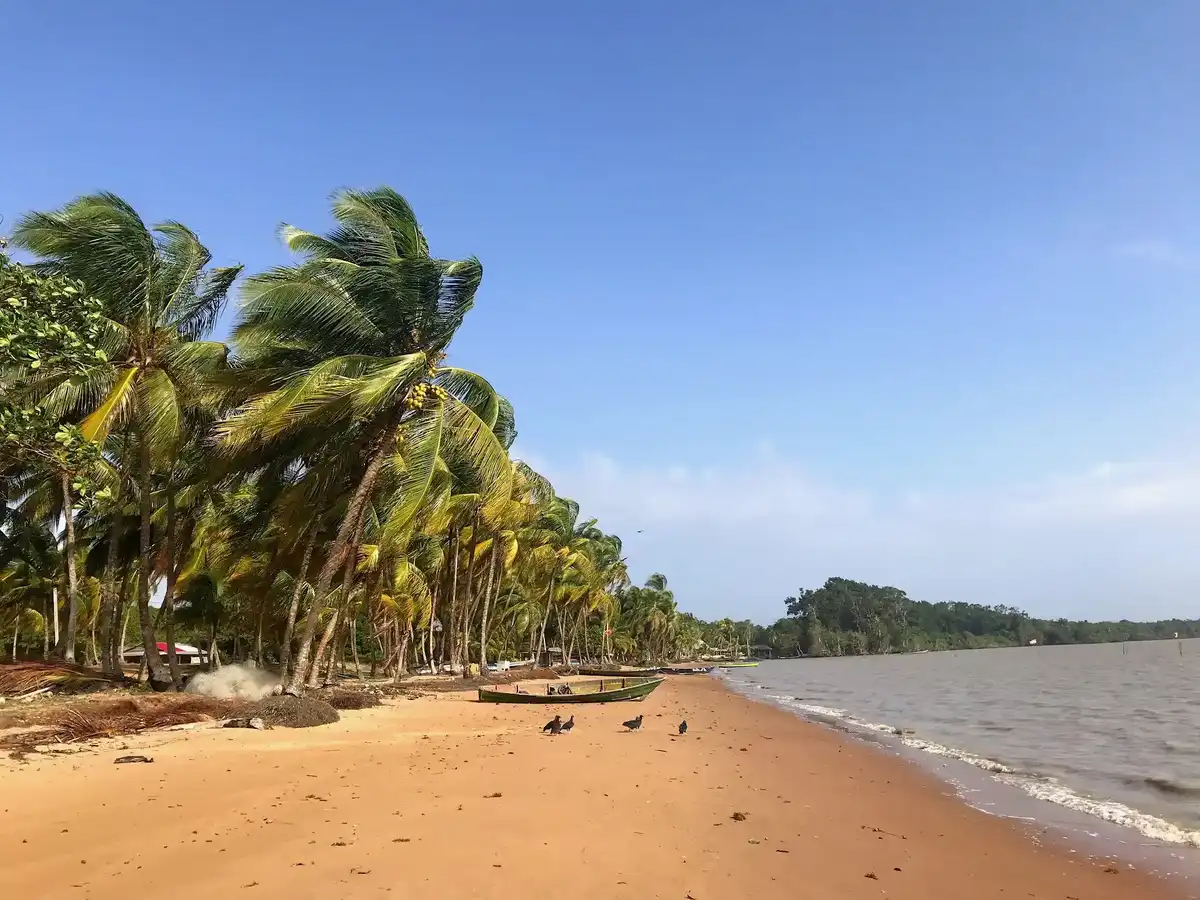
Galibi sits at the mouth of the Marowijne River, and the only realistic way in is by motorized dugout canoe, a ride across open river water that can soak your pack. Galibi Nature Reserve is in the far northeast of Suriname, on the border with French Guiana, where the Carib-speaking Kali’na villages of Galibi share a long beach with nesting sea turtles. You smell salt, wet sand and woodsmoke, and you hear surf over the generators. Giant leatherback and green turtles haul ashore at night in season, and flashlights with white light scare them off, so bring a red one. Hiking is minimal: flat beach walks and a few sandy paths. Crowds are light, but the village shops are thin. Boat transfers eat the budget when booked last minute, so arrange the full package with a licensed operator or lodge in Paramaribo days ahead, and carry small bills for the villages.

Discover everything you want to know in the 📖 Suriname Travel Guide.


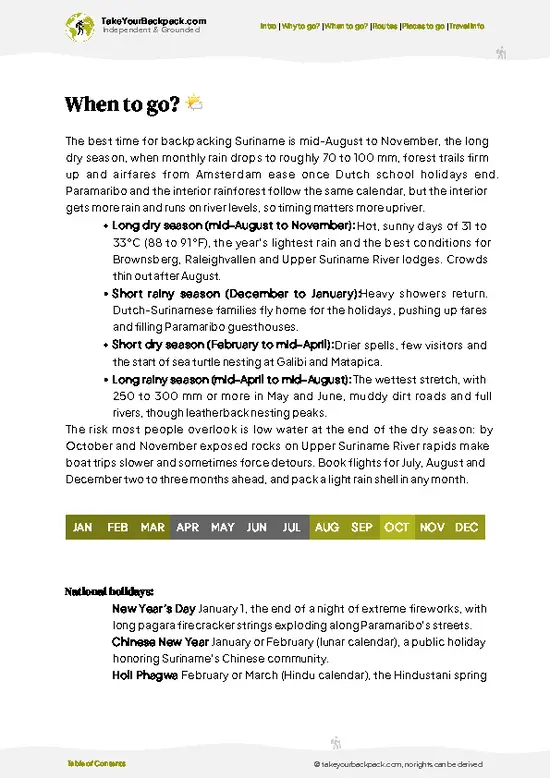
example page 0 from our offline Travel Guide for Suriname
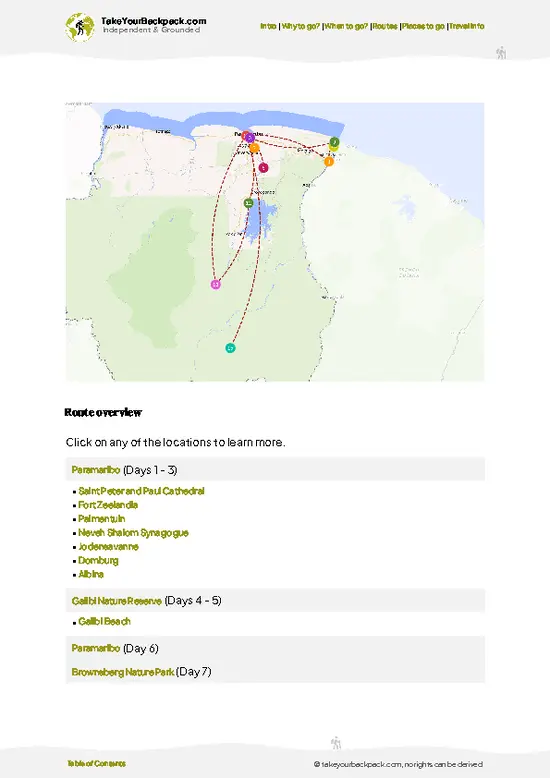
example page 1 from our offline Travel Guide for Suriname
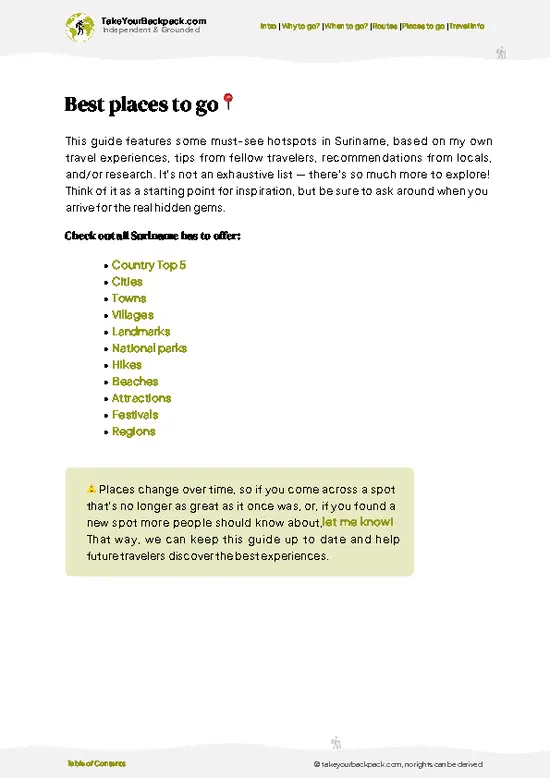
example page 2 from our offline Travel Guide for Suriname
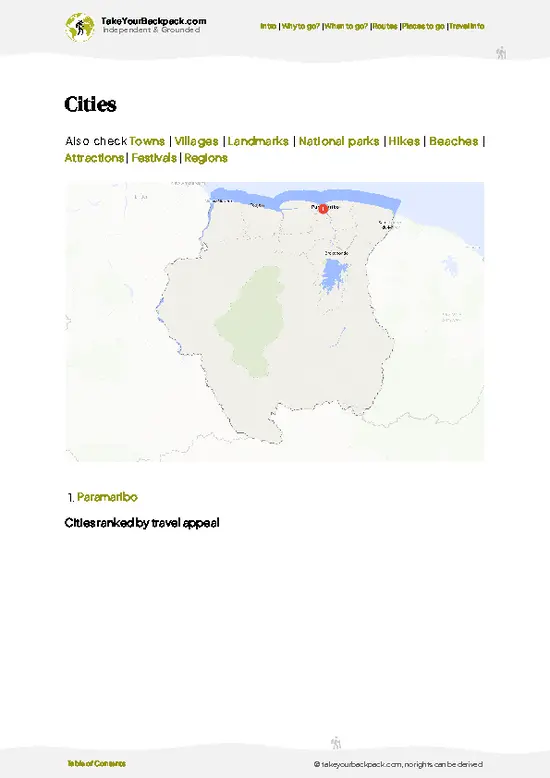
example page 3 from our offline Travel Guide for Suriname
example page 4 from our offline Travel Guide for Suriname
example page 5 from our offline Travel Guide for Suriname
example page 6 from our offline Travel Guide for Suriname
example page 7 from our offline Travel Guide for Suriname
Loading the map 🌍
CLICK TO FILTER
cities
towns
villages
landmarks
national parks
hikes
beaches
attractions
festivals
regions
SHOW COUNTRY’S BESTSHOW ALL

✨ Why go?
Ranked #3 national park in Suriname
What makes this national park worth exploring

Galibi Nature Reserve is the place to watch giant sea turtles lay eggs without a fence, a ticket gate or a crowd of hundreds. Backpackers come for the leatherback turtles, which weigh several hundred kilograms and drag themselves up the sand after dark, usually from roughly February to July, with olive ridley and green turtles also nesting. Come at the right time and you can share a beach with only a handful of other people and a Kali’na guide who reads the tracks like a map.

The second pull is the Kali’na village of Christiaankondre and its neighbor Langamankondre, where you sleep in a hammock under a roof, eat fish and cassava bread, and hear the language spoken at home. Independent travel is difficult here because boats and lodging are organized locally, so a short guided package suits … read more 👉
Galibi Nature Reserve is the place to watch giant sea turtles lay eggs without a fence, a ticket gate or a crowd of hundreds. Backpackers come for the leatherback turtles, which weigh several hundred kilograms and drag themselves up the sand after dark, usually from roughly February to July, with olive ridley and green turtles also nesting. Come at the right time and you can share a beach with only a handful of other people and a Kali’na guide who reads the tracks like a map.

The second pull is the Kali’na village of Christiaankondre and its neighbor Langamankondre, where you sleep in a hammock under a roof, eat fish and cassava bread, and hear the language spoken at home. Independent travel is difficult here because boats and lodging are organized locally, so a short guided package suits self-sufficient travelers better than winging it. Bring your own water, repellent, and patience for the river crossing.

💡 HighlightsDon't-miss highlights and experiences

  1. Nesting leatherback turtles: The headline act. Females of up to about 2 meters in length come ashore at night to dig a pit and lay eggs. Guides lead small groups and keep lights off, so you watch in starlight and the glow of the surf.
  2. Green and olive ridley turtles: Both nest on the same stretches of sand, and the season for them runs longer than for leatherbacks. Seeing a smaller turtle work quietly at its nest is a calmer experience than the giants.
  3. Hatchling emergence: Tiny turtles scramble toward the white line of the surf in the early morning or evening on some beaches. Guides ask you to stay back and not touch them.
  4. Christiaankondre village: A Kali’na settlement on the beach edge with thatched shelters, hammocks, children’s football games and fish drying on racks. A small craft stall sells
… read more 👉
  1. Nesting leatherback turtles: The headline act. Females of up to about 2 meters in length come ashore at night to dig a pit and lay eggs. Guides lead small groups and keep lights off, so you watch in starlight and the glow of the surf.
  2. Green and olive ridley turtles: Both nest on the same stretches of sand, and the season for them runs longer than for leatherbacks. Seeing a smaller turtle work quietly at its nest is a calmer experience than the giants.
  3. Hatchling emergence: Tiny turtles scramble toward the white line of the surf in the early morning or evening on some beaches. Guides ask you to stay back and not touch them.
  4. Christiaankondre village: A Kali’na settlement on the beach edge with thatched shelters, hammocks, children’s football games and fish drying on racks. A small craft stall sells woven items and beadwork.
  5. Langamankondre: The neighboring Kali’na village, quieter and good for a walk along its sandy lanes and view of the river mouth.
  6. Marowijne river mouth: The wide brown water meets the Atlantic, with a visible color line in the surf. Pelicans and terns work the edge, and the border with French Guiana lies on the far bank.
  7. Dugout canoe crossing: The boat ride is itself a highlight, with spray, red-brown water and mangrove walls drifting past on the way in.
If time is short, skip the village craft stall and keep your hours for the night turtle watch.
Spotted a mistake or missing something? Contact us.
🌤️ When to go?Best time to explore Galibi Nature Reserve

  • Turtle Season (February to August): Leatherback, green and olive ridley turtles nest on the beaches of Galibi, with the peak from April to June when leatherbacks come ashore at night. Expect 26 to 32°C (79 to 90°F) and short, heavy showers. Tours cost the same, but boats and lodging fill up on weekends.
  • Main Dry Season (August to mid-November): Calmer seas on the Marowijne estuary, mostly clear skies and highs near 31 to 33°C (88 to 91°F). Nesting is tapering off, so this is for birdwatching and Amerindian village visits. Daylight stays close to 12 hours all year.
  • Short Wet Season (mid-November to January): Intermittent rain, muddy tracks and a lull in visitors. Lodges are often empty and easy to book.
  • Long Wet Season (late April to July): Rain peaks in May and June, though it overlaps with the
… read more 👉
  • Turtle Season (February to August): Leatherback, green and olive ridley turtles nest on the beaches of Galibi, with the peak from April to June when leatherbacks come ashore at night. Expect 26 to 32°C (79 to 90°F) and short, heavy showers. Tours cost the same, but boats and lodging fill up on weekends.
  • Main Dry Season (August to mid-November): Calmer seas on the Marowijne estuary, mostly clear skies and highs near 31 to 33°C (88 to 91°F). Nesting is tapering off, so this is for birdwatching and Amerindian village visits. Daylight stays close to 12 hours all year.
  • Short Wet Season (mid-November to January): Intermittent rain, muddy tracks and a lull in visitors. Lodges are often empty and easy to book.
  • Long Wet Season (late April to July): Rain peaks in May and June, though it overlaps with the best turtle viewing. Rain gear is normal here.
Book your boat transfer and lodging at least a few weeks ahead for April to June, since beds in the Galibi villages are limited.


source: climatestotravel.comJANJanuary: fair for travelingFEBFebruary: fair for travelingMARMarch: fair for travelingAPRApril: fair for travelingMAYMay: fair for travelingJUNJune: fair for travelingJULJuly: fair for travelingAUGAugust: excellent for travelingSEPSeptember: excellent for travelingOCTOctober: excellent for travelingNOVNovember: highly recommended for travelingDECDecember: fair for traveling
suriname-national-park-galibi-nature-reserve
© Google | Hermes Van Amstel

✈️ The backpacker research shortcutSuriname Travel Guide

An offline-friendly backpacking guide with optimized travel routes, ranked highlights, transport advice, and the best areas to stay.
example page 0 from our offline Travel Guide for Suriname
example page 1 from our offline Travel Guide for Suriname
example page 2 from our offline Travel Guide for Suriname
example page 3 from our offline Travel Guide for Suriname
example page 4 from our offline Travel Guide for Suriname
example page 5 from our offline Travel Guide for Suriname
example page 6 from our offline Travel Guide for Suriname
example page 7 from our offline Travel Guide for Suriname
The digital guide (153 pages) contains:
✅ 40 highlights, ranked by travel appeal
✅ Optimized 5, 10 & 15-day travel routes
✅ Cities, national parks, landmarks, beaches
✅ How to get around
✅ Offline-friendly for travel without Wi-Fi
👉 Click to see all 30+ guide features

📅 Plan smarter in minutes, not weeks
✅ Month by month travel advice
✅ Festivals & national holidays
✅ Budget expectations

🗺️ Go to the right places, skip the overrated ones
✅ Honest pros & cons of destinations
✅ Top hikes, parks & viewpoints
✅ Lesser-known places most travelers miss
✅ Clear “worth it vs skip it” guidance

🛏️ Travel smoothly without rookie mistakes
✅ Best areas to stay
✅ Transport systems explained simply
✅ Common scams & safety advice
✅ SIM cards, money & practical tips

🌍 Understand the country, not just visit it
✅ Culture & traditions
✅ 52 Essential phrases & customs
✅ Festivals worth planning around
✅ Traveler-friendly historical context
✅ Insights that make places more meaningful

📱 Built for real travel conditions
✅ Fully downloadable PDF
✅ Works completely offline
✅ Optimized for phone use
✅ Useful in remote areas & buses
✅ Everything in one place
Stop searching, start planning
Get instant access to your full guide. 30‑day money-back guarantee.
+ Add another guide for just

By proceeding you agree to our terms.
Sent to your inbox immediately after payment • 100% Secure Checkout
Best Backpacking Travel Advisor 2025 tourism awardBest Backpacking
Travel Advisor
2025
What others say about Take Your Backpack Guides:
⭐⭐⭐⭐⭐
Fantastic, amazing amount of information!
⭐⭐⭐⭐⭐
My goodness this is amazing, it's what I've been looking for hats off too you!
⭐⭐⭐⭐⭐
I think this is absolutely BRILLIANT
⭐⭐⭐⭐
Very complete and informative. It's still missing places, but I gotta to commend you
⭐⭐⭐⭐⭐
This is truly amazing, thank you, can't wait to explore it with my kids!
⭐⭐⭐⭐⭐
Awesome resource, thank you!
⭐⭐⭐⭐⭐
This is amazing! Can't wait to explore the ones I haven't seen
⭐⭐⭐⭐
I love this! Well done, great idea.
⭐⭐⭐⭐⭐
Thanks for taking the time to make this gem!
⭐⭐⭐⭐⭐
This might be the best website I've ever seen.
⭐⭐⭐⭐⭐
Congratulations, and thank you so much for your work; it's incredibly valuable.
⭐⭐⭐⭐
In all seriousness I think you did a great job pointing out the important spots
⭐⭐⭐⭐⭐
10/10 very good
⭐⭐⭐⭐⭐
As someone who's only just starting to visit regularly this is awesome, thank you.
⭐⭐⭐⭐
Thank you very much! I'm going to visit my dad, it's going to be very useful!
⭐⭐⭐⭐⭐
This is really cool! We'll be travelling for the first time and this definitely come in handy.
⭐⭐⭐⭐⭐
You are now our minister of culture, congratulations 👨‍💼
⭐⭐⭐⭐⭐
Just wanted to tell you that this is a pearl! Going to follow your recommendations.
⭐⭐⭐⭐⭐
This is so cool. I'll definitely be using the resource for my travels soon.
⭐⭐⭐⭐⭐
This is very impressive! Good work.
⭐⭐⭐⭐⭐
This is an amazing and informative site. Very well done!

🛏️ Where to stay?How to pick the right area

Sleep in Galibi itself, because the reserve has no hotels and the two Amerindian villages at its edge, Langamankondre and Christiaankondre, both Kali’na, host every visitor. Stays are simple: a hammock under a roofed shelter with a mosquito net, or a basic room with a fan, usually arranged through a Paramaribo tour operator as a package that includes meals and boat transfers. Expect roughly US$40 to 80 per person per night with all meals, depending on the operator. Bring your own sheet, repellent and flashlight. Electricity is limited to generator hours in many places.
The village of Albina, on … read more 👉
Sleep in Galibi itself, because the reserve has no hotels and the two Amerindian villages at its edge, Langamankondre and Christiaankondre, both Kali’na, host every visitor. Stays are simple: a hammock under a roofed shelter with a mosquito net, or a basic room with a fan, usually arranged through a Paramaribo tour operator as a package that includes meals and boat transfers. Expect roughly US$40 to 80 per person per night with all meals, depending on the operator. Bring your own sheet, repellent and flashlight. Electricity is limited to generator hours in many places.
The village of Albina, on the Marowijne River across from French Guiana, is the nearest town and the usual jumping-off point. It has a few basic guesthouses and small restaurants, and a stay here works if you arrive late or want to cut costs, at roughly US$25 to 50 a night. Paramaribo, about 2.5 to 3 hours away by road, has the full range of hostels, with dorm beds from around US$15 to 25. Most backpackers base themselves there and book a two- or three-day Galibi trip. Independent travel is difficult because boat transfers must be arranged locally.

👛 Costs (as of 19 October 2026)Money, prices, and spending tips

Plan on about US$110 per day for Galibi Nature Reserve, since most visits run as all-inclusive tours from Paramaribo or Albina and transport is the largest cost.
CategoryBudget RangeLocal Reality
Entrance and nature feeUS$5 to 15Usually folded into the tour price, collected for the village and the reserve.
Accommodation (high season)US$30 to 50Hammock or basic room in a village lodge, with a net and shared bathroom.
Accommodation (low season)US$25 to 40Same lodging with more flexibility and occasional discounts.
Local transportUS$25 to 45Boat transfers from Albina or Langamankondre, split among a group. Reaching Albina from Paramaribo by minibus costs roughly US$7 to 12 each way.
Food and waterUS$10 to 20Simple meals of fish, rice and vegetables, usually included on tours. Bring snacks.
Guided activitiesUS$10
… read more 👉
Plan on about US$110 per day for Galibi Nature Reserve, since most visits run as all-inclusive tours from Paramaribo or Albina and transport is the largest cost.
CategoryBudget RangeLocal Reality
Entrance and nature feeUS$5 to 15Usually folded into the tour price, collected for the village and the reserve.
Accommodation (high season)US$30 to 50Hammock or basic room in a village lodge, with a net and shared bathroom.
Accommodation (low season)US$25 to 40Same lodging with more flexibility and occasional discounts.
Local transportUS$25 to 45Boat transfers from Albina or Langamankondre, split among a group. Reaching Albina from Paramaribo by minibus costs roughly US$7 to 12 each way.
Food and waterUS$10 to 20Simple meals of fish, rice and vegetables, usually included on tours. Bring snacks.
Guided activitiesUS$10 to 25Night turtle walk, village tour and birdwatching, often bundled into the package.
Total Daily BudgetUS$110Based on mid-range figures with high-season accommodation. Hammock stays in a group can go lower.


source: suriname.nu
⚠️ Prices can change and everyone travels differently, so take this as a rough guide. Hope it helps you plan your adventure!

🥾 TrailsWhere to hike in Galibi Nature Reserve: trails for every level

Galibi Nature Reserve offers flat, sandy walking rather than formal hiking, and no named, signposted trails exist. Most people walk along the beach from their village base at low tide, usually with a Kali’na guide, and the effort is easy.

  • Night turtle walk: Starts after dark from the village, follows the beach for roughly 1 to 3 hours, and ends when a turtle has finished laying. Terrain is soft sand, easy but tiring in the heat. Use a red-filtered light only.
  • Early morning beach walk: Begins at sunrise from the village and runs along the shoreline for about 1 to 2 hours. You pass nest pits, turtle
… read more 👉
Galibi Nature Reserve offers flat, sandy walking rather than formal hiking, and no named, signposted trails exist. Most people walk along the beach from their village base at low tide, usually with a Kali’na guide, and the effort is easy.

  • Night turtle walk: Starts after dark from the village, follows the beach for roughly 1 to 3 hours, and ends when a turtle has finished laying. Terrain is soft sand, easy but tiring in the heat. Use a red-filtered light only.
  • Early morning beach walk: Begins at sunrise from the village and runs along the shoreline for about 1 to 2 hours. You pass nest pits, turtle tracks, driftwood and shorebirds. Easy, with no shade.
  • River mouth and mangrove stroll: A short walk of about 1 hour, past mangrove roots and mud flats, with a chance of ibises, herons and terns. The ground can be muddy and insect-heavy.
  • Village walk: An easy loop of roughly 30 to 60 minutes between Christiaankondre and neighboring houses on sandy lanes.
The terrain is sand, shell banks and mud, so lightweight shoes that dry fast work better than boots. Sun is strong and shade is rare on the beach, so bring a hat and plenty of water. Mosquitoes and sandflies arrive at dusk, and long sleeves help. Wildlife includes turtles, scarlet ibises, pelicans, terns and the occasional caiman near the mangroves.

Getting there involves a road journey east from Paramaribo toward Albina, then a motorized dugout canoe across the river mouth to the villages, which is why most travelers book through a tour operator or lodge. Public transport covers only the road leg, and the boat has to be arranged in advance. Crowds are modest, with the busiest nights in the main nesting months. Visitors pay an entrance and guide fee, which is typically included in the package, and cash in small bills is needed in the villages as card machines are rare.
⚠️ Hiking info can sometimes be outdated or inaccurate. Before you hit the trail, check the latest conditions with locals. If you do spot anything that's off, I'd love to hear from you, so I can update it for fellow travelers.

🛡️ SafetySafety Tips and Common Scams in Galibi Nature Reserve

Galibi is a low-risk place when you follow the village and ranger rules, and the main issues are water, sun and insects. The boat ride from Albina or Langamankondre crosses open estuary, where chop can build in afternoon winds, so wear the life jacket provided and keep electronics in a dry bag. Heat is constant, so drink plenty and use a hat and strong sunscreen on the open beaches.
Turtle watching happens at night and is guided. Stay behind the guide, use only red or no light, avoid flash photography, and never block a turtle’s path to the sea. Sand is soft and uneven, so wear closed shoes or sturdy sandals. Mosquitoes are persistent, and malaria and dengue exist in the interior, so ask your doctor about prophylaxis and bring repellent with DEET. Caimans and snakes live in the wetlands, but … read more 👉
Galibi is a low-risk place when you follow the village and ranger rules, and the main issues are water, sun and insects. The boat ride from Albina or Langamankondre crosses open estuary, where chop can build in afternoon winds, so wear the life jacket provided and keep electronics in a dry bag. Heat is constant, so drink plenty and use a hat and strong sunscreen on the open beaches.
Turtle watching happens at night and is guided. Stay behind the guide, use only red or no light, avoid flash photography, and never block a turtle’s path to the sea. Sand is soft and uneven, so wear closed shoes or sturdy sandals. Mosquitoes are persistent, and malaria and dengue exist in the interior, so ask your doctor about prophylaxis and bring repellent with DEET. Caimans and snakes live in the wetlands, but you are unlikely to meet them on the guided routes. Carry cash, as there are no ATMs.

FAQFrequently asked questions about Galibi Nature Reserve

Two days and one night is the minimum for Galibi Nature Reserve, and three days gives you more time. Getting there takes about 2.5 to 3 hours by road from Paramaribo to Albina or Moengo, followed by a boat ride of about 1 to 1.5 hours. Turtle nesting happens after dark, so you need at least one overnight stay between February and August.
Yes, but it is not simple. Galibi Nature Reserve has no roads, so you rely on a boat. Public minibuses run from Paramaribo to Albina in about 3 hours for roughly US$7 to 12, and from there you hire a boat to the villages, usually US$25 to 45 split among passengers. Most backpackers book a tour with a Paramaribo operator that handles the transfers.
Yes, Galibi Nature Reserve requires a nature fee and the visit is arranged through the local Kalina communities and operators. The fee is usually around US$5 to 15 and is included in most tour packages. Bring your passport, since the Marowijne River forms the border with French Guiana, and carry cash for extras in the villages.
⚠️ Things can change over time, so always validate details locally before you go.

Other Surinamese national parks near Galibi Nature Reserve

Explore more nearby:


💡 Not sure where to go next?
Create a personalized itinerary for Suriname including Galibi Nature Reserve and the places that fit your trip.

Generate my itinerary

👉 Discover all national parks

Or checkout all Suriname has to offer (think cities, towns, villages, national parks, hikes, beaches, festivals)
Country photo of Suriname

We 💚 feedbackKey takeaways before you go

Go in the nesting season, and stay for the late-night hours when the tide is high and turtles come ashore, because that is when Galibi Nature Reserve earns its reputation. Daytime can be hot and quiet, so use it to rest in a hammock. I would bring a red headlamp, a light rain shell and plenty of patience, since a turtle sometimes keeps you waiting.

✍️ Help improve this page!
The information on this page is based on in-depth research, insights shared by experienced travelers, and feedback from the local travel community in Suriname. While every effort is made to keep the information accurate and current, conditions can change — so if you spot anything incorrect or outdated, please get in touch.


🙋‍♂️ Give feedback

👋 Meet the founderWho’s Behind Take Your Backpack?

Johan, backpacker and founder of TakeYourBackpackHi, I’m Johan (Netherlands 🇳🇱), the creator of TakeYourBackpack. Over the past 3 decades, I’ve backpacked through 90+ countries across six continents, gaining extensive experience with independent travel, long-term trips, and overland routes.

This site is built on a combination of firsthand travel experience and carefully curated insights from other backpackers. Many guides are based on places I’ve personally visited, while others bring together tips, observations, and practical advice shared by trusted travelers I’ve met along the way.

The goal is to provide realistic, experience-driven guidance — not generic itineraries — so you can explore destinations with better context, clearer expectations, and more confidence.