×

Sweden🇸🇪 | best festivalsEssential 11 festivals to Explore in Sweden

Festivals in Sweden are mostly seasonal, outdoor and well organized, and they cluster in the short summer when daylight runs past 10 p.m. in the south and barely ends in the north. The country splits roughly in three. Stockholm and the east coast offer large urban events with high prices and easy rail access. Gothenburg and the west add music and film events near the coast. The south (Skåne, Småland) and the islands such as Gotland favor smaller, campsite-based gatherings. Lapland and the north have few events, long distances and cold, dark winter gatherings. For independent travelers, festivals near a rail station are cheapest to reach, while island and northern ones need advance booking.

By Johan Kruseman 🇳🇱 | Updated October 18, 2026
Explore the best regions in Sweden

Why go?Why These festival Stand Out

Sweden suits festivals because of its seasonal rhythm. Winters are long and dark, so the short summer is used intensively, and communities organize gatherings around the solstice, the harvest and the crayfish season. Many events have roots in folk tradition, with maypoles, folk dress and seasonal food, while the modern music and film calendar grew from a strong association culture, where volunteers and local clubs run a large share of events.

The infrastructure is a real advantage. Trains and long-distance buses link the main cities, festival sites usually have organized camping, and card payment is accepted almost everywhere, with cash rarely needed. Allemansrätten, the public right of access, allows free camping on most open land, though it does not apply on festival grounds or private … read more 👉
Sweden suits festivals because of its seasonal rhythm. Winters are long and dark, so the short summer is used intensively, and communities organize gatherings around the solstice, the harvest and the crayfish season. Many events have roots in folk tradition, with maypoles, folk dress and seasonal food, while the modern music and film calendar grew from a strong association culture, where volunteers and local clubs run a large share of events.

The infrastructure is a real advantage. Trains and long-distance buses link the main cities, festival sites usually have organized camping, and card payment is accepted almost everywhere, with cash rarely needed. Allemansrätten, the public right of access, allows free camping on most open land, though it does not apply on festival grounds or private plots near events.

Travelers should know that Sweden is expensive. Tickets, beer and food cost more than in most of Europe, and alcohol is sold only in licensed areas and, outside bars, through the state-run Systembolaget, which closes early on Saturdays and all day Sunday. Festival dates cluster in June to August, so lodging fills quickly. Outside that window the choice narrows sharply, and much of the north runs on a different, quieter calendar.
How the List Was Created
The list of best festivals in Sweden is created based on energy, traditions, crowd experience, activities, and overall excitement. If you feel a festival is missing in this list, please let us know.

When to go?Timing Your Visit for the Best Experience

Best months: The best months for festivals in Sweden are June to August, when daytime highs reach 18 to 25°C in the south and center and daylight lasts 17 to 19 hours around Stockholm. Midsummer, held on the weekend between 19 and 25 June, is the high point of the calendar, and much of the country shuts down for it, including shops and some transport.
Shoulder seasons: May and September are cooler, at 8 to 16°C, with fewer visitors and lower accommodation prices, often 15 to 30 percent below July rates. Events are fewer, but the weather is usually manageable. Rain is spread through the year, with 50 to 80 mm in a typical summer month in most regions, and short thundery showers are common in July and August.
Peak periods and regions: Late June to mid-August is the peak, and hotel prices in Stockholm, … read more 👉
Best months: The best months for festivals in Sweden are June to August, when daytime highs reach 18 to 25°C in the south and center and daylight lasts 17 to 19 hours around Stockholm. Midsummer, held on the weekend between 19 and 25 June, is the high point of the calendar, and much of the country shuts down for it, including shops and some transport.
Shoulder seasons: May and September are cooler, at 8 to 16°C, with fewer visitors and lower accommodation prices, often 15 to 30 percent below July rates. Events are fewer, but the weather is usually manageable. Rain is spread through the year, with 50 to 80 mm in a typical summer month in most regions, and short thundery showers are common in July and August.
Peak periods and regions: Late June to mid-August is the peak, and hotel prices in Stockholm, Gothenburg and on Gotland rise sharply, so booking two to four months ahead is sensible. Many Swedes take holiday in July, which leaves some city restaurants closed while coastal and island towns are at their fullest. In the north, the season is shorter and mosquitoes are heavy in July. Winter, from December to February, brings temperatures of -5 to -25°C in Lapland and a small set of light, ice and Christmas events, with only a few hours of daylight.

festival hoppingSuggested Travel Strategies

How many days to plan: A trip combining several festivals in Sweden needs 10 to 14 days, which allows two to three stops without rushing between them. Giving each stop 2 to 4 days covers the event itself, arrival, and a day of recovery.
Grouping regions and direction: The most practical cluster is Stockholm, Gothenburg and Skåne, linked by fast rail. Stockholm to Gothenburg takes about 3 hours, and Gothenburg to Malmö about 3 hours by train or 3.5 hours by bus. Travelers can move from east to west to south, ending near Malmö and Copenhagen airport, which is across the Öresund Bridge, about 35 minutes from Malmö. Gotland needs a ferry from Nynäshamn or Oskarshamn (3 to 3.5 hours), so it works best as a separate leg at the start or end, with 4 to 5 days including transfers. The north is a different … read more 👉
How many days to plan: A trip combining several festivals in Sweden needs 10 to 14 days, which allows two to three stops without rushing between them. Giving each stop 2 to 4 days covers the event itself, arrival, and a day of recovery.
Grouping regions and direction: The most practical cluster is Stockholm, Gothenburg and Skåne, linked by fast rail. Stockholm to Gothenburg takes about 3 hours, and Gothenburg to Malmö about 3 hours by train or 3.5 hours by bus. Travelers can move from east to west to south, ending near Malmö and Copenhagen airport, which is across the Öresund Bridge, about 35 minutes from Malmö. Gotland needs a ferry from Nynäshamn or Oskarshamn (3 to 3.5 hours), so it works best as a separate leg at the start or end, with 4 to 5 days including transfers. The north is a different trip, with flights of 1.5 hours from Stockholm to Luleå or Kiruna, or overnight trains of about 14 to 17 hours.
Planning mistakes: The usual error is scheduling back-to-back festivals with no spare day, so a delayed train or ferry costs a ticket. Leave at least one day between events. Another is booking late for ferries and rooms near festival sites, so reserve ferries early. Last, travelers often ignore Midsummer closures, when transport runs on reduced timetables, so plan to be at a festival site or city beforehand.

The ListTop festivals of Sweden

1 Midsummer

Maypole dances, flower crowns, rural gatherings

Celebrate the longest day with traditional songs, outdoor feasts, and rituals that bring Swedes together in countryside villages and city parks.

2 Way Out West

Eco-friendly festival, indie headliners, Slottsskogen park

Listen to international and Swedish acts in a green city park, with vegetarian food and a focus on sustainability shaping the festival experience.

3 Gothenburg Film Festival

Nordic cinema, international premieres, citywide screenings

Experience Sweden’s largest film event as Gothenburg transforms into a hub for directors, cinephiles, and late-night discussions in cozy venues.

4 Stockholm Pride

Rainbow parade, LGBTQ+ events, citywide parties

Take part in Scandinavia’s largest Pride celebration, where open-air stages, debates, and inclusive nightlife fill Stockholm’s summer streets.

5 Jokkmokk Winter Market

Sami handicrafts, reindeer herding, Arctic circle

Browse stalls of indigenous crafts and taste local food at a centuries-old market, held in deep winter above the Arctic Circle.

6 Malmö Festival

Street food, open-air concerts, urban art installations

Join locals for a week of music, food stalls, and creative pop-ups that fill Malmö’s squares and parks with a relaxed, communal energy.

7 Storsjöyran

Lakefront stages, political speeches, midnight concerts

Experience a festival where music, local identity, and political satire blend in Östersund, with performances lasting well into the night.

8 Stockholm Jazz Festival

Waterfront venues, jazz improvisation, international line-up

Hear jazz in historic and modern settings along Stockholm’s waterways, with performances ranging from classic to experimental styles.

9 Kiruna Snow Festival

Snow sculptures, reindeer races, Arctic climate

Witness creative snow art and traditional Sami events in Sweden’s far north, where winter activities take center stage under polar skies.

10 Öland Harvest Festival

Farm markets, pumpkin displays, island traditions

Sample local produce and seasonal dishes as Öland’s villages host markets, workshops, and autumn celebrations across the island.

11 Uppsala Reggae Festival

Reggae legends, riverside camping, sound system culture

Relax by the Fyris River as global reggae artists perform, with laid-back crowds and late-night rhythms defining the festival’s atmosphere.

Loading the map 🌍

Expert viewInsights from Locals and Experts

How many festivals to attend: Two to three festivals is the number to aim for on a trip of up to two weeks. Each festival takes a full 2 to 4 days once travel and recovery are counted, and the cost per event is high enough that a fourth rarely adds enough to justify it. Two gives you time to see the country between events, and a third makes sense only if it falls near the others.
Choosing the kind: For a tight budget, small folk and local events are the best value. Entry is often free or under SEK 200 (about US$20), and they bring contact with local people. For music lovers, a large multi-day festival gives the most in one place, but it costs the most in money and comfort, since camping is basic and queues are long. For comfort seekers, city festivals are the better pick, since you sleep in … read more 👉
How many festivals to attend: Two to three festivals is the number to aim for on a trip of up to two weeks. Each festival takes a full 2 to 4 days once travel and recovery are counted, and the cost per event is high enough that a fourth rarely adds enough to justify it. Two gives you time to see the country between events, and a third makes sense only if it falls near the others.
Choosing the kind: For a tight budget, small folk and local events are the best value. Entry is often free or under SEK 200 (about US$20), and they bring contact with local people. For music lovers, a large multi-day festival gives the most in one place, but it costs the most in money and comfort, since camping is basic and queues are long. For comfort seekers, city festivals are the better pick, since you sleep in a hostel bed and use public transport, trading some atmosphere for rest. For seasonal and cultural travel, Midsummer and harvest events cost little and show more of everyday Sweden than any ticketed event.
Budget: Plan on SEK 900 to 1,500 a day (about US$85 to 140) in cities, including a hostel dorm bed at SEK 300 to 500, public transport and simple food. Festival camping and entry add SEK 1,500 to 3,500 (US$140 to 330) for a major multi-day music event, while small events sit at SEK 0 to 400. Beer at festivals commonly costs SEK 70 to 100 a glass, so food from a supermarket and a refillable bottle save real money. Tap water is safe everywhere.
Safety and etiquette: Sweden is safe, and festivals are well supervised, but pickpocketing happens in crowds, so carry a phone and card in a zipped pocket. Alcohol rules are strict. The legal age to buy is 20 at Systembolaget and 18 in bars, drinking outside licensed areas can lead to fines, and drunk-driving limits are very low at 0.2 per mille. Swedes queue patiently and value personal space, so pushing in or loud behavior at night is poorly received. Respect quiet hours at campsites, take rubbish out, and treat tents on private land as off limits despite allemansrätten. In the north, mosquito repellent and warm layers matter more than any ticket.

✈️ The backpacker research shortcutSweden Travel Guide

An offline-friendly backpacking guide with optimized travel routes, ranked highlights, transport advice, and the best areas to stay.
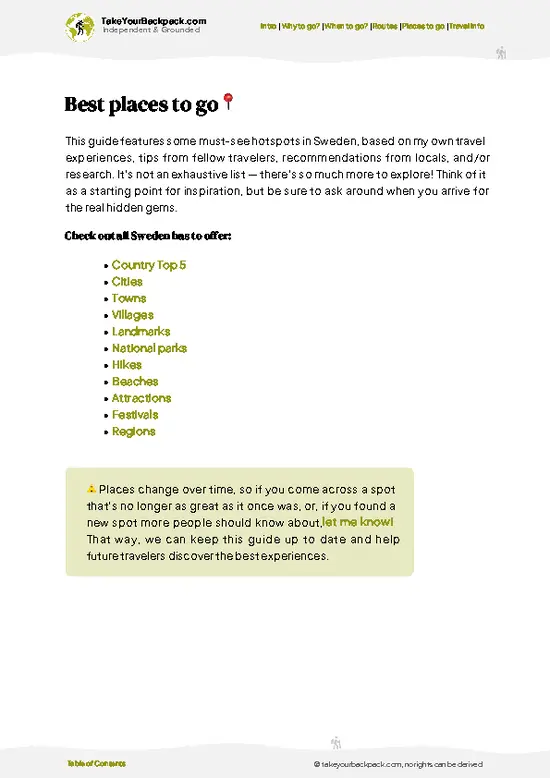
example page 0 from our offline Travel Guide for Sweden
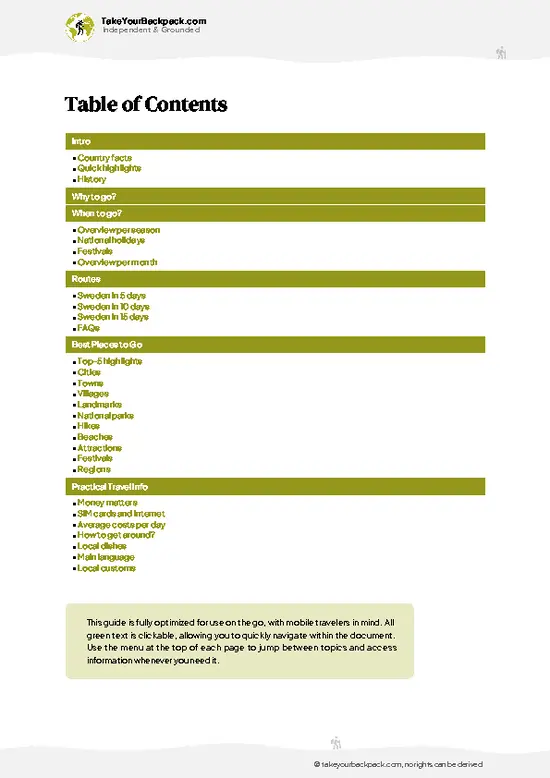
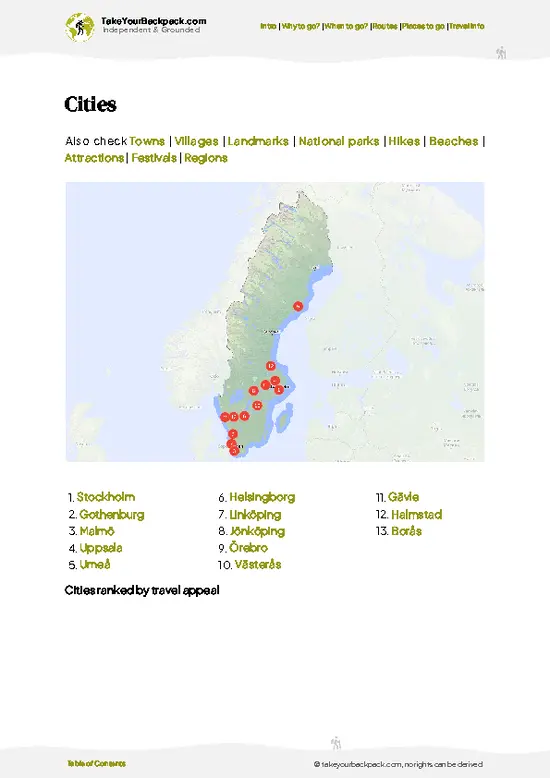
example page 1 from our offline Travel Guide for Sweden
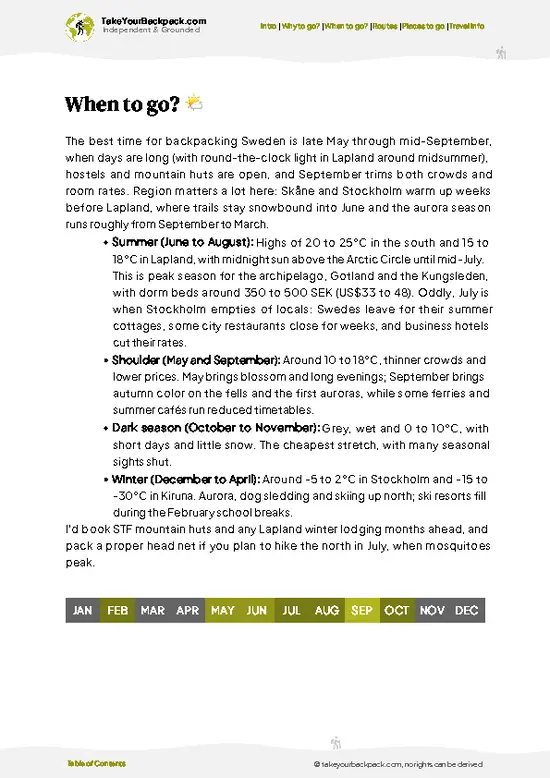
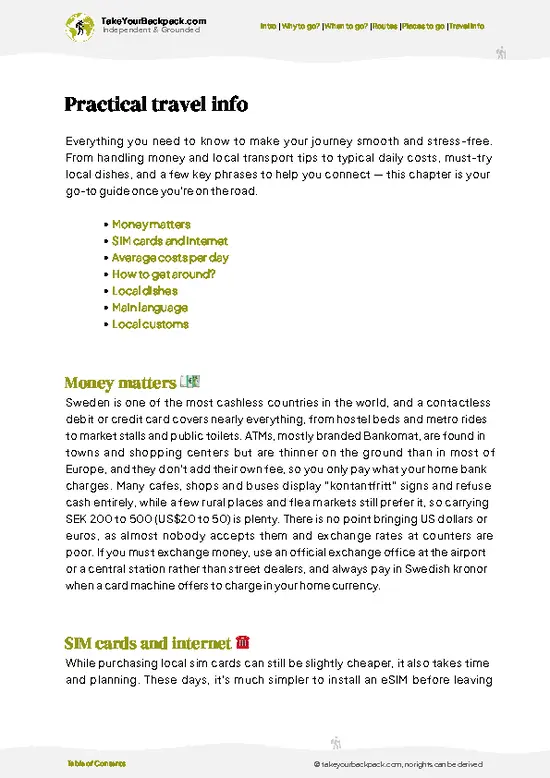
example page 2 from our offline Travel Guide for Sweden
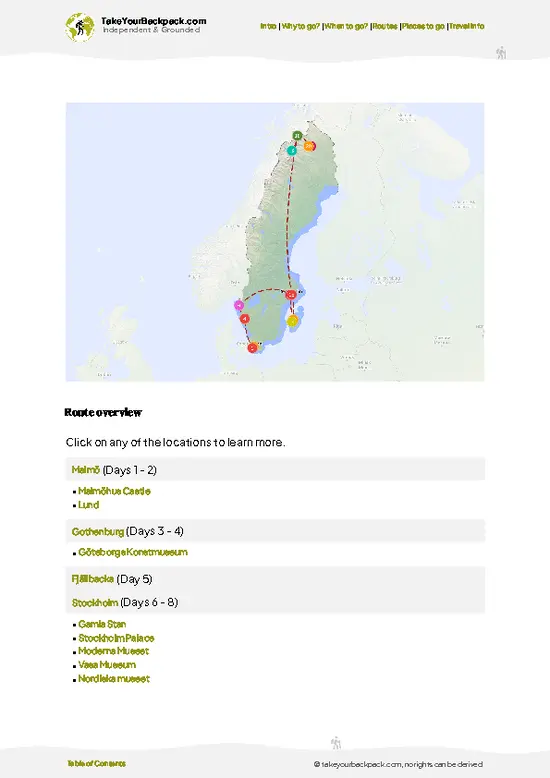
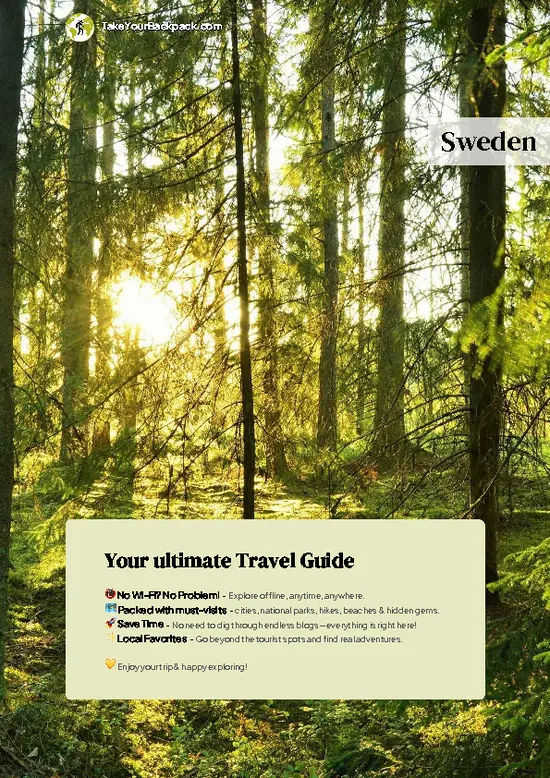
example page 3 from our offline Travel Guide for Sweden
example page 4 from our offline Travel Guide for Sweden
example page 5 from our offline Travel Guide for Sweden
example page 6 from our offline Travel Guide for Sweden
example page 7 from our offline Travel Guide for Sweden
The digital guide (414 pages) contains:
✅ 109 highlights, ranked by travel appeal
✅ Optimized 5, 10 & 15-day travel routes
✅ Cities, national parks, landmarks, beaches
✅ How to get around
✅ Offline-friendly for travel without Wi-Fi
👉 Click to see all 30+ guide features

📅 Plan smarter in minutes, not weeks
✅ Month by month travel advice
✅ Festivals & national holidays
✅ Budget expectations

🗺️ Go to the right places, skip the overrated ones
✅ Honest pros & cons of destinations
✅ Top hikes, parks & viewpoints
✅ Lesser-known places most travelers miss
✅ Clear “worth it vs skip it” guidance

🛏️ Travel smoothly without rookie mistakes
✅ Best areas to stay
✅ Transport systems explained simply
✅ Common scams & safety advice
✅ SIM cards, money & practical tips

🌍 Understand the country, not just visit it
✅ Culture & traditions
✅ 52 Essential phrases & customs
✅ Festivals worth planning around
✅ Traveler-friendly historical context
✅ Insights that make places more meaningful

📱 Built for real travel conditions
✅ Fully downloadable PDF
✅ Works completely offline
✅ Optimized for phone use
✅ Useful in remote areas & buses
✅ Everything in one place
Stop searching, start planning
Get instant access to your full guide. 30‑day money-back guarantee.
+ Add another guide for just

By proceeding you agree to our terms.
Sent to your inbox immediately after payment • 100% Secure Checkout
Best Backpacking Travel Advisor 2025 tourism awardBest Backpacking
Travel Advisor
2025
What others say about Take Your Backpack Guides:
⭐⭐⭐⭐⭐
Fantastic, amazing amount of information!
⭐⭐⭐⭐⭐
My goodness this is amazing, it's what I've been looking for hats off too you!
⭐⭐⭐⭐⭐
I think this is absolutely BRILLIANT
⭐⭐⭐⭐
Very complete and informative. It's still missing places, but I gotta to commend you
⭐⭐⭐⭐⭐
This is truly amazing, thank you, can't wait to explore it with my kids!
⭐⭐⭐⭐⭐
Awesome resource, thank you!
⭐⭐⭐⭐⭐
This is amazing! Can't wait to explore the ones I haven't seen
⭐⭐⭐⭐
I love this! Well done, great idea.
⭐⭐⭐⭐⭐
Thanks for taking the time to make this gem!
⭐⭐⭐⭐⭐
This might be the best website I've ever seen.
⭐⭐⭐⭐⭐
Congratulations, and thank you so much for your work; it's incredibly valuable.
⭐⭐⭐⭐
In all seriousness I think you did a great job pointing out the important spots
⭐⭐⭐⭐⭐
10/10 very good
⭐⭐⭐⭐⭐
As someone who's only just starting to visit regularly this is awesome, thank you.
⭐⭐⭐⭐
Thank you very much! I'm going to visit my dad, it's going to be very useful!
⭐⭐⭐⭐⭐
This is really cool! We'll be travelling for the first time and this definitely come in handy.
⭐⭐⭐⭐⭐
You are now our minister of culture, congratulations 👨‍💼
⭐⭐⭐⭐⭐
Just wanted to tell you that this is a pearl! Going to follow your recommendations.
⭐⭐⭐⭐⭐
This is so cool. I'll definitely be using the resource for my travels soon.
⭐⭐⭐⭐⭐
This is very impressive! Good work.
⭐⭐⭐⭐⭐
This is an amazing and informative site. Very well done!

🛏️ Where to stay?Where to Base Yourself

Budget beds are easy to find in Sweden, with dorms typically running SEK 300 to 500 (US$28 to 48) a night and private hostel rooms from about SEK 700 (US$65), though many places charge extra for sheets and towels unless you bring your own. In Stockholm, Södermalm has the best mix of bars, cheap eats and late nights, while Norrmalm around the central station wins on transport links but feels more functional, and Gamla Stan puts you beside the sights at a higher price, with streets that go very quiet after dark. In Gothenburg, Linnéstaden and Haga give you walkable cafés and bars with an easy tram ride to everything else, and all of these areas are safe to walk at night.

If you enjoy meeting fellow … read more 👉
Budget beds are easy to find in Sweden, with dorms typically running SEK 300 to 500 (US$28 to 48) a night and private hostel rooms from about SEK 700 (US$65), though many places charge extra for sheets and towels unless you bring your own. In Stockholm, Södermalm has the best mix of bars, cheap eats and late nights, while Norrmalm around the central station wins on transport links but feels more functional, and Gamla Stan puts you beside the sights at a higher price, with streets that go very quiet after dark. In Gothenburg, Linnéstaden and Haga give you walkable cafés and bars with an easy tram ride to everything else, and all of these areas are safe to walk at night.

If you enjoy meeting fellow travelers, consider choosing hostels with high ratings for atmosphere. On the other hand, if you prefer having your own space, a hotel might be a better option.

SwedenExpand Your Journey

👋 Meet the founderWho’s Behind Take Your Backpack?

Johan, backpacker and founder of TakeYourBackpackHi, I’m Johan (Netherlands 🇳🇱), the creator of TakeYourBackpack. Over the past 3 decades, I’ve backpacked through 90+ countries across six continents, gaining extensive experience with independent travel, long-term trips, and overland routes.

This site is built on a combination of firsthand travel experience and carefully curated insights from other backpackers. Many guides are based on places I’ve personally visited, while others bring together tips, observations, and practical advice shared by trusted travelers I’ve met along the way.

The goal is to provide realistic, experience-driven guidance — not generic itineraries — so you can explore destinations with better context, clearer expectations, and more confidence.