×

Sweden🇸🇪 | best landmarksEssential 8 landmarks to Explore in Sweden

In Sweden, unique sites are defined by their cultural, historical, and natural significance, offering backpackers a chance to engage deeply with the landscape and heritage. From the vibrant streets of Stockholm to the serene archipelagos of Bohuslän, each region presents distinct experiences that vary in scale and accessibility. Seasonal changes further influence these sites; for instance, the midnight sun in summer transforms the Lapland wilderness, while winter opens up opportunities for Northern Lights viewing. Choosing the right unique site impacts your travel vibe, budget, and cultural immersion, making it essential for independent travelers to consider these factors for a rewarding journey.

By Johan Kruseman 🇳🇱 | Updated June 4, 2026
Explore the best national parks in Sweden

Why go?Why These unique site Stand Out

Unique sites in Sweden matter because they encapsulate the country’s rich cultural and historical tapestry, shaped by centuries of tradition and innovation. Unlike many other nations, Sweden’s commitment to preservation is evident in its approach to maintaining both urban and natural landscapes. The blend of modernity and heritage creates a distinctive atmosphere, where ancient Viking sites coexist with cutting-edge architecture.

Geographically, Sweden’s vast landscape offers a range of experiences, from the serene archipelagos to dense forests, each with its own ecological significance. However, this diversity comes with trade-offs. Accessibility can be a challenge; remote sites may require significant travel time, which can limit the depth of exploration. Visitors often face the choice … read more 👉
Unique sites in Sweden matter because they encapsulate the country’s rich cultural and historical tapestry, shaped by centuries of tradition and innovation. Unlike many other nations, Sweden’s commitment to preservation is evident in its approach to maintaining both urban and natural landscapes. The blend of modernity and heritage creates a distinctive atmosphere, where ancient Viking sites coexist with cutting-edge architecture.

Geographically, Sweden’s vast landscape offers a range of experiences, from the serene archipelagos to dense forests, each with its own ecological significance. However, this diversity comes with trade-offs. Accessibility can be a challenge; remote sites may require significant travel time, which can limit the depth of exploration. Visitors often face the choice between rushing through multiple locations or dedicating time to truly understand a single site.

Seasonal factors also play a crucial role. Peak visitor periods can lead to overcrowding, diminishing the immersive experience. Conversely, off-peak travel may offer solitude but can limit access due to weather conditions or reduced services.

Sweden’s infrastructure supports exploration, yet the balance between comfort and authenticity is a constant consideration. Understanding these dynamics allows travelers to make informed choices, ensuring that their experiences resonate long after they return home.
Our Approach to Ranking
The list of best unique sites in Sweden is created based on history or culture, wow factor, atmosphere, quirks, and memorability. If you feel a unique site is missing in this list, please let us know.

When to go?Timing Your Visit for the Best Experience

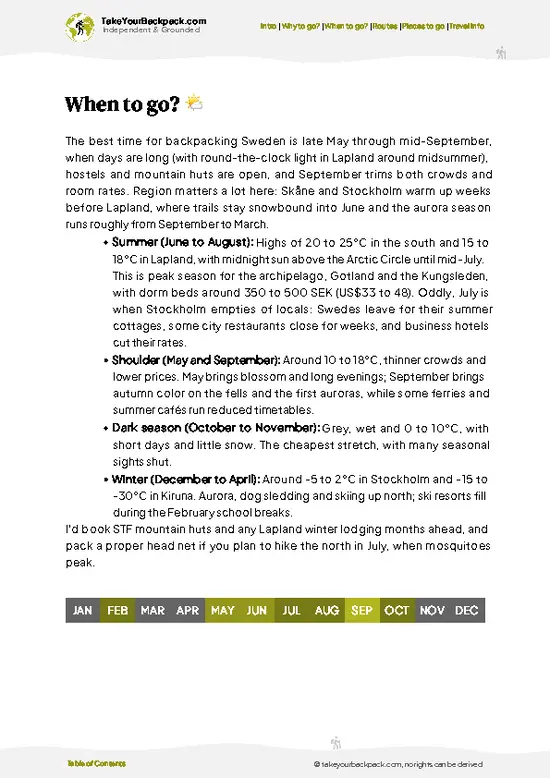
Seasonality in Sweden


Sweden’s unique sites are deeply influenced by the seasons. Winter brings snow and ice, transforming landscapes and creating opportunities for winter sports. However, access to certain sites may be limited due to weather conditions. Roads can be icy, and public transport schedules may change.

Spring offers a gradual thaw, with longer days and blooming flora. This is an excellent time for outdoor exploration, but some sites may still be recovering from winter, affecting visibility and accessibility.

Summer is peak tourist season. The weather is generally warm, and many sites are fully operational. However, this also means larger crowds and higher prices. Booking in advance is advisable to secure access to popular locations.

Autumn presents a different charm. The … read more 👉

Seasonality in Sweden


Sweden’s unique sites are deeply influenced by the seasons. Winter brings snow and ice, transforming landscapes and creating opportunities for winter sports. However, access to certain sites may be limited due to weather conditions. Roads can be icy, and public transport schedules may change.

Spring offers a gradual thaw, with longer days and blooming flora. This is an excellent time for outdoor exploration, but some sites may still be recovering from winter, affecting visibility and accessibility.

Summer is peak tourist season. The weather is generally warm, and many sites are fully operational. However, this also means larger crowds and higher prices. Booking in advance is advisable to secure access to popular locations.

Autumn presents a different charm. The foliage changes, offering stunning views, but temperatures drop, and some sites may close for the season. This shoulder season can provide a quieter experience, often at reduced costs.

Travelers should consider these seasonal constraints. Each season has its trade-offs in terms of comfort, cost, and accessibility. Understanding these patterns helps in planning a trip that maximizes the value of unique experiences while minimizing potential frustrations.

unique site hoppingSuggested Travel Strategies

Regional Clustering

Sweden’s unique sites are best experienced through regional clustering. Start in Stockholm, where the Vasa Museum and Skansen offer a deep dive into maritime history and Swedish culture. From there, head north to Uppsala, known for its historic university and botanical gardens. This route minimizes travel time and maximizes exposure to significant cultural landmarks.

Time Management

Allocate at least two to three hours per stop for major sites. This pacing allows for exploration without feeling rushed. For smaller attractions, an hour may suffice. Be mindful of opening hours; many sites close early in winter, so plan accordingly.

Common Pitfalls

Travelers often underestimate the distances between regions. Sweden is vast, and driving can take longer than expected. … read more 👉

Regional Clustering

Sweden’s unique sites are best experienced through regional clustering. Start in Stockholm, where the Vasa Museum and Skansen offer a deep dive into maritime history and Swedish culture. From there, head north to Uppsala, known for its historic university and botanical gardens. This route minimizes travel time and maximizes exposure to significant cultural landmarks.

Time Management

Allocate at least two to three hours per stop for major sites. This pacing allows for exploration without feeling rushed. For smaller attractions, an hour may suffice. Be mindful of opening hours; many sites close early in winter, so plan accordingly.

Common Pitfalls

Travelers often underestimate the distances between regions. Sweden is vast, and driving can take longer than expected. Avoid cramming too many stops into a single day; this leads to fatigue and missed experiences.

Trade-Offs

Balancing speed and depth is crucial. Quick visits may save time but sacrifice meaningful engagement. Budget constraints can also influence comfort; consider staying in local guesthouses for a more authentic experience. Ultimately, a flexible itinerary allows for spontaneous discoveries, enhancing the overall journey.

The ListTop landmarks of Sweden

1 Scenic Road Vildmarksvägen

mountain plateau, reindeer herds, Arctic circle route

Drive above the treeline through open tundra, spotting wildlife and waterfalls as the landscape shifts from forest to bare highland.

2 Sala Silver Mine

underground tunnels, historic shafts, mineral chambers

Descend into cool, echoing passages carved by centuries of mining, where darkness and mineral veins tell stories of Sweden’s industrial past.

3 Ale’s Stones

ancient stone ship, coastal ridge, Baltic views

Stand among massive stones arranged by unknown hands, feeling the wind and sea merge at the edge of southern Sweden’s open landscape.

sweden-unique-site-ales-stones
© Google |

4 Trollsjön Lake

alpine tarn, clear water, Lapland cirque

Hike through rocky valleys to a secluded lake, where snowmelt feeds crystal water surrounded by steep cliffs and lingering snowfields.

5 Blå Lagunen

turquoise quarry lake, limestone cliffs, Gotland swimming

Swim in clear blue water surrounded by pale rock, where sunlight and mineral-rich depths create a striking contrast to the island’s forests.

sweden-unique-site-bla-lagunen
© Google |

6 Älgafallet

border waterfall, Bohuslän forest, Norway-Sweden boundary

Listen to rushing water at a remote waterfall marking the border, where mossy woods and spray create a cool, green retreat.

sweden-unique-site-algafallet
© Google |

7 Ryningsnäs Ghost Village

abandoned houses, rural decay, Småland woods

Wander empty lanes and weathered buildings, sensing the quiet passage of time in a village reclaimed by forest and silence.

8 Gällabjer

forest hill, Skåne panorama, glacial boulders

Climb through dense woodland to a summit where scattered stones and open sky reveal the rolling farmlands and forests of southern Sweden.

sweden-unique-site-gallabjer
© Google |
Loading the map 🌍

Expert viewInsights from Locals and Experts

Significance
Sweden is a land of contrasts, where ancient history meets modern innovation. Unique sites range from medieval castles to contemporary art installations. The significance of each site often lies in its cultural context. For instance, a Viking burial ground speaks to Sweden’s deep-rooted history, while a modern architectural marvel showcases its forward-thinking ethos. Understanding this duality can enhance your appreciation of each visit.

Access Constraints
Many unique sites are scattered across the country, often in remote areas. Public transportation can be limited, especially in rural regions. While major cities have robust systems, reaching more isolated sites may require a rental car or a considerable time investment. Factor in travel time when planning your itinerary. … read more 👉
Significance
Sweden is a land of contrasts, where ancient history meets modern innovation. Unique sites range from medieval castles to contemporary art installations. The significance of each site often lies in its cultural context. For instance, a Viking burial ground speaks to Sweden’s deep-rooted history, while a modern architectural marvel showcases its forward-thinking ethos. Understanding this duality can enhance your appreciation of each visit.

Access Constraints
Many unique sites are scattered across the country, often in remote areas. Public transportation can be limited, especially in rural regions. While major cities have robust systems, reaching more isolated sites may require a rental car or a considerable time investment. Factor in travel time when planning your itinerary. A site that looks close on a map may involve winding roads or ferry rides, which can eat into your schedule.

Crowd Patterns
Timing is crucial. Popular sites can become crowded during peak tourist seasons, particularly in summer. Visiting during shoulder seasons—late spring or early autumn—can provide a more intimate experience. Early mornings or late afternoons are often quieter, allowing for better exploration and photography. If you’re keen on avoiding crowds, consider visiting lesser-known sites that still offer rich experiences without the throngs of tourists.

Combining Sites
Realistically, aim to visit three to five unique sites in a week, depending on their locations. This allows for a deeper exploration without feeling rushed. Some sites are close enough to combine in a single day, but others may require a full day of travel. Prioritize sites based on your interests—whether historical, artistic, or natural. This will help you create a cohesive narrative for your trip, rather than a disjointed list of places.

Time Investment
Expect to spend a few hours at each site, but also account for travel time. Some sites may require a full day to appreciate fully, especially if they include guided tours or interactive experiences. Balancing time spent at each site with travel logistics is essential. If you’re short on time, focus on fewer sites but allow for a richer experience at each.

Budget Considerations
Entry fees can vary widely. Some sites are free, while others may charge a premium for guided tours or special exhibitions. Factor in transportation costs, especially if you’re renting a car. Gas prices can add up, and parking fees may apply at popular locations. If you’re on a budget, consider purchasing a regional pass that offers discounts for multiple sites.

Safety & Cultural Considerations
Sweden is generally safe for travelers, but it’s wise to be aware of local customs and etiquette. Respect for nature is paramount; follow Leave No Trace principles when visiting natural sites. In urban areas, be mindful of pedestrian zones and cycling lanes. Understanding local cultural norms can enhance your experience and foster positive interactions with locals.

Planning & Prioritizing
Start with a list of must-see sites and research their accessibility. Use local resources, such as tourism boards or travel blogs, to gauge current conditions and recommendations. Flexibility is key; be prepared to adjust your plans based on weather or local events. Prioritize experiences that resonate with you personally, whether that’s a historical site, a natural wonder, or a cultural event. This approach will ensure that your journey through Sweden is not just a checklist, but a meaningful exploration.

✈️ The backpacker research shortcutSweden Travel Guide

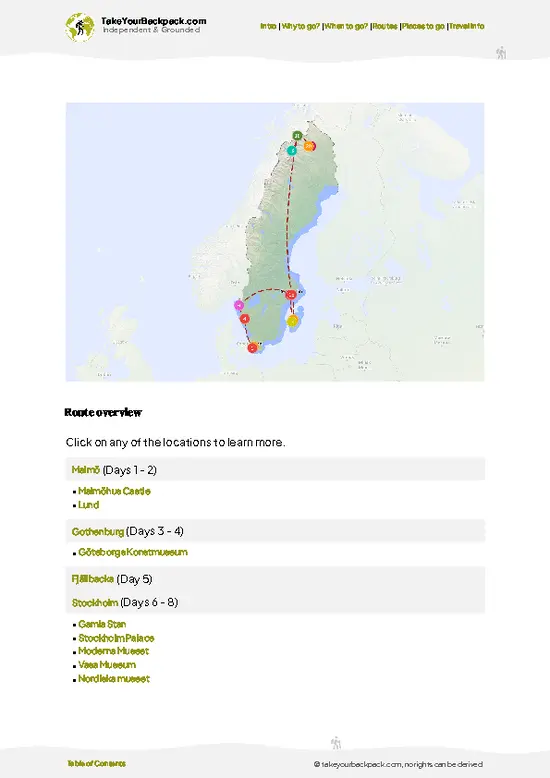
An offline-friendly backpacking guide with optimized travel routes, ranked highlights, transport advice, and the best areas to stay.
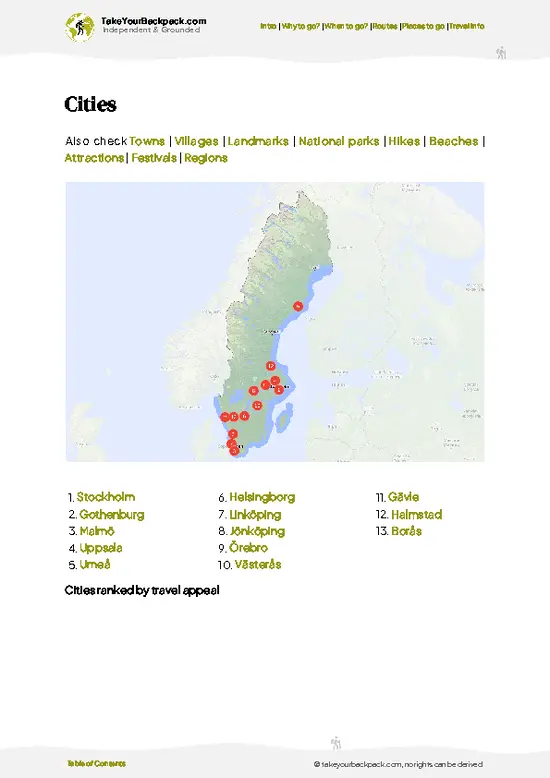
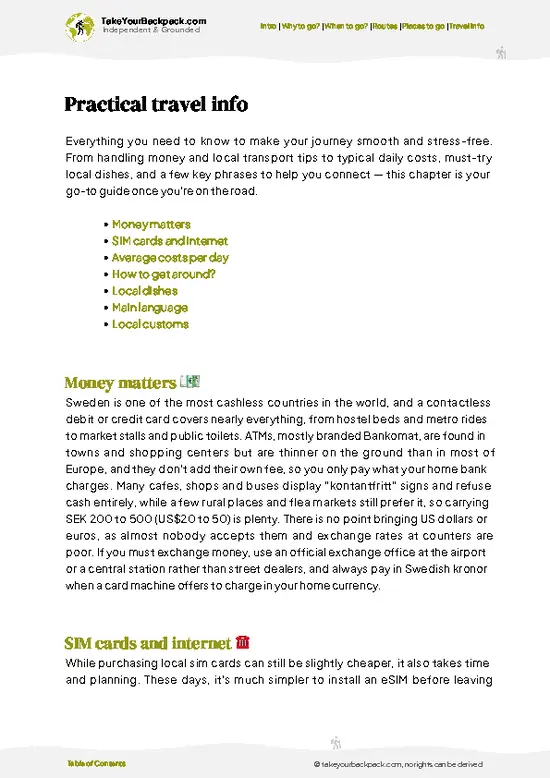
example page 0 from our offline Travel Guide for Swedenexample page 1 from our offline Travel Guide for Swedenexample page 2 from our offline Travel Guide for Swedenexample page 3 from our offline Travel Guide for Swedenexample page 4 from our offline Travel Guide for Swedenexample page 5 from our offline Travel Guide for Swedenexample page 6 from our offline Travel Guide for Swedenexample page 7 from our offline Travel Guide for Sweden
The digital guide (449 pages) contains:
119 highlights, ranked by travel appeal
Optimized 5, 10 & 15-day travel routes
Cities, national parks, beaches, historical sites, ...
How to get around
Offline-friendly for travel without Wi-Fi
👉 Click to see all 30+ guide features

📅 Plan smarter in minutes, not weeks
Month by month travel advice
Festivals & national holidays
Budget expectations

🗺️ Go to the right places, skip the overrated ones
Honest pros & cons of destinations
Top hikes, parks & viewpoints
Lesser-known places most travelers miss
Clear “worth it vs skip it” guidance

🛏️ Travel smoothly without rookie mistakes
Best areas to stay
Transport systems explained simply
Common scams & safety advice
SIM cards, money & practical tips

🌍 Understand the country, not just visit it
Culture & traditions
52 Essential phrases & customs
Festivals worth planning around
Traveler-friendly historical context
Insights that make places more meaningful

📱 Built for real travel conditions
Fully downloadable PDF
Works completely offline
Optimized for phone use
Useful in remote areas & buses
Everything in one place
Save weeks of stressful planning
Get instant access to the full guide directly. 30-day money-back guarantee.


Sent to your inbox immediately after payment • 100% Secure Checkout
Best Backpacking Travel Advisor 2025 tourism awardBest Backpacking
Travel Advisor
2025
What others say about Take Your Backpack Guides:
⭐⭐⭐⭐⭐
Fantastic, amazing amount of information!
⭐⭐⭐⭐⭐
My goodness this is amazing, it's what I've been looking for hats off too you!
⭐⭐⭐⭐⭐
I think this is absolutely BRILLIANT
⭐⭐⭐⭐
Very complete and informative. It's still missing places, but I gotta to commend you
⭐⭐⭐⭐⭐
This is truly amazing, thank you, can't wait to explore it with my kids!
⭐⭐⭐⭐⭐
Awesome resource, thank you!
⭐⭐⭐⭐⭐
This is amazing! Can't wait to explore the ones I haven't seen
⭐⭐⭐⭐
I love this! Well done, great idea.
⭐⭐⭐⭐⭐
Thanks for taking the time to make this gem!
⭐⭐⭐⭐⭐
This might be the best website I've ever seen.
⭐⭐⭐⭐⭐
Congratulations, and thank you so much for your work; it's incredibly valuable.
⭐⭐⭐⭐
In all seriousness I think you did a great job pointing out the important spots
⭐⭐⭐⭐⭐
10/10 very good
⭐⭐⭐⭐⭐
As someone who's only just starting to visit regularly this is awesome, thank you.
⭐⭐⭐⭐
Thank you very much! I'm going to visit my dad, it's going to be very useful!
⭐⭐⭐⭐⭐
This is really cool! We'll be travelling for the first time and this definitely come in handy.
⭐⭐⭐⭐⭐
You are now our minister of culture, congratulations 👨‍💼
⭐⭐⭐⭐⭐
Just wanted to tell you that this is a pearl! Going to follow your recommendations.
⭐⭐⭐⭐⭐
This is so cool. I'll definitely be using the resource for my travels soon.
⭐⭐⭐⭐⭐
This is very impressive! Good work.
⭐⭐⭐⭐⭐
This is an amazing and informative site. Very well done!

🛏️ Where to stay?Where to Stay: Sweden Edition

Yes — hostels and budget accommodation are common across Sweden, concentrated in major cities and tourist regions; expect higher prices and full occupancy in Stockholm and during summer, so book early to avoid limited options.
Stockholm’s best choices cluster in Central/Norrmalm (excellent transport and sights, busy and pricier), Södermalm (good nightlife and cafés, can be noisy), Vasastan (residential, quieter and often cheaper) and Gamla Stan (super-central for attractions but tourist premium), while Gothenburg’s City Centre, Haga and Linné balance tram access, cafés and nightlife with varying crowd levels, and Malmö’s Malmö C, Möllevången and Västra Hamnen trade centrality and seaside walks … read more 👉
Yes — hostels and budget accommodation are common across Sweden, concentrated in major cities and tourist regions; expect higher prices and full occupancy in Stockholm and during summer, so book early to avoid limited options.
Stockholm’s best choices cluster in Central/Norrmalm (excellent transport and sights, busy and pricier), Södermalm (good nightlife and cafés, can be noisy), Vasastan (residential, quieter and often cheaper) and Gamla Stan (super-central for attractions but tourist premium), while Gothenburg’s City Centre, Haga and Linné balance tram access, cafés and nightlife with varying crowd levels, and Malmö’s Malmö C, Möllevången and Västra Hamnen trade centrality and seaside walks for seasonal noise and price swings.
Pick central areas for transit and evening options, choose quieter neighborhoods for sleep and lower rates, confirm dorm type, locker and kitchen policies before booking, and expect basic but functional facilities rather than privacy or luxury.

If you enjoy meeting fellow travelers, consider choosing hostels with high ratings for atmosphere. On the other hand, if you prefer having your own space, a hotel might be a better option.

SwedenExplore Beyond This Category

👋 Meet the founderWho’s Behind Take Your Backpack?

Johan, backpacker and founder of TakeYourBackpackHi, I’m Johan (Netherlands 🇳🇱), the creator of TakeYourBackpack. Over the past decade, I’ve backpacked through 80+ countries across six continents, gaining extensive experience with independent travel, long-term trips, and overland routes.

This site is built on a combination of firsthand travel experience and carefully curated insights from other backpackers. Many guides are based on places I’ve personally visited, while others bring together tips, observations, and practical advice shared by trusted travelers I’ve met along the way.

The goal is to provide realistic, experience-driven guidance — not generic itineraries — so you can explore destinations with better context, clearer expectations, and more confidence.

Get full Sweden guide •
Instant download • 119 highlights • Full Offline guide