×

Tanzania🇹🇿 | citiesDodomanational capital, government district, dry plains | things to do and best time to go

Explore TangaExplore Morogoro

Backpacking in Dodoma
🌟 Highlightcity ranked #12
By Johan Kruseman 🇳🇱 | Updated July 24, 2026

Dodoma isn’t the dusty, bureaucratic backwater many imagine—it’s Tanzania’s capital, yes, but it’s not the country’s beating heart. Smack in the center of Tanzania, Dodoma is more crossroads than destination, with wide streets, a handful of colonial-era buildings, and the stately Parliament complex. Backpackers will find the city calm, safe, and refreshingly hassle-free compared to Dar es Salaam or Arusha, but also quieter, with fewer hostels and less nightlife. The local markets and the Catholic cathedral offer a glimpse of daily life, but don’t expect a parade of bucket-list sights. Costs are low, transport is straightforward, and you’ll meet more locals than travelers. Dodoma’s charm is subtle: it’s a place to pause, not to party.

Discover everything you want to know in the 📖 Tanzania Travel Guide.
Loading the map 🌍
CLICK TO FILTER
cities
towns
landmarks
national parks
hikes
beaches
attractions
festivals
SHOW COUNTRY’S BESTSHOW ALL

✨ Why go?
Ranked #12 city in Tanzania
What sets this place apart

Dodoma, Tanzania, is often overlooked, but it serves as a strategic base for backpackers. Its affordability makes it easy on the wallet, with hostels that offer a cozy atmosphere and a chance to meet fellow travelers. The walkability of the city allows you to explore local markets and street food stalls, where you can savor authentic Tanzanian dishes without breaking the bank. While the nightlife isn’t wild, it has a laid-back charm that invites you to unwind after a day of exploration. Plus, Dodoma’s location makes it a gateway for day trips to nearby attractions, maximizing your time without exhausting your budget. If you’re looking for a place that balances comfort and value, Dodoma is worth considering, especially as a short stop on your journey through Tanzania.
Want to include Dodoma in your Tanzania route?
Create a personalized Tanzania itinerary that includes Dodoma and the places that fit your trip — based on your travel style, budget, and available time. Get your route in seconds.

Generate my trip

💡 HighlightsThe experiences that define the visit

  • Gaddafi Mosque (Dodoma Central Mosque) — The city’s most striking landmark: a massive, white-domed mosque with fine tilework and tall minarets. Even if you’re not Muslim, the courtyard and exterior architecture are worth the photo, and respectful visitors can usually get a guided look inside.
  • Tanzanian Parliament (Bunge) Complex — Symbolic heart of the country’s politics since the move to Dodoma. The modern compound and the public plaza around it give a real sense of national life; you can usually view the buildings and exhibitions from outside and arrange a formal visit if you plan ahead.
  • University of Dodoma (UDOM) Campus — More than a campus: a lively, walkable place to meet students, catch impromptu cultural events, and see big new academic buildings framed by acacia-studded hills.
read more 👉
  • Gaddafi Mosque (Dodoma Central Mosque) — The city’s most striking landmark: a massive, white-domed mosque with fine tilework and tall minarets. Even if you’re not Muslim, the courtyard and exterior architecture are worth the photo, and respectful visitors can usually get a guided look inside.
  • Tanzanian Parliament (Bunge) Complex — Symbolic heart of the country’s politics since the move to Dodoma. The modern compound and the public plaza around it give a real sense of national life; you can usually view the buildings and exhibitions from outside and arrange a formal visit if you plan ahead.
  • University of Dodoma (UDOM) Campus — More than a campus: a lively, walkable place to meet students, catch impromptu cultural events, and see big new academic buildings framed by acacia-studded hills. Great for observing contemporary Dodoma society and cheap eats in student cafés.
  • Dodoma Central Market (Soko Kuu / Soko la Wote) — Busy, colourful and a proper sensory immersion: fresh produce, dried grains, local staples, clothing stalls and small food vendors. Best place to practice Swahili, haggle, and taste regional snacks on the cheap.
  • The Old Boma / Regional Museum — The colonial-era administrative compound (the “Boma”) houses local archives and displays about central Tanzania’s history and cultures. It’s a small but useful primer on how Dodoma’s role has changed over time.
  • Ikulu (Dodoma State House area) — The presidential offices and surrounding official precinct are an important civic space. You can walk the grounds around the complex to see stately architecture, public monuments, and daily official life (formal interior access is limited, but the exterior is meaningful to visit).
  • Dodoma Cathedral (Catholic Cathedral) — A calm, airy cathedral that anchors the city’s Christian community. It’s worth stopping for the architecture, a moment of quiet, and to observe local worshipping life when services are on.
  • Jamhuri Stadium & Sports Quarter — More than sport: matches and Sunday crowds capture everyday Dodoma energy. If you hit a local game or community event, expect loud support, street food, and a real local scene that’s great for people-watching.
  • Dodoma Railway Station & Old Colonial Streets — The compact station and the neighbouring streets still show traces of colonial-era architecture and small businesses. Walkable, photogenic, and good for inexpensive local transport or a slow morning exploring cafés and shops.
  • Local craft stalls and wine cooperatives — Dodoma is the country’s traditional wine region; inside the city you’ll find small shops, cooperatives and craft stalls selling locally made pottery, woven goods and bottles from nearby vineyards. Good for souvenirs and meeting artisans who actually live in the region.
A few real day-trip highlights just outside Dodoma worth planning for: the Kondoa Rock-Art sites (UNESCO-listed rock paintings), the Mtera Reservoir for birding and fishing, and the Chamwino/Chamwino-adjacent villages and vineyards where you can visit local wineries and pottery workshops.
Spotted a mistake or missing something? Contact us.

Things to do in Dodoma

Ratings based on Tripadvisor reviews. When you book through this link, you support our work at no extra cost to you.

🏘️ NeighborhoodsKey areas and districts to know

Dodoma, Tanzania’s capital, is a blend of history and modernity, making it a unique stop for backpackers. Here’s how the neighborhoods stack up:

City Center: The heartbeat of Dodoma. It’s bustling with shops, markets, and eateries. Affordable accommodations are plentiful, and you can easily walk to major attractions. Nightlife is low-key, with a few bars and restaurants. Perfect for short stays.

Uhuru Street: This area offers a more laid-back vibe. It’s quieter, with local cafes and parks. Prices are reasonable, and it’s walkable, but you’ll need transport for attractions further out. Ideal for longer stays if you prefer a slower pace.

Chahali: A bit more upscale, Chahali has a mix of guesthouses and hotels. It’s not as walkable, but taxis are readily available. The nightlife is minimal, … read more 👉
Dodoma, Tanzania’s capital, is a blend of history and modernity, making it a unique stop for backpackers. Here’s how the neighborhoods stack up:

City Center: The heartbeat of Dodoma. It’s bustling with shops, markets, and eateries. Affordable accommodations are plentiful, and you can easily walk to major attractions. Nightlife is low-key, with a few bars and restaurants. Perfect for short stays.

Uhuru Street: This area offers a more laid-back vibe. It’s quieter, with local cafes and parks. Prices are reasonable, and it’s walkable, but you’ll need transport for attractions further out. Ideal for longer stays if you prefer a slower pace.

Chahali: A bit more upscale, Chahali has a mix of guesthouses and hotels. It’s not as walkable, but taxis are readily available. The nightlife is minimal, focusing more on dining. Great for those looking to splurge a little while still enjoying local culture.

Makulu: A residential area that feels authentic. It’s less touristy, with local markets and street food. Prices are low, but transport is necessary to reach the city center. Best for longer stays if you want to immerse yourself in daily life.

⌛️ 1 day1-day itinerary for Dodoma

Dodoma, the capital of Tanzania, offers a unique blend of political significance and local culture. It’s less traveled than other cities, but that’s part of its charm. You can dive into the heart of Tanzania without the tourist crowds.

Start your morning at the bustling Nyerere Square. Grab a cup of local coffee from a nearby vendor and soak in the energy of the city waking up. The square is surrounded by government buildings, but it’s the people watching that makes it special. Afterward, head to the nearby Dodoma Cathedral. Its striking architecture and serene atmosphere provide a peaceful contrast to the lively square.

In the afternoon, make your way to the vibrant Uhuru Park. This green space is perfect for a leisurely stroll or a picnic. You’ll find locals enjoying their day, and if … read more 👉
Dodoma, the capital of Tanzania, offers a unique blend of political significance and local culture. It’s less traveled than other cities, but that’s part of its charm. You can dive into the heart of Tanzania without the tourist crowds.

Start your morning at the bustling Nyerere Square. Grab a cup of local coffee from a nearby vendor and soak in the energy of the city waking up. The square is surrounded by government buildings, but it’s the people watching that makes it special. Afterward, head to the nearby Dodoma Cathedral. Its striking architecture and serene atmosphere provide a peaceful contrast to the lively square.

In the afternoon, make your way to the vibrant Uhuru Park. This green space is perfect for a leisurely stroll or a picnic. You’ll find locals enjoying their day, and if you’re lucky, you might catch a traditional dance performance. For lunch, try a local eatery in the nearby Makole neighborhood. The grilled meats and ugali are a must-try, giving you a taste of authentic Tanzanian cuisine.

As the sun begins to set, visit the nearby Mtera Dam. It’s a bit off the typical tourist path, but the views are worth it. The golden hour casts a beautiful glow over the water, making it a perfect spot for reflection. End your day with dinner at a local restaurant, where you can savor the flavors of Tanzania while chatting with friendly locals. This day in Dodoma will leave you with a deeper appreciation for the heart of Tanzania.
Turn your Dodoma visit into an Tanzania adventure
Build a complete Tanzania route with Dodoma, hidden gems, must-see destinations, and realistic travel times included.

Generate my trip

🌤️ When to go?When to go for the best experience


  • Weather: Dodoma’s dry season from late May to October offers clear skies and minimal rain, making trekking and exploring straightforward. The wet season, November to April, brings heavy rains that can turn trails muddy and unpredictable.

  • Temperature: Expect daytime highs around 28-32°C (82-90°F) during the dry months, with cooler nights dropping to 15-18°C (59-64°F). The wet season is warmer and more humid, often pushing highs above 33°C (91°F), which can sap your energy.

  • Daylight Hours: Consistent year-round, roughly 12 hours of daylight, so your hiking and sightseeing windows stay steady regardless of season.

  • Crowds: Tourist numbers peak in the dry season, especially July and August, so expect more fellow travelers and slightly higher prices. The wet season sees fewer visitors,
read more 👉

  • Weather: Dodoma’s dry season from late May to October offers clear skies and minimal rain, making trekking and exploring straightforward. The wet season, November to April, brings heavy rains that can turn trails muddy and unpredictable.

  • Temperature: Expect daytime highs around 28-32°C (82-90°F) during the dry months, with cooler nights dropping to 15-18°C (59-64°F). The wet season is warmer and more humid, often pushing highs above 33°C (91°F), which can sap your energy.

  • Daylight Hours: Consistent year-round, roughly 12 hours of daylight, so your hiking and sightseeing windows stay steady regardless of season.

  • Crowds: Tourist numbers peak in the dry season, especially July and August, so expect more fellow travelers and slightly higher prices. The wet season sees fewer visitors, offering solitude but at the cost of some accessibility.

  • Seasonal Activities: Dry months are prime for outdoor adventures like hiking and visiting local markets. Wet months bring lush landscapes but limit outdoor options and can disrupt transport schedules.

  • Price Fluctuations: Accommodation and transport costs rise during the dry season’s peak months. The wet season offers bargains but with the trade-off of less predictable conditions.


Pro-tip: Aim for the shoulder months of May or October to balance good weather, manageable crowds, and better prices—smart timing turns your trip into a strategic win.


source: climatestotravel.comJANJanuary: fair for travelingFEBFebruary: fair for travelingMARMarch: fair for travelingAPRApril: fair for travelingMAYMay: highly recommended for travelingJUNJune: highly recommended for travelingJULJuly: excellent for travelingAUGAugust: excellent for travelingSEPSeptember: excellent for travelingOCTOctober: highly recommended for travelingNOVNovember: fair for travelingDECDecember: fair for traveling
when-to-go

✈️ The backpacker research shortcutTanzania Travel Guide

An offline-friendly backpacking guide with optimized travel routes, ranked highlights, transport advice, and the best areas to stay.
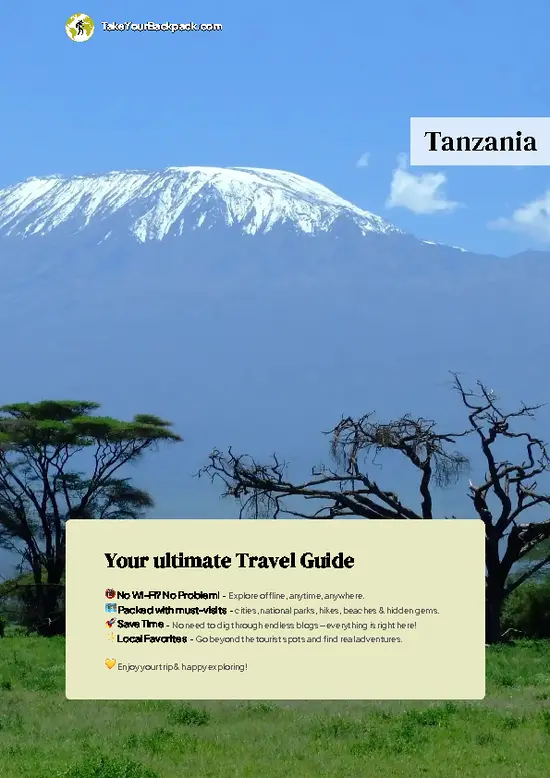
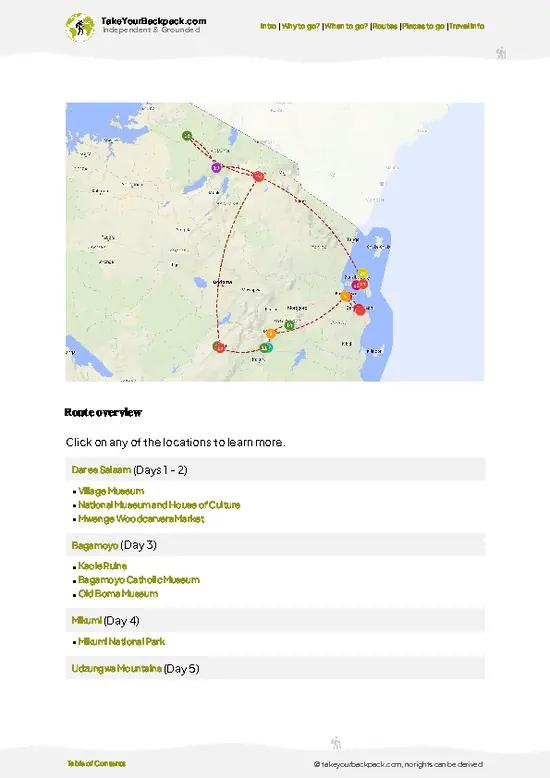
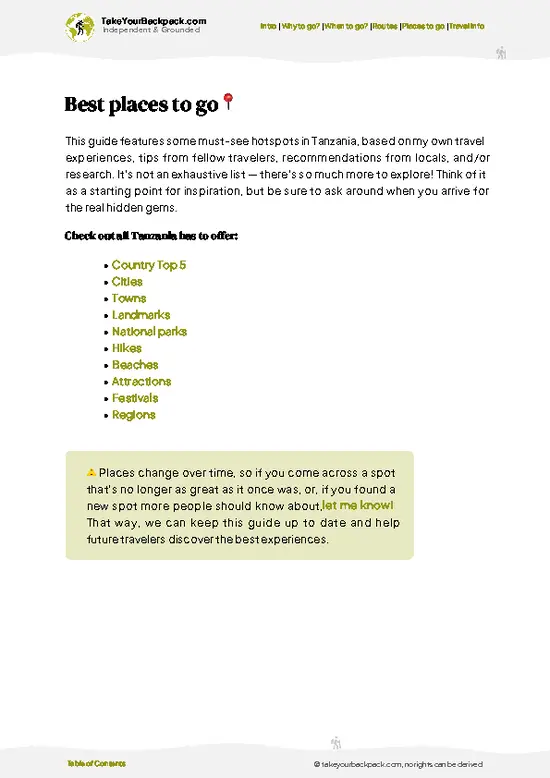
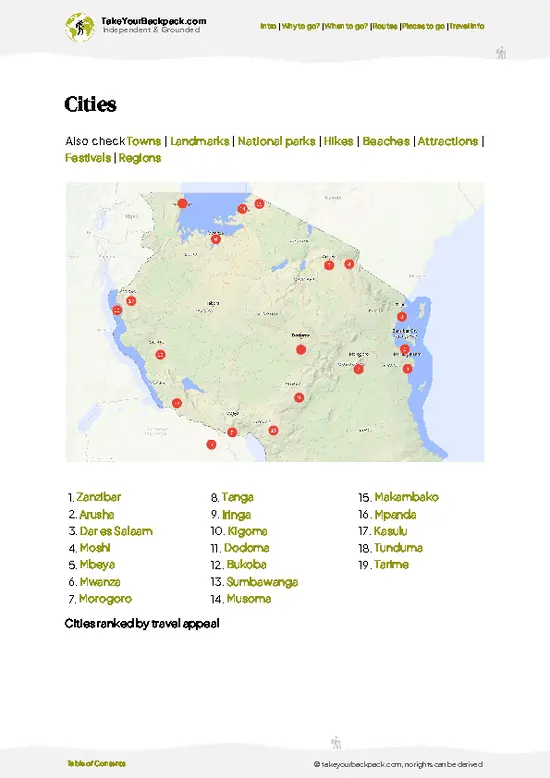
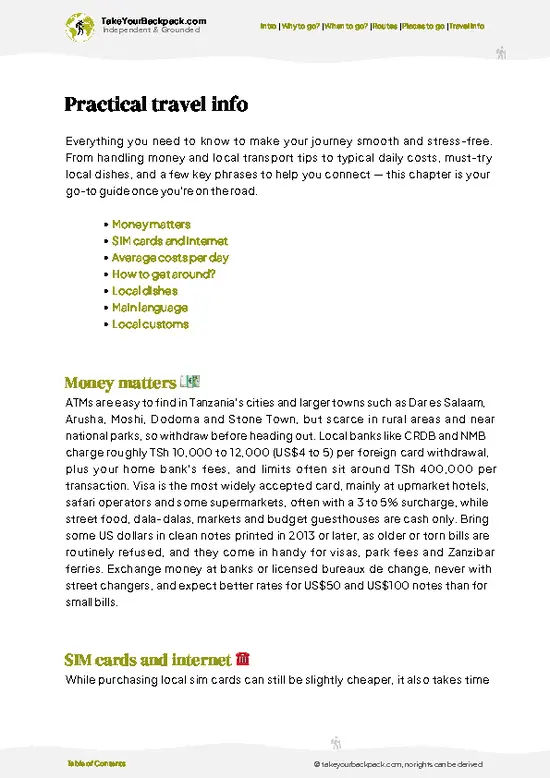
example page 0 from our offline Travel Guide for Tanzania
example page 1 from our offline Travel Guide for Tanzania
example page 2 from our offline Travel Guide for Tanzania
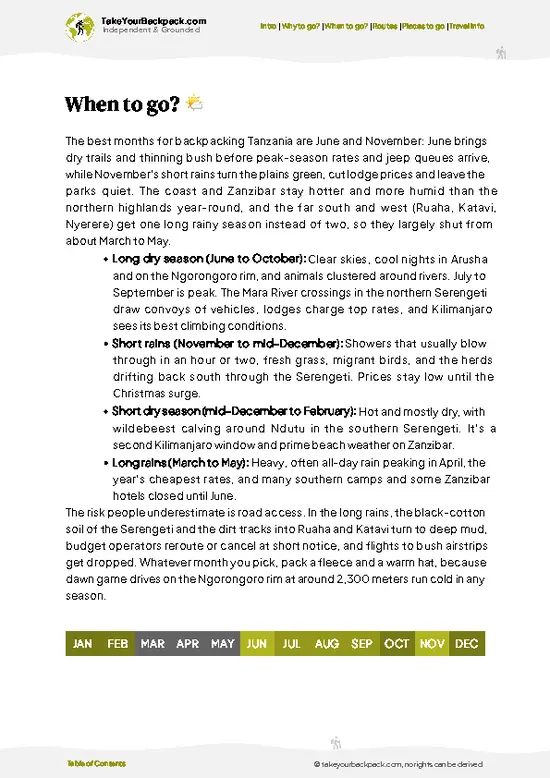
example page 3 from our offline Travel Guide for Tanzania
example page 4 from our offline Travel Guide for Tanzania
example page 5 from our offline Travel Guide for Tanzania
example page 6 from our offline Travel Guide for Tanzania
example page 7 from our offline Travel Guide for Tanzania
The digital guide (377 pages) contains:
100 highlights, ranked by travel appeal
Optimized 7, 14 & 21-day travel routes
Cities, national parks, landmarks, beaches
How to get around
Offline-friendly for travel without Wi-Fi
👉 Click to see all 30+ guide features

📅 Plan smarter in minutes, not weeks
Month by month travel advice
Festivals & national holidays
Budget expectations

🗺️ Go to the right places, skip the overrated ones
Honest pros & cons of destinations
Top hikes, parks & viewpoints
Lesser-known places most travelers miss
Clear “worth it vs skip it” guidance

🛏️ Travel smoothly without rookie mistakes
Best areas to stay
Transport systems explained simply
Common scams & safety advice
SIM cards, money & practical tips

🌍 Understand the country, not just visit it
Culture & traditions
52 Essential phrases & customs
Festivals worth planning around
Traveler-friendly historical context
Insights that make places more meaningful

📱 Built for real travel conditions
Fully downloadable PDF
Works completely offline
Optimized for phone use
Useful in remote areas & buses
Everything in one place
Save weeks of stressful planning
Get instant access to your full guide. 30‑day money-back guarantee.


By proceeding you agree to our terms.
Sent to your inbox immediately after payment • 100% Secure Checkout
Best Backpacking Travel Advisor 2025 tourism awardBest Backpacking
Travel Advisor
2025
What others say about Take Your Backpack Guides:
⭐⭐⭐⭐⭐
Fantastic, amazing amount of information!
⭐⭐⭐⭐⭐
My goodness this is amazing, it's what I've been looking for hats off too you!
⭐⭐⭐⭐⭐
I think this is absolutely BRILLIANT
⭐⭐⭐⭐
Very complete and informative. It's still missing places, but I gotta to commend you
⭐⭐⭐⭐⭐
This is truly amazing, thank you, can't wait to explore it with my kids!
⭐⭐⭐⭐⭐
Awesome resource, thank you!
⭐⭐⭐⭐⭐
This is amazing! Can't wait to explore the ones I haven't seen
⭐⭐⭐⭐
I love this! Well done, great idea.
⭐⭐⭐⭐⭐
Thanks for taking the time to make this gem!
⭐⭐⭐⭐⭐
This might be the best website I've ever seen.
⭐⭐⭐⭐⭐
Congratulations, and thank you so much for your work; it's incredibly valuable.
⭐⭐⭐⭐
In all seriousness I think you did a great job pointing out the important spots
⭐⭐⭐⭐⭐
10/10 very good
⭐⭐⭐⭐⭐
As someone who's only just starting to visit regularly this is awesome, thank you.
⭐⭐⭐⭐
Thank you very much! I'm going to visit my dad, it's going to be very useful!
⭐⭐⭐⭐⭐
This is really cool! We'll be travelling for the first time and this definitely come in handy.
⭐⭐⭐⭐⭐
You are now our minister of culture, congratulations 👨‍💼
⭐⭐⭐⭐⭐
Just wanted to tell you that this is a pearl! Going to follow your recommendations.
⭐⭐⭐⭐⭐
This is so cool. I'll definitely be using the resource for my travels soon.
⭐⭐⭐⭐⭐
This is very impressive! Good work.
⭐⭐⭐⭐⭐
This is an amazing and informative site. Very well done!

🛏️ Where to stay?How to pick the right area

Dodoma’s backpacker sweet spot is the city center, especially around the area near the Parliament and the main bus station. This zone strikes a rare balance: it’s safe enough to wander after dark, yet lively with local markets, street food stalls, and small cafés where you can meet fellow travelers and locals without the touristy gloss. Compared to the quieter, more residential suburbs, this central strip offers a social pulse that’s crucial for solo backpackers craving connection.

Hostel options here lean toward basic but clean, with communal spaces that encourage swapping stories over a cold … read more 👉
Dodoma’s backpacker sweet spot is the city center, especially around the area near the Parliament and the main bus station. This zone strikes a rare balance: it’s safe enough to wander after dark, yet lively with local markets, street food stalls, and small cafés where you can meet fellow travelers and locals without the touristy gloss. Compared to the quieter, more residential suburbs, this central strip offers a social pulse that’s crucial for solo backpackers craving connection.

Hostel options here lean toward basic but clean, with communal spaces that encourage swapping stories over a cold drink. You’re trading off luxury for authenticity and affordability—think simple dorms rather than boutique comfort. The vibe is practical and unpretentious, which means your money goes further and your experience feels grounded in real Tanzanian life.

Other neighborhoods either push you into isolation or pricier lodgings with less character. So, if you want to maximize social energy and keep your budget intact, the city center near transport hubs is your winning move.

🚌 Getting aroundHow to get around Dodoma

Dodoma moves at its own rhythm—neither a frantic rush nor a laid-back drift. It’s a city where schedules exist but bend to local intuition, where the pulse of daily life is set by a blend of government office hours and the steady hum of market chatter. Time here isn’t just measured by clocks but by the ebb and flow of people navigating dusty streets, balancing the need to get somewhere with the reality of waiting for the next ride. Understanding this flow is your first win in mastering Dodoma’s transit game: it’s about reading between the lines of timetables and spotting the moments when comfort, speed, and cost align.


  • Walking: The ultimate zero-cost option. Dodoma’s compact center makes walking not just practical but often faster than waiting for a ride. Expect dusty, uneven sidewalks
read more 👉
Dodoma moves at its own rhythm—neither a frantic rush nor a laid-back drift. It’s a city where schedules exist but bend to local intuition, where the pulse of daily life is set by a blend of government office hours and the steady hum of market chatter. Time here isn’t just measured by clocks but by the ebb and flow of people navigating dusty streets, balancing the need to get somewhere with the reality of waiting for the next ride. Understanding this flow is your first win in mastering Dodoma’s transit game: it’s about reading between the lines of timetables and spotting the moments when comfort, speed, and cost align.


  • Walking: The ultimate zero-cost option. Dodoma’s compact center makes walking not just practical but often faster than waiting for a ride. Expect dusty, uneven sidewalks and the occasional stray goat, but the freedom to stop and soak in local life is unbeatable.


  • Daladala (Minibus): The backbone of Dodoma’s budget transit. Runs roughly from 6:00 AM to 8:00 PM. Fares hover around 500–1,000 Tanzanian shillings ($0.20–$0.40). It’s slow and cramped, with frequent stops, but unbeatable for cost and local immersion. Comfort is minimal; expect standing room only during peak hours.


  • Boda Boda (Motorcycle Taxi): Fast and flexible, these dart through traffic and can take you anywhere on demand. Prices vary but start around 1,000 shillings for short trips. They’re a gamble on comfort and safety—helmet use is spotty, and the ride can be bumpy—but they save precious time when you’re on a tight schedule.


  • Taxi: More expensive, with fares starting around 5,000 shillings ($2) for short trips. Taxis offer a smoother, more private ride and run on your schedule, but expect to negotiate prices upfront. They’re your go-to when comfort and speed outweigh budget constraints.


  • Intercity Buses: For trips beyond Dodoma, these buses run on fixed schedules, typically departing early morning and late afternoon. Tickets cost between 10,000 and 20,000 shillings ($4–$8). They balance comfort and price well but require planning ahead to avoid long waits or sold-out rides.

👛 Costs (as of 20 January 2025)How expensive it really is

Backpacking in Dodoma, Tanzania, offers a clear trade-off between cost and comfort, with prices reflecting the city’s developing infrastructure and local lifestyle. Here’s how your daily expenses typically break down:
  • Dorm Accommodation (High Season): Expect to pay around $8 to $12 per night. High season sees a slight bump due to increased demand, but options remain basic, often with shared bathrooms and modest facilities.
  • Dorm Accommodation (Off-Season): Prices drop to about $5 to $8 per night. Fewer travelers mean better bargaining power, and you might score a quieter spot with the same basic amenities.
  • Meals: Local eateries serve filling meals for $2 to $4 each. Sticking to street food or small restaurants keeps costs low, with staples like ugali, rice, and grilled meats dominating menus.
read more 👉
Backpacking in Dodoma, Tanzania, offers a clear trade-off between cost and comfort, with prices reflecting the city’s developing infrastructure and local lifestyle. Here’s how your daily expenses typically break down:
  • Dorm Accommodation (High Season): Expect to pay around $8 to $12 per night. High season sees a slight bump due to increased demand, but options remain basic, often with shared bathrooms and modest facilities.
  • Dorm Accommodation (Off-Season): Prices drop to about $5 to $8 per night. Fewer travelers mean better bargaining power, and you might score a quieter spot with the same basic amenities.
  • Meals: Local eateries serve filling meals for $2 to $4 each. Sticking to street food or small restaurants keeps costs low, with staples like ugali, rice, and grilled meats dominating menus. Western-style meals or cafes will push your budget higher.
  • Local Transport: Boda-bodas (motorcycle taxis) are the go-to for short trips, costing roughly $0.50 to $1 per ride within the city. They’re quick but can be a bit of an adrenaline rush.
  • City Transport Pass: Dodoma doesn’t have a formal city transport pass system. Instead, dala-dalas (minibuses) run fixed routes for about $0.30 to $0.50 per trip, offering the cheapest way to get around if you’re patient and flexible.
  • Basic Activities/Entry Fees: Most local attractions are low-cost or free. Expect to pay $1 to $3 for entry to museums or cultural sites. Guided tours, if available, will cost more but remain affordable compared to tourist hotspots elsewhere.
  • Miscellaneous Expenses: Budget around $1 to $3 daily for essentials like bottled water, snacks, or small tips. Internet cafes or SIM cards with data plans are inexpensive, typically under $5 for a decent package lasting several days.

Dodoma’s daily backpacking budget ranges roughly between $10 and $20, depending on season and your comfort choices. This city rewards travelers who embrace simplicity and local rhythms, trading off luxury for authentic, wallet-friendly experiences.
⚠️ Prices can change and everyone travels differently, so take this as a rough guide. Hope it helps you plan your adventure!

🚌 Day tripsBest day trips from Dodoma

Dodoma, Tanzania’s capital, is often overlooked, but it’s a strategic base for some fantastic day trips that pack a punch without draining your wallet.

Mtera Dam
Just a 90-minute drive from Dodoma, Mtera Dam offers stunning views and a chance to connect with local fishermen. The lake is perfect for a leisurely day of picnicking or birdwatching. You can rent a boat for a few dollars, making it an affordable adventure. The best time to visit is during the dry season, when the water levels are low, revealing more of the shoreline. A common mistake is underestimating the sun; bring sunscreen and plenty of water.


Mikumi National Park
About two hours away, Mikumi is a prime spot for wildlife enthusiasts. You can spot elephants, lions, and a variety of birds without the crowds of bigger … read more 👉
Dodoma, Tanzania’s capital, is often overlooked, but it’s a strategic base for some fantastic day trips that pack a punch without draining your wallet.

Mtera Dam
Just a 90-minute drive from Dodoma, Mtera Dam offers stunning views and a chance to connect with local fishermen. The lake is perfect for a leisurely day of picnicking or birdwatching. You can rent a boat for a few dollars, making it an affordable adventure. The best time to visit is during the dry season, when the water levels are low, revealing more of the shoreline. A common mistake is underestimating the sun; bring sunscreen and plenty of water.


Mikumi National Park
About two hours away, Mikumi is a prime spot for wildlife enthusiasts. You can spot elephants, lions, and a variety of birds without the crowds of bigger parks. A day trip typically costs around $50, including transport and park fees, making it budget-friendly. The dry season from June to October is ideal for game viewing. Many first-timers forget to pack binoculars; they can make all the difference in spotting wildlife.
👉 Explore Mikumi National Park

Kondoa Rock Art Sites
Roughly a two-hour drive, these ancient rock paintings are a UNESCO World Heritage site that tells the story of early human life in the region. The entrance fee is minimal, and you can often find local guides eager to share their knowledge. Visit in the cooler months, from May to September, to avoid the heat. A common oversight is not allowing enough time to explore; plan for a full day to soak it all in.


Dodoma Wine Tour
For something unique, consider a day trip to the nearby vineyards. Just a short drive away, you can taste local wines and learn about the production process. Costs are low, often under $20 for tastings. The best time to visit is during the harvest season, from February to April. Many backpackers miss this experience, thinking it’s too touristy; don’t skip it!
Want to know what more Tanzania offers?
The Tanzania Travel Guide describes 100 highlights, from cities to national parks, from beaches to hikes

Get the Travel Guide -

🍲 FoodEating & Drinking in Dodoma

In Dodoma, local cuisine is a vibrant tapestry of flavors that tells the story of its people. Don’t miss ugali, a staple made from maize flour, often served with rich stews or grilled meats. Pair it with sukuma wiki, sautéed greens that add a fresh crunch. For a taste of the region, try nyama choma, grilled meat that’s smoky and tender, often enjoyed with spicy sauces.

Street food is where the magic happens. Markets buzz with vendors selling samosas and mandazi, sweet fried dough that’s perfect for a quick snack. Grab a kiburu, a local beer, and join the lively atmosphere.

Eating customs are casual but communal. Sharing food is common, so don’t hesitate to dig in with your hands—just remember to use your right hand. This isn’t just a meal; it’s a chance to connect with locals and soak in … read more 👉
In Dodoma, local cuisine is a vibrant tapestry of flavors that tells the story of its people. Don’t miss ugali, a staple made from maize flour, often served with rich stews or grilled meats. Pair it with sukuma wiki, sautéed greens that add a fresh crunch. For a taste of the region, try nyama choma, grilled meat that’s smoky and tender, often enjoyed with spicy sauces.

Street food is where the magic happens. Markets buzz with vendors selling samosas and mandazi, sweet fried dough that’s perfect for a quick snack. Grab a kiburu, a local beer, and join the lively atmosphere.

Eating customs are casual but communal. Sharing food is common, so don’t hesitate to dig in with your hands—just remember to use your right hand. This isn’t just a meal; it’s a chance to connect with locals and soak in the culture. Embrace the flavors, and let the experience unfold!

🛡️ SafetyStaying Safe: What Travelers Should Know

Dodoma is generally safe for backpackers, but a few situational awareness tips can enhance your experience. Stick to well-lit areas at night, especially if you’re solo. The city is quieter after dark, so keep your wits about you.

Common scams are rare, but be cautious around markets where vendors might inflate prices for tourists. Always negotiate; it’s part of the culture.

Annoyances can include persistent street vendors. A polite but firm “no, thank you” usually does the trick. Carry yourself confidently, and don’t flash valuables. This approach not only keeps you safe but also helps you blend in, making your journey through Dodoma more enjoyable.

Other Tanzanian cities near Dodoma

Explore more nearby:

  • Iringa—highland climate, stone buildings, local crafts| 177 km away
  • Morogoro—Uluguru Mountains, university town, agricultural center| 223 km away
  • Makambako—railway stop, highland plateau, transport hub, cool evenings| 313 km away

💡 Not sure where to go next?
Create a personalized itinerary for Tanzania including Dodoma and the places that fit your trip.

Generate my itinerary

👉 Discover all cities

Or checkout all Tanzania has to offer (think cities, towns, villages, national parks, hikes, beaches, festivals)
Country photo of Tanzania

We 💚 feedbackSumming up the experience

Dodoma has a unique vibe that feels refreshingly authentic. The best surprise? The local markets bursting with life and flavors—don’t miss the street food. Just a heads-up: the heat can be intense, so plan your outings for early morning or late afternoon. Embrace the slower pace; it’s part of the charm. You’ll leave with stories, not just souvenirs.

✍️ Help improve this page!
The information on this page is based on in-depth research, insights shared by experienced travelers, and feedback from the local travel community in Tanzania. While every effort is made to keep the information accurate and current, conditions can change — so if you spot anything incorrect or outdated, please get in touch.


🙋‍♂️ Give feedback

👋 Meet the founderWho’s Behind Take Your Backpack?

Johan, backpacker and founder of TakeYourBackpackHi, I’m Johan (Netherlands 🇳🇱), the creator of TakeYourBackpack. Over the past decade, I’ve backpacked through 80+ countries across six continents, gaining extensive experience with independent travel, long-term trips, and overland routes.

This site is built on a combination of firsthand travel experience and carefully curated insights from other backpackers. Many guides are based on places I’ve personally visited, while others bring together tips, observations, and practical advice shared by trusted travelers I’ve met along the way.

The goal is to provide realistic, experience-driven guidance — not generic itineraries — so you can explore destinations with better context, clearer expectations, and more confidence.

Get full Tanzania guide •
Instant download • 100 highlights • Full Offline guide