×

Tanzania🇹🇿 | citiesIringahighland climate, stone buildings, local crafts | things to do and best time to go

Explore Dar es SalaamExplore Kigoma

Backpacking in Iringa
🌟 Highlightcity ranked #10
By Johan Kruseman 🇳🇱 | Updated July 30, 2026

A decade ago, Iringa was the kind of place you’d breeze through—just a sleepy hill town with a few colonial relics and a bus station that felt like the edge of the world. Fast-forward to today, and Iringa still isn’t a tourist circus, but it’s quietly evolved: a basecamp for Ruaha National Park, a university town with a pulse, and a crossroads where Tanzanian history and daily life actually mingle. Perched on a cool plateau in southern Tanzania, Iringa is affordable, safe by regional standards, and refreshingly low-key compared to Arusha or Dar. You’ll find faded German fortresses, a lively central market, and the odd bar where locals and travelers swap stories over cold Safari lagers. It’s not a party hub, but it’s easy to meet people if you’re open. Iringa’s charm is subtle—less spectacle, more substance.

Discover everything you want to know in the 📖 Tanzania Travel Guide.
Loading the map 🌍
CLICK TO FILTER
cities
towns
landmarks
national parks
hikes
beaches
attractions
festivals
SHOW COUNTRY’S BESTSHOW ALL

✨ Why go?
Ranked #10 city in Tanzania
Why Iringa should be on your travel list

Iringa is a strategic stop for backpackers weaving through Tanzania. It’s not just a place to pass through; it’s a basecamp for adventure. The city offers a solid mix of affordable hostels that cater to budget travelers, making it easy to find a cozy spot without breaking the bank. You’ll appreciate the walkability of Iringa, where you can explore local markets and street food stalls, diving into the flavors of Tanzanian cuisine without needing a taxi.

The nightlife is low-key but vibrant enough to meet fellow travelers, sharing stories over a cold drink. Plus, Iringa serves as a gateway to stunning day trips, whether you’re heading to the nearby national parks or cultural sites. The easy onward travel options mean you can seamlessly continue your journey, whether you’re off to the mountains … read more 👉
Iringa is a strategic stop for backpackers weaving through Tanzania. It’s not just a place to pass through; it’s a basecamp for adventure. The city offers a solid mix of affordable hostels that cater to budget travelers, making it easy to find a cozy spot without breaking the bank. You’ll appreciate the walkability of Iringa, where you can explore local markets and street food stalls, diving into the flavors of Tanzanian cuisine without needing a taxi.

The nightlife is low-key but vibrant enough to meet fellow travelers, sharing stories over a cold drink. Plus, Iringa serves as a gateway to stunning day trips, whether you’re heading to the nearby national parks or cultural sites. The easy onward travel options mean you can seamlessly continue your journey, whether you’re off to the mountains or the coast. If you’re looking for a place that balances comfort and value, Iringa is worth more than just a quick stop.
Want to include Iringa in your Tanzania route?
Create a personalized Tanzania itinerary that includes Iringa and the places that fit your trip — based on your travel style, budget, and available time. Get your route in seconds.

Generate my trip

💡 HighlightsPlaces and moments you shouldn't skip

  • Iringa Boma (Old German Boma) — A compact piece of colonial history in the town centre: the German-era administrative compound with solid stone architecture, a small museum area and a good spot to feel the town’s layered colonial and Hehe resistance history.
  • Iringa Regional Museum — Small but well-curated displays of local archaeology, ethnography and Hehe cultural material with originals and finds from nearby sites; the museum gives real context to the region’s past in one visitable spot.
  • Iringa Central Market (Sokoni) — The best place to experience everyday Iringa: fresh produce, street food, local crafts and lively bargaining. Great for cheap meals, people-watching and picking up small souvenirs.
  • Iringa Railway Station — A working piece of Tanzania’s rail history on the Central Line;
read more 👉
  • Iringa Boma (Old German Boma) — A compact piece of colonial history in the town centre: the German-era administrative compound with solid stone architecture, a small museum area and a good spot to feel the town’s layered colonial and Hehe resistance history.
  • Iringa Regional Museum — Small but well-curated displays of local archaeology, ethnography and Hehe cultural material with originals and finds from nearby sites; the museum gives real context to the region’s past in one visitable spot.
  • Iringa Central Market (Sokoni) — The best place to experience everyday Iringa: fresh produce, street food, local crafts and lively bargaining. Great for cheap meals, people-watching and picking up small souvenirs.
  • Iringa Railway Station — A working piece of Tanzania’s rail history on the Central Line; you’ll see the old-style station building, regular local train activity and authentic commuter life around the platforms.
Nearby day-trip highlights worth adding to your route include the Isimila Stone Age Site, Ruaha National Park and Kalenga / Mkwawa Memorial (all easily reachable from Iringa).
Spotted a mistake or missing something? Contact us.

Things to do in Iringa

Ratings based on Tripadvisor reviews. When you book through this link, you support our work at no extra cost to you.

🏘️ NeighborhoodsHow different areas shape the experience

Iringa is a captivating blend of culture and nature, making it a strategic base for backpackers exploring Tanzania. Here’s how the neighborhoods stack up:

City Center: This is the heartbeat of Iringa. Bustling markets and local eateries abound. It’s affordable, with plenty of budget accommodations. Walkability is high, making it easy to explore on foot. Nightlife is low-key, perfect for those who prefer a quiet evening. Transport options are plentiful, with buses and taxis readily available. Ideal for short stays.

Gangilonga: A bit more laid-back, this area offers a mix of local charm and scenic views. It’s slightly pricier but worth it for the tranquility. The vibe is relaxed, with cozy cafes and a few bars. Walkability is decent, but you might want to grab a taxi for longer distances. … read more 👉
Iringa is a captivating blend of culture and nature, making it a strategic base for backpackers exploring Tanzania. Here’s how the neighborhoods stack up:

City Center: This is the heartbeat of Iringa. Bustling markets and local eateries abound. It’s affordable, with plenty of budget accommodations. Walkability is high, making it easy to explore on foot. Nightlife is low-key, perfect for those who prefer a quiet evening. Transport options are plentiful, with buses and taxis readily available. Ideal for short stays.

Gangilonga: A bit more laid-back, this area offers a mix of local charm and scenic views. It’s slightly pricier but worth it for the tranquility. The vibe is relaxed, with cozy cafes and a few bars. Walkability is decent, but you might want to grab a taxi for longer distances. Great for both short and longer stays, especially if you want a peaceful retreat.

Ruaha National Park Gateway: If you’re planning to venture into the wild, this area is your launchpad. Accommodations range from budget to mid-range. It’s less walkable, but transport options to the park are straightforward. Nightlife is minimal, focusing more on nature than nightlife. Best suited for longer stays, especially for wildlife enthusiasts.

Each area offers a unique flavor, so choose based on what you value most: convenience, comfort, or adventure.

⌛️ 1 dayA smart one-day plan

Iringa, Tanzania, is a city steeped in history and culture, nestled in the Southern Highlands. It’s a place where the warmth of the people matches the stunning landscapes. The city serves as a gateway to the Ruins of Isimila and the nearby Udzungwa Mountains, but you can also find charm right in the streets.

Start your morning at the bustling local market in the heart of the city. The aroma of fresh produce and spices fills the air, and you’ll find locals bartering for everything from ripe bananas to handmade crafts. Grab a breakfast of chapati and chai from a nearby stall. It’s a simple meal, but the flavors are vibrant and energizing.

After fueling up, take a stroll to the Iringa Cultural Heritage Centre. This spot is often overlooked by tourists, but it’s a treasure trove of local art … read more 👉
Iringa, Tanzania, is a city steeped in history and culture, nestled in the Southern Highlands. It’s a place where the warmth of the people matches the stunning landscapes. The city serves as a gateway to the Ruins of Isimila and the nearby Udzungwa Mountains, but you can also find charm right in the streets.

Start your morning at the bustling local market in the heart of the city. The aroma of fresh produce and spices fills the air, and you’ll find locals bartering for everything from ripe bananas to handmade crafts. Grab a breakfast of chapati and chai from a nearby stall. It’s a simple meal, but the flavors are vibrant and energizing.

After fueling up, take a stroll to the Iringa Cultural Heritage Centre. This spot is often overlooked by tourists, but it’s a treasure trove of local art and history. You can chat with artisans, learn about traditional crafts, and even pick up a unique souvenir that tells a story.

In the afternoon, head to the nearby Isimila Stone Age Site. It’s a short drive from the city, and the ancient tools and stunning rock formations will leave you in awe. Spend some time exploring the site, soaking in the significance of this archaeological wonder.

As the sun sets, return to Iringa and unwind at a local eatery like the famous Neema Crafts. Enjoy a hearty dinner while supporting a social enterprise that empowers people with disabilities. The atmosphere is lively, and the food is delicious—perfect for reflecting on your day.

This one-day adventure in Iringa balances time, money, and comfort, allowing you to savor authentic experiences without feeling rushed.
Turn your Iringa visit into an Tanzania adventure
Build a complete Tanzania route with Iringa, hidden gems, must-see destinations, and realistic travel times included.

Generate my trip

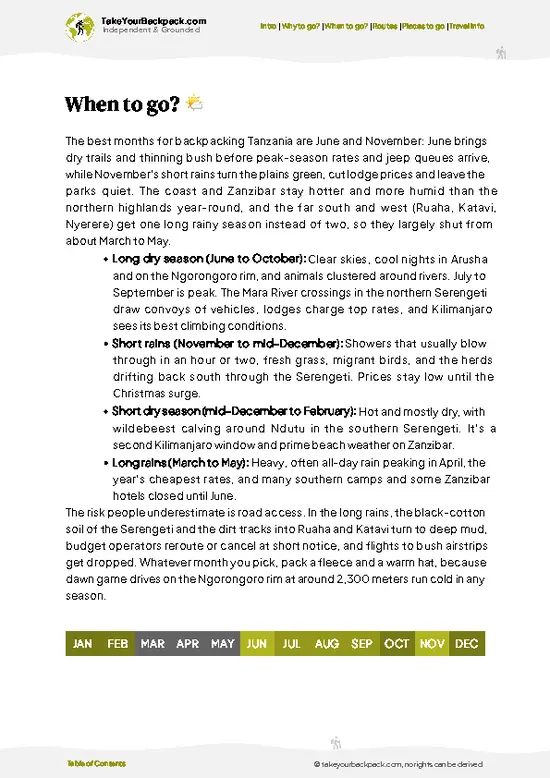
🌤️ When to go?Weather, crowds, and seasonal trade-offs


  • Topic: Weather – Iringa’s dry season from June to October is your best bet. Expect clear skies and minimal rain, perfect for trekking and exploring without soggy boots or canceled plans.

  • Topic: Temperature – Daytime highs hover around 20-25°C (68-77°F) in the dry season, offering comfortable warmth without the oppressive heat of the wet months. Nights can dip to 10°C (50°F), so pack a light jacket.

  • Topic: Daylight Hours – Roughly 11 to 12 hours of daylight year-round, but the dry season’s consistent sun means you can maximize your hiking and sightseeing hours without surprise early darkness.

  • Topic: Crowds – Iringa isn’t a tourist hotspot, but the dry season draws more visitors. You’ll find a livelier atmosphere and better social opportunities, though still far from overcrowded.

read more 👉

  • Topic: Weather – Iringa’s dry season from June to October is your best bet. Expect clear skies and minimal rain, perfect for trekking and exploring without soggy boots or canceled plans.

  • Topic: Temperature – Daytime highs hover around 20-25°C (68-77°F) in the dry season, offering comfortable warmth without the oppressive heat of the wet months. Nights can dip to 10°C (50°F), so pack a light jacket.

  • Topic: Daylight Hours – Roughly 11 to 12 hours of daylight year-round, but the dry season’s consistent sun means you can maximize your hiking and sightseeing hours without surprise early darkness.

  • Topic: Crowds – Iringa isn’t a tourist hotspot, but the dry season draws more visitors. You’ll find a livelier atmosphere and better social opportunities, though still far from overcrowded.

  • Topic: Seasonal Activities – Dry months open up access to Ruaha National Park and local cultural festivals. Wet season limits mobility but brings lush landscapes if you prefer solitude and green vistas.

  • Topic: Price Fluctuations – Expect higher prices on accommodation and tours during the dry season due to demand. The wet season offers bargains but at the cost of less reliable travel conditions.


Pro-tip: Aim for the shoulder months of May or November to balance fewer crowds, decent weather, and better prices—playing the timing game like a pro.


source: climatestotravel.comJANJanuary: fair for travelingFEBFebruary: fair for travelingMARMarch: below average for travelingAPRApril: below average for travelingMAYMay: highly recommended for travelingJUNJune: excellent for travelingJULJuly: excellent for travelingAUGAugust: excellent for travelingSEPSeptember: excellent for travelingOCTOctober: excellent for travelingNOVNovember: highly recommended for travelingDECDecember: fair for traveling
when-to-go

✈️ The backpacker research shortcutTanzania Travel Guide

An offline-friendly backpacking guide with optimized travel routes, ranked highlights, transport advice, and the best areas to stay.
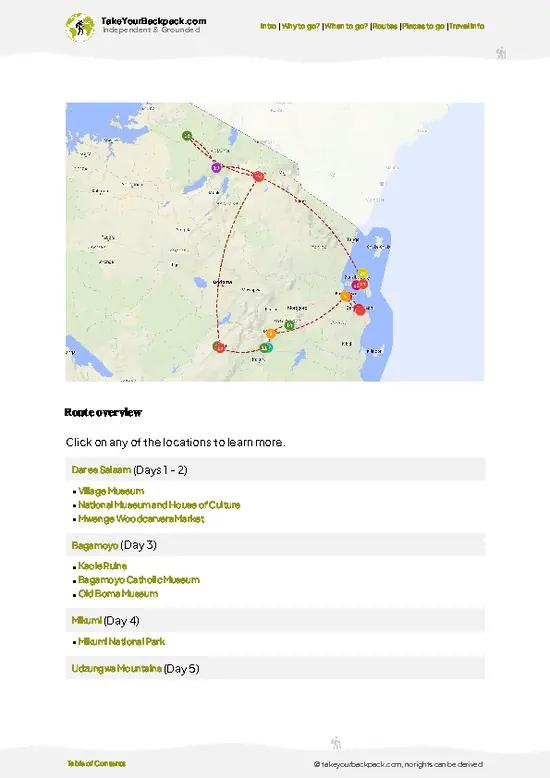
example page 0 from our offline Travel Guide for Tanzania
example page 1 from our offline Travel Guide for Tanzania
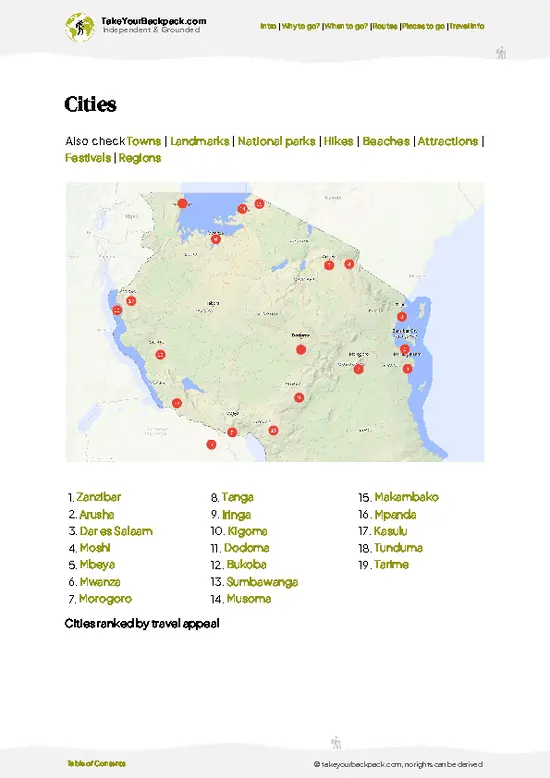
example page 2 from our offline Travel Guide for Tanzania
example page 3 from our offline Travel Guide for Tanzania
example page 4 from our offline Travel Guide for Tanzania
example page 5 from our offline Travel Guide for Tanzania
example page 6 from our offline Travel Guide for Tanzania
example page 7 from our offline Travel Guide for Tanzania
The digital guide (377 pages) contains:
100 highlights, ranked by travel appeal
Optimized 7, 14 & 21-day travel routes
Cities, national parks, landmarks, beaches
How to get around
Offline-friendly for travel without Wi-Fi
👉 Click to see all 30+ guide features

📅 Plan smarter in minutes, not weeks
Month by month travel advice
Festivals & national holidays
Budget expectations

🗺️ Go to the right places, skip the overrated ones
Honest pros & cons of destinations
Top hikes, parks & viewpoints
Lesser-known places most travelers miss
Clear “worth it vs skip it” guidance

🛏️ Travel smoothly without rookie mistakes
Best areas to stay
Transport systems explained simply
Common scams & safety advice
SIM cards, money & practical tips

🌍 Understand the country, not just visit it
Culture & traditions
52 Essential phrases & customs
Festivals worth planning around
Traveler-friendly historical context
Insights that make places more meaningful

📱 Built for real travel conditions
Fully downloadable PDF
Works completely offline
Optimized for phone use
Useful in remote areas & buses
Everything in one place
Save weeks of stressful planning
Get instant access to your full guide. 30‑day money-back guarantee.


By proceeding you agree to our terms.
Sent to your inbox immediately after payment • 100% Secure Checkout
Best Backpacking Travel Advisor 2025 tourism awardBest Backpacking
Travel Advisor
2025
What others say about Take Your Backpack Guides:
⭐⭐⭐⭐⭐
Fantastic, amazing amount of information!
⭐⭐⭐⭐⭐
My goodness this is amazing, it's what I've been looking for hats off too you!
⭐⭐⭐⭐⭐
I think this is absolutely BRILLIANT
⭐⭐⭐⭐
Very complete and informative. It's still missing places, but I gotta to commend you
⭐⭐⭐⭐⭐
This is truly amazing, thank you, can't wait to explore it with my kids!
⭐⭐⭐⭐⭐
Awesome resource, thank you!
⭐⭐⭐⭐⭐
This is amazing! Can't wait to explore the ones I haven't seen
⭐⭐⭐⭐
I love this! Well done, great idea.
⭐⭐⭐⭐⭐
Thanks for taking the time to make this gem!
⭐⭐⭐⭐⭐
This might be the best website I've ever seen.
⭐⭐⭐⭐⭐
Congratulations, and thank you so much for your work; it's incredibly valuable.
⭐⭐⭐⭐
In all seriousness I think you did a great job pointing out the important spots
⭐⭐⭐⭐⭐
10/10 very good
⭐⭐⭐⭐⭐
As someone who's only just starting to visit regularly this is awesome, thank you.
⭐⭐⭐⭐
Thank you very much! I'm going to visit my dad, it's going to be very useful!
⭐⭐⭐⭐⭐
This is really cool! We'll be travelling for the first time and this definitely come in handy.
⭐⭐⭐⭐⭐
You are now our minister of culture, congratulations 👨‍💼
⭐⭐⭐⭐⭐
Just wanted to tell you that this is a pearl! Going to follow your recommendations.
⭐⭐⭐⭐⭐
This is so cool. I'll definitely be using the resource for my travels soon.
⭐⭐⭐⭐⭐
This is very impressive! Good work.
⭐⭐⭐⭐⭐
This is an amazing and informative site. Very well done!

🛏️ Where to stay?Best areas to stay in Tanzania

In Iringa, the sweet spot for backpackers is the area around the town center, especially near the main market and bus station. This zone strikes a rare balance: it’s safe enough to walk around after dark, yet lively enough to meet fellow travelers and locals without feeling like a tourist trap. You’ll find a handful of hostels and guesthouses clustered here, which means social opportunities are baked in—think communal dinners, shared stories, and easy access to local eateries that won’t drain your wallet.

Compared to the quieter, more residential neighborhoods, the town center buzzes with energy … read more 👉
In Iringa, the sweet spot for backpackers is the area around the town center, especially near the main market and bus station. This zone strikes a rare balance: it’s safe enough to walk around after dark, yet lively enough to meet fellow travelers and locals without feeling like a tourist trap. You’ll find a handful of hostels and guesthouses clustered here, which means social opportunities are baked in—think communal dinners, shared stories, and easy access to local eateries that won’t drain your wallet.

Compared to the quieter, more residential neighborhoods, the town center buzzes with energy and practical convenience. It’s where you tap into the city’s pulse without sacrificing comfort or safety. Venturing further out might save a few bucks but costs you in time and social interaction—two currencies backpackers value highly. This area also acts as a launchpad for day trips to nearby natural attractions, making it a strategic base rather than just a place to crash. In short, this neighborhood is where your backpacker instincts pay off: efficient, sociable, and secure.

🚌 Getting aroundTransportation options and practical tips

Iringa moves at a pace that’s part old-school East African rhythm, part practical hustle. It’s not a city where you’ll find strict timetables etched in stone, but neither is it a free-for-all chaos. Instead, the flow here is a dance between local intuition and the occasional beep of a matatu horn, where knowing when to jump in or wait is part of the game. You’ll quickly learn that time, money, and comfort are constantly in negotiation—each transit choice a strategic move on your travel chessboard.


  • Walking: Iringa’s compact center makes walking the default mode for budget travelers. It costs nothing, gives you full control over your schedule, and lets you soak in the city’s pulse up close. Expect to cover most downtown spots within 20-30 minutes on foot, but be ready for uneven sidewalks
read more 👉
Iringa moves at a pace that’s part old-school East African rhythm, part practical hustle. It’s not a city where you’ll find strict timetables etched in stone, but neither is it a free-for-all chaos. Instead, the flow here is a dance between local intuition and the occasional beep of a matatu horn, where knowing when to jump in or wait is part of the game. You’ll quickly learn that time, money, and comfort are constantly in negotiation—each transit choice a strategic move on your travel chessboard.


  • Walking: Iringa’s compact center makes walking the default mode for budget travelers. It costs nothing, gives you full control over your schedule, and lets you soak in the city’s pulse up close. Expect to cover most downtown spots within 20-30 minutes on foot, but be ready for uneven sidewalks and the occasional stray dog.


  • Matatu (Shared Minibus): The backbone of local transit, matatus run roughly from 6 AM to 8 PM. Fares hover around 500-1000 Tanzanian shillings ($0.20-$0.40), making them the cheapest motorized option. They’re fast when traffic is light but can get cramped and noisy. No fixed stops—flag one down anywhere and hop off when you see your destination.


  • Boda Boda (Motorcycle Taxi): When time is tight and you’re willing to spend a bit more, boda bodas are your go-to. Prices vary but expect to pay 2000-5000 shillings ($0.85-$2) for short trips. They’re quick and nimble, slicing through traffic, but comfort is minimal and safety standards vary widely. Best for solo travelers with light packs.


  • Private Taxi: Rare and pricier, private taxis offer door-to-door comfort without the unpredictability of shared rides. Expect to negotiate fares upfront—usually starting around 10,000 shillings ($4) for short hops. They run on your schedule but sacrifice budget and local immersion.


  • Intercity Buses: For trips beyond Iringa, buses depart irregularly from the main bus station, often early morning or late afternoon. Tickets cost between 10,000-20,000 shillings ($4-$8) depending on distance. They’re slower than private cars but offer a window into regional life and a chance to stretch your legs between stops.


Mastering Iringa’s transit means balancing your priorities: save money by walking or hopping matatus, buy time with boda bodas, or invest in comfort with private taxis. Each choice shapes your experience, turning the city’s flow into a puzzle you can solve on your terms.

👛 Costs (as of 30 July 2026)Money, prices, and spending tips

Backpacking in Iringa, Tanzania, offers a clear trade-off between cost and comfort, with prices reflecting the city’s modest but growing tourism infrastructure. Here’s how the daily expenses typically break down for an independent traveler navigating this East African hub.
  • Dorm Accommodation (High Season): Expect to pay around $8 to $12 per night. High season drives prices up slightly due to demand, but options remain basic, often with shared bathrooms and simple amenities.
  • Dorm Accommodation (Off-Season): Prices drop to about $5 to $8 per night. Fewer tourists mean more bargaining power, and you can find clean, safe dorm beds at these rates without sacrificing much on comfort.
  • Meals: Street food and local eateries dominate here, with meals costing between $1.50 and $3 each. A full day’s
read more 👉
Backpacking in Iringa, Tanzania, offers a clear trade-off between cost and comfort, with prices reflecting the city’s modest but growing tourism infrastructure. Here’s how the daily expenses typically break down for an independent traveler navigating this East African hub.
  • Dorm Accommodation (High Season): Expect to pay around $8 to $12 per night. High season drives prices up slightly due to demand, but options remain basic, often with shared bathrooms and simple amenities.
  • Dorm Accommodation (Off-Season): Prices drop to about $5 to $8 per night. Fewer tourists mean more bargaining power, and you can find clean, safe dorm beds at these rates without sacrificing much on comfort.
  • Meals: Street food and local eateries dominate here, with meals costing between $1.50 and $3 each. A full day’s worth of food—breakfast, lunch, and dinner—can be managed comfortably for $5 to $8 if you stick to local dishes like ugali, nyama choma, and fresh fruit.
  • Local Transport: Boda-bodas (motorcycle taxis) and dala-dalas (minibus taxis) are the main modes. Short rides typically cost $0.30 to $0.70. Budget around $1.50 to $3 daily if you’re moving around town frequently.
  • City Transport Pass: Iringa doesn’t have a formal city transport pass system. Instead, daily transport costs are pay-as-you-go, so no upfront pass expense but keep the daily transport budget flexible.
  • Basic Activities/Entry Fees: Visits to local markets, small museums, or natural sites usually cost between $1 and $5. More structured tours or national park entries nearby can push this higher, but for everyday city exploration, $2 to $4 is typical.
  • Miscellaneous Expenses: This includes bottled water, snacks, occasional internet cafes, or small tips. Budget around $1 to $3 daily to cover these incidental costs without stress.

Summing it up, a backpacker in Iringa can expect to spend roughly $15 to $25 per day, depending on season and personal choices. This range balances basic comfort with local flavor, giving you control over where to save and where to splurge for a richer experience.
⚠️ Prices can change and everyone travels differently, so take this as a rough guide. Hope it helps you plan your adventure!

🚌 Day tripsShort trips worth adding

Using Iringa as your base opens up a treasure trove of day trips that blend adventure with cultural immersion. Here’s how to maximize your time, money, and comfort while exploring the surrounding gems.

Ruins of Isimila
Just a 30-minute drive from Iringa, the Isimila Stone Age Site is a fascinating glimpse into ancient history. You’ll wander through stunning rock formations and see artifacts dating back thousands of years. The entrance fee is minimal, making it a budget-friendly excursion. Best visited in the dry season (June to October), you’ll avoid muddy trails and enjoy clearer views. A common mistake? Underestimating how much time you’ll want to spend soaking in the scenery and history.


Ngorongoro Crater Day Trip
While a bit of a stretch at about 4 hours each way, this trip is … read more 👉
Using Iringa as your base opens up a treasure trove of day trips that blend adventure with cultural immersion. Here’s how to maximize your time, money, and comfort while exploring the surrounding gems.

Ruins of Isimila
Just a 30-minute drive from Iringa, the Isimila Stone Age Site is a fascinating glimpse into ancient history. You’ll wander through stunning rock formations and see artifacts dating back thousands of years. The entrance fee is minimal, making it a budget-friendly excursion. Best visited in the dry season (June to October), you’ll avoid muddy trails and enjoy clearer views. A common mistake? Underestimating how much time you’ll want to spend soaking in the scenery and history.


Ngorongoro Crater Day Trip
While a bit of a stretch at about 4 hours each way, this trip is a bucket-list experience. The crater is a UNESCO World Heritage site, teeming with wildlife. Expect to pay a higher entrance fee, but the chance to see the Big Five in their natural habitat is worth every shilling. Plan for an early start to maximize your time in the crater. Many first-timers miss the chance to pack a picnic; don’t let hunger distract you from the breathtaking views.
👉 Explore Ngorongoro Crater

Iringa Market Experience
Staying local? The bustling Iringa Market is a must. Just a short walk from the city center, you can immerse yourself in the vibrant local culture. Sample street food, haggle for crafts, and engage with friendly vendors. This trip is practically free unless you indulge in too many snacks. The best time to visit is early morning when the market is alive with energy. A rookie mistake is not bringing cash; many vendors don’t accept cards.


Kitulo National Park
About 2 hours from Iringa, Kitulo is known as the ”Serengeti of Flowers.” If you’re into hiking and photography, this is paradise. The park is home to an incredible variety of flora and fauna, especially during the rainy season (November to April). Entrance fees are reasonable, and you can easily spend a full day exploring. First-timers often overlook the need for a guide; having one enhances your experience and ensures you don’t miss the park’s highlights.
👉 Explore Kitulo National Park
Want to know what more Tanzania offers?
The Tanzania Travel Guide describes 100 highlights, from cities to national parks, from beaches to hikes

Get the Travel Guide -

🍲 FoodLocal Flavors for Backpackers

In Iringa, the food scene is a vibrant tapestry of flavors that tells the story of its people. Start with ugali, a staple made from maize flour, served with almost every meal. It’s the perfect vehicle for scooping up rich stews, often featuring nyama choma—grilled meat that’s smoky and tender, usually seasoned with local spices.

Street food is where the magic happens. Vendors line the streets, offering samosas and kebabs that are crispy and bursting with flavor. The local markets are a sensory overload, filled with the aroma of spices and the chatter of locals. Don’t miss the chance to try kuku wa kupaka, chicken cooked in a coconut sauce that’s creamy and aromatic.

When it comes to drinks, chai is a daily ritual. Served sweet and spiced, it’s a social experience, often shared among friends. … read more 👉
In Iringa, the food scene is a vibrant tapestry of flavors that tells the story of its people. Start with ugali, a staple made from maize flour, served with almost every meal. It’s the perfect vehicle for scooping up rich stews, often featuring nyama choma—grilled meat that’s smoky and tender, usually seasoned with local spices.

Street food is where the magic happens. Vendors line the streets, offering samosas and kebabs that are crispy and bursting with flavor. The local markets are a sensory overload, filled with the aroma of spices and the chatter of locals. Don’t miss the chance to try kuku wa kupaka, chicken cooked in a coconut sauce that’s creamy and aromatic.

When it comes to drinks, chai is a daily ritual. Served sweet and spiced, it’s a social experience, often shared among friends. You’ll find small cafés buzzing with laughter and conversation, where sipping chai feels like a warm embrace.

Etiquette is simple: share your food and enjoy the communal spirit. Eating with your hands is common, so dive in! Embrace the flavors and the connections—they’re what make Iringa truly special.

🛡️ SafetySafety Tips and Common Scams in Iringa

Iringa is generally safe for backpackers, but a few situational awareness tips can enhance your experience. Stick to well-lit areas at night, especially if you’re solo. The streets can feel quiet, and while locals are friendly, it’s wise to avoid wandering too far off the beaten path after dark.

Common scams are rare, but be cautious around markets. Vendors may inflate prices for tourists. A friendly haggling session can be fun, but know your limits. Always keep your belongings secure; petty theft can happen in crowded places.

Annoyances like persistent street vendors can test your patience. A polite but firm “no, thank you” usually does the trick. Carry yourself confidently, and engage with locals when it feels right. They often appreciate a genuine smile and may offer helpful tips.

Other Tanzanian cities near Iringa

Explore more nearby:

  • Makambako—railway stop, highland plateau, transport hub, cool evenings| 152 km away
  • Dodoma—national capital, government district, dry plains| 177 km away
  • Morogoro—Uluguru Mountains, university town, agricultural center| 241 km away

💡 Not sure where to go next?
Create a personalized itinerary for Tanzania including Iringa and the places that fit your trip.

Generate my itinerary

👉 Discover all cities

Or checkout all Tanzania has to offer (think cities, towns, villages, national parks, hikes, beaches, festivals)
Country photo of Tanzania

We 💚 feedbackParting advice and final tips

Iringa has a vibe that feels both grounded and welcoming. The best surprise? The local markets bursting with fresh produce and vibrant colors. You’ll find locals eager to share stories over a cup of chai. Just a heads-up: the roads can be bumpy, so don’t rush your travels. Embrace the slow pace; it’s part of the charm. This place isn’t just a stop; it’s a moment to savor.

✍️ Help improve this page!
The information on this page is based on in-depth research, insights shared by experienced travelers, and feedback from the local travel community in Tanzania. While every effort is made to keep the information accurate and current, conditions can change — so if you spot anything incorrect or outdated, please get in touch.


🙋‍♂️ Give feedback

👋 Meet the founderWho’s Behind Take Your Backpack?

Johan, backpacker and founder of TakeYourBackpackHi, I’m Johan (Netherlands 🇳🇱), the creator of TakeYourBackpack. Over the past decade, I’ve backpacked through 80+ countries across six continents, gaining extensive experience with independent travel, long-term trips, and overland routes.

This site is built on a combination of firsthand travel experience and carefully curated insights from other backpackers. Many guides are based on places I’ve personally visited, while others bring together tips, observations, and practical advice shared by trusted travelers I’ve met along the way.

The goal is to provide realistic, experience-driven guidance — not generic itineraries — so you can explore destinations with better context, clearer expectations, and more confidence.

Get full Tanzania guide •
Instant download • 100 highlights • Full Offline guide