×

Tanzania🇹🇿 | citiesTangaGerman-era streets, Amboni Caves, Tongoni ruins, Raskazone Beach | things to do and best time to go

Explore MbeyaExplore Dodoma

Backpacking in Tanga
🌟 Highlightcity ranked #9
By Johan Kruseman 🇳🇱 | Updated October 22, 2026

Tanga's Raskazone side hums with the clatter of bicycle taxis and the smell of grilled fish, and the old German-era streets back from the harbor are where you start poking around. This port city sits on the Indian Ocean in the north-east of Tanzania, close to the Kenyan border. Expect crumbling colonial buildings, sleepy beaches and almost no tourist hustle, which suits curious travelers who like to explore on their own. It is thin on polished hostels and nightlife. Compared with Dar es Salaam, Tanga costs less in time and money and is far calmer, though you give up comfort and choice. Compared with Pangani, it has more food, buses and onward links, so it gives a backpacker the most as a base.

Discover everything you want to know in the 📖 Tanzania Travel Guide.


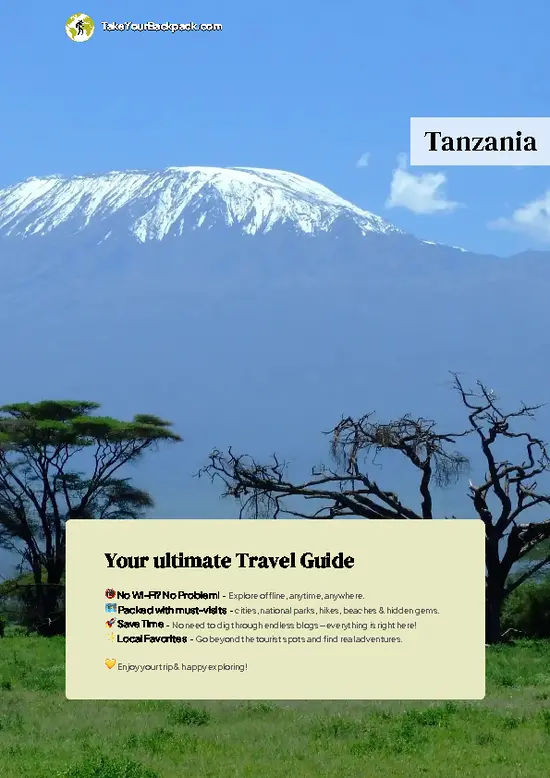
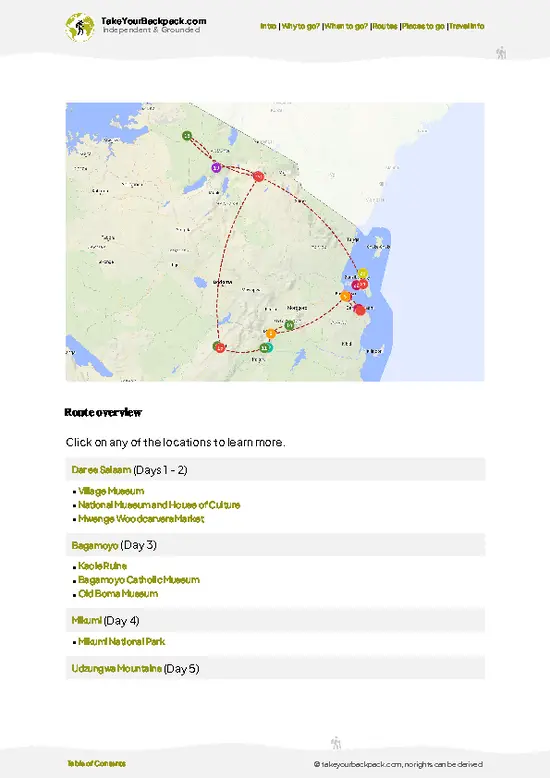
example page 0 from our offline Travel Guide for Tanzania
example page 1 from our offline Travel Guide for Tanzania
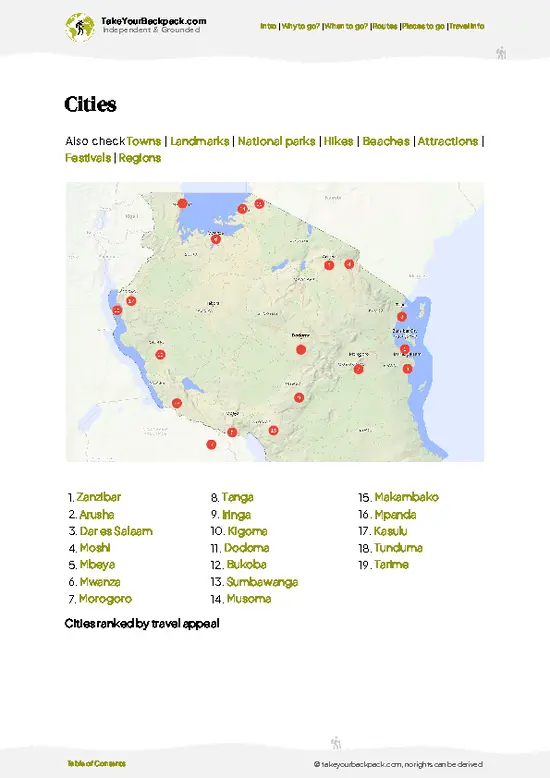
example page 2 from our offline Travel Guide for Tanzania
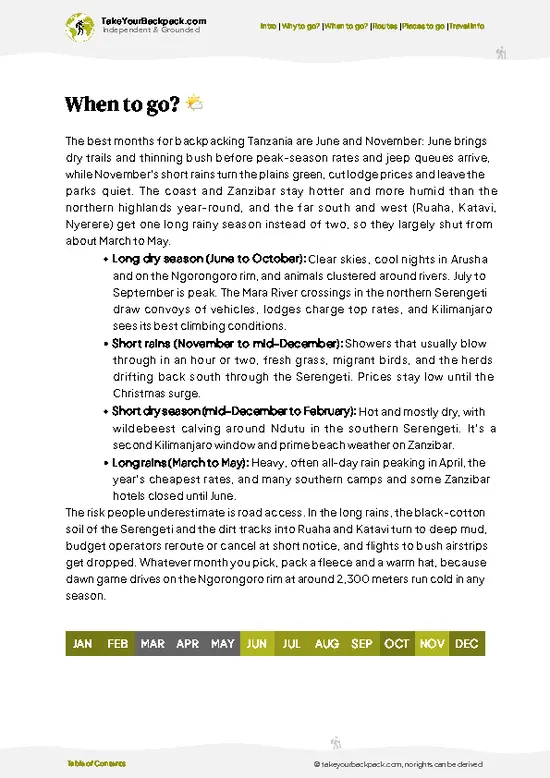
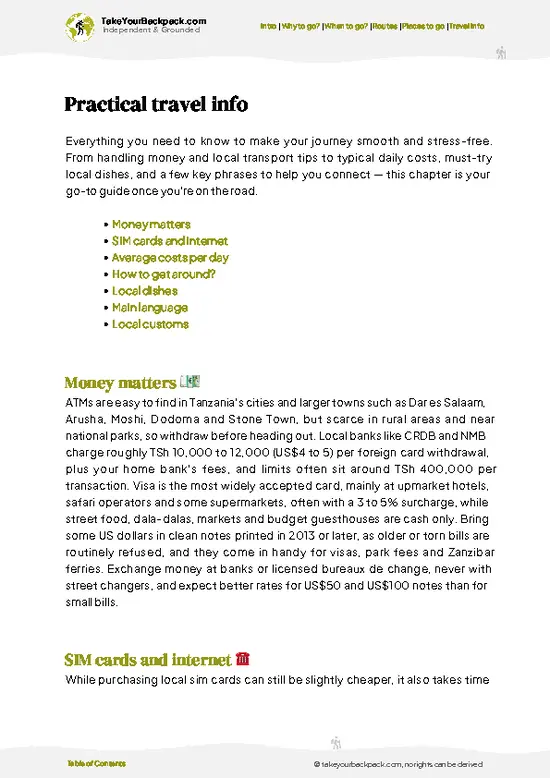
example page 3 from our offline Travel Guide for Tanzania
example page 4 from our offline Travel Guide for Tanzania
example page 5 from our offline Travel Guide for Tanzania
example page 6 from our offline Travel Guide for Tanzania
example page 7 from our offline Travel Guide for Tanzania
Loading the map 🌍
CLICK TO FILTER
cities
towns
landmarks
national parks
hikes
beaches
attractions
festivals
regions
SHOW COUNTRY’S BESTSHOW ALL

✨ Why go?
Ranked #9 city in Tanzania
What makes this city worth visiting

Tanga earns its place on a route for being a working port town with almost no tour-bus traffic, so you spend your days wandering rather than queuing. The center is flat and compact, and you can cover the old quarter on foot or hop on a piki-piki when the sun gets heavy. Guesthouses are simple and cheap, and the seafood stalls near the waterfront and the Swahili coast food culture make eating a daily pleasure rather than a chore. The real draw is the choice of day outings by land and sea that work from a single bed, so you unpack once and still see a lot. It is also a handy hinge between Kenya's coast and the Usambara mountains, with regular buses both ways. Nightlife is low-key, so if you want clubs, look elsewhere. For a slow, authentic stop of two or three nights, it works very well.

💡 HighlightsTop highlights of Tanga

  1. Tongoni Ruins: Ruined 15th-century Swahili mosque and tombs with pillar graves in coastal bush south of town. Go in the morning for cooler walking. Entry is about US$2 to 4 and a visit takes 1 to 2 hours.
  2. Raskazone Beach: The city's own strip of sand, lively with families and football games in the late afternoon. Free, and an hour or two suits it.
  3. Tanga Old Town and German-era buildings: Colonial customs houses, the old boma and arcaded shopfronts line the streets near the port. Walk early before the heat. Free, around 1 to 2 hours.
  4. Central Market (Soko Kuu): Mounds of spices, coconuts, fish and fruit, plus vendors selling kanga cloth. Best before 10 am. Free to enter and an hour gives you plenty.
  5. Tanga Museum: Small exhibits on local history, Swahili life and the town's colonial past in an older
… read more 👉
  1. Tongoni Ruins: Ruined 15th-century Swahili mosque and tombs with pillar graves in coastal bush south of town. Go in the morning for cooler walking. Entry is about US$2 to 4 and a visit takes 1 to 2 hours.
  2. Raskazone Beach: The city's own strip of sand, lively with families and football games in the late afternoon. Free, and an hour or two suits it.
  3. Tanga Old Town and German-era buildings: Colonial customs houses, the old boma and arcaded shopfronts line the streets near the port. Walk early before the heat. Free, around 1 to 2 hours.
  4. Central Market (Soko Kuu): Mounds of spices, coconuts, fish and fruit, plus vendors selling kanga cloth. Best before 10 am. Free to enter and an hour gives you plenty.
  5. Tanga Museum: Small exhibits on local history, Swahili life and the town's colonial past in an older building. Entry is roughly US$1 to 3, and 45 minutes is enough.
  6. Amboni Caves: Limestone caverns north of town with bats, stalactites and local legends. A guide is compulsory. Expect about US$5 to 10 and 1 to 1.5 hours inside; mornings are best.
  7. Fish landing at the harbor: Dhows and small boats bring in the catch at dawn and fishermen sell straight from the sand. Free, and 45 minutes is enough.
For day trips from Tanga, consider Toten Island, the Maziwe Marine Reserve sandbar, Pangani and the Usambara Mountains around Amani. Seeing everything above takes roughly two full days at an easy pace.
Spotted a mistake or missing something? Contact us.

Things to do near Tanga

Ratings based on Tripadvisor reviews. When you book through this link, you support our work at no extra cost to you.

🏘️ NeighborhoodsHow different areas shape the experience

Tanga rewards anyone who explores on foot and by bike, and the compact center and waterfront cover most of what you need. Here is how the areas stack up.
  • Central Tanga and Market Street area: Start here, because it packs the most into the least walking. Old German and British-era buildings line Independence Avenue, the Central Market overflows with spices, fruit and fried snacks, and the bus-stand streets bring constant motion. It is flat, walkable and free to roam, so it gives backpackers the best return for a morning.
  • Ras Kazone and the waterfront: Push east to the harbor edge for sea breezes, fishermen hauling in the catch and grilled seafood stalls at dusk. Nightlife is low-key, with plain local bars and open-air spots. Walk it if the heat allows, or grab a cheap bajaji (auto-rickshaw) for
… read more 👉
Tanga rewards anyone who explores on foot and by bike, and the compact center and waterfront cover most of what you need. Here is how the areas stack up.
  • Central Tanga and Market Street area: Start here, because it packs the most into the least walking. Old German and British-era buildings line Independence Avenue, the Central Market overflows with spices, fruit and fried snacks, and the bus-stand streets bring constant motion. It is flat, walkable and free to roam, so it gives backpackers the best return for a morning.
  • Ras Kazone and the waterfront: Push east to the harbor edge for sea breezes, fishermen hauling in the catch and grilled seafood stalls at dusk. Nightlife is low-key, with plain local bars and open-air spots. Walk it if the heat allows, or grab a cheap bajaji (auto-rickshaw) for the last stretch.
  • Chumbageni and Usagara: These residential, quieter districts hold the Tanga School grounds, Chumbageni Park and the Tanga Museum. Distances stretch, so a short motorbike or bajaji ride saves your legs and costs little. Go for calm streets and a look at everyday life.
  • Mwarongo and Pongwe side: Head south toward Pongwe for sandy shores and quiet beaches. It needs transport, so pair it with a half-day plan rather than a quick stroll.

⌛️ 1 dayHow to make the most of one day

A slow coastal wander of markets, ruins and sea air makes up this day.

7:00 AM: Harbor fish landing
Watch boats unload under a pink sky and sip sweet tea from a nearby stall. Then walk inland toward the center.

8:30 AM: Central Market
Browse spices, fruit and cloth, and grab mandazi for breakfast. Keep bags in front on the narrow lanes.

10:00 AM: Old Town and Tanga Museum
Stroll past colonial facades and customs buildings, then spend about 45 minutes at the museum for local context. The walk is flat and short.

12:30 PM: Lunch near the waterfront
Order grilled fish with chapati or pilau at a simple local eatery and rest through the midday heat.

2:30 PM: Tongoni Ruins
Take a minibus or hire a piki-piki to this off-route 15th-century site. Wander the pillar tombs and mosque walls among baobab … read more 👉
A slow coastal wander of markets, ruins and sea air makes up this day.

7:00 AM: Harbor fish landing
Watch boats unload under a pink sky and sip sweet tea from a nearby stall. Then walk inland toward the center.

8:30 AM: Central Market
Browse spices, fruit and cloth, and grab mandazi for breakfast. Keep bags in front on the narrow lanes.

10:00 AM: Old Town and Tanga Museum
Stroll past colonial facades and customs buildings, then spend about 45 minutes at the museum for local context. The walk is flat and short.

12:30 PM: Lunch near the waterfront
Order grilled fish with chapati or pilau at a simple local eatery and rest through the midday heat.

2:30 PM: Tongoni Ruins
Take a minibus or hire a piki-piki to this off-route 15th-century site. Wander the pillar tombs and mosque walls among baobab and bush, with almost nobody else around. Return before dusk.

5:30 PM: Raskazone Beach
Join locals for football and coconut water as the tide shifts. End with a cold drink and an early night.

🌤️ When to go?Choosing the right time of year

Tanga is hot and humid all year, and the cooler, drier months from June to October give the most comfortable walking and beach time.
  • Cool Dry Season (June to October): Highs reach 28 to 30°C (82 to 86°F), nights dip to about 19°C (66°F), and the sea breeze keeps afternoons bearable. Crowds stay thin and prices stay flat.
  • Hot Season (December to March): Expect 31 to 34°C (88 to 93°F) with heavy humidity. Swimming is lovely, but midday walking drains you.
  • Long Rains (April to May): Downpours flood dirt roads and cut some boat trips. Guesthouses sometimes discount rooms.
  • Short Rains (November): Showers are brief and lighter, and days run about 12 hours long all year.
Book Kenyan-coast or Pemba connections early if you visit around Christmas.

source: climatestotravel.comJANJanuary: good for travelingFEBFebruary: good for travelingMARMarch: fair for travelingAPRApril: fair for travelingMAYMay: fair for travelingJUNJune: highly recommended for travelingJULJuly: excellent for travelingAUGAugust: excellent for travelingSEPSeptember: highly recommended for travelingOCTOctober: highly recommended for travelingNOVNovember: good for travelingDECDecember: good for traveling
when-to-go

✈️ The backpacker research shortcutTanzania Travel Guide

An offline-friendly backpacking guide with optimized travel routes, ranked highlights, transport advice, and the best areas to stay.
example page 0 from our offline Travel Guide for Tanzania
example page 1 from our offline Travel Guide for Tanzania
example page 2 from our offline Travel Guide for Tanzania
example page 3 from our offline Travel Guide for Tanzania
example page 4 from our offline Travel Guide for Tanzania
example page 5 from our offline Travel Guide for Tanzania
example page 6 from our offline Travel Guide for Tanzania
example page 7 from our offline Travel Guide for Tanzania
The digital guide (396 pages) contains:
✅ 103 highlights, ranked by travel appeal
✅ Optimized 7, 14 & 21-day travel routes
✅ Cities, national parks, landmarks, beaches
✅ How to get around
✅ Offline-friendly for travel without Wi-Fi
👉 Click to see all 30+ guide features

📅 Plan smarter in minutes, not weeks
✅ Month by month travel advice
✅ Festivals & national holidays
✅ Budget expectations

🗺️ Go to the right places, skip the overrated ones
✅ Honest pros & cons of destinations
✅ Top hikes, parks & viewpoints
✅ Lesser-known places most travelers miss
✅ Clear “worth it vs skip it” guidance

🛏️ Travel smoothly without rookie mistakes
✅ Best areas to stay
✅ Transport systems explained simply
✅ Common scams & safety advice
✅ SIM cards, money & practical tips

🌍 Understand the country, not just visit it
✅ Culture & traditions
✅ 52 Essential phrases & customs
✅ Festivals worth planning around
✅ Traveler-friendly historical context
✅ Insights that make places more meaningful

📱 Built for real travel conditions
✅ Fully downloadable PDF
✅ Works completely offline
✅ Optimized for phone use
✅ Useful in remote areas & buses
✅ Everything in one place
Stop searching, start planning
Get instant access to your full guide. 30‑day money-back guarantee.
+ Add another guide for just

By proceeding you agree to our terms.
Sent to your inbox immediately after payment • 100% Secure Checkout
Best Backpacking Travel Advisor 2025 tourism awardBest Backpacking
Travel Advisor
2025
What others say about Take Your Backpack Guides:
⭐⭐⭐⭐⭐
Fantastic, amazing amount of information!
⭐⭐⭐⭐⭐
My goodness this is amazing, it's what I've been looking for hats off too you!
⭐⭐⭐⭐⭐
I think this is absolutely BRILLIANT
⭐⭐⭐⭐
Very complete and informative. It's still missing places, but I gotta to commend you
⭐⭐⭐⭐⭐
This is truly amazing, thank you, can't wait to explore it with my kids!
⭐⭐⭐⭐⭐
Awesome resource, thank you!
⭐⭐⭐⭐⭐
This is amazing! Can't wait to explore the ones I haven't seen
⭐⭐⭐⭐
I love this! Well done, great idea.
⭐⭐⭐⭐⭐
Thanks for taking the time to make this gem!
⭐⭐⭐⭐⭐
This might be the best website I've ever seen.
⭐⭐⭐⭐⭐
Congratulations, and thank you so much for your work; it's incredibly valuable.
⭐⭐⭐⭐
In all seriousness I think you did a great job pointing out the important spots
⭐⭐⭐⭐⭐
10/10 very good
⭐⭐⭐⭐⭐
As someone who's only just starting to visit regularly this is awesome, thank you.
⭐⭐⭐⭐
Thank you very much! I'm going to visit my dad, it's going to be very useful!
⭐⭐⭐⭐⭐
This is really cool! We'll be travelling for the first time and this definitely come in handy.
⭐⭐⭐⭐⭐
You are now our minister of culture, congratulations 👨‍💼
⭐⭐⭐⭐⭐
Just wanted to tell you that this is a pearl! Going to follow your recommendations.
⭐⭐⭐⭐⭐
This is so cool. I'll definitely be using the resource for my travels soon.
⭐⭐⭐⭐⭐
This is very impressive! Good work.
⭐⭐⭐⭐⭐
This is an amazing and informative site. Very well done!

🛏️ Where to stay?How to pick the right area

The center near the market and bus stand is the best area for a budget bed in Tanga, with the widest range of cheap guesthouses and simple lodges, usually US$8 to 20 a night for a private room. Dorms are rare here, so expect small guesthouses rather than hostel-style setups. Staying central means you can walk to food, ATMs and the bus stand for onward travel, and bajaji drivers are always on hand after dark. Streets are busy and can be noisy from early morning with traffic and the call to prayer, so pack earplugs and ask for a room at the back.
The waterfront side toward Ras Kazone is the second … read more 👉
The center near the market and bus stand is the best area for a budget bed in Tanga, with the widest range of cheap guesthouses and simple lodges, usually US$8 to 20 a night for a private room. Dorms are rare here, so expect small guesthouses rather than hostel-style setups. Staying central means you can walk to food, ATMs and the bus stand for onward travel, and bajaji drivers are always on hand after dark. Streets are busy and can be noisy from early morning with traffic and the call to prayer, so pack earplugs and ask for a room at the back.
The waterfront side toward Ras Kazone is the second option. It is calmer and breezier, with a few budget and midrange places that cost slightly more, often US$15 to 30. The trade-off is fewer food options at night and a longer walk or bajaji ride to the bus stand. It suits travelers who value sleep over convenience. Book ahead only around holidays; walk-ins usually find a room.

🚌 Getting aroundGetting around like a local

Paying the first quoted price to a bajaji or boda boda driver wastes the most money in Tanga, so ask a local what the ride should cost and agree before you climb on. The center is flat and compact, so you will walk more than you expect, and traffic is light compared with Dar es Salaam. Public transport is informal but plentiful.
  • Walking: Free and the fastest way to cover the market, the waterfront and the old colonial streets. Do it in the morning or late afternoon, when the humidity eases. For the center, it beats everything else.
  • Bajaji (auto-rickshaw): Comfortable enough for two, shaded from the sun and carrying you across town for roughly US$0.80 to 2. Faster than walking in heat and cheaper than a taxi, they are the best choice for most backpackers after dark.
  • Boda boda (motorbike taxi):
… read more 👉
Paying the first quoted price to a bajaji or boda boda driver wastes the most money in Tanga, so ask a local what the ride should cost and agree before you climb on. The center is flat and compact, so you will walk more than you expect, and traffic is light compared with Dar es Salaam. Public transport is informal but plentiful.
  • Walking: Free and the fastest way to cover the market, the waterfront and the old colonial streets. Do it in the morning or late afternoon, when the humidity eases. For the center, it beats everything else.
  • Bajaji (auto-rickshaw): Comfortable enough for two, shaded from the sun and carrying you across town for roughly US$0.80 to 2. Faster than walking in heat and cheaper than a taxi, they are the best choice for most backpackers after dark.
  • Boda boda (motorbike taxi): Quickest in traffic and cheapest at about US$0.40 to 1.50 a short ride. You get a bumpy, exposed seat, and you should insist on a helmet. Pick this for short hops when you travel light.
  • Daladala (minibus): Fares run about US$0.20 to 0.60 within town and to nearby villages. They are crowded and stop often, but they reach beaches and suburbs that nothing else serves cheaply. Services run from early morning until around dusk.
  • Taxi: Cars wait near the bus stand and hotels, and rides cost about US$2 to 5 in town. Use them for luggage, airport trips or late arrivals, not routine hopping.

👛 Costs (as of 22 October 2026)What things cost and how to budget

Tanga costs about US$27 a day for a backpacker who sleeps in budget guesthouses and eats locally.
CategoryBudget RangeLocal Reality
Dorm accommodation (high season)US$8 to 12Dorms are rare, so this is a basic private room in a simple guesthouse.
Dorm accommodation (off-season)US$6 to 9Rooms are easier to bargain down in the rainy months.
MealsUS$5 to 8Street food and local plates cost US$2 to 3 each.
Local transportUS$1 to 3Bajaji, boda boda and daladala rides cost US$0.20 to 2.
City transport passNot availableYou pay per ride.
Basic activities/entry feesUS$3 to 8Caves, boat trips and museum entry run US$3 to 15.
MiscellaneousUS$2 to 4Water, SIM data and snacks.
Total Daily BudgetUS$27Roughly US$20 to 35 depending on how you travel.
Eat where the locals do at the market and waterfront to keep food costs low.
⚠️ Prices can change and everyone travels differently, so take this as a rough guide. Hope it helps you plan your adventure!

🚌 Day tripsBest day trips from Tanga

Tanga works well as a base for day trips, because most sights lie within two hours by road and daladalas run from the main stand.
Amboni Caves:
These limestone caves lie about 8 km north and can be reached in 20 to 30 minutes by bajaji or boda boda. Guided tours cost roughly US$8 to 15, with a guide required, and the dark passages hold bats and strange formations. Go in the dry months and wear closed shoes, since wet floors are slippery. First-timers often arrive without a torch.

Toten Island:
A short boat ride from the Tanga waterfront takes you to this tiny island of ruined buildings and a quiet fishing community. Budget about US$5 to 12 for the crossing and a local guide. Come at high tide, as boats struggle at low water, and check timing before you commit.

Pangani:
This sleepy coastal … read more 👉
Tanga works well as a base for day trips, because most sights lie within two hours by road and daladalas run from the main stand.
Amboni Caves:
These limestone caves lie about 8 km north and can be reached in 20 to 30 minutes by bajaji or boda boda. Guided tours cost roughly US$8 to 15, with a guide required, and the dark passages hold bats and strange formations. Go in the dry months and wear closed shoes, since wet floors are slippery. First-timers often arrive without a torch.

Toten Island:
A short boat ride from the Tanga waterfront takes you to this tiny island of ruined buildings and a quiet fishing community. Budget about US$5 to 12 for the crossing and a local guide. Come at high tide, as boats struggle at low water, and check timing before you commit.

Pangani:
This sleepy coastal town sits about 50 km south, roughly 1.5 to 2 hours by minibus for US$3 to 5. Old Swahili and German buildings, a slave-trade history and the river ferry make it a fine half-day. Leave early so you can get back before the last departures at dusk.
👉 Explore Pangani
Tongoni Ruins:
About 20 km south, this 14th-century Swahili site has tall pillar tombs overlooking the sea. A day costs around US$6 to 10 including transport, and the road can be rough in the rains.

🍲 FoodEating & Drinking in Tanga

Tanga food leans on the Swahili coast, with coconut, spices and fresh seafood in nearly everything. Look for samaki wa kupaka, grilled fish in a coconut-tamarind sauce, and fish or octopus curry with rice cooked in coconut milk. Street cooks sell mishkaki skewers and mihogo (cassava) fried with a spicy chili dip in the evening, plus vitumbua rice cakes for breakfast.
The Central Market is the place for tropical fruit, fresh coconut water and cheap plates of beans, chapati and tea. At dusk the waterfront fills with grills selling fresh catch by the piece, and meals typically cost US$2 to 5. Small local cafes serve strong spiced coffee, and a late-afternoon pot of chai is part of town life. Alcohol is available in local bars, but the coast is mostly Muslim, so drink discreetly outside them.

🛡️ SafetyTraveler Safety Guide

Tanga is relaxed and low-key, and most problems here are small ones. Petty theft such as phone snatching is possible around the market and bus stand, so keep your phone in a front pocket and wear a bag across your body. After dark, take a bajaji instead of walking quiet side streets or the beach, particularly if you are alone. Solo travelers, women included, generally find locals welcoming, though modest dress helps in this largely Muslim coastal town. Touts at the bus stand may overcharge or push you onto a specific coach, so check the fare with the ticket office. Swim only where locals do, as currents can be strong.

FAQFrequently asked questions about Tanga

Two to three days is enough for Tanga. Spend one day on the market, colonial streets and waterfront, a second on the Amboni Caves (about 8 km north, US$8 to 15 with a guide) and Toten Island, and add a third for Pangani, 1.5 to 2 hours south by minibus.
Yes, Tanga is generally comfortable for solo backpackers, with friendly locals and low crime. Keep your phone secured near the market and bus stand, take a bajaji (US$0.80 to 2) after dark, and dress modestly in this largely Muslim coastal town.
Tanga is known for its Swahili coast food, the Amboni Caves, and German and British colonial architecture. It is also a gateway to Toten Island, the Pangani ruins and quiet beaches, with a sleepy pace far from Tanzania's busier hubs. Spices, seafood and sisal heritage define its character.
⚠️ Things can change over time, so always validate details locally before you go.

Other Tanzanian cities near Tanga

Explore more nearby:

  • Zanzibar—Stone Town lanes, carved doors, Forodhani night market, slave market memorial| 120 km away
  • Zanzibar City—Stone Town alleys, spice markets, Omani palaces| 120 km away
  • Dar es Salaam—Ferry gateway, Kivukoni fish auctions, Kariakoo trading, Makonde carvings| 193 km away

💡 Not sure where to go next?
Create a personalized itinerary for Tanzania including Tanga and the places that fit your trip.

Generate my itinerary

👉 Discover all cities

Or checkout all Tanzania has to offer (think cities, towns, villages, national parks, hikes, beaches, festivals)
Country photo of Tanzania

We 💚 feedbackIs it worth it?

Many travelers treat Tanga as a quick bus change on the way to Zanzibar or Kenya and miss it entirely. Give it at least two nights, and spend one of them at Raskazone watching the town come out at dusk. I would bring small notes for piki-piki rides and eat at the fish stalls.

✍️ Help improve this page!
The information on this page is based on in-depth research, insights shared by experienced travelers, and feedback from the local travel community in Tanzania. While every effort is made to keep the information accurate and current, conditions can change — so if you spot anything incorrect or outdated, please get in touch.


🙋‍♂️ Give feedback

👋 Meet the founderWho’s Behind Take Your Backpack?

Johan, backpacker and founder of TakeYourBackpackHi, I’m Johan (Netherlands 🇳🇱), the creator of TakeYourBackpack. Over the past 3 decades, I’ve backpacked through 90+ countries across six continents, gaining extensive experience with independent travel, long-term trips, and overland routes.

This site is built on a combination of firsthand travel experience and carefully curated insights from other backpackers. Many guides are based on places I’ve personally visited, while others bring together tips, observations, and practical advice shared by trusted travelers I’ve met along the way.

The goal is to provide realistic, experience-driven guidance — not generic itineraries — so you can explore destinations with better context, clearer expectations, and more confidence.