×

Tanzania🇹🇿 | citiesDar es Salaamharborfront, multicultural neighborhoods, city beaches | things to do and best time to go

Explore ArushaExplore Iringa

Backpacking in Dar es Salaam
🏆 Top pickcity ranked #4
By Johan Kruseman 🇳🇱 | Updated September 3, 2026

A decade or two ago, Dar es Salaam was the kind of port city where backpackers swapped stories over lukewarm beer, dodged potholes, and navigated a maze of dala-dalas with more curiosity than comfort. Today, the city has grown up—traffic jams now rival the chaos of Nairobi, and glass towers cast shadows over colonial-era buildings, but the pulse is still unmistakably Tanzanian. Sitting on the Indian Ocean, Dar is both a gateway and a crossroads: you’re as likely to meet a Zanzibari spice trader as a German volunteer or a Congolese musician. For backpackers, it’s a city of trade-offs. The National Museum and Askari Monument are worth a look, but don’t expect the polish of Cape Town or Kigali. Costs are low if you eat local and sleep simple, but comfort drops fast outside mid-range hotels. Safety is manageable with street smarts, but the city’s energy is raw, not curated. Compared to Arusha or Moshi, Dar is less about safari launchpads and more about urban grit, late-night music, and the feeling that you’re in the thick of real East African life.

Discover everything you want to know in the 📖 Tanzania Travel Guide.
Loading the map 🌍
CLICK TO FILTER
cities
towns
landmarks
national parks
hikes
beaches
attractions
festivals
SHOW COUNTRY’S BESTSHOW ALL

✨ Why go?
Ranked #4 city in Tanzania
Why Dar es Salaam should be on your travel list

Dar es Salaam is a strategic hub for backpackers navigating Tanzania. It’s not just a stopover; it’s a place where you can maximize your experience. The city offers a blend of affordable hostels that cater to budget travelers, making it easy to meet fellow adventurers. You’ll find a vibrant food scene that ranges from street vendors serving spicy snacks to cozy cafes, all at prices that won’t break the bank.

The walkability of Dar es Salaam allows you to explore its bustling streets and local markets, soaking in the culture without the need for expensive transport. While the nightlife might not rival major cities, it has its charm, with lively bars and music venues that keep the energy high.

What really sets Dar apart is its basecamp value for day trips. You can easily access stunning beaches … read more 👉
Dar es Salaam is a strategic hub for backpackers navigating Tanzania. It’s not just a stopover; it’s a place where you can maximize your experience. The city offers a blend of affordable hostels that cater to budget travelers, making it easy to meet fellow adventurers. You’ll find a vibrant food scene that ranges from street vendors serving spicy snacks to cozy cafes, all at prices that won’t break the bank.

The walkability of Dar es Salaam allows you to explore its bustling streets and local markets, soaking in the culture without the need for expensive transport. While the nightlife might not rival major cities, it has its charm, with lively bars and music venues that keep the energy high.

What really sets Dar apart is its basecamp value for day trips. You can easily access stunning beaches or embark on safaris without the hassle of long travel times. This city is a gateway to the rest of Tanzania, making onward travel a breeze. If you’re looking for a place that balances comfort and value, Dar es Salaam is worth more than just a fleeting visit.
Want to include Dar es Salaam in your Tanzania route?
Create a personalized Tanzania itinerary that includes Dar es Salaam and the places that fit your trip — based on your travel style, budget, and available time. Get your route in seconds.

Generate my trip

💡 HighlightsDon't-miss highlights and experiences

  • Village Museum (Makumbusho): An open-air ethnographic museum with reconstructed traditional huts, live dance performances and craft demonstrations — one of the best places to see Tanzania’s cultural diversity in one visit.
  • Tanzania National Museum: Small but dense with history — fossils, colonial-era exhibits and artifacts that give context to modern Tanzania; handy if you want background before wandering the city streets.
  • Kariakoo Market: Chaotic, colorful and endlessly useful for people-watching, cheap eats and local life. If you can handle the bustle, it’s where Dar’s real commerce happens.
  • Kivukoni Fish Market & Harbour: Morning fish auctions, salty waterfront energy and ferries heading to the islands — raw, noisy and unforgettable for a taste of coastal livelihoods.
  • The Slipway
read more 👉
  • Village Museum (Makumbusho): An open-air ethnographic museum with reconstructed traditional huts, live dance performances and craft demonstrations — one of the best places to see Tanzania’s cultural diversity in one visit.
  • Tanzania National Museum: Small but dense with history — fossils, colonial-era exhibits and artifacts that give context to modern Tanzania; handy if you want background before wandering the city streets.
  • Kariakoo Market: Chaotic, colorful and endlessly useful for people-watching, cheap eats and local life. If you can handle the bustle, it’s where Dar’s real commerce happens.
  • Kivukoni Fish Market & Harbour: Morning fish auctions, salty waterfront energy and ferries heading to the islands — raw, noisy and unforgettable for a taste of coastal livelihoods.
  • The Slipway (Msasani Peninsula): A relaxed waterfront complex with restaurants, craft stalls, and easy dhow departures to nearby islands — great for sunset drinks and casual boat trips.
  • Mwenge Woodcarvers Market: Workshops and stalls run by Makonde carvers; ideal spot to watch artisans at work and buy authentic carvings without tourist-trap prices.
  • Tingatinga Art Cooperative / Galleries: Birthplace of the vivid Tingatinga painting style — visit galleries to see originals, meet artists and pick up bright, affordable pieces.
  • Azania Front Lutheran Church (Azania Church): A striking coral-stone church on the waterfront with colonial-era memorials and a calm interior — good for architecture and history buffs.
  • Askari Monument & Kivukoni Front: The iconic bronze soldier statue in the city center; a short walk from the harbor and a useful meeting point that anchors several historical walks.
  • Coco Beach (Oysterbay): Popular local stretch of sand on the Msasani Peninsula — not pristine, but lively with weekend food stalls, music and a genuine local vibe for an easy seaside break.
For nearby day trips outside the city, consider quick boat runs to Bongoyo or Mbudya Islands for snorkeling and beaches, or a longer drive north to the historic coastal town of Bagamoyo.
Spotted a mistake or missing something? Contact us.

Things to do in Dar es Salaam

Ratings based on Tripadvisor reviews. When you book through this link, you support our work at no extra cost to you.

🏘️ NeighborhoodsWhere things are and how it's laid out

Dar es Salaam is a bustling hub that blends urban energy with coastal charm. Each neighborhood offers unique experiences, catering to different backpacker needs. Here’s how to navigate the city’s diverse areas:

Msasani: This waterfront neighborhood is a favorite among expats and travelers. It boasts a relaxed vibe with beach access and plenty of cafes. Prices can be higher here, but the atmosphere is worth it. Walkability is decent, and you can easily catch a Dala Dala (local minibus) for further exploration. Perfect for longer stays if you enjoy a mix of relaxation and socializing.

Kivukoni: Close to the ferry terminal, Kivukoni is ideal for those wanting to dive into local life. The fish market is a sensory overload, and the waterfront promenade is great for evening strolls. Accommodation … read more 👉
Dar es Salaam is a bustling hub that blends urban energy with coastal charm. Each neighborhood offers unique experiences, catering to different backpacker needs. Here’s how to navigate the city’s diverse areas:

Msasani: This waterfront neighborhood is a favorite among expats and travelers. It boasts a relaxed vibe with beach access and plenty of cafes. Prices can be higher here, but the atmosphere is worth it. Walkability is decent, and you can easily catch a Dala Dala (local minibus) for further exploration. Perfect for longer stays if you enjoy a mix of relaxation and socializing.

Kivukoni: Close to the ferry terminal, Kivukoni is ideal for those wanting to dive into local life. The fish market is a sensory overload, and the waterfront promenade is great for evening strolls. Accommodation is budget-friendly, and it’s walkable, but nightlife is low-key. A solid choice for short stays focused on culture and food.

Upanga: This residential area offers a quieter experience, with tree-lined streets and local eateries. It’s less touristy, making it a great spot to connect with locals. Prices are moderate, and while public transport is available, it’s best explored on foot. Suitable for longer stays if you prefer a peaceful environment.

Ilala: A bustling commercial district, Ilala is where you’ll find the heart of the city. It’s vibrant and chaotic, with street vendors and markets. Costs are low, but the area can be noisy. Transport options are plentiful, making it easy to get around. Ideal for short stays if you want to experience the city’s pulse.

⌛️ 1 daySeeing the highlights in 24 hours

Dar es Salaam is a bustling coastal city that pulses with energy, blending rich Swahili culture with a modern urban vibe. It’s a place where the scent of street food mingles with the salty breeze from the Indian Ocean, and the rhythm of life is as vibrant as the colorful fabrics worn by locals. Spending a day here is about diving into the local scene, savoring the flavors, and soaking up the atmosphere.

Start your morning in the Kariakoo Market, a sensory overload that’s not on every tourist’s radar. Here, you’ll find everything from fresh produce to handmade crafts. Grab a cup of chai from a street vendor and let the lively chatter of vendors and shoppers envelop you. This is where you can truly feel the heartbeat of the city.

Afterward, head to the nearby National Museum, where you can … read more 👉
Dar es Salaam is a bustling coastal city that pulses with energy, blending rich Swahili culture with a modern urban vibe. It’s a place where the scent of street food mingles with the salty breeze from the Indian Ocean, and the rhythm of life is as vibrant as the colorful fabrics worn by locals. Spending a day here is about diving into the local scene, savoring the flavors, and soaking up the atmosphere.

Start your morning in the Kariakoo Market, a sensory overload that’s not on every tourist’s radar. Here, you’ll find everything from fresh produce to handmade crafts. Grab a cup of chai from a street vendor and let the lively chatter of vendors and shoppers envelop you. This is where you can truly feel the heartbeat of the city.

Afterward, head to the nearby National Museum, where you can explore Tanzania’s history and culture. It’s a short taxi ride away, and the exhibits provide a fascinating backdrop to the city’s evolution. Spend a couple of hours here, then make your way to the waterfront for lunch at the Slipway, a laid-back spot with a view of the ocean. Enjoy grilled fish or a local curry while watching dhows sail by.

In the afternoon, stroll through the lush greenery of the Botanical Gardens. This hidden gem is often overlooked but offers a peaceful escape from the city’s hustle. Take your time wandering the paths, admiring the tropical plants, and perhaps even spotting a few monkeys.

As evening approaches, head to the vibrant neighborhood of Masaki. Here, you can find a variety of restaurants and bars. Opt for a seafood dinner at a local favorite, then finish your day with a drink at a beachside bar, listening to the waves lapping against the shore. This blend of experiences—market chaos, cultural insights, and ocean views—will leave you feeling like you’ve truly tasted the essence of Dar es Salaam.
Turn your Dar es Salaam visit into an Tanzania adventure
Build a complete Tanzania route with Dar es Salaam, hidden gems, must-see destinations, and realistic travel times included.

Generate my trip

🌤️ When to go?Choosing the right time of year


  • Topic: Weather and Temperature — Dar es Salaam bakes in tropical heat year-round, averaging 27-32°C (81-90°F). The dry season from June to October offers more bearable humidity and less rain, making it the prime window for backpackers who want to avoid soggy gear and sticky discomfort.

  • Topic: Daylight Hours — Near the equator, daylight is steady, roughly 12 hours year-round. This consistency means you don’t have to juggle short days or long nights, giving you predictable windows for exploring or chilling on the beach.

  • Topic: Crowds — Peak tourist season aligns with the dry months, especially July and August, when international travelers flock in. If you prefer quieter streets and better deals, shoulder months like May or November offer a sweet spot with fewer visitors but still decent
read more 👉

  • Topic: Weather and Temperature — Dar es Salaam bakes in tropical heat year-round, averaging 27-32°C (81-90°F). The dry season from June to October offers more bearable humidity and less rain, making it the prime window for backpackers who want to avoid soggy gear and sticky discomfort.

  • Topic: Daylight Hours — Near the equator, daylight is steady, roughly 12 hours year-round. This consistency means you don’t have to juggle short days or long nights, giving you predictable windows for exploring or chilling on the beach.

  • Topic: Crowds — Peak tourist season aligns with the dry months, especially July and August, when international travelers flock in. If you prefer quieter streets and better deals, shoulder months like May or November offer a sweet spot with fewer visitors but still decent weather.

  • Topic: Seasonal Activities — The dry season is your ticket to outdoor adventures—think snorkeling, hiking, and ferry rides to nearby islands. The wet season (March to May) can dampen these plans but is perfect for witnessing lush landscapes and fewer tourists.

  • Topic: Price Fluctuations — Expect prices to spike during the dry season’s peak months due to demand. Budget travelers can save by booking in the shoulder seasons when accommodation and transport costs dip, though you trade off some weather reliability.


Pro-tip: Aim for late May or early November to balance comfort, cost, and crowd levels—this is when Dar es Salaam feels like it’s yours to explore without the usual tourist rush or weather headaches.


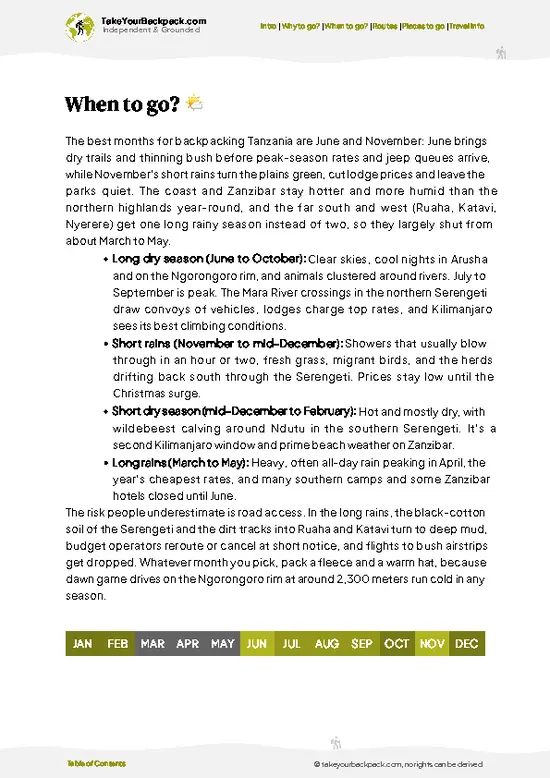
source: climatestotravel.comJANJanuary: fair for travelingFEBFebruary: fair for travelingMARMarch: fair for travelingAPRApril: fair for travelingMAYMay: highly recommended for travelingJUNJune: excellent for travelingJULJuly: excellent for travelingAUGAugust: excellent for travelingSEPSeptember: excellent for travelingOCTOctober: excellent for travelingNOVNovember: highly recommended for travelingDECDecember: fair for traveling
when-to-go

✈️ The backpacker research shortcutTanzania Travel Guide

An offline-friendly backpacking guide with optimized travel routes, ranked highlights, transport advice, and the best areas to stay.
example page 0 from our offline Travel Guide for Tanzania
example page 1 from our offline Travel Guide for Tanzania
example page 2 from our offline Travel Guide for Tanzania
example page 3 from our offline Travel Guide for Tanzania
example page 4 from our offline Travel Guide for Tanzania
example page 5 from our offline Travel Guide for Tanzania
example page 6 from our offline Travel Guide for Tanzania
example page 7 from our offline Travel Guide for Tanzania
The digital guide (377 pages) contains:
100 highlights, ranked by travel appeal
Optimized 7, 14 & 21-day travel routes
Cities, national parks, landmarks, beaches
How to get around
Offline-friendly for travel without Wi-Fi
👉 Click to see all 30+ guide features

📅 Plan smarter in minutes, not weeks
Month by month travel advice
Festivals & national holidays
Budget expectations

🗺️ Go to the right places, skip the overrated ones
Honest pros & cons of destinations
Top hikes, parks & viewpoints
Lesser-known places most travelers miss
Clear “worth it vs skip it” guidance

🛏️ Travel smoothly without rookie mistakes
Best areas to stay
Transport systems explained simply
Common scams & safety advice
SIM cards, money & practical tips

🌍 Understand the country, not just visit it
Culture & traditions
52 Essential phrases & customs
Festivals worth planning around
Traveler-friendly historical context
Insights that make places more meaningful

📱 Built for real travel conditions
Fully downloadable PDF
Works completely offline
Optimized for phone use
Useful in remote areas & buses
Everything in one place
Save weeks of stressful planning
Get instant access to your full guide. 30‑day money-back guarantee.
+ Add another guide for just US$7.80

By proceeding you agree to our terms.
Sent to your inbox immediately after payment • 100% Secure Checkout
Best Backpacking Travel Advisor 2025 tourism awardBest Backpacking
Travel Advisor
2025
What others say about Take Your Backpack Guides:
⭐⭐⭐⭐⭐
Fantastic, amazing amount of information!
⭐⭐⭐⭐⭐
My goodness this is amazing, it's what I've been looking for hats off too you!
⭐⭐⭐⭐⭐
I think this is absolutely BRILLIANT
⭐⭐⭐⭐
Very complete and informative. It's still missing places, but I gotta to commend you
⭐⭐⭐⭐⭐
This is truly amazing, thank you, can't wait to explore it with my kids!
⭐⭐⭐⭐⭐
Awesome resource, thank you!
⭐⭐⭐⭐⭐
This is amazing! Can't wait to explore the ones I haven't seen
⭐⭐⭐⭐
I love this! Well done, great idea.
⭐⭐⭐⭐⭐
Thanks for taking the time to make this gem!
⭐⭐⭐⭐⭐
This might be the best website I've ever seen.
⭐⭐⭐⭐⭐
Congratulations, and thank you so much for your work; it's incredibly valuable.
⭐⭐⭐⭐
In all seriousness I think you did a great job pointing out the important spots
⭐⭐⭐⭐⭐
10/10 very good
⭐⭐⭐⭐⭐
As someone who's only just starting to visit regularly this is awesome, thank you.
⭐⭐⭐⭐
Thank you very much! I'm going to visit my dad, it's going to be very useful!
⭐⭐⭐⭐⭐
This is really cool! We'll be travelling for the first time and this definitely come in handy.
⭐⭐⭐⭐⭐
You are now our minister of culture, congratulations 👨‍💼
⭐⭐⭐⭐⭐
Just wanted to tell you that this is a pearl! Going to follow your recommendations.
⭐⭐⭐⭐⭐
This is so cool. I'll definitely be using the resource for my travels soon.
⭐⭐⭐⭐⭐
This is very impressive! Good work.
⭐⭐⭐⭐⭐
This is an amazing and informative site. Very well done!

🛏️ Where to stay?Where staying makes the most sense

Ilala stands out as the prime zone for backpackers in Dar es Salaam. It’s the city’s beating heart for budget travelers—safe enough to wander after dark, with a social pulse that draws solo adventurers. The streets here hum with a mix of street food stalls, small markets, and local hangouts, making it easy to strike up conversations and swap travel tales. Hostels cluster around this area, offering affordable beds and a communal vibe that’s hard to beat. You’re not just renting a bed; you’re stepping into a mini-network of fellow explorers.

Compared to the more upscale Oysterbay or Masaki, Ilala … read more 👉
Ilala stands out as the prime zone for backpackers in Dar es Salaam. It’s the city’s beating heart for budget travelers—safe enough to wander after dark, with a social pulse that draws solo adventurers. The streets here hum with a mix of street food stalls, small markets, and local hangouts, making it easy to strike up conversations and swap travel tales. Hostels cluster around this area, offering affordable beds and a communal vibe that’s hard to beat. You’re not just renting a bed; you’re stepping into a mini-network of fellow explorers.

Compared to the more upscale Oysterbay or Masaki, Ilala trades luxury for authenticity and wallet-friendly options. It’s less polished but more connected to the city’s everyday rhythm. Plus, public transport links are better here, which means less time and money spent on taxis and more on what matters—exploring.

If you want a quieter, more residential feel, Kariakoo offers a bustling market scene but can be overwhelming for first-timers. Ilala strikes the balance: enough buzz to keep you engaged, enough calm to recharge. For backpackers, it’s the sweet spot where safety, social energy, and budget align without sacrificing the city’s raw character.

🚌 Getting aroundTransportation options and practical tips

Dar es Salaam moves with a pulse that’s part chaos, part rhythm—like a jazz solo where every player listens but no one follows a strict sheet. The city’s flow is a dance between the unpredictable and the habitual. You’ll find schedules that exist mostly on paper, and a street scene where intuition and local knowledge are your best guides. Time here is elastic; you can race against it or let it stretch, but either way, you’re playing a game where money and comfort are the real currencies. Understanding the trade-offs between these three—time, money, and comfort—is your key to mastering Dar’s transit maze.


  • Walking: The purest way to absorb the city’s texture. Zero cost, full control over your pace, and the chance to catch details missed by faster modes. But it’s slow and can be exhausting
read more 👉
Dar es Salaam moves with a pulse that’s part chaos, part rhythm—like a jazz solo where every player listens but no one follows a strict sheet. The city’s flow is a dance between the unpredictable and the habitual. You’ll find schedules that exist mostly on paper, and a street scene where intuition and local knowledge are your best guides. Time here is elastic; you can race against it or let it stretch, but either way, you’re playing a game where money and comfort are the real currencies. Understanding the trade-offs between these three—time, money, and comfort—is your key to mastering Dar’s transit maze.


  • Walking: The purest way to absorb the city’s texture. Zero cost, full control over your pace, and the chance to catch details missed by faster modes. But it’s slow and can be exhausting under the equatorial sun. Best for short hops or exploring neighborhoods like Kariakoo or Oysterbay.


  • Dala-Dala (Minibus): The backbone of local transit. Runs roughly from 6 AM to 9 PM, fares hover around 500-1,000 TZS (about $0.20-$0.40). It’s cheap and frequent but packed and unpredictable in timing. Comfort is minimal—expect tight quarters and a stop-anywhere vibe. If you want to save money and don’t mind the hustle, this is your go-to.


  • Bajaji (Motorcycle Taxi): Fast and nimble, bajajis dart through traffic jams with ease. They operate 24/7, prices vary but usually start around 1,000 TZS for short rides. They offer a quick way to cover medium distances but sacrifice safety and comfort. Ideal when time is tight and you’re willing to pay a bit more for speed.


  • Taxi (Private Car): The most comfortable and direct option, but also the priciest. Metered taxis are rare; expect to negotiate fares upfront, often 10,000-20,000 TZS for typical city trips. They run anytime, offer air conditioning, and save you the hassle of transfers. Use when you want to maximize comfort and save time, and your budget allows.


  • Ferry (to Kigamboni): A unique transit mode connecting the city center to Kigamboni across the harbor. Runs from early morning until evening, costs about 1,000 TZS. It’s a scenic, breezy alternative to road transport, saving you from traffic snarls. Comfort is basic but the experience is worth the slight detour if your itinerary includes Kigamboni.

👛 Costs (as of 3 September 2026)Typical daily expenses

Backpacking in Dar es Salaam means balancing your budget with the city’s pace and options. Here’s the breakdown of what you’re likely to spend daily, based on current estimates for independent travelers.
  • Dorm Accommodation (High Season): Expect to pay around $10 to $15 per night. High season drives prices up due to demand, especially in popular hostels near the city center or beach areas.
  • Dorm Accommodation (Off-Season): Prices drop to about $6 to $10 per night. Fewer tourists mean better deals, but some places may close or reduce services.
  • Meals: Street food and local eateries offer meals for $2 to $5. If you opt for a mix of street food and occasional sit-down meals, budget around $8 to $12 daily. Western-style restaurants push this higher, but they’re not essential for authentic experiences.
read more 👉
Backpacking in Dar es Salaam means balancing your budget with the city’s pace and options. Here’s the breakdown of what you’re likely to spend daily, based on current estimates for independent travelers.
  • Dorm Accommodation (High Season): Expect to pay around $10 to $15 per night. High season drives prices up due to demand, especially in popular hostels near the city center or beach areas.
  • Dorm Accommodation (Off-Season): Prices drop to about $6 to $10 per night. Fewer tourists mean better deals, but some places may close or reduce services.
  • Meals: Street food and local eateries offer meals for $2 to $5. If you opt for a mix of street food and occasional sit-down meals, budget around $8 to $12 daily. Western-style restaurants push this higher, but they’re not essential for authentic experiences.
  • Local Transport: Using dala-dalas (shared minibuses) or local buses costs roughly $0.30 to $0.70 per ride. Budget $1.50 to $3 daily if you move around a lot within neighborhoods.
  • City Transport Pass: Dar es Salaam doesn’t have a unified city transport pass system like some global cities. Instead, daily transport costs depend on your itinerary and mode of travel.
  • Basic Activities/Entry Fees: Visiting museums, markets, or cultural sites typically costs between $2 and $7. Some attractions are free or donation-based, but budget $5 to $10 daily if you plan to explore actively.
  • Miscellaneous Expenses: This covers water, snacks, occasional tips, or small purchases. Around $2 to $5 daily is a safe estimate.

Add it all up, and you’re looking at a daily budget roughly between $20 and $40. The lower end means tight choices and a focus on essentials, while the upper end allows for more comfort and flexibility without tipping into tourist trap territory. Understanding these trade-offs lets you tailor your trip to what matters most—whether that’s stretching your time, saving cash, or enjoying a bit more ease.
⚠️ Prices can change and everyone travels differently, so take this as a rough guide. Hope it helps you plan your adventure!

🚌 Day tripsExploring the surroundings

Dar es Salaam serves as a fantastic launchpad for day trips that blend adventure, culture, and relaxation. You can easily escape the city’s hustle and bustle while diving into the rich experiences Tanzania has to offer. Here’s how to make the most of your time.

Kigamboni Beach
Just a short ferry ride from the city center, Kigamboni Beach offers a slice of paradise without the tourist crowds. The soft sands and warm waters invite you to unwind, while local food stalls serve up fresh seafood at prices that won’t break the bank. Expect to spend around $10 for transport and lunch. The best time to visit is during the dry season from June to October, when the weather is perfect for sunbathing. A common mistake? Many first-timers overlook the ferry schedule, so check the times to avoid long waits. … read more 👉
Dar es Salaam serves as a fantastic launchpad for day trips that blend adventure, culture, and relaxation. You can easily escape the city’s hustle and bustle while diving into the rich experiences Tanzania has to offer. Here’s how to make the most of your time.

Kigamboni Beach
Just a short ferry ride from the city center, Kigamboni Beach offers a slice of paradise without the tourist crowds. The soft sands and warm waters invite you to unwind, while local food stalls serve up fresh seafood at prices that won’t break the bank. Expect to spend around $10 for transport and lunch. The best time to visit is during the dry season from June to October, when the weather is perfect for sunbathing. A common mistake? Many first-timers overlook the ferry schedule, so check the times to avoid long waits.


Mikumi National Park
For a taste of Tanzania’s wildlife, Mikumi National Park is a must. About a four-hour drive from Dar, this park is home to elephants, lions, and a variety of birds. A day trip can cost around $100, including transport and park fees, but the experience of seeing these majestic animals in their natural habitat is worth every penny. The dry season is ideal for wildlife spotting, as animals gather around water sources. Don’t forget to pack snacks; the park can be remote, and food options are limited.
👉 Explore Mikumi National Park

Bagamoyo
Rich in history, Bagamoyo is a former slave port that’s only an hour and a half away. The town’s museums and ruins tell stories of the past, while the beach offers a serene escape. A day here can be done for about $15, including transport and a meal. Visit during the cooler months from June to September for the best experience. Many backpackers miss the local markets, which are perfect for picking up unique souvenirs and interacting with locals.
👉 Explore Bagamoyo

Sadaani National Park
Sadaani is unique because it’s the only national park that meets the ocean. About two hours from Dar, it offers a mix of wildlife and beach time. Expect to spend around $80 for transport and entry fees. The best time to visit is during the dry season, when animals are more active. A common pitfall is underestimating the time needed for the drive; plan for a full day to truly enjoy both the wildlife and the beach.


Changuu Island (Prison Island)
Just a short boat ride away, Changuu Island is famous for its giant tortoises and historical ruins. The trip costs around $30, including the boat ride and entrance fee. The best time to visit is during the dry season, when the waters are calm. Many first-timers forget to bring water and snacks, so pack accordingly to enjoy your time exploring the island.
Want to know what more Tanzania offers?
The Tanzania Travel Guide describes 100 highlights, from cities to national parks, from beaches to hikes

Get the Travel Guide -

🍲 FoodEating & Drinking in Dar es Salaam

In Dar es Salaam, food is a vibrant tapestry woven from spices, cultures, and traditions. You can’t miss the ugali, a staple made from maize flour, often served with rich stews or grilled fish. Pair it with sukuma wiki, sautéed greens that add a fresh crunch. For a taste of the coast, dive into zanzibar pizza—a crispy, stuffed delight that’s a street food favorite.

Street vendors are your best friends here. The Kariakoo Market buzzes with life, where you can sample everything from samosas to fresh coconut water. The air is thick with the scent of spices and grilled meats, inviting you to explore. Casual eateries dot the city, offering hearty meals at prices that won’t break the bank.

When it comes to drinks, don’t overlook konyagi, a local spirit that’s often mixed with soda. It’s a rite … read more 👉
In Dar es Salaam, food is a vibrant tapestry woven from spices, cultures, and traditions. You can’t miss the ugali, a staple made from maize flour, often served with rich stews or grilled fish. Pair it with sukuma wiki, sautéed greens that add a fresh crunch. For a taste of the coast, dive into zanzibar pizza—a crispy, stuffed delight that’s a street food favorite.

Street vendors are your best friends here. The Kariakoo Market buzzes with life, where you can sample everything from samosas to fresh coconut water. The air is thick with the scent of spices and grilled meats, inviting you to explore. Casual eateries dot the city, offering hearty meals at prices that won’t break the bank.

When it comes to drinks, don’t overlook konyagi, a local spirit that’s often mixed with soda. It’s a rite of passage to sip it while mingling with locals at a bustling bar. Remember, sharing food is a sign of friendship, so don’t hesitate to join in on communal dishes.

Etiquette is relaxed; just be open and friendly. Embrace the chaos, and let your taste buds guide you through this culinary adventure.

🛡️ SafetySafety Tips and Common Scams in Dar es Salaam

Dar es Salaam is generally safe, but like any bustling city, it has its quirks. Stay alert in crowded markets like Kariakoo, where pickpockets might be lurking. Keep your valuables close and avoid flashy displays of wealth.

If you’re solo, be cautious at night. Stick to well-lit areas and consider using rideshare apps instead of walking. The waterfront can be beautiful after dark, but it’s best enjoyed with company.

Scams are rare but can happen. Be wary of overly friendly strangers offering unsolicited help or guiding you to shops where they get a cut. A polite but firm “no, thank you” usually suffices.

Annoyances like aggressive taxi drivers or street vendors can test your patience. A calm demeanor goes a long way; just smile and walk away if you’re not interested. Understanding these … read more 👉
Dar es Salaam is generally safe, but like any bustling city, it has its quirks. Stay alert in crowded markets like Kariakoo, where pickpockets might be lurking. Keep your valuables close and avoid flashy displays of wealth.

If you’re solo, be cautious at night. Stick to well-lit areas and consider using rideshare apps instead of walking. The waterfront can be beautiful after dark, but it’s best enjoyed with company.

Scams are rare but can happen. Be wary of overly friendly strangers offering unsolicited help or guiding you to shops where they get a cut. A polite but firm “no, thank you” usually suffices.

Annoyances like aggressive taxi drivers or street vendors can test your patience. A calm demeanor goes a long way; just smile and walk away if you’re not interested. Understanding these dynamics will help you navigate the city with confidence and ease, turning potential pitfalls into mere bumps on your adventure.

FAQTraveler FAQ

2 to 3 days is sufficient to explore Dar es Salaam's main attractions, including the National Museum, Kariakoo Market, and nearby beaches like Coco Beach. This allows time to experience the city's culture and local cuisine without rushing.
Yes, Dar es Salaam is generally safe for solo backpackers if standard precautions are taken. Avoid walking alone at night, keep valuables secure, and use registered taxis or ride-hailing apps to reduce risk.
Dar es Salaam is known for being Tanzania's largest city and economic hub, with a vibrant port and bustling markets. It is also famous for its diverse cultural scene and proximity to beautiful coastal beaches and islands.
⚠️ Things can change over time, so always validate details locally before you go.

Other Tanzanian cities near Dar es Salaam

Explore more nearby:

  • Zanzibar City—Stone Town alleys, spice markets, Omani palaces| 73 km away
  • Zanzibar—Stone Town maze, spice markets, Indian Ocean coast| 76 km away
  • Morogoro—Uluguru Mountains, university town, agricultural center| 180 km away

💡 Not sure where to go next?
Create a personalized itinerary for Tanzania including Dar es Salaam and the places that fit your trip.

Generate my itinerary

👉 Discover all cities

Or checkout all Tanzania has to offer (think cities, towns, villages, national parks, hikes, beaches, festivals)
Country photo of Tanzania

We 💚 feedbackIs it worth it?

Dar es Salaam has a pulse that’s hard to ignore. The street food scene? A delightful surprise—try the mishkaki (skewered meat) from a roadside vendor; it’s a flavor explosion. But watch out for the traffic; it can turn a quick trip into an hour-long ordeal. Embrace the chaos, though. It’s part of the charm. The city’s energy is infectious, and the sunsets over the Indian Ocean will make you want to linger just a bit longer.

✍️ Help improve this page!
The information on this page is based on in-depth research, insights shared by experienced travelers, and feedback from the local travel community in Tanzania. While every effort is made to keep the information accurate and current, conditions can change — so if you spot anything incorrect or outdated, please get in touch.


🙋‍♂️ Give feedback

👋 Meet the founderWho’s Behind Take Your Backpack?

Johan, backpacker and founder of TakeYourBackpackHi, I’m Johan (Netherlands 🇳🇱), the creator of TakeYourBackpack. Over the past decade, I’ve backpacked through 80+ countries across six continents, gaining extensive experience with independent travel, long-term trips, and overland routes.

This site is built on a combination of firsthand travel experience and carefully curated insights from other backpackers. Many guides are based on places I’ve personally visited, while others bring together tips, observations, and practical advice shared by trusted travelers I’ve met along the way.

The goal is to provide realistic, experience-driven guidance — not generic itineraries — so you can explore destinations with better context, clearer expectations, and more confidence.

Get full Tanzania guide •
Instant download • 100 highlights • Full Offline guide