×

Tanzania🇹🇿 | townsMikumiwildlife corridor, park gateway, highway town, local eateries | things to do and best time to go

Explore LushotoExplore Kilwa Masoko

Backpacking in Mikumi
👍 Recommendedtown ranked #4
By Johan Kruseman 🇳🇱 | Updated September 3, 2026

You’re standing at the edge of Mikumi’s main road just after sunrise, the air thick with woodsmoke and the scent of frying mandazi. Trucks rumble past, dust swirling around your ankles, and somewhere a rooster is still insisting it’s dawn. Mikumi sits in southern Tanzania, a small, functional town pressed up against the edge of its namesake national park. For backpackers, Mikumi isn’t a destination you brag about for its nightlife or charm—it’s a launchpad. The town itself is basic: a handful of guesthouses, a market where you can buy bananas by the bunch, and a few local eateries serving rice and beans. But its real draw is proximity. You’re here because it’s the cheapest, easiest way to access Mikumi National Park’s savannahs without the safari price tag of Arusha or Ruaha. Buses from Dar es Salaam or Morogoro drop you right in the center; everything is walkable, though you’ll need a ride to the park gate. Evenings are slow, social if you seek them—expect more shared beers than backpacker bars. Costs are low, safety is typical for rural Tanzania, and compared to Morogoro or Iringa, Mikumi feels more transient, less scenic, but perfectly practical for the wild that waits just beyond town.

Discover everything you want to know in the 📖 Tanzania Travel Guide.
Loading the map 🌍
CLICK TO FILTER
cities
towns
landmarks
national parks
hikes
beaches
attractions
festivals
SHOW COUNTRY’S BESTSHOW ALL

✨ Why go?
Ranked #4 town in Tanzania
What sets this place apart

Mikumi serves as a gateway for backpackers eager to explore Tanzania’s wild side without the chaos of bigger towns. Its proximity to Mikumi National Park makes it a prime spot for those looking to dive into hiking and wildlife experiences. You can easily arrange a day trip to the park, where the air is thick with the scent of acacia trees and the distant calls of elephants echo through the savannah.

The town itself is a charming blend of local life and traveler convenience. Small-scale hostels and guesthouses offer a cozy atmosphere, perfect for solo travelers or small groups looking to connect. The streets are walkable, lined with local eateries where you can savor ugali and fresh grilled fish, adding a flavorful touch to your stay.

Most backpackers tend to linger for a few days, soaking … read more 👉
Mikumi serves as a gateway for backpackers eager to explore Tanzania’s wild side without the chaos of bigger towns. Its proximity to Mikumi National Park makes it a prime spot for those looking to dive into hiking and wildlife experiences. You can easily arrange a day trip to the park, where the air is thick with the scent of acacia trees and the distant calls of elephants echo through the savannah.

The town itself is a charming blend of local life and traveler convenience. Small-scale hostels and guesthouses offer a cozy atmosphere, perfect for solo travelers or small groups looking to connect. The streets are walkable, lined with local eateries where you can savor ugali and fresh grilled fish, adding a flavorful touch to your stay.

Most backpackers tend to linger for a few days, soaking in the laid-back vibe and swapping stories with fellow adventurers. It’s not a party town, but the friendly social atmosphere makes it easy to meet like-minded souls. If you’re a slow traveler or a hiker, Mikumi is a rewarding stop that balances adventure with a taste of local culture.
Want to include Mikumi in your Tanzania route?
Create a personalized Tanzania itinerary that includes Mikumi and the places that fit your trip — based on your travel style, budget, and available time. Get your route in seconds.

Generate my trip

💡 HighlightsTop highlights of Mikumi

  1. Mikumi Main Market (Soko la Mikumi) — The town’s busiest heartbeat in the early morning: stalls of fruit, greens, spices and charcoal where you’ll practice bargaining, sample fresh snacks and watch everyday life up close.
  2. Mikumi Railway Station (TAZARA stop) — A sleepy but photogenic slice of railway history; watching the long-distance trains arrive and depart is oddly transportive and it’s a real way to feel connected to Tanzania’s east-west trade route.
  3. Mikumi National Park Gate / Mikumi Entrance — Technically on the edge of town but visitable from the center: the gate area is where safari logistics happen, you can talk to rangers, book short drives or spot wildlife at the edge of the savanna.
  4. Mkata River Riverside and Bridge — A short walk from the main road, the riverfront is good
read more 👉
  1. Mikumi Main Market (Soko la Mikumi) — The town’s busiest heartbeat in the early morning: stalls of fruit, greens, spices and charcoal where you’ll practice bargaining, sample fresh snacks and watch everyday life up close.
  2. Mikumi Railway Station (TAZARA stop) — A sleepy but photogenic slice of railway history; watching the long-distance trains arrive and depart is oddly transportive and it’s a real way to feel connected to Tanzania’s east-west trade route.
  3. Mikumi National Park Gate / Mikumi Entrance — Technically on the edge of town but visitable from the center: the gate area is where safari logistics happen, you can talk to rangers, book short drives or spot wildlife at the edge of the savanna.
  4. Mkata River Riverside and Bridge — A short walk from the main road, the riverfront is good for birding, watching fishermen and seeing how water shapes local life; bring boots in wet season and a camera for kingfishers.
  5. Main Street Eateries & Nyama Choma Joints — The cluster of roadside grills and small restaurants serve the best unpretentious local food (ugali, grilled meat, fresh fruit shakes) — great for late-afternoon people-watching and cheap, hearty meals.
  6. Craft and Curio Stalls by the Park Road — Small vendors near the park entrance and main junction sell woven baskets, beads and carved souvenirs; conversation with the makers is as valuable as the purchase if you want an authentic souvenir.
  7. Town Viewpoint / Little Hill behind Mikumi — A short climb from town gives wide-open views of the plains toward the park; it’s a simple sunset spot that helps you understand the landscape around Mikumi without paying for a game drive.
  8. Dala-dala & Bus Hub (Transport Hub) — Chaotic, loud and strangely educational: the transport hub shows daily migration patterns, offers cheap connections and is the easiest place to watch how people move between villages and the park.
  9. Weekly Livestock & Local Produce Market Day — On market days you’ll see cattle and goats traded, local spices stacked high and household goods changing hands — a vivid cultural scene (ask locally what day it runs and go early).
  10. Community-led Village Walks / Homestay Introductions — Several guesthouses can arrange short, respectful tours to nearby households and farms where you’ll see cassava, maize and sugarcane cultivation and meet families who explain daily life better than any guidebook.
A few excellent day trips just outside Mikumi include full safaris in Mikumi National Park itself, birding and wetland walks on the nearby Mkata Floodplain, and short village drives to see traditional farming and roadside roadside markets in surrounding settlements.
Spotted a mistake or missing something? Contact us.

Things to do around Mikumi

Ratings based on Tripadvisor reviews. When you book through this link, you support our work at no extra cost to you.

🏘️ NeighborhoodsKey areas and districts to know

Mikumi is a vibrant hub for backpackers, offering a unique blend of wildlife adventure and local culture. Here’s how to navigate its neighborhoods for the best experience.

Central Mikumi: This is the heart of the town, buzzing with energy. You’ll find local markets, street vendors, and a variety of budget accommodations. The vibe is lively, perfect for those who thrive on interaction. Walkability is excellent; everything is within a short stroll. Nightlife is low-key, with a few bars where you can unwind after a day of exploring. Ideal for short stays, as you can easily access transport to the national park.

Ruaha Road Area: A bit quieter, this area offers a more laid-back atmosphere. It’s lined with guesthouses and small lodges, making it suitable for longer stays. The scent of local cuisine … read more 👉
Mikumi is a vibrant hub for backpackers, offering a unique blend of wildlife adventure and local culture. Here’s how to navigate its neighborhoods for the best experience.

Central Mikumi: This is the heart of the town, buzzing with energy. You’ll find local markets, street vendors, and a variety of budget accommodations. The vibe is lively, perfect for those who thrive on interaction. Walkability is excellent; everything is within a short stroll. Nightlife is low-key, with a few bars where you can unwind after a day of exploring. Ideal for short stays, as you can easily access transport to the national park.

Ruaha Road Area: A bit quieter, this area offers a more laid-back atmosphere. It’s lined with guesthouses and small lodges, making it suitable for longer stays. The scent of local cuisine wafts through the air, inviting you to sample authentic dishes. While not as walkable, it’s a short taxi ride to the main attractions. Perfect for those who want to recharge after a day of adventure.

Mikumi National Park Entrance: If you’re here for the wildlife, staying near the park entrance is a no-brainer. The atmosphere is serene, with the sounds of nature surrounding you. Accommodations range from budget to mid-range, and while it’s less walkable, the proximity to game drives makes it worthwhile. This area is best for longer stays, allowing you to fully immerse yourself in the safari experience.

Choose your base wisely, and each neighborhood will enhance your Mikumi adventure.

⌛️ 1 dayWhat you can realistically do in a day

Mikumi, Tanzania, is a vibrant town that serves as a gateway to the stunning Mikumi National Park, but it’s also a place rich in local culture and community life. The air is filled with the scent of spices and the sounds of laughter, making it a perfect spot for an immersive day.

Start your morning with a visit to the bustling local market. The sun rises early here, casting a warm glow on the colorful stalls. You’ll find fresh produce, handmade crafts, and the lively chatter of vendors. Grab a few ripe bananas or a handful of groundnuts for a quick breakfast. This market isn’t on the typical tourist trail, but it offers a genuine taste of daily life in Mikumi.

After fueling up, head to Mikumi National Park. It’s just a short drive away, and the thrill of spotting wildlife is palpable. Spend … read more 👉
Mikumi, Tanzania, is a vibrant town that serves as a gateway to the stunning Mikumi National Park, but it’s also a place rich in local culture and community life. The air is filled with the scent of spices and the sounds of laughter, making it a perfect spot for an immersive day.

Start your morning with a visit to the bustling local market. The sun rises early here, casting a warm glow on the colorful stalls. You’ll find fresh produce, handmade crafts, and the lively chatter of vendors. Grab a few ripe bananas or a handful of groundnuts for a quick breakfast. This market isn’t on the typical tourist trail, but it offers a genuine taste of daily life in Mikumi.

After fueling up, head to Mikumi National Park. It’s just a short drive away, and the thrill of spotting wildlife is palpable. Spend a few hours on a guided safari; the park is home to elephants, zebras, and even lions. The thrill of seeing these majestic creatures in their natural habitat is worth the early start. The light filtering through the acacia trees creates a magical atmosphere, making every moment feel special.

In the afternoon, return to town and explore the quieter neighborhoods. Visit the local art gallery, where you can see works by talented Tanzanian artists. The vibrant colors and intricate designs reflect the culture and spirit of the region. Take your time here; it’s a chance to connect with the local art scene.

As evening approaches, find a spot at a local eatery. The aroma of grilled meats and spices wafts through the air. Try the ugali with nyama choma; it’s a staple that locals love. Enjoy your meal while watching the sunset paint the sky in hues of orange and pink.

Mikumi may not be on every traveler’s radar, but it offers a rich tapestry of experiences that make it a worthwhile stop. Embrace the rhythm of the town, and you’ll leave with memories that linger long after you’ve departed.
Turn your Mikumi visit into an Tanzania adventure
Build a complete Tanzania route with Mikumi, hidden gems, must-see destinations, and realistic travel times included.

Generate my trip

🌤️ When to go?Best time to visit Mikumi


  • Topic: Weather – Mikumi’s dry season from late June to October offers clear skies and minimal rain, making dusty trails easier to navigate and wildlife spotting sharper. The wet season, November to May, brings lush greenery but also muddy paths and frequent afternoon showers that can disrupt plans.

  • Topic: Temperature – Daytime highs hover around 28-32°C (82-90°F) during dry months, comfortable for trekking without overheating. The wet season feels warmer and more humid, often climbing above 33°C (91°F), which can sap your energy faster.

  • Topic: Daylight Hours – Near the equator, daylight stays steady year-round, roughly 12 hours, but dry season mornings are crisp and golden, perfect for early game drives when animals are most active.

  • Topic: Crowds – Peak tourist influx aligns with
read more 👉

  • Topic: Weather – Mikumi’s dry season from late June to October offers clear skies and minimal rain, making dusty trails easier to navigate and wildlife spotting sharper. The wet season, November to May, brings lush greenery but also muddy paths and frequent afternoon showers that can disrupt plans.

  • Topic: Temperature – Daytime highs hover around 28-32°C (82-90°F) during dry months, comfortable for trekking without overheating. The wet season feels warmer and more humid, often climbing above 33°C (91°F), which can sap your energy faster.

  • Topic: Daylight Hours – Near the equator, daylight stays steady year-round, roughly 12 hours, but dry season mornings are crisp and golden, perfect for early game drives when animals are most active.

  • Topic: Crowds – Peak tourist influx aligns with the dry season, especially July and August, so expect more vehicles and higher prices. Off-peak months offer solitude but come with the trade-off of unpredictable weather.

  • Topic: Seasonal Activities – Dry months reveal dusty watering holes where animals congregate, creating prime photo ops. The wet season transforms the landscape into a vibrant green, ideal for birdwatchers chasing migratory species.

  • Topic: Price Fluctuations – Lodging and tours spike during dry season due to demand; booking ahead is essential. The wet season offers lower rates and potential discounts but requires flexibility with itinerary changes.


Pro-tip: Aim for late June or September to catch dry, comfortable weather with fewer crowds and better rates—a sweet spot where Mikumi’s raw beauty feels both accessible and authentic.


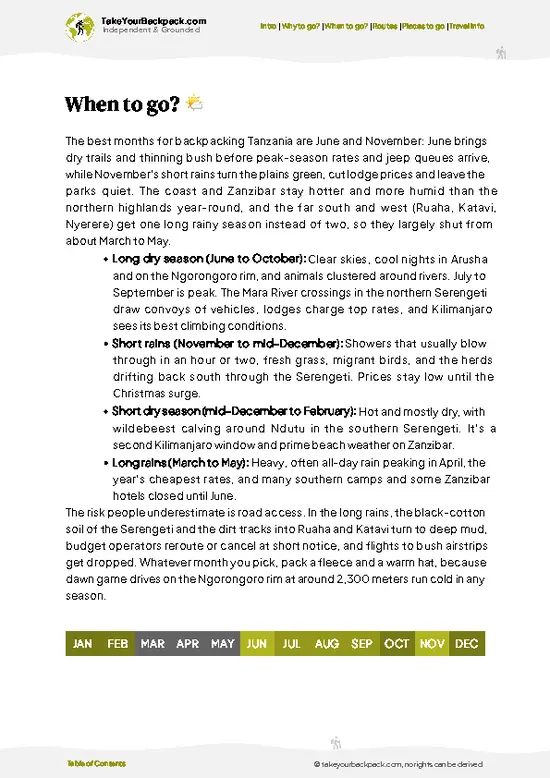
source: climatestotravel.comJANJanuary: fair for travelingFEBFebruary: fair for travelingMARMarch: fair for travelingAPRApril: fair for travelingMAYMay: fair for travelingJUNJune: highly recommended for travelingJULJuly: highly recommended for travelingAUGAugust: highly recommended for travelingSEPSeptember: excellent for travelingOCTOctober: excellent for travelingNOVNovember: fair for travelingDECDecember: fair for traveling
when-to-go

✈️ The backpacker research shortcutTanzania Travel Guide

An offline-friendly backpacking guide with optimized travel routes, ranked highlights, transport advice, and the best areas to stay.
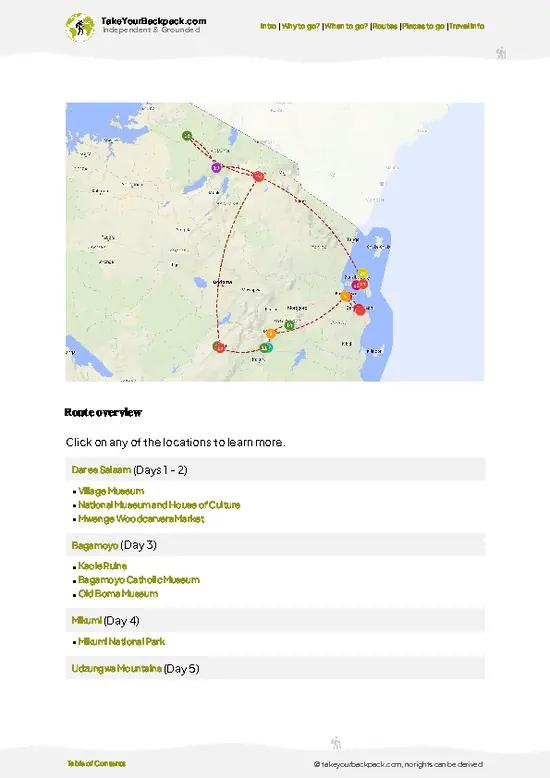
example page 0 from our offline Travel Guide for Tanzania
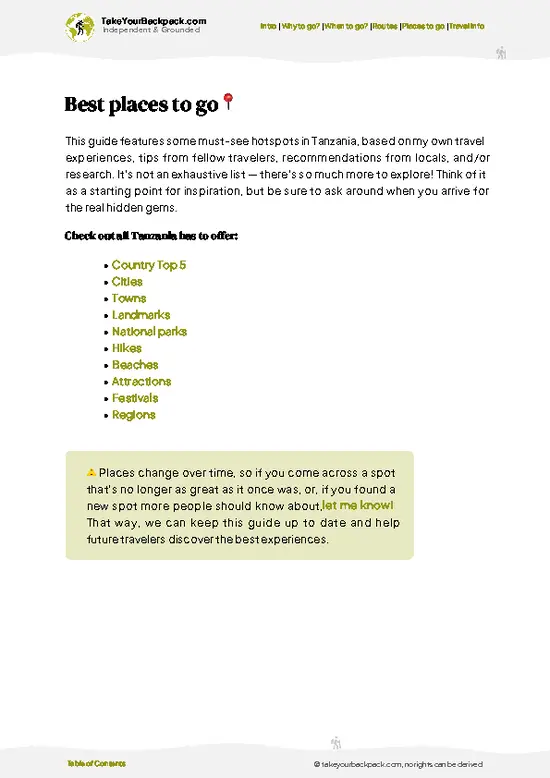
example page 1 from our offline Travel Guide for Tanzania
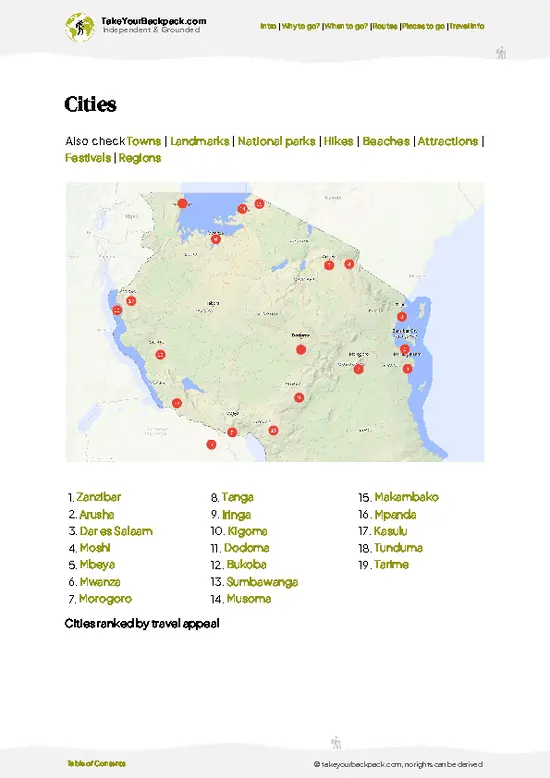
example page 2 from our offline Travel Guide for Tanzania
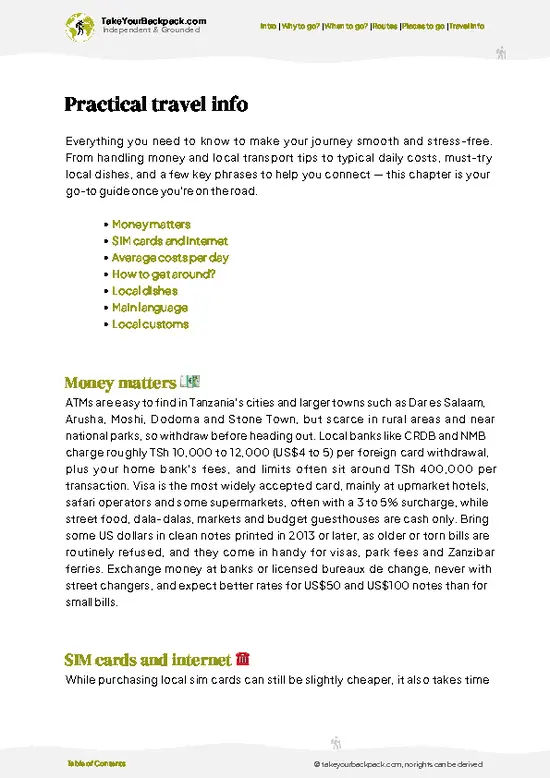
example page 3 from our offline Travel Guide for Tanzania
example page 4 from our offline Travel Guide for Tanzania
example page 5 from our offline Travel Guide for Tanzania
example page 6 from our offline Travel Guide for Tanzania
example page 7 from our offline Travel Guide for Tanzania
The digital guide (377 pages) contains:
100 highlights, ranked by travel appeal
Optimized 7, 14 & 21-day travel routes
Cities, national parks, landmarks, beaches
How to get around
Offline-friendly for travel without Wi-Fi
👉 Click to see all 30+ guide features

📅 Plan smarter in minutes, not weeks
Month by month travel advice
Festivals & national holidays
Budget expectations

🗺️ Go to the right places, skip the overrated ones
Honest pros & cons of destinations
Top hikes, parks & viewpoints
Lesser-known places most travelers miss
Clear “worth it vs skip it” guidance

🛏️ Travel smoothly without rookie mistakes
Best areas to stay
Transport systems explained simply
Common scams & safety advice
SIM cards, money & practical tips

🌍 Understand the country, not just visit it
Culture & traditions
52 Essential phrases & customs
Festivals worth planning around
Traveler-friendly historical context
Insights that make places more meaningful

📱 Built for real travel conditions
Fully downloadable PDF
Works completely offline
Optimized for phone use
Useful in remote areas & buses
Everything in one place
Save weeks of stressful planning
Get instant access to your full guide. 30‑day money-back guarantee.
+ Add another guide for just US$7.80

By proceeding you agree to our terms.
Sent to your inbox immediately after payment • 100% Secure Checkout
Best Backpacking Travel Advisor 2025 tourism awardBest Backpacking
Travel Advisor
2025
What others say about Take Your Backpack Guides:
⭐⭐⭐⭐⭐
Fantastic, amazing amount of information!
⭐⭐⭐⭐⭐
My goodness this is amazing, it's what I've been looking for hats off too you!
⭐⭐⭐⭐⭐
I think this is absolutely BRILLIANT
⭐⭐⭐⭐
Very complete and informative. It's still missing places, but I gotta to commend you
⭐⭐⭐⭐⭐
This is truly amazing, thank you, can't wait to explore it with my kids!
⭐⭐⭐⭐⭐
Awesome resource, thank you!
⭐⭐⭐⭐⭐
This is amazing! Can't wait to explore the ones I haven't seen
⭐⭐⭐⭐
I love this! Well done, great idea.
⭐⭐⭐⭐⭐
Thanks for taking the time to make this gem!
⭐⭐⭐⭐⭐
This might be the best website I've ever seen.
⭐⭐⭐⭐⭐
Congratulations, and thank you so much for your work; it's incredibly valuable.
⭐⭐⭐⭐
In all seriousness I think you did a great job pointing out the important spots
⭐⭐⭐⭐⭐
10/10 very good
⭐⭐⭐⭐⭐
As someone who's only just starting to visit regularly this is awesome, thank you.
⭐⭐⭐⭐
Thank you very much! I'm going to visit my dad, it's going to be very useful!
⭐⭐⭐⭐⭐
This is really cool! We'll be travelling for the first time and this definitely come in handy.
⭐⭐⭐⭐⭐
You are now our minister of culture, congratulations 👨‍💼
⭐⭐⭐⭐⭐
Just wanted to tell you that this is a pearl! Going to follow your recommendations.
⭐⭐⭐⭐⭐
This is so cool. I'll definitely be using the resource for my travels soon.
⭐⭐⭐⭐⭐
This is very impressive! Good work.
⭐⭐⭐⭐⭐
This is an amazing and informative site. Very well done!

🛏️ Where to stay?How to pick the right area

Mikumi’s backpacker scene centers around the small town area just outside the park gates, where the pulse of budget travel beats strongest. This strip is your go-to for safety and social energy—think dusty streets lined with simple guesthouses and hostels that attract solo travelers and small groups alike. The vibe here is relaxed but lively, with a steady hum of chatter over shared meals and plans for the next day’s safari.

Why stay here? Because it’s where you’ll find the best mix of affordability and connection. Hostels cluster close enough to swap stories at sunset, and the local eateries … read more 👉
Mikumi’s backpacker scene centers around the small town area just outside the park gates, where the pulse of budget travel beats strongest. This strip is your go-to for safety and social energy—think dusty streets lined with simple guesthouses and hostels that attract solo travelers and small groups alike. The vibe here is relaxed but lively, with a steady hum of chatter over shared meals and plans for the next day’s safari.

Why stay here? Because it’s where you’ll find the best mix of affordability and connection. Hostels cluster close enough to swap stories at sunset, and the local eateries offer hearty, no-frills meals that fuel your adventures without draining your wallet. The air carries the scent of wood smoke and grilled meat, grounding you in the moment after a day of dusty roads and wildlife spotting.

Venture deeper into Mikumi town itself, and you’ll lose that backpacker camaraderie. The streets get quieter, less geared toward travelers, and more toward locals and long-term residents. It’s not unsafe, but it’s less convenient for meeting fellow adventurers or grabbing last-minute gear. Staying near the park entrance means you wake up to the promise of the wild just minutes away, not hours of travel. That proximity, combined with the social buzz, makes this area the clear winner for backpackers chasing both ease and atmosphere.

🚌 Getting aroundMoving around without the hassle

Mikumi moves at its own rhythm—less a clockwork town and more a place where time bends around the heat and dust. The sun hangs heavy, casting long shadows that stretch lazily across cracked pavement and dirt roads. You’ll notice the air thick with the scent of dry earth and distant smoke from cooking fires. Here, schedules are more of a suggestion than a rule. The town’s pulse is set by the slow shuffle of locals, the occasional honk of a matatu weaving through traffic, and the steady clatter of bicycles carrying goods to market. It’s a place where patience isn’t just a virtue; it’s the currency that buys you smoother rides and friendlier nods.


  • Walking: The most reliable and immersive way to get around Mikumi, especially for budget travelers. Distances between key spots are manageable,
read more 👉
Mikumi moves at its own rhythm—less a clockwork town and more a place where time bends around the heat and dust. The sun hangs heavy, casting long shadows that stretch lazily across cracked pavement and dirt roads. You’ll notice the air thick with the scent of dry earth and distant smoke from cooking fires. Here, schedules are more of a suggestion than a rule. The town’s pulse is set by the slow shuffle of locals, the occasional honk of a matatu weaving through traffic, and the steady clatter of bicycles carrying goods to market. It’s a place where patience isn’t just a virtue; it’s the currency that buys you smoother rides and friendlier nods.


  • Walking: The most reliable and immersive way to get around Mikumi, especially for budget travelers. Distances between key spots are manageable, and walking lets you soak in the smells of fresh produce stalls and the chatter of street vendors. No cost, but prepare for dusty, uneven paths and midday heat—early morning or late afternoon walks are best.


  • Bicycle Taxi (Piki-Piki): A quick, affordable option for short hops within town. Expect to pay around 500-1,000 Tanzanian shillings per ride. They dart through traffic with surprising agility, but hold on tight—helmets are rare, and the ride can be bumpy on rough roads. Best for when you’re in a hurry but want to keep costs low.


  • Shared Minibus (Daladala): The backbone of local transit, these minibuses run on flexible schedules, often leaving only when full. Fares hover around 1,000-2,000 shillings depending on distance. They’re slow and crowded, but a great way to experience local life and cover longer distances, like trips to the Mikumi National Park entrance. Be ready to negotiate space and hold your belongings close.


  • Motorcycle Taxi (Boda Boda): Faster than piki-pikis and able to navigate tighter spots, boda bodas are a popular choice for budget travelers needing to cover more ground quickly. Prices vary but expect to pay 1,000-2,500 shillings. Safety gear is minimal, so weigh speed against risk, especially after dark or on rough terrain.


  • Private Car Hire: Not budget-friendly but worth mentioning for those with a bit more to spend or traveling in groups. Hiring a car with a driver can cost upwards of 100,000 shillings per day but offers comfort, flexibility, and the ability to explore beyond town limits at your own pace—ideal for early morning safaris or late returns when public transit dries up.

👛 Costs (as of 3 September 2026)How expensive it really is

Backpacking in Mikumi, Tanzania, offers a raw, earthy experience where costs stay modest but the environment demands a bit of savvy budgeting to keep your trip smooth.
  • Dorm Accommodation: Expect to pay around $8 to $15 per night for a bed in a basic guesthouse or hostel dorm. These places are simple—think mosquito nets, shared bathrooms, and the occasional creak of wooden floors. It’s not luxury, but it’s clean and functional, perfect for resting after a day in the wild.
  • Meals: Street food and local eateries serve up hearty meals for $2 to $5. Staples like ugali, rice, and grilled meats come with fresh, local veggies. If you opt for a tourist-oriented lodge meal, prices can jump to $8 or more, but sticking to local joints keeps your wallet happy and your taste buds grounded in Tanzanian
read more 👉
Backpacking in Mikumi, Tanzania, offers a raw, earthy experience where costs stay modest but the environment demands a bit of savvy budgeting to keep your trip smooth.
  • Dorm Accommodation: Expect to pay around $8 to $15 per night for a bed in a basic guesthouse or hostel dorm. These places are simple—think mosquito nets, shared bathrooms, and the occasional creak of wooden floors. It’s not luxury, but it’s clean and functional, perfect for resting after a day in the wild.
  • Meals: Street food and local eateries serve up hearty meals for $2 to $5. Staples like ugali, rice, and grilled meats come with fresh, local veggies. If you opt for a tourist-oriented lodge meal, prices can jump to $8 or more, but sticking to local joints keeps your wallet happy and your taste buds grounded in Tanzanian flavors.
  • Local Transport: Getting around Mikumi usually means hopping on dala-dalas (shared minibuses) or bajajis (three-wheelers). Fares hover between $0.50 and $1.50 per trip, depending on distance. For short hops, bajajis are quick and cheap, but dala-dalas are the go-to for longer stretches, offering a glimpse into everyday life as you bump along dirt roads.
  • Basic Activities/Entry Fees: The main draw is Mikumi National Park. Park entry for independent travelers is roughly $20 to $30 per day. Hiring a guide or joining a group safari can add $15 to $40, but it’s worth it for spotting wildlife and navigating the park’s vast, dusty plains. Other local activities are limited but affordable, often under $10.
  • Miscellaneous Expenses: Budget around $2 to $5 daily for essentials like bottled water, snacks, or a local SIM card top-up. Internet access can be patchy, so plan accordingly. Small tips or occasional laundry services might add a couple of dollars here and there.

All told, a realistic daily budget for backpacking in Mikumi ranges from about $35 to $60. This covers basic comfort without cutting corners, letting you focus on the raw, open-air experience of Tanzania’s wilderness without the stress of overspending.
⚠️ Prices can change and everyone travels differently, so take this as a rough guide. Hope it helps you plan your adventure!

🚌 Day tripsBest day trips from Mikumi

Mikumi, Tanzania, is a backpacker’s dream base for day trips, offering a blend of wildlife, culture, and stunning landscapes. The town itself is a laid-back spot, with the scent of grilled street food wafting through the air and the sound of laughter echoing from local markets. Here are some worthwhile day trips that will elevate your experience.

Mikumi National Park
Just a 30-minute drive from town, this park is a must. You’ll find yourself surrounded by the sights and sounds of wildlife—zebras grazing, elephants trumpeting, and the occasional lion lounging in the shade. A guided safari typically costs around $50, which is a steal for the experience. The best time to visit is during the dry season from June to October when animals gather around water sources. A common mistake? Skipping … read more 👉
Mikumi, Tanzania, is a backpacker’s dream base for day trips, offering a blend of wildlife, culture, and stunning landscapes. The town itself is a laid-back spot, with the scent of grilled street food wafting through the air and the sound of laughter echoing from local markets. Here are some worthwhile day trips that will elevate your experience.

Mikumi National Park
Just a 30-minute drive from town, this park is a must. You’ll find yourself surrounded by the sights and sounds of wildlife—zebras grazing, elephants trumpeting, and the occasional lion lounging in the shade. A guided safari typically costs around $50, which is a steal for the experience. The best time to visit is during the dry season from June to October when animals gather around water sources. A common mistake? Skipping the early morning game drives; the light is magical, and the animals are most active.
👉 Explore Mikumi National Park

Udzungwa Mountains
About an hour’s drive from Mikumi, the Udzungwa Mountains offer a different kind of adventure. Known for their lush rainforests and stunning waterfalls, this area is perfect for hiking enthusiasts. A day trip can cost around $30, including transport and a local guide. The best months to hike are from June to September when the trails are less muddy. Many first-timers underestimate the difficulty of the trails; pack good shoes and plenty of water.
👉 Explore Udzungwa Mountains

Morogoro Town
Just over an hour away, Morogoro is a vibrant town filled with local markets and rich culture. You can explore the bustling streets, sample local dishes, and even visit the nearby Kanga and Kitenge fabric markets. Expect to spend about $20 for transport and lunch. The dry season is ideal for visiting, as the weather is pleasant. A common pitfall is not allowing enough time to soak in the atmosphere; plan for a leisurely day.


Ruins of Kilwa Kisiwani
A bit further afield, about two hours from Mikumi, the Kilwa Kisiwani ruins are a UNESCO World Heritage site that tells the story of ancient trade routes. The entrance fee is around $10, and the boat ride to the island adds to the adventure. Visit during the dry season for the best experience. Many travelers rush through; take your time to explore the ruins and enjoy the ocean breeze.
Want to know what more Tanzania offers?
The Tanzania Travel Guide describes 100 highlights, from cities to national parks, from beaches to hikes

Get the Travel Guide -

🛡️ SafetyScams, Hazards, and Annoyances

Mikumi is generally safe, but like any place, a little awareness goes a long way. When wandering the town, keep your belongings close. The bustling market can be a sensory overload, with vibrant colors and the scent of spices wafting through the air. It’s easy to get distracted, so stay alert to your surroundings.

If you’re traveling solo, especially at night, stick to well-lit areas and avoid empty streets. The atmosphere shifts after dark, and while locals are friendly, it’s wise to be cautious.

Scams aren’t rampant, but be wary of overly eager guides offering tours at inflated prices. Always negotiate and ask for recommendations from fellow travelers or your accommodation.

Annoyances like persistent street vendors can test your patience. A polite but firm “no, thank you” usually does … read more 👉
Mikumi is generally safe, but like any place, a little awareness goes a long way. When wandering the town, keep your belongings close. The bustling market can be a sensory overload, with vibrant colors and the scent of spices wafting through the air. It’s easy to get distracted, so stay alert to your surroundings.

If you’re traveling solo, especially at night, stick to well-lit areas and avoid empty streets. The atmosphere shifts after dark, and while locals are friendly, it’s wise to be cautious.

Scams aren’t rampant, but be wary of overly eager guides offering tours at inflated prices. Always negotiate and ask for recommendations from fellow travelers or your accommodation.

Annoyances like persistent street vendors can test your patience. A polite but firm “no, thank you” usually does the trick. Embrace the experience, and remember: a little mindfulness enhances your adventure.

FAQTraveler FAQ

Mikumi is worth visiting primarily for its proximity to Mikumi National Park, which offers a good safari experience with fewer crowds than Serengeti. It is more than just a stopover if you want to explore wildlife and nature in Tanzania's less touristy parks.
Two to three days are sufficient to explore Mikumi National Park and enjoy game drives, as the park covers about 3,230 square kilometers and is known for sightings of elephants, lions, and giraffes. This duration allows time for morning and afternoon safaris plus some relaxation.
Yes, Mikumi can be visited as a day trip from Morogoro, which is about 70 kilometers away, roughly a 1.5 to 2-hour drive each way. However, a day trip limits the time spent in the park, so early departure is essential to maximize wildlife viewing.
⚠️ Things can change over time, so always validate details locally before you go.

Other Tanzanian towns near Mikumi

Explore more nearby:

  • Bagamoyo—coastal ruins, Swahili heritage, colonial relics| 236 km away
  • Korogwe—railway junction, Tanga access, river valley, agricultural hub| 297 km away
  • Kilwa Masoko—Swahili ruins, Indian Ocean coast, dhow harbor, fishing community| 325 km away

💡 Not sure where to go next?
Create a personalized itinerary for Tanzania including Mikumi and the places that fit your trip.

Generate my itinerary

👉 Discover all towns

Or checkout all Tanzania has to offer (think cities, towns, villages, national parks, hikes, beaches, festivals)
Country photo of Tanzania

We 💚 feedbackKey takeaways before you go

Mikumi is a wild symphony of sights and sounds. The air buzzes with the calls of birds, and the scent of sun-baked earth lingers after a rain. Expect to be surprised by the sheer proximity of wildlife; elephants wander close enough to hear their trumpets. But don’t underestimate the heat—hydrate and take breaks. Embrace the slow pace; it’s part of the magic. The real reward? Watching the sunset paint the sky while the world quiets down around you.

✍️ Help improve this page!
The information on this page is based on in-depth research, insights shared by experienced travelers, and feedback from the local travel community in Tanzania. While every effort is made to keep the information accurate and current, conditions can change — so if you spot anything incorrect or outdated, please get in touch.


🙋‍♂️ Give feedback

👋 Meet the founderWho’s Behind Take Your Backpack?

Johan, backpacker and founder of TakeYourBackpackHi, I’m Johan (Netherlands 🇳🇱), the creator of TakeYourBackpack. Over the past decade, I’ve backpacked through 80+ countries across six continents, gaining extensive experience with independent travel, long-term trips, and overland routes.

This site is built on a combination of firsthand travel experience and carefully curated insights from other backpackers. Many guides are based on places I’ve personally visited, while others bring together tips, observations, and practical advice shared by trusted travelers I’ve met along the way.

The goal is to provide realistic, experience-driven guidance — not generic itineraries — so you can explore destinations with better context, clearer expectations, and more confidence.

Get full Tanzania guide •
Instant download • 100 highlights • Full Offline guide