×

Tanzania🇹🇿 | attractionsMtoni Palace RuinsRoofless baths, coral-rock shell, Princess Salme, courtyard trees | things to do and best time to go

Explore Kaole RuinsExplore Maruhubi Palace Ruins

Backpacking in Mtoni Palace Ruins
🌟 Highlightattraction ranked #8
By Johan Kruseman 🇳🇱 | Updated October 22, 2026

Mtoni Palace Ruins is the oldest Omani palace on Zanzibar Island, and the old Persian-style bath complex still stands roofless in the grass, which most visitors never expect. It sits in Tanzania’s Zanzibar archipelago, a short ride north of Stone Town along the coast. Here is how it works: nothing is restored, so you get bare coral-rock walls, collapsed arches and no glossy displays. That is why entry is cheap and crowds are thin. Go on your own or with a local guide, because the signs are sparse and the stories live in people’s heads. The reward is a quiet hour of scrambling through rooms once ruled by Sultan Seyyid Said, with the sea breeze coming through where the roof used to be and mango trees shading the old courtyard.

Discover everything you want to know in the 📖 Tanzania Travel Guide.


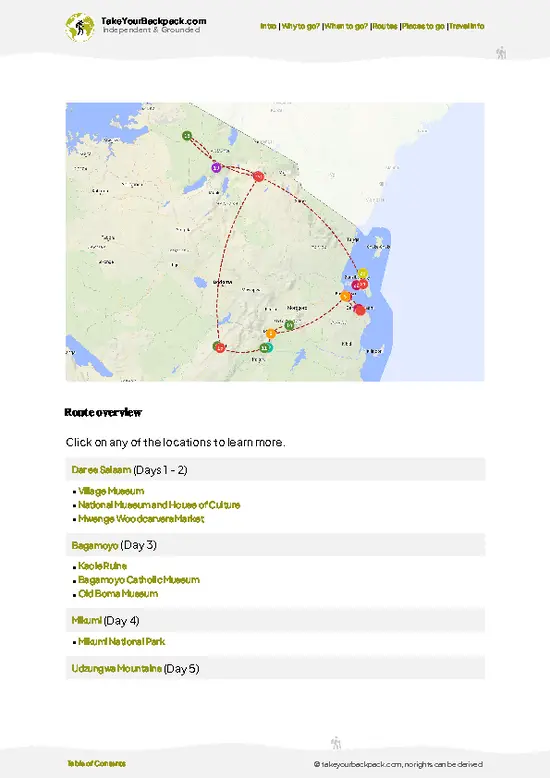
example page 0 from our offline Travel Guide for Tanzania
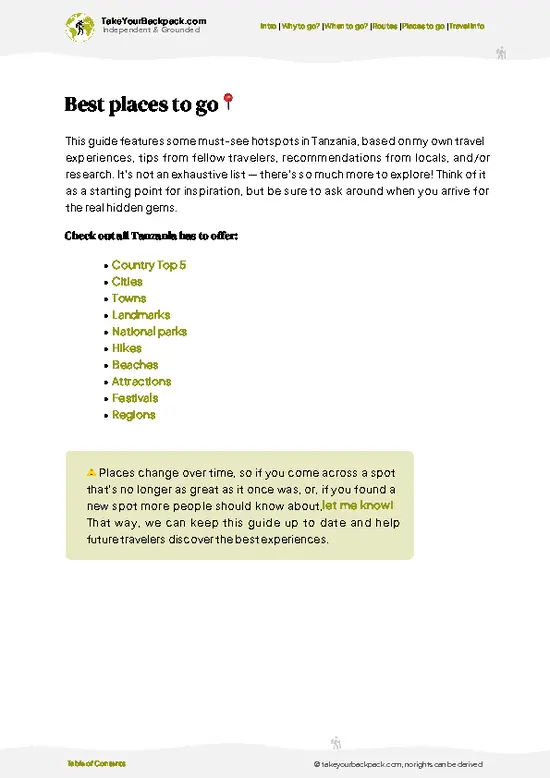
example page 1 from our offline Travel Guide for Tanzania
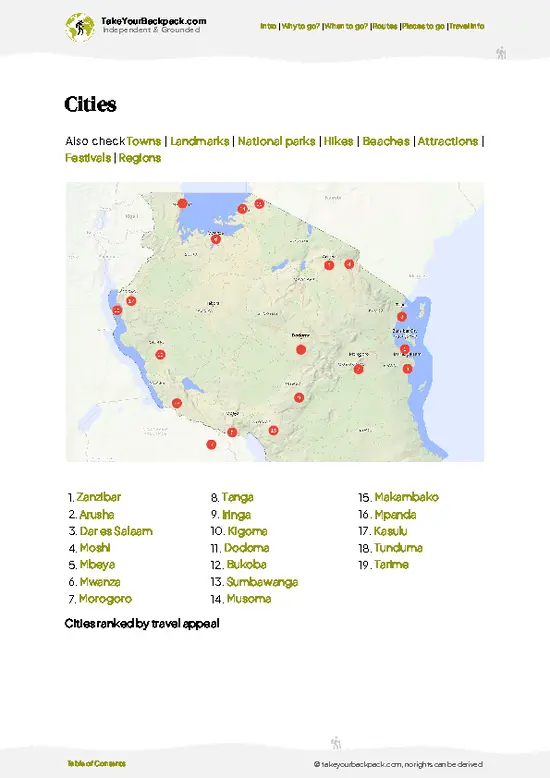
example page 2 from our offline Travel Guide for Tanzania
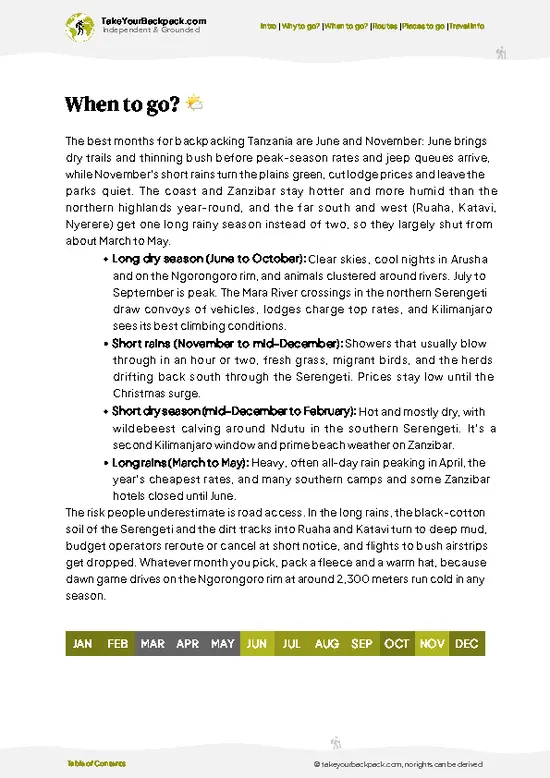
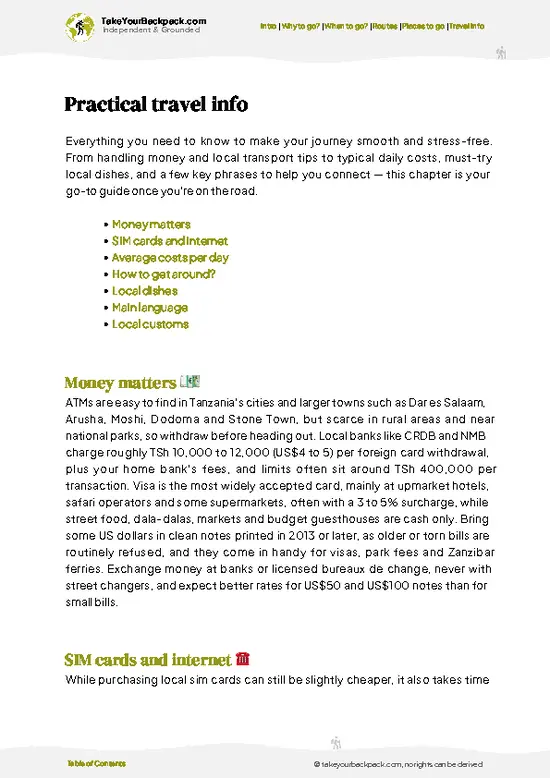
example page 3 from our offline Travel Guide for Tanzania
example page 4 from our offline Travel Guide for Tanzania
example page 5 from our offline Travel Guide for Tanzania
example page 6 from our offline Travel Guide for Tanzania
example page 7 from our offline Travel Guide for Tanzania
Loading the map 🌍
CLICK TO FILTER
cities
towns
landmarks
national parks
hikes
beaches
attractions
festivals
regions
SHOW COUNTRY’S BESTSHOW ALL

✨ Why go?
Ranked #8 attraction in Tanzania
What sets this place apart

Mtoni Palace Ruins gives you the story of Zanzibar’s Omani rulers without a single tour bus in the parking area. Built in the early 1800s for Sultan Seyyid Said, it predates the grand Stone Town palaces by decades, so you are standing at the start of the sultanate’s Zanzibar chapter.

The second reason is the Persian-style baths, the best-preserved part of the site. Their domed chambers and water channels show how the court lived, and they are far more tangible than anything in a museum case.

It also fits a budget route neatly. The ruins sit on the coast road north of town, so you can combine them with the beaches and spice farms nearby. Come for the atmosphere of a place left to the vines and bats, and you will leave with a clearer picture of the island’s past.

💡 HighlightsThe experiences that define the visit

  1. The Persian-style baths: the standout feature, with vaulted chambers and stone water channels that still hint at the sultan’s private bathing rituals.
  2. The main palace shell: tall coral-rock walls with empty window frames, where you can trace the footprint of the old residence room by room.
  3. The great hall remains: once used for gatherings and receptions, now an open space where you can picture the court at work.
  4. The seafront boundary: the palace was built beside the water, and the shoreline view explains why the site was chosen for trade and arrivals.
  5. The ancient trees and courtyard: mango and other trees have grown through the old grounds, giving shade and a ruin-in-the-forest atmosphere that photographers love.
  6. The crumbling arches: weathered doorways and arcades show the original Omani building
… read more 👉
  1. The Persian-style baths: the standout feature, with vaulted chambers and stone water channels that still hint at the sultan’s private bathing rituals.
  2. The main palace shell: tall coral-rock walls with empty window frames, where you can trace the footprint of the old residence room by room.
  3. The great hall remains: once used for gatherings and receptions, now an open space where you can picture the court at work.
  4. The seafront boundary: the palace was built beside the water, and the shoreline view explains why the site was chosen for trade and arrivals.
  5. The ancient trees and courtyard: mango and other trees have grown through the old grounds, giving shade and a ruin-in-the-forest atmosphere that photographers love.
  6. The crumbling arches: weathered doorways and arcades show the original Omani building style, and the light through them is excellent for pictures.
  7. Local guide stories: a guide at the gate can share tales of Princess Salme, who grew up here and later wrote a famous memoir of palace life.
Mtoni Palace Ruins pairs well in a single morning as the baths and the main palace shell, since the two sit within a few steps of each other.
Spotted a mistake or missing something? Contact us.

🌤️ When to go?When to go for the best experience

  • Dry Season (June to October): Mtoni Palace Ruins is easiest to explore now, with highs of 28 to 30°C (82 to 86°F), lower humidity and firm paths through the overgrown site beside the shore. Zanzibar's peak tourist months push up room rates, though the ruins themselves stay quiet.
  • Short Rains (November to December): Expect brief afternoon downpours, 29 to 31°C (84 to 88°F) and muggy air. Mud collects among the crumbling bath and mosque walls, but prices ease.
  • Hot Season (January to February): Highs reach 31 to 33°C (88 to 91°F). Go early, because shade under the ruins is patchy. Rates climb again around the holidays.
  • Long Rains (March to May): Heavy downpours, 27 to 30°C (81 to 86°F) and the lowest prices. Vegetation grows thick and some paths get slick.
Arrive in the first hour after opening, … read more 👉
  • Dry Season (June to October): Mtoni Palace Ruins is easiest to explore now, with highs of 28 to 30°C (82 to 86°F), lower humidity and firm paths through the overgrown site beside the shore. Zanzibar's peak tourist months push up room rates, though the ruins themselves stay quiet.
  • Short Rains (November to December): Expect brief afternoon downpours, 29 to 31°C (84 to 88°F) and muggy air. Mud collects among the crumbling bath and mosque walls, but prices ease.
  • Hot Season (January to February): Highs reach 31 to 33°C (88 to 91°F). Go early, because shade under the ruins is patchy. Rates climb again around the holidays.
  • Long Rains (March to May): Heavy downpours, 27 to 30°C (81 to 86°F) and the lowest prices. Vegetation grows thick and some paths get slick.
Arrive in the first hour after opening, when light is soft for photos and the heat is gentle.


source: climatestotravel.comJANJanuary: good for travelingFEBFebruary: good for travelingMARMarch: fair for travelingAPRApril: fair for travelingMAYMay: fair for travelingJUNJune: excellent for travelingJULJuly: highly recommended for travelingAUGAugust: highly recommended for travelingSEPSeptember: excellent for travelingOCTOctober: excellent for travelingNOVNovember: good for travelingDECDecember: good for traveling
when-to-go

✈️ The backpacker research shortcutTanzania Travel Guide

An offline-friendly backpacking guide with optimized travel routes, ranked highlights, transport advice, and the best areas to stay.
example page 0 from our offline Travel Guide for Tanzania
example page 1 from our offline Travel Guide for Tanzania
example page 2 from our offline Travel Guide for Tanzania
example page 3 from our offline Travel Guide for Tanzania
example page 4 from our offline Travel Guide for Tanzania
example page 5 from our offline Travel Guide for Tanzania
example page 6 from our offline Travel Guide for Tanzania
example page 7 from our offline Travel Guide for Tanzania
The digital guide (396 pages) contains:
✅ 103 highlights, ranked by travel appeal
✅ Optimized 7, 14 & 21-day travel routes
✅ Cities, national parks, landmarks, beaches
✅ How to get around
✅ Offline-friendly for travel without Wi-Fi
👉 Click to see all 30+ guide features

📅 Plan smarter in minutes, not weeks
✅ Month by month travel advice
✅ Festivals & national holidays
✅ Budget expectations

🗺️ Go to the right places, skip the overrated ones
✅ Honest pros & cons of destinations
✅ Top hikes, parks & viewpoints
✅ Lesser-known places most travelers miss
✅ Clear “worth it vs skip it” guidance

🛏️ Travel smoothly without rookie mistakes
✅ Best areas to stay
✅ Transport systems explained simply
✅ Common scams & safety advice
✅ SIM cards, money & practical tips

🌍 Understand the country, not just visit it
✅ Culture & traditions
✅ 52 Essential phrases & customs
✅ Festivals worth planning around
✅ Traveler-friendly historical context
✅ Insights that make places more meaningful

📱 Built for real travel conditions
✅ Fully downloadable PDF
✅ Works completely offline
✅ Optimized for phone use
✅ Useful in remote areas & buses
✅ Everything in one place
Stop searching, start planning
Get instant access to your full guide. 30‑day money-back guarantee.
+ Add another guide for just

By proceeding you agree to our terms.
Sent to your inbox immediately after payment • 100% Secure Checkout
Best Backpacking Travel Advisor 2025 tourism awardBest Backpacking
Travel Advisor
2025
What others say about Take Your Backpack Guides:
⭐⭐⭐⭐⭐
Fantastic, amazing amount of information!
⭐⭐⭐⭐⭐
My goodness this is amazing, it's what I've been looking for hats off too you!
⭐⭐⭐⭐⭐
I think this is absolutely BRILLIANT
⭐⭐⭐⭐
Very complete and informative. It's still missing places, but I gotta to commend you
⭐⭐⭐⭐⭐
This is truly amazing, thank you, can't wait to explore it with my kids!
⭐⭐⭐⭐⭐
Awesome resource, thank you!
⭐⭐⭐⭐⭐
This is amazing! Can't wait to explore the ones I haven't seen
⭐⭐⭐⭐
I love this! Well done, great idea.
⭐⭐⭐⭐⭐
Thanks for taking the time to make this gem!
⭐⭐⭐⭐⭐
This might be the best website I've ever seen.
⭐⭐⭐⭐⭐
Congratulations, and thank you so much for your work; it's incredibly valuable.
⭐⭐⭐⭐
In all seriousness I think you did a great job pointing out the important spots
⭐⭐⭐⭐⭐
10/10 very good
⭐⭐⭐⭐⭐
As someone who's only just starting to visit regularly this is awesome, thank you.
⭐⭐⭐⭐
Thank you very much! I'm going to visit my dad, it's going to be very useful!
⭐⭐⭐⭐⭐
This is really cool! We'll be travelling for the first time and this definitely come in handy.
⭐⭐⭐⭐⭐
You are now our minister of culture, congratulations 👨‍💼
⭐⭐⭐⭐⭐
Just wanted to tell you that this is a pearl! Going to follow your recommendations.
⭐⭐⭐⭐⭐
This is so cool. I'll definitely be using the resource for my travels soon.
⭐⭐⭐⭐⭐
This is very impressive! Good work.
⭐⭐⭐⭐⭐
This is an amazing and informative site. Very well done!

🛏️ Where to stay?Best areas and accommodation options

Stone Town is the place to sleep, since Mtoni Palace Ruins sits only about 6 to 7 km north of it along the coast road. The old town's Shangani and Kiponda neighborhoods hold most of the budget hostels and guesthouses, with rooftop common areas where solo travelers swap plans and split tours. Shangani is the liveliest, close to Forodhani Gardens night food stalls, ferry terminal and bars, so it suits people who want company. Expect some late noise. Kiponda and the streets around the Darajani Market are quieter and cheaper, and a short walk from the dala-dala stands that run north toward Mtoni. … read more 👉
Stone Town is the place to sleep, since Mtoni Palace Ruins sits only about 6 to 7 km north of it along the coast road. The old town's Shangani and Kiponda neighborhoods hold most of the budget hostels and guesthouses, with rooftop common areas where solo travelers swap plans and split tours. Shangani is the liveliest, close to Forodhani Gardens night food stalls, ferry terminal and bars, so it suits people who want company. Expect some late noise. Kiponda and the streets around the Darajani Market are quieter and cheaper, and a short walk from the dala-dala stands that run north toward Mtoni. Streets are narrow and confusing, so save your route offline and avoid wandering unlit alleys late at night. Dorm beds are plentiful here, and booking ahead matters from July to September and over the holidays. A few seaside guesthouses closer to Mtoni exist, but they are isolated, with few evening options and limited social life, so most backpackers prefer to stay in town and make the short trip out.

👛 Costs (as of 22 October 2026)Money, prices, and spending tips

A day at Mtoni Palace Ruins costs about US$32 to 62 per backpacker, including a Stone Town bed, food and transport, and about US$43 in high season for a typical budget day.
CategoryBudget RangeLocal Reality
Entrance feeUS$3 to 5Paid at the site; small fee for local guide may be extra.
Accommodation (high season)US$12 to 20Dorm bed or basic guesthouse room in Stone Town.
Accommodation (low season)US$8 to 14Discounts appear from March to May.
TransportUS$1 to 8Shared dala-dala costs under US$1 each way; a taxi or tuk-tuk from Stone Town runs US$5 to 8.
Food and drinkUS$8 to 15Street snacks, Forodhani seafood and local cafe meals.
Guide or extrasUS$0 to 10Optional guide for the history; water and snacks near the site.
Total Daily BudgetUS$32 to 62About US$43 for a typical high-season day.
⚠️ Prices can change and everyone travels differently, so take this as a rough guide. Hope it helps you plan your adventure!

FAQFrequently asked questions about Mtoni Palace Ruins

Plan on 45 minutes to 1 hour at Mtoni Palace Ruins, since the site is small and mostly roofless walls, a bathhouse and a mosque. Add 1 to 2 hours for the round trip from Stone Town, about 6 to 7 km away. Pairing it with a late-afternoon beach stop or a Stone Town evening fills out a half day.
For history lovers, Mtoni Palace Ruins is good value at roughly US$3 to 5, as it was the early 19th-century home of Sultan Said and the birthplace of Princess Salme. The remains are modest and partly overgrown, so expect atmosphere more than restored rooms. A guide adds useful stories, and the short visit takes under an hour.
Take a dala-dala north from Darajani in Stone Town toward Mtoni, which costs under US$1 and takes 20 to 30 minutes, then walk a few minutes to the ruins. A taxi or tuk-tuk from Stone Town costs roughly US$5 to 8 and takes 15 to 20 minutes. Cycling the coast road is also possible, around 6 to 7 km each way.
⚠️ Things can change over time, so always validate details locally before you go.

Other Tanzanian attractions near Mtoni Palace Ruins

Explore more nearby:

  • Maruhubi Palace Ruins—Stone colonnade, ruined bathhouse, mango garden, sea edge| 0 km away
  • Palace Museum—Sultans' reception rooms, royal bedrooms, Salme exhibit, seafront balconies| 4 km away
  • Princess Salme Museum—Salme's house, guided rooms, royal portraits, memoir display| 4 km away

💡 Not sure where to go next?
Create a personalized itinerary for Tanzania including Mtoni Palace Ruins and the places that fit your trip.

Generate my itinerary

👉 Discover all attractions

Or checkout all Tanzania has to offer (think cities, towns, villages, national parks, hikes, beaches, festivals)
Country photo of Tanzania

We 💚 feedbackIs it worth it?

Mtoni Palace Ruins rewards anyone who looks down as well as up, because the old water channels in the bath area explain how the whole palace worked. I would bring sturdy shoes for the uneven floors and a little patience for the roots and loose stone. Skip the rush and linger in the baths.

✍️ Help improve this page!
The information on this page is based on in-depth research, insights shared by experienced travelers, and feedback from the local travel community in Tanzania. While every effort is made to keep the information accurate and current, conditions can change — so if you spot anything incorrect or outdated, please get in touch.


🙋‍♂️ Give feedback

👋 Meet the founderWho’s Behind Take Your Backpack?

Johan, backpacker and founder of TakeYourBackpackHi, I’m Johan (Netherlands 🇳🇱), the creator of TakeYourBackpack. Over the past 3 decades, I’ve backpacked through 90+ countries across six continents, gaining extensive experience with independent travel, long-term trips, and overland routes.

This site is built on a combination of firsthand travel experience and carefully curated insights from other backpackers. Many guides are based on places I’ve personally visited, while others bring together tips, observations, and practical advice shared by trusted travelers I’ve met along the way.

The goal is to provide realistic, experience-driven guidance — not generic itineraries — so you can explore destinations with better context, clearer expectations, and more confidence.