×

Tanzania🇹🇿 | citiesMwanzaBismarck Rock, Capri Point, Saa Nane Island, Nile perch | things to do and best time to go

Explore MoshiExplore Sumbawanga

Backpacking in Mwanza
🌟 Highlightcity ranked #7
By Johan Kruseman 🇳🇱 | Updated October 22, 2026

Rock piles balance on top of each other along Mwanza’s shoreline, huge granite boulders that look one nudge from tumbling, and Bismarck Rock sits in the water off the lakefront as the city’s emblem. Mwanza sits in the north of Tanzania on the southern shore of Lake Victoria. It suits travelers who like a working port town with hills, fish and few tour groups, and it won’t suit anyone hunting polished resort comforts. Traffic is loud and the center is plain. Still, the lake air, the markets and the boulder-strewn hills reward a little scrambling. Weigh the options: a boat out to the islands costs more time and money than a hilltop walk, but the walk wins on value. Start your first day with a climb for the view, then drop to the waterfront for grilled tilapia.

Discover everything you want to know in the 📖 Tanzania Travel Guide.


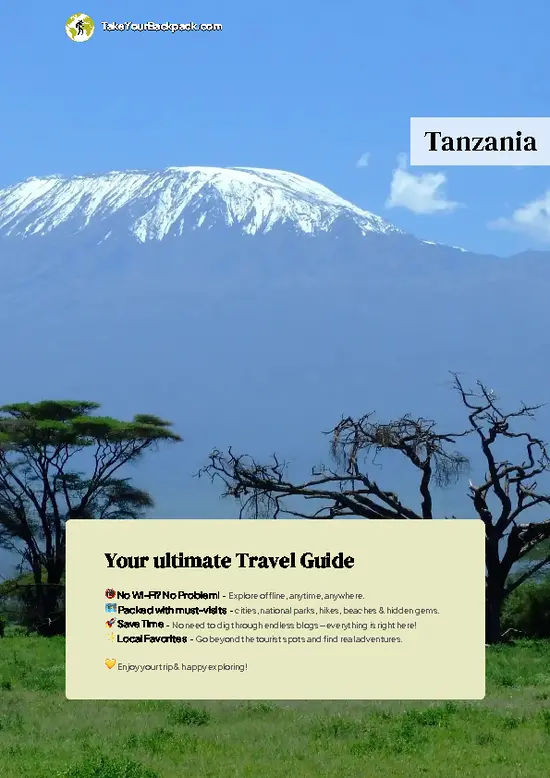
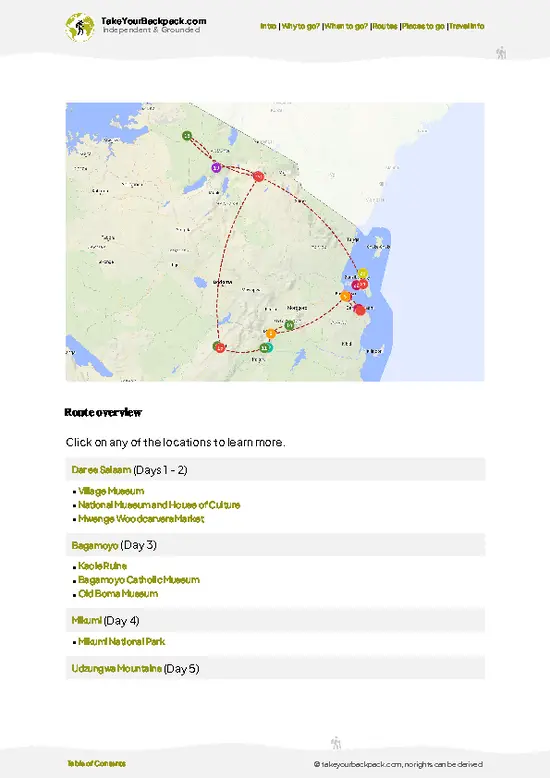
example page 0 from our offline Travel Guide for Tanzania
example page 1 from our offline Travel Guide for Tanzania
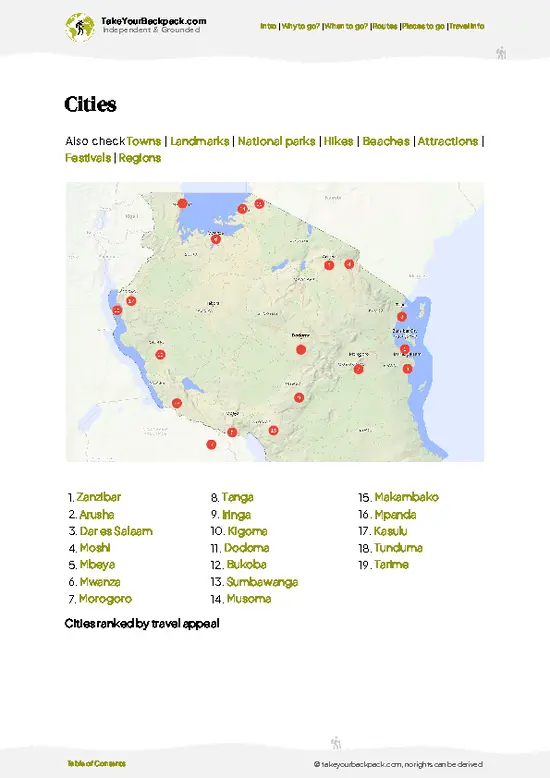
example page 2 from our offline Travel Guide for Tanzania
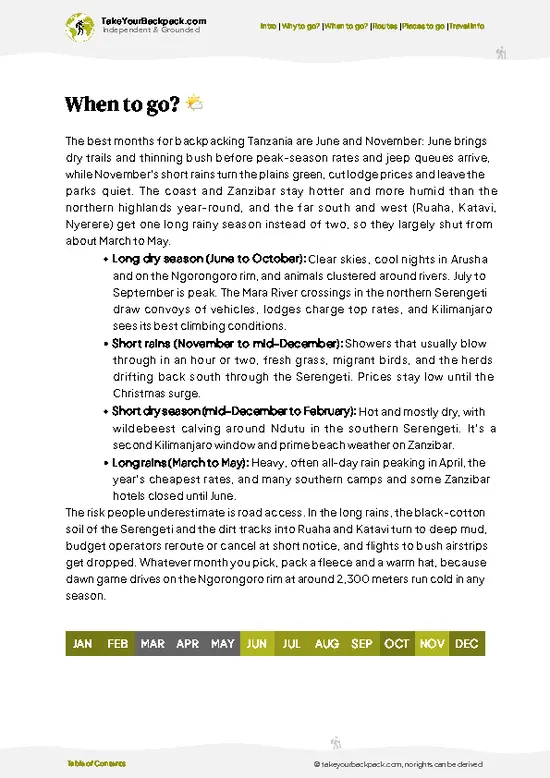
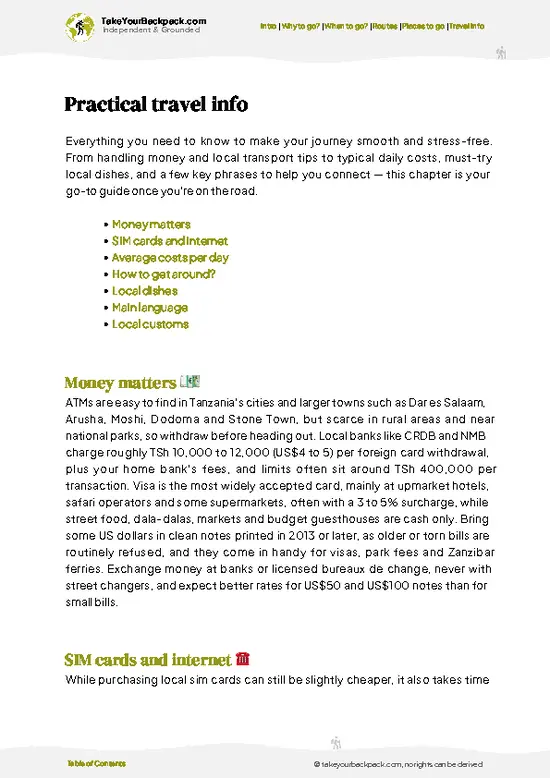
example page 3 from our offline Travel Guide for Tanzania
example page 4 from our offline Travel Guide for Tanzania
example page 5 from our offline Travel Guide for Tanzania
example page 6 from our offline Travel Guide for Tanzania
example page 7 from our offline Travel Guide for Tanzania
Loading the map 🌍
CLICK TO FILTER
cities
towns
landmarks
national parks
hikes
beaches
attractions
festivals
regions
SHOW COUNTRY’S BESTSHOW ALL

✨ Why go?
Ranked #7 city in Tanzania
What makes it a must-see city

Backpackers come to Mwanza because it is the working heart of Lake Victoria, a place where the lake shapes everything from breakfast to the skyline. The city gives you a mix of granite boulder hills you can climb within minutes of the center, a waterfront lined with fishing boats, and a market scene that feels local rather than staged. It is also the natural gateway between the Serengeti side of the country and the western routes, with ferries and the lake port adding options other cities lack. Hostels and guesthouses are plentiful enough that you rarely need to book far ahead, and the compact center is walkable, though you will want a taxi or bajaji for hills and longer hops. Evenings bring cold drinks and fresh fish at lakeside spots. Treat it as a two or three night stop, a place to reset … read more 👉
Backpackers come to Mwanza because it is the working heart of Lake Victoria, a place where the lake shapes everything from breakfast to the skyline. The city gives you a mix of granite boulder hills you can climb within minutes of the center, a waterfront lined with fishing boats, and a market scene that feels local rather than staged. It is also the natural gateway between the Serengeti side of the country and the western routes, with ferries and the lake port adding options other cities lack. Hostels and guesthouses are plentiful enough that you rarely need to book far ahead, and the compact center is walkable, though you will want a taxi or bajaji for hills and longer hops. Evenings bring cold drinks and fresh fish at lakeside spots. Treat it as a two or three night stop, a place to reset laundry and plans before heading on, rather than a destination for weeks.

💡 HighlightsPlaces and moments you shouldn't skip

  1. Bismarck Rock: The granite outcrop rising from the lake is Mwanza’s signature image. Go early morning or late afternoon for softer light and cooler air. Viewing from the shore is free; allow 30 to 60 minutes.
  2. Saa Nane Island: A small island national park with rock hyraxes, impalas and birdlife, plus boulder walking trails. Entry runs about US$20 to 30 plus boat costs, and a visit takes 3 to 4 hours. Go in the morning.
  3. Sukuma Museum (Bujora): Run as a cultural center, it displays Sukuma drums, masks and a royal house, with a famous drum-dance tradition. Entry is roughly US$2 to 5; allow 1 to 2 hours.
  4. Capri Point: A hilly peninsula with lake views, quiet streets and sundowner spots. It is best walked late afternoon and is free; allow 1 to 2 hours.
  5. Mwanza Central Market: A dense maze of produce,
… read more 👉
  1. Bismarck Rock: The granite outcrop rising from the lake is Mwanza’s signature image. Go early morning or late afternoon for softer light and cooler air. Viewing from the shore is free; allow 30 to 60 minutes.
  2. Saa Nane Island: A small island national park with rock hyraxes, impalas and birdlife, plus boulder walking trails. Entry runs about US$20 to 30 plus boat costs, and a visit takes 3 to 4 hours. Go in the morning.
  3. Sukuma Museum (Bujora): Run as a cultural center, it displays Sukuma drums, masks and a royal house, with a famous drum-dance tradition. Entry is roughly US$2 to 5; allow 1 to 2 hours.
  4. Capri Point: A hilly peninsula with lake views, quiet streets and sundowner spots. It is best walked late afternoon and is free; allow 1 to 2 hours.
  5. Mwanza Central Market: A dense maze of produce, dried dagaa fish and textiles. Mornings are liveliest. It is free to enter, and 1 hour is plenty.
  6. Igoma Fish Market and Landing: Boats unload at dawn and traders haggle over Nile perch and tilapia. Arrive at first light. It is free to watch, and an hour will do.
  7. Gleason’s Rocks viewpoint: Climb the boulder slopes above town for sweeping lake views. Late afternoon is best, and the walk takes about 1 hour. It is free.
Day trips from Mwanza can include Rubondo Island National Park, Ukerewe Island, Speke Gulf shores and Serengeti access routes. Entry to Capri Point, the markets, the fish landing and the rocky viewpoints costs nothing, so those are the cheapest items on the list.
Spotted a mistake or missing something? Contact us.

🏘️ NeighborhoodsNeighborhood guide to Mwanza

Mwanza sprawls over granite boulders along Lake Victoria’s southern shore, and each pocket rewards a different kind of wandering.
  • City Center and Clock Tower area: Start here. Markets, money changers, bus offices and cheap eateries sit within a few blocks, so you can cover it on foot in an easy morning and spend almost nothing. Go early, before the heat and the crush of dala dala set in.
  • Capri Point: A leafy peninsula of lake views, restaurants and quiet lanes, with sundowners on the water. It costs more than downtown for a meal, but a short walk or cheap ride gets you there, and it is the best place to unwind after a dusty day.
  • Mirongo and Kenyatta Road: The commercial spine, packed with cafés, supermarkets, banks and bakeries. Walkable but hot, and good value for a fast, filling lunch.
  • Igoma
… read more 👉
Mwanza sprawls over granite boulders along Lake Victoria’s southern shore, and each pocket rewards a different kind of wandering.
  • City Center and Clock Tower area: Start here. Markets, money changers, bus offices and cheap eateries sit within a few blocks, so you can cover it on foot in an easy morning and spend almost nothing. Go early, before the heat and the crush of dala dala set in.
  • Capri Point: A leafy peninsula of lake views, restaurants and quiet lanes, with sundowners on the water. It costs more than downtown for a meal, but a short walk or cheap ride gets you there, and it is the best place to unwind after a dusty day.
  • Mirongo and Kenyatta Road: The commercial spine, packed with cafés, supermarkets, banks and bakeries. Walkable but hot, and good value for a fast, filling lunch.
  • Igoma and Buzuruga: Gritty bus-hub districts south of town. Chaotic and loud, they matter mostly for long-distance departures, so pass through rather than linger.
  • Bismarck Rock and the waterfront: Scramble up the boulders for lake panoramas and sunset photos, and watch fishermen haul in Nile perch. Free, close to Capri Point, and the best-value sight in town.

⌛️ 1 dayA smart one-day plan

7:30 AM: Mwanza Central Market
Start here, because the fish and produce stalls are loudest and freshest early, and the heat hasn’t built yet. Wander the aisles for tilapia, dagaa (tiny sardine-like lake fish) and piles of mangoes, then grab a chai and mandazi from a stall at the edge. Walk or take a short bajaji (three-wheeler) toward the lakeshore.

9:30 AM: Bismarck Rock and the Mwanza lakefront
The balancing granite boulders at the water’s edge are the city’s emblem, and the light is soft for photos this early. Clamber up the lower rocks for a view across Lake Victoria’s bays. Entry is free. Keep your bag zipped and your footing careful on the smooth stone.

11:30 AM: Sukuma Museum at Bujora
This one sits outside the usual circuit, a short ride out of town by dala dala or taxi. The Sukuma … read more 👉
7:30 AM: Mwanza Central Market
Start here, because the fish and produce stalls are loudest and freshest early, and the heat hasn’t built yet. Wander the aisles for tilapia, dagaa (tiny sardine-like lake fish) and piles of mangoes, then grab a chai and mandazi from a stall at the edge. Walk or take a short bajaji (three-wheeler) toward the lakeshore.

9:30 AM: Bismarck Rock and the Mwanza lakefront
The balancing granite boulders at the water’s edge are the city’s emblem, and the light is soft for photos this early. Clamber up the lower rocks for a view across Lake Victoria’s bays. Entry is free. Keep your bag zipped and your footing careful on the smooth stone.

11:30 AM: Sukuma Museum at Bujora
This one sits outside the usual circuit, a short ride out of town by dala dala or taxi. The Sukuma people’s drums, healing objects and the royal houses are explained by local guides, and a small crowd of dancers sometimes performs on weekends. Plan about 1.5 hours.

2:00 PM: Lunch back in the center
Return for grilled lake fish with ugali or chips at a casual spot near the waterfront. Order the whole fish and eat it with your hands, the way locals do.

4:00 PM: Saa Nane Island or a lake shore walk
Finish with a slow stroll through the rocky lake edge, where fishing boats come in and kids swim off the stones. Stay for dusk, then catch a cold Safari or Kilimanjaro lager at a lakeside bar before heading back to your hostel on foot or by bajaji.

🌤️ When to go?Seasonal considerations and timing

June to October gives Mwanza its driest, most comfortable weather, with highs of 26 to 29°C (79 to 84°F) and cooler nights near 16 to 18°C (61 to 64°F).
  • Dry season (June to October): Reliable sunshine for boat trips and Serengeti-bound travelers. Safari-linked crowds and prices peak in July and August.
  • Short rains (November to December): Afternoon storms, warm 27 to 30°C (81 to 86°F) days, and thinner crowds. Lodging is easy to find.
  • Long rains (March to May): The wettest stretch, with heavy downpours that muddy roads and ferry schedules. Rates dip, and the lake looks lush.
  • January and February: Hot, drier spells and 28 to 31°C (82 to 88°F) highs, with moderate prices.
Daylight stays close to twelve hours all year, so plan outings for mornings. Book onward buses a day ahead in peak months.

source: climatestotravel.comJANJanuary: fair for travelingFEBFebruary: fair for travelingMARMarch: fair for travelingAPRApril: fair for travelingMAYMay: good for travelingJUNJune: highly recommended for travelingJULJuly: excellent for travelingAUGAugust: excellent for travelingSEPSeptember: highly recommended for travelingOCTOctober: highly recommended for travelingNOVNovember: fair for travelingDECDecember: fair for traveling
when-to-go

✈️ The backpacker research shortcutTanzania Travel Guide

An offline-friendly backpacking guide with optimized travel routes, ranked highlights, transport advice, and the best areas to stay.
example page 0 from our offline Travel Guide for Tanzania
example page 1 from our offline Travel Guide for Tanzania
example page 2 from our offline Travel Guide for Tanzania
example page 3 from our offline Travel Guide for Tanzania
example page 4 from our offline Travel Guide for Tanzania
example page 5 from our offline Travel Guide for Tanzania
example page 6 from our offline Travel Guide for Tanzania
example page 7 from our offline Travel Guide for Tanzania
The digital guide (396 pages) contains:
✅ 103 highlights, ranked by travel appeal
✅ Optimized 7, 14 & 21-day travel routes
✅ Cities, national parks, landmarks, beaches
✅ How to get around
✅ Offline-friendly for travel without Wi-Fi
👉 Click to see all 30+ guide features

📅 Plan smarter in minutes, not weeks
✅ Month by month travel advice
✅ Festivals & national holidays
✅ Budget expectations

🗺️ Go to the right places, skip the overrated ones
✅ Honest pros & cons of destinations
✅ Top hikes, parks & viewpoints
✅ Lesser-known places most travelers miss
✅ Clear “worth it vs skip it” guidance

🛏️ Travel smoothly without rookie mistakes
✅ Best areas to stay
✅ Transport systems explained simply
✅ Common scams & safety advice
✅ SIM cards, money & practical tips

🌍 Understand the country, not just visit it
✅ Culture & traditions
✅ 52 Essential phrases & customs
✅ Festivals worth planning around
✅ Traveler-friendly historical context
✅ Insights that make places more meaningful

📱 Built for real travel conditions
✅ Fully downloadable PDF
✅ Works completely offline
✅ Optimized for phone use
✅ Useful in remote areas & buses
✅ Everything in one place
Stop searching, start planning
Get instant access to your full guide. 30‑day money-back guarantee.
+ Add another guide for just

By proceeding you agree to our terms.
Sent to your inbox immediately after payment • 100% Secure Checkout
Best Backpacking Travel Advisor 2025 tourism awardBest Backpacking
Travel Advisor
2025
What others say about Take Your Backpack Guides:
⭐⭐⭐⭐⭐
Fantastic, amazing amount of information!
⭐⭐⭐⭐⭐
My goodness this is amazing, it's what I've been looking for hats off too you!
⭐⭐⭐⭐⭐
I think this is absolutely BRILLIANT
⭐⭐⭐⭐
Very complete and informative. It's still missing places, but I gotta to commend you
⭐⭐⭐⭐⭐
This is truly amazing, thank you, can't wait to explore it with my kids!
⭐⭐⭐⭐⭐
Awesome resource, thank you!
⭐⭐⭐⭐⭐
This is amazing! Can't wait to explore the ones I haven't seen
⭐⭐⭐⭐
I love this! Well done, great idea.
⭐⭐⭐⭐⭐
Thanks for taking the time to make this gem!
⭐⭐⭐⭐⭐
This might be the best website I've ever seen.
⭐⭐⭐⭐⭐
Congratulations, and thank you so much for your work; it's incredibly valuable.
⭐⭐⭐⭐
In all seriousness I think you did a great job pointing out the important spots
⭐⭐⭐⭐⭐
10/10 very good
⭐⭐⭐⭐⭐
As someone who's only just starting to visit regularly this is awesome, thank you.
⭐⭐⭐⭐
Thank you very much! I'm going to visit my dad, it's going to be very useful!
⭐⭐⭐⭐⭐
This is really cool! We'll be travelling for the first time and this definitely come in handy.
⭐⭐⭐⭐⭐
You are now our minister of culture, congratulations 👨‍💼
⭐⭐⭐⭐⭐
Just wanted to tell you that this is a pearl! Going to follow your recommendations.
⭐⭐⭐⭐⭐
This is so cool. I'll definitely be using the resource for my travels soon.
⭐⭐⭐⭐⭐
This is very impressive! Good work.
⭐⭐⭐⭐⭐
This is an amazing and informative site. Very well done!

🛏️ Where to stay?How to pick the right area

The city center and the Capri Point area are the two best bases for a budget bed in Mwanza.
The center holds the widest choice of cheap guesthouses and a few dorms, mostly within walking distance of the market, banks and the main bus offices. It is noisy with early traffic and mosque calls, so pack earplugs, but transport is unbeatable, since bajaj and dala dala pass constantly. Streets thin out after dark, so take a short bajaj ride at night instead of walking far.
Capri Point is calmer and leafier, with a handful of backpacker-friendly options, lake breezes and the best dining nearby. Beds cost … read more 👉
The city center and the Capri Point area are the two best bases for a budget bed in Mwanza.
The center holds the widest choice of cheap guesthouses and a few dorms, mostly within walking distance of the market, banks and the main bus offices. It is noisy with early traffic and mosque calls, so pack earplugs, but transport is unbeatable, since bajaj and dala dala pass constantly. Streets thin out after dark, so take a short bajaj ride at night instead of walking far.
Capri Point is calmer and leafier, with a handful of backpacker-friendly options, lake breezes and the best dining nearby. Beds cost a little more and choices are fewer, so book ahead in July and August. Evenings feel relaxed, and a bajaj to the center costs about US$1 to 2. For early long-distance departures, staying central saves you a rushed cross-town ride.

🚌 Getting aroundMoving around without the hassle

Bajaj three-wheelers are the easiest way to get around Mwanza, because they dart through traffic, reach every corner of the hills and cost little. Central streets are walkable, but the slopes and midday heat wear you down, and traffic around the main roundabouts can be dense. Public transport is plentiful and cheap, if crowded.
  • Walking: Free and fast in the center and along the waterfront, where you can cover the market, clock tower and nearby streets in an hour. Skip it after dark and on steep climbs to far suburbs.
  • Bajaj: Rides in town cost about US$1 to 2, and bargaining before you hop in saves coins. They are open to the breeze, quick in jams and the best value for Capri Point or the bus stand. Fares rise at night.
  • Dala dala minibuses: Fares run roughly US$0.20 to 0.40 on set routes, and
… read more 👉
Bajaj three-wheelers are the easiest way to get around Mwanza, because they dart through traffic, reach every corner of the hills and cost little. Central streets are walkable, but the slopes and midday heat wear you down, and traffic around the main roundabouts can be dense. Public transport is plentiful and cheap, if crowded.
  • Walking: Free and fast in the center and along the waterfront, where you can cover the market, clock tower and nearby streets in an hour. Skip it after dark and on steep climbs to far suburbs.
  • Bajaj: Rides in town cost about US$1 to 2, and bargaining before you hop in saves coins. They are open to the breeze, quick in jams and the best value for Capri Point or the bus stand. Fares rise at night.
  • Dala dala minibuses: Fares run roughly US$0.20 to 0.40 on set routes, and you squeeze in with locals and bags. Cheapest by far, but slow, packed and confusing without a destination name. Most run from early morning to around 9 pm.
  • Boda boda motorbike taxis: Fares of US$0.50 to 1.50 get you through gridlock fastest. They are the riskiest option, so insist on a helmet and keep trips short.
  • Taxis and ferries: Metered cars are rare, so agree a price, usually US$4 to 8 across town. Ferries cross to Kamanga and onward lake points for around US$1 to 3, giving a scenic escape from road dust.

👛 Costs (as of 22 October 2026)Typical daily expenses

Mwanza costs roughly US$10 to 14 a day for a backpacker, and the total daily budget below comes to US$31.
CategoryBudget RangeLocal Reality
Dorm (high season)US$10 to 14Dorms are scarce, so many travelers take a basic single room.
Dorm (off-season)US$7 to 10Guesthouses discount outside June to October.
MealsUS$6 to 10Grilled fish with ugali or street skewers fill you up cheaply.
Local transportUS$2 to 4Several bajaj or dala dala rides in a day.
City transport passNot availableYou pay cash per ride.
Activities and entry feesUS$3 to 8Bismarck Rock is free, while Saa Nane and the Bujora museum charge fees.
MiscellaneousUS$2 to 4Water, SIM data and small tips.
Total Daily BudgetUS$31Based on high-season beds and typical spending.
Save money by eating at local fish grills and by taking dala dala instead of bajaj for longer trips.
⚠️ Prices can change and everyone travels differently, so take this as a rough guide. Hope it helps you plan your adventure!

🚌 Day tripsShort trips worth adding

Mwanza works well as a base for lake and granite-country outings, most done between breakfast and dinner.Saa Nane Island: Saa Nane is a small national park island with rock hyraxes, monitor lizards and a fine lake view. Allow a short drive to the shore and then a boat, totaling about 45 minutes, with entry plus boat around US$25 to 35. Go in the dry months, and bring water since shade is thin.
Rubondo Island National Park: Rubondo needs a long day or an overnight trip by road and boat, so only go if you start at dawn. Chimpanzees, sitatunga and birds make it rewarding, but park fees are high, often over US$80 including transfers.
Ukerewe Island: Ferries from Nyamirembe leave through the morning and take about 2 to 3 hours, at roughly US$3 to 5. Village life, quiet beaches and rock formations … read more 👉
Mwanza works well as a base for lake and granite-country outings, most done between breakfast and dinner.Saa Nane Island: Saa Nane is a small national park island with rock hyraxes, monitor lizards and a fine lake view. Allow a short drive to the shore and then a boat, totaling about 45 minutes, with entry plus boat around US$25 to 35. Go in the dry months, and bring water since shade is thin.
Rubondo Island National Park: Rubondo needs a long day or an overnight trip by road and boat, so only go if you start at dawn. Chimpanzees, sitatunga and birds make it rewarding, but park fees are high, often over US$80 including transfers.
Ukerewe Island: Ferries from Nyamirembe leave through the morning and take about 2 to 3 hours, at roughly US$3 to 5. Village life, quiet beaches and rock formations make it a gentle contrast to the city. First-timers often miss the last ferry back, so check the afternoon sailing time on arrival.
Sukuma Museum at Bujora: This open-air museum, about 30 minutes by road, shows Sukuma history, drums and dances. Entry is cheap, around US$3 to 6, and dala dala then a short walk gets you there. Sunday dances are the highlight.

🍲 FoodEating & Drinking in Mwanza

Lake Victoria shapes the plate here, and Nile perch and tilapia are the stars, usually grilled whole or fried crisp and served with ugali or chips. Smaller dagaa (silver sardines) are dried on racks along the shore and cooked into rich stews. Head to the fishing harbors and lakeside grills near the waterfront for the freshest catch, which costs around US$3 to 7 for a hearty portion.
Downtown street stalls sell mishkaki skewers, chapati and fried cassava, and the central market is the place for cheap mangoes, bananas and passion fruit. Local cafés around Kenyatta Road serve strong coffee and snacks for under US$2.
In the evening, locals gather at open-air spots on Capri Point for beers and grilled fish with a view. Fish is typically eaten with the hands, so wash up at the basin offered before you start.

🛡️ SafetyTraveler Safety Guide

Mwanza is manageable for backpackers, and most problems are petty theft rather than violence. Keep phones and cameras tucked away in crowded markets, bus stands such as Buzuruga and dala dala, where pickpockets work packed crowds. After dark, skip walking between districts and take a bajaj, especially around the waterfront and Capri Point. Solo travelers, women included, generally get on fine, though expect staring and persistent offers of rides. Touts at bus stations may quote inflated fares or press you toward a particular company, so buy tickets at official offices and confirm the price first. Carry only the cash you need, split your bank cards, and be careful with jewelry on motorbike taxis. Lake swimming risks bilharzia and crocodiles in many spots, so stay out unless a lodge confirms the water is safe.

FAQCommon questions from travelers

Two to three days covers Mwanza well. One day handles Bismarck Rock, the markets and a Capri Point sunset, while a second suits Saa Nane Island or the Bujora museum, and a third works for a ferry trip to Ukerewe, 2 to 3 hours each way.
Mwanza is reasonably safe for solo backpackers who use common sense. Take a bajaj after dark rather than walking, guard phones in crowded bus stands and markets, and buy tickets at official offices. A basic room in the center or Capri Point costs about US$10 to 14.
Mwanza is known for Lake Victoria, the huge granite boulders such as Bismarck Rock and its fresh Nile perch. It is also the main gateway to the Serengeti, roughly 5 to 7 hours by road to the park’s western gates, and to Rubondo and Ukerewe islands.
⚠️ Things can change over time, so always validate details locally before you go.

Other Tanzanian cities near Mwanza

Explore more nearby:

  • Musoma—Dagaa landings, shoreline boulders, Nyerere peninsula, lakeside bars| 149 km away
  • Bukoba—Robusta coffee, Haya heritage, lakeside port, banana hills| 181 km away
  • Tarime—Kurya homesteads, border-region hills, nyama choma, unpolished market| 207 km away

💡 Not sure where to go next?
Create a personalized itinerary for Tanzania including Mwanza and the places that fit your trip.

Generate my itinerary

👉 Discover all cities

Or checkout all Tanzania has to offer (think cities, towns, villages, national parks, hikes, beaches, festivals)
Country photo of Tanzania

We 💚 feedbackParting advice and final tips

Mwanza deserves two nights, three if you want the islands. Day one covers the markets and rocks, day two is for a boat trip. I would skip the rush and sit lakeside with grilled fish at dusk, then keep small bills handy for bajaji rides.

✍️ Help improve this page!
The information on this page is based on in-depth research, insights shared by experienced travelers, and feedback from the local travel community in Tanzania. While every effort is made to keep the information accurate and current, conditions can change — so if you spot anything incorrect or outdated, please get in touch.


🙋‍♂️ Give feedback

👋 Meet the founderWho’s Behind Take Your Backpack?

Johan, backpacker and founder of TakeYourBackpackHi, I’m Johan (Netherlands 🇳🇱), the creator of TakeYourBackpack. Over the past 3 decades, I’ve backpacked through 90+ countries across six continents, gaining extensive experience with independent travel, long-term trips, and overland routes.

This site is built on a combination of firsthand travel experience and carefully curated insights from other backpackers. Many guides are based on places I’ve personally visited, while others bring together tips, observations, and practical advice shared by trusted travelers I’ve met along the way.

The goal is to provide realistic, experience-driven guidance — not generic itineraries — so you can explore destinations with better context, clearer expectations, and more confidence.