×

Tanzania🇹🇿 | citiesMoshiKilimanjaro views, coffee cooperative, Chemka springs, Materuni waterfall | things to do and best time to go

Explore KigomaExplore Mwanza

Backpacking in Moshi
🏆 Top pickcity ranked #5
By Johan Kruseman 🇳🇱 | Updated October 22, 2026

Moshi forces one real decision: treat it as a launchpad for Kilimanjaro or stay a couple of days and actually explore. Do the second and you get a far better trip. It sits in the north of Tanzania, on the southern slope of the mountain, with the summit often showing on clear mornings. The town suits climbers, safari planners and anyone who wants Tanzania without the Arusha hustle. It does not suit nightlife hunters or sightseers chasing monuments, because the town itself has few big sights. Skip the idea of a checklist. Wander the market, ride a dala-dala out to the coffee farms, and let the pace reset you. Look for the old railway station, where the colonial-era tracks still run toward the foothills.

Discover everything you want to know in the 📖 Tanzania Travel Guide.


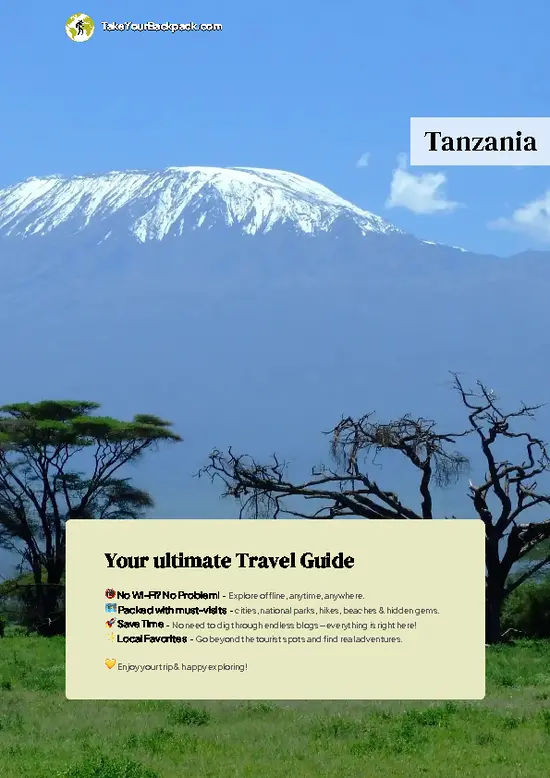
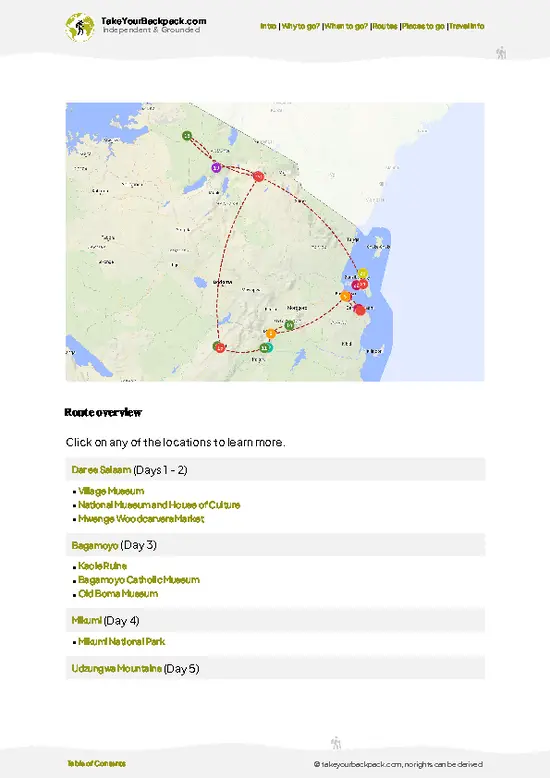
example page 0 from our offline Travel Guide for Tanzania
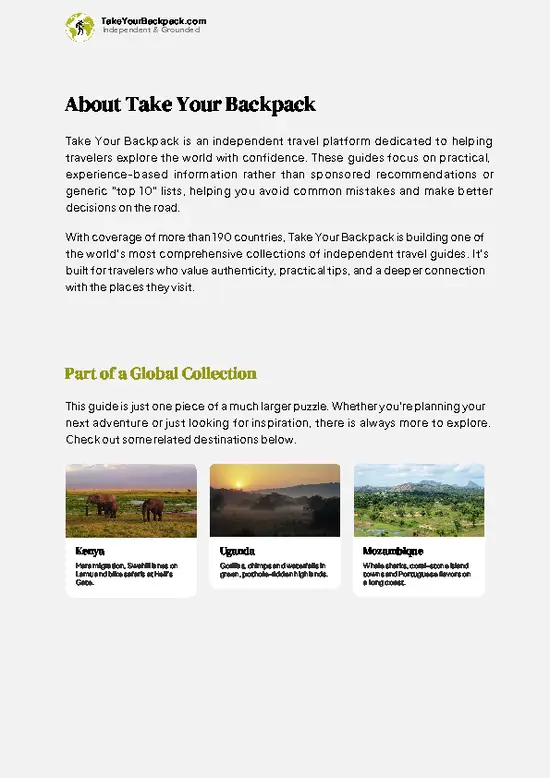
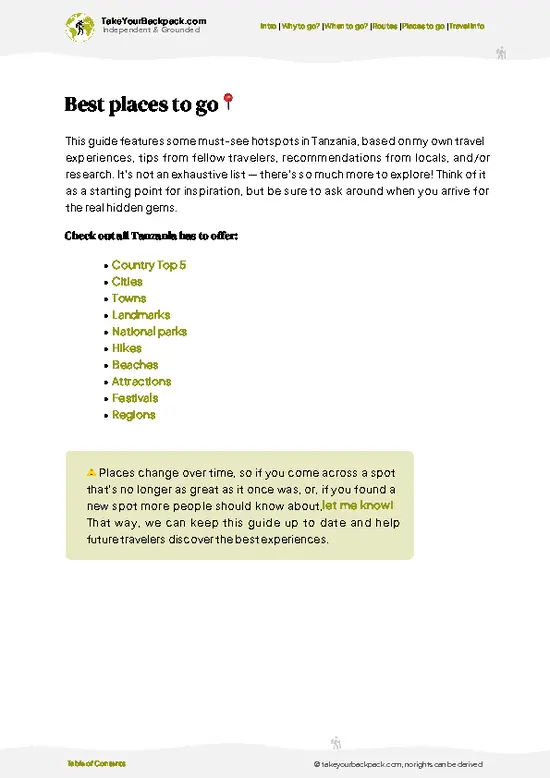
example page 1 from our offline Travel Guide for Tanzania
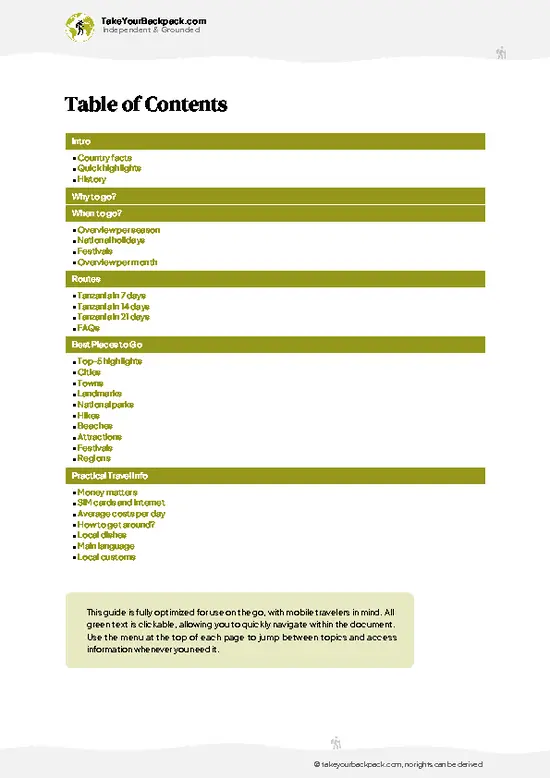
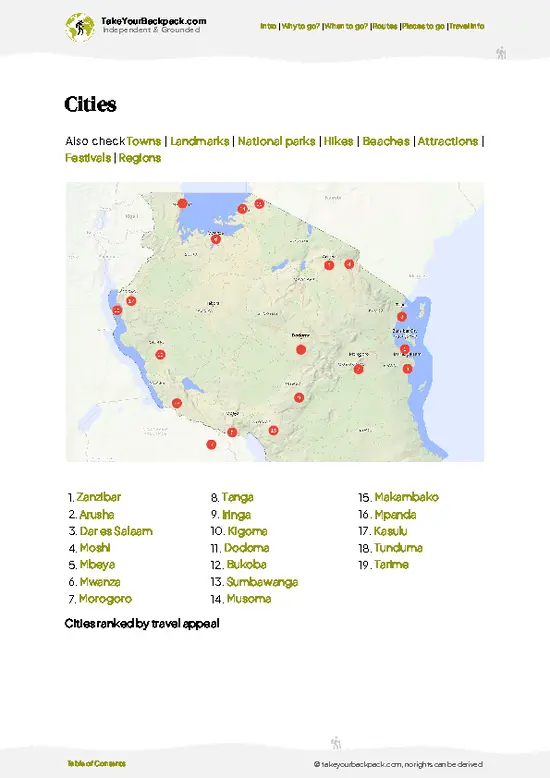
example page 2 from our offline Travel Guide for Tanzania
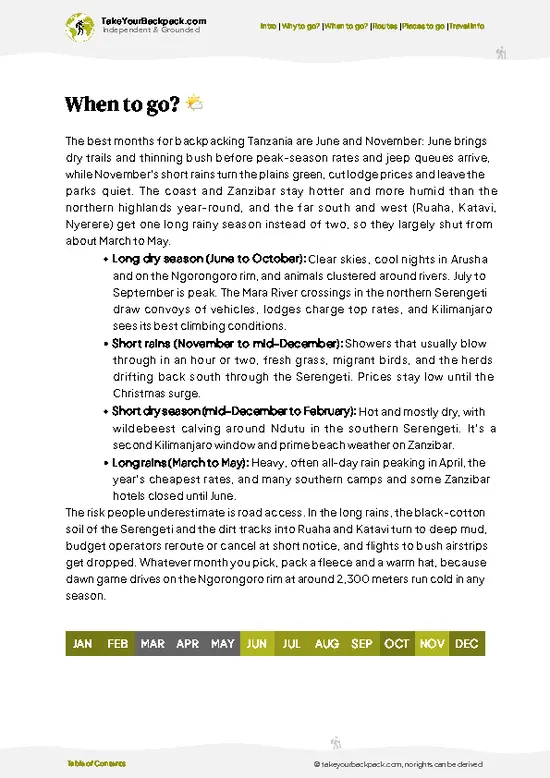
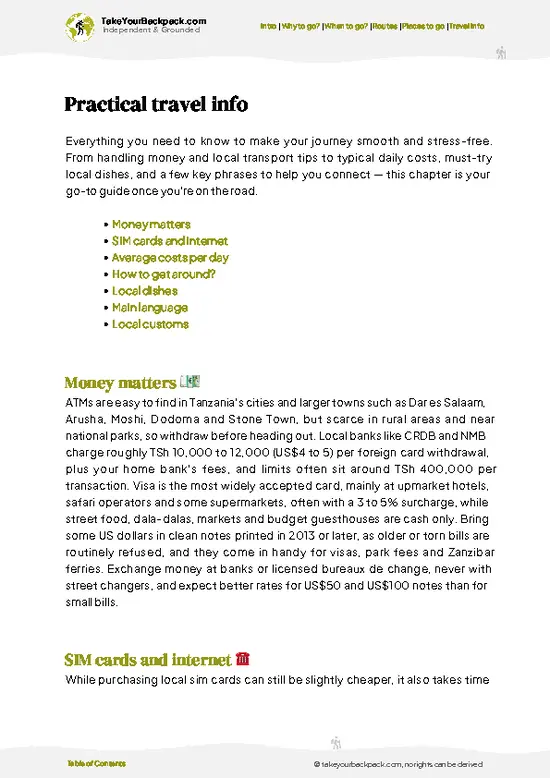
example page 3 from our offline Travel Guide for Tanzania
example page 4 from our offline Travel Guide for Tanzania
example page 5 from our offline Travel Guide for Tanzania
example page 6 from our offline Travel Guide for Tanzania
example page 7 from our offline Travel Guide for Tanzania
Loading the map 🌍
CLICK TO FILTER
cities
towns
landmarks
national parks
hikes
beaches
attractions
festivals
regions
SHOW COUNTRY’S BESTSHOW ALL

✨ Why go?
Ranked #5 city in Tanzania
Why Moshi should be on your travel list

Moshi works as a Kilimanjaro gateway with a calmer feel than Arusha, and that is the main reason people come. Operators, gear rental shops and guides cluster within a few blocks, so you can compare outfits face to face and haggle without a tout on your shoulder. Beyond the climb, the town is compact and flat enough to cover on foot, and the Clock Tower roundabout makes a handy landmark when you get turned around. Hostels here lean toward trekkers swapping stories over dinner, which makes it easy to find a group to share costs on a trek or a day out. Food is a quiet bonus, with local grills, Indian restaurants and coffee grown on the slopes just above town. Nightlife is mellow, so it suits you if you want sleep before an early start. Treat it as a two to four day stop around a mountain or safari, not a place to linger for weeks.

💡 HighlightsTop highlights of Moshi

  1. Kilimanjaro views from town: The mountain is the reason Moshi exists as a tourist stop, and on clear mornings the snowy summit hangs over the rooftops. Go at dawn, before cloud builds. Free, and 15 minutes is enough, though many people just keep looking.
  2. Moshi Central Market: A dense maze of produce, spices, secondhand clothes and fabric stalls. Visit in the morning when stock is freshest. Entry is free, spending is up to you, and an hour covers it. Keep bags zipped in the narrow lanes.
  3. Clock Tower roundabout: The town’s central landmark and a meeting point for taxis and dala-dalas. It is not much to look at, but it orients you. Ten minutes is plenty, and it is free.
  4. Old Moshi railway station: The colonial-era station recalls the line that tied the region to the coast. It is quiet and photogenic
… read more 👉
  1. Kilimanjaro views from town: The mountain is the reason Moshi exists as a tourist stop, and on clear mornings the snowy summit hangs over the rooftops. Go at dawn, before cloud builds. Free, and 15 minutes is enough, though many people just keep looking.
  2. Moshi Central Market: A dense maze of produce, spices, secondhand clothes and fabric stalls. Visit in the morning when stock is freshest. Entry is free, spending is up to you, and an hour covers it. Keep bags zipped in the narrow lanes.
  3. Clock Tower roundabout: The town’s central landmark and a meeting point for taxis and dala-dalas. It is not much to look at, but it orients you. Ten minutes is plenty, and it is free.
  4. Old Moshi railway station: The colonial-era station recalls the line that tied the region to the coast. It is quiet and photogenic in late afternoon. Free to look, about 30 minutes.
  5. Kilimanjaro Native Cooperative Union (KNCU) coffee story: Coffee from the mountain slopes has long been the area’s economic backbone, and the cooperative’s history is worth asking about. Local coffee tours typically cost US$30 to 60 and take half a day, best in the dry months around harvest.
  6. Chemka Hot Springs: A turquoise spring pool fed by underground water, shaded by fig trees, where you can swim and rope-swing. Entry is about US$10 to 20 with a driver, and 2 to 3 hours is typical. Weekdays are quieter.
  7. Materuni Waterfall: A tall waterfall reached by a short hike through banana and coffee plots on the slope above town, with a village coffee-roasting stop. Tours run around US$40 to 70, take half a day, and are best in the morning.
For day trips from Moshi, Marangu Gate and the Kilimanjaro foothills, Lake Chala on the Kenyan border, and Arusha National Park all make good outings. The cheapest sights are the mountain views and the clock tower, which cost nothing.
Spotted a mistake or missing something? Contact us.

Things to do in Moshi

Ratings based on Tripadvisor reviews. When you book through this link, you support our work at no extra cost to you.

🏘️ NeighborhoodsUnderstanding the local layout

Moshi is compact, and you can cover its best parts on foot or with a short boda ride, so pick your areas and get moving.
  • Town Center and Clock Tower: Start at the roundabout with the clock tower and let the streets pull you along. Bank branches, pharmacies, tour offices and fruit sellers crowd the blocks, and it is flat and easy on foot. Worth a morning, not a full day.
  • Central Market area: Dive in here for piles of bananas, avocados, spices and secondhand clothes. Grab a plate of chips mayai or a mug of sweet tea from the stalls nearby. It is loud, tight and brilliant, so go before noon with your bag zipped.
  • Railway Station and Uhuru Road: Skip it for sightseeing. The old colonial station and wide avenues carry some history, but the real draw is the Kilimanjaro views on clear mornings. Walk
… read more 👉
Moshi is compact, and you can cover its best parts on foot or with a short boda ride, so pick your areas and get moving.
  • Town Center and Clock Tower: Start at the roundabout with the clock tower and let the streets pull you along. Bank branches, pharmacies, tour offices and fruit sellers crowd the blocks, and it is flat and easy on foot. Worth a morning, not a full day.
  • Central Market area: Dive in here for piles of bananas, avocados, spices and secondhand clothes. Grab a plate of chips mayai or a mug of sweet tea from the stalls nearby. It is loud, tight and brilliant, so go before noon with your bag zipped.
  • Railway Station and Uhuru Road: Skip it for sightseeing. The old colonial station and wide avenues carry some history, but the real draw is the Kilimanjaro views on clear mornings. Walk through quickly.
  • Kiboriloni and Shanty Town: Head here for the local feel, with cheap eateries, small bars and cafés where backpackers and Kilimanjaro guides mingle. It is quiet by night and a short ride from the center. A few cafés serve strong Kilimanjaro coffee, so settle in.
  • Foothill villages (Kibosho and Machame direction): Hop on a dala-dala and climb into banana groves, waterfalls and coffee farms. Cooler air and mountain views make this the best use of a free afternoon, though walking between villages takes real legwork.

⌛️ 1 dayHow to make the most of one day

Plan to walk the compact center in the cool morning, take a taxi or dala-dala for the farm excursion, and rest through the midday heat before an easy evening.
7:00 AM: Clock Tower roundabout Grab chai and a mandazi from a street vendor and look up for the summit. Walk five minutes to the market.
8:00 AM: Moshi Central Market Browse produce and spice stalls while it is fresh and cool. Buy fruit for later, then catch a taxi or dala-dala toward the slopes.
9:30 AM: Materuni village and waterfall Hike through coffee and banana plots to the falls, then join a local family for traditional coffee roasting. It shows how the mountain feeds the town.
1:00 PM: Lunch in town Return for a plate of grilled meat, rice and beans at a local eatery, then rest out of the heat.
3:00 PM: Old Moshi railway station Few … read more 👉
Plan to walk the compact center in the cool morning, take a taxi or dala-dala for the farm excursion, and rest through the midday heat before an easy evening.
7:00 AM: Clock Tower roundabout Grab chai and a mandazi from a street vendor and look up for the summit. Walk five minutes to the market.
8:00 AM: Moshi Central Market Browse produce and spice stalls while it is fresh and cool. Buy fruit for later, then catch a taxi or dala-dala toward the slopes.
9:30 AM: Materuni village and waterfall Hike through coffee and banana plots to the falls, then join a local family for traditional coffee roasting. It shows how the mountain feeds the town.
1:00 PM: Lunch in town Return for a plate of grilled meat, rice and beans at a local eatery, then rest out of the heat.
3:00 PM: Old Moshi railway station Few visitors come here. Wander the quiet platforms and tracks, then walk back through side streets lined with small shops and tailors.
5:00 PM: Coffee at a local café Taste mountain-grown beans while the light softens.
7:00 PM: Dinner Finish with a relaxed meal at a hostel restaurant and swap stories with trekkers.

🌤️ When to go?Choosing the right time of year

January to early March and June to October give you the clearest Kilimanjaro views and the best conditions for climbing, with the peaks usually visible in the early morning.
  • Long dry season (June to October): Days reach 25 to 28°C (77 to 82°F) and nights cool to 13 to 16°C (55 to 61°F). Summit routes are busiest and tour prices peak, especially July to August.
  • Short dry spell (January to February): Warmer, around 28 to 32°C (82 to 90°F), with fewer crowds and often lower climb prices. Summit nights are cold but mostly clear.
  • Short rains (November to December): Afternoon showers, green farmland and quieter streets. Mountain trails turn muddy.
  • Long rains (March to May): Heavy downpours, cloud over the mountain and many operators slow down. Rooms and safaris cost the least, but roads get messy.
Daylight … read more 👉
January to early March and June to October give you the clearest Kilimanjaro views and the best conditions for climbing, with the peaks usually visible in the early morning.
  • Long dry season (June to October): Days reach 25 to 28°C (77 to 82°F) and nights cool to 13 to 16°C (55 to 61°F). Summit routes are busiest and tour prices peak, especially July to August.
  • Short dry spell (January to February): Warmer, around 28 to 32°C (82 to 90°F), with fewer crowds and often lower climb prices. Summit nights are cold but mostly clear.
  • Short rains (November to December): Afternoon showers, green farmland and quieter streets. Mountain trails turn muddy.
  • Long rains (March to May): Heavy downpours, cloud over the mountain and many operators slow down. Rooms and safaris cost the least, but roads get messy.
Daylight stays close to 12 hours all year, so plan by rain rather than sun. Book climbs a few months ahead for July and August.


source: climatestotravel.comJANJanuary: good for travelingFEBFebruary: good for travelingMARMarch: fair for travelingAPRApril: fair for travelingMAYMay: good for travelingJUNJune: excellent for travelingJULJuly: excellent for travelingAUGAugust: highly recommended for travelingSEPSeptember: highly recommended for travelingOCTOctober: highly recommended for travelingNOVNovember: good for travelingDECDecember: good for traveling
when-to-go

✈️ The backpacker research shortcutTanzania Travel Guide

An offline-friendly backpacking guide with optimized travel routes, ranked highlights, transport advice, and the best areas to stay.
example page 0 from our offline Travel Guide for Tanzania
example page 1 from our offline Travel Guide for Tanzania
example page 2 from our offline Travel Guide for Tanzania
example page 3 from our offline Travel Guide for Tanzania
example page 4 from our offline Travel Guide for Tanzania
example page 5 from our offline Travel Guide for Tanzania
example page 6 from our offline Travel Guide for Tanzania
example page 7 from our offline Travel Guide for Tanzania
The digital guide (396 pages) contains:
✅ 103 highlights, ranked by travel appeal
✅ Optimized 7, 14 & 21-day travel routes
✅ Cities, national parks, landmarks, beaches
✅ How to get around
✅ Offline-friendly for travel without Wi-Fi
👉 Click to see all 30+ guide features

📅 Plan smarter in minutes, not weeks
✅ Month by month travel advice
✅ Festivals & national holidays
✅ Budget expectations

🗺️ Go to the right places, skip the overrated ones
✅ Honest pros & cons of destinations
✅ Top hikes, parks & viewpoints
✅ Lesser-known places most travelers miss
✅ Clear “worth it vs skip it” guidance

🛏️ Travel smoothly without rookie mistakes
✅ Best areas to stay
✅ Transport systems explained simply
✅ Common scams & safety advice
✅ SIM cards, money & practical tips

🌍 Understand the country, not just visit it
✅ Culture & traditions
✅ 52 Essential phrases & customs
✅ Festivals worth planning around
✅ Traveler-friendly historical context
✅ Insights that make places more meaningful

📱 Built for real travel conditions
✅ Fully downloadable PDF
✅ Works completely offline
✅ Optimized for phone use
✅ Useful in remote areas & buses
✅ Everything in one place
Stop searching, start planning
Get instant access to your full guide. 30‑day money-back guarantee.
+ Add another guide for just

By proceeding you agree to our terms.
Sent to your inbox immediately after payment • 100% Secure Checkout
Best Backpacking Travel Advisor 2025 tourism awardBest Backpacking
Travel Advisor
2025
What others say about Take Your Backpack Guides:
⭐⭐⭐⭐⭐
Fantastic, amazing amount of information!
⭐⭐⭐⭐⭐
My goodness this is amazing, it's what I've been looking for hats off too you!
⭐⭐⭐⭐⭐
I think this is absolutely BRILLIANT
⭐⭐⭐⭐
Very complete and informative. It's still missing places, but I gotta to commend you
⭐⭐⭐⭐⭐
This is truly amazing, thank you, can't wait to explore it with my kids!
⭐⭐⭐⭐⭐
Awesome resource, thank you!
⭐⭐⭐⭐⭐
This is amazing! Can't wait to explore the ones I haven't seen
⭐⭐⭐⭐
I love this! Well done, great idea.
⭐⭐⭐⭐⭐
Thanks for taking the time to make this gem!
⭐⭐⭐⭐⭐
This might be the best website I've ever seen.
⭐⭐⭐⭐⭐
Congratulations, and thank you so much for your work; it's incredibly valuable.
⭐⭐⭐⭐
In all seriousness I think you did a great job pointing out the important spots
⭐⭐⭐⭐⭐
10/10 very good
⭐⭐⭐⭐⭐
As someone who's only just starting to visit regularly this is awesome, thank you.
⭐⭐⭐⭐
Thank you very much! I'm going to visit my dad, it's going to be very useful!
⭐⭐⭐⭐⭐
This is really cool! We'll be travelling for the first time and this definitely come in handy.
⭐⭐⭐⭐⭐
You are now our minister of culture, congratulations 👨‍💼
⭐⭐⭐⭐⭐
Just wanted to tell you that this is a pearl! Going to follow your recommendations.
⭐⭐⭐⭐⭐
This is so cool. I'll definitely be using the resource for my travels soon.
⭐⭐⭐⭐⭐
This is very impressive! Good work.
⭐⭐⭐⭐⭐
This is an amazing and informative site. Very well done!

🛏️ Where to stay?Where staying makes the most sense

The town center and the Kiboriloni and Shanty Town side are the two best areas for a budget bed in Moshi, with dorms from about US$8 to 15 and private rooms from roughly US$15 to 30. The center puts you within walking distance of the bus stand, ATMs, supermarkets and tour offices, and dala-dalas leave from there for the mountain villages. Expect some traffic and early-morning calls to prayer, so bring earplugs if you sleep lightly. It is comfortable to walk around in the evening, though short taxi or boda rides are smarter late at night.
Kiboriloni and Shanty Town lie a short ride from the center … read more 👉
The town center and the Kiboriloni and Shanty Town side are the two best areas for a budget bed in Moshi, with dorms from about US$8 to 15 and private rooms from roughly US$15 to 30. The center puts you within walking distance of the bus stand, ATMs, supermarkets and tour offices, and dala-dalas leave from there for the mountain villages. Expect some traffic and early-morning calls to prayer, so bring earplugs if you sleep lightly. It is comfortable to walk around in the evening, though short taxi or boda rides are smarter late at night.
Kiboriloni and Shanty Town lie a short ride from the center and feel calmer. Many budget guesthouses and a handful of hostels cluster there, often with gardens, shared kitchens and traveler mingling. Climbers often stay here before and after their treks, so it is easy to find hiking partners and gear. Mornings are quiet and nights mostly peaceful. Boda rides to the center cost around US$0.50 to 1. Book ahead from July to September and January to February.

🚌 Getting aroundHow to get from A to B

From the main bus stand, the town center is a five to ten minute walk or a US$0.50 to 1 boda-boda ride, and a taxi costs around US$2 to 4. Moshi is small and flat, so most backpackers walk, then jump on a motorbike or dala-dala for anything farther. Traffic is light compared with Arusha, though the roundabouts can be chaotic. Public transport is cheap and frequent but informal, with no printed timetables.
  • Walking: The best choice for the center, market and station area. Distances are short, and the pavements are uneven but fine in daylight. Skip walking after dark on poorly lit side streets.
  • Dala-dala: Minibuses run to nearby villages and Arusha direction for roughly US$0.20 to 1 per hop, usually from around 5:30 am until early evening. They fill up before leaving, so expect a squeeze. They
… read more 👉
From the main bus stand, the town center is a five to ten minute walk or a US$0.50 to 1 boda-boda ride, and a taxi costs around US$2 to 4. Moshi is small and flat, so most backpackers walk, then jump on a motorbike or dala-dala for anything farther. Traffic is light compared with Arusha, though the roundabouts can be chaotic. Public transport is cheap and frequent but informal, with no printed timetables.
  • Walking: The best choice for the center, market and station area. Distances are short, and the pavements are uneven but fine in daylight. Skip walking after dark on poorly lit side streets.
  • Dala-dala: Minibuses run to nearby villages and Arusha direction for roughly US$0.20 to 1 per hop, usually from around 5:30 am until early evening. They fill up before leaving, so expect a squeeze. They are the best way to reach Marangu, Machame and Kibosho.
  • Boda-boda: Motorbike taxis cost about US$0.50 to 2 for most town rides. They are fast and ideal in the heat. Agree the price first, and ask for a helmet.
  • Taxi: Pricier at around US$2 to 6 within town and more to the airport side. Best for late arrivals or when carrying a big pack. Negotiate before you get in, since there are no meters.
  • Long-distance buses and shuttles: Buses to Arusha take about 1.5 to 2 hours for US$2 to 4, and to Dar es Salaam about 8 to 10 hours for roughly US$12 to 20. Shuttle minibuses to Kilimanjaro International Airport cost around US$10 to 20 and take about 45 minutes. Book early morning departures for the best choice.

👛 Costs (as of 22 October 2026)Typical daily expenses

Moshi costs backpackers about US$43 to 63 a day, with the total for one day in high season landing at US$53 when you sleep in a dorm, eat local food and ride dala-dalas. Prices are in US dollars here, though you pay in Tanzanian shillings on the ground, and the cash machines at the banks along Boma Road dispense them.
CategoryBudget RangeLocal Reality
Dorm bed (high season, June to October and December to February)US$10 to 15Basic dorms with fans and nets; mountain climbers fill beds before and after their treks.
Dorm bed (off-season, March to May and November)US$7 to 11Empty rooms mean easy haggling, especially for several nights.
MealsUS$8 to 15Plates of rice, beans or grilled meat at local canteens run US$2 to 4; a sit-down dinner is US$5 to 8.
Local transportUS$1 to 3Dala-dalas within town
… read more 👉
Moshi costs backpackers about US$43 to 63 a day, with the total for one day in high season landing at US$53 when you sleep in a dorm, eat local food and ride dala-dalas. Prices are in US dollars here, though you pay in Tanzanian shillings on the ground, and the cash machines at the banks along Boma Road dispense them.
CategoryBudget RangeLocal Reality
Dorm bed (high season, June to October and December to February)US$10 to 15Basic dorms with fans and nets; mountain climbers fill beds before and after their treks.
Dorm bed (off-season, March to May and November)US$7 to 11Empty rooms mean easy haggling, especially for several nights.
MealsUS$8 to 15Plates of rice, beans or grilled meat at local canteens run US$2 to 4; a sit-down dinner is US$5 to 8.
Local transportUS$1 to 3Dala-dalas within town cost under US$0.50 per ride; a motorbike taxi (boda-boda) is US$1 to 2.
City transport passNoneNo pass exists; you pay per ride in cash.
Basic activities and entry feesUS$10 to 20Coffee tours and waterfall walks near town run roughly US$15 to 35 with a guide; the town itself is free to wander.
MiscellaneousUS$3 to 5Data SIM, bottled water, snacks and laundry.
Total Daily BudgetUS$53Climbing Kilimanjaro is a separate and much larger cost.
Save money by buying fruit, bread and samosas at the central market rather than eating every meal in restaurants, and by always asking the price before boarding a boda-boda.
⚠️ Prices can change and everyone travels differently, so take this as a rough guide. Hope it helps you plan your adventure!

🚌 Day tripsShort trips worth adding

Moshi sits right at the foot of Kilimanjaro, so day trips are easy by dala-dala, boda or a shared taxi, and most do not need a tour operator.
Materuni Waterfalls and Coffee Tour:
A shared ride takes about 1 hour to Materuni village, then you walk through banana farms to a 80 meter waterfall, followed by roasting coffee over a fire. Expect US$30 to 50 with a local guide including lunch, or less if you arrange it in the village. Wear shoes with grip, because the final descent is slippery. Best from June to October.

Chemka Hot Springs:
A turquoise, spring-fed pool surrounded by palms, about 45 minutes to 1 hour away. Entry is roughly US$10 to 15 plus transport of US$20 to 40 per vehicle, so share with other travelers. Go on weekday mornings for fewer crowds, and bring a towel and swimsuit. Many … read more 👉
Moshi sits right at the foot of Kilimanjaro, so day trips are easy by dala-dala, boda or a shared taxi, and most do not need a tour operator.
Materuni Waterfalls and Coffee Tour:
A shared ride takes about 1 hour to Materuni village, then you walk through banana farms to a 80 meter waterfall, followed by roasting coffee over a fire. Expect US$30 to 50 with a local guide including lunch, or less if you arrange it in the village. Wear shoes with grip, because the final descent is slippery. Best from June to October.

Chemka Hot Springs:
A turquoise, spring-fed pool surrounded by palms, about 45 minutes to 1 hour away. Entry is roughly US$10 to 15 plus transport of US$20 to 40 per vehicle, so share with other travelers. Go on weekday mornings for fewer crowds, and bring a towel and swimsuit. Many first-timers underestimate the sun here.

Marangu and Kilimanjaro National Park Gate:
About an hour by dala-dala for around US$1 to 2. Walk the waterfall trail through forest and visit the village caves and Chagga sites. Park fees are high for deeper hikes, so stick to the gate and village sights if you are watching your budget. The dry months give the clearest mountain views.

Lake Chala:
A crater lake on the Kenya border, roughly 1.5 hours by road. Budget US$40 to 70 per person for a private or shared car plus entry and a swim or kayak. Bring your passport and avoid going on rainy days, when the track gets rough.

🍲 FoodLocal Cuisine & Drinks

Moshi’s food draws on Chagga traditions from the mountain slopes. Try mchemsho, a hearty stew of bananas, beef or beans cooked in a pot, and kitawa, a mashed banana and meat dish. Local mbege, a fermented banana and millet beer, is sour, cloudy and shared from a communal bucket in village bars. Skip it if your stomach is sensitive.
For cheap eats, head to the central market and the stalls around the bus stand for chips mayai, grilled meat skewers (mishkaki) and fresh fruit juices. Small local canteens serve plates of rice, beans and greens for about US$2 to 4. Many travelers gather in the cafés around Kiboriloni, where Kilimanjaro coffee from nearby farms is brewed strong and often served with a view of the mountain. Evenings bring grills and cold Kilimanjaro or Safari lager at open-air bars. … read more 👉
Moshi’s food draws on Chagga traditions from the mountain slopes. Try mchemsho, a hearty stew of bananas, beef or beans cooked in a pot, and kitawa, a mashed banana and meat dish. Local mbege, a fermented banana and millet beer, is sour, cloudy and shared from a communal bucket in village bars. Skip it if your stomach is sensitive.
For cheap eats, head to the central market and the stalls around the bus stand for chips mayai, grilled meat skewers (mishkaki) and fresh fruit juices. Small local canteens serve plates of rice, beans and greens for about US$2 to 4. Many travelers gather in the cafés around Kiboriloni, where Kilimanjaro coffee from nearby farms is brewed strong and often served with a view of the mountain. Evenings bring grills and cold Kilimanjaro or Safari lager at open-air bars. Eating with your right hand and washing before meals with a pitcher of water is common in local homes.

🛡️ SafetyTraveler Safety Guide

Moshi is one of Tanzania’s calmer towns, and most problems are petty. Keep your phone and wallet out of sight in the central market and around the bus stand, where crowds make pickpocketing easy. After dark, take a boda or taxi rather than walking dim side streets, particularly if you are alone. Solo travelers, including women, usually find the town friendly, though catcalls happen. The most common annoyance is the flycatchers, friendly touts who approach you on the street offering cheap Kilimanjaro climbs. Many are linked to unlicensed operators, so politely decline and book only through a registered company with an office you have visited. Never hand over a deposit on the street. Agree taxi and boda fares before you set off, and carry small bills for change. Drink bottled or filtered water.

FAQFrequently asked questions about Moshi

Two to three days is enough in Moshi if you are using it as a base. Spend one day at Materuni waterfalls and coffee farms, and another at Chemka Hot Springs or Marangu. Add days only if you plan a Kilimanjaro climb, which takes five to nine days.
Yes, Moshi is among the easier Tanzanian towns for solo backpackers, and many hostels have shared kitchens and mixed dorms. Keep valuables hidden in the market and use a boda or taxi costing US$1 to 3 after dark. Decline street touts selling climbs and book through licensed operators only.
Moshi is known as the gateway to Mount Kilimanjaro, Africa’s highest peak at 5,895 meters. It is also known for Chagga coffee farms, the Materuni waterfalls and Kilimanjaro treks starting at roughly US$1,500 to 2,500 for budget packages. Dala-dalas reach Marangu and Machame for about US$1 to 2.
⚠️ Things can change over time, so always validate details locally before you go.

Other Tanzanian cities near Moshi

Explore more nearby:

  • Arusha—Operator quotes, Meru skyline, Maasai Market, daladala hub| 74 km away
  • Tanga—German-era streets, Amboni Caves, Tongoni ruins, Raskazone Beach| 275 km away
  • Dodoma—Parliament seat, plateau winelands, Gaddafi Mosque, bajaji rides| 362 km away

💡 Not sure where to go next?
Create a personalized itinerary for Tanzania including Moshi and the places that fit your trip.

Generate my itinerary

👉 Discover all cities

Or checkout all Tanzania has to offer (think cities, towns, villages, national parks, hikes, beaches, festivals)
Country photo of Tanzania

We 💚 feedbackFinal thoughts on visiting Moshi

Moshi suits climbers, slow travelers and anyone who likes towns where people actually say hello. If you want clubs or big monuments, skip it. I would book a village coffee visit on your spare day and bring a light rain jacket, since the mountain makes its own weather.

✍️ Help improve this page!
The information on this page is based on in-depth research, insights shared by experienced travelers, and feedback from the local travel community in Tanzania. While every effort is made to keep the information accurate and current, conditions can change — so if you spot anything incorrect or outdated, please get in touch.


🙋‍♂️ Give feedback

👋 Meet the founderWho’s Behind Take Your Backpack?

Johan, backpacker and founder of TakeYourBackpackHi, I’m Johan (Netherlands 🇳🇱), the creator of TakeYourBackpack. Over the past 3 decades, I’ve backpacked through 90+ countries across six continents, gaining extensive experience with independent travel, long-term trips, and overland routes.

This site is built on a combination of firsthand travel experience and carefully curated insights from other backpackers. Many guides are based on places I’ve personally visited, while others bring together tips, observations, and practical advice shared by trusted travelers I’ve met along the way.

The goal is to provide realistic, experience-driven guidance — not generic itineraries — so you can explore destinations with better context, clearer expectations, and more confidence.