×

Tanzania🇹🇿 | attractionsNational Museum and House of Cultureprehistoric fossils, ethnographic displays, colonial artifacts | things to do and best time to go

Explore Old FortExplore Village Museum

Backpacking in National Museum and House of Culture
👍 Recommendedattraction ranked #9
By Johan Kruseman 🇳🇱 | Updated September 3, 2026

A child’s laughter bounces off the cool marble floors as you trace your fingers over the pitted wood of a centuries-old dhow, the air tinged with the sharp scent of old leather and sun-warmed stone. Outside, Dar es Salaam’s traffic hums, but inside the National Museum and House of Culture, time stutters—pausing on tribal drums, colonial relics, and the fossilized grin of a hominid skull.

You’ll find this museum in the heart of Dar es Salaam, Tanzania’s restless port city. Here’s the straight talk: If you’re expecting blockbuster dazzle or Instagram-perfect halls, reset your expectations. The exhibits are sometimes dusty, the signage can be hit-or-miss, and yes, you’ll share the space with school groups and the odd tour bus. But for a few dollars, you get a crash course in Tanzania’s tangled, fascinating history—slavery, independence, ancient human origins—served raw and real. It’s not the Serengeti or Zanzibar, but it’s a rare chance to feel the pulse of the country’s soul, not just its postcard face.

Discover everything you want to know in the 📖 Tanzania Travel Guide.
Loading the map 🌍
CLICK TO FILTER
cities
towns
landmarks
national parks
hikes
beaches
attractions
festivals
SHOW COUNTRY’S BESTSHOW ALL

✨ Why go?
Ranked #9 attraction in Tanzania
What makes this attraction worth visiting

The National Museum and House of Culture in Tanzania isn’t just another stop on the tourist checklist—it’s a heavyweight in the country’s story. Sure, it draws crowds, especially during peak seasons, and the entry fee might make you pause if you’re counting every shilling. But here’s the kicker: this place is a deep dive into Tanzania’s soul, not just a photo op. You’ll find artifacts that trace the footsteps of humanity itself, including the famous fossils from Olduvai Gorge, which rewrite what you thought you knew about human origins. It’s not just history; it’s a living narrative of cultures that shaped East Africa’s identity.

Backpackers who carve out time here aren’t just ticking a box—they’re hitting a milestone. This museum is a cultural anchor on the route through Dar es Salaam, offering … read more 👉
The National Museum and House of Culture in Tanzania isn’t just another stop on the tourist checklist—it’s a heavyweight in the country’s story. Sure, it draws crowds, especially during peak seasons, and the entry fee might make you pause if you’re counting every shilling. But here’s the kicker: this place is a deep dive into Tanzania’s soul, not just a photo op. You’ll find artifacts that trace the footsteps of humanity itself, including the famous fossils from Olduvai Gorge, which rewrite what you thought you knew about human origins. It’s not just history; it’s a living narrative of cultures that shaped East Africa’s identity.

Backpackers who carve out time here aren’t just ticking a box—they’re hitting a milestone. This museum is a cultural anchor on the route through Dar es Salaam, offering a break from the wild and the beaches to engage with the intellectual and historical backbone of the nation. The House of Culture section adds layers of traditional music, dance, and art, giving you a sensory connection that no guidebook can capture. It’s a place where effort meets reward: a few hours inside can change how you see Tanzania, far beyond the usual safari clichés.
Want to include National Museum and House of Culture in your Tanzania route?
Create a personalized Tanzania itinerary that includes National Museum and House of Culture and the places that fit your trip — based on your travel style, budget, and available time. Get your route in seconds.

Generate my trip

💡 HighlightsDon't-miss highlights and experiences

The Leakey Room: The Real Human Origin Story
Forget the textbook diagrams. This is where you stand face-to-face with the bones that rewrote our family tree. The Leakey Room houses actual fossils from Olduvai Gorge—think Paranthropus boisei and Homo habilis, not just replicas. These are the remains that made the world admit: East Africa is the cradle of humanity. There’s a thrill in seeing the real deal, not just reading about it. If you’ve ever wanted to feel your place in the sweep of human history, this is the room that delivers the existential gut punch.


The Lion of Independence: Tanzania’s National Pride on Display
You’ll spot it before you even realize what you’re looking at: the battered, bullet-riddled car that carried Julius Nyerere during the fight for independence. This isn’t some … read more 👉
The Leakey Room: The Real Human Origin Story
Forget the textbook diagrams. This is where you stand face-to-face with the bones that rewrote our family tree. The Leakey Room houses actual fossils from Olduvai Gorge—think Paranthropus boisei and Homo habilis, not just replicas. These are the remains that made the world admit: East Africa is the cradle of humanity. There’s a thrill in seeing the real deal, not just reading about it. If you’ve ever wanted to feel your place in the sweep of human history, this is the room that delivers the existential gut punch.


The Lion of Independence: Tanzania’s National Pride on Display
You’ll spot it before you even realize what you’re looking at: the battered, bullet-riddled car that carried Julius Nyerere during the fight for independence. This isn’t some sanitized, glassed-off relic. It’s a physical reminder that Tanzania’s modern identity was forged through grit, risk, and real people making impossible choices. The car is a magnet for locals and history buffs alike, and it’s the kind of artifact that makes you rethink what “national treasure” actually means.


Makonde Carvings: Art with Teeth
If you’ve seen a Makonde sculpture in a hotel lobby, you haven’t really seen Makonde art. Here, you get the full, unfiltered spectrum: towering ebony totems, intricate “Tree of Life” carvings, and masks that are more psychological thriller than souvenir. These pieces aren’t just decorative—they’re loaded with stories about spirits, ancestors, and the collision of tradition and modernity. The Makonde gallery is where you realize Tanzanian art isn’t just beautiful; it’s subversive, sometimes unsettling, and always alive.


Swahili Coast Culture: More Than a Spice Route
The museum’s Swahili Coast exhibits go way beyond the usual “Arab traders and dhow boats” narrative. Here, you get hands-on with centuries-old coins, ceremonial jewelry, and everyday objects that reveal a culture built on exchange, adaptation, and survival. It’s a crash course in how Tanzania’s coast became a crossroads of Africa, Arabia, and India—without the sugarcoating. You’ll leave with a new respect for the messy, fascinating reality of cultural fusion.


Pre-Colonial Musical Instruments: Soundtrack of Survival
Skip the audio guide and get up close with the real instruments: thumb pianos, drums, and xylophones that powered everything from royal courts to village dances. These aren’t museum props—they’re the backbone of Tanzanian storytelling, protest, and celebration. The display is tactile, sometimes battered, and always evocative. If you listen closely, you can almost hear the pulse of a thousand forgotten festivals.


The Unvarnished Everyday: Tanzania’s Social History
This isn’t the place for airbrushed nostalgia. The museum’s social history section pulls no punches, showing the realities of colonial rule, the grind of daily life, and the resilience of ordinary Tanzanians. From battered schoolbooks to hand-stitched clothing, these artifacts are raw, sometimes uncomfortable, and absolutely necessary. This is where the museum stops being a tourist stop and starts being a mirror—reflecting the real, complicated soul of the country.
Spotted a mistake or missing something? Contact us.

Things to do near National Museum and House of Culture

Ratings based on Tripadvisor reviews. When you book through this link, you support our work at no extra cost to you.

🌤️ When to go?Weather, crowds, and seasonal trade-offs


  • Weather: The best time to visit the National Museum and House of Culture in Tanzania is during the dry season, from June to October. Expect clear skies and minimal rain, making it easier to explore without soggy shoes or canceled plans. Avoid the heavy rains of March to May, when the museum experience can be dampened by muddy streets and unpredictable showers.

  • Temperature: Daytime temperatures hover around 20-25°C (68-77°F) during the dry months, which is comfortable for walking around the museum and nearby cultural sites. The wet season can bring humidity spikes and temperatures climbing above 30°C (86°F), which can sap your energy quickly.

  • Daylight Hours: Tanzania enjoys roughly 12 hours of daylight year-round, but June to August offers slightly longer mornings and evenings, giving
read more 👉

  • Weather: The best time to visit the National Museum and House of Culture in Tanzania is during the dry season, from June to October. Expect clear skies and minimal rain, making it easier to explore without soggy shoes or canceled plans. Avoid the heavy rains of March to May, when the museum experience can be dampened by muddy streets and unpredictable showers.

  • Temperature: Daytime temperatures hover around 20-25°C (68-77°F) during the dry months, which is comfortable for walking around the museum and nearby cultural sites. The wet season can bring humidity spikes and temperatures climbing above 30°C (86°F), which can sap your energy quickly.

  • Daylight Hours: Tanzania enjoys roughly 12 hours of daylight year-round, but June to August offers slightly longer mornings and evenings, giving you more time to soak in exhibits without rushing.

  • Crowds: Tourist numbers peak in July and August, coinciding with the dry season and school holidays. If you want fewer people blocking your view of artifacts or crowding the galleries, aim for June or September when the museum is quieter but the weather remains favorable.

  • Seasonal Activities: Cultural festivals and events often cluster around July and August, adding layers of local flavor to your visit. These can be a double-edged sword—more excitement but also more tourists and higher prices.

  • Price Fluctuations: Entrance fees and local accommodation prices tend to rise during the peak dry season months, especially July and August. Traveling in June or September can save you some cash without sacrificing the quality of your experience.


Pro-tip: Visit in early June or late September to dodge the crowds and high prices while still enjoying dry, pleasant weather and extended daylight for a richer, more relaxed museum experience.


source: climatestotravel.comJANJanuary: good for travelingFEBFebruary: good for travelingMARMarch: fair for travelingAPRApril: below average for travelingMAYMay: fair for travelingJUNJune: excellent for travelingJULJuly: highly recommended for travelingAUGAugust: highly recommended for travelingSEPSeptember: excellent for travelingOCTOctober: excellent for travelingNOVNovember: good for travelingDECDecember: good for traveling
when-to-go

✈️ The backpacker research shortcutTanzania Travel Guide

An offline-friendly backpacking guide with optimized travel routes, ranked highlights, transport advice, and the best areas to stay.
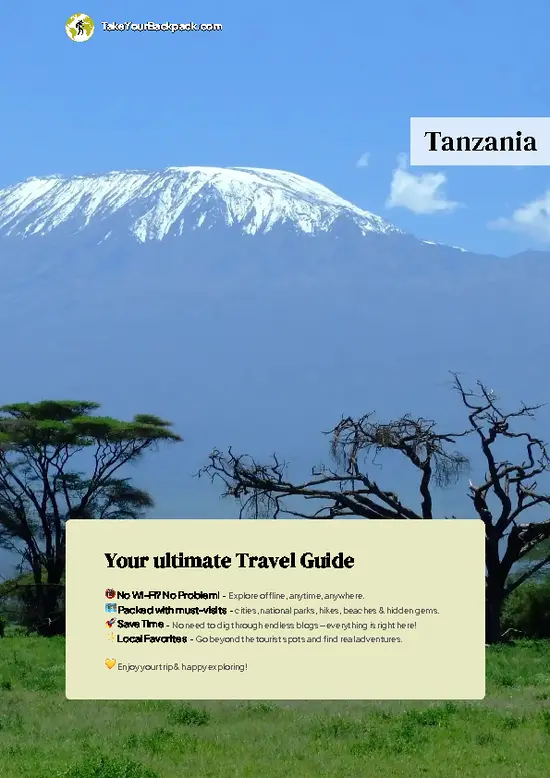
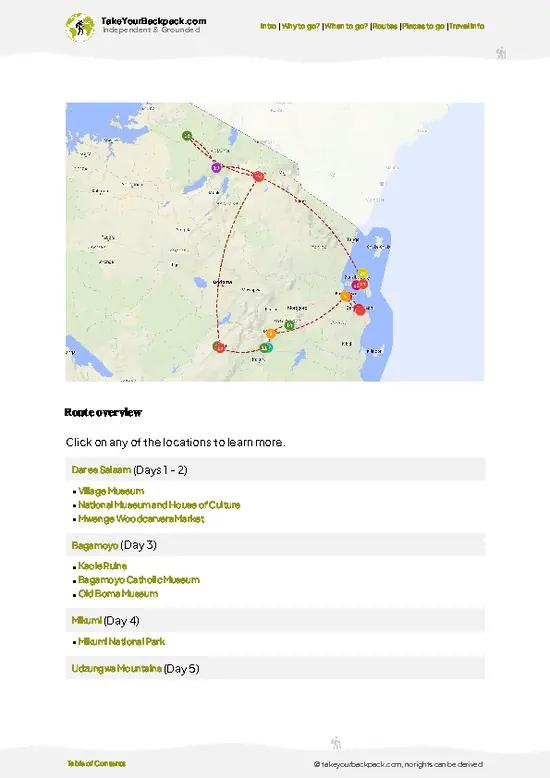
example page 0 from our offline Travel Guide for Tanzania
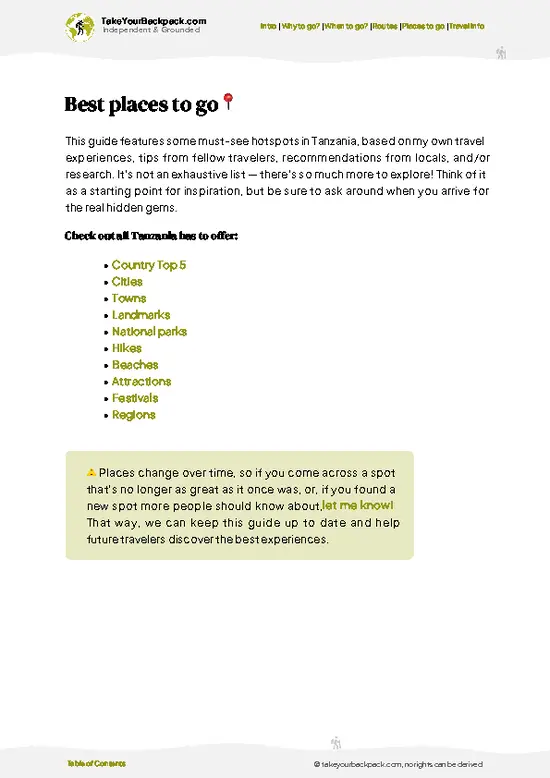
example page 1 from our offline Travel Guide for Tanzania
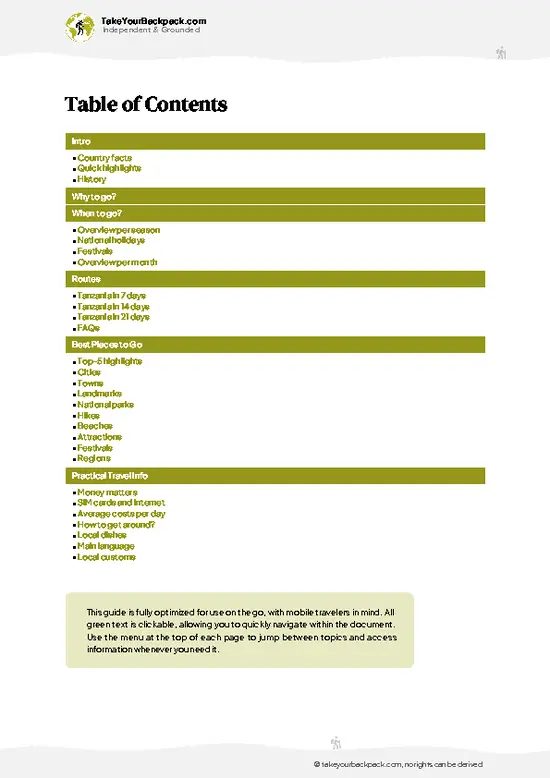
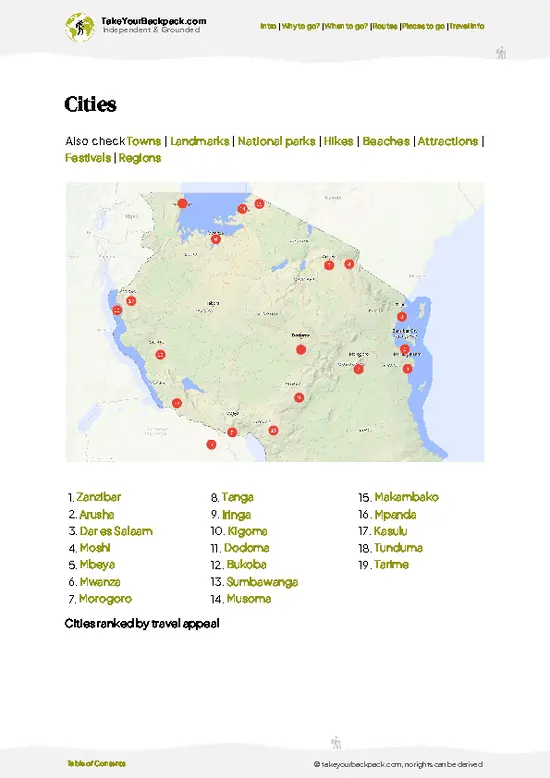
example page 2 from our offline Travel Guide for Tanzania
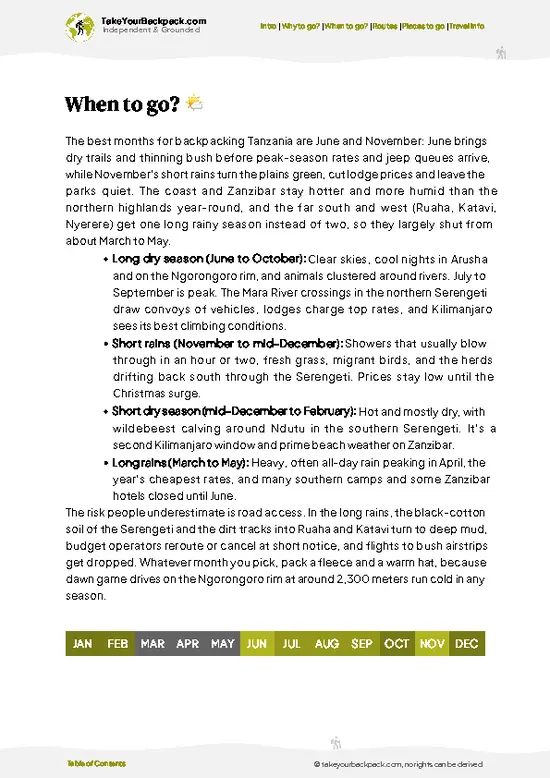
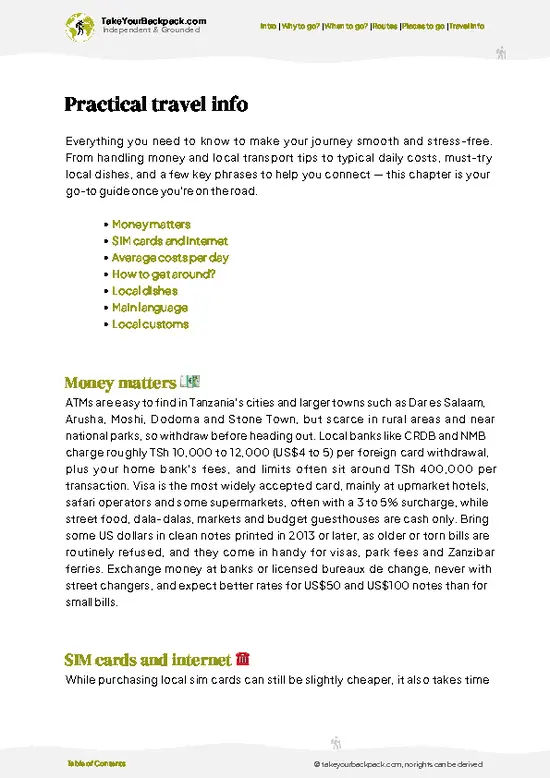
example page 3 from our offline Travel Guide for Tanzania
example page 4 from our offline Travel Guide for Tanzania
example page 5 from our offline Travel Guide for Tanzania
example page 6 from our offline Travel Guide for Tanzania
example page 7 from our offline Travel Guide for Tanzania
The digital guide (377 pages) contains:
100 highlights, ranked by travel appeal
Optimized 7, 14 & 21-day travel routes
Cities, national parks, landmarks, beaches
How to get around
Offline-friendly for travel without Wi-Fi
👉 Click to see all 30+ guide features

📅 Plan smarter in minutes, not weeks
Month by month travel advice
Festivals & national holidays
Budget expectations

🗺️ Go to the right places, skip the overrated ones
Honest pros & cons of destinations
Top hikes, parks & viewpoints
Lesser-known places most travelers miss
Clear “worth it vs skip it” guidance

🛏️ Travel smoothly without rookie mistakes
Best areas to stay
Transport systems explained simply
Common scams & safety advice
SIM cards, money & practical tips

🌍 Understand the country, not just visit it
Culture & traditions
52 Essential phrases & customs
Festivals worth planning around
Traveler-friendly historical context
Insights that make places more meaningful

📱 Built for real travel conditions
Fully downloadable PDF
Works completely offline
Optimized for phone use
Useful in remote areas & buses
Everything in one place
Save weeks of stressful planning
Get instant access to your full guide. 30‑day money-back guarantee.
+ Add another guide for just JP¥1170

By proceeding you agree to our terms.
Sent to your inbox immediately after payment • 100% Secure Checkout
Best Backpacking Travel Advisor 2025 tourism awardBest Backpacking
Travel Advisor
2025
What others say about Take Your Backpack Guides:
⭐⭐⭐⭐⭐
Fantastic, amazing amount of information!
⭐⭐⭐⭐⭐
My goodness this is amazing, it's what I've been looking for hats off too you!
⭐⭐⭐⭐⭐
I think this is absolutely BRILLIANT
⭐⭐⭐⭐
Very complete and informative. It's still missing places, but I gotta to commend you
⭐⭐⭐⭐⭐
This is truly amazing, thank you, can't wait to explore it with my kids!
⭐⭐⭐⭐⭐
Awesome resource, thank you!
⭐⭐⭐⭐⭐
This is amazing! Can't wait to explore the ones I haven't seen
⭐⭐⭐⭐
I love this! Well done, great idea.
⭐⭐⭐⭐⭐
Thanks for taking the time to make this gem!
⭐⭐⭐⭐⭐
This might be the best website I've ever seen.
⭐⭐⭐⭐⭐
Congratulations, and thank you so much for your work; it's incredibly valuable.
⭐⭐⭐⭐
In all seriousness I think you did a great job pointing out the important spots
⭐⭐⭐⭐⭐
10/10 very good
⭐⭐⭐⭐⭐
As someone who's only just starting to visit regularly this is awesome, thank you.
⭐⭐⭐⭐
Thank you very much! I'm going to visit my dad, it's going to be very useful!
⭐⭐⭐⭐⭐
This is really cool! We'll be travelling for the first time and this definitely come in handy.
⭐⭐⭐⭐⭐
You are now our minister of culture, congratulations 👨‍💼
⭐⭐⭐⭐⭐
Just wanted to tell you that this is a pearl! Going to follow your recommendations.
⭐⭐⭐⭐⭐
This is so cool. I'll definitely be using the resource for my travels soon.
⭐⭐⭐⭐⭐
This is very impressive! Good work.
⭐⭐⭐⭐⭐
This is an amazing and informative site. Very well done!

🛏️ Where to stay?Best areas to stay in Tanzania

The National Museum and House of Culture in Dar es Salaam is a magnet for travelers, but let’s cut through the Instagram gloss: the area around it is busy, noisy, and not exactly a postcard-perfect neighborhood. Crowds swarm during weekends and holidays, and prices can spike in nearby spots because of the museum’s pull. If you’re chasing quiet luxury or polished charm, you’ll be disappointed. But here’s the real deal—this is where you get raw, unfiltered Tanzania.

For backpackers, the best move is to base yourself in the Kivukoni or Upanga districts. These areas are a short tuk-tuk ride from … read more 👉
The National Museum and House of Culture in Dar es Salaam is a magnet for travelers, but let’s cut through the Instagram gloss: the area around it is busy, noisy, and not exactly a postcard-perfect neighborhood. Crowds swarm during weekends and holidays, and prices can spike in nearby spots because of the museum’s pull. If you’re chasing quiet luxury or polished charm, you’ll be disappointed. But here’s the real deal—this is where you get raw, unfiltered Tanzania.

For backpackers, the best move is to base yourself in the Kivukoni or Upanga districts. These areas are a short tuk-tuk ride from the museum and offer a gritty, authentic urban vibe that’s both safe and social. You’ll find a mix of budget guesthouses and hostels where solo travelers and groups mingle easily. The streets buzz with street food vendors selling mishkaki (grilled meat skewers) and local chai, which is where you’ll meet locals and fellow backpackers without the tourist bubble.

Safety here is straightforward: stick to well-lit streets after dark and keep your valuables close. The real charm is the neighborhood’s pulse—markets, music spilling from small bars, and the chance to dive into Tanzanian daily life. It’s not polished, but it’s honest, and that’s what makes it worth the trip.

👛 Costs (as of 3 September 2026)What things cost and how to budget

As of the latest available information, the National Museum and House of Culture in Dar es Salaam, Tanzania, charges the following entrance fees: Foreign adults: TZS 12,000 (approximately €4.50); Foreign students: TZS 6,300 (approximately €2.40); Tanzanian and East African adults: TZS 2,500 (approximately €0.90); Tanzanian and East African students: TZS 1,000 (approximately €0.40). Guided tours are available at additional costs, with group rates varying based on the number of participants and nationality. For the most current and detailed pricing, please refer to the official National Museum of Tanzania website.
⚠️ Prices can change and everyone travels differently, so take this as a rough guide. Hope it helps you plan your adventure!

FAQFrequently asked questions about National Museum and House of Culture

Plan for about 1 to 2 hours to visit the National Museum and House of Culture. This allows enough time to explore the exhibits and learn about Tanzania's history and culture without rushing.
Yes, the National Museum and House of Culture is worth the entrance fee, which is typically around 10,000 Tanzanian Shillings for foreigners. The museum offers valuable insights into Tanzania's heritage, including archaeological finds and cultural artifacts.
The National Museum and House of Culture is located in Dar es Salaam. You can get there by taking a taxi or local daladala minibuses heading towards the city center; it is about 3 kilometers from the central business district.
⚠️ Things can change over time, so always validate details locally before you go.

Other Tanzanian attractions near National Museum and House of Culture

Explore more nearby:


💡 Not sure where to go next?
Create a personalized itinerary for Tanzania including National Museum and House of Culture and the places that fit your trip.

Generate my itinerary

👉 Discover all attractions

Or checkout all Tanzania has to offer (think cities, towns, villages, national parks, hikes, beaches, festivals)
Country photo of Tanzania

We 💚 feedbackSumming up the experience

The National Museum and House of Culture in Tanzania isn’t some polished, crowd-pleaser with endless Instagram moments. Expect a modest crowd, a bit of dust on the displays, and a vibe that’s more “local heartbeat” than tourist spectacle. The real magic? The way the exhibits—especially the early human fossils—connect you to deep time and place, grounding you in Africa’s story beyond the usual safari clichés. Just don’t come expecting flashy tech or air conditioning; come for the raw, unfiltered history that sticks with you long after.

✍️ Help improve this page!
The information on this page is based on in-depth research, insights shared by experienced travelers, and feedback from the local travel community in Tanzania. While every effort is made to keep the information accurate and current, conditions can change — so if you spot anything incorrect or outdated, please get in touch.


🙋‍♂️ Give feedback

👋 Meet the founderWho’s Behind Take Your Backpack?

Johan, backpacker and founder of TakeYourBackpackHi, I’m Johan (Netherlands 🇳🇱), the creator of TakeYourBackpack. Over the past decade, I’ve backpacked through 80+ countries across six continents, gaining extensive experience with independent travel, long-term trips, and overland routes.

This site is built on a combination of firsthand travel experience and carefully curated insights from other backpackers. Many guides are based on places I’ve personally visited, while others bring together tips, observations, and practical advice shared by trusted travelers I’ve met along the way.

The goal is to provide realistic, experience-driven guidance — not generic itineraries — so you can explore destinations with better context, clearer expectations, and more confidence.

Get full Tanzania guide •
Instant download • 100 highlights • Full Offline guide