×
Serengeti Migration

Tanzania🇹🇿 | landmarksSerengeti Migrationendless plains, wildebeest herds, river crossings, predator action | things to do and best time to go

Explore Ngorongoro CraterExplore House of Wonders

Backpacking in Serengeti Migration
🏆 Top pickunique site ranked #2
By Johan Kruseman 🇳🇱 | Updated September 3, 2026

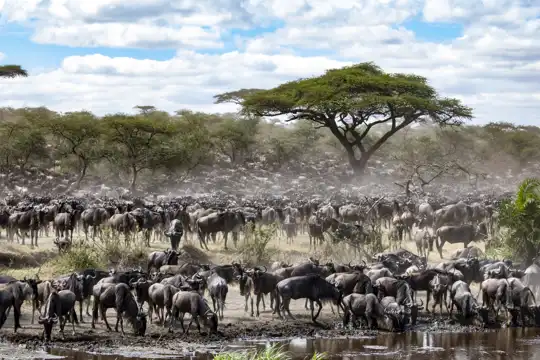
A low, thunderous vibration rolls through your chest before you even see them—hooves drumming the cracked earth, dust rising in a golden haze, and the air thick with the scent of sun-baked grass and adrenaline. You squint against the glare as a river of wildebeest surges past, their bodies packed so tight you can’t see where one ends and the next begins. This is the Serengeti Migration, unfolding across the endless plains of northern Tanzania, just below the Kenyan border.

Here’s the truth: the Serengeti Migration is a spectacle that lives up to the hype, but not the Instagram fantasy. Yes, it’s expensive—park fees, guides, and transport add up fast. You’ll share the view with a convoy of safari vehicles, especially during river crossings, and you’ll need patience to catch the action. But the sheer scale of life on the move, the raw pulse of survival, and the sense of witnessing something ancient and unscripted? That’s the real magic. It’s not about perfect photos; it’s about feeling small, awestruck, and absolutely alive.

Discover everything you want to know in the 📖 Tanzania Travel Guide.
Loading the map 🌍
CLICK TO FILTER
cities
towns
landmarks
national parks
hikes
beaches
attractions
festivals
SHOW COUNTRY’S BESTSHOW ALL

✨ Why go?
Ranked #2 unique site in Tanzania
Why visitors keep coming back

The Serengeti Migration isn’t just a spectacle; it’s a raw, chaotic dance of nature that demands your attention. Sure, you’ll share the experience with a crowd, but that’s part of the pulse of life here. The cost? It can be steep, but think of it as an investment in one of the planet’s most incredible shows.

What makes this migration unique is the sheer scale: millions of wildebeest, zebras, and gazelles moving in unison, driven by instinct. It’s not just about the animals; it’s about the ecosystem in action. You’ll witness predators on the hunt, the circle of life playing out right in front of you.

Accessibility is surprisingly decent. You can hop on a budget safari or even self-drive through the park, making it fit snugly into a broader Tanzania itinerary. Pair it with a trek up Kilimanjaro … read more 👉
The Serengeti Migration isn’t just a spectacle; it’s a raw, chaotic dance of nature that demands your attention. Sure, you’ll share the experience with a crowd, but that’s part of the pulse of life here. The cost? It can be steep, but think of it as an investment in one of the planet’s most incredible shows.

What makes this migration unique is the sheer scale: millions of wildebeest, zebras, and gazelles moving in unison, driven by instinct. It’s not just about the animals; it’s about the ecosystem in action. You’ll witness predators on the hunt, the circle of life playing out right in front of you.

Accessibility is surprisingly decent. You can hop on a budget safari or even self-drive through the park, making it fit snugly into a broader Tanzania itinerary. Pair it with a trek up Kilimanjaro or a visit to Ngorongoro Crater, and you’ve got a trip that’s both adventurous and enriching.

The Serengeti isn’t just a destination; it’s a life-changing experience that connects you to the wild heart of Africa. Don’t just scroll through Instagram—get out there and feel it.
Want to include Serengeti Migration in your Tanzania route?
Create a personalized Tanzania itinerary that includes Serengeti Migration and the places that fit your trip — based on your travel style, budget, and available time. Get your route in seconds.

Generate my trip

💡 HighlightsDon't-miss highlights and experiences

  • Mara River Crossings — The single most cinematic moment of the Migration: thousands of wildebeest and zebra plunging into fast, crocodile-filled currents as predators wait. Best witnessed July-October; timing is unpredictable, which adds to the thrill.
  • Endless Plains and the Moving Sea of Hooves — Wide, open savanna dotted with waves of animals as far as the eye can see. The scale is what hits you: millions of animals moving in a rhythm that shapes the whole ecosystem.
  • Calving Season (Ndutu/Serengeti South) — January-March the plains turn into a nursery: thousands of newborn wildebeest and frantic predator activity. It’s raw, vulnerable wildlife up close — excellent for photography and seeing life cycles in real time.
  • Predator Theatre — Lions, cheetahs and leopards hunt here on a daily
read more 👉
  • Mara River Crossings — The single most cinematic moment of the Migration: thousands of wildebeest and zebra plunging into fast, crocodile-filled currents as predators wait. Best witnessed July-October; timing is unpredictable, which adds to the thrill.
  • Endless Plains and the Moving Sea of Hooves — Wide, open savanna dotted with waves of animals as far as the eye can see. The scale is what hits you: millions of animals moving in a rhythm that shapes the whole ecosystem.
  • Calving Season (Ndutu/Serengeti South) — January-March the plains turn into a nursery: thousands of newborn wildebeest and frantic predator activity. It’s raw, vulnerable wildlife up close — excellent for photography and seeing life cycles in real time.
  • Predator Theatre — Lions, cheetahs and leopards hunt here on a daily basis; Seronera Valley is a hotspot for sightings. The Migration concentrates prey, so packs and prides put on spectacular, often prolonged hunts.
  • The Kopjes — Granite rock outcrops that punctuate the plains and make perfect lookout points for big cats (and for you to get a panoramic shot). They’re tiny ecosystems themselves — shade, lizards, leopards and great sunrise views.
  • Balloon Safaris at Dawn — Floating over the migration at first light gives a calm, unforgettable perspective on scale and movement. Yes it’s pricier than a game drive, but it’s uniquely peaceful and photogenic.
  • Cultural and Conservation Story — The Migration isn’t just wildlife theatre; it’s tied to Maasai lands, community livelihoods and major conservation efforts. Visiting responsibly (local guides, community projects) connects the spectacle to the people and protection behind it.
Spotted a mistake or missing something? Contact us.

Things to do around Serengeti Migration

Ratings based on Tripadvisor reviews. When you book through this link, you support our work at no extra cost to you.

🌤️ When to go?Choosing the right time of year


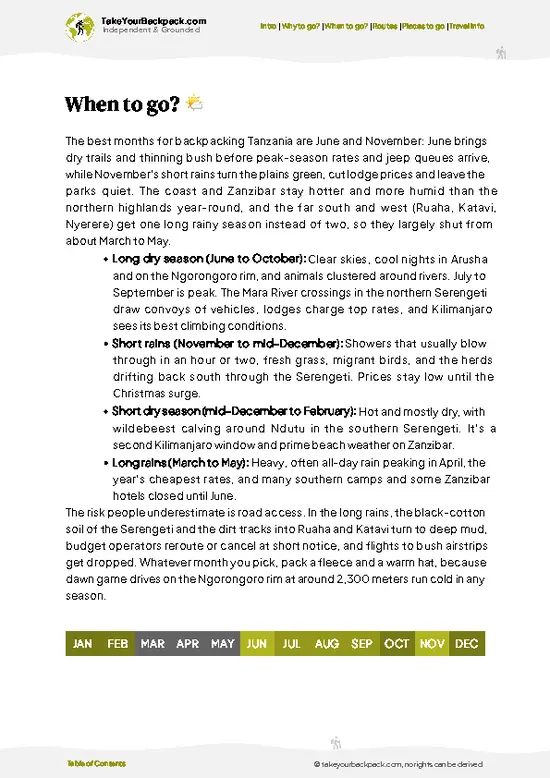
  • Weather: The Serengeti Migration follows the rains. The dry season (June to October) offers clear skies and easier wildlife spotting, but expect dusty trails and parched landscapes. The wet season (November to May) brings lush greenery and newborn animals, but heavy rains can make roads tricky and some areas inaccessible.

  • Temperature: Daytime temps range from 20°C to 30°C (68°F to 86°F) during the dry season, cooling off at night to 10°C–15°C (50°F–59°F). The wet season is warmer and more humid, often hitting 30°C–33°C (86°F–91°F), which can be draining if you’re trekking all day.

  • Daylight Hours: Roughly 12 hours year-round, but the dry season’s clearer skies mean more reliable sunlight for early starts and late game drives.

  • Crowds: Peak season (July to October) sees a surge of tourists
read more 👉

  • Weather: The Serengeti Migration follows the rains. The dry season (June to October) offers clear skies and easier wildlife spotting, but expect dusty trails and parched landscapes. The wet season (November to May) brings lush greenery and newborn animals, but heavy rains can make roads tricky and some areas inaccessible.

  • Temperature: Daytime temps range from 20°C to 30°C (68°F to 86°F) during the dry season, cooling off at night to 10°C–15°C (50°F–59°F). The wet season is warmer and more humid, often hitting 30°C–33°C (86°F–91°F), which can be draining if you’re trekking all day.

  • Daylight Hours: Roughly 12 hours year-round, but the dry season’s clearer skies mean more reliable sunlight for early starts and late game drives.

  • Crowds: Peak season (July to October) sees a surge of tourists chasing the wildebeest river crossings. It’s a spectacle, but expect packed camps and higher prices. Off-peak months offer solitude but fewer dramatic moments.

  • Seasonal Activities: The river crossings (July–September) are the headline act, but calving season (January–March) delivers raw, intimate wildlife drama with vulnerable newborns and predator action.

  • Price Fluctuations: Peak months inflate costs significantly—lodges and safaris can double in price. Off-season offers better deals but requires flexibility and a tolerance for unpredictable weather.


Pro-tip: If you want the iconic migration spectacle without the crush, aim for late June or early November—shoulder months where you catch the action with fewer crowds and better rates.


source: climatestotravel.comJANJanuary: highly recommended for travelingFEBFebruary: highly recommended for travelingMARMarch: highly recommended for travelingAPRApril: good for travelingMAYMay: good for travelingJUNJune: highly recommended for travelingJULJuly: excellent for travelingAUGAugust: excellent for travelingSEPSeptember: excellent for travelingOCTOctober: highly recommended for travelingNOVNovember: highly recommended for travelingDECDecember: good for traveling
Tanzania&Kenya - the Serengeti Migration

✈️ The backpacker research shortcutTanzania Travel Guide

An offline-friendly backpacking guide with optimized travel routes, ranked highlights, transport advice, and the best areas to stay.
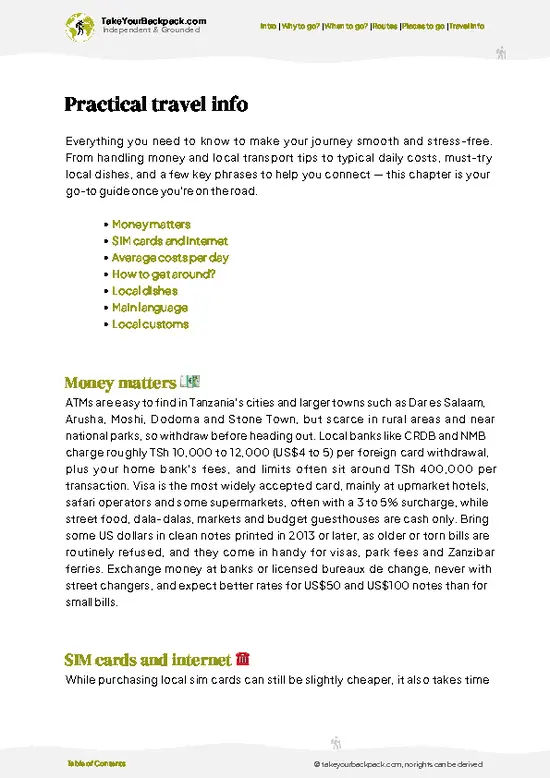
example page 0 from our offline Travel Guide for Tanzania
example page 1 from our offline Travel Guide for Tanzania
example page 2 from our offline Travel Guide for Tanzania
example page 3 from our offline Travel Guide for Tanzania
example page 4 from our offline Travel Guide for Tanzania
example page 5 from our offline Travel Guide for Tanzania
example page 6 from our offline Travel Guide for Tanzania
example page 7 from our offline Travel Guide for Tanzania
The digital guide (377 pages) contains:
100 highlights, ranked by travel appeal
Optimized 7, 14 & 21-day travel routes
Cities, national parks, landmarks, beaches
How to get around
Offline-friendly for travel without Wi-Fi
👉 Click to see all 30+ guide features

📅 Plan smarter in minutes, not weeks
Month by month travel advice
Festivals & national holidays
Budget expectations

🗺️ Go to the right places, skip the overrated ones
Honest pros & cons of destinations
Top hikes, parks & viewpoints
Lesser-known places most travelers miss
Clear “worth it vs skip it” guidance

🛏️ Travel smoothly without rookie mistakes
Best areas to stay
Transport systems explained simply
Common scams & safety advice
SIM cards, money & practical tips

🌍 Understand the country, not just visit it
Culture & traditions
52 Essential phrases & customs
Festivals worth planning around
Traveler-friendly historical context
Insights that make places more meaningful

📱 Built for real travel conditions
Fully downloadable PDF
Works completely offline
Optimized for phone use
Useful in remote areas & buses
Everything in one place
Save weeks of stressful planning
Get instant access to your full guide. 30‑day money-back guarantee.
+ Add another guide for just €6.50

By proceeding you agree to our terms.
Sent to your inbox immediately after payment • 100% Secure Checkout
Best Backpacking Travel Advisor 2025 tourism awardBest Backpacking
Travel Advisor
2025
What others say about Take Your Backpack Guides:
⭐⭐⭐⭐⭐
Fantastic, amazing amount of information!
⭐⭐⭐⭐⭐
My goodness this is amazing, it's what I've been looking for hats off too you!
⭐⭐⭐⭐⭐
I think this is absolutely BRILLIANT
⭐⭐⭐⭐
Very complete and informative. It's still missing places, but I gotta to commend you
⭐⭐⭐⭐⭐
This is truly amazing, thank you, can't wait to explore it with my kids!
⭐⭐⭐⭐⭐
Awesome resource, thank you!
⭐⭐⭐⭐⭐
This is amazing! Can't wait to explore the ones I haven't seen
⭐⭐⭐⭐
I love this! Well done, great idea.
⭐⭐⭐⭐⭐
Thanks for taking the time to make this gem!
⭐⭐⭐⭐⭐
This might be the best website I've ever seen.
⭐⭐⭐⭐⭐
Congratulations, and thank you so much for your work; it's incredibly valuable.
⭐⭐⭐⭐
In all seriousness I think you did a great job pointing out the important spots
⭐⭐⭐⭐⭐
10/10 very good
⭐⭐⭐⭐⭐
As someone who's only just starting to visit regularly this is awesome, thank you.
⭐⭐⭐⭐
Thank you very much! I'm going to visit my dad, it's going to be very useful!
⭐⭐⭐⭐⭐
This is really cool! We'll be travelling for the first time and this definitely come in handy.
⭐⭐⭐⭐⭐
You are now our minister of culture, congratulations 👨‍💼
⭐⭐⭐⭐⭐
Just wanted to tell you that this is a pearl! Going to follow your recommendations.
⭐⭐⭐⭐⭐
This is so cool. I'll definitely be using the resource for my travels soon.
⭐⭐⭐⭐⭐
This is very impressive! Good work.
⭐⭐⭐⭐⭐
This is an amazing and informative site. Very well done!

🛏️ Where to stay?Choosing the right base

The Serengeti Migration is a bucket-list experience, but let’s cut through the Instagram gloss. Crowds can be overwhelming, and costs can skyrocket if you’re not careful. But don’t let that deter you; there are solid options for backpackers that keep you close to the action without breaking the bank.

Start in Arusha. It’s the gateway to the Serengeti and a hub for budget travelers. You’ll find a mix of hostels and guesthouses buzzing with fellow adventurers. The vibe is social, and you can easily connect with others to share safari costs. Plus, the local markets and eateries give you a taste … read more 👉
The Serengeti Migration is a bucket-list experience, but let’s cut through the Instagram gloss. Crowds can be overwhelming, and costs can skyrocket if you’re not careful. But don’t let that deter you; there are solid options for backpackers that keep you close to the action without breaking the bank.

Start in Arusha. It’s the gateway to the Serengeti and a hub for budget travelers. You’ll find a mix of hostels and guesthouses buzzing with fellow adventurers. The vibe is social, and you can easily connect with others to share safari costs. Plus, the local markets and eateries give you a taste of authentic Tanzanian life.

Next, consider Karatu. This small town is often overlooked but offers a more laid-back atmosphere. It’s a short drive from the park entrance, making it convenient for early morning safaris. The community here is welcoming, and you’ll find budget lodges that prioritize safety and comfort.

Lastly, Ngorongoro Crater is worth a mention. While it’s pricier, you can camp nearby for a fraction of the cost. The views are jaw-dropping, and waking up to the sounds of wildlife is an experience you won’t forget.

Stay smart, stay social, and embrace the real magic of the Serengeti.

👛 Costs (as of 3 September 2026)How expensive it really is

Visiting the Serengeti Migration in Tanzania is a bucket-list experience, but it comes with a price tag that can vary widely. Here’s the real deal on what you can expect to spend.
  • Park Entry Fees: Expect to pay around $60 to $70 per day for entry into the Serengeti National Park. This fee is essential for conservation efforts, but it can add up quickly if you’re planning multiple days. Keep in mind that fees can change, so check ahead.
  • Accommodation: Lodging options range from budget campsites at about $30 per night to luxury lodges that can soar to $1,000 or more. Mid-range options typically cost between $150 and $300. Choose wisely based on your comfort level and budget.
  • Guided Safaris: A guided safari can cost anywhere from $150 to $500 per day, depending on the type of vehicle and the level
read more 👉
Visiting the Serengeti Migration in Tanzania is a bucket-list experience, but it comes with a price tag that can vary widely. Here’s the real deal on what you can expect to spend.
  • Park Entry Fees: Expect to pay around $60 to $70 per day for entry into the Serengeti National Park. This fee is essential for conservation efforts, but it can add up quickly if you’re planning multiple days. Keep in mind that fees can change, so check ahead.
  • Accommodation: Lodging options range from budget campsites at about $30 per night to luxury lodges that can soar to $1,000 or more. Mid-range options typically cost between $150 and $300. Choose wisely based on your comfort level and budget.
  • Guided Safaris: A guided safari can cost anywhere from $150 to $500 per day, depending on the type of vehicle and the level of service. Private tours are pricier but offer a more personalized experience. Group tours can be more economical but come with less flexibility.
  • Food and Drink: Meals can vary significantly. If you’re dining at a lodge, expect to pay around $20 to $50 per meal. If you’re camping or self-catering, you can keep costs down to about $10 to $15 per day. Don’t forget to budget for drinks, especially if you’re enjoying a cold beer after a long day of exploring.
  • Transportation: Getting to the Serengeti can be a bit of a journey. Domestic flights from Arusha to the Serengeti cost around $200 to $400 one way. If you’re driving, consider the cost of fuel and vehicle rental, which can add another $100 to $150 per day.

The Serengeti Migration is worth every penny if you’re ready for the adventure. Just be prepared for the costs and plan accordingly.
⚠️ Prices can change and everyone travels differently, so take this as a rough guide. Hope it helps you plan your adventure!

FAQTraveler FAQ

The Serengeti Migration is the annual movement of over 1.5 million wildebeest, along with hundreds of thousands of zebras and gazelles, across the Serengeti ecosystem in Tanzania and Kenya. It is one of the largest and most spectacular wildlife events on Earth, occurring year-round with peak river crossings between July and October.
You need at least 3 to 5 days to properly experience the Serengeti Migration, allowing time to see different phases such as calving, river crossings, and predator interactions. Longer stays increase chances of witnessing key moments and diverse wildlife behavior.
To get to the Serengeti Migration, most travelers fly into Kilimanjaro International Airport or Julius Nyerere International Airport in Tanzania, then take a domestic flight to Serengeti airstrips like Seronera or Kogatende. Overland safaris from Arusha or nearby towns are also possible but take longer, typically 6 to 8 hours by road.
⚠️ Things can change over time, so always validate details locally before you go.

Other Tanzanian landmarks near Serengeti Migration

Explore more nearby:

  • Ngorongoro Crater—caldera floor, dense wildlife, soda lake, Maasai presence| 125 km away
  • Kilimanjaro—alpine summit, volcanic slopes, glacier views, altitude challenge| 292 km away

💡 Not sure where to go next?
Create a personalized itinerary for Tanzania including Serengeti Migration and the places that fit your trip.

Generate my itinerary

👉 Discover all landmarks

Or checkout all Tanzania has to offer (think cities, towns, villages, national parks, hikes, beaches, festivals)
Country photo of Tanzania

We 💚 feedbackFinal thoughts on visiting Serengeti Migration

The Serengeti Migration is a wild spectacle, but don’t let the Instagram hype fool you. Expect crowds, especially during peak season. The real magic? The raw, chaotic energy of thousands of wildebeest thundering across the plains. It’s a visceral experience that’ll leave you breathless. Just be ready for long days and dusty roads. Pack patience and an open heart. The best surprise? The quiet moments—watching a lioness with her cubs or a sunset that paints the sky in ways you didn’t think possible.

✍️ Help improve this page!
The information on this page is based on in-depth research, insights shared by experienced travelers, and feedback from the local travel community in Tanzania. While every effort is made to keep the information accurate and current, conditions can change — so if you spot anything incorrect or outdated, please get in touch.


🙋‍♂️ Give feedback

👋 Meet the founderWho’s Behind Take Your Backpack?

Johan, backpacker and founder of TakeYourBackpackHi, I’m Johan (Netherlands 🇳🇱), the creator of TakeYourBackpack. Over the past decade, I’ve backpacked through 80+ countries across six continents, gaining extensive experience with independent travel, long-term trips, and overland routes.

This site is built on a combination of firsthand travel experience and carefully curated insights from other backpackers. Many guides are based on places I’ve personally visited, while others bring together tips, observations, and practical advice shared by trusted travelers I’ve met along the way.

The goal is to provide realistic, experience-driven guidance — not generic itineraries — so you can explore destinations with better context, clearer expectations, and more confidence.

Get full Tanzania guide •
Instant download • 100 highlights • Full Offline guide