v2.webp)
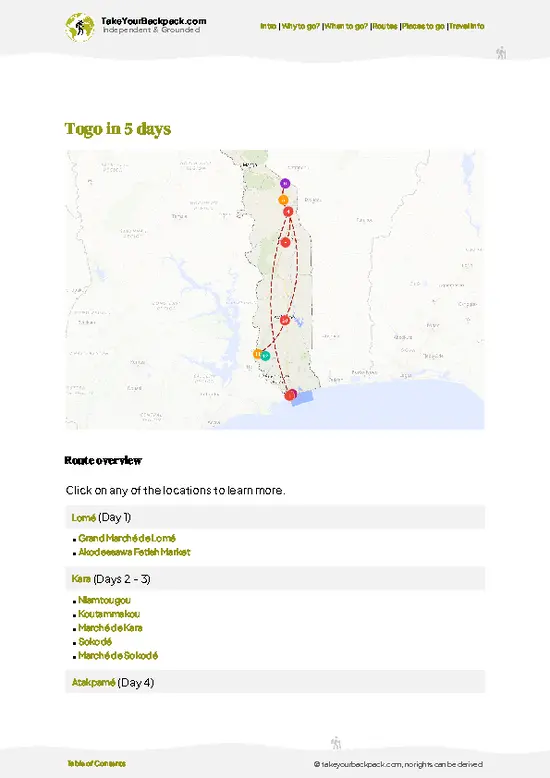
- The Nana Benz cloth stalls. The market is best known for the wax-print fabric trade, which made a generation of Togolese women, the “Nana Benz,” rich enough to buy Mercedes cars. Today the cloth sellers sit on the upper floors and in the lanes around the main building, with bolts of Dutch and Chinese wax prints stacked to the ceiling. Bargaining is expected, and a few meters make a decent pagne.
- The main multi-story market building. The concrete hall in the center, several levels tall, is the landmark you navigate by. Climb to the upper floors for a view down over the corrugated rooftops and the crush of umbrellas below. Stairwells are dim and narrow, so go slowly.
- The tailors’ rows. Seamstresses work treadle and electric machines in tiny booths, and many will turn your fabric into a shirt or
- The Nana Benz cloth stalls. The market is best known for the wax-print fabric trade, which made a generation of Togolese women, the “Nana Benz,” rich enough to buy Mercedes cars. Today the cloth sellers sit on the upper floors and in the lanes around the main building, with bolts of Dutch and Chinese wax prints stacked to the ceiling. Bargaining is expected, and a few meters make a decent pagne.
- The main multi-story market building. The concrete hall in the center, several levels tall, is the landmark you navigate by. Climb to the upper floors for a view down over the corrugated rooftops and the crush of umbrellas below. Stairwells are dim and narrow, so go slowly.
- The tailors’ rows. Seamstresses work treadle and electric machines in tiny booths, and many will turn your fabric into a shirt or dress in a day or two. Bring a photo or an item to copy. Fees are modest, a fraction of what a tailor charges at home.
- The spice and dried-goods lanes. Piles of dried fish, ground pepper, ginger, smoked shrimp and egusi seeds sit in tin basins, and the smell reaches you well before the stalls do. Vendors will let you sniff and taste. A small bag of pepper makes a light, cheap souvenir.
- The fetish stalls. A section sells animal skulls, dried chameleons, roots and charms for Vodun practice. Togo is a heartland of Vodun, and the stalls explain the religion better than any museum label. Ask before photographing, since many sellers refuse or ask a fee.
- The street-food corners. Women ladle out rice and beans, fried plantain and grilled fish at plastic tables squeezed between the stalls. Pâte, the thick maize or cassava dough served with a peppery sauce, is the local standard. Meals cost very little, and busy stalls are the safest bet.
- The motorbike taxi swarm around the edges. Zemidjan riders in yellow shirts crowd the market’s perimeter, and watching them thread through traffic is its own show. Hop on one for a short ride toward the beach or the cathedral, and agree on the fare first.
Spotted a mistake or missing something? Contact us.

Guided tour of the city of Lomé

Day Trip to Agbodrafo Togoville and Aneho

Private full day to see the best of Lomé-TOGO

Kpalimé & Mont Agou: Adventure in the Heart of the Wonders of Togo

Lomé authentic tour

Historical Tour to Togoville

3-Day Tour in the Heart of Benin - Check-out Lomé or Cotonou

Private Maritimes Region Historical And Cultural Tour

Private transfer from Lomé Airport to Lomé


 Best Backpacking
.jpg) Hi, I’m Johan (Netherlands 🇳🇱), the creator of TakeYourBackpack. Over the past 3 decades, I’ve backpacked through 90+ countries across six continents, gaining extensive experience with independent travel, long-term trips, and overland routes.
Hi, I’m Johan (Netherlands 🇳🇱), the creator of TakeYourBackpack. Over the past 3 decades, I’ve backpacked through 90+ countries across six continents, gaining extensive experience with independent travel, long-term trips, and overland routes.