×

Togo🇹🇬 | attractionsLomé Cathedralneo-Gothic architecture, stained glass, twin spires, city views | things to do and best time to go

Explore Akodessawa Fetish MarketExplore Independence Monument

Backpacking in Lomé Cathedral
👍 Recommendedattraction ranked #6
By Johan Kruseman 🇳🇱 | Updated September 3, 2026

Is anyone really flying to Lomé just to snap a photo of the cathedral’s twin spires for their feed? Let’s be honest: the Instagram crowd loves a dramatic façade, but the real magic of Lomé Cathedral isn’t in its architecture—it’s in the pulse of the city that surrounds it. Smack in the heart of Lomé, Togo’s capital, this cathedral is less a solitary monument and more a crossroads of daily life. For backpackers, the wow-factor isn’t in stained glass or soaring ceilings (you’ll find grander cathedrals in Europe), but in the way locals spill out after mass, the market chaos just a block away, and the blend of colonial history with West African energy. Yes, it’s crowded—especially on Sundays—and you won’t escape the touts. Entry is free, but don’t expect a serene sanctuary. Compared to Togo’s wild national parks or the voodoo markets, the cathedral is a quick, vivid snapshot of urban Togo: gritty, lively, and absolutely real.

Discover everything you want to know in the 📖 Togo Travel Guide.


Get your Togo guide
49 ranked highlights, routes & tips, works offline (215 pages)
Loading the map 🌍
CLICK TO FILTER
cities
towns
landmarks
national parks
hikes
beaches
attractions
festivals
regions
SHOW COUNTRY’S BESTSHOW ALL

✨ Why go?
Ranked #6 attraction in Togo
What makes it a must-see attraction

Lomé Cathedral isn’t some flashy, overhyped tourist trap plastered all over Instagram. It’s a solid, unmistakable landmark that commands respect for good reasons. First off, it’s one of the few places in Togo where you can feel the weight of colonial history pressing through the walls—built by German missionaries in the early 1900s, it’s a raw reminder of the complex cultural layers that shape the country today. The architecture isn’t about ornate grandeur but a sturdy, no-nonsense Gothic style that stands out sharply against Lomé’s tropical backdrop.

Backpackers make the trek here because it’s a genuine milestone on the Togo route—an anchor point that signals you’re diving deeper than the usual beach or market scenes. It’s a place where you can pause, reflect, and soak in a quieter, more … read more 👉
Lomé Cathedral isn’t some flashy, overhyped tourist trap plastered all over Instagram. It’s a solid, unmistakable landmark that commands respect for good reasons. First off, it’s one of the few places in Togo where you can feel the weight of colonial history pressing through the walls—built by German missionaries in the early 1900s, it’s a raw reminder of the complex cultural layers that shape the country today. The architecture isn’t about ornate grandeur but a sturdy, no-nonsense Gothic style that stands out sharply against Lomé’s tropical backdrop.

Backpackers make the trek here because it’s a genuine milestone on the Togo route—an anchor point that signals you’re diving deeper than the usual beach or market scenes. It’s a place where you can pause, reflect, and soak in a quieter, more contemplative side of the city. The effort-to-reward ratio is solid: it’s easy to reach, free to enter, and offers a break from the sensory overload of Lomé’s bustling streets. Plus, the cathedral’s location near the central market means you can combine history with a dose of local life, making it a practical and meaningful stop that’s more than just a photo op.
Want to include Lomé Cathedral in your Togo route?
Create a personalized Togo itinerary that includes Lomé Cathedral and the places that fit your trip — based on your travel style, budget, and available time. Get your route in seconds.

Generate my trip

💡 HighlightsThe experiences that define the visit

The Facade: Neo-Gothic with a West African Twist
Let’s get real: Lomé Cathedral’s exterior is not going to out-glam Europe’s heavyweights. But that’s exactly the point. The faded pink-and-white stripes, the twin spires, and the slightly battered look are a visual handshake between colonial ambition and local resilience. It’s a cathedral that’s lived a life—weathered, sun-bleached, and all the more interesting for it. You’re not here for pristine perfection; you’re here for character. The facade is a living artifact of Togo’s colonial past, and it’s got the scars to prove it.


The Vibe: Street Life Meets Sacred Space
Step outside and you’re in the thick of Lomé’s daily pulse. The cathedral isn’t cordoned off from reality—it’s smack in the middle of the city’s chaos. Expect the sound of motorbikes, … read more 👉
The Facade: Neo-Gothic with a West African Twist
Let’s get real: Lomé Cathedral’s exterior is not going to out-glam Europe’s heavyweights. But that’s exactly the point. The faded pink-and-white stripes, the twin spires, and the slightly battered look are a visual handshake between colonial ambition and local resilience. It’s a cathedral that’s lived a life—weathered, sun-bleached, and all the more interesting for it. You’re not here for pristine perfection; you’re here for character. The facade is a living artifact of Togo’s colonial past, and it’s got the scars to prove it.


The Vibe: Street Life Meets Sacred Space
Step outside and you’re in the thick of Lomé’s daily pulse. The cathedral isn’t cordoned off from reality—it’s smack in the middle of the city’s chaos. Expect the sound of motorbikes, the scent of grilled maize, and the sight of market stalls brushing right up against the church gates. This isn’t a hushed, museum-like sanctuary. It’s a crossroads, where faith and commerce collide. If you want to feel the heartbeat of Lomé, stand on those steps at noon and just watch.


The Interior: Faded Grandeur and Real Devotion
Inside, you’ll find high ceilings, stained glass, and a sense of grandeur that’s more workhorse than show pony. The paint is peeling, the pews are worn, and the air is thick with incense and history. This is not a cathedral for Instagram—it’s a cathedral for people who actually use cathedrals. If you’re lucky enough to catch a service, you’ll hear hymns in French and Ewe, sung with a conviction that makes the whole place hum. It’s not about spectacle; it’s about soul.


The People: Come for the Architecture, Stay for the Humanity
Forget the idea of blending in. You’ll stand out, and that’s fine. Locals are used to visitors, but they’re not putting on a show for you. If you’re respectful, you might get a nod from a parishioner or a smile from a caretaker. The real magic is in these small, unscripted moments—sharing a bench with a grandmother in her Sunday best, or watching a group of kids light candles with serious intent. This is the cathedral’s true currency.


The Contrast: Colonial Relic in a Modern African City
Lomé Cathedral is a time capsule dropped into a city that’s moving fast. You’ll see sharp-dressed office workers, street vendors, and barefoot kids all within a stone’s throw of the altar. The juxtaposition is jarring, but that’s the point. This is not a place frozen in time; it’s a place negotiating its past and present in real time. If you want a cathedral that tells a complicated story, this is it.


The Bells: Not Just for Show
If you’re around at the right moment, you’ll hear the bells—loud, insistent, and impossible to ignore. They’re not automated; they’re rung by hand, and you can feel the human effort in every clang. It’s a sound that cuts through the city noise and reminds everyone, believer or not, that something bigger is happening here.

Spotted a mistake or missing something? Contact us.

Things to do near Lomé Cathedral

Ratings based on Tripadvisor reviews. When you book through this link, you support our work at no extra cost to you.

🌤️ When to go?Choosing the right time of year


  • Weather: Lomé’s climate is tropical, so expect hot, humid conditions most of the year. The best window is from November to February when the harmattan winds cool things down, dropping temperatures to a more bearable 24-28°C (75-82°F). Avoid the heavy rains of April to June, which can turn streets into mud traps and dampen your exploration.

  • Temperature: Outside the harmattan season, Lomé hovers around 28-32°C (82-90°F), which can feel relentless if you’re trekking around the cathedral and city. Early mornings and late afternoons are your best bets for comfortable visits.

  • Daylight Hours: Lomé sits near the equator, so daylight is steady year-round—roughly 12 hours daily. This means you can plan your visits flexibly without worrying about early sunsets cutting your time short.

  • Crowds:
read more 👉

  • Weather: Lomé’s climate is tropical, so expect hot, humid conditions most of the year. The best window is from November to February when the harmattan winds cool things down, dropping temperatures to a more bearable 24-28°C (75-82°F). Avoid the heavy rains of April to June, which can turn streets into mud traps and dampen your exploration.

  • Temperature: Outside the harmattan season, Lomé hovers around 28-32°C (82-90°F), which can feel relentless if you’re trekking around the cathedral and city. Early mornings and late afternoons are your best bets for comfortable visits.

  • Daylight Hours: Lomé sits near the equator, so daylight is steady year-round—roughly 12 hours daily. This means you can plan your visits flexibly without worrying about early sunsets cutting your time short.

  • Crowds: The cathedral doesn’t draw massive tourist hordes, but weekends and religious holidays see local crowds swell. Visiting on weekdays, especially in the cooler months, offers a quieter, more reflective experience.

  • Seasonal Activities: December hosts vibrant local festivals and church events around the cathedral, adding cultural depth but also more foot traffic. If you want to soak in local life without the crush, aim for January or February.

  • Price Fluctuations: Accommodation and transport costs spike slightly during the dry season’s peak (December to February) due to increased tourist flow. Booking ahead can save you from last-minute price hikes.


Pro-tip: Target November or February for the sweet spot—cooler temps, manageable crowds, and authentic local vibes without the festival frenzy.


source: climatestotravel.comJANJanuary: highly recommended for travelingFEBFebruary: excellent for travelingMARMarch: good for travelingAPRApril: fair for travelingMAYMay: fair for travelingJUNJune: fair for travelingJULJuly: good for travelingAUGAugust: good for travelingSEPSeptember: good for travelingOCTOctober: good for travelingNOVNovember: excellent for travelingDECDecember: highly recommended for traveling
when-to-go

✈️ The backpacker research shortcutTogo Travel Guide

An offline-friendly backpacking guide with optimized travel routes, ranked highlights, transport advice, and the best areas to stay.
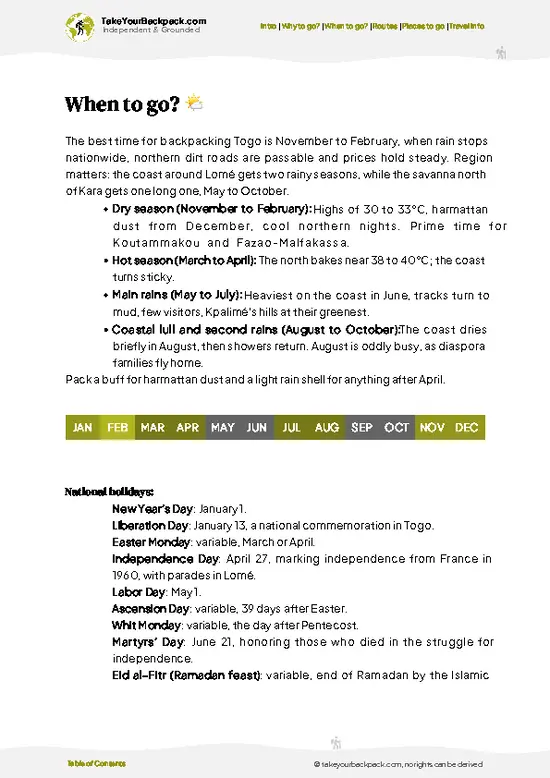
example page 0 from our offline Travel Guide for Togo
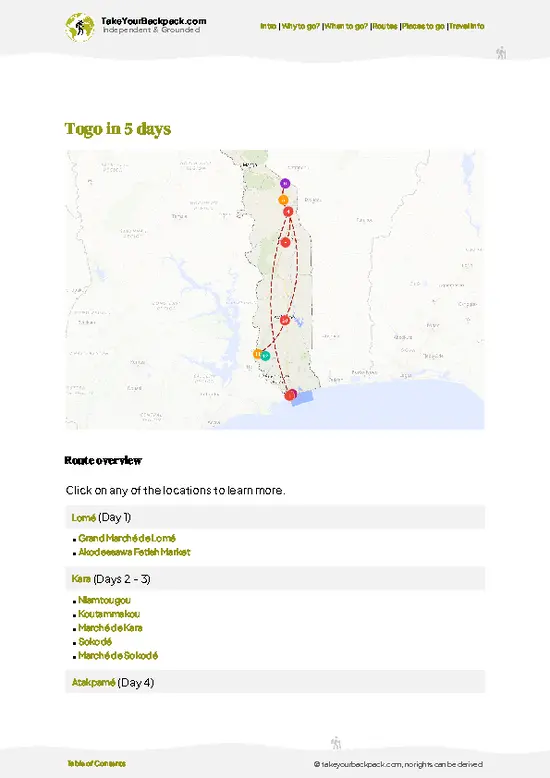
example page 1 from our offline Travel Guide for Togo
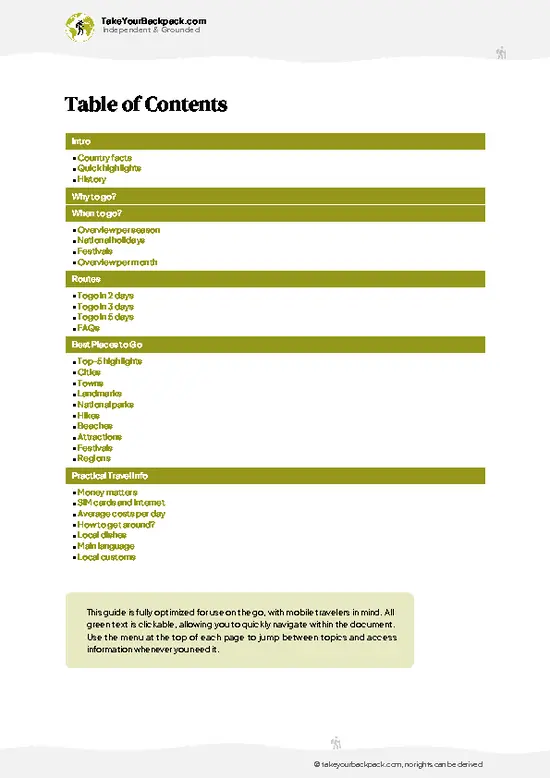
example page 2 from our offline Travel Guide for Togo
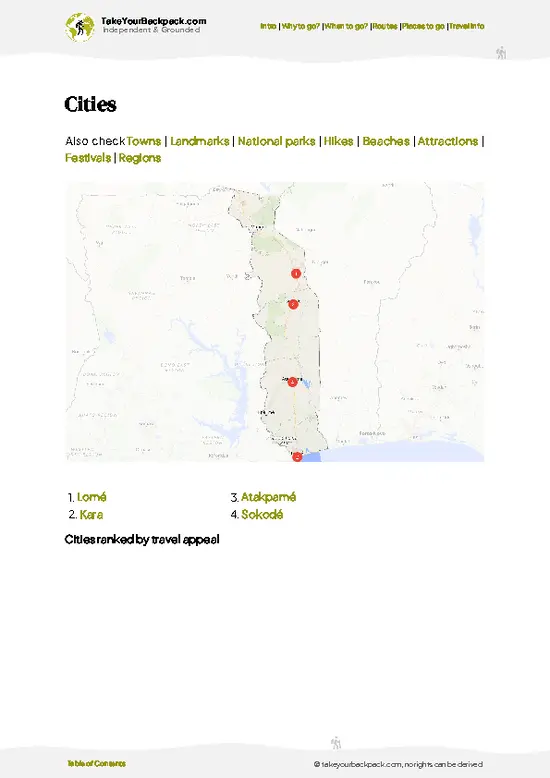
example page 3 from our offline Travel Guide for Togo
example page 4 from our offline Travel Guide for Togo
example page 5 from our offline Travel Guide for Togo
example page 6 from our offline Travel Guide for Togo
example page 7 from our offline Travel Guide for Togo
The digital guide (215 pages) contains:
49 highlights, ranked by travel appeal
Optimized 2, 3 & 5-day travel routes
Cities, national parks, landmarks, beaches
How to get around
Offline-friendly for travel without Wi-Fi
👉 Click to see all 30+ guide features

📅 Plan smarter in minutes, not weeks
Month by month travel advice
Festivals & national holidays
Budget expectations

🗺️ Go to the right places, skip the overrated ones
Honest pros & cons of destinations
Top hikes, parks & viewpoints
Lesser-known places most travelers miss
Clear “worth it vs skip it” guidance

🛏️ Travel smoothly without rookie mistakes
Best areas to stay
Transport systems explained simply
Common scams & safety advice
SIM cards, money & practical tips

🌍 Understand the country, not just visit it
Culture & traditions
52 Essential phrases & customs
Festivals worth planning around
Traveler-friendly historical context
Insights that make places more meaningful

📱 Built for real travel conditions
Fully downloadable PDF
Works completely offline
Optimized for phone use
Useful in remote areas & buses
Everything in one place
Save weeks of stressful planning
Get instant access to your full guide. 30‑day money-back guarantee.
+ Add another guide for just US$7.80

By proceeding you agree to our terms.
Sent to your inbox immediately after payment • 100% Secure Checkout
Best Backpacking Travel Advisor 2025 tourism awardBest Backpacking
Travel Advisor
2025
What others say about Take Your Backpack Guides:
⭐⭐⭐⭐⭐
Fantastic, amazing amount of information!
⭐⭐⭐⭐⭐
My goodness this is amazing, it's what I've been looking for hats off too you!
⭐⭐⭐⭐⭐
I think this is absolutely BRILLIANT
⭐⭐⭐⭐
Very complete and informative. It's still missing places, but I gotta to commend you
⭐⭐⭐⭐⭐
This is truly amazing, thank you, can't wait to explore it with my kids!
⭐⭐⭐⭐⭐
Awesome resource, thank you!
⭐⭐⭐⭐⭐
This is amazing! Can't wait to explore the ones I haven't seen
⭐⭐⭐⭐
I love this! Well done, great idea.
⭐⭐⭐⭐⭐
Thanks for taking the time to make this gem!
⭐⭐⭐⭐⭐
This might be the best website I've ever seen.
⭐⭐⭐⭐⭐
Congratulations, and thank you so much for your work; it's incredibly valuable.
⭐⭐⭐⭐
In all seriousness I think you did a great job pointing out the important spots
⭐⭐⭐⭐⭐
10/10 very good
⭐⭐⭐⭐⭐
As someone who's only just starting to visit regularly this is awesome, thank you.
⭐⭐⭐⭐
Thank you very much! I'm going to visit my dad, it's going to be very useful!
⭐⭐⭐⭐⭐
This is really cool! We'll be travelling for the first time and this definitely come in handy.
⭐⭐⭐⭐⭐
You are now our minister of culture, congratulations 👨‍💼
⭐⭐⭐⭐⭐
Just wanted to tell you that this is a pearl! Going to follow your recommendations.
⭐⭐⭐⭐⭐
This is so cool. I'll definitely be using the resource for my travels soon.
⭐⭐⭐⭐⭐
This is very impressive! Good work.
⭐⭐⭐⭐⭐
This is an amazing and informative site. Very well done!

🛏️ Where to stay?Choosing the right base

Lomé Cathedral sits smack in the heart of Lomé, and if you want to be close, you’re looking at the city center neighborhoods. This is where the real pulse of Togo’s capital beats—busy streets, street vendors hawking everything from spicy kebabs to colorful fabrics, and locals going about their daily grind. It’s not a polished tourist bubble, so expect some noise and hustle, but that’s part of the charm.

For backpackers, the key is to find a spot that balances safety with social energy. The areas just north and east of the cathedral tend to attract budget travelers and solo adventurers because … read more 👉
Lomé Cathedral sits smack in the heart of Lomé, and if you want to be close, you’re looking at the city center neighborhoods. This is where the real pulse of Togo’s capital beats—busy streets, street vendors hawking everything from spicy kebabs to colorful fabrics, and locals going about their daily grind. It’s not a polished tourist bubble, so expect some noise and hustle, but that’s part of the charm.

For backpackers, the key is to find a spot that balances safety with social energy. The areas just north and east of the cathedral tend to attract budget travelers and solo adventurers because they’re walkable to the cathedral and the lively markets without plunging you into the sketchy edges of the city. You’ll find guesthouses and small inns where the vibe is casual and communal—perfect for swapping stories over a cold drink or planning your next move.

Don’t expect luxury or quiet streets here. The real magic is in the street-level interactions: the smell of grilled fish, the chatter in French and local languages, and the chance to watch daily life unfold in a way no polished guidebook can capture. If you want to be near Lomé Cathedral, stay where the city lives loud and real. That’s where you’ll find the authentic Togo experience worth the trip.

👛 Costs (as of 3 September 2026)Typical daily expenses

As of the most recent estimates, visiting Lomé Cathedral in Togo is free of charge; however, donations are appreciated. Visitors are encouraged to dress modestly, covering shoulders and knees, when entering the cathedral.

source: milehacker.com
⚠️ Prices can change and everyone travels differently, so take this as a rough guide. Hope it helps you plan your adventure!

FAQTraveler FAQ

30 to 45 minutes is sufficient to visit Lomé Cathedral. This allows time to explore the interior and appreciate its architecture without rushing. The cathedral is not very large, so a quick visit fits well into a half-day itinerary.
Yes, Lomé Cathedral is worth the entrance fee, which is typically around 500 CFA francs (less than 1 USD). The fee supports maintenance of this historic site, and the cathedral offers a unique glimpse into colonial-era architecture and local religious culture.
You can get to Lomé Cathedral by taxi or local minibus from the city center. It is located near the city’s main market, about 2 kilometers from the central bus station, making it easily accessible on foot or by a short ride.
⚠️ Things can change over time, so always validate details locally before you go.

Other Togolese attractions near Lomé Cathedral

Explore more nearby:


💡 Not sure where to go next?
Create a personalized itinerary for Togo including Lomé Cathedral and the places that fit your trip.

Generate my itinerary

👉 Discover all attractions

Or checkout all Togo has to offer (think cities, towns, villages, national parks, hikes, beaches, festivals)
Country photo of Togo

We 💚 feedbackSumming up the experience

Lomé Cathedral isn’t some polished postcard spot. Expect a steady flow of locals and tourists, especially on weekends, so it’s not the place for solitude. But here’s the kicker: the real magic is in the raw, lived-in feel—the way sunlight filters through stained glass that’s seen decades of history, and the quiet moments when a local choir breaks into song. It’s not flashy, but it’s honest. If you want a snapshot, fine. But stick around for the atmosphere—that’s what stays with you.

✍️ Help improve this page!
The information on this page is based on in-depth research, insights shared by experienced travelers, and feedback from the local travel community in Togo. While every effort is made to keep the information accurate and current, conditions can change — so if you spot anything incorrect or outdated, please get in touch.


🙋‍♂️ Give feedback

👋 Meet the founderWho’s Behind Take Your Backpack?

Johan, backpacker and founder of TakeYourBackpackHi, I’m Johan (Netherlands 🇳🇱), the creator of TakeYourBackpack. Over the past decade, I’ve backpacked through 80+ countries across six continents, gaining extensive experience with independent travel, long-term trips, and overland routes.

This site is built on a combination of firsthand travel experience and carefully curated insights from other backpackers. Many guides are based on places I’ve personally visited, while others bring together tips, observations, and practical advice shared by trusted travelers I’ve met along the way.

The goal is to provide realistic, experience-driven guidance — not generic itineraries — so you can explore destinations with better context, clearer expectations, and more confidence.

Get full Togo guide •
Instant download • 49 highlights • Full Offline guide