×

Togo🇹🇬 | attractionsNational Museum of TogoChiefly regalia, drums and harps, colonial photographs, masks | things to do and best time to go

Explore Independence MonumentExplore Village Artisanal de Kpalimé

Backpacking in National Museum of Togo
🌟 Highlightattraction ranked #4
By Johan Kruseman 🇳🇱 | Updated October 22, 2026

The ceiling fan clicks overhead, the floor tiles cool your feet after the heat of the Lomé streets, and a carved wooden stool sits behind glass, its seat worn smooth by hands long gone. National Museum of Togo is in Lomé, Togo’s capital, in the central district not far from the coast. It is small, quiet and low on crowds, so you can read every label at your own speed. The collection is modest and some displays look dated, so I would skip it if you want slick, interactive exhibits. Go for the regalia, instruments and colonial-era records, which explain what you see outside. The entrance is cheap, which makes it an easy call. A good first day: walk in early, spend about an hour inside, then head to the markets with the context fresh.

Discover everything you want to know in the 📖 Togo Travel Guide.


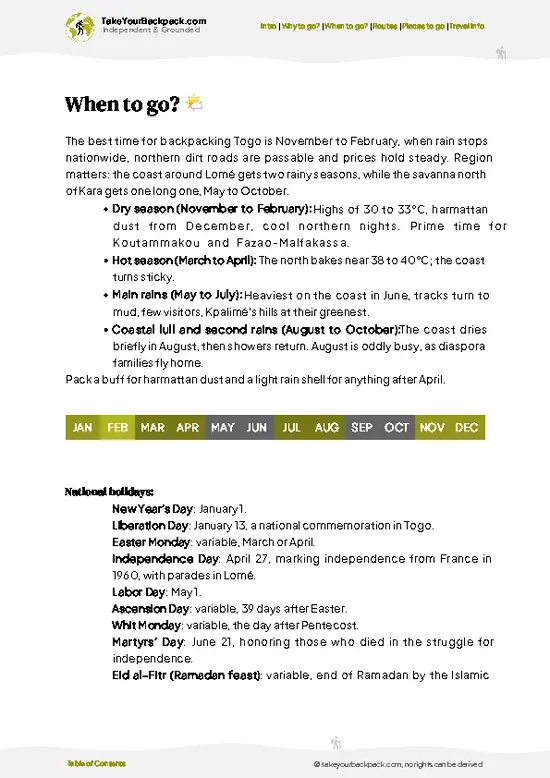
example page 0 from our offline Travel Guide for Togo
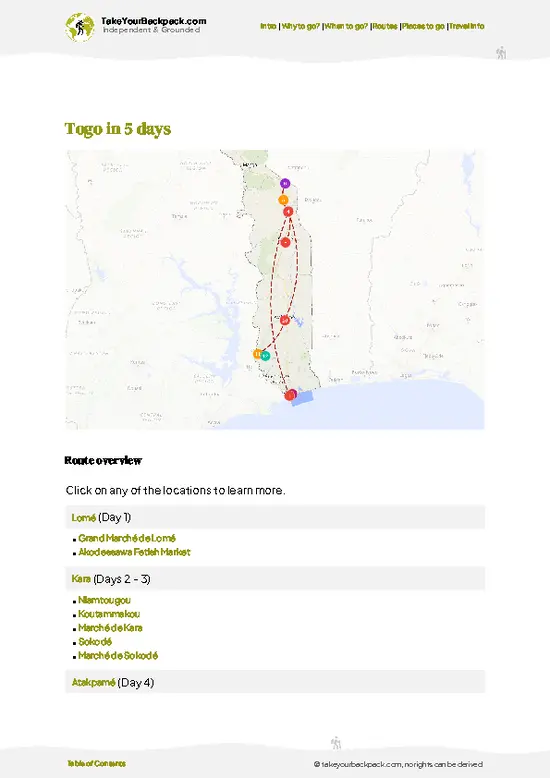
example page 1 from our offline Travel Guide for Togo
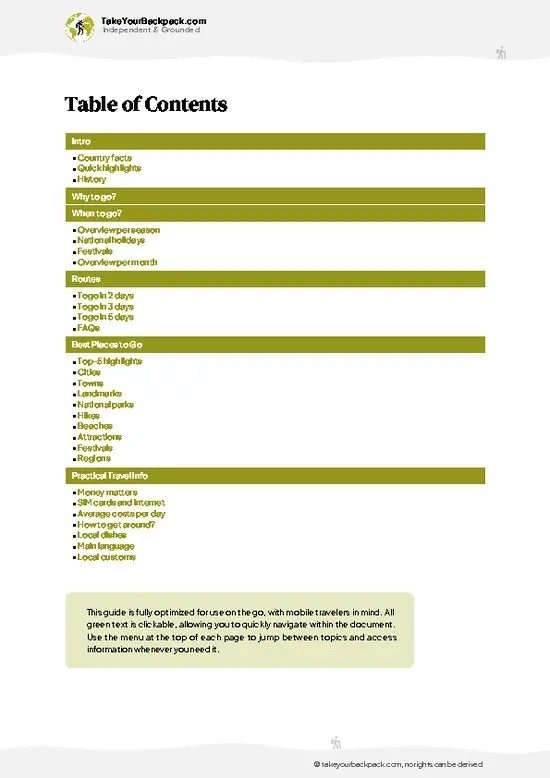
example page 2 from our offline Travel Guide for Togo
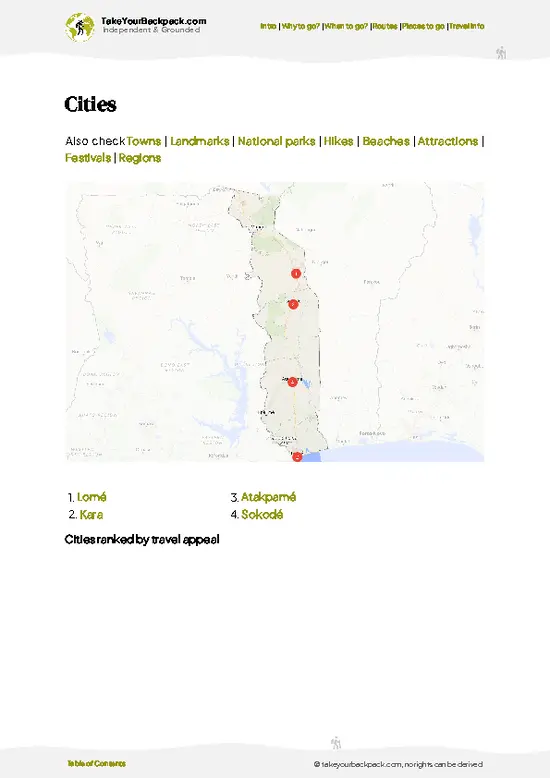
example page 3 from our offline Travel Guide for Togo
example page 4 from our offline Travel Guide for Togo
example page 5 from our offline Travel Guide for Togo
example page 6 from our offline Travel Guide for Togo
example page 7 from our offline Travel Guide for Togo
Loading the map 🌍
CLICK TO FILTER
cities
towns
landmarks
national parks
hikes
beaches
attractions
festivals
regions
SHOW COUNTRY’S BESTSHOW ALL

✨ Why go?
Ranked #4 attraction in Togo
What makes this attraction worth visiting

National Museum of Togo is the quickest way to make sense of a country that most backpackers cross in a hurry. Togo is a thin strip with dozens of ethnic groups, three colonial rulers in its past and very little signage telling you any of it. Here the story sits in one cool, uncrowded building.

The royal regalia and chiefly objects tie directly to places you will visit later, such as Togoville on the lake. The musical instruments give you ears for the drumming you will hear at ceremonies and in village squares. And the colonial-era photographs and documents show how German, then French and British, rule carved up the territory.

It also works as a milestone on a Lomé stop. You get an anchor before the Grand Marché, the fetish market and the beach, and you leave knowing what to look for. On a rainy afternoon it is a dry, calm refuge.

💡 HighlightsKey sights and experiences for travelers

  1. Royal and chiefly regalia: Stools, staffs and ceremonial objects linked to Togo’s traditional rulers. The craftsmanship is the draw, and the labels explain who was allowed to sit, carry or wear what.
  2. Musical instrument collection: Drums, rattles, harps and horns from different regions. Seeing the shapes up close makes the rhythms you hear on the street make sense.
  3. Masks and ritual objects: Carved figures and masks tied to spiritual practice, including the traditions that shaped vodun culture along the coast. They are displayed plainly, so you can study the carving detail.
  4. Colonial-period photographs and documents: Images and papers from the German, French and British eras. They are the most direct window into how the borders and the capital took shape.
  5. Traditional dress and textiles: Woven cloth
… read more 👉
  1. Royal and chiefly regalia: Stools, staffs and ceremonial objects linked to Togo’s traditional rulers. The craftsmanship is the draw, and the labels explain who was allowed to sit, carry or wear what.
  2. Musical instrument collection: Drums, rattles, harps and horns from different regions. Seeing the shapes up close makes the rhythms you hear on the street make sense.
  3. Masks and ritual objects: Carved figures and masks tied to spiritual practice, including the traditions that shaped vodun culture along the coast. They are displayed plainly, so you can study the carving detail.
  4. Colonial-period photographs and documents: Images and papers from the German, French and British eras. They are the most direct window into how the borders and the capital took shape.
  5. Traditional dress and textiles: Woven cloth and costumes that show regional differences, from the south to the savanna north. Good preparation for browsing fabric stalls afterward.
  6. Archaeological and everyday tools: Pottery, farming tools and household items that show how people lived and worked. They are small objects, and each one tells a practical story.
Start with the regalia, because it is the most striking collection and gives you the vocabulary of power and ritual that the rest of the rooms build on.
Spotted a mistake or missing something? Contact us.

Things to do near National Museum of Togo

Ratings based on Tripadvisor reviews. When you book through this link, you support our work at no extra cost to you.

🌤️ When to go?Weather, crowds, and seasonal trade-offs

  • Main Dry Season (November to March): Mornings in Lomé stay around 24 to 27°C (75 to 81°F), with afternoons reaching 31 to 33°C (88 to 91°F). The harmattan haze can dull the sky, but museum visits stay comfortable. Hotel rates and crowds peak around Christmas and New Year.
  • Long Rains (April to July): Heavy downpours arrive, peaking in June, with highs near 29 to 30°C (84 to 86°F). Streets flood in places and moto-taxis get slower. The galleries stay quiet and lodging is easier to haggle down.
  • Short Dry Spell (August to September): Cloudier and cooler at 25 to 28°C (77 to 82°F), with little rain. Few tourists show up, so you may have the rooms to yourself.
  • Short Rains (October): Brief afternoon storms, with 27 to 30°C (81 to 86°F) and humid air.
Arrive when the doors open on a weekday morning, before … read more 👉
  • Main Dry Season (November to March): Mornings in Lomé stay around 24 to 27°C (75 to 81°F), with afternoons reaching 31 to 33°C (88 to 91°F). The harmattan haze can dull the sky, but museum visits stay comfortable. Hotel rates and crowds peak around Christmas and New Year.
  • Long Rains (April to July): Heavy downpours arrive, peaking in June, with highs near 29 to 30°C (84 to 86°F). Streets flood in places and moto-taxis get slower. The galleries stay quiet and lodging is easier to haggle down.
  • Short Dry Spell (August to September): Cloudier and cooler at 25 to 28°C (77 to 82°F), with little rain. Few tourists show up, so you may have the rooms to yourself.
  • Short Rains (October): Brief afternoon storms, with 27 to 30°C (81 to 86°F) and humid air.
Arrive when the doors open on a weekday morning, before the midday heat builds and before school groups come through.


source: climatestotravel.comJANJanuary: good for travelingFEBFebruary: highly recommended for travelingMARMarch: highly recommended for travelingAPRApril: fair for travelingMAYMay: fair for travelingJUNJune: fair for travelingJULJuly: fair for travelingAUGAugust: fair for travelingSEPSeptember: fair for travelingOCTOctober: fair for travelingNOVNovember: highly recommended for travelingDECDecember: good for traveling
when-to-go

✈️ The backpacker research shortcutTogo Travel Guide

An offline-friendly backpacking guide with optimized travel routes, ranked highlights, transport advice, and the best areas to stay.
example page 0 from our offline Travel Guide for Togo
example page 1 from our offline Travel Guide for Togo
example page 2 from our offline Travel Guide for Togo
example page 3 from our offline Travel Guide for Togo
example page 4 from our offline Travel Guide for Togo
example page 5 from our offline Travel Guide for Togo
example page 6 from our offline Travel Guide for Togo
example page 7 from our offline Travel Guide for Togo
The digital guide (194 pages) contains:
✅ 42 highlights, ranked by travel appeal
✅ Optimized 2, 3 & 5-day travel routes
✅ Cities, national parks, landmarks, beaches
✅ How to get around
✅ Offline-friendly for travel without Wi-Fi
👉 Click to see all 30+ guide features

📅 Plan smarter in minutes, not weeks
✅ Month by month travel advice
✅ Festivals & national holidays
✅ Budget expectations

🗺️ Go to the right places, skip the overrated ones
✅ Honest pros & cons of destinations
✅ Top hikes, parks & viewpoints
✅ Lesser-known places most travelers miss
✅ Clear “worth it vs skip it” guidance

🛏️ Travel smoothly without rookie mistakes
✅ Best areas to stay
✅ Transport systems explained simply
✅ Common scams & safety advice
✅ SIM cards, money & practical tips

🌍 Understand the country, not just visit it
✅ Culture & traditions
✅ 52 Essential phrases & customs
✅ Festivals worth planning around
✅ Traveler-friendly historical context
✅ Insights that make places more meaningful

📱 Built for real travel conditions
✅ Fully downloadable PDF
✅ Works completely offline
✅ Optimized for phone use
✅ Useful in remote areas & buses
✅ Everything in one place
Stop searching, start planning
Get instant access to your full guide. 30‑day money-back guarantee.
+ Add another guide for just

By proceeding you agree to our terms.
Sent to your inbox immediately after payment • 100% Secure Checkout
Best Backpacking Travel Advisor 2025 tourism awardBest Backpacking
Travel Advisor
2025
What others say about Take Your Backpack Guides:
⭐⭐⭐⭐⭐
Fantastic, amazing amount of information!
⭐⭐⭐⭐⭐
My goodness this is amazing, it's what I've been looking for hats off too you!
⭐⭐⭐⭐⭐
I think this is absolutely BRILLIANT
⭐⭐⭐⭐
Very complete and informative. It's still missing places, but I gotta to commend you
⭐⭐⭐⭐⭐
This is truly amazing, thank you, can't wait to explore it with my kids!
⭐⭐⭐⭐⭐
Awesome resource, thank you!
⭐⭐⭐⭐⭐
This is amazing! Can't wait to explore the ones I haven't seen
⭐⭐⭐⭐
I love this! Well done, great idea.
⭐⭐⭐⭐⭐
Thanks for taking the time to make this gem!
⭐⭐⭐⭐⭐
This might be the best website I've ever seen.
⭐⭐⭐⭐⭐
Congratulations, and thank you so much for your work; it's incredibly valuable.
⭐⭐⭐⭐
In all seriousness I think you did a great job pointing out the important spots
⭐⭐⭐⭐⭐
10/10 very good
⭐⭐⭐⭐⭐
As someone who's only just starting to visit regularly this is awesome, thank you.
⭐⭐⭐⭐
Thank you very much! I'm going to visit my dad, it's going to be very useful!
⭐⭐⭐⭐⭐
This is really cool! We'll be travelling for the first time and this definitely come in handy.
⭐⭐⭐⭐⭐
You are now our minister of culture, congratulations 👨‍💼
⭐⭐⭐⭐⭐
Just wanted to tell you that this is a pearl! Going to follow your recommendations.
⭐⭐⭐⭐⭐
This is so cool. I'll definitely be using the resource for my travels soon.
⭐⭐⭐⭐⭐
This is very impressive! Good work.
⭐⭐⭐⭐⭐
This is an amazing and informative site. Very well done!

🛏️ Where to stay?Best areas to stay in Togo

The best base for the National Museum of Togo is central Lomé, in the Quartier Administratif and the streets around Boulevard du 13 Janvier, where the museum sits a short moto-taxi or walk away. Staying here puts you near the Grand Marché, the cathedral, and plenty of cheap chop shops, and the main roads are lit and busy well into the evening. Backpackers get the most choice of budget guesthouses and a few hostel-style places here, and the mix of aid workers, overlanders and students makes it easy to find travel partners.

Tokoin and the Hédzranawoé side of town are quieter and residential, with … read more 👉
The best base for the National Museum of Togo is central Lomé, in the Quartier Administratif and the streets around Boulevard du 13 Janvier, where the museum sits a short moto-taxi or walk away. Staying here puts you near the Grand Marché, the cathedral, and plenty of cheap chop shops, and the main roads are lit and busy well into the evening. Backpackers get the most choice of budget guesthouses and a few hostel-style places here, and the mix of aid workers, overlanders and students makes it easy to find travel partners.

Tokoin and the Hédzranawoé side of town are quieter and residential, with simple guesthouses and more local restaurants. They suit solo travelers who want a calmer night, though you will rely more on taxis after dark.

The beachfront area toward the port and Boulevard de la Marina has a livelier bar scene and more social energy, but prices are higher and it is best to take a taxi home late at night. Whichever area you choose, book near the center so museum, markets and bus stations stay within a short ride.

👛 Costs (as of 22 October 2026)Travel costs and budget guide for National Museum of Togo

The National Museum of Togo costs a backpacker roughly €20 to 47 a day in Lomé, including a very low entry fee. Travelers pay in local currency, but the figures here are converted into euros.
CategoryBudget RangeLocal Reality
Museum entry€1 to 3A small fee for foreign visitors, paid in cash at the desk. Photography may carry an extra charge.
Guide or extra tours€0 to 5Staff will often walk you through the rooms for a tip.
Accommodation (high season)€12 to 25Simple guesthouse rooms with a fan or air conditioning. Prices ease off in the rainy months, when €10 to 20 is typical.
Food€4 to 8Street rice, grilled fish and fufu cost little. Sit-down restaurants run higher.
Local transport€2 to 4Shared taxis and moto-taxis cost less than €1 per short ride. Agree on the fare before you leave.
Water and snacks€1
… read more 👉
The National Museum of Togo costs a backpacker roughly €20 to 47 a day in Lomé, including a very low entry fee. Travelers pay in local currency, but the figures here are converted into euros.
CategoryBudget RangeLocal Reality
Museum entry€1 to 3A small fee for foreign visitors, paid in cash at the desk. Photography may carry an extra charge.
Guide or extra tours€0 to 5Staff will often walk you through the rooms for a tip.
Accommodation (high season)€12 to 25Simple guesthouse rooms with a fan or air conditioning. Prices ease off in the rainy months, when €10 to 20 is typical.
Food€4 to 8Street rice, grilled fish and fufu cost little. Sit-down restaurants run higher.
Local transport€2 to 4Shared taxis and moto-taxis cost less than €1 per short ride. Agree on the fare before you leave.
Water and snacks€1 to 2Sachet and bottled water are sold everywhere.
Total Daily Budget€20 to 47Cash is king, so carry small notes.
⚠️ Prices can change and everyone travels differently, so take this as a rough guide. Hope it helps you plan your adventure!

FAQFrequently asked questions about National Museum of Togo

Plan on one to two hours for the National Museum of Togo. The collection is compact, with exhibits on Togolese history, colonial-era objects, traditional art and musical instruments. Add another hour if you combine it with the nearby Grand Marché or the Lomé cathedral.
The National Museum of Togo is good value, since entry costs only around €1 to 3. You get a concentrated look at Togolese history and culture, and the visit is quiet. It is smaller than museums in Accra or Dakar, so it suits history buffs best and works well as a rainy-day stop.
The National Museum of Togo is in central Lomé, easy to reach by moto-taxi (zémidjan) or shared taxi from most neighborhoods for under €1 to 3. From the Grand Marché it is a short ride of about 10 to 15 minutes. From Lomé airport allow roughly 20 to 30 minutes by taxi, for around €5 to 8 depending on your haggling.
⚠️ Things can change over time, so always validate details locally before you go.

Other Togolese attractions near National Museum of Togo

Explore more nearby:


💡 Not sure where to go next?
Create a personalized itinerary for Togo including National Museum of Togo and the places that fit your trip.

Generate my itinerary

👉 Discover all attractions

Or checkout all Togo has to offer (think cities, towns, villages, national parks, hikes, beaches, festivals)
Country photo of Togo

We 💚 feedbackWhat to keep in mind

National Museum of Togo needs only about an hour or two, so fit it into your first morning in Lomé before the heat peaks. Longer would be stretching it. I would bring small change, read the labels slowly, and go before you visit Togoville or the markets, because the context turns those stops into something richer.

✍️ Help improve this page!
The information on this page is based on in-depth research, insights shared by experienced travelers, and feedback from the local travel community in Togo. While every effort is made to keep the information accurate and current, conditions can change — so if you spot anything incorrect or outdated, please get in touch.


🙋‍♂️ Give feedback

👋 Meet the founderWho’s Behind Take Your Backpack?

Johan, backpacker and founder of TakeYourBackpackHi, I’m Johan (Netherlands 🇳🇱), the creator of TakeYourBackpack. Over the past 3 decades, I’ve backpacked through 90+ countries across six continents, gaining extensive experience with independent travel, long-term trips, and overland routes.

This site is built on a combination of firsthand travel experience and carefully curated insights from other backpackers. Many guides are based on places I’ve personally visited, while others bring together tips, observations, and practical advice shared by trusted travelers I’ve met along the way.

The goal is to provide realistic, experience-driven guidance — not generic itineraries — so you can explore destinations with better context, clearer expectations, and more confidence.