×

Togo🇹🇬 | townsMangomarket town, river crossing, northern gateway | things to do and best time to go

Explore BadouExplore Bassar

Backpacking in Mango
👍 Recommendedtown ranked #7
By Johan Kruseman 🇳🇱 | Updated June 15, 2026

Forget the idea that Mango is a lush, tropical paradise just because of its name. Mango sits in northern Togo, where the air is dry, the earth is red, and the Sahel’s edge is never far from your senses. This is a working town, not a postcard—dusty, sun-baked, and honest. For backpackers, Mango isn’t a destination you linger in for nightlife or café culture; it’s a practical stopover, a place to recalibrate between the busier south and the wilder north. The market is lively but utilitarian, with the scent of smoked fish and shea butter hanging in the heat. You’ll find basic guesthouses, but don’t expect hostels or a ready-made backpacker scene. Getting here is straightforward by bush taxi or bus, but you’ll need patience for the journey. Compared to Kara’s bustle or Dapaong’s frontier vibe, Mango is quieter, more functional, and less scenic—best used as a launchpad for nearby nature reserves or as a rest point on the long road north. Costs are low, safety is typical for rural Togo, and the real reward is the sense of crossing into a different rhythm of West African life.

Discover everything you want to know in the 📖 Togo Travel Guide.


Get your Togo guide
55 ranked highlights, routes & tips, works offline (234 pages)
Loading the map 🌍
CLICK TO FILTER
cities
towns
landmarks
national parks
hikes
beaches
attractions
festivals
regions
SHOW COUNTRY’S BESTSHOW ALL

✨ Why go?
Ranked #7 town in Togo
What makes this town worth visiting

Backpackers flock to Mango in Togo for its strategic location as a gateway to stunning hikes and cultural experiences. The town is a launchpad for exploring the nearby Atakora Mountains, where trails wind through lush landscapes and local villages. After a day of trekking, you can unwind at small-scale guesthouses that offer a cozy atmosphere and a chance to connect with fellow travelers. The walkable streets are lined with local eateries, where the aroma of spicy stews and grilled fish fills the air, inviting you to savor authentic Togolese cuisine.

While some travelers might pass through quickly, many find themselves lingering for a few days, soaking in the friendly social vibe. It’s a place where solo travelers and small groups can share stories over a meal or a cup of local coffee. If … read more 👉
Backpackers flock to Mango in Togo for its strategic location as a gateway to stunning hikes and cultural experiences. The town is a launchpad for exploring the nearby Atakora Mountains, where trails wind through lush landscapes and local villages. After a day of trekking, you can unwind at small-scale guesthouses that offer a cozy atmosphere and a chance to connect with fellow travelers. The walkable streets are lined with local eateries, where the aroma of spicy stews and grilled fish fills the air, inviting you to savor authentic Togolese cuisine.

While some travelers might pass through quickly, many find themselves lingering for a few days, soaking in the friendly social vibe. It’s a place where solo travelers and small groups can share stories over a meal or a cup of local coffee. If you’re a slow traveler looking for a blend of adventure and community, Mango is a perfect fit. Just don’t expect a bustling nightlife; the charm lies in the simplicity and connection to the land and its people.
Want to include Mango in your Togo route?
Create a personalized Togo itinerary that includes Mango and the places that fit your trip — based on your travel style, budget, and available time. Get your route in seconds.

Generate my trip

💡 HighlightsMust-see experiences and standout moments

  • Le grand marché (the central market) — The beating heart of Mango: fresh produce, shea and tamarind, fabrics and live animals; best place to watch trade, haggle a little, and sample street food while soaking up daily life.
  • Banks of the Oti River — A short walk from town, the riverfront is where fishers, washers and children gather; calm water, good sunset light and a real feel for how the river shapes local rhythms.
  • Pont de Mango (the town bridge) — More than infrastructure: it’s a social spot with wide views of the Oti, fishermen casting lines below, and easy access to riverside paths and small islands used by locals.
  • La mosquée centrale — The main mosque is an architectural and social anchor in town; visiting at non-prayer times lets you observe local religious life and the simple,
read more 👉
  • Le grand marché (the central market) — The beating heart of Mango: fresh produce, shea and tamarind, fabrics and live animals; best place to watch trade, haggle a little, and sample street food while soaking up daily life.
  • Banks of the Oti River — A short walk from town, the riverfront is where fishers, washers and children gather; calm water, good sunset light and a real feel for how the river shapes local rhythms.
  • Pont de Mango (the town bridge) — More than infrastructure: it’s a social spot with wide views of the Oti, fishermen casting lines below, and easy access to riverside paths and small islands used by locals.
  • La mosquée centrale — The main mosque is an architectural and social anchor in town; visiting at non-prayer times lets you observe local religious life and the simple, powerful geometry of Sahelian mosque design.
  • Le quartier administratif / place de la préfecture — The civic center where colonial-era buildings, the prefecture offices and local courts cluster; useful for people-watching and understanding Mango’s role as a regional hub.
  • Ateliers d’artisans autour du marché — Small workshops and blacksmiths near the market turn out tools, jewelry and leatherwork; watching (and buying) here supports makers and gives insight into traditional craft techniques.
  • La cour du chef traditionnel — The chief’s compound is often open to respectful visitors and offers a clear window into local leadership, customs and occasional public ceremonies — check with a local guide for timing.
  • Rue principale et ses gargotes (street food strip) — A compact, flavorful experience: grills, porridges (tô), spicy sauces and tea stalls where locals eat, gossip and unwind — the best place to try real northern Togolese home cooking.
  • Gare routière (bus/taxi station) — Chaotic, lively and informative: watch long-haul minibuses arrive and depart, meet traders and travelers, and get a practical sense of travel life in the region.
  • Petites collines et points de vue périphériques — Low rises on the town edges give broad views over the Oti valley and surrounding farms; short climbs reward you with perspective and good photos without leaving the municipality.
A few worthwhile day trips from Mango include the regional market and crafts of nearby Dapaong, the wildlife and savanna scenery of Parc national de la Kéran, and riverside villages along the Oti valley—each reachable in a day and offering different slices of the region.
Spotted a mistake or missing something? Contact us.

🏘️ NeighborhoodsWhere things are and how it's laid out

Mango, Togo, is a vibrant hub that offers a unique blend of culture and accessibility for backpackers. Each neighborhood has its own character, making it essential to choose wisely based on your travel style.

Centre Ville: This is the heart of Mango. Bustling markets and local eateries fill the streets, offering a sensory overload of sights and smells. It’s affordable, with plenty of budget accommodations. The walkability is excellent, allowing you to soak in the local life. Nightlife is low-key, perfect for those who prefer a quiet evening after a day of exploration. Ideal for short stays, as you can easily access transport to other destinations.

Quartier Dapaong: A bit more laid-back, this area has a friendly vibe. It’s slightly more residential, making it a good spot for longer stays. … read more 👉
Mango, Togo, is a vibrant hub that offers a unique blend of culture and accessibility for backpackers. Each neighborhood has its own character, making it essential to choose wisely based on your travel style.

Centre Ville: This is the heart of Mango. Bustling markets and local eateries fill the streets, offering a sensory overload of sights and smells. It’s affordable, with plenty of budget accommodations. The walkability is excellent, allowing you to soak in the local life. Nightlife is low-key, perfect for those who prefer a quiet evening after a day of exploration. Ideal for short stays, as you can easily access transport to other destinations.

Quartier Dapaong: A bit more laid-back, this area has a friendly vibe. It’s slightly more residential, making it a good spot for longer stays. You’ll find cozy guesthouses and local cafes. The atmosphere is tranquil, with fewer tourists around. Walkability is decent, but you might need to rely on shared taxis for longer distances. Great for those wanting to immerse themselves in daily life.

Quartier Kpogan: This neighborhood is known for its vibrant nightlife. Bars and music venues come alive after dark, making it a hotspot for socializing. Accommodations here can be pricier, but the energy is infectious. It’s less walkable, so be prepared to navigate public transport. Perfect for those looking to blend adventure with a lively scene, whether for a short or extended visit.

⌛️ 1 dayA smart one-day plan

Mango, Togo, is a vibrant tapestry of culture and nature, nestled between lush hills and the flowing Mono River. It’s a place where the air is thick with the scent of fresh spices and the sounds of daily life create a lively backdrop. This town is often overlooked, but it’s a treasure trove of authentic experiences waiting to be uncovered.

Start your morning at the bustling local market. The sun filters through the colorful awnings, casting playful shadows on the stalls. Here, you can sample fresh mangoes—sweet and juicy, just like the town’s name suggests. Engage with the vendors; their smiles and stories are as rich as the produce they sell. This is where you’ll feel the pulse of Mango.

In the afternoon, head to the nearby Kpalimé Hills. The hike is challenging but rewarding, with trails … read more 👉
Mango, Togo, is a vibrant tapestry of culture and nature, nestled between lush hills and the flowing Mono River. It’s a place where the air is thick with the scent of fresh spices and the sounds of daily life create a lively backdrop. This town is often overlooked, but it’s a treasure trove of authentic experiences waiting to be uncovered.

Start your morning at the bustling local market. The sun filters through the colorful awnings, casting playful shadows on the stalls. Here, you can sample fresh mangoes—sweet and juicy, just like the town’s name suggests. Engage with the vendors; their smiles and stories are as rich as the produce they sell. This is where you’ll feel the pulse of Mango.

In the afternoon, head to the nearby Kpalimé Hills. The hike is challenging but rewarding, with trails that wind through dense forests and offer breathtaking views of the surrounding landscape. The air is cooler here, and the earthy scent of damp soil invigorates your spirit. Bring a packed lunch to enjoy at a scenic overlook, where you can soak in the beauty and tranquility.

As evening approaches, return to town and explore the vibrant neighborhoods. Visit the local artisans in the Togo Craft Center, where you can watch skilled hands create beautiful textiles and woodwork. This isn’t on the typical tourist path, but it’s a chance to connect with the heart of Mango’s culture.

Wrap up your day at a local eatery, savoring a dish of fufu and spicy sauce. The flavors are bold, just like the people. As night falls, the town hums with life, and you’ll leave with a deeper understanding of this hidden gem.
Turn your Mango visit into an Togo adventure
Build a complete Togo route with Mango, hidden gems, must-see destinations, and realistic travel times included.

Generate my trip

🌤️ When to go?Choosing the right time of year


  • Topic: Weather – Mango’s dry season from November to March is your best bet. The air clears out, leaving a warm but bearable heat around 25-30°C (77-86°F). Rainy months (April to October) bring humidity and heavy downpours that can turn dirt roads into mud traps, slowing your pace and soaking your gear.

  • Topic: Temperature – Daytime highs hover near 30°C (86°F) in dry months, cooling to a comfortable 20°C (68°F) at night. The rainy season cranks up humidity, making 28-32°C (82-90°F) feel sticky and exhausting, especially if you’re hiking or exploring on foot.

  • Topic: Daylight Hours – Near the equator, Mango enjoys roughly 12 hours of daylight year-round. Sunrise around 6:30 AM and sunset near 6:30 PM give you a solid window for trekking and market visits without rushing.

  • Topic: Crowds
read more 👉

  • Topic: Weather – Mango’s dry season from November to March is your best bet. The air clears out, leaving a warm but bearable heat around 25-30°C (77-86°F). Rainy months (April to October) bring humidity and heavy downpours that can turn dirt roads into mud traps, slowing your pace and soaking your gear.

  • Topic: Temperature – Daytime highs hover near 30°C (86°F) in dry months, cooling to a comfortable 20°C (68°F) at night. The rainy season cranks up humidity, making 28-32°C (82-90°F) feel sticky and exhausting, especially if you’re hiking or exploring on foot.

  • Topic: Daylight Hours – Near the equator, Mango enjoys roughly 12 hours of daylight year-round. Sunrise around 6:30 AM and sunset near 6:30 PM give you a solid window for trekking and market visits without rushing.

  • Topic: Crowds – The dry season draws more travelers, especially around December holidays, so expect livelier markets and busier guesthouses. Off-season, you’ll find more solitude but fewer services and some closed spots.

  • Topic: Seasonal Activities – Dry months are prime for cultural festivals and outdoor adventures like hiking nearby hills or visiting local villages. The rainy season limits these options but offers lush landscapes if you don’t mind the wet.

  • Topic: Price Fluctuations – Expect higher prices for lodging and transport during the dry season’s peak, especially December and January. Off-season rates drop noticeably, but factor in the trade-off with weather and accessibility.


Pro-tip: Aim for late November or February to catch dry, pleasant weather with fewer crowds and better prices—a sweet spot where Mango’s atmosphere feels just right for exploration.


source: climatestotravel.comJANJanuary: highly recommended for travelingFEBFebruary: excellent for travelingMARMarch: highly recommended for travelingAPRApril: fair for travelingMAYMay: fair for travelingJUNJune: fair for travelingJULJuly: fair for travelingAUGAugust: fair for travelingSEPSeptember: fair for travelingOCTOctober: fair for travelingNOVNovember: highly recommended for travelingDECDecember: good for traveling
when-to-go

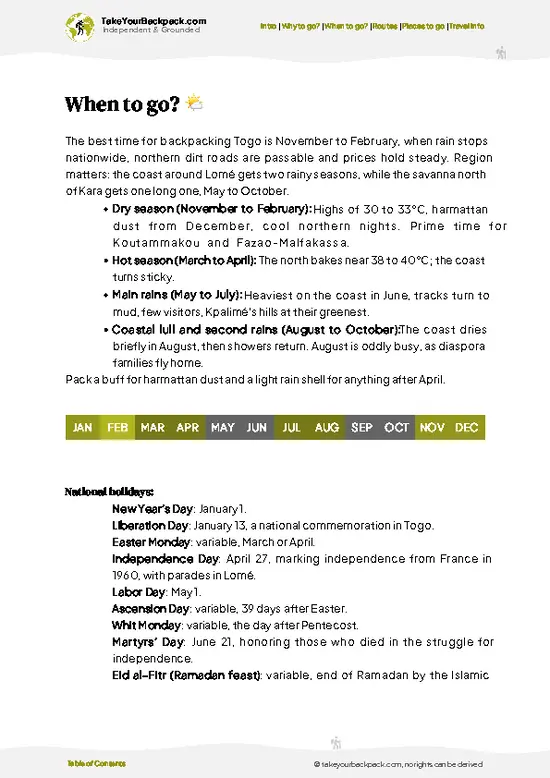
✈️ The backpacker research shortcutTogo Travel Guide

An offline-friendly backpacking guide with optimized travel routes, ranked highlights, transport advice, and the best areas to stay.
example page 0 from our offline Travel Guide for Togo
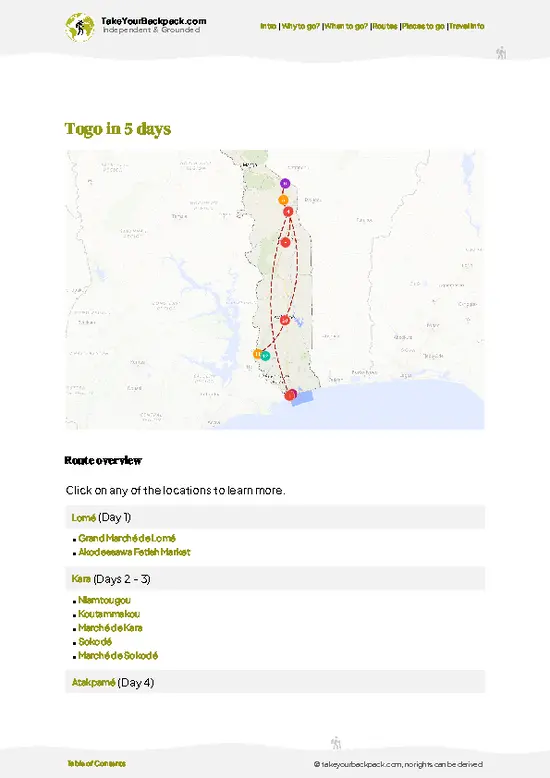
example page 1 from our offline Travel Guide for Togo
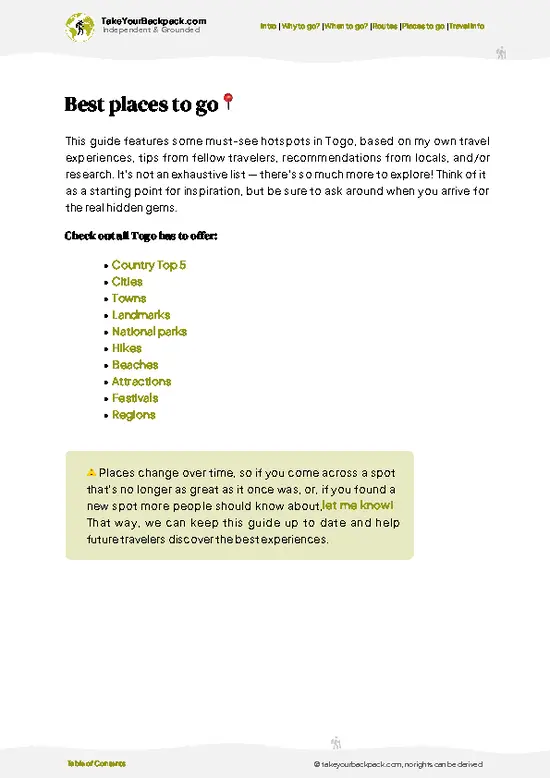
example page 2 from our offline Travel Guide for Togo
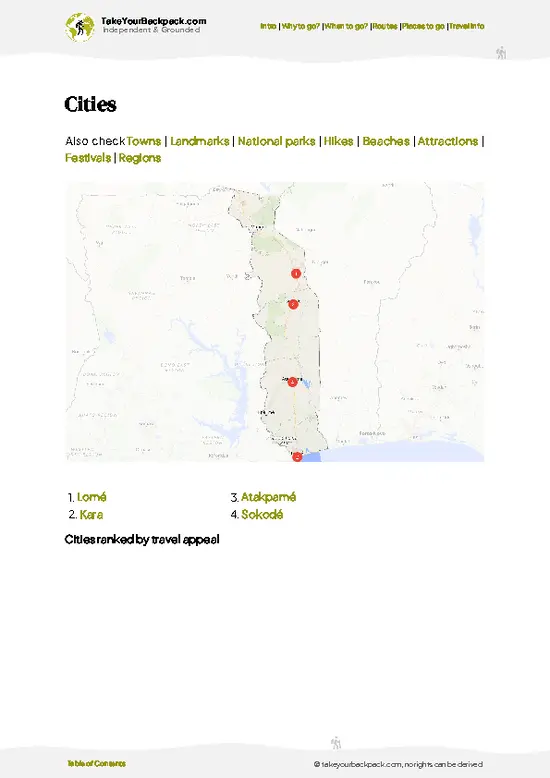
example page 3 from our offline Travel Guide for Togo
example page 4 from our offline Travel Guide for Togo
example page 5 from our offline Travel Guide for Togo
example page 6 from our offline Travel Guide for Togo
example page 7 from our offline Travel Guide for Togo
The digital guide (234 pages) contains:
55 highlights, ranked by travel appeal
Optimized 2, 3 & 5-day travel routes
Cities, national parks, landmarks, beaches
How to get around
Offline-friendly for travel without Wi-Fi
👉 Click to see all 30+ guide features

📅 Plan smarter in minutes, not weeks
Month by month travel advice
Festivals & national holidays
Budget expectations

🗺️ Go to the right places, skip the overrated ones
Honest pros & cons of destinations
Top hikes, parks & viewpoints
Lesser-known places most travelers miss
Clear “worth it vs skip it” guidance

🛏️ Travel smoothly without rookie mistakes
Best areas to stay
Transport systems explained simply
Common scams & safety advice
SIM cards, money & practical tips

🌍 Understand the country, not just visit it
Culture & traditions
52 Essential phrases & customs
Festivals worth planning around
Traveler-friendly historical context
Insights that make places more meaningful

📱 Built for real travel conditions
Fully downloadable PDF
Works completely offline
Optimized for phone use
Useful in remote areas & buses
Everything in one place
Save weeks of stressful planning
Get instant access to your full guide. 30‑day money-back guarantee.


By proceeding you agree to our terms.
Sent to your inbox immediately after payment • 100% Secure Checkout
Best Backpacking Travel Advisor 2025 tourism awardBest Backpacking
Travel Advisor
2025
What others say about Take Your Backpack Guides:
⭐⭐⭐⭐⭐
Fantastic, amazing amount of information!
⭐⭐⭐⭐⭐
My goodness this is amazing, it's what I've been looking for hats off too you!
⭐⭐⭐⭐⭐
I think this is absolutely BRILLIANT
⭐⭐⭐⭐
Very complete and informative. It's still missing places, but I gotta to commend you
⭐⭐⭐⭐⭐
This is truly amazing, thank you, can't wait to explore it with my kids!
⭐⭐⭐⭐⭐
Awesome resource, thank you!
⭐⭐⭐⭐⭐
This is amazing! Can't wait to explore the ones I haven't seen
⭐⭐⭐⭐
I love this! Well done, great idea.
⭐⭐⭐⭐⭐
Thanks for taking the time to make this gem!
⭐⭐⭐⭐⭐
This might be the best website I've ever seen.
⭐⭐⭐⭐⭐
Congratulations, and thank you so much for your work; it's incredibly valuable.
⭐⭐⭐⭐
In all seriousness I think you did a great job pointing out the important spots
⭐⭐⭐⭐⭐
10/10 very good
⭐⭐⭐⭐⭐
As someone who's only just starting to visit regularly this is awesome, thank you.
⭐⭐⭐⭐
Thank you very much! I'm going to visit my dad, it's going to be very useful!
⭐⭐⭐⭐⭐
This is really cool! We'll be travelling for the first time and this definitely come in handy.
⭐⭐⭐⭐⭐
You are now our minister of culture, congratulations 👨‍💼
⭐⭐⭐⭐⭐
Just wanted to tell you that this is a pearl! Going to follow your recommendations.
⭐⭐⭐⭐⭐
This is so cool. I'll definitely be using the resource for my travels soon.
⭐⭐⭐⭐⭐
This is very impressive! Good work.
⭐⭐⭐⭐⭐
This is an amazing and informative site. Very well done!

🛏️ Where to stay?Best areas to stay in Togo

In Mango, the best spot for backpackers is the area around the central market and the nearby main street. This neighborhood hums with life from dawn till dusk—the air thick with the scent of grilled street food and fresh mangoes, the chatter of locals bartering in a mix of French and local languages. It’s where you’ll find the most budget-friendly hostels, often run by locals who double as informal guides, making it easy to connect with fellow travelers and tap into insider tips. Safety here feels tangible; the streets are busy enough to deter trouble but not so crowded that you lose your bearings. … read more 👉
In Mango, the best spot for backpackers is the area around the central market and the nearby main street. This neighborhood hums with life from dawn till dusk—the air thick with the scent of grilled street food and fresh mangoes, the chatter of locals bartering in a mix of French and local languages. It’s where you’ll find the most budget-friendly hostels, often run by locals who double as informal guides, making it easy to connect with fellow travelers and tap into insider tips. Safety here feels tangible; the streets are busy enough to deter trouble but not so crowded that you lose your bearings.

Compared to the quieter residential zones on the outskirts, this central area offers a social pulse that’s hard to beat. You’re steps away from small cafés and open-air bars where stories flow as freely as the local beer. The vibe is unpolished but genuine—no tourist traps, just real life unfolding. Staying here means you’re not just passing through Mango; you’re stepping into its rhythm, making every moment count.

🚌 Getting aroundGetting around like a local

Mango moves at its own rhythm—think less clockwork precision, more a pulse you feel in the air. The streets hum with a mix of honking scooters, vendors calling out, and the occasional burst of laughter from a corner café. It’s a place where schedules bend to the day’s heat and the mood of the crowd, not the other way around. If you want to catch the best light for photos or snag a seat at a busy market stall, you learn to read the flow rather than fight it. This town rewards patience and a keen eye for timing, turning what might seem chaotic into a dance you quickly get the hang of.


  • Walking: Mango’s compact center is a walker’s playground. The air carries scents of grilled street food and fresh fruit, making every stroll a sensory adventure. Most key spots are within 20-30 minutes on foot,
read more 👉
Mango moves at its own rhythm—think less clockwork precision, more a pulse you feel in the air. The streets hum with a mix of honking scooters, vendors calling out, and the occasional burst of laughter from a corner café. It’s a place where schedules bend to the day’s heat and the mood of the crowd, not the other way around. If you want to catch the best light for photos or snag a seat at a busy market stall, you learn to read the flow rather than fight it. This town rewards patience and a keen eye for timing, turning what might seem chaotic into a dance you quickly get the hang of.


  • Walking: Mango’s compact center is a walker’s playground. The air carries scents of grilled street food and fresh fruit, making every stroll a sensory adventure. Most key spots are within 20-30 minutes on foot, perfect for soaking in the town’s textures without rushing.


  • Shared Minibuses (Colectivos): These are the lifeblood of local transit—cheap (around $0.50), frequent, and flexible. They don’t run on a strict timetable but start rolling around 6:30 AM and taper off by 8 PM. Expect a lively, sometimes cramped ride with locals chatting or dozing off, a real slice of daily life.


  • Motorcycle Taxis: When time is tight or you’re carrying gear, these zippy rides cut through traffic like a hot knife through butter. Prices vary but usually hover around $1-$2 for short hops. They’re fast but hold on tight—the ride is an adrenaline shot through Mango’s winding alleys.


  • City Buses: Larger and more comfortable than colectivos, city buses cover longer routes and run from 5:30 AM to 9 PM. Tickets cost about $0.75. They’re slower due to frequent stops but offer a smoother ride and air-conditioned relief during midday heat.


  • Bike Rentals: For the adventurous, renting a bike (roughly $5/day) unlocks a new layer of freedom. Mango’s terrain is mostly flat with a few gentle hills, and early mornings or late afternoons are the best times to pedal when the light softens and the streets quiet down.

👛 Costs (as of 4 June 2026)Travel costs and budget guide for Mango

Backpacking in Mango, Togo, means embracing a pace where every cedi spent feels like a step deeper into local life. Here’s what you’re looking at day-to-day.
  • Dorm Accommodation: Expect basic guesthouses or hostels with shared rooms. Prices hover around €5 to €10 per night. The rooms are simple—think mosquito nets, a fan, and a mattress that’s seen a few seasons. It’s not luxury, but it’s clean enough and keeps you close to the town’s pulse.
  • Meals: Street food and small local eateries dominate. A hearty plate of grilled fish or chicken with rice and vegetables will set you back about €1.50 to €3. Fresh fruit from market stalls is even cheaper. If you opt for a café or a slightly more touristy spot, expect to pay up to €5 for a meal.
  • Local Transport: Mango’s transport is mostly shared taxis
read more 👉
Backpacking in Mango, Togo, means embracing a pace where every cedi spent feels like a step deeper into local life. Here’s what you’re looking at day-to-day.
  • Dorm Accommodation: Expect basic guesthouses or hostels with shared rooms. Prices hover around €5 to €10 per night. The rooms are simple—think mosquito nets, a fan, and a mattress that’s seen a few seasons. It’s not luxury, but it’s clean enough and keeps you close to the town’s pulse.
  • Meals: Street food and small local eateries dominate. A hearty plate of grilled fish or chicken with rice and vegetables will set you back about €1.50 to €3. Fresh fruit from market stalls is even cheaper. If you opt for a café or a slightly more touristy spot, expect to pay up to €5 for a meal.
  • Local Transport: Mango’s transport is mostly shared taxis or bush taxis. Short rides cost around €0.50 to €1. Longer trips to nearby villages might be €2 to €4. The vehicles are often crowded and bumpy, but they’re the fastest way to get around and a chance to soak in local rhythms.
  • Basic Activities/Entry Fees: Most cultural sites or natural spots in and around Mango have minimal or no entry fees, typically under €2. Guided tours are rare and usually informal, so if you want a guide, budget around €5 to €10 for a half-day.
  • Miscellaneous Expenses: This includes bottled water, snacks, phone credit, and occasional treats like a cold drink. Plan on about €1 to €3 daily. Water is essential—tap water isn’t safe, so bottled or filtered water is a must.

All told, you’re looking at roughly €10 to €25 per day to cover the essentials without cutting corners. This range lets you live simply but comfortably, with enough flexibility to enjoy Mango’s unique atmosphere without scrambling over every cedi.
⚠️ Prices can change and everyone travels differently, so take this as a rough guide. Hope it helps you plan your adventure!

🚌 Day tripsEasy escapes and nearby places

Mango, Togo, is a backpacker’s dream base for exploring the region’s rich culture and stunning landscapes. With its laid-back vibe and proximity to various attractions, you can easily dive into authentic experiences without the hassle.

Mount Agou
A trek to Mount Agou, Togo’s highest peak, is a must. The journey takes about an hour by shared taxi, and the trailhead is just a short walk from the main road. As you ascend, the air shifts from warm and humid to cool and crisp, filled with the scent of pine and wildflowers. The panoramic views from the summit are a reward worth every step. Plan for a modest budget of around 5,000 CFA for transport and park fees. Early morning is the best time to beat the heat and catch the sunrise illuminating the lush valleys below. A common mistake? Underestimating … read more 👉
Mango, Togo, is a backpacker’s dream base for exploring the region’s rich culture and stunning landscapes. With its laid-back vibe and proximity to various attractions, you can easily dive into authentic experiences without the hassle.

Mount Agou
A trek to Mount Agou, Togo’s highest peak, is a must. The journey takes about an hour by shared taxi, and the trailhead is just a short walk from the main road. As you ascend, the air shifts from warm and humid to cool and crisp, filled with the scent of pine and wildflowers. The panoramic views from the summit are a reward worth every step. Plan for a modest budget of around 5,000 CFA for transport and park fees. Early morning is the best time to beat the heat and catch the sunrise illuminating the lush valleys below. A common mistake? Underestimating the trail’s difficulty; wear sturdy shoes and bring plenty of water.
👉 Explore Mount Agou

Kpalimé Market
Just a 30-minute ride from Mango, Kpalimé’s bustling market is a sensory overload in the best way. The vibrant colors of textiles, the aroma of spices, and the lively chatter of vendors create an electric atmosphere. You can easily spend a few hours wandering through stalls, sampling local snacks, and picking up handmade crafts. Budget around 3,000 CFA for transport and snacks. Aim for a Saturday visit when the market is at its liveliest. A rookie mistake is sticking to the main paths; venture into the side alleys for unique finds and a more intimate experience with locals.


Lake Togo
A trip to Lake Togo offers a refreshing escape. It’s about an hour from Mango, and the ride is filled with scenic views of palm trees and small villages. Once there, you can rent a canoe or simply relax by the water’s edge, soaking in the tranquil atmosphere. Expect to spend around 7,000 CFA for transport and canoe rental. The best time to visit is during the dry season, from November to March, when the weather is perfect for outdoor activities. Many first-timers miss the chance to engage with local fishermen; don’t hesitate to ask about their daily catch for a richer experience.
👉 Explore Lake Togo

Agbodrafo Beach
For a taste of coastal life, head to Agbodrafo Beach, just under an hour away. The salty breeze and the sound of waves crashing create a perfect backdrop for relaxation. You can swim, sunbathe, or enjoy fresh seafood from local vendors. Budget around 5,000 CFA for transport and a meal. The best time to go is during the afternoon when the sun is warm but not scorching. A common oversight is not bringing sunscreen; the sun can be fierce, so protect your skin while you enjoy the beach vibes.
👉 Explore Agbodrafo Beach

Each of these trips from Mango not only enriches your experience but also connects you with the heart of Togo. Embrace the journey, and let the landscapes and people shape your adventure.
Want to know what more Togo offers?
The Togo Travel Guide describes 55 highlights, from cities to national parks, from beaches to hikes

Get the Travel Guide -

🛡️ SafetyScams, Hazards, and Annoyances

Mango, Togo, is generally safe, but a few practical tips can enhance your experience. The bustling market is vibrant, but keep your belongings close. Pickpockets can be a concern in crowded areas, so wear a crossbody bag and stay aware of your surroundings.

If you’re traveling solo, avoid wandering too far after dark. The streets can be dimly lit, and it’s best to stick to well-populated areas.

Common scams include overly friendly locals offering unsolicited help, often with an expectation of payment. Politely decline and keep moving.

Annoyances like persistent vendors can be managed with a friendly but firm “no, thank you.” Carry yourself confidently; a relaxed demeanor can deter unwanted attention. Enjoy the warmth of Mango, but stay alert, and you’ll unlock its true charm.

Other Togolese towns near Mango

Explore more nearby:

  • Dapaong—market crossroads, Sahel landscapes, border trade, regional crafts| 65 km away
  • Niamtougou—airport access, roadside stalls, Kabiyé culture| 96 km away
  • Bassar—yam markets, ironworking heritage, plateau views| 126 km away

💡 Not sure where to go next?
Create a personalized itinerary for Togo including Mango and the places that fit your trip.

Generate my itinerary

👉 Discover all towns

Or checkout all Togo has to offer (think cities, towns, villages, national parks, hikes, beaches, festivals)
Country photo of Togo

We 💚 feedbackIs it worth it?

Mango has a pulse that’s hard to ignore. The air is thick with the scent of ripe mangoes and the sound of laughter from local markets. You’ll be surprised by the warmth of the people; they’ll invite you into their world without hesitation. Just watch out for the midday heat—it can be relentless. Embrace the slow pace, savor the street food, and let the vibrant chaos wash over you. It’s a place that rewards patience with unforgettable moments.

✍️ Help improve this page!
The information on this page is based on in-depth research, insights shared by experienced travelers, and feedback from the local travel community in Togo. While every effort is made to keep the information accurate and current, conditions can change — so if you spot anything incorrect or outdated, please get in touch.


🙋‍♂️ Give feedback

👋 Meet the founderWho’s Behind Take Your Backpack?

Johan, backpacker and founder of TakeYourBackpackHi, I’m Johan (Netherlands 🇳🇱), the creator of TakeYourBackpack. Over the past decade, I’ve backpacked through 80+ countries across six continents, gaining extensive experience with independent travel, long-term trips, and overland routes.

This site is built on a combination of firsthand travel experience and carefully curated insights from other backpackers. Many guides are based on places I’ve personally visited, while others bring together tips, observations, and practical advice shared by trusted travelers I’ve met along the way.

The goal is to provide realistic, experience-driven guidance — not generic itineraries — so you can explore destinations with better context, clearer expectations, and more confidence.

Get full Togo guide •
Instant download • 55 highlights • Full Offline guide