

×

Togo🇹🇬 | townsNiamtougouairport access, roadside stalls, Kabiyé culture | things to do and best time to go

Explore BassarExplore Dapaong

Backpacking in Niamtougou
👍 Recommendedtown ranked #8
By Johan Kruseman 🇳🇱 | Updated September 3, 2026

Most travelers expect Niamtougou to be a sleepy crossroads, but here’s the twist: it’s one of the few places in northern Togo where the air actually cools at dusk, thanks to its elevation and the nearby Chaîne de l’Atakora hills. You’ll find Niamtougou in the heart of Togo’s Kara Region, about halfway between the busier city of Kara and the Benin border. The town itself is modest—think red-dust streets, a handful of low-slung shops, and the scent of grilled maize drifting from roadside stalls. It’s not a destination for nightlife or grand architecture, but it’s a practical, low-key base for exploring the lush hills and traditional villages nearby. Transport is straightforward: bush taxis and minibuses stop right on the main road, and you can walk most places, though a moto-taxi is handy for reaching trailheads or the market. Social life is slow; you’ll meet more locals than backpackers, and evenings are quiet, but the welcome is genuine. Costs are low, safety is solid, and compared to Kara, Niamtougou feels more relaxed and less touristic—perfect if you want to trade crowds for a sense of real, everyday Togo.

Discover everything you want to know in the 📖 Togo Travel Guide.


Get your Togo guide
49 ranked highlights, routes & tips, works offline (215 pages)
Loading the map 🌍
CLICK TO FILTER
cities
towns
landmarks
national parks
hikes
beaches
attractions
festivals
regions
SHOW COUNTRY’S BESTSHOW ALL

✨ Why go?
Ranked #8 town in Togo
What sets this place apart

Niamtougou serves as a gateway for backpackers seeking the authentic Togo experience. Its convenient location makes it a perfect base for nearby hikes in the Atakora Mountains or a quick trip to the beaches of the coast. The town is small enough to navigate on foot, with walkable streets that invite exploration. You’ll find a handful of small-scale hostels and guesthouses, where the atmosphere is friendly and welcoming, ideal for solo travelers or those in small groups.

Food stalls and local eateries offer a taste of Togolese cuisine, filling the air with the scent of spices and grilled meats. Most travelers stay for a few days, soaking in the laid-back vibe and connecting with fellow adventurers. Niamtougou isn’t about nightlife; it’s about community and nature. If you’re a slow travelerread more 👉
Niamtougou serves as a gateway for backpackers seeking the authentic Togo experience. Its convenient location makes it a perfect base for nearby hikes in the Atakora Mountains or a quick trip to the beaches of the coast. The town is small enough to navigate on foot, with walkable streets that invite exploration. You’ll find a handful of small-scale hostels and guesthouses, where the atmosphere is friendly and welcoming, ideal for solo travelers or those in small groups.

Food stalls and local eateries offer a taste of Togolese cuisine, filling the air with the scent of spices and grilled meats. Most travelers stay for a few days, soaking in the laid-back vibe and connecting with fellow adventurers. Niamtougou isn’t about nightlife; it’s about community and nature. If you’re a slow traveler or a hiker, this town will feel like a warm embrace before you head deeper into Togo’s wonders.
Want to include Niamtougou in your Togo route?
Create a personalized Togo itinerary that includes Niamtougou and the places that fit your trip — based on your travel style, budget, and available time. Get your route in seconds.

Generate my trip

💡 HighlightsTop highlights of Niamtougou

  • Marché central de Niamtougou — the real heartbeat of the town: fresh produce, local fabrics, street-food stalls and loud bargaining. Morning is best for colors, smells and watching everyday life unfold.
  • Niamtougou Airport — a small regional airstrip that’s interesting to walk around (from public viewing spots), watch light planes and get a feel for the town’s transport link to the north. Great for quick photo ops of arrivals/departures.
  • Palais du chef (le palais traditionnel) — the local chief’s compound is the cultural center for many ceremonies and a window into traditional authority, architecture and customs (ask permission before visiting).
  • Le marché aux bestiaux (weekly livestock market) — if your timing lines up, this market is raw, noisy and vivid: herders, cattle trading and traditional
read more 👉
  • Marché central de Niamtougou — the real heartbeat of the town: fresh produce, local fabrics, street-food stalls and loud bargaining. Morning is best for colors, smells and watching everyday life unfold.
  • Niamtougou Airport — a small regional airstrip that’s interesting to walk around (from public viewing spots), watch light planes and get a feel for the town’s transport link to the north. Great for quick photo ops of arrivals/departures.
  • Palais du chef (le palais traditionnel) — the local chief’s compound is the cultural center for many ceremonies and a window into traditional authority, architecture and customs (ask permission before visiting).
  • Le marché aux bestiaux (weekly livestock market) — if your timing lines up, this market is raw, noisy and vivid: herders, cattle trading and traditional deals that show the rural economy that feeds the town.
  • Ateliers d’artisans (weavers, teinturiers et potiers) — small workshops scattered through town where you can watch hand-weaving, indigo dyeing or pottery being made and buy crafts directly from makers.
  • Église paroissiale principale — the main Catholic church acts as a social hub; services are lively and visiting gives a close, respectful look at local faith life and community rhythms.
  • Grande mosquée de Niamtougou — an important focal point for the Muslim community; the call to prayer and mosque architecture are part of the town’s religious tapestry (observe local customs when visiting).
  • La colline / point de vue local — a short, steep walk up the nearest town hill rewards you with sweeping views over the surrounding savannah and villages—especially pretty at sunset and useful for orientation.
  • Gare routière (le carrefour des tro-tro) — chaotic, efficient and endlessly entertaining: this is where regional life passes through—great for people-watching, catching a ride, or seeing how goods move around the north.
  • Stade communal et match de foot local — if there’s a local game, go. Cheap ticket, loud crowds, and a brutally honest display of local pride—pure local culture and an easy way to meet people.
Nearby day trips worth planning from Niamtougou include Kéran National Park for wildlife and savannah scenery, the regional hub of Kara for markets and colonial-era buildings, and Bassar for traditional iron-working villages and craft traditions.
Spotted a mistake or missing something? Contact us.

🏘️ NeighborhoodsNeighborhood guide to Niamtougou

Niamtougou offers a rich tapestry of experiences for backpackers, blending local culture with practical amenities. Here’s a breakdown of its key neighborhoods:

Centre Ville: This is the heart of Niamtougou, where the pulse of daily life beats strongest. You’ll find bustling markets, street food stalls, and vibrant local shops. The vibe is energetic, perfect for those who thrive on activity. Walkability is excellent, making it easy to explore on foot. Nightlife is low-key, with a few bars offering local brews. Ideal for short stays, as you can soak up the local culture quickly.

Quartier A: A quieter area, Quartier A is perfect for those seeking a more laid-back atmosphere. The streets are lined with trees, and the scent of local cuisine wafts through the air. It’s a bit more residential, … read more 👉
Niamtougou offers a rich tapestry of experiences for backpackers, blending local culture with practical amenities. Here’s a breakdown of its key neighborhoods:

Centre Ville: This is the heart of Niamtougou, where the pulse of daily life beats strongest. You’ll find bustling markets, street food stalls, and vibrant local shops. The vibe is energetic, perfect for those who thrive on activity. Walkability is excellent, making it easy to explore on foot. Nightlife is low-key, with a few bars offering local brews. Ideal for short stays, as you can soak up the local culture quickly.

Quartier A: A quieter area, Quartier A is perfect for those seeking a more laid-back atmosphere. The streets are lined with trees, and the scent of local cuisine wafts through the air. It’s a bit more residential, which means you’ll find affordable guesthouses. Public transport is accessible, but walking is a pleasant option. This neighborhood suits longer stays, allowing you to immerse yourself in the local rhythm.

Quartier B: Known for its artistic vibe, Quartier B attracts creatives and those looking for inspiration. The streets are adorned with murals, and small galleries pop up between cafes. It’s walkable, but you might want to use local transport for longer distances. Nightlife here is more vibrant, with live music and cultural events. Great for both short and extended visits, especially if you’re looking to connect with the local arts scene.

⌛️ 1 day1-day itinerary for Niamtougou

Niamtougou, Togo, is a vibrant tapestry of culture and community, nestled in the lush hills of the northern region. The air is thick with the scent of spices and the sounds of daily life, making it a perfect spot to immerse yourself in authentic Togolese culture.

Start your morning at the bustling local market, where the colors of fresh produce and handmade crafts explode in every direction. The early sun casts a warm glow, illuminating the faces of vendors as they call out their wares. Grab a breakfast of akpan (fermented corn) paired with a spicy sauce from a street vendor. It’s a simple meal, but the flavors will wake up your senses and prepare you for the day ahead.

In the afternoon, head to the nearby Koutammakou, a UNESCO World Heritage site. This traditional village, known for its … read more 👉
Niamtougou, Togo, is a vibrant tapestry of culture and community, nestled in the lush hills of the northern region. The air is thick with the scent of spices and the sounds of daily life, making it a perfect spot to immerse yourself in authentic Togolese culture.

Start your morning at the bustling local market, where the colors of fresh produce and handmade crafts explode in every direction. The early sun casts a warm glow, illuminating the faces of vendors as they call out their wares. Grab a breakfast of akpan (fermented corn) paired with a spicy sauce from a street vendor. It’s a simple meal, but the flavors will wake up your senses and prepare you for the day ahead.

In the afternoon, head to the nearby Koutammakou, a UNESCO World Heritage site. This traditional village, known for its unique mud huts, offers a glimpse into the lives of the Tem people. The earthy tones of the structures blend seamlessly with the landscape, and the atmosphere is filled with the sounds of laughter and conversation. Engage with locals; they’re often eager to share their stories and traditions.

As evening approaches, return to Niamtougou and stroll through the lively neighborhoods. Stop by a local eatery for dinner—try the fufu with a rich groundnut sauce. The warmth of the community will wrap around you like a cozy blanket.

Finish your day at a small bar where you can sip on a local beer while listening to the rhythmic beats of Togolese music. The night air is cool, and the laughter of new friends will linger in your memory long after you leave.
Turn your Niamtougou visit into an Togo adventure
Build a complete Togo route with Niamtougou, hidden gems, must-see destinations, and realistic travel times included.

Generate my trip

🌤️ When to go?Seasonal considerations and timing


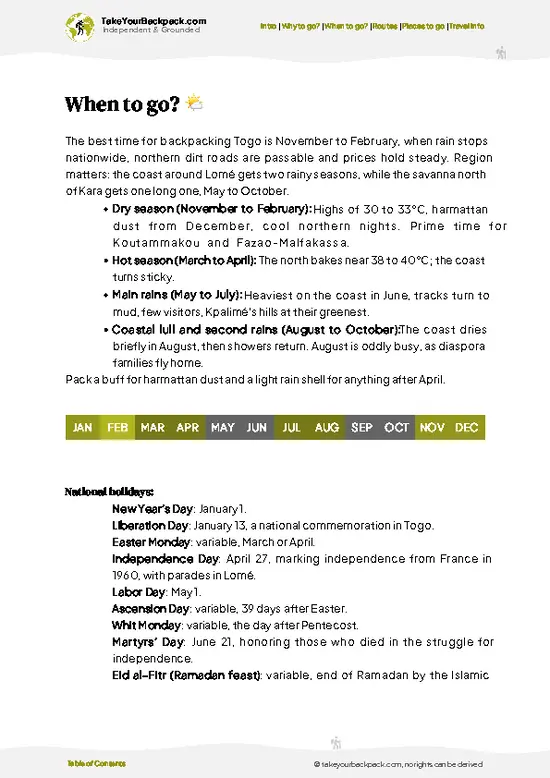
  • Topic: Weather – Niamtougou’s dry season, from November to March, offers clear skies and minimal rain, making trails less slippery and the air crisp. The wet season, April to October, brings heavy rains that can turn paths into mud traps and obscure views.

  • Topic: Temperature – Expect daytime highs around 28-32°C (82-90°F) during the dry season, with cooler nights dipping to 18-22°C (64-72°F). The wet season feels warmer and more humid, often pushing highs above 33°C (91°F), which can sap your energy on long hikes.

  • Topic: Daylight Hours – Daylight stays steady year-round, roughly 11 to 12 hours, but the dry season’s clearer skies mean you’ll get more usable light for early starts and late finishes without the threat of sudden downpours.

  • Topic: Crowds – The dry months attract more local
read more 👉

  • Topic: Weather – Niamtougou’s dry season, from November to March, offers clear skies and minimal rain, making trails less slippery and the air crisp. The wet season, April to October, brings heavy rains that can turn paths into mud traps and obscure views.

  • Topic: Temperature – Expect daytime highs around 28-32°C (82-90°F) during the dry season, with cooler nights dipping to 18-22°C (64-72°F). The wet season feels warmer and more humid, often pushing highs above 33°C (91°F), which can sap your energy on long hikes.

  • Topic: Daylight Hours – Daylight stays steady year-round, roughly 11 to 12 hours, but the dry season’s clearer skies mean you’ll get more usable light for early starts and late finishes without the threat of sudden downpours.

  • Topic: Crowds – The dry months attract more local and regional visitors, especially around holidays, but Niamtougou remains low-key compared to Togo’s southern hotspots. The wet season sees fewer travelers, offering solitude but at the cost of accessibility.

  • Topic: Seasonal Activities – Dry season is prime for trekking, market visits, and cultural festivals that showcase local music and dance. The wet season limits outdoor activities but brings lush greenery and vibrant birdlife for those willing to brave the mud.

  • Topic: Price Fluctuations – Accommodation and transport costs rise slightly during the dry season due to demand but remain reasonable. The wet season offers better deals, though some guesthouses may close or reduce services.


Pro-tip: Aim for late November or February to catch dry, cool weather with fewer crowds and lively local events—perfect for soaking in Niamtougou’s authentic rhythm without the hassle of mud or heat exhaustion.


source: climatestotravel.comJANJanuary: highly recommended for travelingFEBFebruary: excellent for travelingMARMarch: highly recommended for travelingAPRApril: fair for travelingMAYMay: fair for travelingJUNJune: fair for travelingJULJuly: fair for travelingAUGAugust: fair for travelingSEPSeptember: fair for travelingOCTOctober: fair for travelingNOVNovember: highly recommended for travelingDECDecember: highly recommended for traveling
when-to-go

✈️ The backpacker research shortcutTogo Travel Guide

An offline-friendly backpacking guide with optimized travel routes, ranked highlights, transport advice, and the best areas to stay.
example page 0 from our offline Travel Guide for Togo
example page 1 from our offline Travel Guide for Togo
example page 2 from our offline Travel Guide for Togo
example page 3 from our offline Travel Guide for Togo
example page 4 from our offline Travel Guide for Togo
example page 5 from our offline Travel Guide for Togo
example page 6 from our offline Travel Guide for Togo
example page 7 from our offline Travel Guide for Togo
The digital guide (215 pages) contains:
49 highlights, ranked by travel appeal
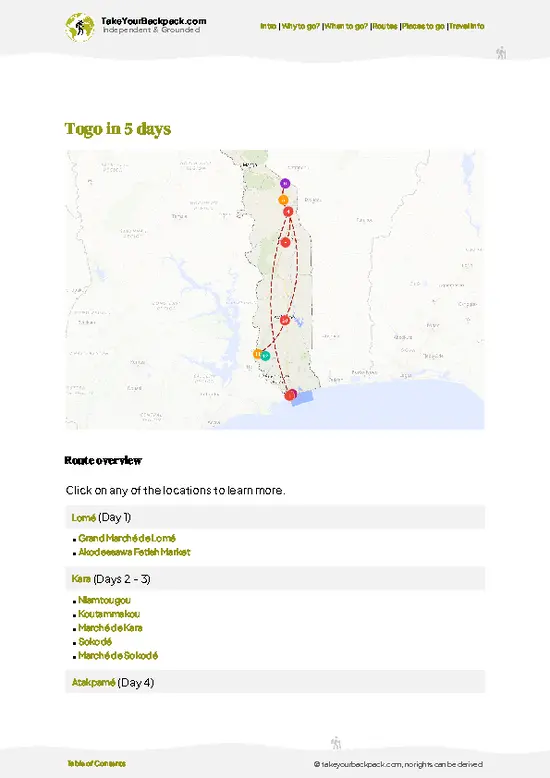
Optimized 2, 3 & 5-day travel routes
Cities, national parks, landmarks, beaches
How to get around
Offline-friendly for travel without Wi-Fi
👉 Click to see all 30+ guide features

📅 Plan smarter in minutes, not weeks
Month by month travel advice
Festivals & national holidays
Budget expectations

🗺️ Go to the right places, skip the overrated ones
Honest pros & cons of destinations
Top hikes, parks & viewpoints
Lesser-known places most travelers miss
Clear “worth it vs skip it” guidance

🛏️ Travel smoothly without rookie mistakes
Best areas to stay
Transport systems explained simply
Common scams & safety advice
SIM cards, money & practical tips

🌍 Understand the country, not just visit it
Culture & traditions
52 Essential phrases & customs
Festivals worth planning around
Traveler-friendly historical context
Insights that make places more meaningful

📱 Built for real travel conditions
Fully downloadable PDF
Works completely offline
Optimized for phone use
Useful in remote areas & buses
Everything in one place
Save weeks of stressful planning
Get instant access to your full guide. 30‑day money-back guarantee.
+ Add another guide for just US$7.80

By proceeding you agree to our terms.
Sent to your inbox immediately after payment • 100% Secure Checkout
Best Backpacking Travel Advisor 2025 tourism awardBest Backpacking
Travel Advisor
2025
What others say about Take Your Backpack Guides:
⭐⭐⭐⭐⭐
Fantastic, amazing amount of information!
⭐⭐⭐⭐⭐
My goodness this is amazing, it's what I've been looking for hats off too you!
⭐⭐⭐⭐⭐
I think this is absolutely BRILLIANT
⭐⭐⭐⭐
Very complete and informative. It's still missing places, but I gotta to commend you
⭐⭐⭐⭐⭐
This is truly amazing, thank you, can't wait to explore it with my kids!
⭐⭐⭐⭐⭐
Awesome resource, thank you!
⭐⭐⭐⭐⭐
This is amazing! Can't wait to explore the ones I haven't seen
⭐⭐⭐⭐
I love this! Well done, great idea.
⭐⭐⭐⭐⭐
Thanks for taking the time to make this gem!
⭐⭐⭐⭐⭐
This might be the best website I've ever seen.
⭐⭐⭐⭐⭐
Congratulations, and thank you so much for your work; it's incredibly valuable.
⭐⭐⭐⭐
In all seriousness I think you did a great job pointing out the important spots
⭐⭐⭐⭐⭐
10/10 very good
⭐⭐⭐⭐⭐
As someone who's only just starting to visit regularly this is awesome, thank you.
⭐⭐⭐⭐
Thank you very much! I'm going to visit my dad, it's going to be very useful!
⭐⭐⭐⭐⭐
This is really cool! We'll be travelling for the first time and this definitely come in handy.
⭐⭐⭐⭐⭐
You are now our minister of culture, congratulations 👨‍💼
⭐⭐⭐⭐⭐
Just wanted to tell you that this is a pearl! Going to follow your recommendations.
⭐⭐⭐⭐⭐
This is so cool. I'll definitely be using the resource for my travels soon.
⭐⭐⭐⭐⭐
This is very impressive! Good work.
⭐⭐⭐⭐⭐
This is an amazing and informative site. Very well done!

🛏️ Where to stay?Best areas to stay in Togo

In Niamtougou, the best spot for backpackers is the central district around the main market and the town square. This area pulses with local life—early morning vendors setting up, the scent of fresh spices and grilled meat hanging in the air, and the chatter of locals negotiating prices. It’s where you’ll find the most budget-friendly guesthouses and a handful of simple hostels that cater to solo travelers and small groups. Staying here means you’re never far from the heart of the town, making it easy to connect with other backpackers and locals alike.

Compared to the quieter residential outskirts, … read more 👉
In Niamtougou, the best spot for backpackers is the central district around the main market and the town square. This area pulses with local life—early morning vendors setting up, the scent of fresh spices and grilled meat hanging in the air, and the chatter of locals negotiating prices. It’s where you’ll find the most budget-friendly guesthouses and a handful of simple hostels that cater to solo travelers and small groups. Staying here means you’re never far from the heart of the town, making it easy to connect with other backpackers and locals alike.

Compared to the quieter residential outskirts, this central zone offers a safer, more social vibe after dark, thanks to the steady flow of people and street lighting. It’s not polished, but that’s the point—the rough edges bring authenticity. You’ll want to avoid the more isolated neighborhoods where accommodation is sparse and the atmosphere can feel too still, especially if you’re traveling alone. In the center, you get the buzz and the security of being among others, plus quick access to transport links for exploring the surrounding hills and markets.

🚌 Getting aroundHow to get from A to B

Niamtougou moves at its own rhythm—neither frantic nor sluggish, but a steady pulse that matches the dusty roads and the chatter spilling from open market stalls. The sun hits the red earth with a fierce honesty by midday, and the scent of grilled maize and diesel fumes hangs in the air, mixing with the occasional breeze that carries the distant calls of vendors. Here, schedules are more about the flow of people than strict timetables. You’ll find that patience and a keen eye for local cues unlock the best rides and routes. The town’s transport scene is a blend of informal hustle and practical necessity, where knowing when and where to catch your ride is half the adventure.

Walking: The most straightforward way to get around, especially within the town center. The compact layout means you … read more 👉
Niamtougou moves at its own rhythm—neither frantic nor sluggish, but a steady pulse that matches the dusty roads and the chatter spilling from open market stalls. The sun hits the red earth with a fierce honesty by midday, and the scent of grilled maize and diesel fumes hangs in the air, mixing with the occasional breeze that carries the distant calls of vendors. Here, schedules are more about the flow of people than strict timetables. You’ll find that patience and a keen eye for local cues unlock the best rides and routes. The town’s transport scene is a blend of informal hustle and practical necessity, where knowing when and where to catch your ride is half the adventure.

Walking: The most straightforward way to get around, especially within the town center. The compact layout means you can cover most spots on foot in 15-30 minutes. It’s free, gives you a real feel for the town’s textures and sounds, and lets you dodge the dust clouds kicked up by passing vehicles.

Shared Taxis (Taxi Collectifs): These minibuses or cars run fixed routes but leave only when full, so timing is flexible but unpredictable. Expect to pay around 200-500 CFA francs for short hops. They’re the fastest way to reach nearby villages or the bus station, but comfort is minimal—think tight seats and windows down to let in the heat and dust.

Motorcycle Taxis (Zémidjans): The go-to for quick, nimble trips through narrow streets or when you’re running late. Prices start at about 100 CFA francs for short distances. They’re noisy and expose you to every bump and breeze, but nothing beats the thrill of zipping past slower traffic and feeling the town’s pulse up close.

Intercity Buses: For longer hauls, these leave from the main bus station and run on rough schedules—departures can be early morning or late afternoon, depending on demand. Tickets cost between 1,000 and 2,000 CFA francs to major regional hubs. The rides are slow and bumpy but reliable if you’re patient and prepared for the dust and chatter.

Bicycle Rentals: Less common but a solid option if you want freedom without the dust cloud. Rentals are rare and usually arranged through guesthouses or locals, costing around 500-1,000 CFA francs per day. It’s a quiet, sweat-earned way to explore the outskirts and soak in the landscape at your own pace.

Mastering Niamtougou’s transport means tuning into its natural tempo—embracing the unpredictability, the smells, the sounds, and the human rhythm that turns every trip into a story worth telling.

👛 Costs (as of 3 September 2026)How expensive it really is

Backpacking in Niamtougou, Togo, offers a raw, authentic experience where your budget stretches further than in more tourist-heavy spots, but it still demands a practical approach to daily expenses.
  • Dorm Accommodation: Expect basic guesthouses or small hostels with shared rooms. Prices hover around €5 to €10 per night. These places are simple—think mosquito nets, a fan, and a shared bathroom—but clean enough to recharge after a day exploring.
  • Meals: Street food and local eateries dominate the scene. A filling meal of grilled meat, rice, or local staples like fufu and sauce costs about €1 to €3. If you opt for something a bit more substantial or a small café, budget up to €5 per meal. Fresh fruit and snacks are cheap and plentiful, perfect for quick energy boosts.
  • Local Transport: Transport
read more 👉
Backpacking in Niamtougou, Togo, offers a raw, authentic experience where your budget stretches further than in more tourist-heavy spots, but it still demands a practical approach to daily expenses.
  • Dorm Accommodation: Expect basic guesthouses or small hostels with shared rooms. Prices hover around €5 to €10 per night. These places are simple—think mosquito nets, a fan, and a shared bathroom—but clean enough to recharge after a day exploring.
  • Meals: Street food and local eateries dominate the scene. A filling meal of grilled meat, rice, or local staples like fufu and sauce costs about €1 to €3. If you opt for something a bit more substantial or a small café, budget up to €5 per meal. Fresh fruit and snacks are cheap and plentiful, perfect for quick energy boosts.
  • Local Transport: Transport is mostly informal—shared taxis or minibuses. A typical ride within or around town will set you back around €0.30 to €1. For longer trips or private taxis, expect to pay closer to €3 to €5. Walking is often the best way to soak in the atmosphere and save cash.
  • Basic Activities/Entry Fees: Niamtougou isn’t packed with pricey tourist attractions. Entry fees to local sites or markets are minimal, usually under €1. If you want to hire a local guide for a cultural or nature walk, budget about €5 to €10, which supports the community directly.
  • Miscellaneous Expenses: This covers essentials like bottled water, snacks, phone credit, or small souvenirs. Plan for around €1 to €3 daily. Bottled water is a must, given the climate and sanitation standards.

Altogether, you’re looking at a daily budget between €10 and €25. This range gives you enough flexibility to stay comfortable without cutting corners, letting you focus on the sights, sounds, and smells that make Niamtougou a genuine slice of Togo life.
⚠️ Prices can change and everyone travels differently, so take this as a rough guide. Hope it helps you plan your adventure!

🚌 Day tripsShort trips worth adding

Niamtougou is a fantastic base for exploring the rich tapestry of Togo’s landscapes and cultures. With its vibrant markets and friendly locals, you’ll find the perfect launchpad for unforgettable day trips.

Mount Agou
Just a couple of hours from Niamtougou, Mount Agou offers a rewarding hike that culminates in breathtaking views of the surrounding hills and valleys. The trail winds through lush forests, where the air is thick with the scent of damp earth and wildflowers. Aim for early morning to beat the heat and catch the sunrise painting the sky. Expect to spend around 5,000 CFA for transport and snacks. A common mistake? Underestimating the trail’s difficulty; wear sturdy shoes and bring plenty of water.
👉 Explore Mount Agou

Kpalimé
About an hour away, Kpalimé is a hub for artisans … read more 👉
Niamtougou is a fantastic base for exploring the rich tapestry of Togo’s landscapes and cultures. With its vibrant markets and friendly locals, you’ll find the perfect launchpad for unforgettable day trips.

Mount Agou
Just a couple of hours from Niamtougou, Mount Agou offers a rewarding hike that culminates in breathtaking views of the surrounding hills and valleys. The trail winds through lush forests, where the air is thick with the scent of damp earth and wildflowers. Aim for early morning to beat the heat and catch the sunrise painting the sky. Expect to spend around 5,000 CFA for transport and snacks. A common mistake? Underestimating the trail’s difficulty; wear sturdy shoes and bring plenty of water.
👉 Explore Mount Agou

Kpalimé
About an hour away, Kpalimé is a hub for artisans and a great spot to immerse yourself in local crafts. Wander through bustling markets filled with colorful textiles and handmade goods. Don’t miss the chance to sample local dishes at street stalls—try the fufu! The total cost for a day here can be around 7,000 CFA, including transport and food. Best visited during the dry season, when the weather is more forgiving. Many first-timers overlook the vibrant art scene; take time to chat with local artists.


Fosse aux Lions
This natural wonder is a short drive from Niamtougou and offers a unique opportunity to see a stunning waterfall surrounded by lush greenery. The sound of rushing water is invigorating, and the area is perfect for a picnic. Plan for about 3,000 CFA for transport and snacks. The best time to visit is during the rainy season when the falls are at their most impressive. A common error is not bringing a camera; the scenery is worth capturing!


Atakpamé
Just over an hour away, Atakpamé is known for its vibrant cultural scene and local festivals. You can explore traditional music and dance, especially if you time your visit with a local event. Expect to spend around 6,000 CFA for transport and a meal. The dry season is ideal for outdoor activities. Many travelers miss out on the local festivities; check the calendar before you go!
Want to know what more Togo offers?
The Togo Travel Guide describes 49 highlights, from cities to national parks, from beaches to hikes

Get the Travel Guide -

🛡️ SafetyStaying Safe: What Travelers Should Know

Niamtougou is generally safe, but a few practical tips can enhance your experience. Stay aware in crowded markets, where pickpockets might lurk. Keep your valuables close, ideally in a money belt under your clothes.

If you’re solo, avoid wandering too far after dark. The streets can be dimly lit, and it’s best to stick to well-populated areas.

Scams are rare, but be cautious of overly friendly locals who might offer unsolicited help—sometimes, it comes with a price. When haggling in markets, keep your cool; it’s part of the dance.

Embrace the local vibe, but trust your instincts. A confident demeanor goes a long way in blending in and enjoying the rich culture without unnecessary hassle.

FAQFrequently asked questions about Niamtougou

Niamtougou is worth visiting if you are interested in experiencing local Togolese culture and rural life, but it is often considered more of a stopover for travelers heading to northern Togo. The town offers a market and nearby natural attractions, but it lacks extensive tourist infrastructure.
Two days are sufficient to explore Niamtougou, including visiting the local market and nearby natural sites such as the surrounding hills. This allows enough time to experience the town without rushing.
Yes, Niamtougou can be visited as a day trip from Kara, which is about 40 kilometers away. The journey takes around one hour by car or bus, making it feasible for a day visit.
⚠️ Things can change over time, so always validate details locally before you go.

Other Togolese towns near Niamtougou

Explore more nearby:

  • Bassar—yam markets, ironworking heritage, plateau views| 67 km away
  • Tchamba—cotton fields, Fulani settlements, Friday market| 88 km away
  • Mango—market town, river crossing, northern gateway| 96 km away

💡 Not sure where to go next?
Create a personalized itinerary for Togo including Niamtougou and the places that fit your trip.

Generate my itinerary

👉 Discover all towns

Or checkout all Togo has to offer (think cities, towns, villages, national parks, hikes, beaches, festivals)
Country photo of Togo

We 💚 feedbackIs it worth it?

Niamtougou has a raw, unfiltered vibe that’s hard to find elsewhere. The air is thick with the scent of earth after rain, and the laughter of locals fills the streets. Don’t miss the bustling market; it’s a sensory overload in the best way. Just a heads-up: the roads can be rough, so pack patience along with your gear. Embrace the journey; the surprises are what make it all worthwhile.

✍️ Help improve this page!
The information on this page is based on in-depth research, insights shared by experienced travelers, and feedback from the local travel community in Togo. While every effort is made to keep the information accurate and current, conditions can change — so if you spot anything incorrect or outdated, please get in touch.


🙋‍♂️ Give feedback

👋 Meet the founderWho’s Behind Take Your Backpack?

Johan, backpacker and founder of TakeYourBackpackHi, I’m Johan (Netherlands 🇳🇱), the creator of TakeYourBackpack. Over the past decade, I’ve backpacked through 80+ countries across six continents, gaining extensive experience with independent travel, long-term trips, and overland routes.

This site is built on a combination of firsthand travel experience and carefully curated insights from other backpackers. Many guides are based on places I’ve personally visited, while others bring together tips, observations, and practical advice shared by trusted travelers I’ve met along the way.

The goal is to provide realistic, experience-driven guidance — not generic itineraries — so you can explore destinations with better context, clearer expectations, and more confidence.

Get full Togo guide •
Instant download • 49 highlights • Full Offline guide