v2.webp)
The Capitol
Let’s cut through the postcard haze: Dougga’s Capitol is not just another pile of Roman rocks. This is a temple that still commands respect, even after two millennia of sun, wind, and the occasional goat. The columns are thick, the steps are steep, and the carvings—if you squint—still show off the swagger of a city that once believed it was the center of the world. Stand here at noon, and you’ll feel the heat radiate off the stone like a challenge. This is where the city flexed its power, and you can still sense it in the bones of the place.
The Theatre
Forget the Instagram shots of empty ruins. Dougga’s Roman theatre is usually quiet, but it’s not sanitized. Sit on the top row and you’ll get a view that’s half ancient drama, half rolling olive groves. The acoustics are so sharp … read more 👉
Let’s cut through the postcard haze: Dougga’s Capitol is not just another pile of Roman rocks. This is a temple that still commands respect, even after two millennia of sun, wind, and the occasional goat. The columns are thick, the steps are steep, and the carvings—if you squint—still show off the swagger of a city that once believed it was the center of the world. Stand here at noon, and you’ll feel the heat radiate off the stone like a challenge. This is where the city flexed its power, and you can still sense it in the bones of the place.
The Theatre
Forget the Instagram shots of empty ruins. Dougga’s Roman theatre is usually quiet, but it’s not sanitized. Sit on the top row and you’ll get a view that’s half ancient drama, half rolling olive groves. The acoustics are so sharp … read more 👉
The Capitol
Let’s cut through the postcard haze: Dougga’s Capitol is not just another pile of Roman rocks. This is a temple that still commands respect, even after two millennia of sun, wind, and the occasional goat. The columns are thick, the steps are steep, and the carvings—if you squint—still show off the swagger of a city that once believed it was the center of the world. Stand here at noon, and you’ll feel the heat radiate off the stone like a challenge. This is where the city flexed its power, and you can still sense it in the bones of the place.
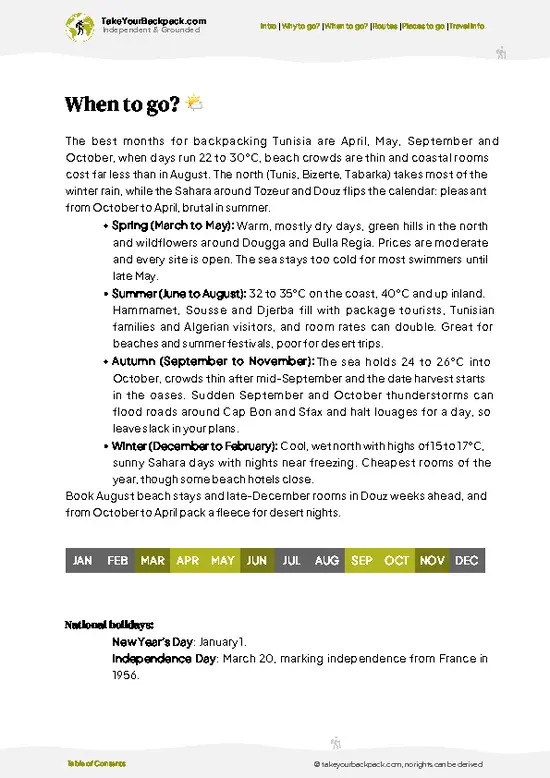
The Theatre
Forget the Instagram shots of empty ruins. Dougga’s Roman theatre is usually quiet, but it’s not sanitized. Sit on the top row and you’ll get a view that’s half ancient drama, half rolling olive groves. The acoustics are so sharp you can whisper and hear it bounce back—no exaggeration. If you’re lucky enough to catch a local performance or even a rehearsal, you’ll see why this place was built for spectacle, not just ceremony. The real magic? The wind whistling through the seats, carrying echoes of every audience that’s ever sat here.
The Licinian Baths
Roman baths are everywhere, but the Licinian Baths at Dougga are a masterclass in ancient leisure. You can trace the whole spa routine: cold plunge, warm soak, hot sweat. The mosaics are battered but still cheeky, and the layout is so intact you can almost hear the gossip and splashing. This isn’t a sterile museum piece—it’s a blueprint for how to live well, Roman-style. If you want to understand daily life, skip the temples and start here.
The Punic Mausoleum
Most Roman sites erase what came before, but Dougga’s Punic Mausoleum refuses to be sidelined. This tower predates the Romans and stands out with its sharp, geometric lines—a totally different flavor from the rest of the ruins. It’s a rare survivor from the Numidian era, and it’s not here for decoration. Climb the hill for a close look and you’ll see why archaeologists get giddy: this is North African history with its teeth still in.
The Forum
Every Roman city had a forum, but Dougga’s is a lesson in how public life used to work. The paving stones are worn smooth by centuries of feet, and the layout is still easy to read. You can stand where merchants haggled, politicians schemed, and locals gossiped. The forum isn’t flashy, but it’s the social engine of the city—walk it at sunset and you’ll get a sense of the rhythms that made Dougga tick.
The House of Trifolium
Private homes rarely get the spotlight, but the House of Trifolium is Dougga’s answer to the question: what did the good life look like here? The floor mosaics are battered but still vivid, and the rooms are laid out in a way that makes sense even now. You can see where the family ate, where they entertained, and where they escaped the heat. It’s a rare chance to step inside the everyday, not just the monumental.
Let’s cut through the postcard haze: Dougga’s Capitol is not just another pile of Roman rocks. This is a temple that still commands respect, even after two millennia of sun, wind, and the occasional goat. The columns are thick, the steps are steep, and the carvings—if you squint—still show off the swagger of a city that once believed it was the center of the world. Stand here at noon, and you’ll feel the heat radiate off the stone like a challenge. This is where the city flexed its power, and you can still sense it in the bones of the place.
The Theatre
Forget the Instagram shots of empty ruins. Dougga’s Roman theatre is usually quiet, but it’s not sanitized. Sit on the top row and you’ll get a view that’s half ancient drama, half rolling olive groves. The acoustics are so sharp you can whisper and hear it bounce back—no exaggeration. If you’re lucky enough to catch a local performance or even a rehearsal, you’ll see why this place was built for spectacle, not just ceremony. The real magic? The wind whistling through the seats, carrying echoes of every audience that’s ever sat here.
The Licinian Baths
Roman baths are everywhere, but the Licinian Baths at Dougga are a masterclass in ancient leisure. You can trace the whole spa routine: cold plunge, warm soak, hot sweat. The mosaics are battered but still cheeky, and the layout is so intact you can almost hear the gossip and splashing. This isn’t a sterile museum piece—it’s a blueprint for how to live well, Roman-style. If you want to understand daily life, skip the temples and start here.
The Punic Mausoleum
Most Roman sites erase what came before, but Dougga’s Punic Mausoleum refuses to be sidelined. This tower predates the Romans and stands out with its sharp, geometric lines—a totally different flavor from the rest of the ruins. It’s a rare survivor from the Numidian era, and it’s not here for decoration. Climb the hill for a close look and you’ll see why archaeologists get giddy: this is North African history with its teeth still in.
The Forum
Every Roman city had a forum, but Dougga’s is a lesson in how public life used to work. The paving stones are worn smooth by centuries of feet, and the layout is still easy to read. You can stand where merchants haggled, politicians schemed, and locals gossiped. The forum isn’t flashy, but it’s the social engine of the city—walk it at sunset and you’ll get a sense of the rhythms that made Dougga tick.
The House of Trifolium
Private homes rarely get the spotlight, but the House of Trifolium is Dougga’s answer to the question: what did the good life look like here? The floor mosaics are battered but still vivid, and the rooms are laid out in a way that makes sense even now. You can see where the family ate, where they entertained, and where they escaped the heat. It’s a rare chance to step inside the everyday, not just the monumental.
Spotted a mistake or missing something? Contact us.

VIP transfer between Tunis Carthage Airport and a hotel in Tunis

07 -Guided day Tour Tunisia Monumental

10 Day Historical and Cultural Tour of Tunisia

8 Days Tunisia Essential Discovery Private Tour

Bizerte Utique Day and Cape Angela the Far North of Africa

Explore Tunisia in Depth:The Private Grand Tour in 8 Days

Half-Day Traditional Tunisian Cuisine Cooking Class in Tunis

3 Day Tunisian Desert Adventure Dunes, Oases and Bedouin Nights

Private Tour to Kairouan, El Jem and Sousse


 Best Backpacking
.jpg) Hi, I’m Johan (Netherlands 🇳🇱), the creator of TakeYourBackpack. Over the past 3 decades, I’ve backpacked through 90+ countries across six continents, gaining extensive experience with independent travel, long-term trips, and overland routes.
Hi, I’m Johan (Netherlands 🇳🇱), the creator of TakeYourBackpack. Over the past 3 decades, I’ve backpacked through 90+ countries across six continents, gaining extensive experience with independent travel, long-term trips, and overland routes.