
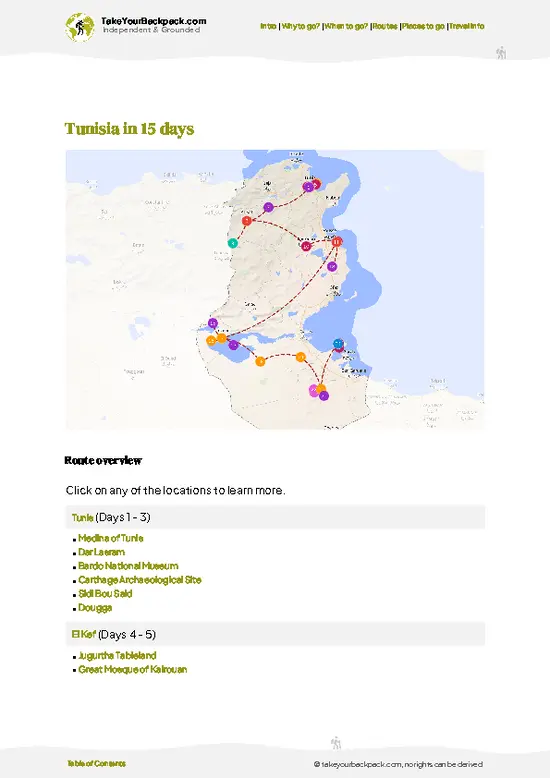
Antonine Baths
Let’s get real: most people show up expecting a single, jaw-dropping ruin. Instead, Carthage is a sprawl of sites, and the Antonine Baths are the blockbuster. Not because they’re pristine—far from it—but because you can actually feel the scale of Roman ambition. These aren’t dainty mosaics; these are the bones of a seaside palace for the masses. Stand on the crumbling platforms, look out at the Mediterranean, and you’ll get why emperors wanted to show off here. The crowds thin out by late afternoon, and that’s when the sea breeze and the echo of ancient voices make it feel less like a museum and more like a lost city waking up.
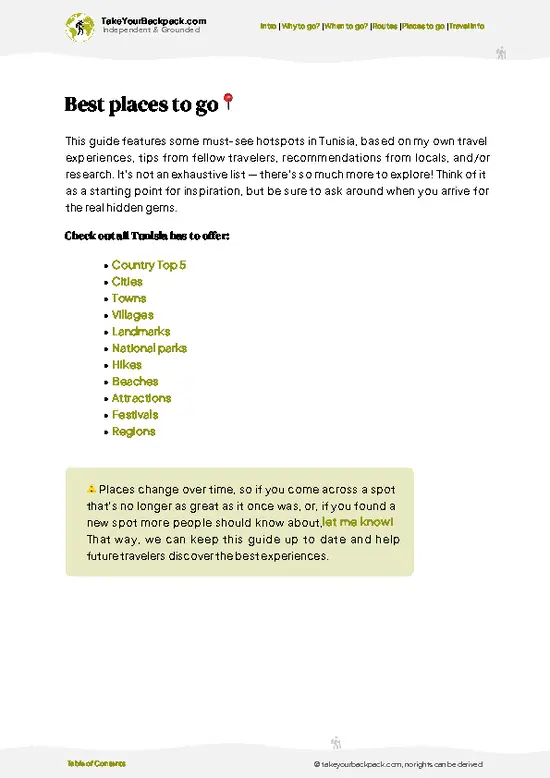
Tophet of Salammbo
This is not your average photo stop. The Tophet is a field of stone markers and urns, the remnants of Carthage’s most controversial … read more 👉
Let’s get real: most people show up expecting a single, jaw-dropping ruin. Instead, Carthage is a sprawl of sites, and the Antonine Baths are the blockbuster. Not because they’re pristine—far from it—but because you can actually feel the scale of Roman ambition. These aren’t dainty mosaics; these are the bones of a seaside palace for the masses. Stand on the crumbling platforms, look out at the Mediterranean, and you’ll get why emperors wanted to show off here. The crowds thin out by late afternoon, and that’s when the sea breeze and the echo of ancient voices make it feel less like a museum and more like a lost city waking up.
Tophet of Salammbo
This is not your average photo stop. The Tophet is a field of stone markers and urns, the remnants of Carthage’s most controversial … read more 👉
Antonine Baths
Let’s get real: most people show up expecting a single, jaw-dropping ruin. Instead, Carthage is a sprawl of sites, and the Antonine Baths are the blockbuster. Not because they’re pristine—far from it—but because you can actually feel the scale of Roman ambition. These aren’t dainty mosaics; these are the bones of a seaside palace for the masses. Stand on the crumbling platforms, look out at the Mediterranean, and you’ll get why emperors wanted to show off here. The crowds thin out by late afternoon, and that’s when the sea breeze and the echo of ancient voices make it feel less like a museum and more like a lost city waking up.
Tophet of Salammbo
This is not your average photo stop. The Tophet is a field of stone markers and urns, the remnants of Carthage’s most controversial rituals. Forget the Instagram filters—this place is raw, unsettling, and absolutely fascinating. Historians still argue about what happened here: child sacrifice, or just a cemetery for the young? Either way, you’re standing in the middle of a mystery that’s fueled debates for centuries. It’s not “pretty,” but it’s the kind of site that sticks with you long after you leave. If you want a sanitized version of history, skip it. If you want to feel the pulse of ancient Carthage, this is ground zero.
Byrsa Hill and Carthage Museum
Byrsa Hill is where Carthage’s story gets personal. Climb up (yes, it’s a climb, and yes, it’s worth it) for a panoramic view that puts the whole city in context: ruins, sea, modern sprawl. The museum itself is a mixed bag—some world-class artifacts, some dusty cases—but the real magic is the sense of layers. Phoenician, Roman, Vandal, Byzantine: it’s all stacked here. You’re not just looking at relics; you’re standing on the city’s original acropolis. If you want to understand why Carthage mattered, this is the spot.
Roman Amphitheatre
Don’t expect the Colosseum. What you get is a sunken arena, half-swallowed by the suburbs, but that’s exactly the point. This is where gladiators fought, and you can walk right into the pit—no velvet ropes, no crowds. It’s gritty, it’s real, and it’s a reminder that Carthage was a living, breathing city, not just a postcard. The amphitheatre’s battered stones have seen more drama than any Instagram reel.
Punic Ports
If you want to see Carthaginian genius, skip the temples and head for the water. The Punic Ports are where the city’s power was built—literally. The military harbor, with its circular island, was an engineering marvel, and you can still trace the outlines today. There’s not much left above ground, but if you close your eyes and listen to the wind, you can almost hear the shipbuilders and sailors. This is where Carthage outsmarted Rome—until it didn’t. For anyone who loves the nuts and bolts of ancient history, this is the real show.
Let’s get real: most people show up expecting a single, jaw-dropping ruin. Instead, Carthage is a sprawl of sites, and the Antonine Baths are the blockbuster. Not because they’re pristine—far from it—but because you can actually feel the scale of Roman ambition. These aren’t dainty mosaics; these are the bones of a seaside palace for the masses. Stand on the crumbling platforms, look out at the Mediterranean, and you’ll get why emperors wanted to show off here. The crowds thin out by late afternoon, and that’s when the sea breeze and the echo of ancient voices make it feel less like a museum and more like a lost city waking up.
Tophet of Salammbo
This is not your average photo stop. The Tophet is a field of stone markers and urns, the remnants of Carthage’s most controversial rituals. Forget the Instagram filters—this place is raw, unsettling, and absolutely fascinating. Historians still argue about what happened here: child sacrifice, or just a cemetery for the young? Either way, you’re standing in the middle of a mystery that’s fueled debates for centuries. It’s not “pretty,” but it’s the kind of site that sticks with you long after you leave. If you want a sanitized version of history, skip it. If you want to feel the pulse of ancient Carthage, this is ground zero.
Byrsa Hill and Carthage Museum
Byrsa Hill is where Carthage’s story gets personal. Climb up (yes, it’s a climb, and yes, it’s worth it) for a panoramic view that puts the whole city in context: ruins, sea, modern sprawl. The museum itself is a mixed bag—some world-class artifacts, some dusty cases—but the real magic is the sense of layers. Phoenician, Roman, Vandal, Byzantine: it’s all stacked here. You’re not just looking at relics; you’re standing on the city’s original acropolis. If you want to understand why Carthage mattered, this is the spot.
Roman Amphitheatre
Don’t expect the Colosseum. What you get is a sunken arena, half-swallowed by the suburbs, but that’s exactly the point. This is where gladiators fought, and you can walk right into the pit—no velvet ropes, no crowds. It’s gritty, it’s real, and it’s a reminder that Carthage was a living, breathing city, not just a postcard. The amphitheatre’s battered stones have seen more drama than any Instagram reel.
Punic Ports
If you want to see Carthaginian genius, skip the temples and head for the water. The Punic Ports are where the city’s power was built—literally. The military harbor, with its circular island, was an engineering marvel, and you can still trace the outlines today. There’s not much left above ground, but if you close your eyes and listen to the wind, you can almost hear the shipbuilders and sailors. This is where Carthage outsmarted Rome—until it didn’t. For anyone who loves the nuts and bolts of ancient history, this is the real show.
Spotted a mistake or missing something? Contact us.
v2.webp)


Best Backpacking
Hi, I’m Johan (Netherlands 🇳🇱), the creator of TakeYourBackpack. Over the past decade, I’ve backpacked through 80+ countries across six continents, gaining extensive experience with independent travel, long-term trips, and overland routes.