×

Tunisia🇹🇳 | townsSidi Bou SaidBlue doors, mat-seat café, music palace, cliff-to-marina path | things to do and best time to go

Explore MidesExplore Zaghouan

Backpacking in Sidi Bou Said
🏆 Top picktown ranked #1
By Johan Kruseman 🇳🇱 | Updated October 22, 2026

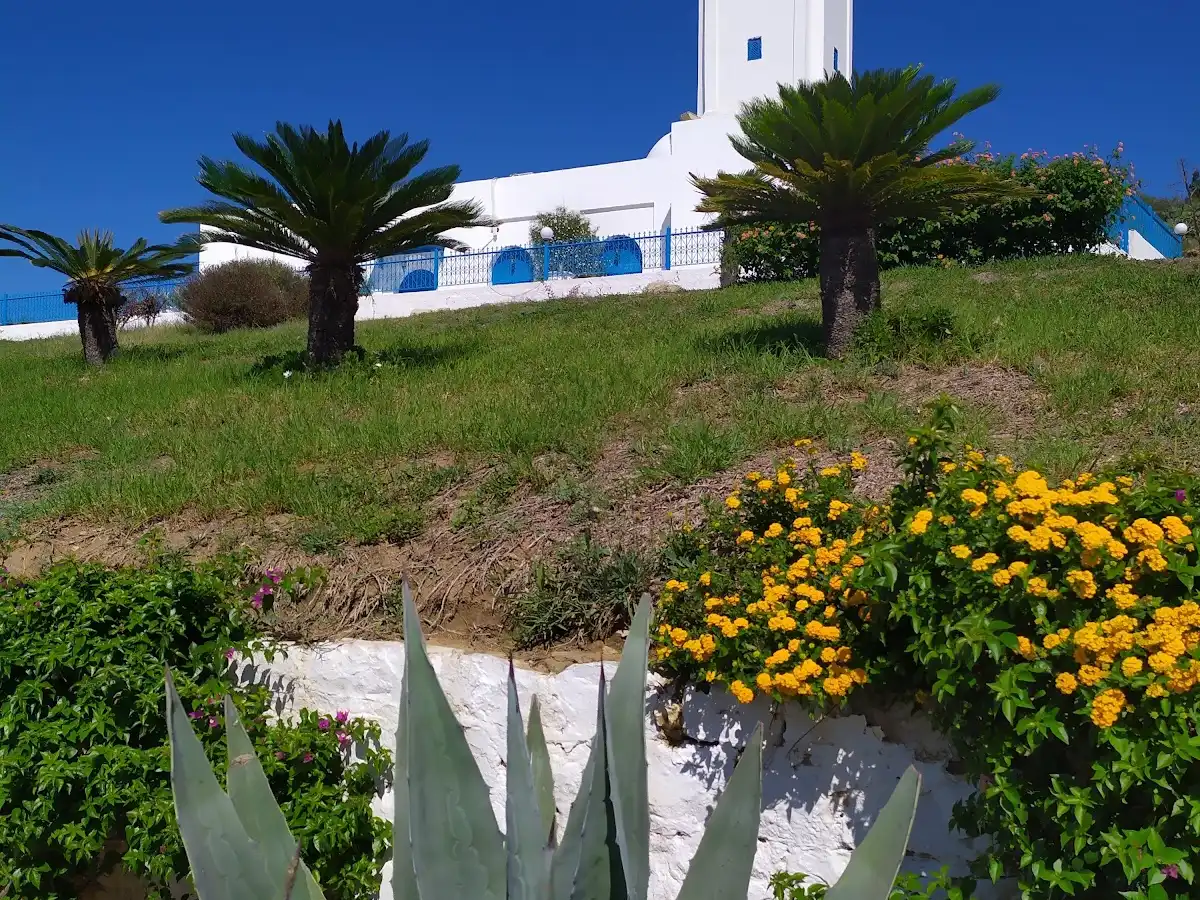
Sidi Bou Said suits travelers who like to wander slowly, photograph doors, and drink mint tea with pine nuts while someone else's cat judges them. If you need nightlife, hostel banter or a long checklist of sights, you may find it less rewarding. It sits on a cliff in the north of Tunisia, about 20 kilometers northeast of central Tunis, above the Gulf of Tunis. The streets are steep cobbles lined with white walls and blue shutters, and every turn gives you a view of the harbor at Sidi Bou Said or a doorway worth a photo. The train from Tunis makes it easy to reach, though the crowds peak at midday and the souvenir shops are persistent. Evenings are quiet, with a few cafés and almost no hostel scene, so meeting other backpackers happens mostly over tea. It works best as a half-day or overnight stop. Slow travelers, photographers and couples will love it. Party seekers and budget-fixated travelers will not.

Discover everything you want to know in the 📖 Tunisia Travel Guide.


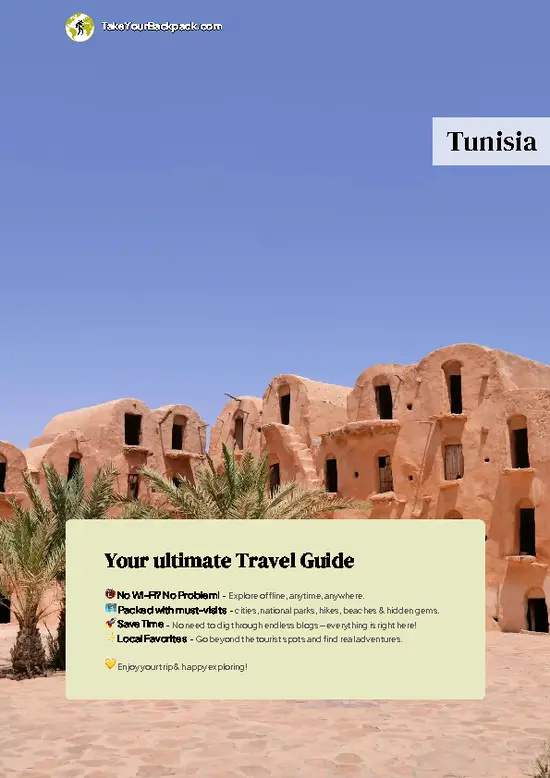
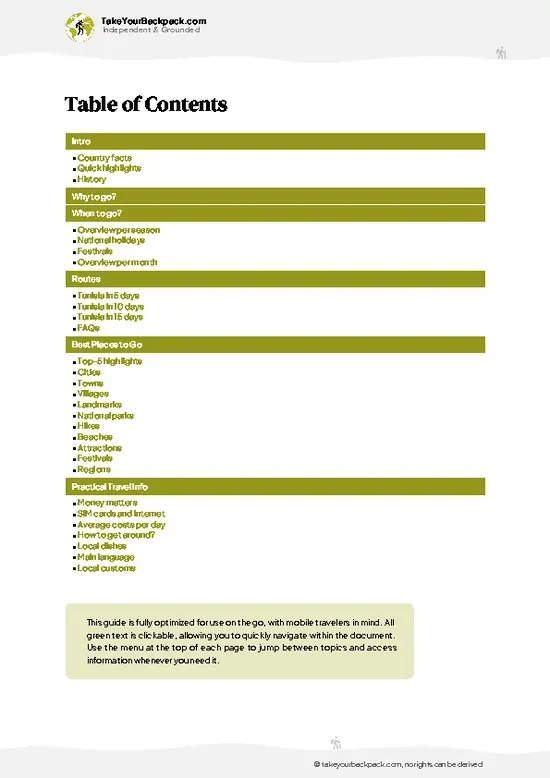
example page 0 from our offline Travel Guide for Tunisia
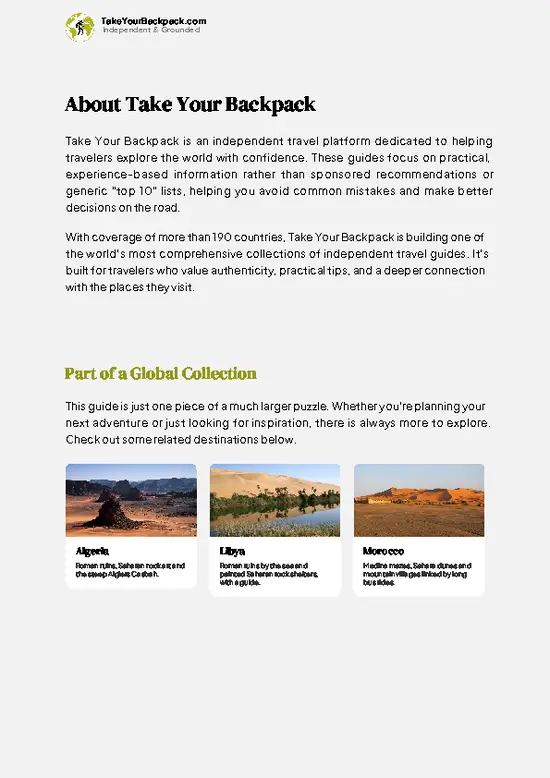
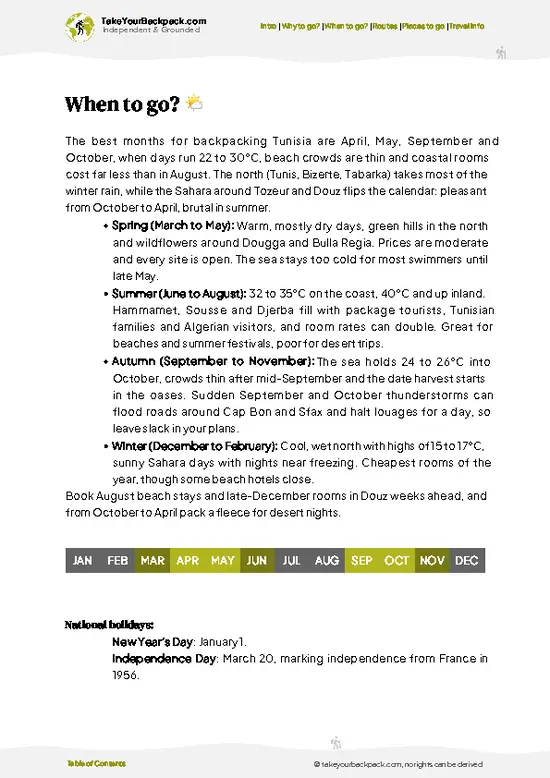
example page 1 from our offline Travel Guide for Tunisia
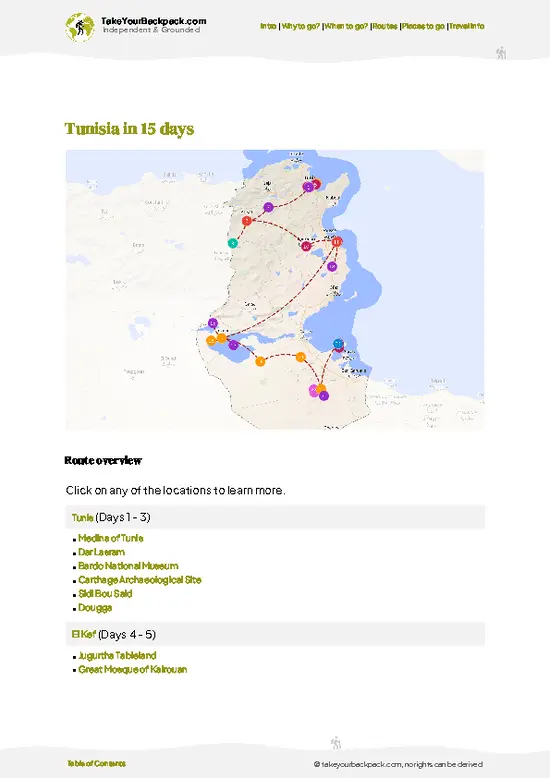
example page 2 from our offline Travel Guide for Tunisia
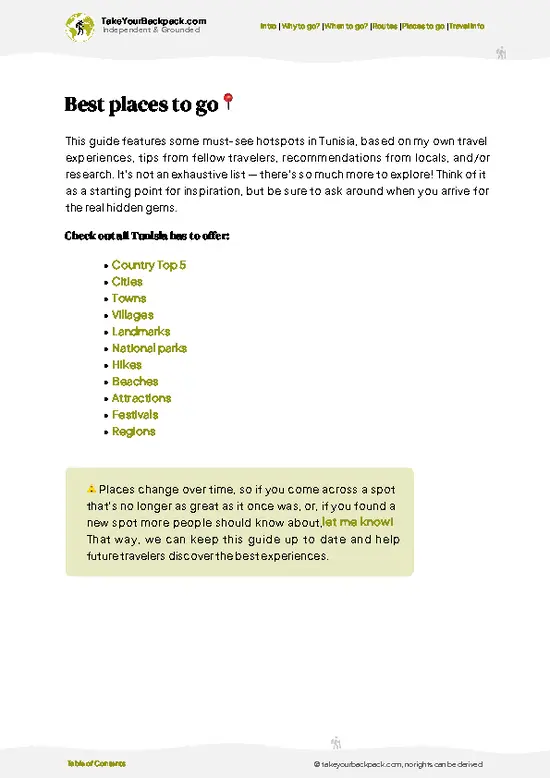
example page 3 from our offline Travel Guide for Tunisia
example page 4 from our offline Travel Guide for Tunisia
example page 5 from our offline Travel Guide for Tunisia
example page 6 from our offline Travel Guide for Tunisia
example page 7 from our offline Travel Guide for Tunisia
Loading the map 🌍
CLICK TO FILTER
cities
towns
villages
landmarks
national parks
hikes
beaches
attractions
festivals
regions
SHOW COUNTRY’S BESTSHOW ALL

✨ Why go?
Ranked #1 town in Tunisia
What sets this place apart

Sidi Bou Said earns its place on a Tunisian route because it gives you a calm, walkable breather from the capital's noise, with the sea always in view. Most travelers come for a few hours, but staying overnight changes everything. Once the tour groups leave, the lanes empty out and the blue-and-white lanes go quiet, lit by lanterns. You can walk the whole village in under an hour, which leaves room to linger over a table at the Café des Nattes, where you sit on mats and drink mint tea with pine nuts. The village also has the Ennejma Ezzahra palace, a rare chance to see a grand early twentieth-century Arab-Andalusian home, and the pleasant cliff paths down toward the marina. It is not a place for big nights out or lots of social chatter, and hostels are scarce, so the crowd leans toward slow … read more 👉
Sidi Bou Said earns its place on a Tunisian route because it gives you a calm, walkable breather from the capital's noise, with the sea always in view. Most travelers come for a few hours, but staying overnight changes everything. Once the tour groups leave, the lanes empty out and the blue-and-white lanes go quiet, lit by lanterns. You can walk the whole village in under an hour, which leaves room to linger over a table at the Café des Nattes, where you sit on mats and drink mint tea with pine nuts. The village also has the Ennejma Ezzahra palace, a rare chance to see a grand early twentieth-century Arab-Andalusian home, and the pleasant cliff paths down toward the marina. It is not a place for big nights out or lots of social chatter, and hostels are scarce, so the crowd leans toward slow travelers, solo wanderers who like their own company, and couples. If you want local food, a few good views and a gentle pace, give it an afternoon and an evening. If you need action, treat it as a short stop.

💡 HighlightsDon't-miss highlights and experiences

  1. Sidi Bou Said village lanes: The main draw is the walk itself, up Rue Hedi Zarrouk and through the side alleys, where white walls, blue studded doors and bougainvillea frame sea views. Go early or late to avoid tour groups. Free, allow 1 to 2 hours.
  2. Café des Nattes: A historic café on a terrace near the main square, where you sit on mats and order mint tea with pine nuts. It is best in the late afternoon when the light softens. Expect US$2 to 4 for a drink, and stay about 45 minutes.
  3. Ennejma Ezzahra Palace (Center of Arab and Mediterranean Music): A grand early twentieth-century palace built by the Baron Rodolphe d’Erlanger, with courtyards, tilework and carved wood. It hosts concerts and houses a music collection. Visit in the morning, entry about US$3 to 5, allow 1 to 1.5 hours.
  4. Dar El Annabi:
… read more 👉
  1. Sidi Bou Said village lanes: The main draw is the walk itself, up Rue Hedi Zarrouk and through the side alleys, where white walls, blue studded doors and bougainvillea frame sea views. Go early or late to avoid tour groups. Free, allow 1 to 2 hours.
  2. Café des Nattes: A historic café on a terrace near the main square, where you sit on mats and order mint tea with pine nuts. It is best in the late afternoon when the light softens. Expect US$2 to 4 for a drink, and stay about 45 minutes.
  3. Ennejma Ezzahra Palace (Center of Arab and Mediterranean Music): A grand early twentieth-century palace built by the Baron Rodolphe d’Erlanger, with courtyards, tilework and carved wood. It hosts concerts and houses a music collection. Visit in the morning, entry about US$3 to 5, allow 1 to 1.5 hours.
  4. Dar El Annabi: A traditional house turned museum, with rooms laid out to show how a wealthy local family lived in the eighteenth and nineteenth centuries. Small but atmospheric, it is best visited at midday when the lanes are busy. Entry roughly US$2 to 4, 30 to 45 minutes.
  5. Sidi Bou Said Marina and Cliff Path: Walk down from the village to the harbor to see the boats, the sea and the village stacked above you. Sunset is the best moment, and the hike is mostly free. Allow 1 hour including the climb back up.
For day trips, Sidi Bou Said sits close to the ruins of Carthage, the beach and cafés of La Marsa, and the Bardo Museum with its mosaics in Tunis. All of the village sights together take about half a day, or most of an afternoon if you linger over tea.
Spotted a mistake or missing something? Contact us.

Things to do near Sidi Bou Said

Ratings based on Tripadvisor reviews. When you book through this link, you support our work at no extra cost to you.

🏘️ NeighborhoodsUnderstanding the local layout

Sidi Bou Said is small enough to cover on foot in an afternoon, but the hills make each area feel different, and the cobbles will have an opinion about your shoes.
  • Rue Hedi Zarrouk and the main lane: This is the postcard strip, whitewashed walls, blue studded doors and souvenir stalls selling birdcages and ceramics. It is packed by midday and pleasantly quiet by 8 a.m. You get the photo, and a short window to take it without a stranger's elbow in the frame.
  • Café des Nattes and the upper square: Straw mats, mint tea with pine nuts and a view over rooftops to the Gulf of Tunis. Prices are higher than elsewhere in the village, and you are paying rent on the view. One glass of tea lasts as long as you want it to.
  • Cafe Sidi Chabaane and the cliff terraces: Steps drop toward the sea, and the terraces
… read more 👉
Sidi Bou Said is small enough to cover on foot in an afternoon, but the hills make each area feel different, and the cobbles will have an opinion about your shoes.
  • Rue Hedi Zarrouk and the main lane: This is the postcard strip, whitewashed walls, blue studded doors and souvenir stalls selling birdcages and ceramics. It is packed by midday and pleasantly quiet by 8 a.m. You get the photo, and a short window to take it without a stranger's elbow in the frame.
  • Café des Nattes and the upper square: Straw mats, mint tea with pine nuts and a view over rooftops to the Gulf of Tunis. Prices are higher than elsewhere in the village, and you are paying rent on the view. One glass of tea lasts as long as you want it to.
  • Cafe Sidi Chabaane and the cliff terraces: Steps drop toward the sea, and the terraces hang over the harbor with no pretense of a railing. Sit here with a plate of bambalouni, the sugared doughnut sold on every corner, and the whole bay is yours.
  • The marina and lower village: A steep ten-minute walk down brings you to boats, fish restaurants and a calm that the hilltop lost around ten. Grilled fish here is the best meal-for-view ratio nearby.
  • Residential back lanes: Step off the main drag and you find cats, laundry and kids playing football. Nobody sells anything. You get the village as people actually live in it, and a bit of silence.

⌛️ 1 dayHow to make the most of one day

This is a slow wander day built around light, tea and sea views, with plenty of pauses. 9:00 AM: Sidi Bou Said train station. Step off the train and walk uphill along the main road. The cobbled lanes are nearly empty now, so you can photograph the doors without crowds. 9:45 AM: Village lanes and side alleys. Skip the main shopping street at first and drift into the narrow back lanes, where residents hang laundry and cats nap on step corners. You get the village without the souvenir pressure. 11:00 AM: Dar El Annabi. Tour this old family house to see tiled rooms and period furnishings. It takes under an hour and is a cool break before the day warms up. 12:15 PM: Ennejma Ezzahra Palace. Walk along the quieter upper streets to the palace. Wander the courtyards and look closely at the carved ceilings … read more 👉
This is a slow wander day built around light, tea and sea views, with plenty of pauses. 9:00 AM: Sidi Bou Said train station. Step off the train and walk uphill along the main road. The cobbled lanes are nearly empty now, so you can photograph the doors without crowds. 9:45 AM: Village lanes and side alleys. Skip the main shopping street at first and drift into the narrow back lanes, where residents hang laundry and cats nap on step corners. You get the village without the souvenir pressure. 11:00 AM: Dar El Annabi. Tour this old family house to see tiled rooms and period furnishings. It takes under an hour and is a cool break before the day warms up. 12:15 PM: Ennejma Ezzahra Palace. Walk along the quieter upper streets to the palace. Wander the courtyards and look closely at the carved ceilings and tilework. 1:45 PM: Lunch away from the main square. Choose a small spot on a side street for a plate of fish or a simple sandwich and avoid the priciest terraces. 3:30 PM: Café des Nattes. Sit on the mats with mint tea and pine nuts, and watch the square slow down as groups leave. 5:00 PM: Cliff path to the marina. This is the less-visited part of the day. Follow the stairs and paths downhill to the harbor, where fishing boats and yachts sit below the village. Watch the sea change color, then climb back up slowly for a sweet bambalouni to finish.

🌤️ When to go?When to go for the best experience

Late April to early June and mid-September to October give the easiest conditions for wandering Sidi Bou Said's steep lanes.
  • Spring (March to May): Highs run 18 to 26°C (64 to 79°F), bougainvillea is in bloom against the white walls, and daylight stretches past 13 hours by May. Easter week brings Tunisian and European visitors.
  • Summer (June to August): Highs of 30 to 35°C (86 to 95°F) with strong sun on the reflective walls. Evenings by the sea are lovely, but weekends are crowded and café prices rise.
  • Autumn (September to November): Sea still warm at 22 to 26°C (72 to 79°F), air a touch softer, crowds thinning from October.
  • Winter (December to February): Highs of 12 to 16°C (54 to 61°F), rain showers, and daylight down to about 10 hours. Lanes are nearly empty and rooms are cheapest.
Go on a weekday, … read more 👉
Late April to early June and mid-September to October give the easiest conditions for wandering Sidi Bou Said's steep lanes.
  • Spring (March to May): Highs run 18 to 26°C (64 to 79°F), bougainvillea is in bloom against the white walls, and daylight stretches past 13 hours by May. Easter week brings Tunisian and European visitors.
  • Summer (June to August): Highs of 30 to 35°C (86 to 95°F) with strong sun on the reflective walls. Evenings by the sea are lovely, but weekends are crowded and café prices rise.
  • Autumn (September to November): Sea still warm at 22 to 26°C (72 to 79°F), air a touch softer, crowds thinning from October.
  • Winter (December to February): Highs of 12 to 16°C (54 to 61°F), rain showers, and daylight down to about 10 hours. Lanes are nearly empty and rooms are cheapest.
Go on a weekday, because weekends bring day-trippers from Tunis in large numbers.


source: climatestotravel.comJANJanuary: good for travelingFEBFebruary: good for travelingMARMarch: highly recommended for travelingAPRApril: excellent for travelingMAYMay: highly recommended for travelingJUNJune: good for travelingJULJuly: fair for travelingAUGAugust: fair for travelingSEPSeptember: highly recommended for travelingOCTOctober: excellent for travelingNOVNovember: highly recommended for travelingDECDecember: good for traveling
tunisia-city-sidi-bou-said
© Google |

✈️ The backpacker research shortcutTunisia Travel Guide

An offline-friendly backpacking guide with optimized travel routes, ranked highlights, transport advice, and the best areas to stay.
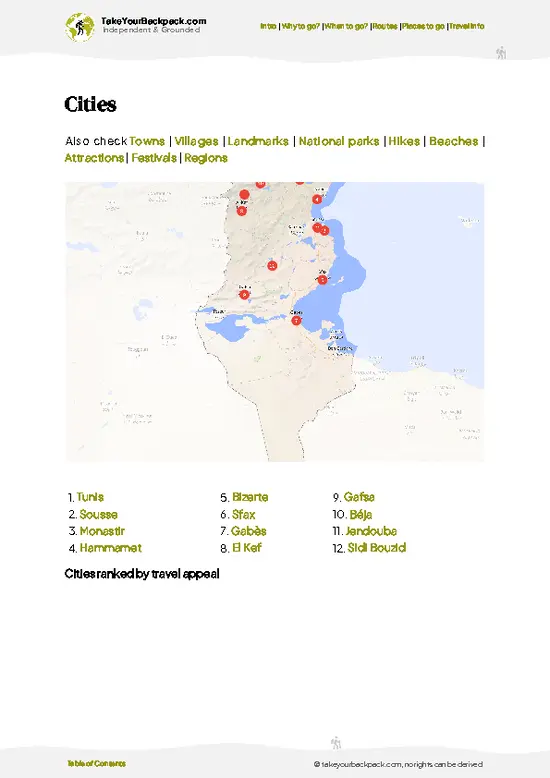
example page 0 from our offline Travel Guide for Tunisia
example page 1 from our offline Travel Guide for Tunisia
example page 2 from our offline Travel Guide for Tunisia
example page 3 from our offline Travel Guide for Tunisia
example page 4 from our offline Travel Guide for Tunisia
example page 5 from our offline Travel Guide for Tunisia
example page 6 from our offline Travel Guide for Tunisia
example page 7 from our offline Travel Guide for Tunisia
The digital guide (355 pages) contains:
✅ 90 highlights, ranked by travel appeal
✅ Optimized 5, 10 & 15-day travel routes
✅ Cities, national parks, landmarks, beaches
✅ How to get around
✅ Offline-friendly for travel without Wi-Fi
👉 Click to see all 30+ guide features

📅 Plan smarter in minutes, not weeks
✅ Month by month travel advice
✅ Festivals & national holidays
✅ Budget expectations

🗺️ Go to the right places, skip the overrated ones
✅ Honest pros & cons of destinations
✅ Top hikes, parks & viewpoints
✅ Lesser-known places most travelers miss
✅ Clear “worth it vs skip it” guidance

🛏️ Travel smoothly without rookie mistakes
✅ Best areas to stay
✅ Transport systems explained simply
✅ Common scams & safety advice
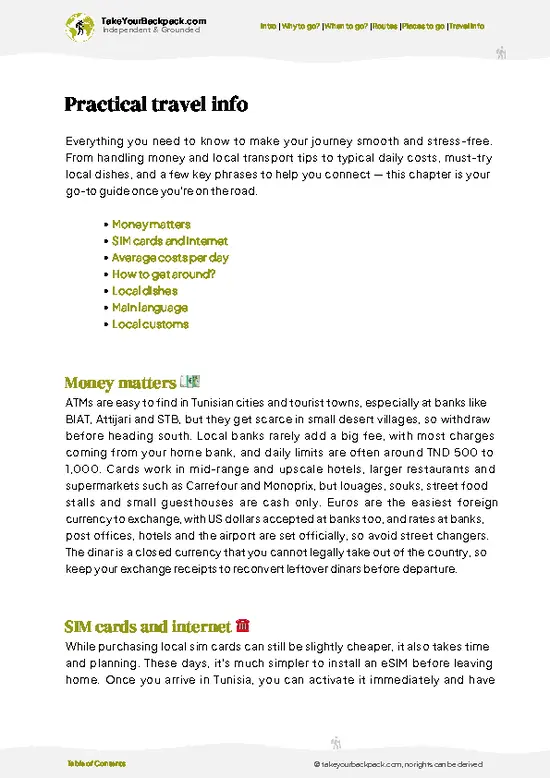
✅ SIM cards, money & practical tips

🌍 Understand the country, not just visit it
✅ Culture & traditions
✅ 52 Essential phrases & customs
✅ Festivals worth planning around
✅ Traveler-friendly historical context
✅ Insights that make places more meaningful

📱 Built for real travel conditions
✅ Fully downloadable PDF
✅ Works completely offline
✅ Optimized for phone use
✅ Useful in remote areas & buses
✅ Everything in one place
Stop searching, start planning
Get instant access to your full guide. 30‑day money-back guarantee.
+ Add another guide for just

By proceeding you agree to our terms.
Sent to your inbox immediately after payment • 100% Secure Checkout
Best Backpacking Travel Advisor 2025 tourism awardBest Backpacking
Travel Advisor
2025
What others say about Take Your Backpack Guides:
⭐⭐⭐⭐⭐
Fantastic, amazing amount of information!
⭐⭐⭐⭐⭐
My goodness this is amazing, it's what I've been looking for hats off too you!
⭐⭐⭐⭐⭐
I think this is absolutely BRILLIANT
⭐⭐⭐⭐
Very complete and informative. It's still missing places, but I gotta to commend you
⭐⭐⭐⭐⭐
This is truly amazing, thank you, can't wait to explore it with my kids!
⭐⭐⭐⭐⭐
Awesome resource, thank you!
⭐⭐⭐⭐⭐
This is amazing! Can't wait to explore the ones I haven't seen
⭐⭐⭐⭐
I love this! Well done, great idea.
⭐⭐⭐⭐⭐
Thanks for taking the time to make this gem!
⭐⭐⭐⭐⭐
This might be the best website I've ever seen.
⭐⭐⭐⭐⭐
Congratulations, and thank you so much for your work; it's incredibly valuable.
⭐⭐⭐⭐
In all seriousness I think you did a great job pointing out the important spots
⭐⭐⭐⭐⭐
10/10 very good
⭐⭐⭐⭐⭐
As someone who's only just starting to visit regularly this is awesome, thank you.
⭐⭐⭐⭐
Thank you very much! I'm going to visit my dad, it's going to be very useful!
⭐⭐⭐⭐⭐
This is really cool! We'll be travelling for the first time and this definitely come in handy.
⭐⭐⭐⭐⭐
You are now our minister of culture, congratulations 👨‍💼
⭐⭐⭐⭐⭐
Just wanted to tell you that this is a pearl! Going to follow your recommendations.
⭐⭐⭐⭐⭐
This is so cool. I'll definitely be using the resource for my travels soon.
⭐⭐⭐⭐⭐
This is very impressive! Good work.
⭐⭐⭐⭐⭐
This is an amazing and informative site. Very well done!

🛏️ Where to stay?Best areas to stay in Tunisia

Sidi Bou Said itself has only a handful of guesthouses and no dorm-style hostels worth planning around, so most backpackers sleep elsewhere along the coast and arrive by train.

Central Tunis, around the Medina and Avenue Habib Bourguiba, is the better choice for the lowest prices. Dorm beds and basic rooms are more available, and the station for the TGM at Tunis Marine puts you on the coast line in about 25 to 30 minutes. The area is busy until late, and the Medina is noisy in the morning, but cafes and restaurants stay open into the evening and the walk from hotels to the station is short and … read more 👉
Sidi Bou Said itself has only a handful of guesthouses and no dorm-style hostels worth planning around, so most backpackers sleep elsewhere along the coast and arrive by train.

Central Tunis, around the Medina and Avenue Habib Bourguiba, is the better choice for the lowest prices. Dorm beds and basic rooms are more available, and the station for the TGM at Tunis Marine puts you on the coast line in about 25 to 30 minutes. The area is busy until late, and the Medina is noisy in the morning, but cafes and restaurants stay open into the evening and the walk from hotels to the station is short and lit. Beds typically run US$10 to 20 in dorms and US$25 to 45 for a basic private room.

La Marsa, a few stops past Sidi Bou Said on the same line, suits those who want a calmer base with beaches, bars and a more local seaside feel. Budget beds are scarcer and rooms cost more, roughly US$30 to 60, but the train is right there and late taxis are easy to find. The streets are quiet and residential after dark, and it feels comfortable for solo travelers.

If you want to wake up inside the whitewashed lanes, book a guesthouse early. Rooms are few and fill quickly in summer and on spring weekends.

🚌 Getting aroundGetting around like a local

Taking a taxi from Tunis without agreeing on a price or insisting on the meter is the habit that costs visitors the most, when the TGM train does the same trip for under US$1. Sidi Bou Said itself is a hill village of about a kilometer across, closed to most traffic in the old core, so your feet will do most of the work.
  • Walking: Everything in Sidi Bou Said is within 15 minutes of everything else, but the cobbles are uneven and the slopes are real. Wear shoes with grip. You get the village at the speed it deserves, with a view around each corner.
  • TGM light rail: The line runs from Tunis Marine to La Marsa and stops at Sidi Bou Said station, about 25 to 30 minutes from central Tunis. A ticket costs roughly US$0.40 to 0.60, trains run every 15 to 20 minutes, and service starts around 5 a.m. and
… read more 👉
Taking a taxi from Tunis without agreeing on a price or insisting on the meter is the habit that costs visitors the most, when the TGM train does the same trip for under US$1. Sidi Bou Said itself is a hill village of about a kilometer across, closed to most traffic in the old core, so your feet will do most of the work.
  • Walking: Everything in Sidi Bou Said is within 15 minutes of everything else, but the cobbles are uneven and the slopes are real. Wear shoes with grip. You get the village at the speed it deserves, with a view around each corner.
  • TGM light rail: The line runs from Tunis Marine to La Marsa and stops at Sidi Bou Said station, about 25 to 30 minutes from central Tunis. A ticket costs roughly US$0.40 to 0.60, trains run every 15 to 20 minutes, and service starts around 5 a.m. and ends after midnight. It is crowded at rush hour, but you get a ride along the coast for pocket change.
  • Yellow taxis: Cabs wait at the station and the village entrance. A metered ride from central Tunis costs about US$5 to 9, and from the airport about US$6 to 10, as the airport lies roughly 15 km away. Insist on the meter; at night drivers sometimes quote fixed prices. You get door-to-door service after a late dinner when the climb back to the station feels steep.
  • Louage and local buses: Shared vans and buses link nearby coastal towns such as La Marsa and Carthage, usually for US$0.50 to 1.50. They suit short hops when you are exploring the northern suburbs, and cost nearly nothing.
  • Hop-on bus tours: The Tunis City Sightseeing bus stops near Carthage sites and costs around US$15 to 20 for a day ticket. It is only useful if you want to combine ruins and village in one go.
The station sits at the foot of the hill, and the uphill walk to the village is about 10 minutes. Arriving by train means you start with a climb and finish with a downhill stroll back, which is the right way round.

👛 Costs (as of 22 October 2026)Typical daily expenses

Sidi Bou Said costs a backpacker about US$45 to 70 a day when you sleep in Tunis or La Marsa and visit by train, with a total near US$61 in the table below. Prices are paid in Tunisian dinars, and the village itself is pricier than the rest of the country.
CategoryBudget RangeLocal Reality
Dorm accommodationUS$10 to 20 (high season)Dorms are mostly in Tunis, and the village has few budget beds. Low season drops to US$8 to 14.
MealsUS$12 to 22A sandwich or fricassé costs US$1.50 to 3, a grilled fish lunch near the marina US$10 to 18, and a tea with pine nuts about US$2 to 4.
Local transportUS$1 to 8The TGM ticket is under US$1 each way, and taxis in the area run US$3 to 9.
Basic activities/entry feesUS$5 to 12Carthage sites cost around US$10 to 12, and Dar Ennejma Ezzahra and the village lanes are
… read more 👉
Sidi Bou Said costs a backpacker about US$45 to 70 a day when you sleep in Tunis or La Marsa and visit by train, with a total near US$61 in the table below. Prices are paid in Tunisian dinars, and the village itself is pricier than the rest of the country.
CategoryBudget RangeLocal Reality
Dorm accommodationUS$10 to 20 (high season)Dorms are mostly in Tunis, and the village has few budget beds. Low season drops to US$8 to 14.
MealsUS$12 to 22A sandwich or fricassé costs US$1.50 to 3, a grilled fish lunch near the marina US$10 to 18, and a tea with pine nuts about US$2 to 4.
Local transportUS$1 to 8The TGM ticket is under US$1 each way, and taxis in the area run US$3 to 9.
Basic activities/entry feesUS$5 to 12Carthage sites cost around US$10 to 12, and Dar Ennejma Ezzahra and the village lanes are cheap or free.
Miscellaneous expensesUS$5 to 10Water, snacks, a bambalouni doughnut at about US$0.50 to 1, and small souvenirs.
Total Daily BudgetUS$61Based on high-season dorm prices and a mid-range meal plan.
Eat your main meal in nearby La Marsa or Tunis rather than on the village terraces, where the same dish often costs twice as much.
⚠️ Prices can change and everyone travels differently, so take this as a rough guide. Hope it helps you plan your adventure!

🚌 Day tripsEasy escapes and nearby places

Sidi Bou Said sits on the TGM line, which makes day trips north and south easy and cheap, with no overnight stays needed.

Carthage: Ruins of the Punic and Roman city lie one or two stops south, about 10 minutes by train. A combined ticket for the main sites costs roughly US$10 to 12 and covers the Antonine Baths, Roman villas and the Tophet. The sites are spread over several kilometers, and first-timers often try to walk between all of them in the midday heat. Go in spring or autumn and plan 3 to 4 hours. Budget about US$15 with a snack.
👉 Explore Carthage

La Marsa: Ten minutes north by TGM, this beach suburb gives you a Tunisian weekend atmosphere, with promenade cafes, a long sandy beach and good ice cream. It is best from May to September, and the beach is busiest on weekends. Costs stay … read more 👉
Sidi Bou Said sits on the TGM line, which makes day trips north and south easy and cheap, with no overnight stays needed.

Carthage: Ruins of the Punic and Roman city lie one or two stops south, about 10 minutes by train. A combined ticket for the main sites costs roughly US$10 to 12 and covers the Antonine Baths, Roman villas and the Tophet. The sites are spread over several kilometers, and first-timers often try to walk between all of them in the midday heat. Go in spring or autumn and plan 3 to 4 hours. Budget about US$15 with a snack.
👉 Explore Carthage

La Marsa: Ten minutes north by TGM, this beach suburb gives you a Tunisian weekend atmosphere, with promenade cafes, a long sandy beach and good ice cream. It is best from May to September, and the beach is busiest on weekends. Costs stay under US$10 for transport and lunch. Many visitors arrive without a swimsuit and a towel, so pack them.


Bardo Museum: Home to one of the world's largest collections of Roman mosaics, the museum is about 45 minutes from Sidi Bou Said by train and tram or taxi. Entry is about US$4 to 6. Plan 2 to 3 hours, and go on a weekday morning when the halls are calmer. Many visitors forget that it is closed on Mondays.
👉 Explore Bardo National Museum

Tunis Medina: The souks and Zitouna Mosque area are a 30 to 40 minute trip by TGM and a short walk from Tunis Marine. It costs little to wander, and a rooftop mint tea overlooking the domes runs US$2 to 4. Go in the morning, before the stalls fill and the heat builds, and be sure to bargain politely.

🛡️ SafetyStaying Safe: What Travelers Should Know

Sidi Bou Said is a calm, well-patrolled village, and the main hazards are petty rather than serious. The most common trouble is pushy sales, with vendors steering you into shops or offering a quick tour that ends with a request for money, and a firm “no thank you” followed by walking on works fine. Pickpockets can work the crowded lanes and the TGM at rush hour, so keep your phone and wallet in a front pocket. Taxis occasionally refuse the meter, so insist on it or agree a price before climbing in. After dark the village stays comfortable for solo travelers, including women, though the steep, poorly lit steps toward the marina deserve a phone flashlight. Dress modestly away from the cafes and ask before photographing people, since many locals prefer not to be pictured. Leave valuables in your … read more 👉
Sidi Bou Said is a calm, well-patrolled village, and the main hazards are petty rather than serious. The most common trouble is pushy sales, with vendors steering you into shops or offering a quick tour that ends with a request for money, and a firm “no thank you” followed by walking on works fine. Pickpockets can work the crowded lanes and the TGM at rush hour, so keep your phone and wallet in a front pocket. Taxis occasionally refuse the meter, so insist on it or agree a price before climbing in. After dark the village stays comfortable for solo travelers, including women, though the steep, poorly lit steps toward the marina deserve a phone flashlight. Dress modestly away from the cafes and ask before photographing people, since many locals prefer not to be pictured. Leave valuables in your accommodation and carry only what you need for the day.

FAQTraveler FAQ

Sidi Bou Said is worth a visit in its own right, even if it is easy to reach from Tunis. The whitewashed lanes, the cliff-top cafes and the harbor view deserve at least a half day, and the TGM ride from Tunis Marine takes about 30 minutes for under US$1. Carthage ruins lie a couple of stops away, so the two combine well.
Most travelers need half a day to one full day in Sidi Bou Said. A morning for the lanes, tea at Café des Nattes and the marina walk covers the essentials, while an extra afternoon allows for Carthage by train for around US$10 to 12 entry. Overnight stays are possible but guesthouses are few and cost more than Tunis beds.
Yes, Sidi Bou Said works as an easy day trip from Tunis, because the TGM light rail runs about every 15 to 20 minutes and takes 25 to 30 minutes each way. A return ticket costs under US$1.50, and a taxi from the center is about US$5 to 9. Arrive before 10 a.m. to avoid the crowds and leave at dusk for the marina views.
⚠️ Things can change over time, so always validate details locally before you go.

Other Tunisian towns near Sidi Bou Said

Explore more nearby:

  • Carthage—Antonine Baths, Byrsa Hill, Punic ports, TGM light rail| 2 km away
  • Hammam-Lif—Gulf beach, Boukornine peaks, synagogue mosaics, day-trip rail| 16 km away
  • Zaghouan—Temple of Waters, Roman aqueduct, Jebbel trails, Andalusian lanes| 54 km away

💡 Not sure where to go next?
Create a personalized itinerary for Tunisia including Sidi Bou Said and the places that fit your trip.

Generate my itinerary

👉 Discover all towns

Or checkout all Tunisia has to offer (think cities, towns, villages, national parks, hikes, beaches, festivals)
Country photo of Tunisia

We 💚 feedbackParting advice and final tips

The classic mistake in Sidi Bou Said is arriving at noon with every tour bus, buying the first overpriced souvenir and leaving by two. Get it right by coming for the evening instead, or sleeping over. I would bring comfortable shoes for the slopes, haggle gently, and save your tea for the late afternoon terrace.

✍️ Help improve this page!
The information on this page is based on in-depth research, insights shared by experienced travelers, and feedback from the local travel community in Tunisia. While every effort is made to keep the information accurate and current, conditions can change — so if you spot anything incorrect or outdated, please get in touch.


🙋‍♂️ Give feedback

👋 Meet the founderWho’s Behind Take Your Backpack?

Johan, backpacker and founder of TakeYourBackpackHi, I’m Johan (Netherlands 🇳🇱), the creator of TakeYourBackpack. Over the past 3 decades, I’ve backpacked through 90+ countries across six continents, gaining extensive experience with independent travel, long-term trips, and overland routes.

This site is built on a combination of firsthand travel experience and carefully curated insights from other backpackers. Many guides are based on places I’ve personally visited, while others bring together tips, observations, and practical advice shared by trusted travelers I’ve met along the way.

The goal is to provide realistic, experience-driven guidance — not generic itineraries — so you can explore destinations with better context, clearer expectations, and more confidence.