×

Tunisia🇹🇳 | best townsDiscover the 10 Best towns Across Tunisia

Towns in Tunisia offer a rich tapestry of culture, history, and local charm, each with its own distinct vibe. From the bustling markets of Tunis to the serene coastal streets of Sousse, your choice of town can dramatically shape your backpacking experience. Seasonal nuances play a big role; summer crowds can turn popular spots into tourist traps, while off-peak months reveal a more authentic side.

Budget considerations also vary widely—some towns are more wallet-friendly than others, impacting your ability to immerse yourself in local life. Safety and ease of travel fluctuate too, with some areas being more walkable and welcoming. Choosing wisely means not just seeing Tunisia, but truly experiencing it.

By Johan Kruseman 🇳🇱 | Updated September 4, 2026
Explore the best villages in Tunisia

Why go?What Makes Them Special

Tunisian towns are a delightful mix of cultural richness and historical depth, standing apart from the typical tourist traps found elsewhere. Here, the pace of life is refreshingly slow, allowing travelers to soak in the local charm without the relentless hustle of more commercialized destinations. The culinary scene is a treasure trove, with street vendors serving up brik and couscous that tell stories of generations, while cafes buzz with the aroma of strong Arabic coffee.

However, the logistics can be a bit of a grind. Many towns are clustered, which can tempt you into a whirlwind itinerary. But rushing through means missing the nuances that make each place special. Travel time can eat into your exploration, so consider whether you want to skim the surface or dive deep into the local culture. … read more 👉
Tunisian towns are a delightful mix of cultural richness and historical depth, standing apart from the typical tourist traps found elsewhere. Here, the pace of life is refreshingly slow, allowing travelers to soak in the local charm without the relentless hustle of more commercialized destinations. The culinary scene is a treasure trove, with street vendors serving up brik and couscous that tell stories of generations, while cafes buzz with the aroma of strong Arabic coffee.

However, the logistics can be a bit of a grind. Many towns are clustered, which can tempt you into a whirlwind itinerary. But rushing through means missing the nuances that make each place special. Travel time can eat into your exploration, so consider whether you want to skim the surface or dive deep into the local culture.

Tunisia’s geography plays a role, too. The coastal towns offer a different vibe than those inland, where the desert landscapes provide a stark contrast to the Mediterranean. The climate can be a double-edged sword; summer heat can be oppressive, while spring and fall offer a more pleasant experience.

Ultimately, Tunisia is well-suited for those who appreciate authentic experiences over superficial sightseeing, but it requires a willingness to embrace the quirks of travel. Balancing accessibility with immersive exploration is key to unlocking the true essence of these towns.
Why These Made the Cut
The list of best towns in Tunisia is created based on charm, local culture, atmosphere, hidden gems, and visitor appeal. If you feel a town is missing in this list, please let us know.

When to go?Timing Your Visit for the Best Experience

Seasonality plays a significant role in the experience of small-town life across Tunisia. The country’s Mediterranean climate means hot, dry summers and mild, wet winters. Summer months can be sweltering, with temperatures often soaring, making outdoor exploration a sweaty affair. This is when tourists flock to coastal areas, leading to crowded streets and inflated prices.

Optimal months for visiting typically fall between late spring and early fall. During this time, towns come alive with local festivals, markets, and the rhythm of daily life. The weather is generally pleasant, allowing for leisurely strolls and outdoor dining.

Shoulder seasons—spring and fall—offer a sweet spot. Fewer tourists mean less hustle and bustle, and prices tend to drop. However, spring can bring occasional … read more 👉
Seasonality plays a significant role in the experience of small-town life across Tunisia. The country’s Mediterranean climate means hot, dry summers and mild, wet winters. Summer months can be sweltering, with temperatures often soaring, making outdoor exploration a sweaty affair. This is when tourists flock to coastal areas, leading to crowded streets and inflated prices.

Optimal months for visiting typically fall between late spring and early fall. During this time, towns come alive with local festivals, markets, and the rhythm of daily life. The weather is generally pleasant, allowing for leisurely strolls and outdoor dining.

Shoulder seasons—spring and fall—offer a sweet spot. Fewer tourists mean less hustle and bustle, and prices tend to drop. However, spring can bring occasional rain, while fall may see some lingering heat.

Peak periods coincide with major holidays and summer vacations, which can lead to overwhelming crowds and limited accommodations. Planning around these times can save both sanity and budget.

Seasonal constraints are crucial to consider. Winter brings cooler temperatures and fewer activities, but it also offers a chance to experience local life without the touristy gloss. Understanding these patterns can transform a trip from a crowded slog into an authentic adventure.

town hoppingSuggested Travel Strategies

Regional Clustering
Tunis is a natural starting point. From there, head to the north for charming coastal towns like Bizerte and Tabarka. These spots offer a mix of history and beach vibes, perfect for unwinding after the hustle of the capital. Then, swing south to the ancient city of Carthage and the vibrant streets of Sidi Bou Said. This route keeps you moving in a logical direction while soaking in the Mediterranean charm.

Timing Your Stops
Aim for two to three days in each town. This pacing allows for exploration without feeling like a travel zombie. Spend a day wandering the markets, another for historical sites, and leave some time for spontaneous detours—those are often the best parts.

Common Pitfalls
Many travelers try to cram too much into a short time. Rushing through towns … read more 👉
Regional Clustering
Tunis is a natural starting point. From there, head to the north for charming coastal towns like Bizerte and Tabarka. These spots offer a mix of history and beach vibes, perfect for unwinding after the hustle of the capital. Then, swing south to the ancient city of Carthage and the vibrant streets of Sidi Bou Said. This route keeps you moving in a logical direction while soaking in the Mediterranean charm.

Timing Your Stops
Aim for two to three days in each town. This pacing allows for exploration without feeling like a travel zombie. Spend a day wandering the markets, another for historical sites, and leave some time for spontaneous detours—those are often the best parts.

Common Pitfalls
Many travelers try to cram too much into a short time. Rushing through towns leads to missed experiences and a lot of frustration. Focus on quality over quantity.

Trade-offs and Flexibility
Consider your priorities. If comfort is key, opt for fewer stops with better accommodations. If budget is tight, embrace local transport, but be prepared for delays. Balancing speed with depth of experience is crucial. Embrace the unpredictability; it’s part of the adventure.

The ListTop towns of Tunisia

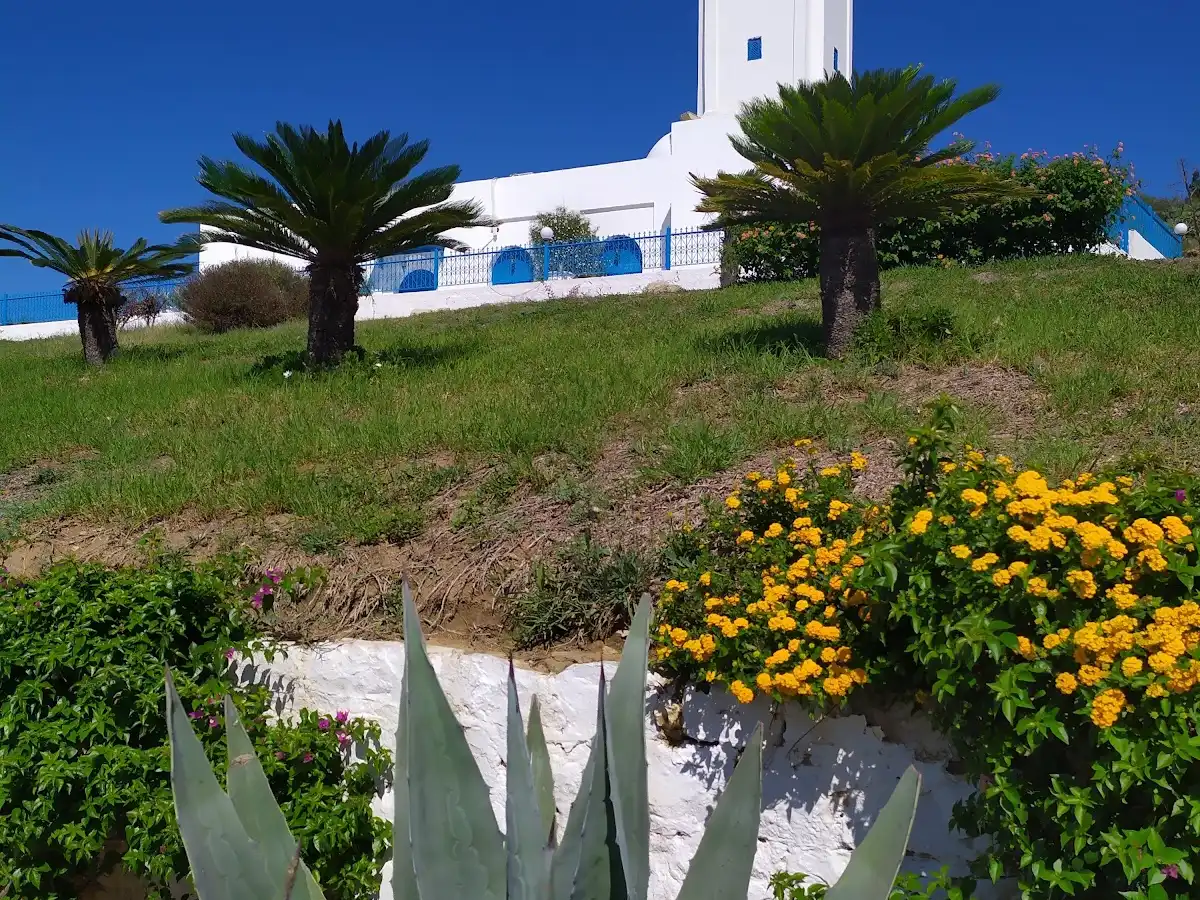
1 Sidi Bou Said

blue-and-white houses, cliffside cafés, Mediterranean views

Stroll narrow lanes above the sea, pausing for coffee and sweeping vistas in a town defined by its distinctive palette.

tunisia-city-sidi-bou-said
© Google |

2 Carthage

ancient ruins, Punic ports, Roman villas

Trace the layers of empire among weathered stones, seaside relics, and the subtle presence of Tunisia’s oldest urban legacy.

tunisia-city-carthage
© Google |

3 Monastir

Seafront ribat, mausoleum, palm-lined promenade, marina

Stroll a coastal city defined by its fortress, open squares, and a shoreline that draws both locals and travelers to linger by the sea.

4 Tozeur

date palm oases, desert medina, mudbrick architecture

Wander shaded alleys and palm groves, then step into the desert’s edge where traditional homes blend with the sand.

tunisia-city-tozeur
© Google |

5 Matmata

troglodyte dwellings, Berber heritage, sunken courtyards

Descend into a landscape where homes are carved from earth, revealing a way of life adapted to desert extremes and ancient traditions.

6 Ain Draham

mountain forest, red-tiled roofs, cool climate

Escape to wooded hills and crisp air, where architecture and scenery reflect a blend of North African and Mediterranean influences.

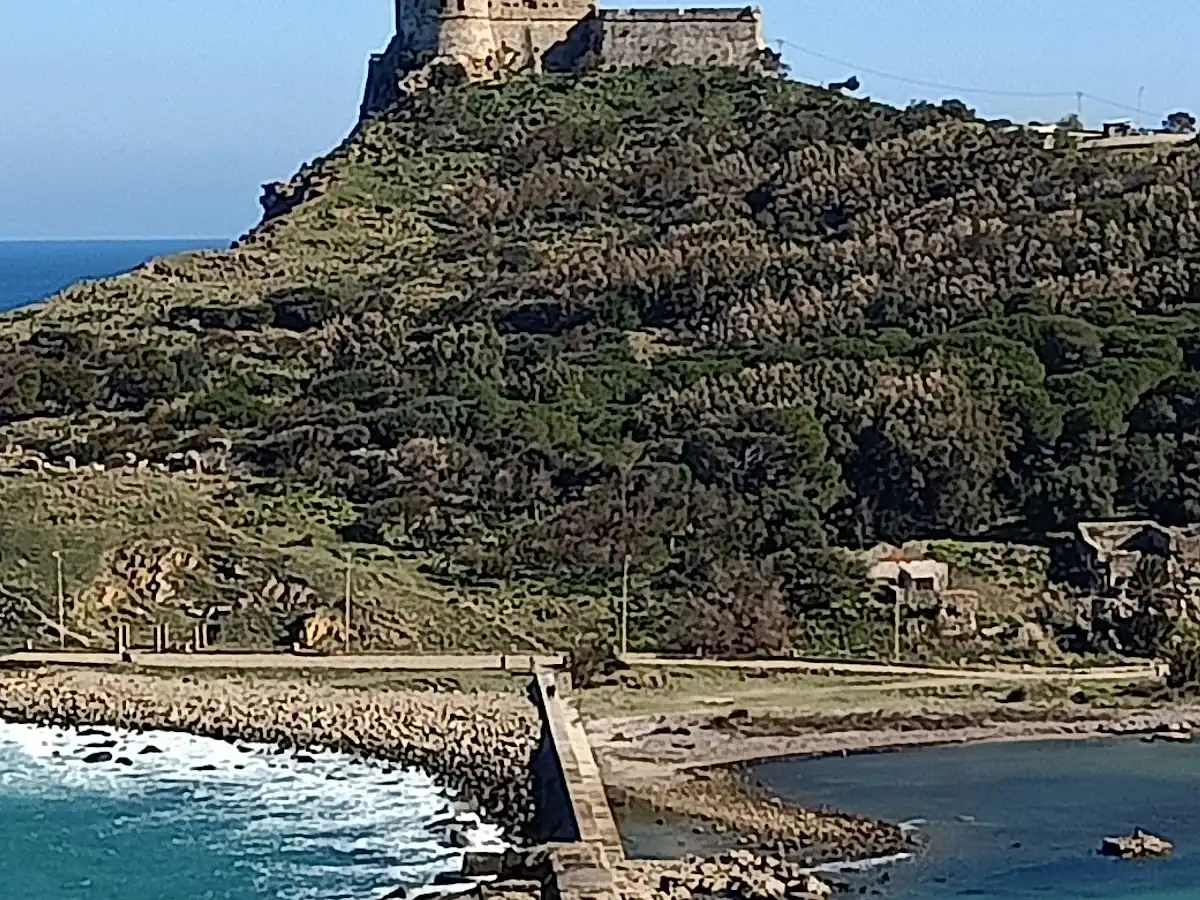
7 Tabarka

coral reefs, Genoese fort, pine forests

Dive beneath rocky headlands, hike wooded hills, and explore a town where the sea and mountains meet.

tunisia-city-tabarka
© Google |

8 Douz

Sahara gateway, camel market, sand dunes

Begin desert journeys from a town where nomadic traditions meet the shifting sands and the rhythm of market days.

9 Nefta

corbeille oasis, Sufi shrines, desert edge

Experience a spiritual town where palm groves cluster in a natural basin and the desert horizon stretches beyond.

10 Kelibia

Byzantine fortress, fishing port, sandy beaches

Walk ancient ramparts, watch boats unload the day’s catch, and swim in clear waters along the Cap Bon coast.

11 Zaghouan

Roman aqueduct, mountain springs, pilgrimage site

Follow ancient water routes, visit sacred springs, and hike slopes that have drawn travelers for centuries.

12 Tataouine

ksour villages, Berber granaries, lunar landscapes

Venture through stark hills and fortified settlements, where earth-toned architecture rises from a landscape that feels otherworldly.

tunisia-city-tataouine
© Google |

13 Zarzis

Mediterranean port, olive groves, Saharan fringe

Arrive at a southern town where the sea, desert, and agriculture intersect, shaping daily life and local cuisine.

14 Hammam-Lif

thermal baths, Ottoman palace, coastal promenade

Soak in mineral springs, visit historic mansions, and stroll a seafront favored by locals for its relaxed pace.

15 Kebili

desert oasis, date markets, salt lake edge

Rest in a palm-filled town near the Chott el Jerid, where the desert meets a patchwork of cultivated land.

16 Mides

canyon cliffs, abandoned village, oasis stream

Stand above dramatic gorges, explore crumbling dwellings, and listen to water flowing through a remote, rocky valley.

17 Medenine

Ksour granaries, desert edge, weekly market, Berber architecture

Visit a gateway town where fortified granaries and mudbrick structures reflect the traditions of southern Tunisia’s semi-arid landscape.

18 Redeyef

mining town, plateau location, colonial-era buildings

Experience a highland settlement where mining history is visible in the architecture and the daily rhythm of life.

19 Ghomrassen

rocky outcrops, Berber villages, arid valleys

Explore a landscape of stone and sand, where traditional settlements cluster beneath dramatic cliffs and open skies.

20 Mateur

lakeside setting, agricultural plains, local markets

Pause in a working town surrounded by fields and water, where daily commerce supports the region’s rural communities.

21 Korba

coastal lagoon, citrus groves, sandy shoreline

Relax by shallow waters, wander through orchards, and enjoy a quieter stretch of the Cap Bon peninsula.

22 Menzel Bourguiba

naval dockyard, colonial grid, lakeshore

Observe shipyards and wide boulevards in a town shaped by industry and its position on the edge of Lake Bizerte.

23 Metlaoui

phosphate mines, Red Lizard train, rocky gorges

Ride historic railways through dramatic canyons and see how mining has transformed both landscape and livelihoods.

24 Siliana

Hilltop kasbah, wheat fields, rural souks, mountain views

Travel through a region where agricultural rhythms set the pace, and the town’s elevated position offers sweeping views of the countryside.

Think you know Tunisia?

Prove you’re a true local — uncover 14 lesser-known towns in Tunisia that locals tend to keep to themselves.
Loading the map 🌍

Expert viewInsights from Locals and Experts

Regional Clusters
Tunisian towns are like a well-curated playlist; each one has its own vibe, but together they create a rhythm that’s hard to resist. Aim for a mix of three to five towns to get a taste of the country’s diverse flavors. Start in the north, where the coastal towns offer a blend of Mediterranean charm and historical intrigue. Then, head south for a completely different experience—think desert landscapes and Berber culture. This regional clustering not only saves you time but also helps you appreciate the contrasts that make Tunisia unique.

Travel Rhythm
Plan for a leisurely pace. Tunisia isn’t about racing from one Instagrammable spot to another; it’s about soaking in the local life. A week is a good starting point, but if you can stretch it to ten days, you’ll have the luxury … read more 👉
Regional Clusters
Tunisian towns are like a well-curated playlist; each one has its own vibe, but together they create a rhythm that’s hard to resist. Aim for a mix of three to five towns to get a taste of the country’s diverse flavors. Start in the north, where the coastal towns offer a blend of Mediterranean charm and historical intrigue. Then, head south for a completely different experience—think desert landscapes and Berber culture. This regional clustering not only saves you time but also helps you appreciate the contrasts that make Tunisia unique.

Travel Rhythm
Plan for a leisurely pace. Tunisia isn’t about racing from one Instagrammable spot to another; it’s about soaking in the local life. A week is a good starting point, but if you can stretch it to ten days, you’ll have the luxury to wander. The infrastructure is decent, but don’t expect high-speed trains or seamless connections. Buses are your best bet, but they can be a bit of a gamble—sometimes they run on time, and sometimes they don’t. Embrace the unpredictability; it’s part of the adventure.

Local Charm
Each town has its own character, shaped by history and culture. You’ll find bustling markets, where the scent of spices mingles with the chatter of locals. Don’t miss the chance to sip mint tea with a shopkeeper who’s eager to share stories. But be prepared for the occasional tourist trap—those overpriced souvenir shops can sneak up on you. Trust your instincts; if it feels too polished, it probably is. Seek out the places where locals hang out, even if it means venturing a little off the beaten path.

Logistical Considerations
Budget-wise, Tunisia is generally friendly to travelers, but costs can vary. Street food is a steal, while dining in touristy areas can hit your wallet harder than expected. Factor in transportation costs, which can add up if you’re hopping between towns. Always keep a little cash on hand; not everywhere accepts cards, and ATMs can be a bit finicky.

Safety & Cultural Considerations
Safety is generally not a major concern, but it’s wise to stay aware of your surroundings, especially in crowded areas. Dress modestly to respect local customs, particularly in more traditional towns. A light scarf can be your best friend, doubling as a sunshade or a way to blend in.

Trade-offs and Constraints
The trade-off here is time versus depth. You could rush through a dozen towns, but you’d miss the soul of Tunisia. Instead, focus on a few key spots and really dive in. This means fewer selfies but richer experiences. You’ll leave with stories that go beyond the surface, and that’s what travel is all about.

In the end, the real magic of Tunisia lies in its ability to surprise you. The absurdities of travel—like getting lost or waiting for a bus that’s late—become part of the narrative. Embrace the grind, and you’ll find the gold.

✈️ The backpacker research shortcutTunisia Travel Guide

An offline-friendly backpacking guide with optimized travel routes, ranked highlights, transport advice, and the best areas to stay.
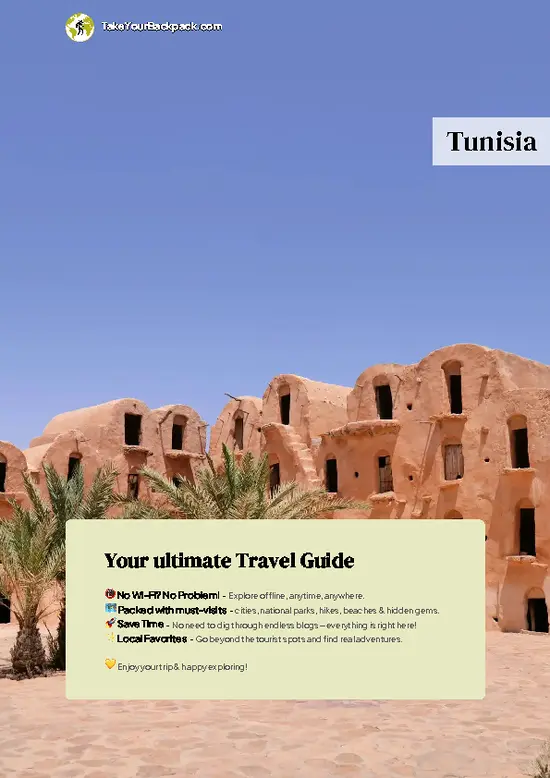
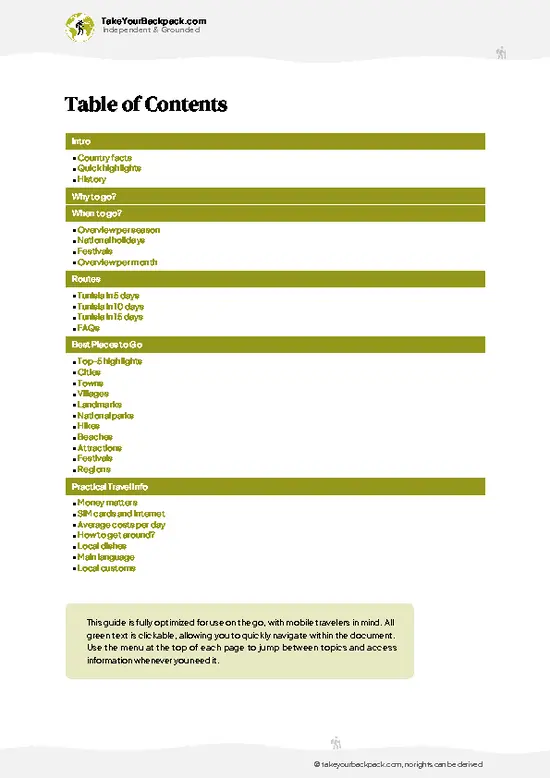
example page 0 from our offline Travel Guide for Tunisia
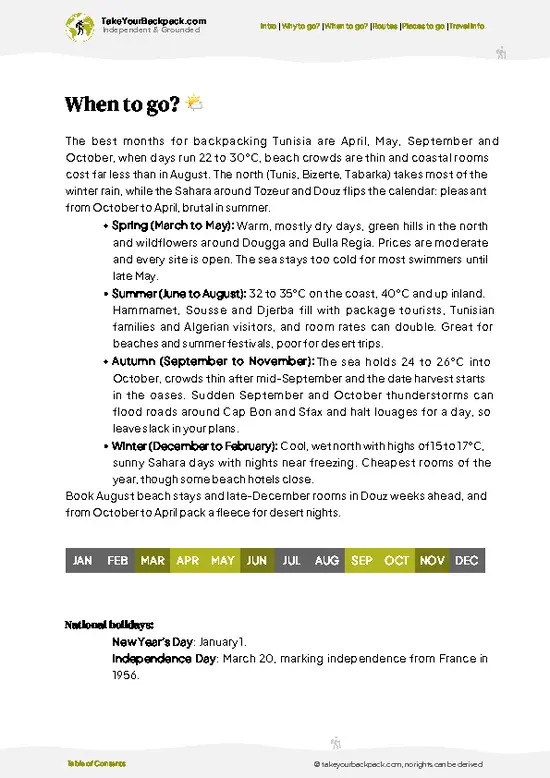
example page 1 from our offline Travel Guide for Tunisia
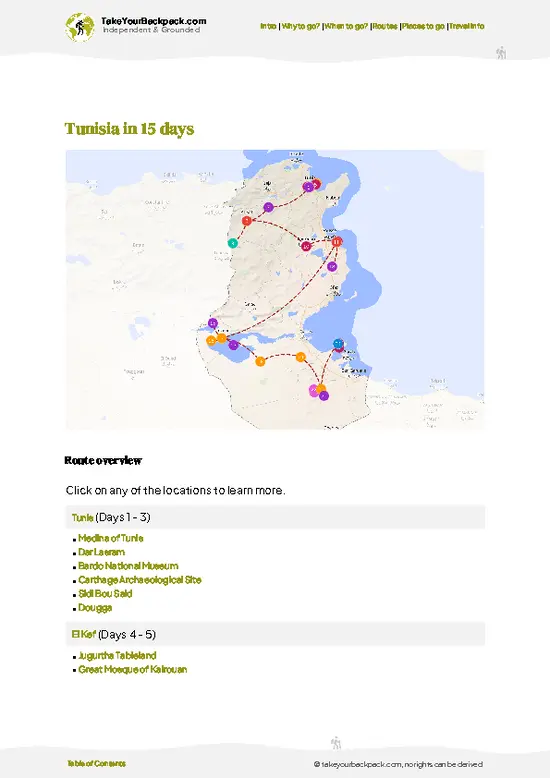
example page 2 from our offline Travel Guide for Tunisia
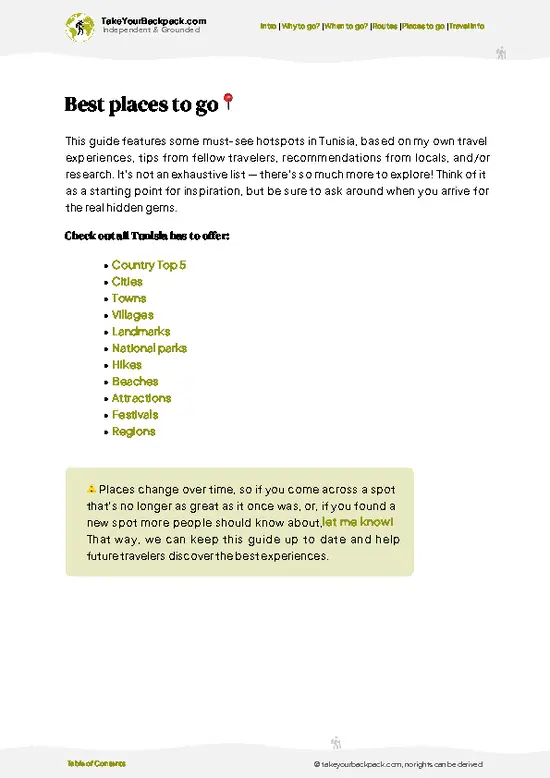
example page 3 from our offline Travel Guide for Tunisia
example page 4 from our offline Travel Guide for Tunisia
example page 5 from our offline Travel Guide for Tunisia
example page 6 from our offline Travel Guide for Tunisia
example page 7 from our offline Travel Guide for Tunisia
The digital guide (371 pages) contains:
98 highlights, ranked by travel appeal
Optimized 5, 10 & 15-day travel routes
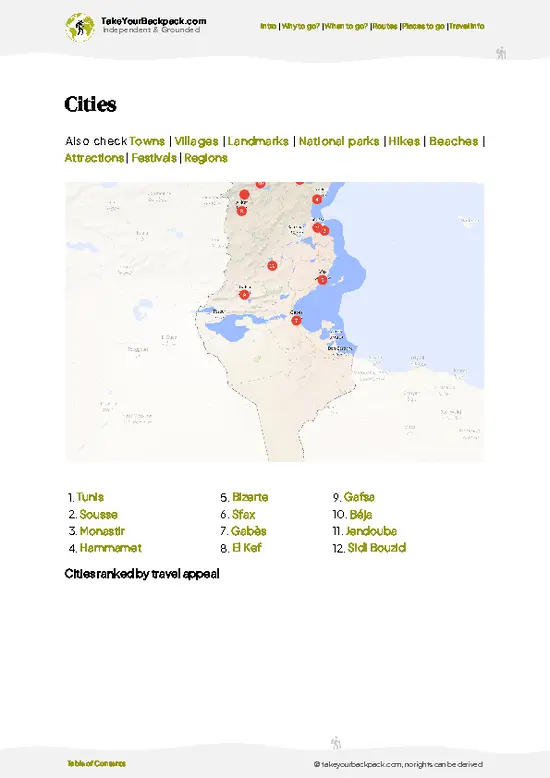
Cities, national parks, landmarks, beaches
How to get around
Offline-friendly for travel without Wi-Fi
👉 Click to see all 30+ guide features

📅 Plan smarter in minutes, not weeks
Month by month travel advice
Festivals & national holidays
Budget expectations

🗺️ Go to the right places, skip the overrated ones
Honest pros & cons of destinations
Top hikes, parks & viewpoints
Lesser-known places most travelers miss
Clear “worth it vs skip it” guidance

🛏️ Travel smoothly without rookie mistakes
Best areas to stay
Transport systems explained simply
Common scams & safety advice
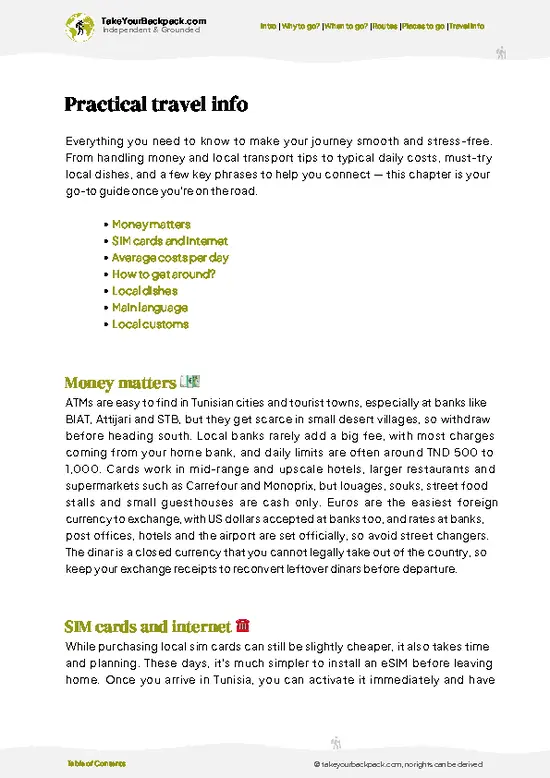
SIM cards, money & practical tips

🌍 Understand the country, not just visit it
Culture & traditions
52 Essential phrases & customs
Festivals worth planning around
Traveler-friendly historical context
Insights that make places more meaningful

📱 Built for real travel conditions
Fully downloadable PDF
Works completely offline
Optimized for phone use
Useful in remote areas & buses
Everything in one place
Save weeks of stressful planning
Get instant access to your full guide. 30‑day money-back guarantee.
+ Add another guide for just US$7.80

By proceeding you agree to our terms.
Sent to your inbox immediately after payment • 100% Secure Checkout
Best Backpacking Travel Advisor 2025 tourism awardBest Backpacking
Travel Advisor
2025
What others say about Take Your Backpack Guides:
⭐⭐⭐⭐⭐
Fantastic, amazing amount of information!
⭐⭐⭐⭐⭐
My goodness this is amazing, it's what I've been looking for hats off too you!
⭐⭐⭐⭐⭐
I think this is absolutely BRILLIANT
⭐⭐⭐⭐
Very complete and informative. It's still missing places, but I gotta to commend you
⭐⭐⭐⭐⭐
This is truly amazing, thank you, can't wait to explore it with my kids!
⭐⭐⭐⭐⭐
Awesome resource, thank you!
⭐⭐⭐⭐⭐
This is amazing! Can't wait to explore the ones I haven't seen
⭐⭐⭐⭐
I love this! Well done, great idea.
⭐⭐⭐⭐⭐
Thanks for taking the time to make this gem!
⭐⭐⭐⭐⭐
This might be the best website I've ever seen.
⭐⭐⭐⭐⭐
Congratulations, and thank you so much for your work; it's incredibly valuable.
⭐⭐⭐⭐
In all seriousness I think you did a great job pointing out the important spots
⭐⭐⭐⭐⭐
10/10 very good
⭐⭐⭐⭐⭐
As someone who's only just starting to visit regularly this is awesome, thank you.
⭐⭐⭐⭐
Thank you very much! I'm going to visit my dad, it's going to be very useful!
⭐⭐⭐⭐⭐
This is really cool! We'll be travelling for the first time and this definitely come in handy.
⭐⭐⭐⭐⭐
You are now our minister of culture, congratulations 👨‍💼
⭐⭐⭐⭐⭐
Just wanted to tell you that this is a pearl! Going to follow your recommendations.
⭐⭐⭐⭐⭐
This is so cool. I'll definitely be using the resource for my travels soon.
⭐⭐⭐⭐⭐
This is very impressive! Good work.
⭐⭐⭐⭐⭐
This is an amazing and informative site. Very well done!

🛏️ Where to stay?Where to Stay in Tunisia

Yes — hostels and budget accommodation are widely available in Tunisia, concentrated in Tunis (Medina and Ville Nouvelle), Sousse (Medina and waterfront), Hammamet, Djerba, with smaller backpacker options in Tozeur and Kairouan.
Medina areas put you within historic highlights and cheap local food but expect narrow streets, basic rooms and limited nightlife; Ville Nouvelle and Sousse waterfront offer easier transport, more social hostels and livelier evenings at slightly higher rates; Hammamet and Djerba are quieter beach bases with seasonal service drops and fewer cheap beds outside high season.
Budget places usually mean communal bathrooms, simple cleaning standards and crowded summer months, … read more 👉
Yes — hostels and budget accommodation are widely available in Tunisia, concentrated in Tunis (Medina and Ville Nouvelle), Sousse (Medina and waterfront), Hammamet, Djerba, with smaller backpacker options in Tozeur and Kairouan.
Medina areas put you within historic highlights and cheap local food but expect narrow streets, basic rooms and limited nightlife; Ville Nouvelle and Sousse waterfront offer easier transport, more social hostels and livelier evenings at slightly higher rates; Hammamet and Djerba are quieter beach bases with seasonal service drops and fewer cheap beds outside high season.
Budget places usually mean communal bathrooms, simple cleaning standards and crowded summer months, so book early in peak season, carry cash, and bring a light sleeping liner and mosquito protection to avoid common small-trip mistakes.

If you enjoy meeting fellow travelers, consider choosing hostels with high ratings for atmosphere. On the other hand, if you prefer having your own space, a hotel might be a better option.

TunisiaMore of Tunisia

👋 Meet the founderWho’s Behind Take Your Backpack?

Johan, backpacker and founder of TakeYourBackpackHi, I’m Johan (Netherlands 🇳🇱), the creator of TakeYourBackpack. Over the past decade, I’ve backpacked through 80+ countries across six continents, gaining extensive experience with independent travel, long-term trips, and overland routes.

This site is built on a combination of firsthand travel experience and carefully curated insights from other backpackers. Many guides are based on places I’ve personally visited, while others bring together tips, observations, and practical advice shared by trusted travelers I’ve met along the way.

The goal is to provide realistic, experience-driven guidance — not generic itineraries — so you can explore destinations with better context, clearer expectations, and more confidence.

Get full Tunisia guide •
Instant download • 98 highlights • Full Offline guide