×

Tuvalu🇹🇻 | regionsNanumea Atollouter reef, WWII relics, village compounds, pandanus plantations | things to do and best time to go

Explore Tuvalu Independence DayExplore Nukulaelae Atoll

Backpacking in Nanumea Atoll
🏆 Top pickregion ranked #1
By Johan Kruseman 🇳🇱 | Updated July 30, 2026

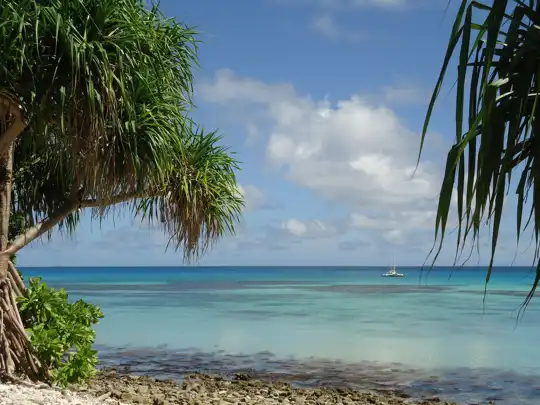
Most people only realize on the way out that Nanumea is where Tuvalu still feels like a village, not a postcard shoot — you actually learn names, not room numbers, and that changes the whole trip. Nanumea Atoll sits at the far northwest edge of Tuvalu, a long way from Funafuti in both miles and mindset. For backpackers, it’s raw and quiet: wide reef flats, a lagoon that glows at sunset, WWII relics rusting in the bush, and evenings that revolve around the maneapa meeting house, church, and whoever has a guitar. There’s almost nothing to “do” in the tourist sense, which is the charm and the challenge. Transport is rare, boats can be rough, and costs creep up because everything is shipped in. Compared with Funafuti’s traffic and government buzz, Nanumea feels slower, poorer in options, richer in real life — amazing if you want depth, frustrating if you crave convenience.

Discover everything you want to know in the 📖 Tuvalu Travel Guide.


Get your Tuvalu guide
21 ranked highlights, routes & tips, works offline (109 pages)
Loading the map 🌍
CLICK TO FILTER
towns
villages
landmarks
beaches
attractions
festivals
regions
SHOW COUNTRY’S BESTSHOW ALL

✨ Why go?
Ranked #1 region in Tuvalu
What makes it a must-see region

Nanumea Atoll in Tuvalu is a backpacker’s paradise for a reason. First off, the variety of landscapes is mind-blowing. You’ve got pristine beaches, lush vegetation, and vibrant coral reefs all within a stone’s throw. This means you can dive, snorkel, or just chill on the sand without the hassle of constant relocation.

Speaking of hassle, the transport flexibility here is a game-changer. With a few local boats and bicycles at your disposal, you can explore at your own pace. No rigid schedules or crowded buses—just you and the open road (or water).

But it’s not just about nature; Nanumea offers a rich cultural tapestry. Engage with locals, learn about their traditions, and savor authentic cuisine. This blend of nature and culture makes for a deeper experience.

Slow travel is the name of … read more 👉
Nanumea Atoll in Tuvalu is a backpacker’s paradise for a reason. First off, the variety of landscapes is mind-blowing. You’ve got pristine beaches, lush vegetation, and vibrant coral reefs all within a stone’s throw. This means you can dive, snorkel, or just chill on the sand without the hassle of constant relocation.

Speaking of hassle, the transport flexibility here is a game-changer. With a few local boats and bicycles at your disposal, you can explore at your own pace. No rigid schedules or crowded buses—just you and the open road (or water).

But it’s not just about nature; Nanumea offers a rich cultural tapestry. Engage with locals, learn about their traditions, and savor authentic cuisine. This blend of nature and culture makes for a deeper experience.

Slow travel is the name of the game. Spend a few days soaking it all in, and you’ll feel like a savvy local rather than a tourist. The trade-off? You might sacrifice some comfort, but the high-value experiences you gain are absolutely worth it.
Want to include Nanumea Atoll in your Tuvalu route?
Create a personalized Tuvalu itinerary that includes Nanumea Atoll and the places that fit your trip — based on your travel style, budget, and available time. Get your route in seconds.

Generate my trip

💡 HighlightsDon't-miss highlights and experiences

  • Main settlement on Nanumea (the village) — The real heartbeat of the atoll: daily life, canoe launching, elders mending nets, and informal stalls selling fish and coconuts. Visit for honest conversation, watching traditional crafts, and to catch a local celebration if your timing’s right.
  • WWII relics and old airstrip remains — Concrete slabs, rusting hardware and scattered foundations from the Allied presence in the 1940s still dot parts of the islet. It’s a compact, tangible slice of history you can walk around and imagine — quieter and less “cleaned up” than museum displays elsewhere.
  • Nanumea lagoon snorkel sites — Clear, shallow channels and coral bommies close to shore make for excellent snorkeling: colourful reef fish, giant clams, and healthy hard corals because visitor numbers are
read more 👉
  • Main settlement on Nanumea (the village) — The real heartbeat of the atoll: daily life, canoe launching, elders mending nets, and informal stalls selling fish and coconuts. Visit for honest conversation, watching traditional crafts, and to catch a local celebration if your timing’s right.
  • WWII relics and old airstrip remains — Concrete slabs, rusting hardware and scattered foundations from the Allied presence in the 1940s still dot parts of the islet. It’s a compact, tangible slice of history you can walk around and imagine — quieter and less “cleaned up” than museum displays elsewhere.
  • Nanumea lagoon snorkel sites — Clear, shallow channels and coral bommies close to shore make for excellent snorkeling: colourful reef fish, giant clams, and healthy hard corals because visitor numbers are tiny. Best explored with a local who knows the safe passes.
  • South-west sandbank picnic (hidden gem) — At low tide a narrow spit appears off the reef where locals go for family picnics, shell collecting and unforgettable low-tide walks. You’ll be sharing the space with sand dollars, hermit crabs and postcard-clear water — bring shade and sunscreen.
  • Lakena islet day trip (secluded motu) — Hidden gem — A short boat ride away, this tiny motu offers private beaches, old coconut groves and quiet snorkeling just offshore. Locals use it for short retreats and small ceremonies; visitors who come respectfully often get a very warm welcome.
  • Turtle-nesting beaches (seasonal) — Hidden gem — Parts of Nanumea’s shoreline are used by sea turtles to nest. Visit with a local guide or community group who protect the nests at night — it’s a slow, rare experience you won’t easily replicate on busier islands.
  • Canoe-building yards and traditional boatmaking — Watch skilled craftspeople shape outrigger canoes, lash hulls and fit sails the old way. The techniques and wood choices here reflect northern Tuvalu traditions; seeing a canoe take shape is a cultural workshop in miniature.
  • Evening maneapa gatherings and fatele — Drop in on a community maneapa (gathering space) for an evening of song, drumming and fatele — the local dance-song. It’s participatory, loud, authentic and one of the best ways to feel the island’s social rhythm rather than just observing it.
  • Reef pass fishing and local fishing techniques — Join (or watch) fishers using traditional handlines, throw-nets and spearing techniques around the reef passes where fish concentrate. It’s practical, sustainable local knowledge — and often ends with a shared meal.
  • Breadfruit and coconut groves behind the village — Small family plots of breadfruit, pandanus and coconut shape both the landscape and diet here. Visiting these groves (with permission) offers a close look at local food systems, simple agroforestry and the seasonal rhythms that island life still depends on.
Spotted a mistake or missing something? Contact us.

⌛️ 5 daysA smart one-week plan

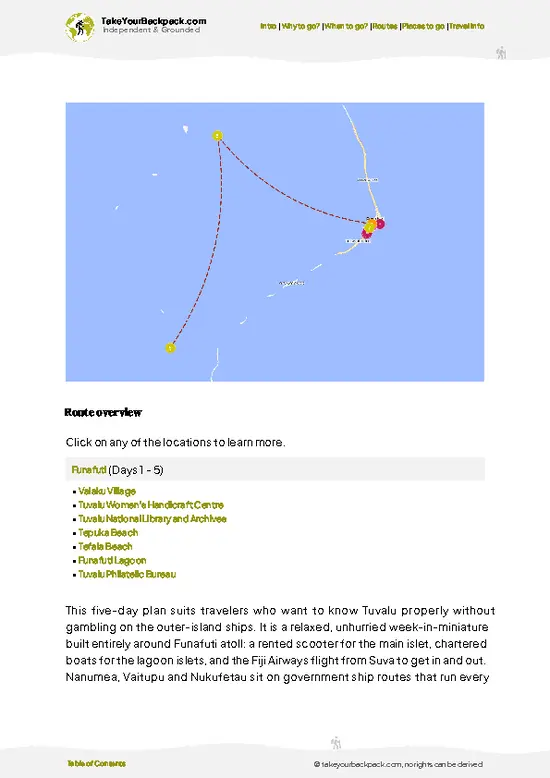
Day 1: Funafuti


Start your journey in Funafuti, the capital. This is where you’ll land, and it’s the hub of transport in Tuvalu. Spend the day acclimating and exploring the local market. Grab a fresh coconut and chat with locals. The vibe here is relaxed, and it sets the tone for your trip. You’ll need to understand the rhythm of island life, which is slow but rich in connection.

Day 2: Nanumea


Catch a ferry to Nanumea, the largest atoll. The ride takes about three hours, so bring snacks and a good book. Once there, the pace shifts. You’ll find fewer tourists and more untouched beauty. Rent a bike to explore the island. The roads are simple, and you’ll discover hidden beaches. This is where you can really feel the isolation and tranquility of Tuvalu.

Day 3: Off-Path Reward - Takaue

read more 👉

Day 1: Funafuti


Start your journey in Funafuti, the capital. This is where you’ll land, and it’s the hub of transport in Tuvalu. Spend the day acclimating and exploring the local market. Grab a fresh coconut and chat with locals. The vibe here is relaxed, and it sets the tone for your trip. You’ll need to understand the rhythm of island life, which is slow but rich in connection.

Day 2: Nanumea


Catch a ferry to Nanumea, the largest atoll. The ride takes about three hours, so bring snacks and a good book. Once there, the pace shifts. You’ll find fewer tourists and more untouched beauty. Rent a bike to explore the island. The roads are simple, and you’ll discover hidden beaches. This is where you can really feel the isolation and tranquility of Tuvalu.

Day 3: Off-Path Reward - Takaue


Take a detour to Takaue, a small islet nearby. It’s a short boat ride, and you’ll find pristine snorkeling spots. The coral here is vibrant, and the fish are plentiful. This little adventure is worth the extra time and money. It’s a chance to connect with nature and escape the crowds.

Day 4: Niulakita


Head to Niulakita, the least populated atoll. The ferry is less frequent, so plan ahead. This is where you’ll experience true solitude. Spend your day hiking and soaking in the untouched landscapes. The lack of development here means you’ll feel like you’ve stepped back in time.

Day 5: Return to Funafuti


Make your way back to Funafuti. Use this day to reflect on your journey. Visit the local museum to learn about Tuvalu’s culture and history. This final day ties everything together, giving you a deeper appreciation for the islands.

The must-do day? Day 2 in Nanumea. It’s the heart of your adventure, where you’ll truly grasp the essence of Tuvalu. Embrace the slow pace and let the island charm work its magic.
Turn your Nanumea Atoll visit into an Tuvalu adventure
Build a complete Tuvalu route with Nanumea Atoll, hidden gems, must-see destinations, and realistic travel times included.

Generate my trip

🌤️ When to go?Best time to visit Nanumea Atoll


  • Topic: Weather – The sweet spot is May to October, when Nanumea Atoll enjoys its dry season. Expect less humidity and almost no rain, making your gear lighter and your mood brighter. Avoid November to April unless you’re into tropical downpours and sticky nights.

  • Topic: Temperature – Temperatures hover comfortably between 27°C and 31°C (81°F to 88°F) year-round. The dry season feels a bit cooler and less oppressive, perfect for hiking and beach lounging without melting into your sunscreen.

  • Topic: Daylight Hours – Daylight is steady, roughly 12 hours year-round. No drastic shifts here, so you can plan your days without worrying about early sunsets or late sunrises messing with your rhythm.

  • Topic: Crowds – Nanumea is off the beaten path, so crowds are minimal anytime. Still, the dry
read more 👉

  • Topic: Weather – The sweet spot is May to October, when Nanumea Atoll enjoys its dry season. Expect less humidity and almost no rain, making your gear lighter and your mood brighter. Avoid November to April unless you’re into tropical downpours and sticky nights.

  • Topic: Temperature – Temperatures hover comfortably between 27°C and 31°C (81°F to 88°F) year-round. The dry season feels a bit cooler and less oppressive, perfect for hiking and beach lounging without melting into your sunscreen.

  • Topic: Daylight Hours – Daylight is steady, roughly 12 hours year-round. No drastic shifts here, so you can plan your days without worrying about early sunsets or late sunrises messing with your rhythm.

  • Topic: Crowds – Nanumea is off the beaten path, so crowds are minimal anytime. Still, the dry season draws slightly more visitors, mostly locals and a handful of intrepid travelers, so you get a quiet vibe with a pinch of social buzz.

  • Topic: Seasonal Activities – Dry months are prime for fishing, snorkeling, and cultural events. The local community often holds traditional dances and ceremonies during this time, giving you a genuine peek into island life.

  • Topic: Price Fluctuations – Prices for accommodation and transport tend to rise a bit during the dry season, but the trade-off is worth it for reliable weather and access to activities. Off-season rates drop, but prepare for unpredictable conditions.


Pro-tip: Book your trip just before the dry season peaks—late April or early May—to snag lower prices and still dodge the wettest weather.


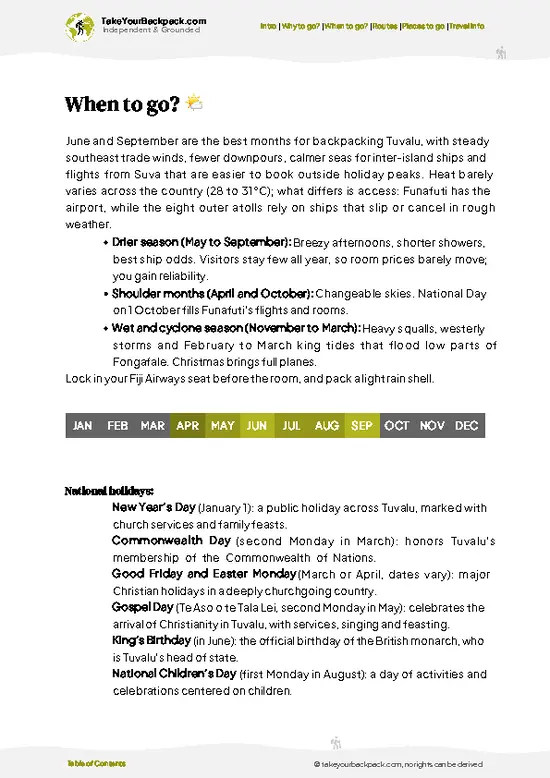
source: climatestotravel.comJANJanuary: below average for travelingFEBFebruary: below average for travelingMARMarch: below average for travelingAPRApril: fair for travelingMAYMay: highly recommended for travelingJUNJune: excellent for travelingJULJuly: excellent for travelingAUGAugust: excellent for travelingSEPSeptember: excellent for travelingOCTOctober: highly recommended for travelingNOVNovember: fair for travelingDECDecember: below average for traveling
when-to-go

✈️ The backpacker research shortcutTuvalu Travel Guide

An offline-friendly backpacking guide with optimized travel routes, ranked highlights, transport advice, and the best areas to stay.
example page 0 from our offline Travel Guide for Tuvalu
example page 1 from our offline Travel Guide for Tuvalu
example page 2 from our offline Travel Guide for Tuvalu
example page 3 from our offline Travel Guide for Tuvalu
example page 4 from our offline Travel Guide for Tuvalu
example page 5 from our offline Travel Guide for Tuvalu
example page 6 from our offline Travel Guide for Tuvalu
example page 7 from our offline Travel Guide for Tuvalu
The digital guide (109 pages) contains:
21 highlights, ranked by travel appeal
Optimized 2, 3 & 5-day travel routes
Cities, national parks, landmarks, beaches
How to get around
Offline-friendly for travel without Wi-Fi
👉 Click to see all 30+ guide features

📅 Plan smarter in minutes, not weeks
Month by month travel advice
Festivals & national holidays
Budget expectations

🗺️ Go to the right places, skip the overrated ones
Honest pros & cons of destinations
Top hikes, parks & viewpoints
Lesser-known places most travelers miss
Clear “worth it vs skip it” guidance

🛏️ Travel smoothly without rookie mistakes
Best areas to stay
Transport systems explained simply
Common scams & safety advice
SIM cards, money & practical tips

🌍 Understand the country, not just visit it
Culture & traditions
52 Essential phrases & customs
Festivals worth planning around
Traveler-friendly historical context
Insights that make places more meaningful

📱 Built for real travel conditions
Fully downloadable PDF
Works completely offline
Optimized for phone use
Useful in remote areas & buses
Everything in one place
Save weeks of stressful planning
Get instant access to your full guide. 30‑day money-back guarantee.


By proceeding you agree to our terms.
Sent to your inbox immediately after payment • 100% Secure Checkout
Best Backpacking Travel Advisor 2025 tourism awardBest Backpacking
Travel Advisor
2025
What others say about Take Your Backpack Guides:
⭐⭐⭐⭐⭐
Fantastic, amazing amount of information!
⭐⭐⭐⭐⭐
My goodness this is amazing, it's what I've been looking for hats off too you!
⭐⭐⭐⭐⭐
I think this is absolutely BRILLIANT
⭐⭐⭐⭐
Very complete and informative. It's still missing places, but I gotta to commend you
⭐⭐⭐⭐⭐
This is truly amazing, thank you, can't wait to explore it with my kids!
⭐⭐⭐⭐⭐
Awesome resource, thank you!
⭐⭐⭐⭐⭐
This is amazing! Can't wait to explore the ones I haven't seen
⭐⭐⭐⭐
I love this! Well done, great idea.
⭐⭐⭐⭐⭐
Thanks for taking the time to make this gem!
⭐⭐⭐⭐⭐
This might be the best website I've ever seen.
⭐⭐⭐⭐⭐
Congratulations, and thank you so much for your work; it's incredibly valuable.
⭐⭐⭐⭐
In all seriousness I think you did a great job pointing out the important spots
⭐⭐⭐⭐⭐
10/10 very good
⭐⭐⭐⭐⭐
As someone who's only just starting to visit regularly this is awesome, thank you.
⭐⭐⭐⭐
Thank you very much! I'm going to visit my dad, it's going to be very useful!
⭐⭐⭐⭐⭐
This is really cool! We'll be travelling for the first time and this definitely come in handy.
⭐⭐⭐⭐⭐
You are now our minister of culture, congratulations 👨‍💼
⭐⭐⭐⭐⭐
Just wanted to tell you that this is a pearl! Going to follow your recommendations.
⭐⭐⭐⭐⭐
This is so cool. I'll definitely be using the resource for my travels soon.
⭐⭐⭐⭐⭐
This is very impressive! Good work.
⭐⭐⭐⭐⭐
This is an amazing and informative site. Very well done!

🛏️ Where to stay?Choosing the right base

When you land in Nanumea Atoll, you’re stepping into a world where simplicity reigns and community thrives. The main village, Nanumea, is your best bet. It’s the heart of the atoll, where locals gather and the vibe is genuinely welcoming. You’ll find a mix of traditional charm and modern conveniences, making it a perfect base for backpackers.

Stay close to the beach for easy access to stunning sunsets and the chance to mingle with locals. The evenings often bring impromptu gatherings, where you can share stories and maybe even a meal.

If you’re looking for a bit more social buzz, check out … read more 👉
When you land in Nanumea Atoll, you’re stepping into a world where simplicity reigns and community thrives. The main village, Nanumea, is your best bet. It’s the heart of the atoll, where locals gather and the vibe is genuinely welcoming. You’ll find a mix of traditional charm and modern conveniences, making it a perfect base for backpackers.

Stay close to the beach for easy access to stunning sunsets and the chance to mingle with locals. The evenings often bring impromptu gatherings, where you can share stories and maybe even a meal.

If you’re looking for a bit more social buzz, check out the area around the community center. This is where events happen, and you’ll find fellow travelers eager to connect.

For those who crave a quieter experience, consider the outskirts of the village. You’ll sacrifice some social interaction but gain peace and a more immersive local experience. Just remember, the trade-off here is comfort for a bit of solitude.

In Nanumea, you’re not just a visitor; you’re part of the rhythm of island life. Embrace it, and you’ll leave with more than just memories.

🚌 Getting aroundMoving around without the hassle

Nanumea Atoll is a world where time dances to its own rhythm. Forget the rigid schedules of city life; here, the flow is more about intuition than precision. Boats glide over turquoise waters, and the occasional plane buzzes overhead, but don’t expect a clock to dictate your day. The locals have mastered the art of patience, and you’ll find that the best experiences often come when you let go of the itinerary. Embrace the spontaneity, and you’ll discover the true essence of this remote paradise.


  • Local Boat Services — These are your lifelines. Departures are typically scheduled based on demand rather than a strict timetable. Expect to pay around AUD 10-20 for a ride, which can take about 30-60 minutes depending on your destination. Comfort varies, but you’ll get a real taste of local life.
read more 👉
Nanumea Atoll is a world where time dances to its own rhythm. Forget the rigid schedules of city life; here, the flow is more about intuition than precision. Boats glide over turquoise waters, and the occasional plane buzzes overhead, but don’t expect a clock to dictate your day. The locals have mastered the art of patience, and you’ll find that the best experiences often come when you let go of the itinerary. Embrace the spontaneity, and you’ll discover the true essence of this remote paradise.


  • Local Boat Services — These are your lifelines. Departures are typically scheduled based on demand rather than a strict timetable. Expect to pay around AUD 10-20 for a ride, which can take about 30-60 minutes depending on your destination. Comfort varies, but you’ll get a real taste of local life.


  • Tuvalu Shipping Corporation — For those looking to hop between islands, this is your best bet. Boats run weekly, with prices around AUD 30-50. The journey can take several hours, but the views are worth every minute. Bring snacks and enjoy the ride.


  • Air Travel — If you’re in a hurry, the small planes from Funafuti to Nanumea are your ticket. Flights are limited, usually just a couple of times a week, costing about AUD 150-200. The flight is quick—around 30 minutes—but be prepared for a bumpy ride. It’s not the lap of luxury, but it gets you there fast.


  • Bicycles — Once you’re on Nanumea, rent a bike for about AUD 5-10 a day. It’s the perfect way to explore the atoll at your own pace. The roads are sandy, and the scenery is breathtaking, so take your time and soak it all in.


  • Walking — If you’re feeling adventurous, just lace up your shoes. The atoll is small enough to explore on foot, and you’ll stumble upon hidden spots that no one else knows about. Plus, it’s free!


For a master tactical tip: always check the local community boards or chat with residents about boat schedules. They often know the latest updates and can help you catch a ride when you need it most. Embrace the local vibe, and you’ll navigate Nanumea like a pro.

🍲 FoodEating & Drinking in Nanumea Atoll

In Nanumea Atoll, food is a celebration of the ocean and the land. You can’t miss the palusami, a dish made from taro leaves baked in coconut cream, rich and creamy with a hint of sweetness. Pair that with freshly caught fish, grilled to perfection, and you’ll taste the essence of the Pacific. Don’t skip the coconut crabs if you’re feeling adventurous; they’re a local delicacy that packs a punch of flavor.

For a true local experience, head to the markets where the air is thick with the scent of grilled fish and sweet tropical fruits. Vendors serve up street food like fritters made from local vegetables, crispy on the outside and soft within. Grab a cold pandan drink or fresh coconut water to wash it down; it’s refreshing and a perfect antidote to the tropical heat.

Dining here is laid-back. … read more 👉
In Nanumea Atoll, food is a celebration of the ocean and the land. You can’t miss the palusami, a dish made from taro leaves baked in coconut cream, rich and creamy with a hint of sweetness. Pair that with freshly caught fish, grilled to perfection, and you’ll taste the essence of the Pacific. Don’t skip the coconut crabs if you’re feeling adventurous; they’re a local delicacy that packs a punch of flavor.

For a true local experience, head to the markets where the air is thick with the scent of grilled fish and sweet tropical fruits. Vendors serve up street food like fritters made from local vegetables, crispy on the outside and soft within. Grab a cold pandan drink or fresh coconut water to wash it down; it’s refreshing and a perfect antidote to the tropical heat.

Dining here is laid-back. You’ll often find locals sharing meals, so don’t be shy about joining in. It’s customary to eat with your hands, especially with dishes like umu (a traditional earth oven feast). Just remember to wash your hands first—hygiene is key! Embrace the communal vibe, and you’ll feel like you’re part of the family.

Other Tuvaluan regions near Nanumea Atoll

Explore more nearby:

  • Nukufetau—lagoon islets, traditional meeting houses, coconut groves, tidal channels| 321 km away
  • Nukulaelae Atoll—remote motu, shallow lagoon, seaweed farming, single main village| 421 km away

💡 Not sure where to go next?
Create a personalized itinerary for Tuvalu including Nanumea Atoll and the places that fit your trip.

Generate my itinerary

👉 Discover all regions

Or checkout all Tuvalu has to offer (think cities, towns, villages, national parks, hikes, beaches, festivals)
Country photo of Tuvalu

We 💚 feedbackParting advice and final tips

If you find yourself on Nanumea Atoll, embrace the slow pace. The vibe is laid-back, almost meditative. Don’t miss the local fishing trips; they’re a treasure trove of stories and fresh catch. Just a heads-up: the weather can turn on a dime, so keep your plans flexible. The real surprise? The warmth of the locals—it’s like being welcomed into a family. This isn’t just a stop; it’s a slice of life that lingers long after you leave.

✍️ Help improve this page!
The information on this page is based on in-depth research, insights shared by experienced travelers, and feedback from the local travel community in Tuvalu. While every effort is made to keep the information accurate and current, conditions can change — so if you spot anything incorrect or outdated, please get in touch.


🙋‍♂️ Give feedback

👋 Meet the founderWho’s Behind Take Your Backpack?

Johan, backpacker and founder of TakeYourBackpackHi, I’m Johan (Netherlands 🇳🇱), the creator of TakeYourBackpack. Over the past decade, I’ve backpacked through 80+ countries across six continents, gaining extensive experience with independent travel, long-term trips, and overland routes.

This site is built on a combination of firsthand travel experience and carefully curated insights from other backpackers. Many guides are based on places I’ve personally visited, while others bring together tips, observations, and practical advice shared by trusted travelers I’ve met along the way.

The goal is to provide realistic, experience-driven guidance — not generic itineraries — so you can explore destinations with better context, clearer expectations, and more confidence.

Get full Tuvalu guide •
Instant download • 21 highlights • Full Offline guide