×

Tuvalu🇹🇻 | regionsNukulaelae AtollElekana story, Sunday hymns, pandanus weaving, outer motu beaches | things to do and best time to go

Explore Nanumea AtollExplore Nukufetau

Backpacking in Nukulaelae Atoll
👍 Recommendedregion ranked #3
By Johan Kruseman 🇳🇱 | Updated October 15, 2026

Nobody will queue ahead of you for anything on Nukulaelae, and that is the practical gift: you arrive as a guest of a small community, not a customer. The atoll sits in the south of Tuvalu, south-east of Funafuti, and reaching it means catching the cargo ship, which is slow and basic but far cheaper than any charter, and the only sane choice for a backpacker. Once there, the trade-off is time, because the ship schedule makes a longer stay smarter than a quick look. The good side is a calm lagoon, a village with a church at its center, easy fishing talk and warm hosting. The bad side is thin shops, patchy comforts and almost no formal tourism. Bring snacks to share. On your first day, walk the village at the cooler end of the afternoon, say hello to everyone, and let someone invite you to the lagoon.

Discover everything you want to know in the 📖 Tuvalu Travel Guide.


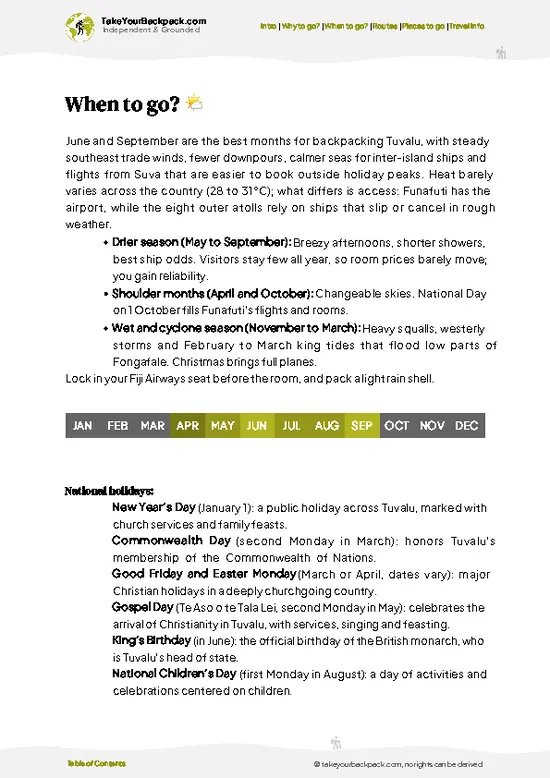
example page 0 from our offline Travel Guide for Tuvalu
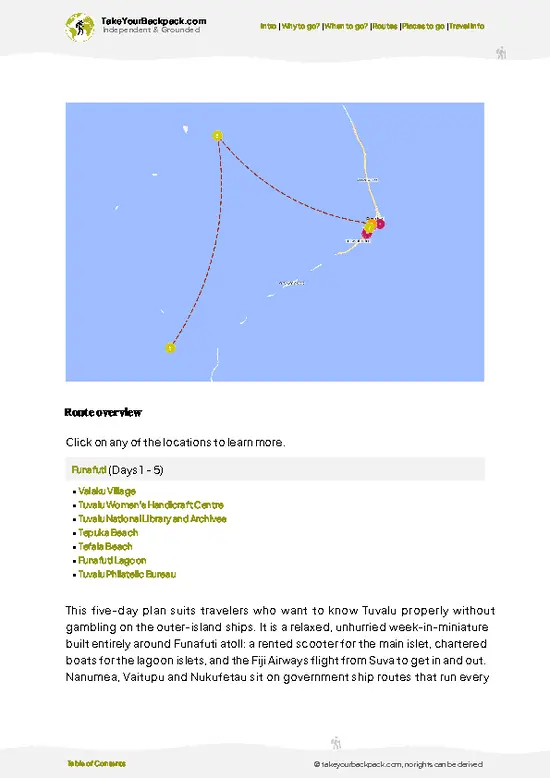
example page 1 from our offline Travel Guide for Tuvalu
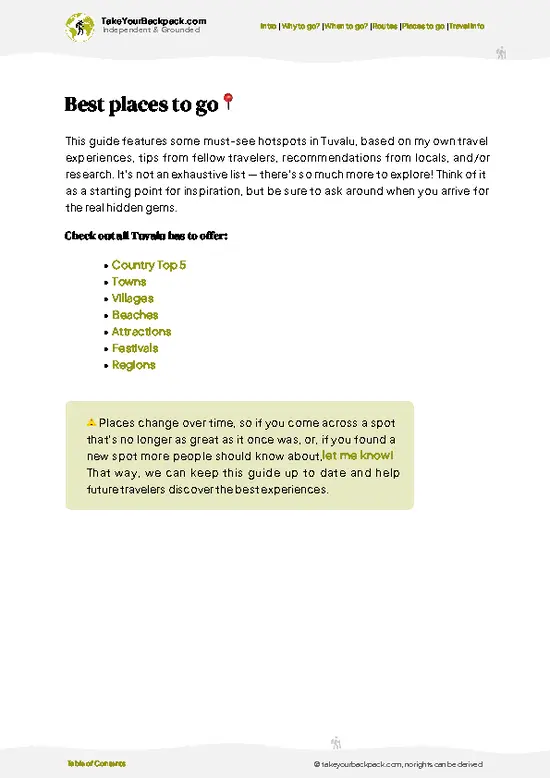
example page 2 from our offline Travel Guide for Tuvalu
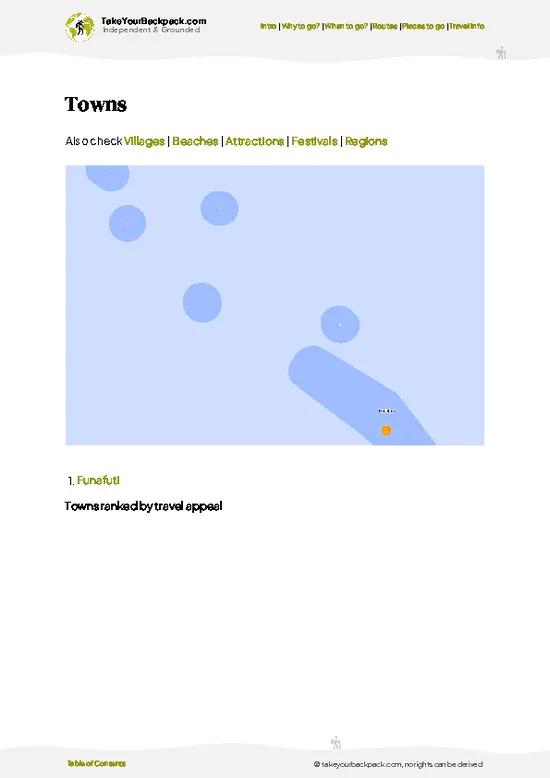
example page 3 from our offline Travel Guide for Tuvalu
example page 4 from our offline Travel Guide for Tuvalu
example page 5 from our offline Travel Guide for Tuvalu
example page 6 from our offline Travel Guide for Tuvalu
example page 7 from our offline Travel Guide for Tuvalu
Loading the map 🌍
CLICK TO FILTER
towns
villages
beaches
attractions
festivals
regions
SHOW COUNTRY’S BESTSHOW ALL

✨ Why go?
Ranked #3 region in Tuvalu
What sets this place apart

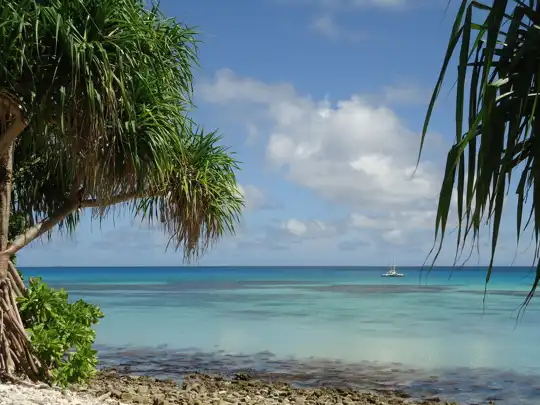
Backpackers come to Nukulaelae for the chance to live inside a Tuvaluan community without a tour layer in between. The atoll is home to only a few hundred people, so you quickly become a known face, and invitations to meals, church services and fishing trips follow naturally. The story here is also rich. It was where the Cook Islands deacon Elekana washed ashore in 1861 and helped bring Christianity to Tuvalu, and the community still organizes life around its church and its meeting hall. The second reason is the water. The wide lagoon and its ring of small islets give you swimming, snorkeling and boat picnics in one place, with no need to relocate every day. Add pulaka pits, toddy cutting and mat weaving and you can mix nature and culture entirely on foot. Slow travel is not a choice here, it is the schedule, and that suits the place.

💡 HighlightsPlaces and moments you shouldn't skip

  1. Elekana story and memorial: the 1861 arrival of a drifting Cook Islands deacon changed Tuvalu’s religious history, and locals will happily tell you the version they grew up with.
  2. Nukulaelae village church: the heart of the community, with Sunday singing that fills the whole village and welcomes visitors who dress modestly.
  3. The maneapa (community hall): an open-sided meeting house where decisions, feasts and evening gatherings happen, so sitting there is the quickest way to meet people.
  4. Lagoon swimming: sheltered, clear and usually calm, it is the best place to cool off after the afternoon heat.
  5. Boat trips to the outer islets: small uninhabited motu around the lagoon rim offer empty white-sand beaches and good snorkeling if a local fisherman will take you.
  6. Ocean-side reef beach: the outer shore
… read more 👉
  1. Elekana story and memorial: the 1861 arrival of a drifting Cook Islands deacon changed Tuvalu’s religious history, and locals will happily tell you the version they grew up with.
  2. Nukulaelae village church: the heart of the community, with Sunday singing that fills the whole village and welcomes visitors who dress modestly.
  3. The maneapa (community hall): an open-sided meeting house where decisions, feasts and evening gatherings happen, so sitting there is the quickest way to meet people.
  4. Lagoon swimming: sheltered, clear and usually calm, it is the best place to cool off after the afternoon heat.
  5. Boat trips to the outer islets: small uninhabited motu around the lagoon rim offer empty white-sand beaches and good snorkeling if a local fisherman will take you.
  6. Ocean-side reef beach: the outer shore is rough and dramatic, with surf breaking on the reef edge, and it is wonderful at low tide for walking.
  7. Pulaka pits: a lesser-known spot, these sunken taro gardens are dug into the coral soil and show how islanders feed themselves on land that barely rises above the sea.
  8. Toddy cutters at dusk: another lesser-known experience, as men climb coconut palms to collect sap for kaleve, a sweet drink, and you can watch the routine.
  9. Pandanus mat weaving: women weave mats and baskets in the village, and it is a rare chance to see the craft done for daily use instead of sale.
  10. Evening fatele: song and dance nights held for feasts and celebrations, which you can join if invited, and where the atoll feels most alive.
Start with the Elekana story, because it explains why the church and village life look the way they do and gives you a topic to open conversations from day one.
Spotted a mistake or missing something? Contact us.

⌛️ 5 days5-day itinerary for Nukulaelae Atoll

Day 1: Village and Maneapa: Start at the village in the early morning, when it is coolest and people are out on the paths, because the ship-driven schedule means you arrive with little local knowledge and need introductions fast. Greet your host family, visit the maneapa and walk the lanes to the church. Transport on Nukulaelae is your feet and the occasional boat, so the pace is set by tides, church services and the next cargo ship, not by timetables.
Day 2: Pulaka Pits and Toddy Cutters: Spend the second day inland on the village islet. Visit the pulaka pits in the morning with someone who works them, then return at dusk to watch toddy collection. Doing the garden walk early avoids the midday heat, and the evening session fits neatly after a swim.
Day 3: Lagoon and Outer Islets: Ask a fisherman … read more 👉
Day 1: Village and Maneapa: Start at the village in the early morning, when it is coolest and people are out on the paths, because the ship-driven schedule means you arrive with little local knowledge and need introductions fast. Greet your host family, visit the maneapa and walk the lanes to the church. Transport on Nukulaelae is your feet and the occasional boat, so the pace is set by tides, church services and the next cargo ship, not by timetables.
Day 2: Pulaka Pits and Toddy Cutters: Spend the second day inland on the village islet. Visit the pulaka pits in the morning with someone who works them, then return at dusk to watch toddy collection. Doing the garden walk early avoids the midday heat, and the evening session fits neatly after a swim.
Day 3: Lagoon and Outer Islets: Ask a fisherman to run you across the lagoon to an uninhabited motu. Pack water, food to share and a mask. This is the detour: it adds a deserted beach and good snorkeling without leaving the atoll, and it works because the lagoon boats are small and flexible. Go on a calm morning and return by late afternoon.
Day 4: Ocean Reef and Weaving: Walk the ocean-side shore at low tide, then return to meet the weavers in the afternoon. Keeping a slow day here leaves room for a possible fatele or feast that someone invites you to.
Day 5: Church and Farewell: If it is Sunday, go to church and let the singing carry the morning. If not, spend the day with your host, fishing or helping with a meal. The one day that justifies the whole trip is Day 3, when the lagoon, the empty motu and the small boat make the atoll feel like your own.

🌤️ When to go?Choosing the right time of year

May to October is the easiest window for Nukulaelae, with drier, steadier weather and calmer lagoon crossings.
  • Dry Season (May to October): Days run about 28 to 31°C (82 to 88°F), trade winds keep the air moving, and rain falls in short showers. Lagoon and ocean conditions are most predictable, so boat transfers and fishing outings are easier to plan.
  • Wet Season (November to April): Expect heavier, longer downpours, humid air of 27 to 31°C (81 to 88°F), and the occasional westerly gale. Cyclone season peaks from roughly December to March, and ships from Funafuti can slip by days.
  • Daylight: Close to the equator, the sun rises around 6 am and sets around 6 pm all year, so plan around a fixed 12-hour day.
  • Crowds and Prices: Visitors are rare in every month, so there is no peak pricing. The atoll
… read more 👉
May to October is the easiest window for Nukulaelae, with drier, steadier weather and calmer lagoon crossings.
  • Dry Season (May to October): Days run about 28 to 31°C (82 to 88°F), trade winds keep the air moving, and rain falls in short showers. Lagoon and ocean conditions are most predictable, so boat transfers and fishing outings are easier to plan.
  • Wet Season (November to April): Expect heavier, longer downpours, humid air of 27 to 31°C (81 to 88°F), and the occasional westerly gale. Cyclone season peaks from roughly December to March, and ships from Funafuti can slip by days.
  • Daylight: Close to the equator, the sun rises around 6 am and sets around 6 pm all year, so plan around a fixed 12-hour day.
  • Crowds and Prices: Visitors are rare in every month, so there is no peak pricing. The atoll hosts a few families and outer-island visitors over Christmas and New Year, when island feasts and dancing are at their liveliest.
Book onward transport with a few spare days on either end, because the atoll runs on ship schedules, not your calendar.


source: climatestotravel.comJANJanuary: fair for travelingFEBFebruary: fair for travelingMARMarch: fair for travelingAPRApril: fair for travelingMAYMay: highly recommended for travelingJUNJune: excellent for travelingJULJuly: excellent for travelingAUGAugust: excellent for travelingSEPSeptember: excellent for travelingOCTOctober: highly recommended for travelingNOVNovember: fair for travelingDECDecember: fair for traveling
when-to-go

✈️ The backpacker research shortcutTuvalu Travel Guide

An offline-friendly backpacking guide with optimized travel routes, ranked highlights, transport advice, and the best areas to stay.
example page 0 from our offline Travel Guide for Tuvalu
example page 1 from our offline Travel Guide for Tuvalu
example page 2 from our offline Travel Guide for Tuvalu
example page 3 from our offline Travel Guide for Tuvalu
example page 4 from our offline Travel Guide for Tuvalu
example page 5 from our offline Travel Guide for Tuvalu
example page 6 from our offline Travel Guide for Tuvalu
example page 7 from our offline Travel Guide for Tuvalu
The digital guide (97 pages) contains:
✅ 20 highlights, ranked by travel appeal
✅ Optimized 2, 3 & 5-day travel routes
✅ Cities, national parks, landmarks, beaches
✅ How to get around
✅ Offline-friendly for travel without Wi-Fi
👉 Click to see all 30+ guide features

📅 Plan smarter in minutes, not weeks
✅ Month by month travel advice
✅ Festivals & national holidays
✅ Budget expectations

🗺️ Go to the right places, skip the overrated ones
✅ Honest pros & cons of destinations
✅ Top hikes, parks & viewpoints
✅ Lesser-known places most travelers miss
✅ Clear “worth it vs skip it” guidance

🛏️ Travel smoothly without rookie mistakes
✅ Best areas to stay
✅ Transport systems explained simply
✅ Common scams & safety advice
✅ SIM cards, money & practical tips

🌍 Understand the country, not just visit it
✅ Culture & traditions
✅ 52 Essential phrases & customs
✅ Festivals worth planning around
✅ Traveler-friendly historical context
✅ Insights that make places more meaningful

📱 Built for real travel conditions
✅ Fully downloadable PDF
✅ Works completely offline
✅ Optimized for phone use
✅ Useful in remote areas & buses
✅ Everything in one place
Stop searching, start planning
Get instant access to your full guide. 30‑day money-back guarantee.
+ Add another guide for just

By proceeding you agree to our terms.
Sent to your inbox immediately after payment • 100% Secure Checkout
Best Backpacking Travel Advisor 2025 tourism awardBest Backpacking
Travel Advisor
2025
What others say about Take Your Backpack Guides:
⭐⭐⭐⭐⭐
Fantastic, amazing amount of information!
⭐⭐⭐⭐⭐
My goodness this is amazing, it's what I've been looking for hats off too you!
⭐⭐⭐⭐⭐
I think this is absolutely BRILLIANT
⭐⭐⭐⭐
Very complete and informative. It's still missing places, but I gotta to commend you
⭐⭐⭐⭐⭐
This is truly amazing, thank you, can't wait to explore it with my kids!
⭐⭐⭐⭐⭐
Awesome resource, thank you!
⭐⭐⭐⭐⭐
This is amazing! Can't wait to explore the ones I haven't seen
⭐⭐⭐⭐
I love this! Well done, great idea.
⭐⭐⭐⭐⭐
Thanks for taking the time to make this gem!
⭐⭐⭐⭐⭐
This might be the best website I've ever seen.
⭐⭐⭐⭐⭐
Congratulations, and thank you so much for your work; it's incredibly valuable.
⭐⭐⭐⭐
In all seriousness I think you did a great job pointing out the important spots
⭐⭐⭐⭐⭐
10/10 very good
⭐⭐⭐⭐⭐
As someone who's only just starting to visit regularly this is awesome, thank you.
⭐⭐⭐⭐
Thank you very much! I'm going to visit my dad, it's going to be very useful!
⭐⭐⭐⭐⭐
This is really cool! We'll be travelling for the first time and this definitely come in handy.
⭐⭐⭐⭐⭐
You are now our minister of culture, congratulations 👨‍💼
⭐⭐⭐⭐⭐
Just wanted to tell you that this is a pearl! Going to follow your recommendations.
⭐⭐⭐⭐⭐
This is so cool. I'll definitely be using the resource for my travels soon.
⭐⭐⭐⭐⭐
This is very impressive! Good work.
⭐⭐⭐⭐⭐
This is an amazing and informative site. Very well done!

🛏️ Where to stay?Where staying makes the most sense

Stay in the main village on Nukulaelae, because it is the only place with a settled community, and that is where you will sleep. There is no hostel scene, so your base is a guesthouse room or a family home arranged through the island council or a contact in Funafuti.
The village sits on the lagoon side of the atoll, where the water is calm enough for swimming and the breeze keeps nights bearable. Choosing a spot close to the center puts you near the church, the meeting hall and the small shop, all within a few minutes’ walk. This is where social life happens. Evenings bring volleyball, singing … read more 👉
Stay in the main village on Nukulaelae, because it is the only place with a settled community, and that is where you will sleep. There is no hostel scene, so your base is a guesthouse room or a family home arranged through the island council or a contact in Funafuti.
The village sits on the lagoon side of the atoll, where the water is calm enough for swimming and the breeze keeps nights bearable. Choosing a spot close to the center puts you near the church, the meeting hall and the small shop, all within a few minutes’ walk. This is where social life happens. Evenings bring volleyball, singing practice and long conversations on mats, and as a visitor you will be pulled in quickly.
Safety is a non-issue in the usual sense. The population is only a few hundred, everyone knows everyone, and a stranger is noticed and looked after. Respect matters more than caution. Dress modestly, particularly on Sundays, when the island is quiet and church takes up the morning.
Budget for simple rooms, shared bathrooms and meals with your hosts, roughly A$30 to 70 a night all in. Bring cash, since nothing here takes cards. Solo travelers often find the homestay arrangement more sociable than any dormitory, mostly because dinner turns into an evening.

🚌 Getting aroundGetting around like a local

A ride on Nukulaelae costs nothing in the usual sense, because the atoll has no taxis or buses, and you pay for things like boat hire in Australian dollars cash, or by agreeing a fuel contribution with your host. Cash is the only currency that works here, so bring plenty of small notes from Funafuti.
The islet is small enough that you cover nearly everything on foot, and the rest depends on boats and the occasional supply ship. Reliability is the sticking point. Schedules shift with weather, cargo and fuel, so treat any date as a hopeful guess.
  • Walking: Free, and the most useful choice by far. The main village sits along one lagoon-side stretch, and a stroll between the church, meeting house and shoreline takes minutes. Go early or after 4 pm, when the sun eases, and you will be chatting with
… read more 👉
A ride on Nukulaelae costs nothing in the usual sense, because the atoll has no taxis or buses, and you pay for things like boat hire in Australian dollars cash, or by agreeing a fuel contribution with your host. Cash is the only currency that works here, so bring plenty of small notes from Funafuti.
The islet is small enough that you cover nearly everything on foot, and the rest depends on boats and the occasional supply ship. Reliability is the sticking point. Schedules shift with weather, cargo and fuel, so treat any date as a hopeful guess.
  • Walking: Free, and the most useful choice by far. The main village sits along one lagoon-side stretch, and a stroll between the church, meeting house and shoreline takes minutes. Go early or after 4 pm, when the sun eases, and you will be chatting with every household you pass.
  • Motorbike or bicycle: Some residents own motorbikes or bicycles, and a loan is possible if you ask politely, usually for a small thank-you of A$5 to 10 or a bag of rice or tinned fish. Bikes save little time over walking, but they are handy on the longer track toward the far end of the atoll.
  • Local boats: Small outboard boats cross the lagoon to other islets for fishing, picnics and birdlife. Expect to cover fuel, roughly A$20 to 50 depending on distance, and go on a calm morning, since afternoon chop makes the ride wet. Of everything here, this gives a backpacker the most for the money.
  • Inter-island ship: The government vessel from Funafuti is the cheapest way in and out, with deck or cabin fares typically in the range of A$40 to 100 one way. It takes around one to two days, depending on the route, and the bunks are basic. It is slow and sometimes rough, but it is the only way in.
Let your host know your onward dates the moment you arrive. News of a ship travels through the village faster than any notice, and they will tell you when it is time to pack.

🍲 FoodWhat to Eat & Drink

Eat coconut and fish here, because the atoll is built on both. Tuna, reef fish and flying fish arrive grilled over coconut husk, raw in coconut cream or simmered into soups with a faint smoky sweetness.
Staples include pulaka, a giant swamp taro grown in pits and boiled until dense and earthy, plus breadfruit, roasted until the skin blackens and the inside turns fluffy. Pandanus and coconut crab appear at feasts, and fekei, a pudding of pulaka or breadfruit in coconut cream, is worth requesting. For a drink, ask for a drinking coconut cracked fresh, cool and slightly salty. Toddy (sap from the coconut tree) is also made locally, mild when fresh and fierce after a day.
There are no restaurants or cafés. You eat with your host family or at a communal feast in the meeting house, and a small shop … read more 👉
Eat coconut and fish here, because the atoll is built on both. Tuna, reef fish and flying fish arrive grilled over coconut husk, raw in coconut cream or simmered into soups with a faint smoky sweetness.
Staples include pulaka, a giant swamp taro grown in pits and boiled until dense and earthy, plus breadfruit, roasted until the skin blackens and the inside turns fluffy. Pandanus and coconut crab appear at feasts, and fekei, a pudding of pulaka or breadfruit in coconut cream, is worth requesting. For a drink, ask for a drinking coconut cracked fresh, cool and slightly salty. Toddy (sap from the coconut tree) is also made locally, mild when fresh and fierce after a day.
There are no restaurants or cafés. You eat with your host family or at a communal feast in the meeting house, and a small shop sells tinned fish, rice, biscuits and instant noodles. Bring snacks, coffee and anything you need for a particular diet from Funafuti, since supplies depend on the ship.
Customs matter. Food is often laid out on mats and the eldest or guests are served first, so wait for the signal before starting. Accept what is offered and leave a little behind. Sharing is expected, so a bag of rice or tinned goods makes a welcome gift. Alcohol is limited and sometimes restricted, so ask before bringing any.

FAQCommon questions from travelers

Three to five days is enough for Nukulaelae, though ship schedules often decide for you. The village and lagoon can be covered in a day or two on foot, and a boat trip to neighboring islets takes a half day. Because services from Funafuti run irregularly, plan a buffer of two to three extra days.
On the atoll, you walk, and that covers almost everything since the village is a few minutes from end to end. For lagoon trips, hire a local boat for around A$20 to 50 depending on distance, and borrow a bicycle or motorbike for the longer track. To reach Nukulaelae from Funafuti, the government ship takes roughly one to two days at about A$40 to 100 one way.
Nukulaelae is known for its remote, quiet lagoon, its small close-knit community and its traditional Polynesian life of fishing, pulaka growing and church-centered weeks. It is one of the least visited atolls in Tuvalu, home to only a few hundred people. Expect feasts, singing and simple homestays, plus excellent snorkeling and birdlife around the outer islets.
⚠️ Things can change over time, so always validate details locally before you go.

Other Tuvaluan regions near Nukulaelae Atoll

Explore more nearby:

  • Nukufetau—Motulalo bomber strip, thirty-islet lagoon, kaleve tapping, canoe line fishing| 224 km away
  • Vaitupu—Asau settlement, boarding school, reef flat, thatch maneapa| 248 km away
  • Nui—Lagoon islets, sandy track, swamp taro gardens, Nui dance| 381 km away

💡 Not sure where to go next?
Create a personalized itinerary for Tuvalu including Nukulaelae Atoll and the places that fit your trip.

Generate my itinerary

👉 Discover all regions

Or checkout all Tuvalu has to offer (think cities, towns, villages, national parks, hikes, beaches, festivals)
Country photo of Tuvalu

We 💚 feedbackKey takeaways before you go

Plan on at least a week, because the ship timing punishes anything shorter and the place only opens up once people know you. I would bring small gifts or food for your host family, plenty of cash in small notes, and a flexible mind. Skip the idea of an itinerary and say yes to the first fishing invitation.

✍️ Help improve this page!
The information on this page is based on in-depth research, insights shared by experienced travelers, and feedback from the local travel community in Tuvalu. While every effort is made to keep the information accurate and current, conditions can change — so if you spot anything incorrect or outdated, please get in touch.


🙋‍♂️ Give feedback

👋 Meet the founderWho’s Behind Take Your Backpack?

Johan, backpacker and founder of TakeYourBackpackHi, I’m Johan (Netherlands 🇳🇱), the creator of TakeYourBackpack. Over the past 3 decades, I’ve backpacked through 90+ countries across six continents, gaining extensive experience with independent travel, long-term trips, and overland routes.

This site is built on a combination of firsthand travel experience and carefully curated insights from other backpackers. Many guides are based on places I’ve personally visited, while others bring together tips, observations, and practical advice shared by trusted travelers I’ve met along the way.

The goal is to provide realistic, experience-driven guidance — not generic itineraries — so you can explore destinations with better context, clearer expectations, and more confidence.