×

Tuvalu🇹🇻 | villagesVaiaku Villageguesthouses, national bank, central post office | things to do and best time to go

Explore NuiExplore Vaitupu

Backpacking in Vaiaku Village
🏆 Top pickvillage ranked #1
By Johan Kruseman 🇳🇱 | Updated September 4, 2026

Years ago, Vaiaku felt like a sleepy government outpost with a runway attached: a few concrete buildings, the soft thud of volleyball on the sand, kerosene on the breeze, and almost no one carrying a backpack. Today it’s still tiny, but there’s more movement: a couple of guesthouses, more phones glowing at dusk, and a quiet sense that the outside world has finally found Tuvalu’s front porch. Vaiaku sits on Fongafale islet in Funafuti atoll, essentially the capital strip of the country. For backpackers, it’s less “destination” and more “base camp” for the lagoon, boat trips to outer islets, and slow walks along the ocean side where the wind smells of salt and rust. Everything is walkable; there’s no real public transport, just the odd lift in a truck. It’s calm, safe, and low-key social—think shared beers on the seawall, not bar crawls. Compared with the outer islets, Vaiaku is practical rather than idyllic, but you need it to unlock the rest of Tuvalu.

Discover everything you want to know in the 📖 Tuvalu Travel Guide.


Get your Tuvalu guide
21 ranked highlights, routes & tips, works offline (109 pages)
Loading the map 🌍
CLICK TO FILTER
towns
villages
landmarks
beaches
attractions
festivals
regions
SHOW COUNTRY’S BESTSHOW ALL

✨ Why go?
Ranked #1 village in Tuvalu
Why visitors keep coming back

Vaiaku Village in Tuvalu is a backpacker’s haven for those seeking a genuine slice of island life. Its convenience as a base for nearby hikes and cultural sites makes it a strategic stop. You can stroll to local beaches where the sand feels like powdered sugar beneath your feet, and the ocean whispers secrets only the waves know. The small-scale hostels and guesthouses here foster a friendly social atmosphere, perfect for solo travelers or small groups looking to connect.

Many backpackers linger a few days, soaking in the laid-back vibe, while others might just stop for a night or two. The walkable streets invite exploration, with the scent of local food wafting from roadside stalls, offering a taste of authentic Tuvaluan cuisine.

This isn’t a party town; it’s for those who appreciate … read more 👉
Vaiaku Village in Tuvalu is a backpacker’s haven for those seeking a genuine slice of island life. Its convenience as a base for nearby hikes and cultural sites makes it a strategic stop. You can stroll to local beaches where the sand feels like powdered sugar beneath your feet, and the ocean whispers secrets only the waves know. The small-scale hostels and guesthouses here foster a friendly social atmosphere, perfect for solo travelers or small groups looking to connect.

Many backpackers linger a few days, soaking in the laid-back vibe, while others might just stop for a night or two. The walkable streets invite exploration, with the scent of local food wafting from roadside stalls, offering a taste of authentic Tuvaluan cuisine.

This isn’t a party town; it’s for those who appreciate slow travel and the beauty of simplicity. If you’re a hiker or a culture enthusiast, you’ll find the quiet charm of Vaiaku Village rewarding. It’s a place where the journey feels as enriching as the destination, making every moment worthwhile.
Want to include Vaiaku Village in your Tuvalu route?
Create a personalized Tuvalu itinerary that includes Vaiaku Village and the places that fit your trip — based on your travel style, budget, and available time. Get your route in seconds.

Generate my trip

💡 HighlightsTop highlights of Vaiaku Village

  • Vaiaku Lagi Hotel — Tuvalu’s best-known (and basically only) proper hotel; a good base for arranging boat trips, grabbing a cold drink, and getting a close-up view of the lagoon entrance and local comings-and-goings.
  • Tuvalu Parliament / Government House area — the administrative heart of the nation in micro form; worth a walk-by to see where national business happens and to grab a photo of the modest civic buildings that run the country.
  • The Vaiaku Maneapa (community meeting hall) — the social center for weddings, funerals, and village meetings; visit to observe traditional gatherings, public notices, or a Sunday function (ask first).
  • Main Congregational Church in Vaiaku — church life shapes daily rhythms here; attending a service or simply seeing the churchyard gives real insight into
read more 👉
  • Vaiaku Lagi Hotel — Tuvalu’s best-known (and basically only) proper hotel; a good base for arranging boat trips, grabbing a cold drink, and getting a close-up view of the lagoon entrance and local comings-and-goings.
  • Tuvalu Parliament / Government House area — the administrative heart of the nation in micro form; worth a walk-by to see where national business happens and to grab a photo of the modest civic buildings that run the country.
  • The Vaiaku Maneapa (community meeting hall) — the social center for weddings, funerals, and village meetings; visit to observe traditional gatherings, public notices, or a Sunday function (ask first).
  • Main Congregational Church in Vaiaku — church life shapes daily rhythms here; attending a service or simply seeing the churchyard gives real insight into local culture and community ties.
  • Vaiaku Jetty / boat landing — where fishermen and tour boats come and go; a great place to watch local fishing operations, catch a boat to the lagoon, or photograph the reef pass at low light.
  • Post Office & Philatelic counter — small, practical, and oddly fun: Tuvalu’s stamps are collectible and postcards mailed from here make a neat travel souvenir.
  • Local market stalls and roadside shops — nothing fancy, but where you’ll find fresh fish, taro, breadfruit and the occasional handmade craft; the best place to chat with locals and sample simple island food.
  • Government services cluster (health clinic / administration offices) — the working side of village life; visiting the clinic or administration offices (during open hours) gives a realistic sense of everyday life and services on a tiny atoll.
  • Community school and sports field — schools are lively places in Vaiaku; if there’s a match or school event you can watch, it’s one of the clearest windows into local youth culture and community pride.
  • Village cemetery and family shrines — quiet, respectfully maintained spaces that tell local family histories and customs; visiting with sensitivity gives context to the island’s past generations and traditions.
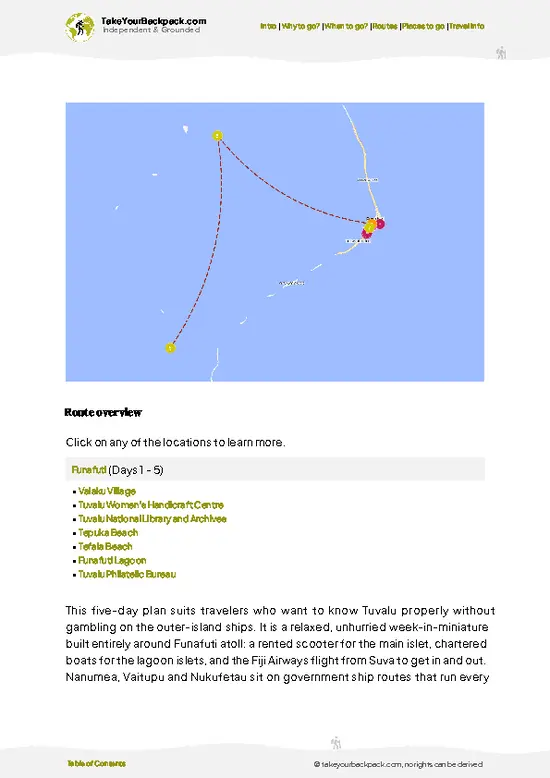
A few excellent day trips just outside Vaiaku: the Funafuti Conservation Area for top-notch snorkeling, nearby islets like Tepuka and Fualopa for lazy beach visits, and the atoll’s WWII relics and lagoon passages — all easily reached by short boat rides from the Vaiaku jetty.
Spotted a mistake or missing something? Contact us.

⌛️ 1 daySeeing the highlights in 24 hours

Vaiaku Village, the heart of Funafuti, Tuvalu, is a place where the ocean meets the sky in a seamless blend of blues. The air carries the scent of salt and coconut, and the gentle hum of island life wraps around you like a warm embrace. This village isn’t just a stopover; it’s a chance to immerse yourself in the local culture and experience the simplicity of island living.

Start your morning with a stroll along the waterfront. The sun rises slowly, casting a golden light over the lagoon. Grab a breakfast of fresh coconut and local bread from a nearby vendor. The taste is sweet and chewy, a perfect fuel for your day. After breakfast, head to the Tuvalu Maritime Training Institute. This spot isn’t on every tourist’s radar, but it offers a glimpse into the island’s commitment to maritime education. … read more 👉
Vaiaku Village, the heart of Funafuti, Tuvalu, is a place where the ocean meets the sky in a seamless blend of blues. The air carries the scent of salt and coconut, and the gentle hum of island life wraps around you like a warm embrace. This village isn’t just a stopover; it’s a chance to immerse yourself in the local culture and experience the simplicity of island living.

Start your morning with a stroll along the waterfront. The sun rises slowly, casting a golden light over the lagoon. Grab a breakfast of fresh coconut and local bread from a nearby vendor. The taste is sweet and chewy, a perfect fuel for your day. After breakfast, head to the Tuvalu Maritime Training Institute. This spot isn’t on every tourist’s radar, but it offers a glimpse into the island’s commitment to maritime education. You might catch students practicing their skills, surrounded by the sound of waves lapping against the shore.

In the afternoon, explore the village further. Visit the local market, where vibrant fruits and handmade crafts are on display. Engage with the vendors; they’re eager to share stories and smiles. The atmosphere is lively, filled with laughter and the scent of grilled fish. Afterward, take a short walk to the nearby Funafuti Conservation Area. The lush greenery and unique wildlife make it a peaceful retreat. Bring your camera; the colors are striking, and the tranquility is palpable.

As evening approaches, find a spot along the beach to watch the sunset. The sky transforms into a canvas of oranges and purples, reflecting off the water. For dinner, seek out a local eatery serving up fresh fish and taro. The flavors are simple yet satisfying, a true taste of Tuvaluan hospitality.

Your day in Vaiaku Village will leave you with a deeper appreciation for this island paradise, where every moment feels like a small victory in the journey of travel.
Turn your Vaiaku Village visit into an Tuvalu adventure
Build a complete Tuvalu route with Vaiaku Village, hidden gems, must-see destinations, and realistic travel times included.

Generate my trip

🌤️ When to go?Weather, crowds, and seasonal trade-offs


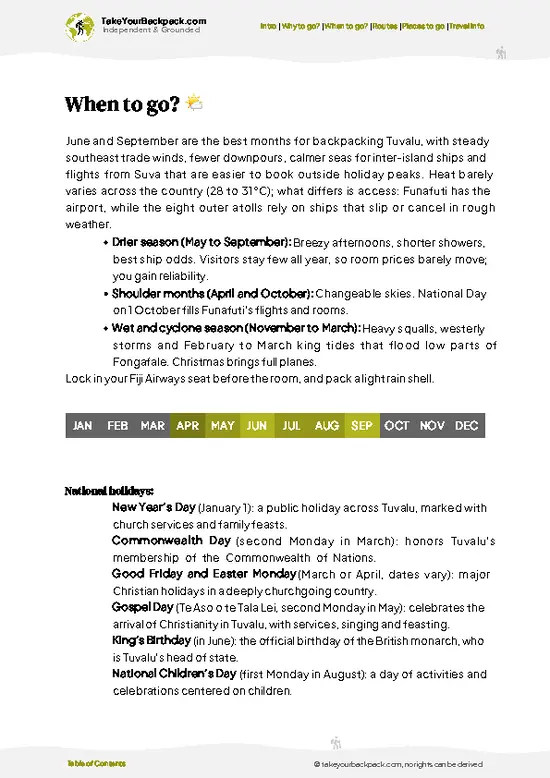
  • Weather: Vaiaku Village experiences a tropical climate with a wet season from November to April, bringing heavy rains and humidity that can dampen outdoor plans. The dry season, May to October, offers clearer skies and less moisture, making it the prime window for backpackers craving sun and sea.

  • Temperature: Temperatures hover between 26°C and 31°C (79°F to 88°F) year-round, but the dry season feels more comfortable with lower humidity, so your sweat won’t soak through your shirt every five minutes.

  • Daylight Hours: Near the equator, Vaiaku Village enjoys roughly 12 hours of daylight year-round, so you won’t lose precious hiking or beach time no matter when you arrive.

  • Crowds: Tourism here is minimal year-round, but the dry season sees a slight uptick in visitors. You’ll still find
read more 👉

  • Weather: Vaiaku Village experiences a tropical climate with a wet season from November to April, bringing heavy rains and humidity that can dampen outdoor plans. The dry season, May to October, offers clearer skies and less moisture, making it the prime window for backpackers craving sun and sea.

  • Temperature: Temperatures hover between 26°C and 31°C (79°F to 88°F) year-round, but the dry season feels more comfortable with lower humidity, so your sweat won’t soak through your shirt every five minutes.

  • Daylight Hours: Near the equator, Vaiaku Village enjoys roughly 12 hours of daylight year-round, so you won’t lose precious hiking or beach time no matter when you arrive.

  • Crowds: Tourism here is minimal year-round, but the dry season sees a slight uptick in visitors. You’ll still find plenty of quiet corners to soak in the island’s rhythm without feeling like you’re in a postcard crowd.

  • Seasonal Activities: The dry months align with local festivals and fishing seasons, offering a richer cultural experience and fresher seafood. The wet season’s storms can limit boat trips and outdoor excursions.

  • Price Fluctuations: Accommodation and transport prices peak slightly during the dry season due to demand but remain reasonable compared to more tourist-heavy Pacific islands. Booking ahead during this time ensures better rates and availability.


Pro-tip: Aim for May to October to catch Vaiaku Village at its sunniest and most accessible—your gear will thank you, and so will your spirit.


source: climatestotravel.comJANJanuary: fair for travelingFEBFebruary: fair for travelingMARMarch: fair for travelingAPRApril: fair for travelingMAYMay: excellent for travelingJUNJune: excellent for travelingJULJuly: excellent for travelingAUGAugust: excellent for travelingSEPSeptember: excellent for travelingOCTOctober: excellent for travelingNOVNovember: fair for travelingDECDecember: fair for traveling
when-to-go

✈️ The backpacker research shortcutTuvalu Travel Guide

An offline-friendly backpacking guide with optimized travel routes, ranked highlights, transport advice, and the best areas to stay.
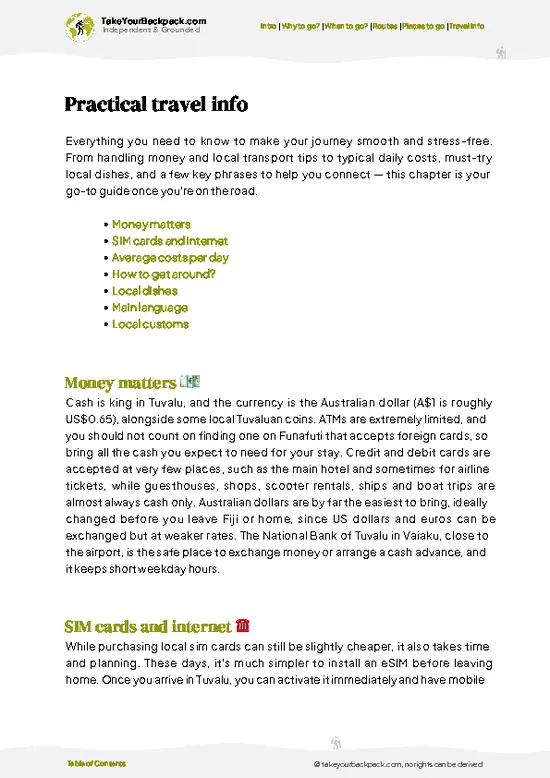
example page 0 from our offline Travel Guide for Tuvalu
example page 1 from our offline Travel Guide for Tuvalu
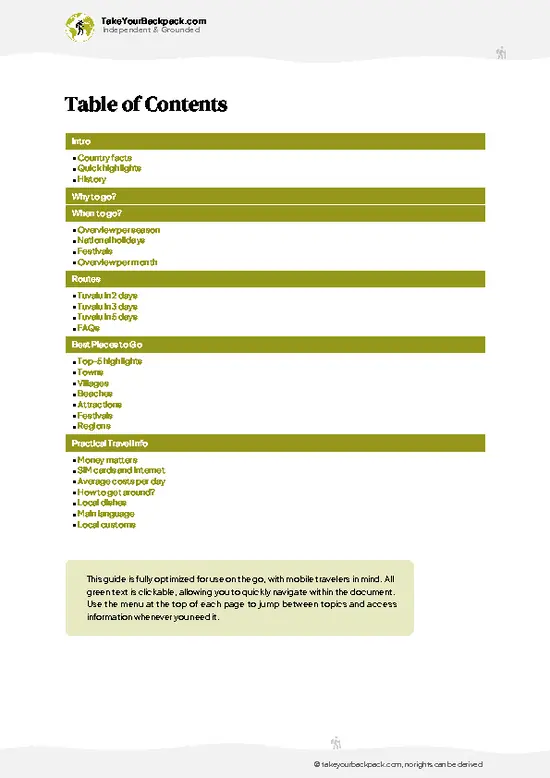
example page 2 from our offline Travel Guide for Tuvalu
example page 3 from our offline Travel Guide for Tuvalu
example page 4 from our offline Travel Guide for Tuvalu
example page 5 from our offline Travel Guide for Tuvalu
example page 6 from our offline Travel Guide for Tuvalu
example page 7 from our offline Travel Guide for Tuvalu
The digital guide (109 pages) contains:
21 highlights, ranked by travel appeal
Optimized 2, 3 & 5-day travel routes
Cities, national parks, landmarks, beaches
How to get around
Offline-friendly for travel without Wi-Fi
👉 Click to see all 30+ guide features

📅 Plan smarter in minutes, not weeks
Month by month travel advice
Festivals & national holidays
Budget expectations

🗺️ Go to the right places, skip the overrated ones
Honest pros & cons of destinations
Top hikes, parks & viewpoints
Lesser-known places most travelers miss
Clear “worth it vs skip it” guidance

🛏️ Travel smoothly without rookie mistakes
Best areas to stay
Transport systems explained simply
Common scams & safety advice
SIM cards, money & practical tips

🌍 Understand the country, not just visit it
Culture & traditions
52 Essential phrases & customs
Festivals worth planning around
Traveler-friendly historical context
Insights that make places more meaningful

📱 Built for real travel conditions
Fully downloadable PDF
Works completely offline
Optimized for phone use
Useful in remote areas & buses
Everything in one place
Save weeks of stressful planning
Get instant access to your full guide. 30‑day money-back guarantee.
+ Add another guide for just US$7.80

By proceeding you agree to our terms.
Sent to your inbox immediately after payment • 100% Secure Checkout
Best Backpacking Travel Advisor 2025 tourism awardBest Backpacking
Travel Advisor
2025
What others say about Take Your Backpack Guides:
⭐⭐⭐⭐⭐
Fantastic, amazing amount of information!
⭐⭐⭐⭐⭐
My goodness this is amazing, it's what I've been looking for hats off too you!
⭐⭐⭐⭐⭐
I think this is absolutely BRILLIANT
⭐⭐⭐⭐
Very complete and informative. It's still missing places, but I gotta to commend you
⭐⭐⭐⭐⭐
This is truly amazing, thank you, can't wait to explore it with my kids!
⭐⭐⭐⭐⭐
Awesome resource, thank you!
⭐⭐⭐⭐⭐
This is amazing! Can't wait to explore the ones I haven't seen
⭐⭐⭐⭐
I love this! Well done, great idea.
⭐⭐⭐⭐⭐
Thanks for taking the time to make this gem!
⭐⭐⭐⭐⭐
This might be the best website I've ever seen.
⭐⭐⭐⭐⭐
Congratulations, and thank you so much for your work; it's incredibly valuable.
⭐⭐⭐⭐
In all seriousness I think you did a great job pointing out the important spots
⭐⭐⭐⭐⭐
10/10 very good
⭐⭐⭐⭐⭐
As someone who's only just starting to visit regularly this is awesome, thank you.
⭐⭐⭐⭐
Thank you very much! I'm going to visit my dad, it's going to be very useful!
⭐⭐⭐⭐⭐
This is really cool! We'll be travelling for the first time and this definitely come in handy.
⭐⭐⭐⭐⭐
You are now our minister of culture, congratulations 👨‍💼
⭐⭐⭐⭐⭐
Just wanted to tell you that this is a pearl! Going to follow your recommendations.
⭐⭐⭐⭐⭐
This is so cool. I'll definitely be using the resource for my travels soon.
⭐⭐⭐⭐⭐
This is very impressive! Good work.
⭐⭐⭐⭐⭐
This is an amazing and informative site. Very well done!

🛏️ Where to stay?Where staying makes the most sense

Vaiaku Village is the heart of Tuvalu’s capital, Funafuti, and it’s where backpackers will find the best mix of safety, social buzz, and budget-friendly options. This compact village is the natural hub for travelers because it’s where the island’s few guesthouses and hostels cluster. Staying here means you’re steps away from the local market, the ferry terminal, and the handful of eateries where you can swap stories with other travelers over fresh fish and coconut.

Unlike sprawling cities, Vaiaku’s small size works in your favor. The village’s layout encourages walking and spontaneous meetups. … read more 👉
Vaiaku Village is the heart of Tuvalu’s capital, Funafuti, and it’s where backpackers will find the best mix of safety, social buzz, and budget-friendly options. This compact village is the natural hub for travelers because it’s where the island’s few guesthouses and hostels cluster. Staying here means you’re steps away from the local market, the ferry terminal, and the handful of eateries where you can swap stories with other travelers over fresh fish and coconut.

Unlike sprawling cities, Vaiaku’s small size works in your favor. The village’s layout encourages walking and spontaneous meetups. The air carries the salty tang of the ocean mixed with the faint aroma of pandanus leaves drying in the sun, grounding you in the island’s rhythm. This isn’t a place for flashy nightlife, but the calm, friendly vibe makes it easy to connect with locals and fellow backpackers alike.

Compared to the more residential or isolated parts of Funafuti, Vaiaku offers a smoother experience. You won’t waste time or energy on long commutes or feeling out of place. The village’s safety is tangible—quiet streets under soft evening light, where neighbors greet each other by name. For solo travelers or budget seekers, this is the spot to settle in, recharge, and soak up the authentic pulse of Tuvalu without unnecessary hassle.

🚌 Getting aroundHow to get around Vaiaku Village

Vaiaku Village moves at the pace of the ocean tides—unhurried, rhythmic, and shaped by the sun’s arc rather than a clock’s tick. The air carries a salty tang mixed with the faint aroma of coconut and wood smoke, while locals drift between tasks with a calm certainty that defies rigid schedules. Here, time is more about moments than minutes, and your best bet is to sync with the natural flow rather than fight it. That means embracing walking as your baseline, using local boats when you want to stretch your range, and tapping into the occasional shared ride when the mood strikes. The transit options are simple but layered with character—each one a small adventure in itself.

Walking: The heartbeat of Vaiaku. The village is compact, with dirt paths and shaded lanes that invite slow exploration. … read more 👉
Vaiaku Village moves at the pace of the ocean tides—unhurried, rhythmic, and shaped by the sun’s arc rather than a clock’s tick. The air carries a salty tang mixed with the faint aroma of coconut and wood smoke, while locals drift between tasks with a calm certainty that defies rigid schedules. Here, time is more about moments than minutes, and your best bet is to sync with the natural flow rather than fight it. That means embracing walking as your baseline, using local boats when you want to stretch your range, and tapping into the occasional shared ride when the mood strikes. The transit options are simple but layered with character—each one a small adventure in itself.

Walking: The heartbeat of Vaiaku. The village is compact, with dirt paths and shaded lanes that invite slow exploration. Walking costs nothing, offers the richest sensory experience, and lets you absorb the village’s textures—from the rough bark of breadfruit trees to the chatter of children playing barefoot. It’s the fastest way to get anywhere within Vaiaku itself, and you’ll rarely need anything else for daily errands or beach visits.

Shared Minibus: These are informal, often brightly painted vans that run between Vaiaku and nearby villages or the airport. They don’t follow a strict timetable but usually start rolling around 7 a.m. and taper off by early evening. Expect to pay a few tala (local currency) per ride. It’s a budget-friendly option if you’re heading beyond Vaiaku, but be ready for a bumpy ride on uneven roads and a stop-and-go rhythm dictated by passenger pickups.

Outrigger Canoes: For crossing the lagoon or hopping between islets, these traditional boats are both practical and atmospheric. They operate mostly on demand, so you’ll need to negotiate a price upfront—usually affordable if you’re not in a rush. The ride is slow but scenic, with the wind and water sounds filling the space between you and the horizon. It’s a perfect way to experience the village’s maritime culture firsthand.

Motorbike Rentals: If you want to cover more ground independently, renting a motorbike is a solid choice. Prices vary but remain reasonable for budget travelers. The roads can be rough, so a sturdy bike and some riding experience help. This option gives you freedom to explore at your own pace, especially the less accessible spots beyond the village perimeter.

Taxi Services: Taxis exist but are rare and usually more expensive than other options. They’re best reserved for urgent trips or when you’re carrying heavy gear. Expect to negotiate fares before hopping in, as meters are uncommon. Comfort is better than minibuses, but the cost and availability make this a less practical choice for budget travelers.

Understanding Vaiaku’s transit means tuning into its rhythms: walk when you want to soak in the village’s soul, hitch a ride when you need to stretch your legs, and embrace the water’s slow pull for a change of scenery. This isn’t a place for rigid timetables, but for flexible, sensory travel that rewards patience and curiosity.

👛 Costs (as of 4 September 2026)How expensive it really is

Backpacking in Vaiaku Village, Tuvalu, means embracing a slow pace where every dollar stretches against the backdrop of island life’s quiet rhythms. Here’s what you can expect to spend daily, broken down into the essentials.
  • Dorm Accommodation: Dorm-style lodging is rare and limited, often found in small guesthouses or community-run hostels. Expect to pay around $20 to $35 USD per night. The rooms are basic, with simple bedding and shared bathrooms, but they offer a chance to connect with locals and fellow travelers in a setting that feels more like a home than a hotel.
  • Meals: Food costs hover around $5 to $10 USD per meal if you stick to local fare. Vaiaku’s meals are straightforward—think fresh fish, taro, and coconut-based dishes—often cooked over open fires or small stoves. Eating at
read more 👉
Backpacking in Vaiaku Village, Tuvalu, means embracing a slow pace where every dollar stretches against the backdrop of island life’s quiet rhythms. Here’s what you can expect to spend daily, broken down into the essentials.
  • Dorm Accommodation: Dorm-style lodging is rare and limited, often found in small guesthouses or community-run hostels. Expect to pay around $20 to $35 USD per night. The rooms are basic, with simple bedding and shared bathrooms, but they offer a chance to connect with locals and fellow travelers in a setting that feels more like a home than a hotel.
  • Meals: Food costs hover around $5 to $10 USD per meal if you stick to local fare. Vaiaku’s meals are straightforward—think fresh fish, taro, and coconut-based dishes—often cooked over open fires or small stoves. Eating at local stalls or small eateries keeps costs down and flavors authentic, while imported goods or Western-style meals can push prices higher.
  • Local Transport: Vaiaku is compact, so most travel happens on foot or by bicycle, which is free or costs a few dollars to rent. For longer trips around Funafuti Atoll, small boats or shared taxis might run $5 to $10 USD. Transport isn’t frequent or flashy, but it’s part of the island’s unhurried charm.
  • Basic Activities/Entry Fees: Activities are low-key and nature-focused. Snorkeling gear rental or guided walks might cost $5 to $15 USD. There are no big-ticket tourist traps here; instead, you pay for access to simple pleasures like lagoon swims, village tours, or cultural experiences, often arranged through your accommodation.
  • Miscellaneous Expenses: Budget $3 to $7 USD for essentials like bottled water, occasional snacks, or small souvenirs. Internet access is limited and can be pricey, so factor in a bit extra if staying connected is a priority.

Vaiaku Village’s daily budget for an independent backpacker typically falls between $40 and $70 USD. It’s not about luxury or speed here; it’s about tuning into the island’s slow pulse, where every expense supports a lifestyle that’s simple but deeply rooted in place.
⚠️ Prices can change and everyone travels differently, so take this as a rough guide. Hope it helps you plan your adventure!

🚌 Day tripsShort trips worth adding

Vaiaku Village is your gateway to the heart of Tuvalu, where the pace is slow, but the experiences are rich. Use this charming village as your base for day trips that reveal the island’s soul.

Funafuti Conservation Area
Just a short boat ride away, the Funafuti Conservation Area is a must-see for nature lovers. Picture yourself gliding over turquoise waters, spotting vibrant coral reefs and schools of fish. The area is a sanctuary for marine life, making it perfect for snorkeling. Plan for about two hours of travel each way, and budget around $30 for the boat ride and gear rental. The best time to visit is during the dry season, from May to October, when visibility is at its peak. A common mistake? Underestimating the sun; bring plenty of sunscreen and a hat.


Niulakita Island
This … read more 👉
Vaiaku Village is your gateway to the heart of Tuvalu, where the pace is slow, but the experiences are rich. Use this charming village as your base for day trips that reveal the island’s soul.

Funafuti Conservation Area
Just a short boat ride away, the Funafuti Conservation Area is a must-see for nature lovers. Picture yourself gliding over turquoise waters, spotting vibrant coral reefs and schools of fish. The area is a sanctuary for marine life, making it perfect for snorkeling. Plan for about two hours of travel each way, and budget around $30 for the boat ride and gear rental. The best time to visit is during the dry season, from May to October, when visibility is at its peak. A common mistake? Underestimating the sun; bring plenty of sunscreen and a hat.


Niulakita Island
This tiny island is a slice of paradise, just a 30-minute boat ride from Vaiaku. Niulakita offers pristine beaches and a chance to experience local culture. Spend your day swimming, sunbathing, or chatting with friendly locals. The round trip will set you back about $40, and it’s best to go in the morning to avoid the midday heat. Many first-timers miss out on the island’s charm by sticking to the main attractions; don’t be afraid to wander and explore.


Fongafale Village
A short walk or bike ride from Vaiaku, Fongafale is the capital of Tuvalu and offers a glimpse into daily life. Visit local markets, sample fresh seafood, and soak in the laid-back atmosphere. This trip is practically free, aside from what you spend on food and souvenirs. Aim for the late afternoon when the village comes alive with activity. A common oversight is not engaging with locals; they’re eager to share stories and insights about their culture.


Funafuti Lagoon
Exploring the lagoon is an adventure that combines relaxation and exploration. Rent a kayak and paddle through the calm waters, discovering secluded spots perfect for a picnic. The lagoon is just a short ride from Vaiaku, and you can easily spend a full day here. Expect to pay around $20 for kayak rental. The best time is early morning when the water is glassy and the light is magical. Many backpackers miss the chance to enjoy the lagoon’s tranquility; don’t rush—take your time.
👉 Explore Funafuti Lagoon
Want to know what more Tuvalu offers?
The Tuvalu Travel Guide describes 21 highlights, from cities to national parks, from beaches to hikes

Get the Travel Guide -

🛡️ SafetyStaying Safe: What Travelers Should Know

Vaiaku Village is generally safe, but a little awareness goes a long way. The main road is well-trodden, but stray dogs can be a nuisance. Keep your distance and don’t engage; they’re usually harmless but can be a bit intimidating.

Solo travelers should feel comfortable, but it’s wise to stick to well-lit areas after dark. The village has a relaxed vibe, but wandering too far off the beaten path at night can lead to unexpected encounters.

Scams are rare, yet it’s good to be cautious with offers that seem too good to be true, especially from vendors at the market. Always negotiate prices; it’s part of the local culture.

Annoyances might include the occasional persistent seller, but a polite “no, thank you” usually does the trick. Carry yourself with confidence, and you’ll blend right in. … read more 👉
Vaiaku Village is generally safe, but a little awareness goes a long way. The main road is well-trodden, but stray dogs can be a nuisance. Keep your distance and don’t engage; they’re usually harmless but can be a bit intimidating.

Solo travelers should feel comfortable, but it’s wise to stick to well-lit areas after dark. The village has a relaxed vibe, but wandering too far off the beaten path at night can lead to unexpected encounters.

Scams are rare, yet it’s good to be cautious with offers that seem too good to be true, especially from vendors at the market. Always negotiate prices; it’s part of the local culture.

Annoyances might include the occasional persistent seller, but a polite “no, thank you” usually does the trick. Carry yourself with confidence, and you’ll blend right in. Embrace the simplicity of life here; it’s part of the charm.

FAQCommon questions from travelers

You get to Vaiaku Village by flying into Funafuti International Airport, the main gateway to Tuvalu, then taking a short taxi or local transport ride of about 5 kilometers to the village. Flights typically connect through Fiji or Kiribati, with at least one stopover. Travel options are limited and flights may be infrequent, so plan accordingly.
Yes, Vaiaku Village is worth the trip for its authentic experience of Tuvaluan culture and its proximity to the Funafuti Conservation Area, which offers excellent snorkeling and marine life viewing. The village is the administrative center of Tuvalu and provides insight into local life on one of the world's smallest and least visited countries.
Yes, Vaiaku Village can be visited as a day trip if you are staying on Funafuti Atoll. The village is easily accessible from the airport and main accommodation areas, allowing you to explore local markets, the church, and nearby beaches within a few hours.
⚠️ Things can change over time, so always validate details locally before you go.

Other Tuvaluan villages near Vaiaku Village

Explore more nearby:

  • Savave—lagoon shoreline, village meeting house, local fishing boats| 112 km away
  • Vaitupu—largest landmass, secondary school, agricultural plots| 130 km away
  • Nui—interconnected motu, coconut plantations, lagoon views| 267 km away

💡 Not sure where to go next?
Create a personalized itinerary for Tuvalu including Vaiaku Village and the places that fit your trip.

Generate my itinerary

👉 Discover all villages

Or checkout all Tuvalu has to offer (think cities, towns, villages, national parks, hikes, beaches, festivals)
Country photo of Tuvalu

We 💚 feedbackWhat to keep in mind

Vaiaku Village is a slice of paradise where the air is thick with the scent of salt and coconut. The vibe? Laid-back and genuine, with locals who greet you like family. The best surprise? Stumbling upon a spontaneous village feast—fresh fish grilled right on the beach, with laughter echoing into the night. Just a heads-up: the roads can be rough, so don’t rush. Embrace the slow pace; it’s part of the charm. You’ll leave with a piece of Tuvalu in your heart.

✍️ Help improve this page!
The information on this page is based on in-depth research, insights shared by experienced travelers, and feedback from the local travel community in Tuvalu. While every effort is made to keep the information accurate and current, conditions can change — so if you spot anything incorrect or outdated, please get in touch.


🙋‍♂️ Give feedback

👋 Meet the founderWho’s Behind Take Your Backpack?

Johan, backpacker and founder of TakeYourBackpackHi, I’m Johan (Netherlands 🇳🇱), the creator of TakeYourBackpack. Over the past decade, I’ve backpacked through 80+ countries across six continents, gaining extensive experience with independent travel, long-term trips, and overland routes.

This site is built on a combination of firsthand travel experience and carefully curated insights from other backpackers. Many guides are based on places I’ve personally visited, while others bring together tips, observations, and practical advice shared by trusted travelers I’ve met along the way.

The goal is to provide realistic, experience-driven guidance — not generic itineraries — so you can explore destinations with better context, clearer expectations, and more confidence.

Get full Tuvalu guide •
Instant download • 21 highlights • Full Offline guide