×

Tuvalu🇹🇻 | villagesFangauaGlassy shallows, Pepesala village, Congregational church, Elekana story, fatele nights | things to do and best time to go

Explore Vaiaku VillageExplore Savave

Backpacking in Fangaua
🌟 Highlightvillage ranked #1
By Johan Kruseman 🇳🇱 | Updated October 16, 2026

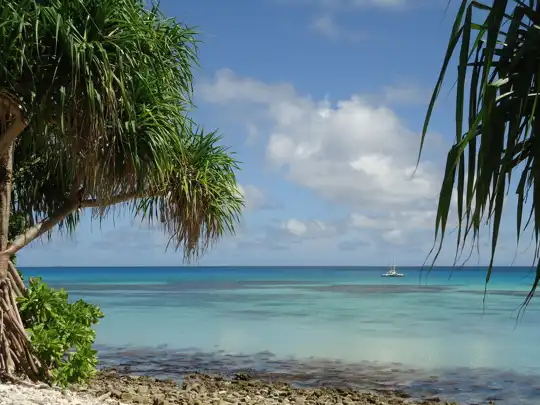
Fangaua Lagoon is famous, to the extent anything here is, for water so calm and clear that you can see the sandy bottom from the shore, with a thin ring of coconut palms behind it. What gets overlooked is that you are visiting a living community, not a resort: this is the inhabited islet of Nukulaelae atoll, and the village of Pepesala sits right beside the shoreline. Fangaua Lagoon lies southeast of Funafuti in Tuvalu, and the only way there is by ship. Be honest with yourself about that. Sailings are infrequent, the schedule shifts, and there are no tour operators, no crowds and no ticket gates. You will probably be one of very few outsiders. Your reward is time: slow mornings on the lagoon edge, a wave from nearly every person you pass, and a village that notices when you arrive. Late afternoon is when the lagoon turns glassy and children take over the shallows with homemade spears and a lot of shouting.

Discover everything you want to know in the 📖 Tuvalu Travel Guide.


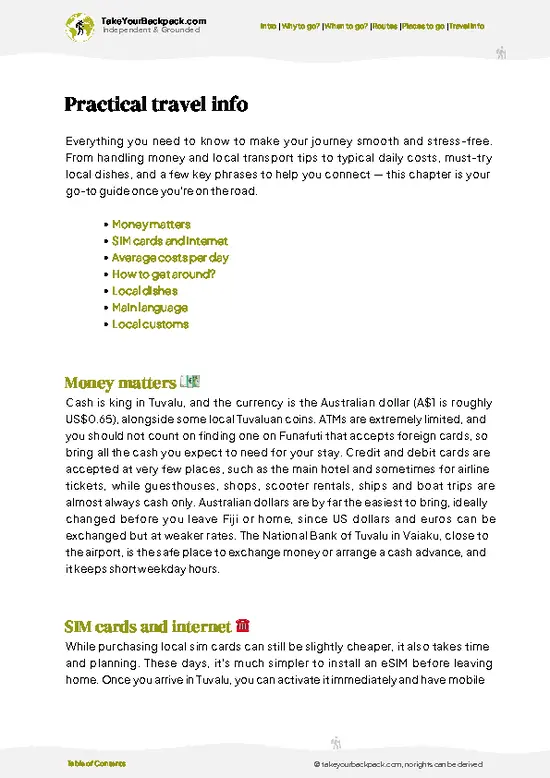
example page 0 from our offline Travel Guide for Tuvalu
example page 1 from our offline Travel Guide for Tuvalu
example page 2 from our offline Travel Guide for Tuvalu
example page 3 from our offline Travel Guide for Tuvalu
example page 4 from our offline Travel Guide for Tuvalu
example page 5 from our offline Travel Guide for Tuvalu
example page 6 from our offline Travel Guide for Tuvalu
example page 7 from our offline Travel Guide for Tuvalu
Loading the map 🌍
CLICK TO FILTER
towns
villages
beaches
attractions
festivals
regions
SHOW COUNTRY’S BESTSHOW ALL

✨ Why go?
Ranked #1 village in Tuvalu
Reasons people choose to visit here

Fangaua Lagoon is worth the long ship journey because almost nobody else makes it. Nukulaelae is one of the least-visited atolls in one of the least-visited countries on earth, so what you find is daily life on a coral islet, not a staged version of it. Pepesala village is small enough that you will know most faces by the second day, and hospitality here tends to arrive as a plate of fish before you have asked for anything.
The second reason is the water. The lagoon is shallow, sheltered and warm, which makes it good for easy swimming and wading, and the reef on the ocean side offers a completely different, rougher view of the same islet within a short walk.
Third, the history gives the place weight. The atoll is tied to Elekana, the deacon whose drift voyage brought Christianity to the Tuvaluan … read more 👉
Fangaua Lagoon is worth the long ship journey because almost nobody else makes it. Nukulaelae is one of the least-visited atolls in one of the least-visited countries on earth, so what you find is daily life on a coral islet, not a staged version of it. Pepesala village is small enough that you will know most faces by the second day, and hospitality here tends to arrive as a plate of fish before you have asked for anything.
The second reason is the water. The lagoon is shallow, sheltered and warm, which makes it good for easy swimming and wading, and the reef on the ocean side offers a completely different, rougher view of the same islet within a short walk.
Third, the history gives the place weight. The atoll is tied to Elekana, the deacon whose drift voyage brought Christianity to the Tuvaluan islands, and the church still anchors village life. Come with time to spare, since ship schedules decide when you leave, and treat the wait as part of the trip.

💡 HighlightsKey sights and experiences for travelers

  1. Fangaua Lagoon shoreline: The reason to come. The water inside the islet is shallow and clear, and at low tide you can wade a long way over pale sand and patches of coral rubble. It is quiet enough that the loudest sound is often wind in the palms.
  2. Pepesala village: The only settlement on the islet, strung along the lagoon side. Walk it slowly. Houses, cookhouses, pigpens and taro pits show how a community lives on a strip of land only a few hundred meters wide.
  3. The village church: The Congregational church is the center of Nukulaelae life, with services that fill the building with hymn singing in harmony. Visitors are welcome to sit in, and conservative dress is expected.
  4. The story of Elekana: Locals will tell you about the Nukulaelae deacon whose drift voyage in the 1860s brought Christianity
… read more 👉
  1. Fangaua Lagoon shoreline: The reason to come. The water inside the islet is shallow and clear, and at low tide you can wade a long way over pale sand and patches of coral rubble. It is quiet enough that the loudest sound is often wind in the palms.
  2. Pepesala village: The only settlement on the islet, strung along the lagoon side. Walk it slowly. Houses, cookhouses, pigpens and taro pits show how a community lives on a strip of land only a few hundred meters wide.
  3. The village church: The Congregational church is the center of Nukulaelae life, with services that fill the building with hymn singing in harmony. Visitors are welcome to sit in, and conservative dress is expected.
  4. The story of Elekana: Locals will tell you about the Nukulaelae deacon whose drift voyage in the 1860s brought Christianity to the Ellice Islands. Ask an elder and the story gets longer and better.
  5. The ocean-side reef and beach: Cross the islet and the scene changes completely: surf breaking on the reef edge, coral shingle underfoot and open horizon. Good for walking at low tide, but the swell makes swimming here unwise.
  6. Fatele evenings: When the community gathers for a fatele, the Tuvaluan song and dance performance, drummed rhythms and clapping carry across the village. These happen on festive occasions, so there is no set schedule, but if one is on, go.
  7. Fishing with villagers: Fishing from the lagoon edge and reef is the daily food source. If you are invited along, accept. You will learn more about the atoll in an hour than from any walk alone.
All of it fits comfortably into two or three relaxed days, though ship timing usually stretches a stay well beyond that.
Spotted a mistake or missing something? Contact us.

🌤️ When to go?When to go for the best experience

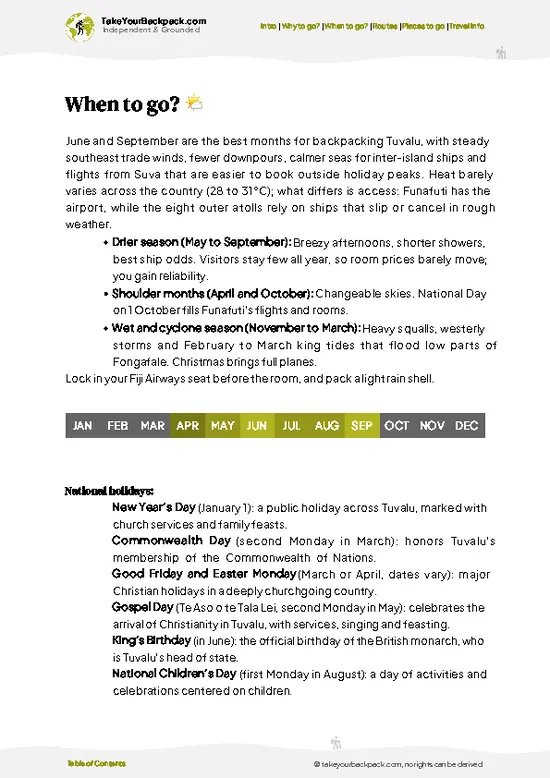
  • Dry Season (May to October): This is the best window for Fangaua Lagoon, with less rain, steadier trade winds and calmer days for lagoon swimming. Days run 28 to 31°C (82 to 88°F), nights around 25°C (77°F). Ship schedules to the outer islands are also easier to plan around.
  • Wet Season (November to April): Expect heavy squalls, humid air at 28 to 32°C (82 to 90°F) and rougher seas that can delay or cancel sailings. Cyclones are possible, mostly between November and April. Lagoon water turns choppy and murky after downpours.
  • Daylight: Close to the equator, days stay near 12 hours all year, so season makes little difference to how much light you have.
  • Crowds and Prices: There are no crowds in any month. Ship fares and local costs stay the same all year, but Christmas and New Year bring returning
… read more 👉
  • Dry Season (May to October): This is the best window for Fangaua Lagoon, with less rain, steadier trade winds and calmer days for lagoon swimming. Days run 28 to 31°C (82 to 88°F), nights around 25°C (77°F). Ship schedules to the outer islands are also easier to plan around.
  • Wet Season (November to April): Expect heavy squalls, humid air at 28 to 32°C (82 to 90°F) and rougher seas that can delay or cancel sailings. Cyclones are possible, mostly between November and April. Lagoon water turns choppy and murky after downpours.
  • Daylight: Close to the equator, days stay near 12 hours all year, so season makes little difference to how much light you have.
  • Crowds and Prices: There are no crowds in any month. Ship fares and local costs stay the same all year, but Christmas and New Year bring returning islanders and fuller ships.
  • Community Events: Church feasts and island gatherings fill the calendar around December and January, which is lively but makes ship berths scarce.
Book your return passage before you leave, since the ship timetable matters more than the weather.


source: climatestotravel.comJANJanuary: fair for travelingFEBFebruary: fair for travelingMARMarch: fair for travelingAPRApril: fair for travelingMAYMay: highly recommended for travelingJUNJune: excellent for travelingJULJuly: excellent for travelingAUGAugust: excellent for travelingSEPSeptember: excellent for travelingOCTOctober: highly recommended for travelingNOVNovember: fair for travelingDECDecember: fair for traveling
when-to-go

✈️ The backpacker research shortcutTuvalu Travel Guide

An offline-friendly backpacking guide with optimized travel routes, ranked highlights, transport advice, and the best areas to stay.
example page 0 from our offline Travel Guide for Tuvalu
example page 1 from our offline Travel Guide for Tuvalu
example page 2 from our offline Travel Guide for Tuvalu
example page 3 from our offline Travel Guide for Tuvalu
example page 4 from our offline Travel Guide for Tuvalu
example page 5 from our offline Travel Guide for Tuvalu
example page 6 from our offline Travel Guide for Tuvalu
example page 7 from our offline Travel Guide for Tuvalu
The digital guide (97 pages) contains:
✅ 20 highlights, ranked by travel appeal
✅ Optimized 2, 3 & 5-day travel routes
✅ Cities, national parks, landmarks, beaches
✅ How to get around
✅ Offline-friendly for travel without Wi-Fi
👉 Click to see all 30+ guide features

📅 Plan smarter in minutes, not weeks
✅ Month by month travel advice
✅ Festivals & national holidays
✅ Budget expectations

🗺️ Go to the right places, skip the overrated ones
✅ Honest pros & cons of destinations
✅ Top hikes, parks & viewpoints
✅ Lesser-known places most travelers miss
✅ Clear “worth it vs skip it” guidance

🛏️ Travel smoothly without rookie mistakes
✅ Best areas to stay
✅ Transport systems explained simply
✅ Common scams & safety advice
✅ SIM cards, money & practical tips

🌍 Understand the country, not just visit it
✅ Culture & traditions
✅ 52 Essential phrases & customs
✅ Festivals worth planning around
✅ Traveler-friendly historical context
✅ Insights that make places more meaningful

📱 Built for real travel conditions
✅ Fully downloadable PDF
✅ Works completely offline
✅ Optimized for phone use
✅ Useful in remote areas & buses
✅ Everything in one place
Stop searching, start planning
Get instant access to your full guide. 30‑day money-back guarantee.
+ Add another guide for just

By proceeding you agree to our terms.
Sent to your inbox immediately after payment • 100% Secure Checkout
Best Backpacking Travel Advisor 2025 tourism awardBest Backpacking
Travel Advisor
2025
What others say about Take Your Backpack Guides:
⭐⭐⭐⭐⭐
Fantastic, amazing amount of information!
⭐⭐⭐⭐⭐
My goodness this is amazing, it's what I've been looking for hats off too you!
⭐⭐⭐⭐⭐
I think this is absolutely BRILLIANT
⭐⭐⭐⭐
Very complete and informative. It's still missing places, but I gotta to commend you
⭐⭐⭐⭐⭐
This is truly amazing, thank you, can't wait to explore it with my kids!
⭐⭐⭐⭐⭐
Awesome resource, thank you!
⭐⭐⭐⭐⭐
This is amazing! Can't wait to explore the ones I haven't seen
⭐⭐⭐⭐
I love this! Well done, great idea.
⭐⭐⭐⭐⭐
Thanks for taking the time to make this gem!
⭐⭐⭐⭐⭐
This might be the best website I've ever seen.
⭐⭐⭐⭐⭐
Congratulations, and thank you so much for your work; it's incredibly valuable.
⭐⭐⭐⭐
In all seriousness I think you did a great job pointing out the important spots
⭐⭐⭐⭐⭐
10/10 very good
⭐⭐⭐⭐⭐
As someone who's only just starting to visit regularly this is awesome, thank you.
⭐⭐⭐⭐
Thank you very much! I'm going to visit my dad, it's going to be very useful!
⭐⭐⭐⭐⭐
This is really cool! We'll be travelling for the first time and this definitely come in handy.
⭐⭐⭐⭐⭐
You are now our minister of culture, congratulations 👨‍💼
⭐⭐⭐⭐⭐
Just wanted to tell you that this is a pearl! Going to follow your recommendations.
⭐⭐⭐⭐⭐
This is so cool. I'll definitely be using the resource for my travels soon.
⭐⭐⭐⭐⭐
This is very impressive! Good work.
⭐⭐⭐⭐⭐
This is an amazing and informative site. Very well done!

🛏️ Where to stay?How to pick the right area

Your only real option is the village of Pepesala, the settlement on the islet of Fangaua, where you stay with a local family. There are no hostels, hotels or backpacker districts on Nukulaelae atoll, and that is the appeal. Homestays are arranged through the island council or through contacts on Funafuti before you sail, and you should confirm them in advance because you cannot simply turn up and shop around.
Pepesala is small, quiet and very safe. Everyone knows everyone, so you are a visitor in a tight community, and your host effectively becomes your guide, cook and social circle. Evenings revolve … read more 👉
Your only real option is the village of Pepesala, the settlement on the islet of Fangaua, where you stay with a local family. There are no hostels, hotels or backpacker districts on Nukulaelae atoll, and that is the appeal. Homestays are arranged through the island council or through contacts on Funafuti before you sail, and you should confirm them in advance because you cannot simply turn up and shop around.
Pepesala is small, quiet and very safe. Everyone knows everyone, so you are a visitor in a tight community, and your host effectively becomes your guide, cook and social circle. Evenings revolve around the maneapa (the open meeting hall), church services and shared meals, so you will meet people quickly even if you travel solo. Nights are often silent apart from surf on the reef and voices drifting between houses.
Staying near the lagoon side of the village keeps you closest to swimming spots and the shoreline, while rooms are typically simple, with mats, mosquito nets and shared washing facilities. Bring snacks, a flashlight and any medication you need, since supplies are limited and shops carry only basics. Offering to contribute to food costs is expected and appreciated. Because ships arrive infrequently, you will likely stay several days, so settle in and follow the village rhythm.

👛 Costs (as of 16 October 2026)How expensive it really is

Expect to spend about US$10 to 20 a day on Fangaua Lagoon, with a Total Daily Budget of roughly US$60 in high season, and the ship fare is the biggest cost.
CategoryBudget RangeLocal Reality
Ship Passage (per day averaged)US$10 to 20Return fares from Funafuti run roughly US$60 to 120 on the inter-island ship, spread over a stay of several days.
Accommodation (high season)US$15 to 25Family homestay with a mat, net and shared facilities. Prices are similar in the wet season, US$12 to 25.
FoodUS$10 to 20Often included or shared with your host. Fish, taro, coconut and rice dominate, and you pay in Australian dollars.
ActivitiesUS$0 to 5Swimming, walking the islet and fishing with locals are free, with a small thank-you gift or fuel contribution for boat trips.
SuppliesUS$5 to 10Shop stock is limited,
… read more 👉
Expect to spend about US$10 to 20 a day on Fangaua Lagoon, with a Total Daily Budget of roughly US$60 in high season, and the ship fare is the biggest cost.
CategoryBudget RangeLocal Reality
Ship Passage (per day averaged)US$10 to 20Return fares from Funafuti run roughly US$60 to 120 on the inter-island ship, spread over a stay of several days.
Accommodation (high season)US$15 to 25Family homestay with a mat, net and shared facilities. Prices are similar in the wet season, US$12 to 25.
FoodUS$10 to 20Often included or shared with your host. Fish, taro, coconut and rice dominate, and you pay in Australian dollars.
ActivitiesUS$0 to 5Swimming, walking the islet and fishing with locals are free, with a small thank-you gift or fuel contribution for boat trips.
SuppliesUS$5 to 10Shop stock is limited, so water, snacks and toiletries cost more and can run out.
Total Daily BudgetUS$60Sum of the rows using midpoints, with high-season accommodation.
⚠️ Prices can change and everyone travels differently, so take this as a rough guide. Hope it helps you plan your adventure!

🚌 Day tripsExploring the surroundings

Fangaua works as a base for short outings only in the sense that everything lies within an hour or two on foot or by small boat inside Nukulaelae atoll, because there is no road network, no public transport and no way to reach another atoll for the day. Think of it as one long ring of islets around a lagoon, with the village of Pepesala as your anchor.
Walk the Village and Lagoon Shore:
The easiest outing costs nothing. Start at the lagoon side of Pepesala and follow the coral-gravel track along the shore, where fishing canoes are pulled up and families work on the reef flat at low tide. Allow two to three hours at a slow pace with swim stops. Go early or late, because the middle of the day on an islet with little shade is punishing. First-timers often walk straight through someone’s land or … read more 👉
Fangaua works as a base for short outings only in the sense that everything lies within an hour or two on foot or by small boat inside Nukulaelae atoll, because there is no road network, no public transport and no way to reach another atoll for the day. Think of it as one long ring of islets around a lagoon, with the village of Pepesala as your anchor.
Walk the Village and Lagoon Shore:
The easiest outing costs nothing. Start at the lagoon side of Pepesala and follow the coral-gravel track along the shore, where fishing canoes are pulled up and families work on the reef flat at low tide. Allow two to three hours at a slow pace with swim stops. Go early or late, because the middle of the day on an islet with little shade is punishing. First-timers often walk straight through someone’s land or fishing spot without asking, so greet people and check before you wander.

Boat Trip to the Outer Islets:
Nukulaelae is a chain of islets on a reef, and the uninhabited ones are where you find nesting seabirds, coconut crab habitat and empty beaches. A local boat owner can take you across the lagoon in 30 to 60 minutes each way, and you should expect to chip in for fuel, roughly US$15 to 40 for the group, plus a little extra for the driver’s time. The calm, dry months from about May to October give the flattest water. Bring all your drinking water and a hat, since there is no shop and no shade on many shores.
👉 Explore Nukulaelae Atoll
Snorkeling the Lagoon Edge:
The lagoon has coral heads close to shore and clear water on calm days, so you can make this a half-day swim without a boat at all. Walk to the lagoon edge, slip in at high tide and drift along the drop-off where reef fish gather. Costs are just what you bring, as there is no rental. The common mistake is swimming across the pass or near the ocean reef when the tide is moving, where currents can pull hard. Ask a local which stretch is safe that day and go with someone if you can.

Ocean-Side Reef Walk:
On the seaward side the reef flat opens at low tide, with tide pools, small fish and views of surf breaking on the outer edge. It takes about two hours return from the village and costs nothing. Wear sturdy reef shoes, since coral cuts get infected fast in the heat. Check tide times with your hosts before you set off, because the flat floods quicker than it looks.

FAQFrequently asked questions about Fangaua

Fangaua Lagoon is the sheltered water around Fangaua, the inhabited islet of Nukulaelae atoll, home to the village of Pepesala. It lies about 120 km southeast of Funafuti in one of the most remote corners of Tuvalu. Life here runs on fishing, taro pits and church, with only a few hundred residents on the atoll.
Plan on five to seven days, because the ship schedule dictates your stay more than the sights do. The sailing from Funafuti takes roughly a day, and you may wait a week or more for the return ship. The islet can be walked in under an hour, so the days fill with swimming, fishing and village life.
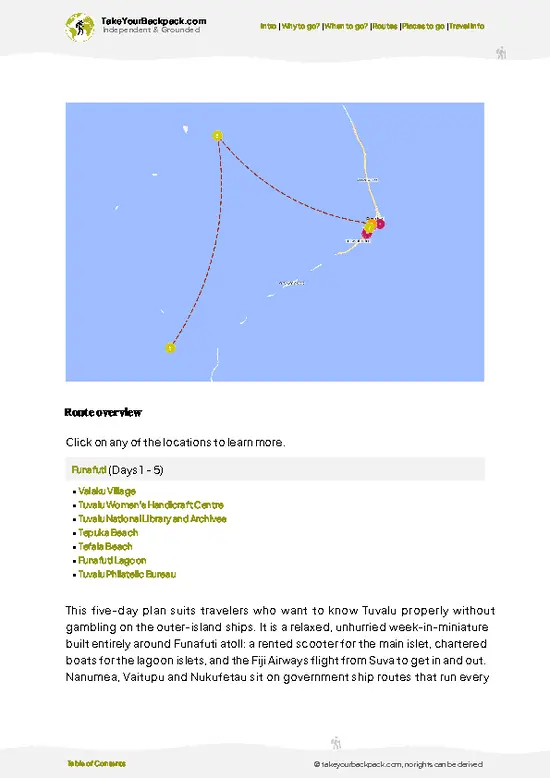
Fangaua Lagoon can only be reached by ship, not by small boat from Fongafale. Fly into Funafuti International Airport, then book a berth on the inter-island vessel to Nukulaelae, a voyage of roughly 120 km taking about 12 to 24 hours depending on stops. Fares are about US$60 to 120 return, and sailings are irregular, so confirm dates with the shipping office on Funafuti.
⚠️ Things can change over time, so always validate details locally before you go.

Other Tuvaluan villages near Fangaua

Explore more nearby:

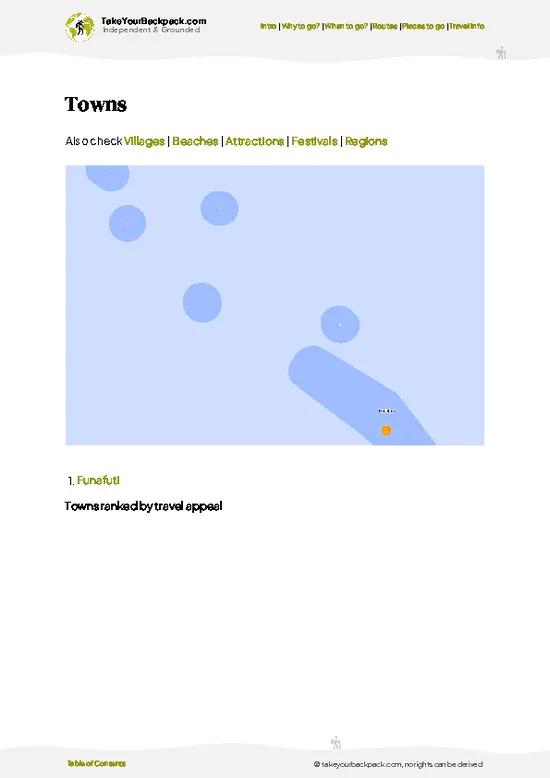
  • Vaiaku Village—Runway street, lagoon beachfront, stamp bureau, scooter-wide island| 116 km away
  • Savave—Nukufetau atoll, village quiet, wartime bomber strip, giant clams| 222 km away
  • Nanumea—B-24 airstrip, Tefolaha stories, lagoon, supply-ship access| 576 km away

💡 Not sure where to go next?
Create a personalized itinerary for Tuvalu including Fangaua and the places that fit your trip.

Generate my itinerary

👉 Discover all villages

Or checkout all Tuvalu has to offer (think cities, towns, villages, national parks, hikes, beaches, festivals)
Country photo of Tuvalu

We 💚 feedbackSumming up the experience

Fangaua Lagoon is at its best when the tide is out, and most first-timers miss how the whole village drifts onto the flats then to gather shellfish and fish. Go down with them and you will be handed a role within minutes. Bring a few small gifts for your hosts, wear reef shoes, and pack extra reading for the wait between ships.

✍️ Help improve this page!
The information on this page is based on in-depth research, insights shared by experienced travelers, and feedback from the local travel community in Tuvalu. While every effort is made to keep the information accurate and current, conditions can change — so if you spot anything incorrect or outdated, please get in touch.


🙋‍♂️ Give feedback

👋 Meet the founderWho’s Behind Take Your Backpack?

Johan, backpacker and founder of TakeYourBackpackHi, I’m Johan (Netherlands 🇳🇱), the creator of TakeYourBackpack. Over the past 3 decades, I’ve backpacked through 90+ countries across six continents, gaining extensive experience with independent travel, long-term trips, and overland routes.

This site is built on a combination of firsthand travel experience and carefully curated insights from other backpackers. Many guides are based on places I’ve personally visited, while others bring together tips, observations, and practical advice shared by trusted travelers I’ve met along the way.

The goal is to provide realistic, experience-driven guidance — not generic itineraries — so you can explore destinations with better context, clearer expectations, and more confidence.