Yes, backpacking the United Arab Emirates on your own is easy: it is one of the safest countries you can visit, signs are in English and Arabic, and the big cities have good public transport.
The challenge is cost, not logistics. Dorm beds in
Dubai run about AED 70 to 120 (US$19 to 33), Metro rides cost AED 3 to 7.50, and intercity buses to
Abu Dhabi or
Al Ain take 1.5 to 2.5 hours for AED 25 to 35. Food is cheap if you eat at South Asian cafeterias, where a curry and bread costs AED 10 to 20. The mountains and the desert are harder to reach, and you’ll need a tour, a taxi or a rental car.
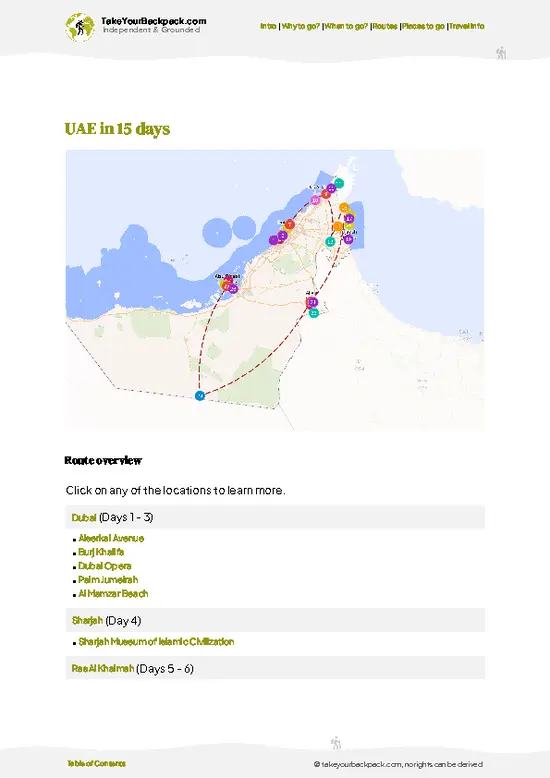
Five days covers Dubai and one mountain trip, but ten to fifteen days lets you see the United Arab Emirates properly, including the interior and the east coast.
With five days, spend three in
Dubai and one or two in
Hatta, 1.5 to 2 hours away by direct bus. Ten days adds
Abu Dhabi (2 hours from Dubai),
Al Ain and
Ras Al Khaimah. Fifteen days gives you time for the dunes at
Liwa Oasis, about 3 hours from Abu Dhabi by car, and two nights on the Gulf of Oman at
Dibba Al-Fujairah. Distances are short, so two or three nights per stop feels relaxed.
Yes, you can travel between all the main cities in the United Arab Emirates without a car, though Liwa, Jebel Jais and most hiking trailheads still require a taxi, tour or rental.
Buses link
Dubai to
Abu Dhabi in about 2 hours, to
Al Ain in about 2 hours and to
Ras Al Khaimah in 1.5 to 2 hours, for AED 25 to 35 (US$7 to 10). The Dubai Metro covers Downtown, the Marina and the airport. A taxi from Ras Al Khaimah to
Jebel Jais takes about an hour each way. For the desert or the east coast, renting a small car for AED 100 to 180 (US$27 to 50) a day saves you time and stress.
In the United Arab Emirates, the essential stops are the
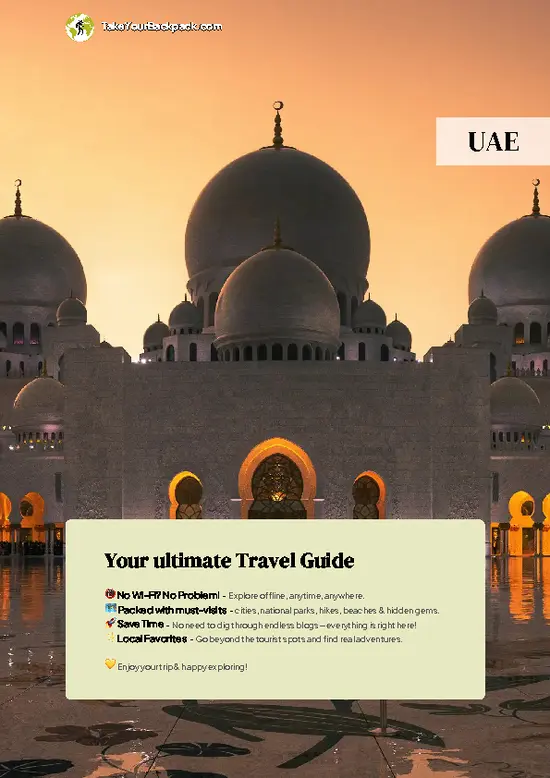
Sheikh Zayed Grand Mosque and
Louvre Abu Dhabi in the capital, the
Burj Khalifa in Dubai, and a night or evening in the desert.
Book the mosque for free online and go near sunset. The Louvre costs around AED 63 (US$17), and the Burj Khalifa observation deck costs AED 170 to 200 (US$46 to 55) outside sunset slots. For the desert, the
Dubai Desert Conservation Reserve is the easy option, while
Liwa Oasis is the dramatic one, about 3 hours from Abu Dhabi. Add
Al Ain Oasis for palm groves and
Jebel Jais in Ras Al Khaimah for cooler air at around 1,900 meters.
When you’re short on time in the United Arab Emirates, skip the theme parks and malls first, because tickets cost US$80 to 100 and they feel the same as theme parks elsewhere.
IMG Worlds of Adventure and
Ferrari World Abu Dhabi can each take up a full day. Instead, spend that time at the
Sheikh Zayed Grand Mosque or in the desert.
Palm Jumeirah looks better on a map than on the ground, so a quick ride on the monorail is enough.
Fujairah city is fine but not essential, as the east coast is best at
Dibba Al-Fujairah and
Snoopy Island. You can also skip
Sir Bani Yas Island on a short trip, since it is a 3 to 4 hour journey west of Abu Dhabi.
Yes, our itinerary-planner does exactly that. Set your trip length in days, give your interests and travel style, optionally give start- and end location and/or some mandatory stops you would like to include and the itinerary planner creates your personalized routes for UAE in seconds. Try it out!
Try the itinerary plannerv2.webp)
 Best Backpacking

