×

United Kingdom🇬🇧 | best festivalsThe 10 Top festivals in the UK

Festivals in the United Kingdom (UK) come in two temperaments: the muddy, tent-based field weekend and the city takeover where you sleep in a hostel and walk to the venue. England leans toward the first, with ticketed farm-field events that sell out months ahead and cost £250 to £400 for a weekend. Scotland and Wales trade scale for local character, with ceilidhs, choirs and fire-lit village nights that cost far less. Northern Ireland runs on pub sessions that need no ticket at all. Cities like Edinburgh and London swell, then price a bed as if it were a kidney. For a backpacker or any independent traveler, transport is the quiet deciding factor, because rural sites are beautiful and also 14 miles from the nearest late bus. Pack a poncho. Optimism is not waterproof.

By Johan Kruseman 🇳🇱 | Updated October 18, 2026
Explore the best regions in the UK

Why go?What Makes Them Special

The UK suits festivals because nearly every town has a calendar and the habit of standing outdoors in questionable weather is deeply national. Centuries of fairs, church holidays, trade guilds and bardic gatherings left a culture of turning up in a field to sing, drink tea and argue about the queue. Add the modern music industry, with London as a global base for acts, and you get an unusually dense schedule across a country small enough to cross by train in a day.

The four nations each add their own flavor. Scotland brings Gaelic and piping traditions plus a famous August arts crush. Wales protects its language through eisteddfod competitions. Northern Ireland mixes traditional music with an easy pub culture. England covers the rest, from folk to electronic to carnival.

Before choosing the … read more 👉
The UK suits festivals because nearly every town has a calendar and the habit of standing outdoors in questionable weather is deeply national. Centuries of fairs, church holidays, trade guilds and bardic gatherings left a culture of turning up in a field to sing, drink tea and argue about the queue. Add the modern music industry, with London as a global base for acts, and you get an unusually dense schedule across a country small enough to cross by train in a day.

The four nations each add their own flavor. Scotland brings Gaelic and piping traditions plus a famous August arts crush. Wales protects its language through eisteddfod competitions. Northern Ireland mixes traditional music with an easy pub culture. England covers the rest, from folk to electronic to carnival.

Before choosing the UK, know that infrastructure is excellent but pricey. Trains are frequent yet the walk-up fare on a festival Friday can cost more than the ticket to the next gig. Rural sites often rely on shuttle buses, and official camping is usually the only bed within reach. Weather is a participant, not a backdrop: a sunny afternoon and a horizontal downpour can share the same hour, and good boots matter more than a good outfit. Alcohol is part of most events, and bag searches, cashless bars and re-entry rules are common. Book early, since the largest events sell out in hours, while smaller regional ones are often easy to join the week before. Contactless payment works almost everywhere, and a power bank is more useful than a second jacket. The UK rewards people who plan the logistics and then relax about the mud.
Evaluating the Top Choices
The list of best festivals in the UK is created based on energy, traditions, crowd experience, activities, and overall excitement. If you feel a festival is missing in this list, please let us know.

When to go?Seasonal Guide to Visiting

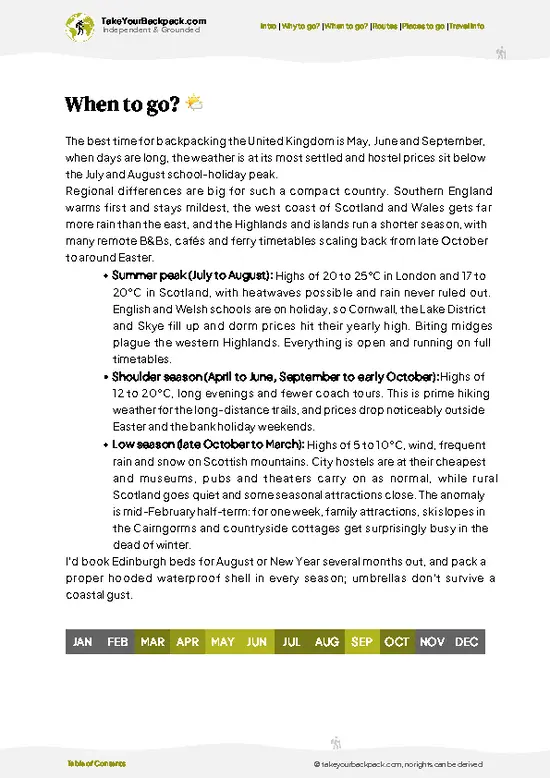
Best months: The best months for festivals in the UK are June to August, because the big outdoor events cluster there and daytime highs reach 18 to 22°C in England and Wales, a few degrees cooler in Scotland. Daylight lasts until 9:30 or 10 p.m. in midsummer, which is handy when the headliner starts late and the walk back is long. Rain, however, ignores the calendar. July and August still bring around 10 to 14 wet days a month in most regions, and the west of Scotland and Wales get more than the east.
Shoulder seasons: May and September are the sensible compromise. Temperatures sit around 12 to 18°C, crowds thin, and accommodation prices near events can drop 20 to 40 percent compared with peak August. Spring suits folk gatherings, carnivals and city arts weeks, and early autumn brings harvest … read more 👉
Best months: The best months for festivals in the UK are June to August, because the big outdoor events cluster there and daytime highs reach 18 to 22°C in England and Wales, a few degrees cooler in Scotland. Daylight lasts until 9:30 or 10 p.m. in midsummer, which is handy when the headliner starts late and the walk back is long. Rain, however, ignores the calendar. July and August still bring around 10 to 14 wet days a month in most regions, and the west of Scotland and Wales get more than the east.
Shoulder seasons: May and September are the sensible compromise. Temperatures sit around 12 to 18°C, crowds thin, and accommodation prices near events can drop 20 to 40 percent compared with peak August. Spring suits folk gatherings, carnivals and city arts weeks, and early autumn brings harvest and food-themed events with fewer queues. April and October work for indoor and pub-based events, though evenings fall to 5 to 9°C and daylight shrinks fast.
Peak pressure and winter: August in Edinburgh is the clearest peak: dorm beds and hotel rooms can double or triple in price, and booking three to six months ahead is normal. Bank holiday weekends in England (late May and late August) fill trains and campsites everywhere. Winter is quieter, cold at 2 to 8°C, and dark by 4 p.m. from December, but it suits fire festivals and New Year celebrations, especially in Scotland, where Hogmanay draws big crowds. Some rural campsites and ferries run reduced services from November to March, so confirm opening before building a plan around them.

festival hoppingPlanning Your Route Efficiently

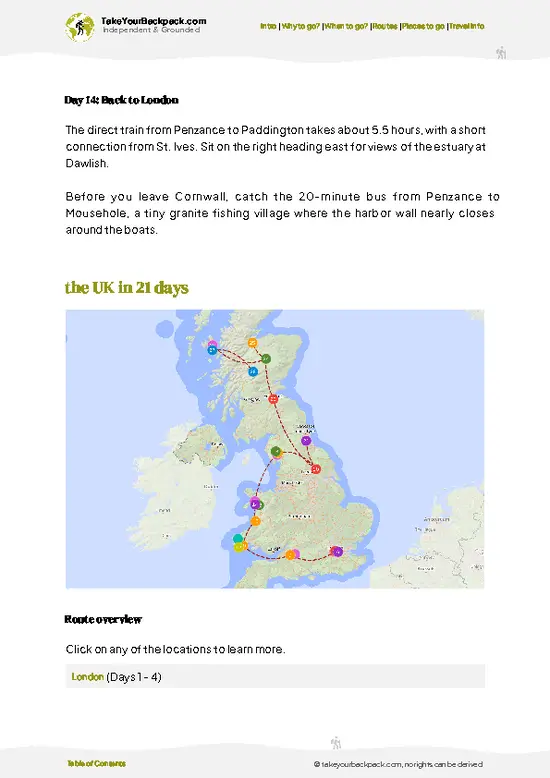
How long it takes: A trip combining several festivals in the UK needs 10 to 21 days, since the distances look short on a map and then refuse to behave. Travel between regions is slow: London to Edinburgh takes roughly 4.5 to 5 hours by train, London to Cardiff about 2 hours, and Edinburgh to Belfast around 5 to 7 hours with a ferry or flight connection. Allow 2 to 4 nights per stop for a city event and a full 3 to 4 nights for a camping weekend, which includes arrival queues, recovery and the wet-tent factor.
Which regions cluster: Southern England, South Wales and the Bristol region group well, with frequent trains from London, Bristol and Cardiff, each under 2.5 hours apart. Northern England links naturally with Scotland along the East Coast line through York, Newcastle and Edinburgh. Northern … read more 👉
How long it takes: A trip combining several festivals in the UK needs 10 to 21 days, since the distances look short on a map and then refuse to behave. Travel between regions is slow: London to Edinburgh takes roughly 4.5 to 5 hours by train, London to Cardiff about 2 hours, and Edinburgh to Belfast around 5 to 7 hours with a ferry or flight connection. Allow 2 to 4 nights per stop for a city event and a full 3 to 4 nights for a camping weekend, which includes arrival queues, recovery and the wet-tent factor.
Which regions cluster: Southern England, South Wales and the Bristol region group well, with frequent trains from London, Bristol and Cardiff, each under 2.5 hours apart. Northern England links naturally with Scotland along the East Coast line through York, Newcastle and Edinburgh. Northern Ireland is better treated as a separate leg, reached by cheap flights or the Cairnryan to Belfast ferry, about 2 to 2.5 hours.
Direction and mistakes: Travel south to north if dates allow, so the long, expensive hauls come when your energy and clean laundry are at their peak and the Scottish leg ends the trip. Common mistakes include scheduling two camping events back to back with no gap (budget at least one night in a real bed between them), assuming rural sites have late trains (many last services leave before 11 p.m.), and booking cheap rail fares late. Buy advance tickets 6 to 12 weeks ahead, use coaches such as National Express or FlixBus for savings, and book accommodation near big events before the lineup is announced. Leave one empty day per week. Trains will use it.

The ListHighly Recommended festivals of the UK

1 Glastonbury Festival

Pyramid Stage, sprawling fields, late-night revelry

Navigate a vast landscape of music, art installations, and spontaneous gatherings, where every corner offers a different sensory experience.

2 Edinburgh Festival Fringe

pop-up venues, street performers, experimental theatre

Immerse yourself in a city transformed by thousands of shows, unexpected performances, and a constant buzz from morning until midnight.

3 Notting Hill Carnival

Caribbean culture, street parades, sound systems

Follow vibrant processions, sample street food, and experience the rhythms of calypso and reggae in London’s largest annual street event.

4 Isle of Wight Festival

heritage acts, island setting, open-air stages

Catch major bands and classic artists in a relaxed, open setting, with easy access to beaches and local pubs.

5 Boomtown Fair

immersive sets, themed districts, interactive storylines

Step into a temporary city where elaborate stages, costumed characters, and ongoing narratives blur the line between festival and theatre.

6 Download Festival

heavy metal, mosh pits, Donington Park

Stand among dedicated fans for high-decibel performances, intense crowd energy, and a lineup focused on rock and metal legends.

7 Hay Festival

literary talks, book signings, Welsh countryside

Join writers, thinkers, and readers for discussions, readings, and relaxed encounters in a small town surrounded by green hills.

8 Green Man Festival

Brecon Beacons, folk music, craft ales

Camp beneath mountains, listen to indie and folk acts, and sample local food and drink in a scenic, laid-back environment.

9 Latitude Festival

lakeside woods, multi-genre lineup, art installations

Wander between music, comedy, and visual art in a parkland setting, with woodland walks and unexpected performances around every turn.

10 Wilderness Festival

boutique camping, wild swimming, feasts

Balance music and outdoor adventure with communal dining, lakeside activities, and wellness sessions in a rural estate.

11 Camp Bestival

family-friendly, castle grounds, circus shows

Bring children for music, creative workshops, and playful activities in a safe, well-organized space designed for all ages.

12 Kendal Calling

Lake District, indie bands, woodland stages

Enjoy a compact festival with a friendly crowd, scenic views, and a lineup that mixes new acts with established names.

13 Shambala Festival

eco-conscious ethos, creative workshops, fancy dress

Experience a festival where sustainability shapes every detail, from campsite practices to immersive art and themed celebrations.

14 Up Helly Aa

Viking procession, torchlit parade, Shetland tradition

Watch locals in elaborate costumes march through Lerwick, culminating in the burning of a replica longship to mark the end of winter.

Think you know the UK?

Prove you’re a true local — uncover 4 lesser-known festivals in the UK that locals tend to keep to themselves.
Loading the map 🌍

Expert viewInsights from Locals and Experts

How many to attend: Go to two or three festivals in a single UK trip. Beyond that, your budget, your feet and your laundry give out together. Two gives you contrast, for example a big field event and a cultural gathering in a city or small town. A third is fine if one is cheap or free. Packing in five means you spend most of the trip on a platform looking at a delay board.
Choosing a kind for your travel style: First-timers on a modest budget do best with city and cultural events, many of which are free or pay-what-you-can, and you can sleep in a hostel. Music lovers who want the full experience should pick one camping weekend and treat it as the trip’s centerpiece. Folk, language and heritage fans should look at Wales, Scotland and Northern Ireland, where smaller events give far better contact … read more 👉
How many to attend: Go to two or three festivals in a single UK trip. Beyond that, your budget, your feet and your laundry give out together. Two gives you contrast, for example a big field event and a cultural gathering in a city or small town. A third is fine if one is cheap or free. Packing in five means you spend most of the trip on a platform looking at a delay board.
Choosing a kind for your travel style: First-timers on a modest budget do best with city and cultural events, many of which are free or pay-what-you-can, and you can sleep in a hostel. Music lovers who want the full experience should pick one camping weekend and treat it as the trip’s centerpiece. Folk, language and heritage fans should look at Wales, Scotland and Northern Ireland, where smaller events give far better contact with locals and cost a fraction of the English giants. Solo travelers find communal camping and session pubs easier for meeting people than big arenas.
What it costs: Plan on £60 to £110 a day (about US$75 to 140) for general travel in high season, with dorm beds at £25 to £60 and up to £150 or more in Edinburgh in August. Major camping festivals charge £250 to £400 for a weekend ticket, plus £20 to £60 for parking or shuttle buses, and food and drinks inside run £8 to £15 a meal and £6 to £8 a pint. City festivals and pub sessions often cost £0 to £30 per event. Budget £15 to £25 for a rail day pass or booking fees.
Costs that catch people out: Walk-up train fares can triple the price, so book advance tickets weeks ahead. Ticket resale scams are common, and only official resale platforms are safe. Cashless sites charge a fee to move unspent money, so top up in small amounts. Hostels near big events impose minimum stays, so check before you book one night. Cheap tents are a false economy, because a £30 tent in a downpour becomes a very damp lesson, while a decent one at £80 to £120 survives.
Safety and etiquette: The UK is safe, but crowds attract pickpockets, so keep your phone in a zipped inner pocket. Drink plenty of water, since sun, alcohol and long standing days dehydrate faster than expected, and free water points exist at most large sites. Respect quiet camping zones and queue patiently; pushing in is seen as a serious offense, and a mild glare from a stranger will teach you more than any rulebook. Local events in Northern Ireland and Scotland carry cultural and political sensitivities, so avoid taking sides in banter and let locals lead the conversation. Take hearing protection to loud shows and a weatherproof layer to everything. Carry photo ID, since age checks at bars are strict and even over-30s get asked. Leave nothing behind, because organizers fine campers for abandoned tents and a field full of them is an expensive sight.

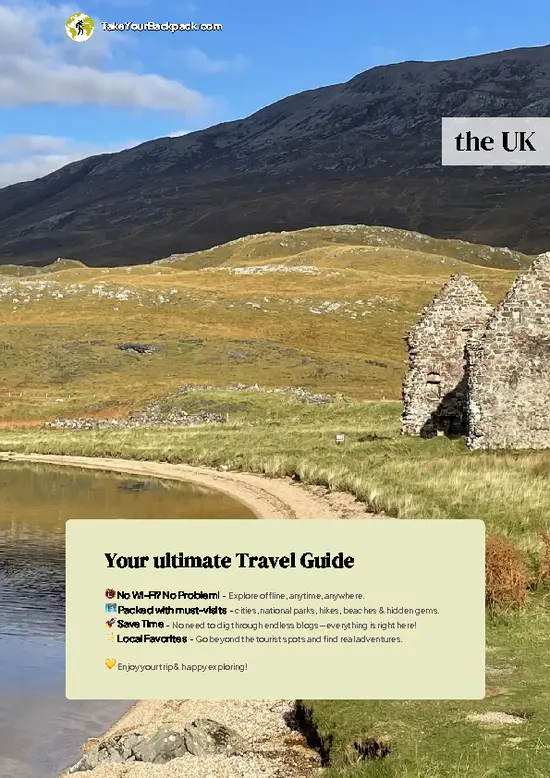
✈️ The backpacker research shortcutthe UK Travel Guide

An offline-friendly backpacking guide with optimized travel routes, ranked highlights, transport advice, and the best areas to stay.
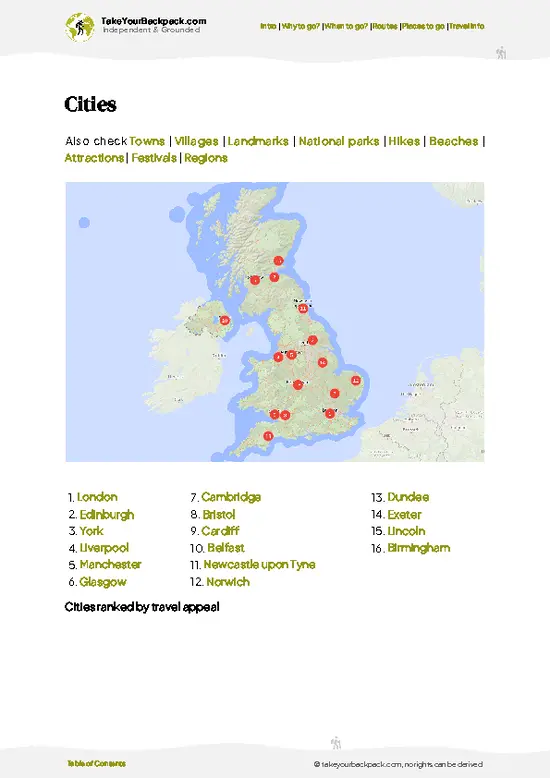
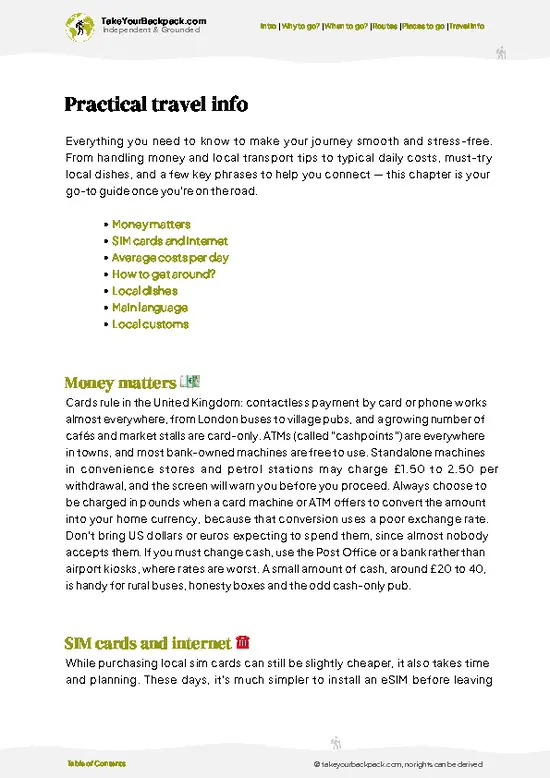
example page 0 from our offline Travel Guide for United Kingdom
example page 1 from our offline Travel Guide for United Kingdom
example page 2 from our offline Travel Guide for United Kingdom
example page 3 from our offline Travel Guide for United Kingdom
example page 4 from our offline Travel Guide for United Kingdom
example page 5 from our offline Travel Guide for United Kingdom
example page 6 from our offline Travel Guide for United Kingdom
example page 7 from our offline Travel Guide for United Kingdom
The digital guide (526 pages) contains:
✅ 146 highlights, ranked by travel appeal
✅ Optimized 7, 14 & 21-day travel routes
✅ Cities, national parks, landmarks, beaches
✅ How to get around
✅ Offline-friendly for travel without Wi-Fi
👉 Click to see all 30+ guide features

📅 Plan smarter in minutes, not weeks
✅ Month by month travel advice
✅ Festivals & national holidays
✅ Budget expectations

🗺️ Go to the right places, skip the overrated ones
✅ Honest pros & cons of destinations
✅ Top hikes, parks & viewpoints
✅ Lesser-known places most travelers miss
✅ Clear “worth it vs skip it” guidance

🛏️ Travel smoothly without rookie mistakes
✅ Best areas to stay
✅ Transport systems explained simply
✅ Common scams & safety advice
✅ SIM cards, money & practical tips

🌍 Understand the country, not just visit it
✅ Culture & traditions
✅ Local customs
✅ Festivals worth planning around
✅ Traveler-friendly historical context
✅ Insights that make places more meaningful

📱 Built for real travel conditions
✅ Fully downloadable PDF
✅ Works completely offline
✅ Optimized for phone use
✅ Useful in remote areas & buses
✅ Everything in one place
Stop searching, start planning
Get instant access to your full guide. 30‑day money-back guarantee.
+ Add another guide for just

By proceeding you agree to our terms.
Sent to your inbox immediately after payment • 100% Secure Checkout
Best Backpacking Travel Advisor 2025 tourism awardBest Backpacking
Travel Advisor
2025
What others say about Take Your Backpack Guides:
⭐⭐⭐⭐⭐
Fantastic, amazing amount of information!
⭐⭐⭐⭐⭐
My goodness this is amazing, it's what I've been looking for hats off too you!
⭐⭐⭐⭐⭐
I think this is absolutely BRILLIANT
⭐⭐⭐⭐
Very complete and informative. It's still missing places, but I gotta to commend you
⭐⭐⭐⭐⭐
This is truly amazing, thank you, can't wait to explore it with my kids!
⭐⭐⭐⭐⭐
Awesome resource, thank you!
⭐⭐⭐⭐⭐
This is amazing! Can't wait to explore the ones I haven't seen
⭐⭐⭐⭐
I love this! Well done, great idea.
⭐⭐⭐⭐⭐
Thanks for taking the time to make this gem!
⭐⭐⭐⭐⭐
This might be the best website I've ever seen.
⭐⭐⭐⭐⭐
Congratulations, and thank you so much for your work; it's incredibly valuable.
⭐⭐⭐⭐
In all seriousness I think you did a great job pointing out the important spots
⭐⭐⭐⭐⭐
10/10 very good
⭐⭐⭐⭐⭐
As someone who's only just starting to visit regularly this is awesome, thank you.
⭐⭐⭐⭐
Thank you very much! I'm going to visit my dad, it's going to be very useful!
⭐⭐⭐⭐⭐
This is really cool! We'll be travelling for the first time and this definitely come in handy.
⭐⭐⭐⭐⭐
You are now our minister of culture, congratulations 👨‍💼
⭐⭐⭐⭐⭐
Just wanted to tell you that this is a pearl! Going to follow your recommendations.
⭐⭐⭐⭐⭐
This is so cool. I'll definitely be using the resource for my travels soon.
⭐⭐⭐⭐⭐
This is very impressive! Good work.
⭐⭐⭐⭐⭐
This is an amazing and informative site. Very well done!

🛏️ Where to stay?Top Places to Consider Staying

The United Kingdom has plenty of hostels, with London dorm beds typically £25 to 50 (US$32 to 65) a night and most other cities closer to £18 to 35 (US$23 to 45), climbing sharply on summer weekends and during the Edinburgh festivals in August. In London, King’s Cross has the best transport links and the most beds, Camden and Shoreditch put you next to late bars and live music but are loud after midnight, and Earl’s Court is quieter and handy for Heathrow on the Piccadilly line, though it is a longer ride to the East End. In Edinburgh, the Old Town puts the castle and the Royal Mile outside your door at the cost of stag-party noise, while in Glasgow the West End is calmer and studenty, with … read more 👉
The United Kingdom has plenty of hostels, with London dorm beds typically £25 to 50 (US$32 to 65) a night and most other cities closer to £18 to 35 (US$23 to 45), climbing sharply on summer weekends and during the Edinburgh festivals in August. In London, King’s Cross has the best transport links and the most beds, Camden and Shoreditch put you next to late bars and live music but are loud after midnight, and Earl’s Court is quieter and handy for Heathrow on the Piccadilly line, though it is a longer ride to the East End. In Edinburgh, the Old Town puts the castle and the Royal Mile outside your door at the cost of stag-party noise, while in Glasgow the West End is calmer and studenty, with cheap food on Byres Road and a short subway ride to the center.

If you enjoy meeting fellow travelers, consider choosing hostels with high ratings for atmosphere. On the other hand, if you prefer having your own space, a hotel might be a better option.

the UKMore Places Across the UK

👋 Meet the founderWho’s Behind Take Your Backpack?

Johan, backpacker and founder of TakeYourBackpackHi, I’m Johan (Netherlands 🇳🇱), the creator of TakeYourBackpack. Over the past 3 decades, I’ve backpacked through 90+ countries across six continents, gaining extensive experience with independent travel, long-term trips, and overland routes.

This site is built on a combination of firsthand travel experience and carefully curated insights from other backpackers. Many guides are based on places I’ve personally visited, while others bring together tips, observations, and practical advice shared by trusted travelers I’ve met along the way.

The goal is to provide realistic, experience-driven guidance — not generic itineraries — so you can explore destinations with better context, clearer expectations, and more confidence.