×

Uruguay🇺🇾 | festivalsFestival de Jazz de MontevideoTeatro Solís, Ciudad Vieja jam sessions, candombe-tinged jazz | things to do and best time to go

Explore Semana CriollaExplore Festival de la Cerveza Artesanal

Backpacking in de Jazz de Montevideo
👀 For curious travelersfestival ranked #9
By Johan Kruseman 🇳🇱 | Updated October 19, 2026

The festival is best known for programming jazz in Montevideo’s historic theaters rather than on a field, with the Teatro Solís as its anchor on Plaza Independencia. Festival de Jazz de Montevideo takes place in Uruguay’s capital, mostly in the Ciudad Vieja and Centro districts, with some concerts in other halls and clubs. Expect contemporary and Latin-leaning jazz, a mix of Uruguayan and international artists, and a seated, attentive audience of locals, students and musicians. Costs and delays catch people out: tickets for the main halls sell out, so buy early from the official ticket outlets; beds near the Ciudad Vieja fill on concert weekends, so book ahead; and start times can slip, so confirm venues, since they change. Unlike the open-air Festival de Jazz de Punta del Este, this one is urban and indoors.

Discover everything you want to know in the 📖 Uruguay Travel Guide.


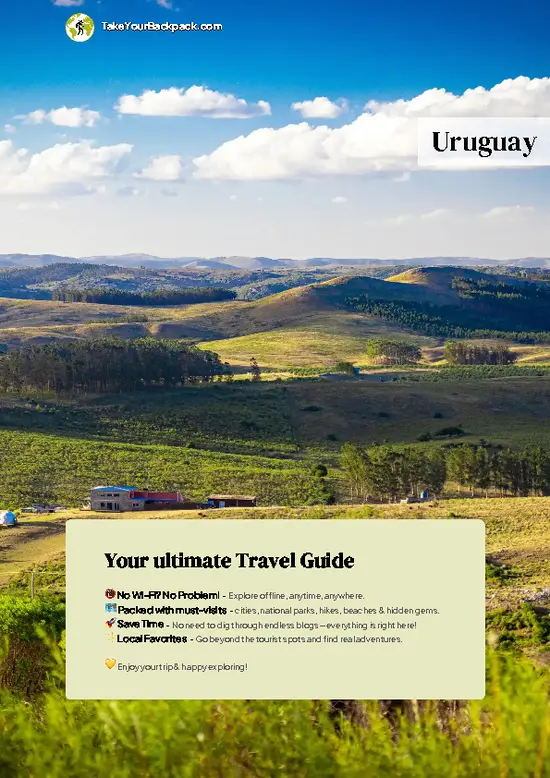
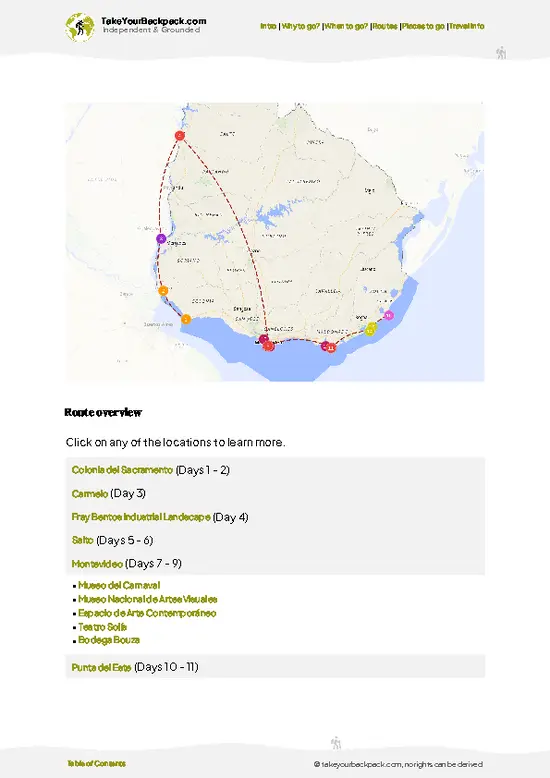
example page 0 from our offline Travel Guide for Uruguay
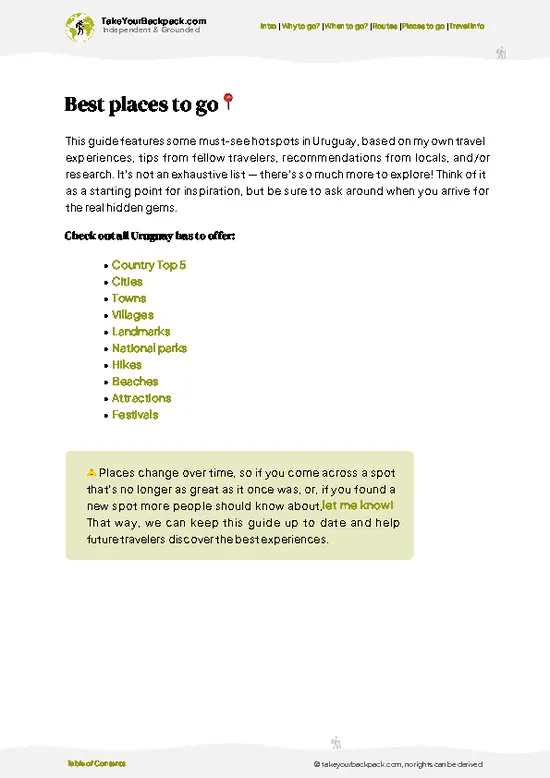
example page 1 from our offline Travel Guide for Uruguay
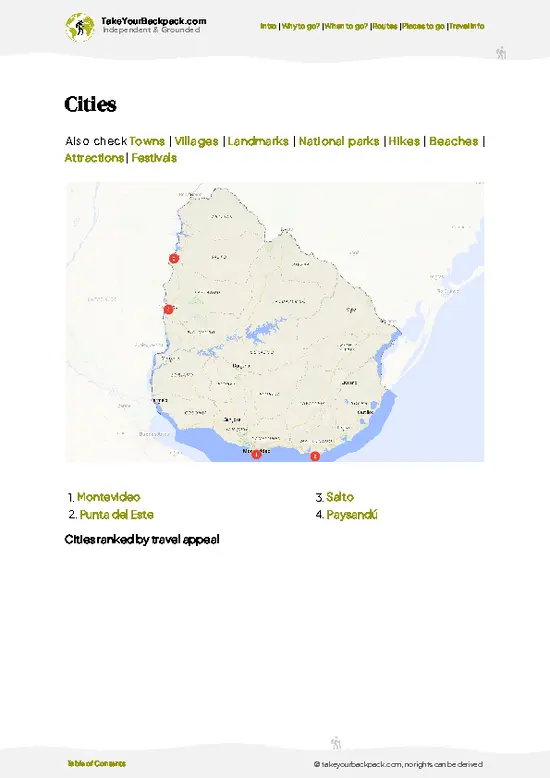
example page 2 from our offline Travel Guide for Uruguay
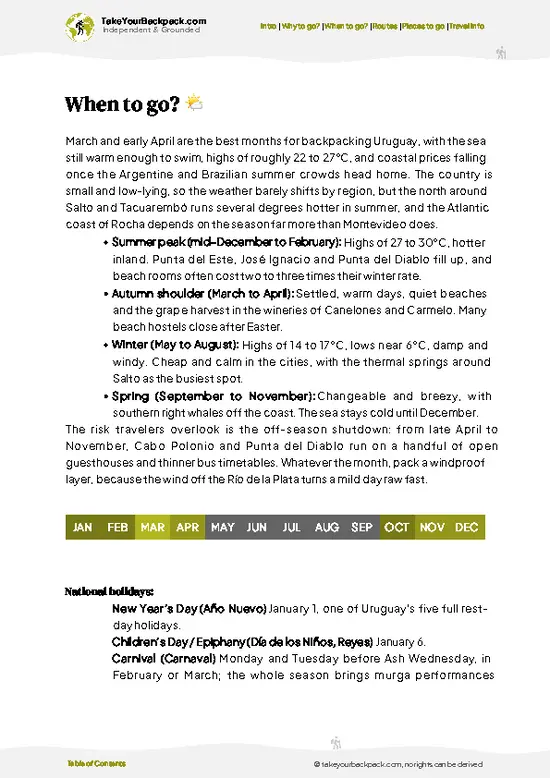
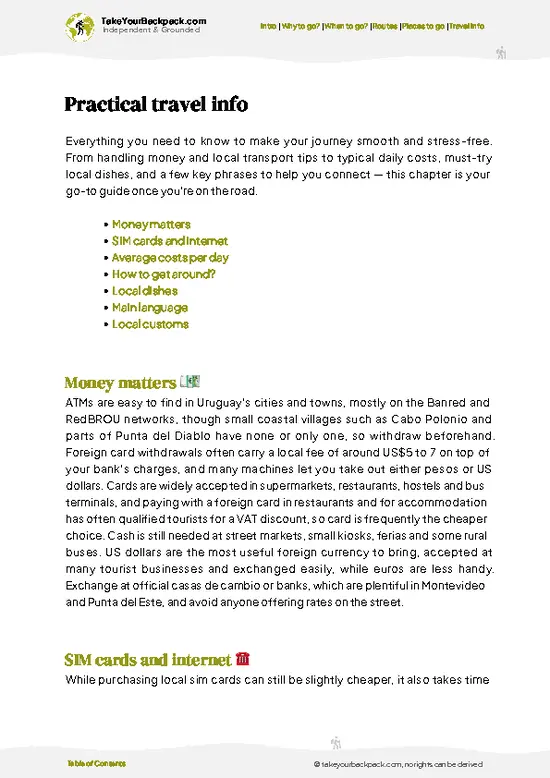
example page 3 from our offline Travel Guide for Uruguay
example page 4 from our offline Travel Guide for Uruguay
example page 5 from our offline Travel Guide for Uruguay
example page 6 from our offline Travel Guide for Uruguay
example page 7 from our offline Travel Guide for Uruguay
Loading the map 🌍
CLICK TO FILTER
cities
towns
villages
landmarks
national parks
hikes
beaches
attractions
festivals
SHOW COUNTRY’S BESTSHOW ALL

✨ Why go?
Ranked #9 festival in Uruguay
What sets this place apart

Festival de Jazz de Montevideo suits backpackers who want music without a campsite or a festival-ticket budget. Its concerts sit in a walkable core, so you spend evenings in Teatro Solís and nearby halls, then end up in a Ciudad Vieja bar talking with the musicians and fans who just came out of the same set. That is the temporary community here: small, seated, and surprisingly easy to join.

It also fits a longer route well. Montevideo is a natural entry or exit point for Uruguay, so you can pair the festival with the coast, the wine country, or a ferry hop to Buenos Aires. Compared with big European jazz festivals, tickets are modest. You get a real look at the city’s cultural life, with its own audience, rather than a tourist show.

💡 HighlightsMust-see experiences and standout moments

  1. Teatro Solís: Uruguay’s oldest major theater, opened in the 1850s on Plaza Independencia. Its horseshoe auditorium gives the headline concerts a proper concert-hall hush and strong acoustics.
  2. Ciudad Vieja club and bar sets: Late-night jam sessions and smaller shows in the old quarter, where the audience is close enough to hear the drummer breathe.
  3. Uruguayan artists on the bill: Local players often blend jazz with candombe rhythms and tango, which gives sets a sound you won’t hear at other jazz festivals.
  4. Post-concert walks along the Rambla: After a show, the waterfront promenade is where locals drift with a thermos of mate, and it clears your head before bed.
Allow three to four evenings to cover the main shows, with afternoons free for the old quarter.
Spotted a mistake or missing something? Contact us.

Things to do around Festival de Jazz de Montevideo

Ratings based on Tripadvisor reviews. When you book through this link, you support our work at no extra cost to you.

🌤️ When to go?When is the celebration of Festival de Jazz de Montevideo?

Festival de Jazz de Montevideo usually runs in late spring or early summer, with recent editions held in early December, across several venues in the city, including Teatro Solís in the Ciudad Vieja and Sala Zitarrosa on Avenida 18 de Julio.
  • Best day: Weekend nights bring the headline acts and the fullest rooms, while weekday shows are easier for walk-up seats and chatting with musicians.
  • Weather: Expect 14 to 24°C (57 to 75°F), with sudden showers and a cool wind off the Río de la Plata after dark, so bring a rain shell and a sweater.
  • Booking: Buy tickets for top names a few weeks ahead and book beds about a month out, as central rates rise roughly 10 to 25 percent.
  • Crowds: Arrive in the city midday before a show, since evening traffic around Ciudad Vieja and Centro slows buses and taxis.
Check … read more 👉
Festival de Jazz de Montevideo usually runs in late spring or early summer, with recent editions held in early December, across several venues in the city, including Teatro Solís in the Ciudad Vieja and Sala Zitarrosa on Avenida 18 de Julio.
  • Best day: Weekend nights bring the headline acts and the fullest rooms, while weekday shows are easier for walk-up seats and chatting with musicians.
  • Weather: Expect 14 to 24°C (57 to 75°F), with sudden showers and a cool wind off the Río de la Plata after dark, so bring a rain shell and a sweater.
  • Booking: Buy tickets for top names a few weeks ahead and book beds about a month out, as central rates rise roughly 10 to 25 percent.
  • Crowds: Arrive in the city midday before a show, since evening traffic around Ciudad Vieja and Centro slows buses and taxis.
Check the lineup once it is announced and plan your stay around the one act you refuse to miss.


source: climatestotravel.comJANJanuary: not recommended for travelingFEBFebruary: not recommended for travelingMARMarch: not recommended for travelingAPRApril: not recommended for travelingMAYMay: not recommended for travelingJUNJune: not recommended for travelingJULJuly: not recommended for travelingAUGAugust: not recommended for travelingSEPSeptember: not recommended for travelingOCTOctober: excellent for travelingNOVNovember: not recommended for travelingDECDecember: not recommended for traveling

✈️ The backpacker research shortcutUruguay Travel Guide

An offline-friendly backpacking guide with optimized travel routes, ranked highlights, transport advice, and the best areas to stay.
example page 0 from our offline Travel Guide for Uruguay
example page 1 from our offline Travel Guide for Uruguay
example page 2 from our offline Travel Guide for Uruguay
example page 3 from our offline Travel Guide for Uruguay
example page 4 from our offline Travel Guide for Uruguay
example page 5 from our offline Travel Guide for Uruguay
example page 6 from our offline Travel Guide for Uruguay
example page 7 from our offline Travel Guide for Uruguay
The digital guide (198 pages) contains:
✅ 56 highlights, ranked by travel appeal
✅ Optimized 5, 10 & 15-day travel routes
✅ Cities, national parks, landmarks, beaches
✅ How to get around
✅ Offline-friendly for travel without Wi-Fi
👉 Click to see all 30+ guide features

📅 Plan smarter in minutes, not weeks
✅ Month by month travel advice
✅ Festivals & national holidays
✅ Budget expectations

🗺️ Go to the right places, skip the overrated ones
✅ Honest pros & cons of destinations
✅ Top hikes, parks & viewpoints
✅ Lesser-known places most travelers miss
✅ Clear “worth it vs skip it” guidance

🛏️ Travel smoothly without rookie mistakes
✅ Best areas to stay
✅ Transport systems explained simply
✅ Common scams & safety advice
✅ SIM cards, money & practical tips

🌍 Understand the country, not just visit it
✅ Culture & traditions
✅ 52 Essential phrases & customs
✅ Festivals worth planning around
✅ Traveler-friendly historical context
✅ Insights that make places more meaningful

📱 Built for real travel conditions
✅ Fully downloadable PDF
✅ Works completely offline
✅ Optimized for phone use
✅ Useful in remote areas & buses
✅ Everything in one place
Stop searching, start planning
Get instant access to your full guide. 30‑day money-back guarantee.
+ Add another guide for just

By proceeding you agree to our terms.
Sent to your inbox immediately after payment • 100% Secure Checkout
Best Backpacking Travel Advisor 2025 tourism awardBest Backpacking
Travel Advisor
2025
What others say about Take Your Backpack Guides:
⭐⭐⭐⭐⭐
Fantastic, amazing amount of information!
⭐⭐⭐⭐⭐
My goodness this is amazing, it's what I've been looking for hats off too you!
⭐⭐⭐⭐⭐
I think this is absolutely BRILLIANT
⭐⭐⭐⭐
Very complete and informative. It's still missing places, but I gotta to commend you
⭐⭐⭐⭐⭐
This is truly amazing, thank you, can't wait to explore it with my kids!
⭐⭐⭐⭐⭐
Awesome resource, thank you!
⭐⭐⭐⭐⭐
This is amazing! Can't wait to explore the ones I haven't seen
⭐⭐⭐⭐
I love this! Well done, great idea.
⭐⭐⭐⭐⭐
Thanks for taking the time to make this gem!
⭐⭐⭐⭐⭐
This might be the best website I've ever seen.
⭐⭐⭐⭐⭐
Congratulations, and thank you so much for your work; it's incredibly valuable.
⭐⭐⭐⭐
In all seriousness I think you did a great job pointing out the important spots
⭐⭐⭐⭐⭐
10/10 very good
⭐⭐⭐⭐⭐
As someone who's only just starting to visit regularly this is awesome, thank you.
⭐⭐⭐⭐
Thank you very much! I'm going to visit my dad, it's going to be very useful!
⭐⭐⭐⭐⭐
This is really cool! We'll be travelling for the first time and this definitely come in handy.
⭐⭐⭐⭐⭐
You are now our minister of culture, congratulations 👨‍💼
⭐⭐⭐⭐⭐
Just wanted to tell you that this is a pearl! Going to follow your recommendations.
⭐⭐⭐⭐⭐
This is so cool. I'll definitely be using the resource for my travels soon.
⭐⭐⭐⭐⭐
This is very impressive! Good work.
⭐⭐⭐⭐⭐
This is an amazing and informative site. Very well done!

🛏️ Where to stay?Best areas and accommodation options

Ciudad Vieja is the best base, since it puts the historic theaters within walking distance and has the densest cluster of backpacker-oriented stays and bars. Plaza Independencia and Peatonal Sarandí give you easy access to bus lines, cafes and cheap lunch counters, and the old town is lively and well-patrolled by day. After dark, stick to busier streets such as Sarandí and the area around Mercado del Puerto, as the western edge of Ciudad Vieja empties out late.
Centro, along Avenida 18 de Julio, is the second choice. It is more central for Sala Zitarrosa, has plenty of budget guesthouses and frequent … read more 👉
Ciudad Vieja is the best base, since it puts the historic theaters within walking distance and has the densest cluster of backpacker-oriented stays and bars. Plaza Independencia and Peatonal Sarandí give you easy access to bus lines, cafes and cheap lunch counters, and the old town is lively and well-patrolled by day. After dark, stick to busier streets such as Sarandí and the area around Mercado del Puerto, as the western edge of Ciudad Vieja empties out late.
Centro, along Avenida 18 de Julio, is the second choice. It is more central for Sala Zitarrosa, has plenty of budget guesthouses and frequent buses, and costs a little less than the old town. Keep valuables out of sight on the avenue at night.
Pocitos, along the beachfront, is calmer, more residential and safer for solo travelers who want quiet. Buses to the center take about 20 to 30 minutes, and rooms there suit anyone wanting a kitchen and a morning walk on the Rambla.

👛 Costs (as of 19 October 2026)Typical daily expenses

A realistic budget for one festival day in Montevideo is about US$52 to 163 per person, with the figures below adding up to about US$90 for a mid-range backpacker.
CategoryBudget RangeLocal Reality
Festival ticketsUS$10 to 40Individual concerts vary by venue and artist. Budget US$25 for one show per day.
AccommodationUS$20 to 60Dorm beds run US$18 to 30 in high season, and private rooms cost US$50 to 90. Budget US$25.
Local transportUS$2 to 8City bus rides cost about US$1 each with a rechargeable STM card. Late taxis home run US$5 to 12.
Food & drinksUS$15 to 35A chivito costs US$7 to 12, a beer US$3 to 5 and a set lunch US$8 to 12. Budget US$25.
MiscellaneousUS$5 to 20Covers cubierto charges, tips, SIM data and small purchases. Budget US$10.
Total Daily BudgetUS$52 to 163About US$90 using the figures above for one day in high season.
⚠️ Prices can change and everyone travels differently, so take this as a rough guide. Hope it helps you plan your adventure!

🍲 FoodWhat to Eat & Drink

Festival nights in Montevideo run on chivito, the Uruguayan steak sandwich piled with ham, egg, cheese and olives, which you can find at cafes and street counters near the theaters. A choripán from a grill cart is the cheaper, faster option between sets.
For something local, try milanesa with fries, or a slice of fainá alongside pizza, a Montevideo habit. Order a glass of Tannat, Uruguay’s signature red, or a cold Patricia or Pilsen beer. Locals also sip mate from a thermos while waiting in line, and sharing it is a social ritual, so accept a round if offered and say gracias when you are done.
Theater bars tend to sell coffee, wine and light snacks, and portions of street food are large enough to split. Carry some cash in Uruguayan pesos for small stalls, though most restaurants take cards. … read more 👉
Festival nights in Montevideo run on chivito, the Uruguayan steak sandwich piled with ham, egg, cheese and olives, which you can find at cafes and street counters near the theaters. A choripán from a grill cart is the cheaper, faster option between sets.
For something local, try milanesa with fries, or a slice of fainá alongside pizza, a Montevideo habit. Order a glass of Tannat, Uruguay’s signature red, or a cold Patricia or Pilsen beer. Locals also sip mate from a thermos while waiting in line, and sharing it is a social ritual, so accept a round if offered and say gracias when you are done.
Theater bars tend to sell coffee, wine and light snacks, and portions of street food are large enough to split. Carry some cash in Uruguayan pesos for small stalls, though most restaurants take cards. Many places add a cubierto (cover charge) to the bill, and a tip of about 10 percent is customary.

FAQFrequently asked questions about de Jazz de Montevideo

Festival de Jazz de Montevideo is typically held in late spring, with recent editions in early December. It spreads over several days, usually a long weekend or a week of evening concerts. Main venues include Teatro Solís in Ciudad Vieja and Sala Zitarrosa on Avenida 18 de Julio.
Attending Festival de Jazz de Montevideo costs roughly US$10 to 40 per concert, depending on the venue and artist. Budget about US$25 for a typical evening show. Add around US$25 a night for a hostel dorm and US$2 to 8 for local buses, so a full day lands near US$90.
For Festival de Jazz de Montevideo, tickets for headline acts are best bought a few weeks ahead, since smaller rooms like Sala Zitarrosa can fill up. Seats for the larger Teatro Solís shows sell out on weekends. Buy online through the venue’s ticketing platform or at the box office, and expect some lesser concerts to have walk-up entry on the day.
⚠️ Things can change over time, so always validate details locally before you go.

Other Uruguayan festivals near de Jazz de Montevideo

Explore more nearby:


💡 Not sure where to go next?
Create a personalized itinerary for Uruguay including de Jazz de Montevideo and the places that fit your trip.

Generate my itinerary

👉 Discover all festivals

Or checkout all Uruguay has to offer (think cities, towns, villages, national parks, hikes, beaches, festivals)
Country photo of Uruguay

We 💚 feedbackKey takeaways before you go

Festival de Jazz de Montevideo is easiest to enjoy if you treat the small rooms as the main event. Skip chasing only the biggest names at the large theater, and spend at least one night in a club where the set starts late and ends later. Bring a light layer, since halls can run cool.

✍️ Help improve this page!
The information on this page is based on in-depth research, insights shared by experienced travelers, and feedback from the local travel community in Uruguay. While every effort is made to keep the information accurate and current, conditions can change — so if you spot anything incorrect or outdated, please get in touch.


🙋‍♂️ Give feedback

👋 Meet the founderWho’s Behind Take Your Backpack?

Johan, backpacker and founder of TakeYourBackpackHi, I’m Johan (Netherlands 🇳🇱), the creator of TakeYourBackpack. Over the past 3 decades, I’ve backpacked through 90+ countries across six continents, gaining extensive experience with independent travel, long-term trips, and overland routes.

This site is built on a combination of firsthand travel experience and carefully curated insights from other backpackers. Many guides are based on places I’ve personally visited, while others bring together tips, observations, and practical advice shared by trusted travelers I’ve met along the way.

The goal is to provide realistic, experience-driven guidance — not generic itineraries — so you can explore destinations with better context, clearer expectations, and more confidence.