×

Uruguay🇺🇾 | citiesSaltothermal springs, citrus groves, border crossings | things to do and best time to go

Explore Punta del EsteExplore Paysandú

Backpacking in Salto
👍 Recommendedcity ranked #2
By Johan Kruseman 🇳🇱 | Updated June 14, 2026

Everyone talks about Salto’s hot springs like they’re the whole point, but for backpackers the real game is how Salto lets you trade time, money, and comfort more flexibly than most Uruguayan cities. Sitting in the northwest on the Río Uruguay, opposite Concordia in Argentina, it’s a crossroads town where buses, borders, and budgets intersect. As a destination, it’s low-drama and medium-reward: cheaper than Montevideo and Colonia, calmer than coastal party spots, and safer than many border cities, especially if you stick to the center around Plaza Artigas and the riverfront. You get relaxed plazas, a few solid museums, decent parrillas, and thermal complexes that are more about slow recovery than Instagram. Nightlife exists but isn’t a magnet; you’ll meet more overlanders and regional travelers than hostel-party crews. Salto feels workaday, slightly worn, and quietly social—good for resetting your body and your budget before your next big push.

Discover everything you want to know in the 📖 Uruguay Travel Guide.


Get your Uruguay guide
64 ranked highlights, routes & tips, works offline (256 pages)
Loading the map 🌍
CLICK TO FILTER
cities
towns
villages
landmarks
national parks
hikes
beaches
attractions
festivals
regions
SHOW COUNTRY’S BESTSHOW ALL

✨ Why go?
Ranked #2 city in Uruguay
What sets this place apart

Salto, Uruguay, is a strategic stop for backpackers weaving through South America. It’s not just about the highlights; it’s about how the city fits into your journey. With a solid mix of affordable hostels, you can find a cozy spot to recharge without breaking the bank. The food scene is a delightful surprise, offering everything from local street eats to sit-down meals that won’t empty your wallet.

The city’s walkability makes it easy to explore on foot, allowing you to soak in the local vibe without the hassle of public transport. Plus, the nightlife offers a laid-back atmosphere where you can mingle with fellow travelers and locals alike, making it a perfect place to unwind after a day of exploration.

Salto also serves as a basecamp for day trips to nearby attractions, maximizing your … read more 👉
Salto, Uruguay, is a strategic stop for backpackers weaving through South America. It’s not just about the highlights; it’s about how the city fits into your journey. With a solid mix of affordable hostels, you can find a cozy spot to recharge without breaking the bank. The food scene is a delightful surprise, offering everything from local street eats to sit-down meals that won’t empty your wallet.

The city’s walkability makes it easy to explore on foot, allowing you to soak in the local vibe without the hassle of public transport. Plus, the nightlife offers a laid-back atmosphere where you can mingle with fellow travelers and locals alike, making it a perfect place to unwind after a day of exploration.

Salto also serves as a basecamp for day trips to nearby attractions, maximizing your time without sacrificing comfort. It’s a convenient hub for onward travel, connecting you to other destinations with ease. If you’re looking for a place that balances value and experience, Salto is worth considering, whether for a longer stay or a quick pit stop.
Want to include Salto in your Uruguay route?
Create a personalized Uruguay itinerary that includes Salto and the places that fit your trip — based on your travel style, budget, and available time. Get your route in seconds.

Generate my trip

💡 HighlightsTop highlights of Salto

  1. Plaza Artigas — The civic heart of Salto, with the statue of José Artigas, leafy benches and surrounding colonial-era buildings; great for people-watching and getting a feel for how locals use public space.
  2. Catedral Basílica de San Juan Bautista — The city’s main church: imposing façade, peaceful interior and important role in Salto’s religious and architectural history.
  3. Teatro Larrañaga — A classic small Argentine/Uruguayan provincial theater where you can catch local plays, concerts or simply admire the restored early-20th-century décor and atmosphere.
  4. Museo del Hombre y la Tecnología — Quirky, hands-on displays that trace the region’s industrial, transport and everyday-technology history; especially good if you like mechanical oddities and local stories.
  5. Rambla de Salto (costanera)
read more 👉
  1. Plaza Artigas — The civic heart of Salto, with the statue of José Artigas, leafy benches and surrounding colonial-era buildings; great for people-watching and getting a feel for how locals use public space.
  2. Catedral Basílica de San Juan Bautista — The city’s main church: imposing façade, peaceful interior and important role in Salto’s religious and architectural history.
  3. Teatro Larrañaga — A classic small Argentine/Uruguayan provincial theater where you can catch local plays, concerts or simply admire the restored early-20th-century décor and atmosphere.
  4. Museo del Hombre y la Tecnología — Quirky, hands-on displays that trace the region’s industrial, transport and everyday-technology history; especially good if you like mechanical oddities and local stories.
  5. Rambla de Salto (costanera) — The riverside promenade along the Río Uruguay: walks, sunset views, low-key beaches and stalls selling mate and snacks—perfect for an evening stroll.
  6. Mirador/Área de Salto Grande — The Salto Grande hydroelectric complex and its viewpoints give striking panorama over the river and the international bridge; a good spot to learn about the dam’s impact on the region.
  7. Mercado Municipal de Salto — A working food market where you can sample fresh local produce, cold cuts and bakery goods; authentic, noisy and perfect for breakfast or a cheap meal.
  8. Estación Ferroviaria de Salto (antigua estación) — The old train station building and surrounding area offer a slice of transport history and nicely preserved architecture—easy to include on a walking tour of the center.
  9. Intendencia de Salto / Centro histórico — The municipal palace and nearby old mansions form a compact historic core; wandering the blocks reveals tilework, plaques and everyday life in an older Salto.
  10. Parque Solari — A green, laid-back city park where locals exercise, relax and hold community events; good if you want a quieter, local slice of Salto away from the riverfront.
For nearby day trips: the thermal pools at Termas del Daymán are a short drive from the city, Concordia (Argentina) across the Salto Grande bridge makes a convenient cross-border visit, and the larger Termas del Arapey are doable as a longer day trip.
Spotted a mistake or missing something? Contact us.

🏘️ NeighborhoodsKey areas and districts to know

Salto, Uruguay, is a charming city where you can balance time, money, and comfort while exploring its unique neighborhoods. Here’s a breakdown to help you navigate your options.

Centro: This is the heart of Salto. You’ll find a mix of shops, cafes, and local eateries. It’s walkable, making it easy to explore on foot. Prices are moderate, so you can enjoy a decent meal without breaking the bank. The nightlife is low-key, perfect for unwinding after a day of sightseeing. Ideal for short stays, as you can access most attractions quickly.

Termas del Daymán: A bit outside the city center, this area is famous for its thermal baths. If relaxation is your goal, this is the place. Accommodations range from budget hostels to mid-range hotels. While it’s less walkable, shuttles and taxis are readily … read more 👉
Salto, Uruguay, is a charming city where you can balance time, money, and comfort while exploring its unique neighborhoods. Here’s a breakdown to help you navigate your options.

Centro: This is the heart of Salto. You’ll find a mix of shops, cafes, and local eateries. It’s walkable, making it easy to explore on foot. Prices are moderate, so you can enjoy a decent meal without breaking the bank. The nightlife is low-key, perfect for unwinding after a day of sightseeing. Ideal for short stays, as you can access most attractions quickly.

Termas del Daymán: A bit outside the city center, this area is famous for its thermal baths. If relaxation is your goal, this is the place. Accommodations range from budget hostels to mid-range hotels. While it’s less walkable, shuttles and taxis are readily available. The vibe is tranquil, making it suitable for longer stays if you want to soak in the hot springs daily.

Salto Nuevo: A residential area that offers a glimpse into local life. It’s quieter, with fewer tourists, and you’ll find affordable dining options. The walkability is decent, but public transport is your best bet for getting around. This area is great for longer stays if you want to immerse yourself in the culture.

Parque Solari: A green oasis in the city, perfect for picnics and leisurely strolls. It’s a peaceful spot, ideal for those seeking comfort and a break from the urban hustle. While not a nightlife hub, it’s close enough to Centro for easy access. Suitable for both short and longer stays, especially if you enjoy nature.

⌛️ 1 dayA smart one-day plan

Salto, Uruguay, is a city that dances on the edge of the Río Uruguay, blending rich history with a laid-back vibe. Known for its thermal springs and vibrant local culture, it’s a place where you can soak in both relaxation and adventure.

Start your day in the bustling downtown area, where the Plaza Artigas serves as the heart of the city. Grab a coffee at a local café—try Café del Mercado for a taste of the local scene. The aroma of freshly baked pastries fills the air, and you can enjoy people-watching as the city wakes up. After your caffeine fix, stroll over to the Salto Grande Dam. It’s not just a feat of engineering; the views are stunning, and you can learn about its significance to the region.

As the sun climbs higher, head to the Parque Solari. This green oasis is perfect for a … read more 👉
Salto, Uruguay, is a city that dances on the edge of the Río Uruguay, blending rich history with a laid-back vibe. Known for its thermal springs and vibrant local culture, it’s a place where you can soak in both relaxation and adventure.

Start your day in the bustling downtown area, where the Plaza Artigas serves as the heart of the city. Grab a coffee at a local café—try Café del Mercado for a taste of the local scene. The aroma of freshly baked pastries fills the air, and you can enjoy people-watching as the city wakes up. After your caffeine fix, stroll over to the Salto Grande Dam. It’s not just a feat of engineering; the views are stunning, and you can learn about its significance to the region.

As the sun climbs higher, head to the Parque Solari. This green oasis is perfect for a leisurely walk or a picnic. You’ll find locals enjoying the outdoors, and if you’re lucky, you might catch a spontaneous game of fútbol. The park is a great spot to recharge before diving into the afternoon.

For lunch, venture into the Barrio Histórico, where you can find authentic Uruguayan cuisine. Try a chivito at a family-run eatery—it’s a hearty sandwich that’s a must-have. Afterward, explore the neighborhood’s charming streets, dotted with colonial architecture and local artisan shops.

As evening approaches, make your way to the Termas del Daymán, just a short drive from the city. This thermal spa is often overlooked by tourists, but it’s a fantastic way to unwind. Soak in the warm waters as the sun sets, and let the day’s adventures wash away.

Wrap up your day with a casual dinner at a nearby parrilla, where you can savor grilled meats and local wines. Salto may be small, but it’s packed with experiences that linger long after you leave.
Turn your Salto visit into an Uruguay adventure
Build a complete Uruguay route with Salto, hidden gems, must-see destinations, and realistic travel times included.

Generate my trip

🌤️ When to go?Seasonal considerations and timing


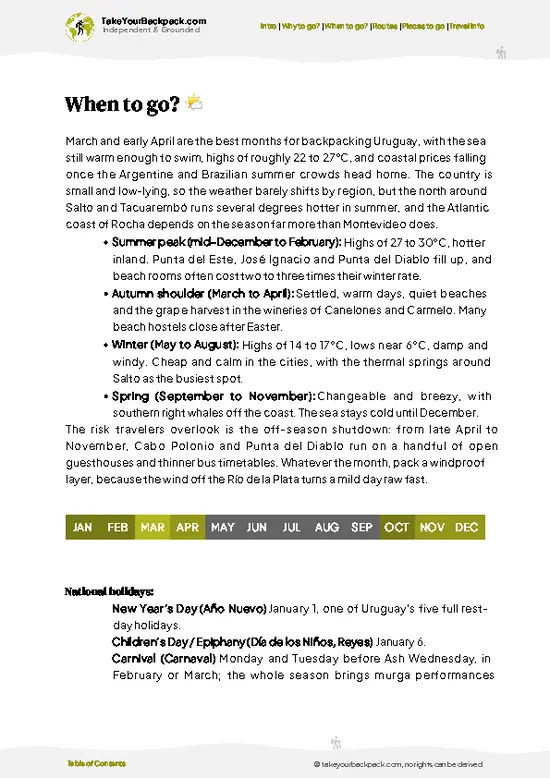
  • Weather: Salto’s climate is humid subtropical, meaning hot summers and mild winters. December to February hits highs around 30-33°C (86-91°F), perfect for river dips but sticky if you’re not a fan of heat. Winters (June-August) cool down to 10-15°C (50-59°F), which is comfortable for hiking but less ideal for swimming.

  • Daylight Hours: Summer days stretch long, offering up to 14 hours of light—prime for squeezing in more exploration. Winter cuts daylight to about 10 hours, so plan your activities accordingly to avoid rushing in the dark.

  • Crowds: Peak tourist season aligns with summer holidays, so expect more visitors and higher prices. Off-season months see fewer travelers, giving you more breathing room and a more local vibe, but some attractions might have limited hours.

  • Seasonal
read more 👉

  • Weather: Salto’s climate is humid subtropical, meaning hot summers and mild winters. December to February hits highs around 30-33°C (86-91°F), perfect for river dips but sticky if you’re not a fan of heat. Winters (June-August) cool down to 10-15°C (50-59°F), which is comfortable for hiking but less ideal for swimming.

  • Daylight Hours: Summer days stretch long, offering up to 14 hours of light—prime for squeezing in more exploration. Winter cuts daylight to about 10 hours, so plan your activities accordingly to avoid rushing in the dark.

  • Crowds: Peak tourist season aligns with summer holidays, so expect more visitors and higher prices. Off-season months see fewer travelers, giving you more breathing room and a more local vibe, but some attractions might have limited hours.

  • Seasonal Activities: Summer unlocks river sports, open-air festivals, and bustling markets. Winter brings quieter streets and a chance to experience Salto’s thermal baths without the crowds, a unique comfort trade-off.

  • Price Fluctuations: Accommodation and transport costs spike in summer, especially around holidays. Booking off-season can save you 20-40%, but be ready for some businesses to scale back services.


Pro-tip: Visit in late spring or early autumn to balance pleasant weather, manageable crowds, and better prices—your sweet spot for a high-value Salto experience.


source: climatestotravel.comJANJanuary: highly recommended for travelingFEBFebruary: highly recommended for travelingMARMarch: good for travelingAPRApril: highly recommended for travelingMAYMay: highly recommended for travelingJUNJune: good for travelingJULJuly: good for travelingAUGAugust: good for travelingSEPSeptember: highly recommended for travelingOCTOctober: highly recommended for travelingNOVNovember: highly recommended for travelingDECDecember: highly recommended for traveling
when-to-go

✈️ The backpacker research shortcutUruguay Travel Guide

An offline-friendly backpacking guide with optimized travel routes, ranked highlights, transport advice, and the best areas to stay.
example page 0 from our offline Travel Guide for Uruguay
example page 1 from our offline Travel Guide for Uruguay
example page 2 from our offline Travel Guide for Uruguay
example page 3 from our offline Travel Guide for Uruguay
example page 4 from our offline Travel Guide for Uruguay
example page 5 from our offline Travel Guide for Uruguay
example page 6 from our offline Travel Guide for Uruguay
example page 7 from our offline Travel Guide for Uruguay
The digital guide (256 pages) contains:
64 highlights, ranked by travel appeal
Optimized 5, 10 & 15-day travel routes
Cities, national parks, landmarks, beaches
How to get around
Offline-friendly for travel without Wi-Fi
👉 Click to see all 30+ guide features

📅 Plan smarter in minutes, not weeks
Month by month travel advice
Festivals & national holidays
Budget expectations

🗺️ Go to the right places, skip the overrated ones
Honest pros & cons of destinations
Top hikes, parks & viewpoints
Lesser-known places most travelers miss
Clear “worth it vs skip it” guidance

🛏️ Travel smoothly without rookie mistakes
Best areas to stay
Transport systems explained simply
Common scams & safety advice
SIM cards, money & practical tips

🌍 Understand the country, not just visit it
Culture & traditions
52 Essential phrases & customs
Festivals worth planning around
Traveler-friendly historical context
Insights that make places more meaningful

📱 Built for real travel conditions
Fully downloadable PDF
Works completely offline
Optimized for phone use
Useful in remote areas & buses
Everything in one place
Save weeks of stressful planning
Get instant access to your full guide. 30‑day money-back guarantee.


By proceeding you agree to our terms.
Sent to your inbox immediately after payment • 100% Secure Checkout
Best Backpacking Travel Advisor 2025 tourism awardBest Backpacking
Travel Advisor
2025
What others say about Take Your Backpack Guides:
⭐⭐⭐⭐⭐
Fantastic, amazing amount of information!
⭐⭐⭐⭐⭐
My goodness this is amazing, it's what I've been looking for hats off too you!
⭐⭐⭐⭐⭐
I think this is absolutely BRILLIANT
⭐⭐⭐⭐
Very complete and informative. It's still missing places, but I gotta to commend you
⭐⭐⭐⭐⭐
This is truly amazing, thank you, can't wait to explore it with my kids!
⭐⭐⭐⭐⭐
Awesome resource, thank you!
⭐⭐⭐⭐⭐
This is amazing! Can't wait to explore the ones I haven't seen
⭐⭐⭐⭐
I love this! Well done, great idea.
⭐⭐⭐⭐⭐
Thanks for taking the time to make this gem!
⭐⭐⭐⭐⭐
This might be the best website I've ever seen.
⭐⭐⭐⭐⭐
Congratulations, and thank you so much for your work; it's incredibly valuable.
⭐⭐⭐⭐
In all seriousness I think you did a great job pointing out the important spots
⭐⭐⭐⭐⭐
10/10 very good
⭐⭐⭐⭐⭐
As someone who's only just starting to visit regularly this is awesome, thank you.
⭐⭐⭐⭐
Thank you very much! I'm going to visit my dad, it's going to be very useful!
⭐⭐⭐⭐⭐
This is really cool! We'll be travelling for the first time and this definitely come in handy.
⭐⭐⭐⭐⭐
You are now our minister of culture, congratulations 👨‍💼
⭐⭐⭐⭐⭐
Just wanted to tell you that this is a pearl! Going to follow your recommendations.
⭐⭐⭐⭐⭐
This is so cool. I'll definitely be using the resource for my travels soon.
⭐⭐⭐⭐⭐
This is very impressive! Good work.
⭐⭐⭐⭐⭐
This is an amazing and informative site. Very well done!

🛏️ Where to stay?Best areas to stay in Uruguay

Salto’s backpacker sweet spot is the downtown area, especially around the Plaza Artigas. This neighborhood nails the balance between safety and social buzz, making it a natural magnet for budget travelers and solo adventurers. You’re close enough to the city’s pulse—cafés, markets, and street life—without the noise bleeding into your sleep. It’s a compact zone where walking everywhere is not just possible but enjoyable, which saves you time and money on transport.

Compared to the quieter, more residential outskirts, downtown offers a built-in social scene. Hostels here tend to cluster, creating … read more 👉
Salto’s backpacker sweet spot is the downtown area, especially around the Plaza Artigas. This neighborhood nails the balance between safety and social buzz, making it a natural magnet for budget travelers and solo adventurers. You’re close enough to the city’s pulse—cafés, markets, and street life—without the noise bleeding into your sleep. It’s a compact zone where walking everywhere is not just possible but enjoyable, which saves you time and money on transport.

Compared to the quieter, more residential outskirts, downtown offers a built-in social scene. Hostels here tend to cluster, creating a low-key network of travelers swapping tips and plans over mate or a cold beer. The vibe is relaxed but lively, with enough locals around to keep it authentic without feeling touristy. Safety-wise, it’s one of the better parts of Salto after dark, which is a big plus for solo backpackers.

Other neighborhoods might offer cheaper digs, but they often come with trade-offs: longer commutes, less nightlife, or a more isolated feel. Downtown Salto is where you get the most bang for your buck—comfort, convenience, and connection all wrapped into one. It’s the kind of place where logistics become a game you’re winning, not a headache you’re enduring.

🚌 Getting aroundMoving around without the hassle

Salto moves at its own pace—neither a frantic rush nor a laid-back dawdle, but a rhythm that blends the predictability of a clock with the flexibility of local intuition. The city’s pulse is marked by the steady hum of buses and the occasional honk of cars, but it’s the pedestrian flow that truly sets the tempo. Here, time isn’t just measured by schedules but by the ebb and flow of daily life, where a missed bus isn’t a disaster but an invitation to soak in the street scene. Understanding this balance is your key to mastering Salto’s transit game: knowing when to lean into structure and when to embrace the city’s casual beat.


  • Walking: Salto’s compact downtown makes walking your default mode. It’s free, flexible, and the best way to catch the city’s character up close. Most attractions
read more 👉
Salto moves at its own pace—neither a frantic rush nor a laid-back dawdle, but a rhythm that blends the predictability of a clock with the flexibility of local intuition. The city’s pulse is marked by the steady hum of buses and the occasional honk of cars, but it’s the pedestrian flow that truly sets the tempo. Here, time isn’t just measured by schedules but by the ebb and flow of daily life, where a missed bus isn’t a disaster but an invitation to soak in the street scene. Understanding this balance is your key to mastering Salto’s transit game: knowing when to lean into structure and when to embrace the city’s casual beat.


  • Walking: Salto’s compact downtown makes walking your default mode. It’s free, flexible, and the best way to catch the city’s character up close. Most attractions and markets are within 20-30 minutes on foot, so lace up for comfort rather than speed.


  • Local Buses: The backbone of budget transit, local buses run roughly from 6:00 AM to 10:00 PM. Fares hover around 30-40 UYU (Uruguayan pesos), making them a wallet-friendly choice. They’re not the fastest—expect stops every few blocks—but they offer a reliable, if sometimes crowded, ride through the city’s main arteries.


  • Shared Taxis (Colectivos): These operate on fixed routes like buses but with fewer stops and slightly higher fares (around 50-60 UYU). They run from early morning until about midnight. Faster and more comfortable than buses, they strike a balance between cost and convenience, perfect when you want to save time without breaking the bank.


  • Regular Taxis: Metered taxis are available but pricier, starting at about 100 UYU for short trips. They offer door-to-door comfort and flexibility, ideal if you’re traveling late or with heavy gear. Not budget-friendly for daily use, but a smart splurge when time or comfort is a priority.


  • Bicycle Rentals: For the adventurous, renting a bike can be a game-changer. Costs vary but expect around 200-300 UYU per day. It’s faster than walking and gives you freedom beyond bus routes, though you’ll need to navigate some uneven streets and modest hills. A solid middle ground if you want speed and independence without the expense of taxis.

👛 Costs (as of 29 June 2026)Travel costs and budget guide for Salto

Backpacking in Salto, Uruguay, offers a clear trade-off map between time, money, and comfort, with costs that reflect its laid-back, less tourist-heavy vibe. Here’s the breakdown to help you navigate your budget like a pro:
  • Dorm Accommodation (High Season): Expect to pay around $12 to $18 USD per night. High season, typically summer months, pushes prices up due to local demand and holidaymakers.
  • Dorm Accommodation (Off-Season): Prices drop to about $8 to $12 USD per night. Off-season means fewer tourists and more bargaining power, perfect for stretching your budget.
  • Meals: A typical meal at a local eatery or market will cost between $4 and $7 USD. Street food and small restaurants offer filling options without the tourist markup, while occasional splurges at nicer spots might hit $10.
read more 👉
Backpacking in Salto, Uruguay, offers a clear trade-off map between time, money, and comfort, with costs that reflect its laid-back, less tourist-heavy vibe. Here’s the breakdown to help you navigate your budget like a pro:
  • Dorm Accommodation (High Season): Expect to pay around $12 to $18 USD per night. High season, typically summer months, pushes prices up due to local demand and holidaymakers.
  • Dorm Accommodation (Off-Season): Prices drop to about $8 to $12 USD per night. Off-season means fewer tourists and more bargaining power, perfect for stretching your budget.
  • Meals: A typical meal at a local eatery or market will cost between $4 and $7 USD. Street food and small restaurants offer filling options without the tourist markup, while occasional splurges at nicer spots might hit $10.
  • Local Transport: Single bus rides within Salto usually cost around $0.70 to $1 USD. Buses are frequent and reliable, making them the go-to for quick, cheap hops around town.
  • City Transport Pass: If you plan to move around a lot, a monthly or weekly pass can save money, typically around $15 to $20 USD for a month, offering unlimited rides and convenience.
  • Basic Activities/Entry Fees: Entrance to museums, thermal baths, or local attractions generally ranges from $3 to $8 USD. Some natural sites or cultural spots might be free or ask for a small donation.
  • Miscellaneous Expenses: This includes snacks, bottled water, occasional coffee, or small souvenirs, averaging $3 to $6 USD daily. It’s the buffer zone for those little extras that add flavor to your day.

In total, a savvy backpacker can expect to spend between $25 and $45 USD per day in Salto, depending on how much comfort and convenience they prioritize. This range balances the essentials with a few treats, giving you control over where to save and where to invest in your experience.
⚠️ Prices can change and everyone travels differently, so take this as a rough guide. Hope it helps you plan your adventure!

🚌 Day tripsWhere to go beyond the main area

Salto, Uruguay, is a fantastic launchpad for day trips that blend adventure with local culture. With its strategic location, you can easily explore the surrounding gems without breaking the bank or sacrificing comfort.

Termas del Daymán
Just a 30-minute bus ride from Salto, Termas del Daymán is a hot spring paradise. The thermal pools are perfect for unwinding after a day of exploration. You’ll find a mix of public and private pools, with the latter offering a more tranquil experience. Expect to spend around $10 for entry, plus a few extra bucks for snacks. The best time to visit is during the cooler months, when the contrast of warm water and crisp air is pure bliss. A common mistake? Overpacking your swim gear; just bring the essentials and a towel.


Parque Nacional Quebrada de los read more 👉
Salto, Uruguay, is a fantastic launchpad for day trips that blend adventure with local culture. With its strategic location, you can easily explore the surrounding gems without breaking the bank or sacrificing comfort.

Termas del Daymán
Just a 30-minute bus ride from Salto, Termas del Daymán is a hot spring paradise. The thermal pools are perfect for unwinding after a day of exploration. You’ll find a mix of public and private pools, with the latter offering a more tranquil experience. Expect to spend around $10 for entry, plus a few extra bucks for snacks. The best time to visit is during the cooler months, when the contrast of warm water and crisp air is pure bliss. A common mistake? Overpacking your swim gear; just bring the essentials and a towel.


Parque Nacional Quebrada de los Cuervos
For a taste of nature, head to Parque Nacional Quebrada de los Cuervos, about an hour and a half away. This park is a haven for hikers and birdwatchers, featuring stunning canyons and diverse wildlife. The entrance fee is minimal, around $5, and you can easily spend a full day exploring the trails. Spring and fall are ideal for comfortable hiking temperatures. Many first-timers underestimate the park’s size; plan your route ahead to avoid getting lost in its beauty.
👉 Explore Parque Nacional Quebrada de los Cuervos

Salto Grande Dam
A quick 15-minute ride will take you to the Salto Grande Dam, a marvel of engineering. The dam offers guided tours that reveal its significance and the surrounding ecosystem. Tours are typically free, but donations are appreciated. The best time to visit is early morning when the light reflects beautifully off the water. A common pitfall is arriving too late; the tours can fill up, so aim for the first slot.


Colonia de Sacramento
If you’re up for a longer journey, Colonia de Sacramento is about two hours away by bus. This UNESCO World Heritage site is rich in history, with cobblestone streets and colonial architecture. Expect to spend around $15 on the bus and a bit more if you indulge in local cuisine. Spring and fall are perfect for strolling through its charming streets. Many backpackers rush through; take your time to soak in the atmosphere and enjoy a leisurely meal.


Each of these trips offers a unique slice of Uruguayan life, making Salto a strategic base for your adventures. Choose wisely, and you’ll create lasting memories without the hassle.
Want to know what more Uruguay offers?
The Uruguay Travel Guide describes 64 highlights, from cities to national parks, from beaches to hikes

Get the Travel Guide -

🍲 FoodLocal Flavors for Backpackers

In Salto, food and drink are not just sustenance; they’re a way to connect with the local culture. Start with asado, a traditional barbecue that’s more than a meal; it’s a social event. Picture smoky meats sizzling over open flames, the aroma wafting through the air, drawing you into the gathering.

Don’t miss out on empanadas, those flaky pastries filled with everything from beef to cheese. Street vendors serve them hot, perfect for a quick bite while you explore. Pair that with a glass of tannat, Uruguay’s signature red wine. It’s bold and rich, a delightful way to unwind after a day of adventure.

Markets are the heartbeat of Salto. Here, you’ll find locals haggling over fresh produce and homemade goods. Grab a seat at a casual café and sip on mate, the national drink. It’s a communal … read more 👉
In Salto, food and drink are not just sustenance; they’re a way to connect with the local culture. Start with asado, a traditional barbecue that’s more than a meal; it’s a social event. Picture smoky meats sizzling over open flames, the aroma wafting through the air, drawing you into the gathering.

Don’t miss out on empanadas, those flaky pastries filled with everything from beef to cheese. Street vendors serve them hot, perfect for a quick bite while you explore. Pair that with a glass of tannat, Uruguay’s signature red wine. It’s bold and rich, a delightful way to unwind after a day of adventure.

Markets are the heartbeat of Salto. Here, you’ll find locals haggling over fresh produce and homemade goods. Grab a seat at a casual café and sip on mate, the national drink. It’s a communal experience; locals often share their gourd, inviting you into their circle.

Etiquette matters—when offered mate, accept it with a nod, and pass it back after sipping. This simple act fosters connection. Embrace the vibrant atmosphere, and let the flavors of Salto guide your journey. Each bite and sip tells a story, making your trip not just a visit, but an experience.

🛡️ SafetyStaying Safe: What Travelers Should Know

Salto, Uruguay, is generally safe for backpackers, but a few nuances can enhance your experience. The city’s center is lively, but like any urban area, stay alert in less populated spots, especially after dark. Solo travelers should avoid wandering too far from the main streets at night; stick to well-lit areas and keep your belongings close.

While scams are rare, be cautious around bus stations and markets. Some vendors might inflate prices or push you to buy things you don’t need. A friendly smile can often defuse a situation, but don’t hesitate to walk away if something feels off.

Annoyances can include occasional street vendors who are a bit too persistent. A polite “no, gracias” usually does the trick. Carry yourself confidently; a relaxed demeanor can deter unwanted attention. Overall, … read more 👉
Salto, Uruguay, is generally safe for backpackers, but a few nuances can enhance your experience. The city’s center is lively, but like any urban area, stay alert in less populated spots, especially after dark. Solo travelers should avoid wandering too far from the main streets at night; stick to well-lit areas and keep your belongings close.

While scams are rare, be cautious around bus stations and markets. Some vendors might inflate prices or push you to buy things you don’t need. A friendly smile can often defuse a situation, but don’t hesitate to walk away if something feels off.

Annoyances can include occasional street vendors who are a bit too persistent. A polite “no, gracias” usually does the trick. Carry yourself confidently; a relaxed demeanor can deter unwanted attention. Overall, with a little awareness and a dash of common sense, you can navigate Salto smoothly and enjoy its charm without unnecessary stress.

Other Uruguayan cities near Salto

Explore more nearby:

  • Paysandú—riverfront parks, local breweries, industrial heritage| 104 km away
  • Montevideo—port markets, art deco avenues, rambla coastline| 424 km away
  • Punta del Este—high-rise skyline, nightlife, twin beaches| 485 km away

💡 Not sure where to go next?
Create a personalized itinerary for Uruguay including Salto and the places that fit your trip.

Generate my itinerary

👉 Discover all cities

Or checkout all Uruguay has to offer (think cities, towns, villages, national parks, hikes, beaches, festivals)
Country photo of Uruguay

We 💚 feedbackKey takeaways before you go

Salto has a laid-back vibe that feels like a secret escape. The hot springs are a delightful surprise—nothing beats soaking under the stars after a day of exploring. Just be ready for the occasional language barrier; not everyone speaks English, but that’s part of the charm. Embrace the local culture, and you’ll find warmth and hospitality that makes you feel right at home. Trust me, it’s worth the trip.

✍️ Help improve this page!
The information on this page is based on in-depth research, insights shared by experienced travelers, and feedback from the local travel community in Uruguay. While every effort is made to keep the information accurate and current, conditions can change — so if you spot anything incorrect or outdated, please get in touch.


🙋‍♂️ Give feedback

👋 Meet the founderWho’s Behind Take Your Backpack?

Johan, backpacker and founder of TakeYourBackpackHi, I’m Johan (Netherlands 🇳🇱), the creator of TakeYourBackpack. Over the past decade, I’ve backpacked through 80+ countries across six continents, gaining extensive experience with independent travel, long-term trips, and overland routes.

This site is built on a combination of firsthand travel experience and carefully curated insights from other backpackers. Many guides are based on places I’ve personally visited, while others bring together tips, observations, and practical advice shared by trusted travelers I’ve met along the way.

The goal is to provide realistic, experience-driven guidance — not generic itineraries — so you can explore destinations with better context, clearer expectations, and more confidence.

Get full Uruguay guide •
Instant download • 64 highlights • Full Offline guide