×

Uruguay🇺🇾 | citiesPunta del Estehigh-rise skyline, nightlife, twin beaches | things to do and best time to go

Explore MontevideoExplore Salto

Backpacking in Punta del Este
🏆 Top pickcity ranked #1
By Johan Kruseman 🇳🇱 | Updated June 6, 2026

Your feet are still damp with salt when the wind shifts and you catch it: grilled provoleta and meat fat drifting from a parrilla, mixing with sunscreen and seaweed as the last light slides off the Atlantic. Music thumps faintly from a beach bar; behind you, waves slap the sand in slow, heavy breaths.

Punta del Este sits on Uruguay’s southeastern tip, where the Río de la Plata meets the open ocean, and it’s the country’s glossy resort town that backpackers sometimes side-eye, then secretly enjoy. It’s pricier and more polished than laid-back La Paloma or mellow Piriápolis, more about beach clubs, nightlife, and people-watching than raw wilderness. As a backpacker, you treat it as a short stop, not a base: a couple of days between Montevideo and Rocha’s quieter coast, to walk the peninsula, hit Playa Brava and Playa Mansa, maybe party once, then move on. Buses roll in easily, the center is walkable, hostels are social in high season, and while costs spike and crowds feel very “scene,” it’s generally safe and simple to navigate if you’re watching your budget.

Discover everything you want to know in the 📖 Uruguay Travel Guide.


Get your Uruguay guide
64 ranked highlights, routes & tips, works offline (256 pages)
Loading the map 🌍
CLICK TO FILTER
cities
towns
villages
landmarks
national parks
hikes
beaches
attractions
festivals
regions
SHOW COUNTRY’S BESTSHOW ALL

✨ Why go?
Ranked #1 city in Uruguay
Reasons people choose to visit here

Backpackers flock to Punta del Este not just for its beaches but for its role as a strategic stop on the route through Uruguay. The walkable streets make it easy to explore, with small-scale hostels and guesthouses offering a cozy atmosphere that encourages interaction. You can grab a bite of fresh seafood at a local eatery, where the scent of grilled fish mingles with the salty sea air, creating a laid-back vibe that feels welcoming.

Many travelers stay for a few days, soaking in the easy access to nearby hikes and cultural sites. The hiking trails along the coast offer stunning views, rewarding those who venture out with a sense of accomplishment. Whether you’re a slow traveler savoring the local culture or a solo backpacker looking for friendly faces, Punta del Este strikes a balance … read more 👉
Backpackers flock to Punta del Este not just for its beaches but for its role as a strategic stop on the route through Uruguay. The walkable streets make it easy to explore, with small-scale hostels and guesthouses offering a cozy atmosphere that encourages interaction. You can grab a bite of fresh seafood at a local eatery, where the scent of grilled fish mingles with the salty sea air, creating a laid-back vibe that feels welcoming.

Many travelers stay for a few days, soaking in the easy access to nearby hikes and cultural sites. The hiking trails along the coast offer stunning views, rewarding those who venture out with a sense of accomplishment. Whether you’re a slow traveler savoring the local culture or a solo backpacker looking for friendly faces, Punta del Este strikes a balance between social and serene.

It’s not a party town; instead, it’s a place where you can unwind after a day of exploration. If you’re seeking a quick stop or a few days of relaxation, this town delivers a blend of natural beauty and authentic experiences that resonate long after you leave.
Want to include Punta del Este in your Uruguay route?
Create a personalized Uruguay itinerary that includes Punta del Este and the places that fit your trip — based on your travel style, budget, and available time. Get your route in seconds.

Generate my trip

💡 HighlightsEssential experiences to have while visiting Punta del Este

  1. La Mano (Los Dedos) at Playa Brava — The giant sculpted hand sticking out of the sand is the town’s signature image; great for photos, people-watching, and a salty reminder you’re at a seaside resort with a playful streak.
  2. Punta del Este Lighthouse (Faro de Punta del Este) — Standing at the tip of the peninsula, the lighthouse gives sweeping views of both the Brava and Mansa shores and has a small maritime museum; sunset up here is worth the short climb.
  3. Puerto de Punta del Este (the Port and Marina) — Fishing boats, sea lions lounging on the docks, fresh seafood stalls and waterfront restaurants — the port is where the town’s working-seaside character meets its tourist side.
  4. Avenida Gorlero — The main artery through town: shops, old cafés, street vendors and a real feel for everyday
read more 👉
  1. La Mano (Los Dedos) at Playa Brava — The giant sculpted hand sticking out of the sand is the town’s signature image; great for photos, people-watching, and a salty reminder you’re at a seaside resort with a playful streak.
  2. Punta del Este Lighthouse (Faro de Punta del Este) — Standing at the tip of the peninsula, the lighthouse gives sweeping views of both the Brava and Mansa shores and has a small maritime museum; sunset up here is worth the short climb.
  3. Puerto de Punta del Este (the Port and Marina) — Fishing boats, sea lions lounging on the docks, fresh seafood stalls and waterfront restaurants — the port is where the town’s working-seaside character meets its tourist side.
  4. Avenida Gorlero — The main artery through town: shops, old cafés, street vendors and a real feel for everyday Punta del Este life. Stroll it to soak up architecture, local commerce and casual nightlife.
  5. Plaza Artigas & Iglesia Nuestra Señora de la Candelaria — The historic civic heart: a leafy square, the town’s main church and monuments that connect Punta’s resort vibe with its local history and community rituals.
  6. Museo Ralli — A surprisingly good free modern-art collection focusing on Latin American and Spanish artists; it’s quiet, well-curated and often overlooked by beachgoers, so you get art without the crowds.
  7. Museo del Mar (Museum of the Sea) — Shells, taxidermy, a whale skeleton and lots of marine curiosities — a hands-on maritime collection that explains the natural world behind the local fishing and ocean culture.
  8. Rambla Claudio Williman / Playa Mansa promenade — Wide, flat seaside walk for bikes and sunset walks; calm waters on the Mansa side make this stretch ideal for relaxed swimming and watching the light change over the bay.
  9. Isla Gorriti (short boat ride from the port) — A tiny island with beaches, historic fort ruins and quiet coves; it’s a quick escape from the bustle and great for a picnic, a snorkel or a short hike among old cannons.
  10. Conrad Punta del Este Resort & Casino — Big-ticket nightlife and events: whether you gamble, catch a show, or just browse the glitzy interiors, the Conrad is a landmark of the town’s modern entertainment scene.
If you have a day to spare, nearby highlights outside the town worth visiting include Casapueblo at Punta Ballena (the sculptural cliffside atelier of Carlos Páez Vilaró), the laid-back surf village of José Ignacio with its lighthouse and beaches, and boat trips to Isla de Lobos to see the massive sea-lion colony.
Spotted a mistake or missing something? Contact us.

Things to do in Punta del Este

Ratings based on Tripadvisor reviews. When you book through this link, you support our work at no extra cost to you.

🏘️ NeighborhoodsKey areas and districts to know

Punta del Este is a vibrant coastal town where the Atlantic meets a laid-back Uruguayan vibe. Each neighborhood offers a unique flavor, making it essential to choose wisely for your backpacking adventure.

La Barra: This area pulses with youthful energy. Known for its bohemian atmosphere, La Barra is a hotspot for surfers and artists. Expect affordable hostels and lively beach bars. The walkability is excellent, with everything within a short stroll. Nightlife here is buzzing, especially during the summer months, making it perfect for those looking to socialize. If you’re staying longer, the local art scene and surf culture will keep you engaged.

José Ignacio: A bit more upscale, this neighborhood is quieter and more serene. It’s ideal for those seeking a peaceful retreat. While accommodations … read more 👉
Punta del Este is a vibrant coastal town where the Atlantic meets a laid-back Uruguayan vibe. Each neighborhood offers a unique flavor, making it essential to choose wisely for your backpacking adventure.

La Barra: This area pulses with youthful energy. Known for its bohemian atmosphere, La Barra is a hotspot for surfers and artists. Expect affordable hostels and lively beach bars. The walkability is excellent, with everything within a short stroll. Nightlife here is buzzing, especially during the summer months, making it perfect for those looking to socialize. If you’re staying longer, the local art scene and surf culture will keep you engaged.

José Ignacio: A bit more upscale, this neighborhood is quieter and more serene. It’s ideal for those seeking a peaceful retreat. While accommodations can be pricier, the stunning beaches and charming village feel make it worth the splurge. Public transport is less frequent, so consider renting a bike to explore. Perfect for short stays focused on relaxation and enjoying nature.

Centro: The heart of Punta del Este, Centro is where you’ll find the hustle and bustle. It’s a blend of shops, restaurants, and cultural spots. Walkability is top-notch, and you can easily access public transport to other areas. While nightlife is more subdued here, you’ll find plenty of cozy cafes and local eateries. This area suits both short and longer stays, offering a taste of urban life by the sea.

Manantiales: A hidden treasure, Manantiales is quieter and more residential. It’s perfect for those who want to escape the tourist crowds. The vibe is relaxed, with a few charming restaurants and boutique shops. Accommodations are generally affordable, and the beaches are pristine. It’s best for longer stays, allowing you to soak in the local lifestyle. Transport options are limited, so be prepared to walk or bike.

⌛️ 1 daySeeing the highlights in 24 hours

Punta del Este is a coastal paradise where the Atlantic meets a vibrant culture. Known for its stunning beaches and lively nightlife, it’s also a place where you can find quiet corners and local charm if you know where to look.

Start your day at the iconic Playa Brava. The early morning light dances on the waves, and the salty breeze carries the scent of the ocean. Grab a coffee at a nearby café, like Café de la Plaza, where the locals gather. Sip your brew while watching surfers catch the morning swell. After your caffeine fix, take a stroll along the beach, feeling the cool sand beneath your feet. The famous sculpture, La Mano, rises from the sand, a perfect photo op to kick off your adventure.

As the sun climbs higher, head to the charming neighborhood of La Barra. This area is known … read more 👉
Punta del Este is a coastal paradise where the Atlantic meets a vibrant culture. Known for its stunning beaches and lively nightlife, it’s also a place where you can find quiet corners and local charm if you know where to look.

Start your day at the iconic Playa Brava. The early morning light dances on the waves, and the salty breeze carries the scent of the ocean. Grab a coffee at a nearby café, like Café de la Plaza, where the locals gather. Sip your brew while watching surfers catch the morning swell. After your caffeine fix, take a stroll along the beach, feeling the cool sand beneath your feet. The famous sculpture, La Mano, rises from the sand, a perfect photo op to kick off your adventure.

As the sun climbs higher, head to the charming neighborhood of La Barra. This area is known for its colorful houses and bohemian vibe. Explore the quirky shops and art galleries that line the streets. Don’t miss the chance to visit the local market, where you can sample fresh produce and artisan goods. Grab a light lunch at a food truck serving up chivitos—Uruguayan sandwiches that are a must-try. The combination of flavors will energize you for the afternoon ahead.

In the afternoon, make your way to the less-traveled José Ignacio. This sleepy fishing village is just a short drive away and offers a more laid-back atmosphere. Walk along the beach, where the waves crash against the rocky shore, and take in the stunning views of the lighthouse. It’s a perfect spot for reflection and a break from the bustling tourist scene.

As evening approaches, return to Punta del Este and head to the waterfront promenade. The sunset here is a spectacle, painting the sky in hues of orange and pink. For dinner, choose a local seafood restaurant like La Huella, where the catch of the day is grilled to perfection. The ambiance is relaxed, and the flavors are fresh, making it a fitting end to your day.

With a mix of iconic sights and hidden treasures, one day in Punta del Este can be both fulfilling and inspiring, leaving you with memories that linger long after the sun sets.
Turn your Punta del Este visit into an Uruguay adventure
Build a complete Uruguay route with Punta del Este, hidden gems, must-see destinations, and realistic travel times included.

Generate my trip

🌤️ When to go?Weather, crowds, and seasonal trade-offs


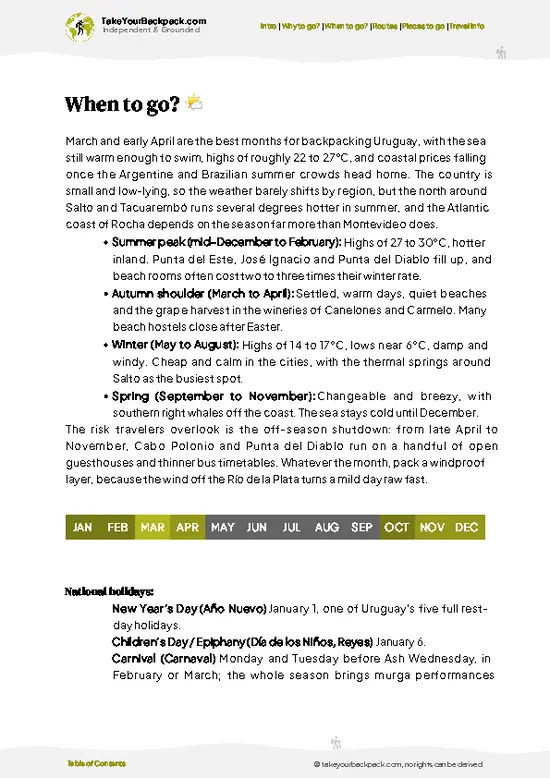
  • Weather: Punta del Este basks in a mild oceanic climate. Summers (December to February) bring highs around 28-30°C (82-86°F), perfect for beach days but expect humidity and occasional afternoon breezes that freshen the air. Winters (June to August) cool down to 10-15°C (50-59°F), crisp but rarely freezing, making it less ideal for swimming but great for exploring without sweat.

  • Daylight Hours: Summer days stretch long, with up to 14 hours of light, giving you more time to soak in sunsets over the Atlantic. Winter cuts daylight to about 10 hours, so plan your hikes and beach walks accordingly to avoid dusk chills.

  • Crowds: Peak season floods the town with tourists, especially in January, turning the streets lively but also pricier and busier. Off-season months like May and September offer
read more 👉

  • Weather: Punta del Este basks in a mild oceanic climate. Summers (December to February) bring highs around 28-30°C (82-86°F), perfect for beach days but expect humidity and occasional afternoon breezes that freshen the air. Winters (June to August) cool down to 10-15°C (50-59°F), crisp but rarely freezing, making it less ideal for swimming but great for exploring without sweat.

  • Daylight Hours: Summer days stretch long, with up to 14 hours of light, giving you more time to soak in sunsets over the Atlantic. Winter cuts daylight to about 10 hours, so plan your hikes and beach walks accordingly to avoid dusk chills.

  • Crowds: Peak season floods the town with tourists, especially in January, turning the streets lively but also pricier and busier. Off-season months like May and September offer a quieter, more local vibe, letting you explore beaches and cafes without elbowing through crowds.

  • Seasonal Activities: Summer unlocks water sports, open-air festivals, and vibrant nightlife. Winter shifts focus to cultural events, art galleries, and cozy seafood spots where you can savor fresh catch without the summer rush.

  • Price Fluctuations: Accommodation and dining costs spike in summer, sometimes doubling compared to off-season rates. Booking early is crucial if you aim for January. Shoulder seasons (spring and fall) balance better prices with decent weather and fewer tourists.


Pro-tip: Aim for late spring (November) or early fall (March-April) to catch warm days, manageable crowds, and wallet-friendly rates—perfect for a backpacker who wants the best of Punta del Este without the chaos.


source: climatestotravel.comJANJanuary: good for travelingFEBFebruary: highly recommended for travelingMARMarch: highly recommended for travelingAPRApril: highly recommended for travelingMAYMay: highly recommended for travelingJUNJune: fair for travelingJULJuly: fair for travelingAUGAugust: fair for travelingSEPSeptember: highly recommended for travelingOCTOctober: good for travelingNOVNovember: excellent for travelingDECDecember: good for traveling
when-to-go

✈️ The backpacker research shortcutUruguay Travel Guide

An offline-friendly backpacking guide with optimized travel routes, ranked highlights, transport advice, and the best areas to stay.
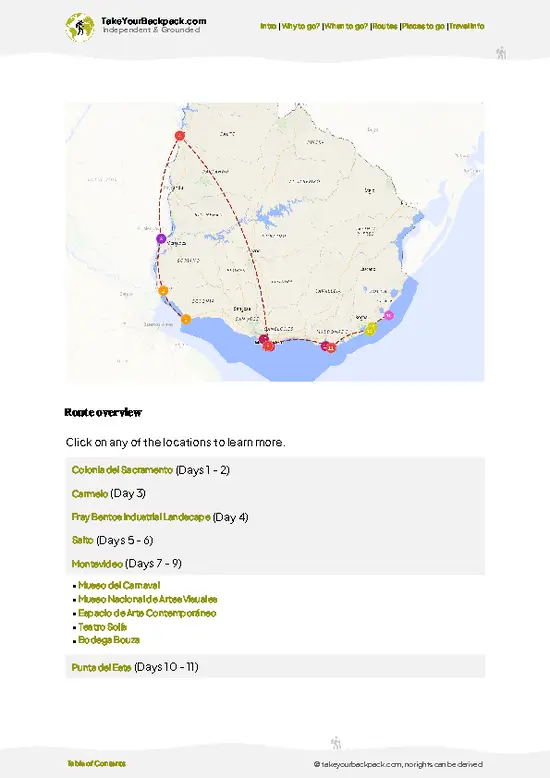
example page 0 from our offline Travel Guide for Uruguay
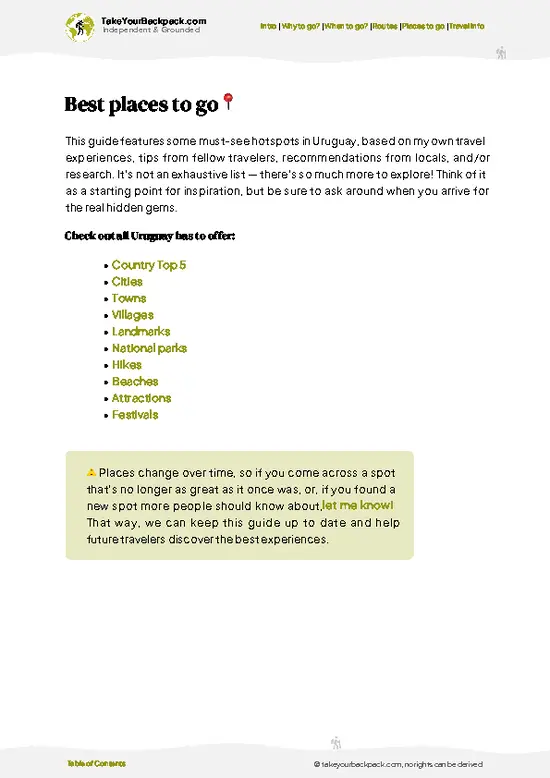
example page 1 from our offline Travel Guide for Uruguay
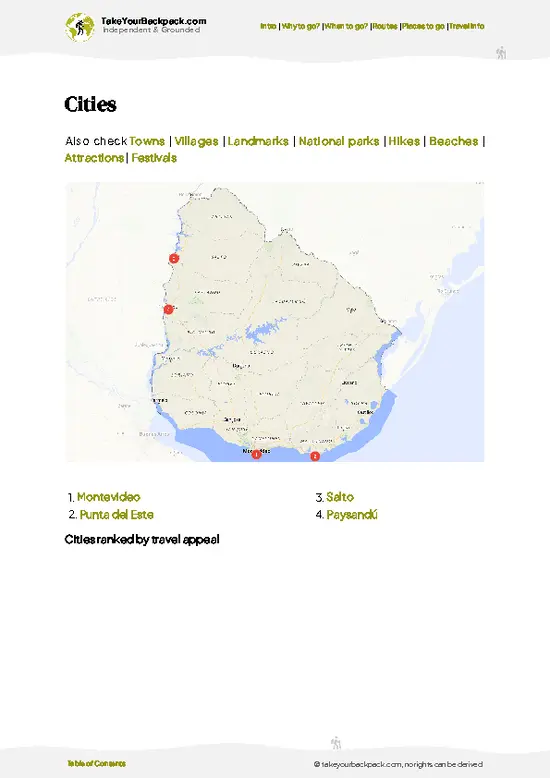
example page 2 from our offline Travel Guide for Uruguay
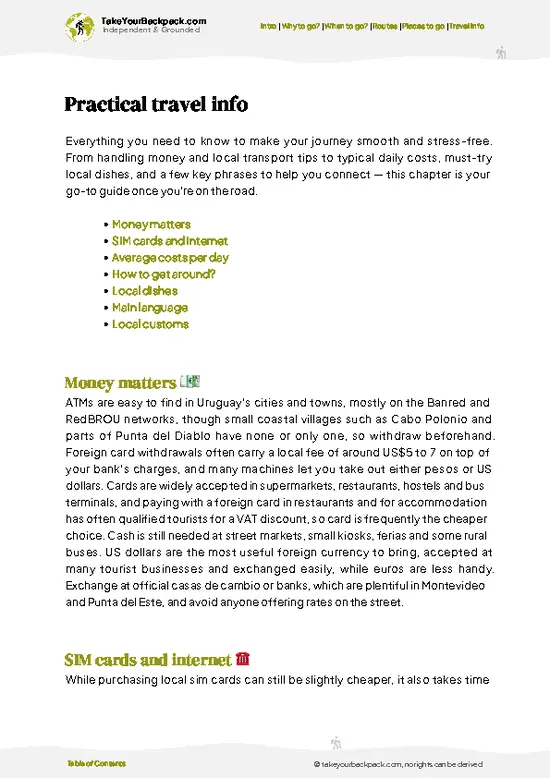
example page 3 from our offline Travel Guide for Uruguay
example page 4 from our offline Travel Guide for Uruguay
example page 5 from our offline Travel Guide for Uruguay
example page 6 from our offline Travel Guide for Uruguay
example page 7 from our offline Travel Guide for Uruguay
The digital guide (256 pages) contains:
64 highlights, ranked by travel appeal
Optimized 5, 10 & 15-day travel routes
Cities, national parks, landmarks, beaches
How to get around
Offline-friendly for travel without Wi-Fi
👉 Click to see all 30+ guide features

📅 Plan smarter in minutes, not weeks
Month by month travel advice
Festivals & national holidays
Budget expectations

🗺️ Go to the right places, skip the overrated ones
Honest pros & cons of destinations
Top hikes, parks & viewpoints
Lesser-known places most travelers miss
Clear “worth it vs skip it” guidance

🛏️ Travel smoothly without rookie mistakes
Best areas to stay
Transport systems explained simply
Common scams & safety advice
SIM cards, money & practical tips

🌍 Understand the country, not just visit it
Culture & traditions
52 Essential phrases & customs
Festivals worth planning around
Traveler-friendly historical context
Insights that make places more meaningful

📱 Built for real travel conditions
Fully downloadable PDF
Works completely offline
Optimized for phone use
Useful in remote areas & buses
Everything in one place
Save weeks of stressful planning
Get instant access to your full guide. 30‑day money-back guarantee.


By proceeding you agree to our terms.
Sent to your inbox immediately after payment • 100% Secure Checkout
Best Backpacking Travel Advisor 2025 tourism awardBest Backpacking
Travel Advisor
2025
What others say about Take Your Backpack Guides:
⭐⭐⭐⭐⭐
Fantastic, amazing amount of information!
⭐⭐⭐⭐⭐
My goodness this is amazing, it's what I've been looking for hats off too you!
⭐⭐⭐⭐⭐
I think this is absolutely BRILLIANT
⭐⭐⭐⭐
Very complete and informative. It's still missing places, but I gotta to commend you
⭐⭐⭐⭐⭐
This is truly amazing, thank you, can't wait to explore it with my kids!
⭐⭐⭐⭐⭐
Awesome resource, thank you!
⭐⭐⭐⭐⭐
This is amazing! Can't wait to explore the ones I haven't seen
⭐⭐⭐⭐
I love this! Well done, great idea.
⭐⭐⭐⭐⭐
Thanks for taking the time to make this gem!
⭐⭐⭐⭐⭐
This might be the best website I've ever seen.
⭐⭐⭐⭐⭐
Congratulations, and thank you so much for your work; it's incredibly valuable.
⭐⭐⭐⭐
In all seriousness I think you did a great job pointing out the important spots
⭐⭐⭐⭐⭐
10/10 very good
⭐⭐⭐⭐⭐
As someone who's only just starting to visit regularly this is awesome, thank you.
⭐⭐⭐⭐
Thank you very much! I'm going to visit my dad, it's going to be very useful!
⭐⭐⭐⭐⭐
This is really cool! We'll be travelling for the first time and this definitely come in handy.
⭐⭐⭐⭐⭐
You are now our minister of culture, congratulations 👨‍💼
⭐⭐⭐⭐⭐
Just wanted to tell you that this is a pearl! Going to follow your recommendations.
⭐⭐⭐⭐⭐
This is so cool. I'll definitely be using the resource for my travels soon.
⭐⭐⭐⭐⭐
This is very impressive! Good work.
⭐⭐⭐⭐⭐
This is an amazing and informative site. Very well done!

🛏️ Where to stay?How to pick the right area

Punta del Este’s best backpacker base is the peninsula area, especially around the port and Playa Brava. This spot is where the town’s pulse beats strongest for budget travelers and solo adventurers. The streets here are alive with a mix of locals and travelers, creating a social atmosphere that’s easy to tap into without feeling like a tourist trap. You’ll find hostels clustered within walking distance of the beach, bars, and markets, making it simple to meet people while keeping your wallet intact.

Why the peninsula? It’s compact and walkable, so you’re never far from the Atlantic breeze or … read more 👉
Punta del Este’s best backpacker base is the peninsula area, especially around the port and Playa Brava. This spot is where the town’s pulse beats strongest for budget travelers and solo adventurers. The streets here are alive with a mix of locals and travelers, creating a social atmosphere that’s easy to tap into without feeling like a tourist trap. You’ll find hostels clustered within walking distance of the beach, bars, and markets, making it simple to meet people while keeping your wallet intact.

Why the peninsula? It’s compact and walkable, so you’re never far from the Atlantic breeze or the scent of fresh seafood grilling nearby. The light here shifts beautifully throughout the day—from the sharp morning sun on the water to the golden glow at sunset over Playa Brava’s crashing waves. This natural rhythm invites you to slow down and soak in the vibe, which is a mix of laid-back beach culture and lively nightlife.

Compared to the more upscale and quieter Beverly Hills neighborhood or the sprawling, less pedestrian-friendly La Barra, the peninsula offers a safer, more connected experience. Streets are well-lit and busy enough to feel secure after dark, but not so crowded that you lose the chance for genuine conversations. Staying here means you’re plugged into the heart of Punta del Este’s energy, with easy access to both the beach and the town’s social hubs—perfect for backpackers who want to dive in without the fuss.

🚌 Getting aroundHow to get from A to B

Punta del Este moves with the rhythm of the ocean breeze—laid-back but never lazy. The town’s pulse is a mix of sun-soaked spontaneity and a surprisingly efficient local flow. You won’t find rigid timetables etched in stone here; instead, the vibe is more about catching the right moment, whether it’s hopping on a bus or strolling along the beach just as the light softens. The scent of salt air mingles with grilled seafood from nearby markets, and the streets hum with a casual energy that rewards those who lean into its easygoing tempo. Understanding how Punta del Este’s transit system works is your ticket to skipping the tourist traps and sliding into the local groove without a hitch.

Walking is your best friend in Punta del Este. The town’s compact layout means you can cover most of the … read more 👉
Punta del Este moves with the rhythm of the ocean breeze—laid-back but never lazy. The town’s pulse is a mix of sun-soaked spontaneity and a surprisingly efficient local flow. You won’t find rigid timetables etched in stone here; instead, the vibe is more about catching the right moment, whether it’s hopping on a bus or strolling along the beach just as the light softens. The scent of salt air mingles with grilled seafood from nearby markets, and the streets hum with a casual energy that rewards those who lean into its easygoing tempo. Understanding how Punta del Este’s transit system works is your ticket to skipping the tourist traps and sliding into the local groove without a hitch.

Walking is your best friend in Punta del Este. The town’s compact layout means you can cover most of the main attractions—like Playa Brava, the marina, and the peninsula—on foot within 30 to 45 minutes. The sidewalks are generally well-maintained, and the sea breeze keeps things fresh. Walking lets you soak in the changing light on the water and catch the spontaneous street art or local vendors selling fresh empanadas. Plus, it’s free and flexible, perfect for budget travelers who want to move at their own pace.

Local Buses are the backbone of budget transit here. Routes like the 10 and 11 connect the city center with key beaches and residential areas. Buses run roughly from 6:00 AM to 11:00 PM, with fares around 40 to 50 Uruguayan pesos (about $1 to $1.25 USD). They’re not the fastest option, often making frequent stops, but they’re reliable and give you a real sense of daily life. The buses can get crowded during peak hours, so grab a window seat early to enjoy the coastal views and avoid the crush.

Colectivos (Shared Taxis) offer a middle ground between bus and private taxi. These vans follow set routes but pick up and drop off passengers anywhere along the way. They’re faster than buses and cost a bit more—usually around 80 pesos ($2 USD). Colectivos run until late evening, making them a solid choice if you’re out past the last bus. The ride is more intimate, often with locals chatting or sharing tips about the best spots to eat or swim.

Bike Rentals unlock a different kind of freedom. Punta del Este’s flat terrain and dedicated bike lanes along the Rambla make cycling a breeze. Daily rentals cost about 300 to 500 pesos ($7 to $12 USD), and you can pick up a bike near the port or main squares. Riding lets you cover more ground than walking but still keeps you connected to the sights and sounds—the salty spray, the chatter of beachgoers, the distant call of seagulls. It’s a perfect way to explore the peninsula at your own speed without breaking the bank.

Private Taxis are the most expensive but sometimes necessary for late-night returns or when you’re hauling gear. Expect to pay around 300 to 500 pesos ($7 to $12 USD) for short trips within town. Taxis don’t run on a schedule, so you can call one anytime, but they’re less budget-friendly. Still, if you want to arrive dry after a sunset swim or make a quick dash to the bus station, they’re worth the splurge.

Mastering these options means you’re not just moving through Punta del Este—you’re syncing with its rhythm. You’ll dodge the frustration of missed rides and overpriced shuttles, and instead, you’ll find yourself stepping into the town’s easy flow, where every transit choice feels like part of the adventure.

👛 Costs (as of 20 June 2026)Travel costs and budget guide for Punta del Este

Backpacking in Punta del Este, Uruguay, comes with a price tag that reflects its status as a popular beach destination with a mix of luxury and laid-back charm. Here’s how the costs typically break down for an independent traveler navigating the town’s vibe without splurging on high-end resorts.
  • Dorm Accommodation: Hostels in Punta del Este usually charge between $15 and $30 USD per night for a bed in a shared dorm. The quality varies—some are basic but clean, while others offer a bit more style and social atmosphere. Booking ahead during peak season is crucial to lock in these rates.
  • Meals: Eating out can range widely. Budget travelers can expect to spend around $8 to $15 USD for a simple lunch or dinner at local cafes or casual eateries. Street food and small markets offer cheaper options,
read more 👉
Backpacking in Punta del Este, Uruguay, comes with a price tag that reflects its status as a popular beach destination with a mix of luxury and laid-back charm. Here’s how the costs typically break down for an independent traveler navigating the town’s vibe without splurging on high-end resorts.
  • Dorm Accommodation: Hostels in Punta del Este usually charge between $15 and $30 USD per night for a bed in a shared dorm. The quality varies—some are basic but clean, while others offer a bit more style and social atmosphere. Booking ahead during peak season is crucial to lock in these rates.
  • Meals: Eating out can range widely. Budget travelers can expect to spend around $8 to $15 USD for a simple lunch or dinner at local cafes or casual eateries. Street food and small markets offer cheaper options, but fresh seafood and meat dishes push prices higher. Cooking your own meals can save money but requires access to kitchen facilities.
  • Local Transport: Public buses are the main way to get around, with fares around $1 to $2 USD per ride. Taxis and ride-shares are available but noticeably pricier, often starting at $5 and climbing depending on distance. Walking is a great option in the central areas, where the sea breeze and sun make the stroll part of the experience.
  • Basic Activities/Entry Fees: Many beaches are free, which is a huge plus. Museums and galleries typically charge between $3 and $7 USD. Renting a bike or paddleboard can run $10 to $20 per hour, offering a more active way to explore the coast. Nightlife entry fees vary but expect $5 to $15 if you want to hit a club or live music spot.
  • Miscellaneous Expenses: This includes things like bottled water, snacks, toiletries, and occasional treats. Budget around $5 to $10 USD daily. Keep in mind that tourist-heavy areas might inflate prices slightly, so shopping at local markets can be a smart move.

All told, a realistic daily budget for backpacking in Punta del Este falls between $40 and $80 USD. This range balances the town’s tourist appeal with practical choices, letting you soak in the sun and culture without feeling like you’re constantly watching your wallet.
⚠️ Prices can change and everyone travels differently, so take this as a rough guide. Hope it helps you plan your adventure!

🚌 Day tripsBest day trips from Punta del Este

Punta del Este is a fantastic launchpad for day trips that reveal the heart of Uruguay. The coastal town buzzes with energy, but the surrounding landscapes offer a different kind of magic. Here are some standout excursions that will enrich your experience.

La Barra
Just a short bus ride from Punta del Este, La Barra is a vibrant beach town known for its bohemian vibe and colorful architecture. Spend your morning wandering through quirky shops and art galleries, then hit the beach for some sunbathing or surfing. The waves here are friendly for beginners, and you can rent a board for around $15. Don’t miss the sunset at the iconic bridge, where the sky ignites in hues of orange and pink. The best time to visit is during the summer months (December to February) when the atmosphere is electric. … read more 👉
Punta del Este is a fantastic launchpad for day trips that reveal the heart of Uruguay. The coastal town buzzes with energy, but the surrounding landscapes offer a different kind of magic. Here are some standout excursions that will enrich your experience.

La Barra
Just a short bus ride from Punta del Este, La Barra is a vibrant beach town known for its bohemian vibe and colorful architecture. Spend your morning wandering through quirky shops and art galleries, then hit the beach for some sunbathing or surfing. The waves here are friendly for beginners, and you can rent a board for around $15. Don’t miss the sunset at the iconic bridge, where the sky ignites in hues of orange and pink. The best time to visit is during the summer months (December to February) when the atmosphere is electric. A common mistake? Skipping the local seafood shacks—try the fresh ceviche for a true taste of the coast.
👉 Explore La Barra

José Ignacio
This charming fishing village is about a 30-minute drive from Punta del Este and feels worlds away. Known for its laid-back atmosphere, José Ignacio is perfect for a leisurely day. Explore the sandy beaches, and if you’re feeling adventurous, rent a bike to cruise along the coastline. The lighthouse offers stunning views, especially at dawn. Budget around $10 for bus fare and a few bucks for snacks. The best time to go is early morning to beat the crowds. Many first-timers miss the chance to enjoy a quiet breakfast at one of the local bakeries—don’t overlook the pastries!
👉 Explore José Ignacio

Casapueblo
A 20-minute drive from Punta del Este, Casapueblo is a unique blend of art and architecture, created by the Uruguayan artist Carlos Páez Vilaró. The white-washed building, perched on a cliff, offers breathtaking views of the Atlantic. Spend a few hours exploring the museum and soaking in the artistic atmosphere. Entry is around $10, and the best time to visit is during the late afternoon when the light casts a golden hue over the ocean. A common mistake is rushing through; take your time to enjoy the art and the views.
👉 Explore Casapueblo

Montevideo
Just a two-hour bus ride away, the capital city of Montevideo is a must-see. The vibrant Ciudad Vieja is packed with history, street art, and local markets. Spend your day sampling traditional Uruguayan dishes like asado or chivito at the Mercado del Puerto. Buses run frequently, costing about $10 each way. Aim for a weekday visit to avoid the weekend crowds. Many first-timers stick to the tourist spots—don’t miss the chance to wander off the beaten path and discover hidden cafés and street performances.
👉 Explore Montevideo
Want to know what more Uruguay offers?
The Uruguay Travel Guide describes 64 highlights, from cities to national parks, from beaches to hikes

Get the Travel Guide -

🍲 FoodWhat to Eat & Drink

In Punta del Este, food and drink are a lively dance between tradition and laid-back beach vibes, perfect for backpackers who want to taste the city’s soul without breaking the bank. The star on every plate is asado—Uruguay’s take on barbecue, where smoky, tender cuts of beef are grilled low and slow. It’s not just a meal; it’s a social ritual, best enjoyed with a glass of tannat wine, the local red that’s bold, tannic, and earthy, pairing beautifully with the meat’s char.

Backpackers will find their groove in bustling markets and street food stalls, where the air is thick with the scent of grilled sausages and fresh bread. Don’t miss chivito, a hefty sandwich stacked with steak, ham, cheese, and a fried egg—a no-frills, satisfying fuel for long days of exploring. Casual cafés spill onto … read more 👉
In Punta del Este, food and drink are a lively dance between tradition and laid-back beach vibes, perfect for backpackers who want to taste the city’s soul without breaking the bank. The star on every plate is asado—Uruguay’s take on barbecue, where smoky, tender cuts of beef are grilled low and slow. It’s not just a meal; it’s a social ritual, best enjoyed with a glass of tannat wine, the local red that’s bold, tannic, and earthy, pairing beautifully with the meat’s char.

Backpackers will find their groove in bustling markets and street food stalls, where the air is thick with the scent of grilled sausages and fresh bread. Don’t miss chivito, a hefty sandwich stacked with steak, ham, cheese, and a fried egg—a no-frills, satisfying fuel for long days of exploring. Casual cafés spill onto sidewalks, inviting you to sip mate, the bitter, grassy national infusion shared from a gourd, a ritual that’s as much about connection as caffeine.

Eating here isn’t rushed. Locals savor long lunches and late dinners, so adjust your pace. When invited to share mate, accept—it’s a gesture of trust and friendship. The drinking culture leans toward relaxed evenings, where conversations flow as freely as the wine. In Punta del Este, food and drink are your backstage pass to the city’s heart, served with a side of warmth and welcome.

🛡️ SafetyTraveler Safety Guide

Punta del Este is generally safe, but a few practical tips can enhance your experience. The bustling beaches and nightlife draw crowds, so stay aware in busy areas like La Barra and the port. Keep your belongings close, especially in crowded spots.

If you’re venturing out solo at night, stick to well-lit areas and popular streets. The vibe is lively, but it’s smart to avoid quieter backroads after dark.

Common scams are rare, but be cautious of overly friendly strangers offering unsolicited help or deals that seem too good to be true. A friendly chat can quickly turn into a sales pitch.

Everyday annoyances might include aggressive street vendors or persistent taxi drivers. A polite but firm “no, gracias” usually does the trick.

Overall, carry yourself with confidence and a sense of … read more 👉
Punta del Este is generally safe, but a few practical tips can enhance your experience. The bustling beaches and nightlife draw crowds, so stay aware in busy areas like La Barra and the port. Keep your belongings close, especially in crowded spots.

If you’re venturing out solo at night, stick to well-lit areas and popular streets. The vibe is lively, but it’s smart to avoid quieter backroads after dark.

Common scams are rare, but be cautious of overly friendly strangers offering unsolicited help or deals that seem too good to be true. A friendly chat can quickly turn into a sales pitch.

Everyday annoyances might include aggressive street vendors or persistent taxi drivers. A polite but firm “no, gracias” usually does the trick.

Overall, carry yourself with confidence and a sense of purpose. Enjoy the vibrant atmosphere, and you’ll find that the little bumps along the way only add to the adventure.

Other Uruguayan cities near Punta del Este

Explore more nearby:

  • Montevideo—port markets, art deco avenues, rambla coastline| 115 km away
  • Paysandú—riverfront parks, local breweries, industrial heritage| 412 km away
  • Salto—thermal springs, citrus groves, border crossings| 485 km away

💡 Not sure where to go next?
Create a personalized itinerary for Uruguay including Punta del Este and the places that fit your trip.

Generate my itinerary

👉 Discover all cities

Or checkout all Uruguay has to offer (think cities, towns, villages, national parks, hikes, beaches, festivals)
Country photo of Uruguay

We 💚 feedbackFinal thoughts on visiting Punta del Este

Punta del Este has a pulse that’s hard to resist. The beach clubs buzz with laughter, and the salty air carries the scent of fresh seafood. Don’t miss the sunset at La Barra; it’s a riot of colors that feels like a secret shared among friends. But watch out for the high prices in peak season—plan your splurges wisely. Embrace the local vibe, chat with the fishermen, and you’ll uncover the real heart of this coastal gem. It’s all about the connections you make.

✍️ Help improve this page!
The information on this page is based on in-depth research, insights shared by experienced travelers, and feedback from the local travel community in Uruguay. While every effort is made to keep the information accurate and current, conditions can change — so if you spot anything incorrect or outdated, please get in touch.


🙋‍♂️ Give feedback

👋 Meet the founderWho’s Behind Take Your Backpack?

Johan, backpacker and founder of TakeYourBackpackHi, I’m Johan (Netherlands 🇳🇱), the creator of TakeYourBackpack. Over the past decade, I’ve backpacked through 80+ countries across six continents, gaining extensive experience with independent travel, long-term trips, and overland routes.

This site is built on a combination of firsthand travel experience and carefully curated insights from other backpackers. Many guides are based on places I’ve personally visited, while others bring together tips, observations, and practical advice shared by trusted travelers I’ve met along the way.

The goal is to provide realistic, experience-driven guidance — not generic itineraries — so you can explore destinations with better context, clearer expectations, and more confidence.

Get full Uruguay guide •
Instant download • 64 highlights • Full Offline guide