×

Uruguay🇺🇾 | citiesMontevideoport markets, art deco avenues, rambla coastline | things to do and best time to go

Explore Punta del EsteExplore Punta del Este

Backpacking in Montevideo
🏆 Top pickcity ranked #1
By Johan Kruseman 🇳🇱 | Updated June 14, 2026

Your empanada is still too hot, but the sea breeze off the Río de la Plata keeps cooling your fingers as you sit on the rambla wall, watching locals pass a single mate gourd between five friends. A bus sighs to a stop behind you, someone’s portable speaker leaks cumbia, and the air smells like grilled meat and salt. This is Montevideo, stretched along Uruguay’s southern coast, facing that wide, brown river that feels like an ocean.

For backpackers, Montevideo is mellow, safe-feeling, and quietly social rather than electric. Ciudad Vieja’s colonial facades, Plaza Independencia, and the port market give you history and steak; Parque Rodó and the endless rambla give you lazy afternoons; a few hostels and bars around the center give you just enough nightlife. It’s pricier than you’d expect for South America, cheaper than most of Europe, and calmer and more lived-in than flashy Punta del Este or intense Buenos Aires across the water.

Discover everything you want to know in the 📖 Uruguay Travel Guide.


Get your Uruguay guide
64 ranked highlights, routes & tips, works offline (256 pages)
Loading the map 🌍
CLICK TO FILTER
cities
towns
villages
landmarks
national parks
hikes
beaches
attractions
festivals
regions
SHOW COUNTRY’S BESTSHOW ALL

✨ Why go?
Ranked #1 city in Uruguay
What sets this place apart

Montevideo is a strategic stop for backpackers navigating South America. It’s not just a city; it’s a basecamp that offers a mix of highlights and activities without overwhelming your schedule. The walkability of the city makes it easy to explore on foot, allowing you to soak in the local vibe without burning through your budget on transport.

Hostels here are not just places to crash; they’re vibrant hubs where you can meet fellow travelers and share stories over a cheap meal. Speaking of food, the local cuisine is a treat, with plenty of affordable options that won’t skimp on flavor.

When it comes to nightlife, Montevideo has a laid-back charm, perfect for unwinding after a day of exploration. Plus, its easy onward travel options mean you can seamlessly continue your journey to other … read more 👉
Montevideo is a strategic stop for backpackers navigating South America. It’s not just a city; it’s a basecamp that offers a mix of highlights and activities without overwhelming your schedule. The walkability of the city makes it easy to explore on foot, allowing you to soak in the local vibe without burning through your budget on transport.

Hostels here are not just places to crash; they’re vibrant hubs where you can meet fellow travelers and share stories over a cheap meal. Speaking of food, the local cuisine is a treat, with plenty of affordable options that won’t skimp on flavor.

When it comes to nightlife, Montevideo has a laid-back charm, perfect for unwinding after a day of exploration. Plus, its easy onward travel options mean you can seamlessly continue your journey to other destinations in Uruguay or beyond.

In short, if you’re looking for a city that balances comfort and value, Montevideo fits the bill. It’s ideal for a longer stay or a quick stop, depending on your travel style. Just know that this city is more than a pit stop; it’s a rewarding piece of your backpacking puzzle.
Want to include Montevideo in your Uruguay route?
Create a personalized Uruguay itinerary that includes Montevideo and the places that fit your trip — based on your travel style, budget, and available time. Get your route in seconds.

Generate my trip

💡 HighlightsEssential experiences to have while visiting Montevideo

  • Ciudad Vieja (Old Town) — The compact historic heart with cobbled streets, colonial façades, street art and tiny galleries; wander from the Puerta de la Ciudadela outwards and you’ll get the city’s origins and atmosphere in one walk.
  • Plaza Independencia & Palacio Salvo — Montevideo’s ceremonial center: stand by the Artigas mausoleum, admire the Palacio Salvo skyline, and feel how history and civic life meet in one busy square.
  • Teatro Solís — Uruguay’s grand 19th-century theater; guided tours show the ornate interiors, and catching a concert here gives a real cultural night out without needing to be fancy.
  • La Rambla — The roughly 22-km seaside promenade that defines city life: runners, mate drinkers, fishermen and long sunsets — great for bike rides, beach stops (Pocitos) and people-watching.
read more 👉
  • Ciudad Vieja (Old Town) — The compact historic heart with cobbled streets, colonial façades, street art and tiny galleries; wander from the Puerta de la Ciudadela outwards and you’ll get the city’s origins and atmosphere in one walk.
  • Plaza Independencia & Palacio Salvo — Montevideo’s ceremonial center: stand by the Artigas mausoleum, admire the Palacio Salvo skyline, and feel how history and civic life meet in one busy square.
  • Teatro Solís — Uruguay’s grand 19th-century theater; guided tours show the ornate interiors, and catching a concert here gives a real cultural night out without needing to be fancy.
  • La Rambla — The roughly 22-km seaside promenade that defines city life: runners, mate drinkers, fishermen and long sunsets — great for bike rides, beach stops (Pocitos) and people-watching.
  • Mercado del Puerto — A lively iron-roofed market serving the country’s best parrillas, live music and an unmistakable churrasco culture — perfect for a social, affordable meal with locals.
  • Museo Nacional de Artes Visuales (MNAV) — The best place to see Uruguay’s painters (Blanes, Gurvich, etc.) in one tidy, well-curated collection within Parque Rodó.
  • Feria de Tristán Narvaja — Sunday flea market where you can dig for books, vinyl, antiques, plants and street food; it’s a real local scene, not just a tourist gimmick.
  • Estadio Centenario & Museo del Fútbol — The 1930 World Cup stadium and its museum — essential for football fans and anyone who wants to understand how deeply the sport is woven into Uruguayan identity.
  • Museo Torres García — A focused, intimate museum dedicated to Joaquín Torres García’s constructivist work; it explains a huge part of Uruguay’s modern art story in a small space.
  • Mercado Agrícola de Montevideo — A beautifully restored early-20th-century market with local produce, bakeries and a few quality stalls and cafés — great for affordable bites and people-watching off the tourist track.
A few easy day trips from Montevideo: the colonial charms of Colonia del Sacramento, the beaches and sculpture scene of Punta del Este, and the nearby wineries and bodegas around Canelones.
Spotted a mistake or missing something? Contact us.

Things to do in Montevideo

Ratings based on Tripadvisor reviews. When you book through this link, you support our work at no extra cost to you.

🏘️ NeighborhoodsHow different areas shape the experience

Montevideo is a city that balances vibrant culture with laid-back charm, making it a fantastic spot for backpackers. Here’s a breakdown of key neighborhoods to help you navigate your stay.

Ciudad Vieja: This is the historic heart of Montevideo. You’ll find cobblestone streets, street art, and a lively market scene. It’s walkable, with plenty of budget-friendly hostels and cafes. The nightlife here is buzzing, especially on weekends, but you can also find quiet corners to relax. Perfect for short stays if you want to soak in the city’s history.

Centro: The commercial hub, Centro is where you’ll find shops, banks, and more. It’s less charming than Ciudad Vieja but offers convenience. Public transport is easily accessible, making it a good base for longer stays. The vibe is more business-like, … read more 👉
Montevideo is a city that balances vibrant culture with laid-back charm, making it a fantastic spot for backpackers. Here’s a breakdown of key neighborhoods to help you navigate your stay.

Ciudad Vieja: This is the historic heart of Montevideo. You’ll find cobblestone streets, street art, and a lively market scene. It’s walkable, with plenty of budget-friendly hostels and cafes. The nightlife here is buzzing, especially on weekends, but you can also find quiet corners to relax. Perfect for short stays if you want to soak in the city’s history.

Centro: The commercial hub, Centro is where you’ll find shops, banks, and more. It’s less charming than Ciudad Vieja but offers convenience. Public transport is easily accessible, making it a good base for longer stays. The vibe is more business-like, so expect quieter evenings.

Pocitos: This upscale neighborhood is known for its beach and promenade. It’s a bit pricier, but the atmosphere is relaxed and scenic. Great for those who want a mix of beach time and urban life. Walkability is high, and it’s perfect for longer stays if you enjoy a more leisurely pace.

Parque Rodó: A green oasis in the city, this area is popular with locals and has a youthful vibe. It’s budget-friendly and offers a mix of parks, cafes, and cultural spots. The nightlife is vibrant but not overwhelming. Ideal for both short and longer stays, especially if you appreciate nature.

Malvín: A quieter, residential area with a laid-back beach vibe. It’s less touristy, making it a great spot for those looking to immerse themselves in local life. Costs are moderate, and it’s walkable, but nightlife is limited. Best for longer stays if you want to escape the hustle.

⌛️ 1 daySeeing the highlights in 24 hours

Montevideo, the capital of Uruguay, is a city that pulses with a unique blend of culture, history, and a laid-back vibe. Its coastal charm, vibrant neighborhoods, and rich culinary scene make it a delightful stop for any traveler. You can easily immerse yourself in its character in just one day, focusing on the Ciudad Vieja and the nearby Parque Rodó.

Start your morning in Ciudad Vieja, the historic heart of Montevideo. Grab a coffee and a pastry at Café Brasilero, a local favorite that’s been around since 1877. The aroma of freshly brewed coffee mingles with the chatter of locals, setting a warm tone for your day. After fueling up, stroll over to the Mercado del Puerto. This bustling market is a feast for the senses, where you can watch as vendors grill succulent meats and serve up traditional … read more 👉
Montevideo, the capital of Uruguay, is a city that pulses with a unique blend of culture, history, and a laid-back vibe. Its coastal charm, vibrant neighborhoods, and rich culinary scene make it a delightful stop for any traveler. You can easily immerse yourself in its character in just one day, focusing on the Ciudad Vieja and the nearby Parque Rodó.

Start your morning in Ciudad Vieja, the historic heart of Montevideo. Grab a coffee and a pastry at Café Brasilero, a local favorite that’s been around since 1877. The aroma of freshly brewed coffee mingles with the chatter of locals, setting a warm tone for your day. After fueling up, stroll over to the Mercado del Puerto. This bustling market is a feast for the senses, where you can watch as vendors grill succulent meats and serve up traditional Uruguayan dishes. Even if you’re not hungry yet, the atmosphere is electric.

In the afternoon, make your way to the Parque Rodó. This expansive park is a breath of fresh air, dotted with sculptures and a picturesque lake. It’s a great spot to relax or people-watch. If you’re feeling adventurous, rent a bike and explore the area. Don’t miss the nearby Museo Nacional de Artes Visuales, which showcases Uruguayan art and is often overlooked by tourists. The museum’s serene environment offers a refreshing contrast to the lively market.

As the sun begins to set, head to the Rambla, Montevideo’s iconic waterfront promenade. Walk along the coast, soaking in the views of the Río de la Plata. For dinner, stop by La Pulpería, a cozy spot known for its hearty dishes and local wines. The ambiance is inviting, and the food is a true taste of Uruguay.

By the end of the day, you’ll have experienced the essence of Montevideo—its history, its people, and its flavors—all while making choices that balance time, money, and comfort. Each moment spent here is a step deeper into the soul of this captivating city.
Turn your Montevideo visit into an Uruguay adventure
Build a complete Uruguay route with Montevideo, hidden gems, must-see destinations, and realistic travel times included.

Generate my trip

🌤️ When to go?Best time to visit Montevideo


  • Weather: Montevideo’s climate is mild, with summers (December to February) hitting highs around 28-30°C (82-86°F), perfect for beach days but sticky and humid. Winters (June to August) dip to 10-15°C (50-59°F), cooler but rarely freezing, making it comfortable for city wandering without sweating buckets.

  • Daylight Hours: Summer offers long days—up to 14 hours of light—ideal for squeezing in more exploration. Winter shortens daylight to about 10 hours, which means earlier nights but cozier evenings in cafés or bars.

  • Crowds: Peak tourist season aligns with summer, so expect busier beaches, higher prices, and more hustle in popular spots. Shoulder seasons (spring and fall) bring fewer tourists, letting you enjoy Montevideo’s charm without elbowing through crowds.

  • Seasonal Activities:
read more 👉

  • Weather: Montevideo’s climate is mild, with summers (December to February) hitting highs around 28-30°C (82-86°F), perfect for beach days but sticky and humid. Winters (June to August) dip to 10-15°C (50-59°F), cooler but rarely freezing, making it comfortable for city wandering without sweating buckets.

  • Daylight Hours: Summer offers long days—up to 14 hours of light—ideal for squeezing in more exploration. Winter shortens daylight to about 10 hours, which means earlier nights but cozier evenings in cafés or bars.

  • Crowds: Peak tourist season aligns with summer, so expect busier beaches, higher prices, and more hustle in popular spots. Shoulder seasons (spring and fall) bring fewer tourists, letting you enjoy Montevideo’s charm without elbowing through crowds.

  • Seasonal Activities: Summer hosts vibrant outdoor events, from beach festivals to open-air markets, while winter focuses on cultural experiences like theater and tango nights, offering a different flavor of local life.

  • Price Fluctuations: Accommodation and flights spike in summer due to demand. Visiting in spring (September-November) or fall (March-May) often means better deals and a more relaxed vibe without sacrificing decent weather.


Pro-tip: Aim for spring or fall to balance pleasant weather, manageable crowds, and wallet-friendly prices—Montevideo rewards the savvy timer.


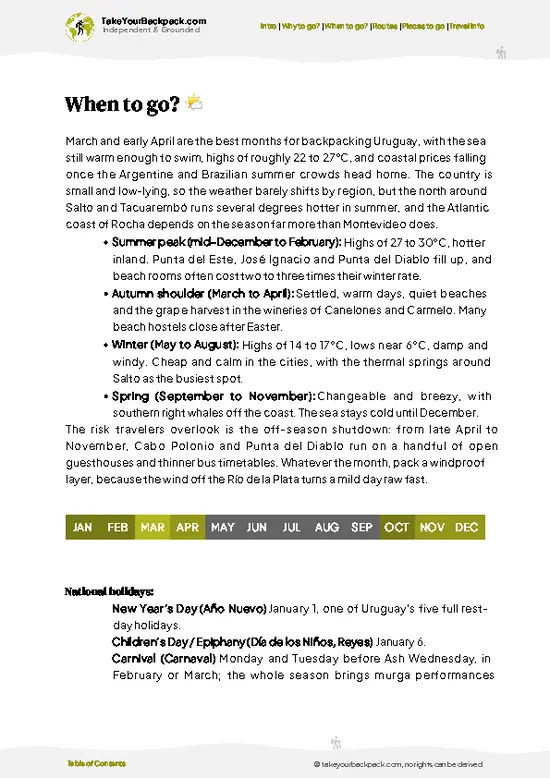
source: climatestotravel.comJANJanuary: highly recommended for travelingFEBFebruary: highly recommended for travelingMARMarch: highly recommended for travelingAPRApril: highly recommended for travelingMAYMay: good for travelingJUNJune: good for travelingJULJuly: good for travelingAUGAugust: good for travelingSEPSeptember: highly recommended for travelingOCTOctober: highly recommended for travelingNOVNovember: highly recommended for travelingDECDecember: highly recommended for traveling
uruguay-city-montevideo
© Google |

✈️ The backpacker research shortcutUruguay Travel Guide

An offline-friendly backpacking guide with optimized travel routes, ranked highlights, transport advice, and the best areas to stay.
example page 0 from our offline Travel Guide for Uruguay
example page 1 from our offline Travel Guide for Uruguay
example page 2 from our offline Travel Guide for Uruguay
example page 3 from our offline Travel Guide for Uruguay
example page 4 from our offline Travel Guide for Uruguay
example page 5 from our offline Travel Guide for Uruguay
example page 6 from our offline Travel Guide for Uruguay
example page 7 from our offline Travel Guide for Uruguay
The digital guide (256 pages) contains:
64 highlights, ranked by travel appeal
Optimized 5, 10 & 15-day travel routes
Cities, national parks, landmarks, beaches
How to get around
Offline-friendly for travel without Wi-Fi
👉 Click to see all 30+ guide features

📅 Plan smarter in minutes, not weeks
Month by month travel advice
Festivals & national holidays
Budget expectations

🗺️ Go to the right places, skip the overrated ones
Honest pros & cons of destinations
Top hikes, parks & viewpoints
Lesser-known places most travelers miss
Clear “worth it vs skip it” guidance

🛏️ Travel smoothly without rookie mistakes
Best areas to stay
Transport systems explained simply
Common scams & safety advice
SIM cards, money & practical tips

🌍 Understand the country, not just visit it
Culture & traditions
52 Essential phrases & customs
Festivals worth planning around
Traveler-friendly historical context
Insights that make places more meaningful

📱 Built for real travel conditions
Fully downloadable PDF
Works completely offline
Optimized for phone use
Useful in remote areas & buses
Everything in one place
Save weeks of stressful planning
Get instant access to your full guide. 30‑day money-back guarantee.


By proceeding you agree to our terms.
Sent to your inbox immediately after payment • 100% Secure Checkout
Best Backpacking Travel Advisor 2025 tourism awardBest Backpacking
Travel Advisor
2025
What others say about Take Your Backpack Guides:
⭐⭐⭐⭐⭐
Fantastic, amazing amount of information!
⭐⭐⭐⭐⭐
My goodness this is amazing, it's what I've been looking for hats off too you!
⭐⭐⭐⭐⭐
I think this is absolutely BRILLIANT
⭐⭐⭐⭐
Very complete and informative. It's still missing places, but I gotta to commend you
⭐⭐⭐⭐⭐
This is truly amazing, thank you, can't wait to explore it with my kids!
⭐⭐⭐⭐⭐
Awesome resource, thank you!
⭐⭐⭐⭐⭐
This is amazing! Can't wait to explore the ones I haven't seen
⭐⭐⭐⭐
I love this! Well done, great idea.
⭐⭐⭐⭐⭐
Thanks for taking the time to make this gem!
⭐⭐⭐⭐⭐
This might be the best website I've ever seen.
⭐⭐⭐⭐⭐
Congratulations, and thank you so much for your work; it's incredibly valuable.
⭐⭐⭐⭐
In all seriousness I think you did a great job pointing out the important spots
⭐⭐⭐⭐⭐
10/10 very good
⭐⭐⭐⭐⭐
As someone who's only just starting to visit regularly this is awesome, thank you.
⭐⭐⭐⭐
Thank you very much! I'm going to visit my dad, it's going to be very useful!
⭐⭐⭐⭐⭐
This is really cool! We'll be travelling for the first time and this definitely come in handy.
⭐⭐⭐⭐⭐
You are now our minister of culture, congratulations 👨‍💼
⭐⭐⭐⭐⭐
Just wanted to tell you that this is a pearl! Going to follow your recommendations.
⭐⭐⭐⭐⭐
This is so cool. I'll definitely be using the resource for my travels soon.
⭐⭐⭐⭐⭐
This is very impressive! Good work.
⭐⭐⭐⭐⭐
This is an amazing and informative site. Very well done!

🛏️ Where to stay?How to pick the right area

Ciudad Vieja is the undeniable hub for backpackers in Montevideo. It’s the old city core, where colonial architecture rubs shoulders with street art and lively plazas. Safety here is decent, especially around the main squares and pedestrian streets, but like any historic center, you keep your wits about you after dark. The real draw is the social scene—cafés, bars, and markets buzz with locals and travelers alike, making it easy to strike up conversations. Hostels cluster here, offering budget beds and communal spaces that naturally foster connections. You trade a bit of quiet for the pulse of … read more 👉
Ciudad Vieja is the undeniable hub for backpackers in Montevideo. It’s the old city core, where colonial architecture rubs shoulders with street art and lively plazas. Safety here is decent, especially around the main squares and pedestrian streets, but like any historic center, you keep your wits about you after dark. The real draw is the social scene—cafés, bars, and markets buzz with locals and travelers alike, making it easy to strike up conversations. Hostels cluster here, offering budget beds and communal spaces that naturally foster connections. You trade a bit of quiet for the pulse of the city, but that’s the point: you’re plugged into Montevideo’s cultural heartbeat.

If you want something a touch calmer but still social, Pocitos is your next best bet. This beachside neighborhood is safer and cleaner, with a more modern vibe. It’s popular with young locals and solo travelers who want a mix of relaxation and nightlife without the gritty edges of Ciudad Vieja. Hostels here tend to be newer and slightly pricier, but you gain comfort and easy access to the Rambla—a sprawling waterfront perfect for sunset strolls and people-watching.

Avoid the outskirts unless you have a local guide or a car. They’re quieter but lack the social infrastructure and safety that make backpacking enjoyable. In Montevideo, your choice boils down to the trade-off between raw urban energy and polished beachside calm—both deliver value, just different flavors of the city’s soul.

🚌 Getting aroundGetting around like a local

Montevideo moves at its own rhythm—neither a frantic rush nor a sluggish crawl. It’s a city where the pulse is steady, shaped by a blend of old-school pragmatism and a relaxed coastal vibe. You’ll find that schedules exist but with a forgiving elasticity; buses don’t always show up on the dot, yet the system hums along with enough predictability to plan around. The streets invite a mix of deliberate walking and strategic hopping on public transit, making your choices a subtle dance between saving time, spending less, or just cruising comfortably.


  • Walking: Montevideo’s compact Centro and Ciudad Vieja neighborhoods are best explored on foot. It costs nothing, offers maximum flexibility, and lets you soak in the city’s character at your own pace. Expect to cover 3-5 kilometers comfortably
read more 👉
Montevideo moves at its own rhythm—neither a frantic rush nor a sluggish crawl. It’s a city where the pulse is steady, shaped by a blend of old-school pragmatism and a relaxed coastal vibe. You’ll find that schedules exist but with a forgiving elasticity; buses don’t always show up on the dot, yet the system hums along with enough predictability to plan around. The streets invite a mix of deliberate walking and strategic hopping on public transit, making your choices a subtle dance between saving time, spending less, or just cruising comfortably.


  • Walking: Montevideo’s compact Centro and Ciudad Vieja neighborhoods are best explored on foot. It costs nothing, offers maximum flexibility, and lets you soak in the city’s character at your own pace. Expect to cover 3-5 kilometers comfortably in an hour, perfect for budget travelers who value immersion over speed.


  • Colectivos (City Buses): The backbone of Montevideo’s public transit, colectivos run from early morning (around 5:30 AM) until about midnight. A single ride costs roughly 40-50 UYU (about $1–$1.25 USD), making it the cheapest way to cover longer distances. They’re frequent but can get crowded during rush hours, so comfort takes a hit for the price. Routes crisscross the city, but be ready for some unpredictability in timing.


  • Taxi and Remises: Taxis are metered and start at about 70 UYU ($1.75 USD), with rides within the city center usually under 200 UYU ($5 USD). Remises are pre-booked private cars with fixed rates, offering more comfort and reliability but at a higher cost. Both are your go-to if you’re prioritizing comfort and speed, especially late at night when buses stop running.


  • Bicycle Rentals: Montevideo has invested in bike lanes, especially along the Rambla waterfront. Renting a bike costs around 150-200 UYU per day ($4–$5 USD), giving you a fast, flexible, and eco-friendly way to cover medium distances. It’s a sweet spot between walking and public transit, offering speed without the expense or confinement of a bus or taxi.


  • Tren de la Costa (Coastal Train): While not a daily commuter staple, this train runs along the coast connecting Montevideo with nearby beach towns. It’s a budget-friendly option (around 50 UYU) for day trips, offering a scenic, comfortable ride that saves you the hassle of bus transfers. Service is less frequent, so plan accordingly if you want to use it.


Understanding these options means you’re not just moving through Montevideo—you’re playing the system smart. You decide when to stretch your legs, when to save pesos, and when to splurge for a smoother ride. Each choice shifts your trip’s balance between time, money, and comfort, turning logistics into a strategic game you’re winning.

👛 Costs (as of 24 June 2026)What things cost and how to budget

Backpacking in Montevideo, Uruguay, means balancing your budget with the city’s laid-back vibe and practical costs. Here’s the breakdown to help you see exactly where your money goes.
  • Dorm Accommodation (High Season): Expect to pay around $15 to $25 USD per night in popular hostels during peak months (December to February). These spots fill fast, so prices reflect demand and proximity to the beach or city center.
  • Dorm Accommodation (Off-Season): From March to November, prices drop to about $10 to $18 USD. You’ll find quieter hostels with the same amenities but fewer crowds, which can be a win for both your wallet and your peace of mind.
  • Meals: Eating out on a budget means $5 to $10 USD for a simple lunch or dinner at local markets or casual eateries. If you opt for street food or bakeries,
read more 👉
Backpacking in Montevideo, Uruguay, means balancing your budget with the city’s laid-back vibe and practical costs. Here’s the breakdown to help you see exactly where your money goes.
  • Dorm Accommodation (High Season): Expect to pay around $15 to $25 USD per night in popular hostels during peak months (December to February). These spots fill fast, so prices reflect demand and proximity to the beach or city center.
  • Dorm Accommodation (Off-Season): From March to November, prices drop to about $10 to $18 USD. You’ll find quieter hostels with the same amenities but fewer crowds, which can be a win for both your wallet and your peace of mind.
  • Meals: Eating out on a budget means $5 to $10 USD for a simple lunch or dinner at local markets or casual eateries. If you opt for street food or bakeries, you can get by on closer to $3 to $6 USD per meal. Groceries for self-catering can be even cheaper, especially if you shop at local markets.
  • Local Transport: Single bus rides cost about $1.20 USD. Montevideo’s bus network is extensive and reliable, making it easy to get around without breaking the bank.
  • City Transport Pass: If you plan to use public transport frequently, a rechargeable card (Tarjeta STM) can save you money, bringing the cost down to roughly $0.90 USD per ride after the initial card purchase.
  • Basic Activities/Entry Fees: Museums and cultural sites typically charge between $2 and $5 USD. Some parks and beaches are free, but guided tours or special exhibitions can push costs higher, around $10 to $15 USD.
  • Miscellaneous Expenses: Budget $3 to $7 USD daily for essentials like bottled water, snacks, or occasional coffee. Keep a little extra for unexpected small purchases or tips.

Montevideo’s daily backpacking budget usually falls between $25 and $45 USD. You’re trading a bit more comfort or convenience for savings, but the city’s affordable transport and food options mean you can stretch your dollars without feeling like you’re missing out. This balance lets you focus on the experience, not just the expense.
⚠️ Prices can change and everyone travels differently, so take this as a rough guide. Hope it helps you plan your adventure!

🚌 Day tripsEasy escapes and nearby places

Montevideo is a fantastic launchpad for day trips that blend adventure, culture, and local flavor. Here are some top picks that will enrich your experience without breaking the bank.

Colonia del Sacramento
Just a two-hour bus ride from Montevideo, Colonia del Sacramento is a UNESCO World Heritage site that feels like stepping into a time capsule. The cobblestone streets and colonial architecture are a feast for the eyes. You can wander through the Barrio Histórico, visit the lighthouse, and enjoy a leisurely lunch by the river. Budget around $15 for the round trip and a bit more for food. Spring and fall are ideal for pleasant weather and fewer crowds. A common mistake? Many first-timers rush through without taking the time to soak in the atmosphere—slow down and savor it.
👉 Explore Colonia read more 👉
Montevideo is a fantastic launchpad for day trips that blend adventure, culture, and local flavor. Here are some top picks that will enrich your experience without breaking the bank.

Colonia del Sacramento
Just a two-hour bus ride from Montevideo, Colonia del Sacramento is a UNESCO World Heritage site that feels like stepping into a time capsule. The cobblestone streets and colonial architecture are a feast for the eyes. You can wander through the Barrio Histórico, visit the lighthouse, and enjoy a leisurely lunch by the river. Budget around $15 for the round trip and a bit more for food. Spring and fall are ideal for pleasant weather and fewer crowds. A common mistake? Many first-timers rush through without taking the time to soak in the atmosphere—slow down and savor it.
👉 Explore Colonia del Sacramento

Punta del Este
Known as Uruguay’s glitzy beach resort, Punta del Este is about a two-hour bus ride from Montevideo. While it’s famous for its nightlife, the daytime offers stunning beaches and the iconic ”Hand in the Sand” sculpture. You can enjoy a beach day or explore the nearby Casapueblo, a unique building turned museum. Expect to spend around $20 for transport and a meal. Summer is peak season, so aim for early spring or late fall for a quieter experience. A rookie mistake? Forgetting sunscreen—those rays can be relentless!
👉 Explore Punta del Este

Cabo Polonio
For a more off-the-beaten-path experience, Cabo Polonio is a must. This remote village is about a four-hour journey, including a 7-kilometer drive through sand dunes. The lack of electricity adds to its charm, and you can hike to the lighthouse for breathtaking views. The round trip will cost around $30, including the unique 4x4 ride. Visit in the shoulder seasons for fewer tourists and milder weather. Many travelers underestimate the time it takes to get there, so plan accordingly.
👉 Explore Cabo Polonio

Salto
If you’re up for a longer day, Salto is about a 5-hour bus ride but offers the chance to soak in natural hot springs. The term “hot springs” doesn’t do justice to the experience; it’s a relaxing oasis. Budget around $40 for transport and entry fees. Late spring or early fall is best for fewer crowds. A common oversight? Not checking the bus schedule ahead of time, as services can be limited.
👉 Explore Salto

These day trips from Montevideo offer a rich tapestry of experiences, each with its own unique flavor. Choose wisely, and you’ll find that the journey is just as rewarding as the destination.
Want to know what more Uruguay offers?
The Uruguay Travel Guide describes 64 highlights, from cities to national parks, from beaches to hikes

Get the Travel Guide -

🍲 FoodEating & Drinking in Montevideo

In Montevideo, the food scene is a vibrant tapestry of flavors that beckons every backpacker to dive in. Start with the asado, a traditional barbecue that’s more than just a meal; it’s a social event. Picture smoky meats sizzling over open flames, accompanied by a chorus of laughter and clinking glasses. Don’t miss the chivito, a hearty sandwich stacked with beef, cheese, and a medley of toppings. It’s a local staple that packs a punch.

For a true taste of the city, hit up the Mercado del Puerto. This bustling market is a haven for street food lovers. Grab a plate of empanadas or sample some fresh seafood while soaking in the lively atmosphere. The aromas wafting through the air will make your stomach growl in anticipation.

When it comes to drinks, mate is the cultural cornerstone. This … read more 👉
In Montevideo, the food scene is a vibrant tapestry of flavors that beckons every backpacker to dive in. Start with the asado, a traditional barbecue that’s more than just a meal; it’s a social event. Picture smoky meats sizzling over open flames, accompanied by a chorus of laughter and clinking glasses. Don’t miss the chivito, a hearty sandwich stacked with beef, cheese, and a medley of toppings. It’s a local staple that packs a punch.

For a true taste of the city, hit up the Mercado del Puerto. This bustling market is a haven for street food lovers. Grab a plate of empanadas or sample some fresh seafood while soaking in the lively atmosphere. The aromas wafting through the air will make your stomach growl in anticipation.

When it comes to drinks, mate is the cultural cornerstone. This herbal tea is shared among friends, so don’t be surprised if someone offers you a sip. It’s a ritual that fosters connection. For something stronger, try a glass of grappa or a local beer; the craft scene is thriving, and you’ll find plenty of cozy bars where you can unwind.

Etiquette is simple: share your food and drinks, and embrace the communal spirit. In Montevideo, every bite and sip is an invitation to connect.

🛡️ SafetyScams, Hazards, and Annoyances

Montevideo is generally safe, but like any city, it has its quirks. Areas like Ciudad Vieja and Parque Rodó are vibrant but can attract pickpockets, especially in crowded markets or during events. Keep your belongings close and be aware of your surroundings.

If you’re solo, especially at night, stick to well-lit streets and avoid empty areas. The Rambla is lovely for evening strolls, but don’t wander too far off the beaten path.

Scams are rare, but some travelers report taxi drivers who take longer routes. Always use reputable services or rideshare apps. Another common annoyance is street vendors who can be persistent. A polite “no, gracias” usually does the trick.

Overall, carry yourself confidently and engage with locals; they’re often friendly and helpful. By staying aware and making … read more 👉
Montevideo is generally safe, but like any city, it has its quirks. Areas like Ciudad Vieja and Parque Rodó are vibrant but can attract pickpockets, especially in crowded markets or during events. Keep your belongings close and be aware of your surroundings.

If you’re solo, especially at night, stick to well-lit streets and avoid empty areas. The Rambla is lovely for evening strolls, but don’t wander too far off the beaten path.

Scams are rare, but some travelers report taxi drivers who take longer routes. Always use reputable services or rideshare apps. Another common annoyance is street vendors who can be persistent. A polite “no, gracias” usually does the trick.

Overall, carry yourself confidently and engage with locals; they’re often friendly and helpful. By staying aware and making smart choices, you’ll navigate Montevideo smoothly and enjoy its rich culture without unnecessary stress.

Other Uruguayan cities near Montevideo

Explore more nearby:

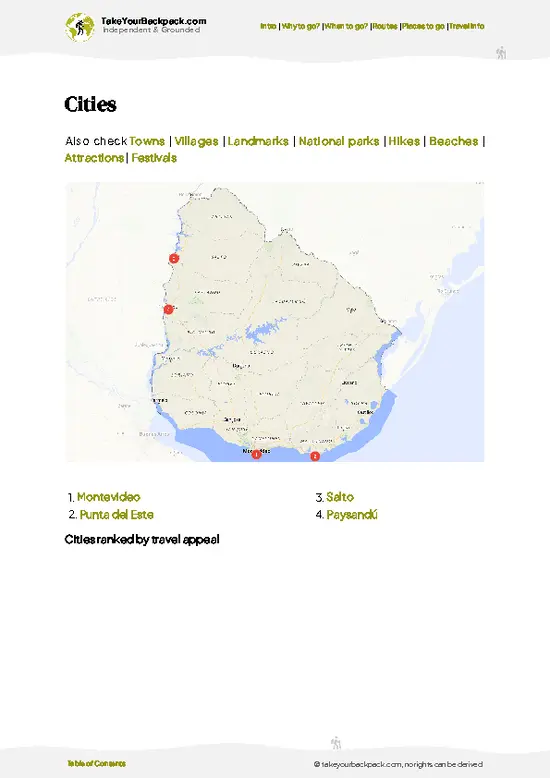
  • Punta del Este—high-rise skyline, nightlife, twin beaches| 115 km away
  • Paysandú—riverfront parks, local breweries, industrial heritage| 337 km away
  • Salto—thermal springs, citrus groves, border crossings| 424 km away

💡 Not sure where to go next?
Create a personalized itinerary for Uruguay including Montevideo and the places that fit your trip.

Generate my itinerary

👉 Discover all cities

Or checkout all Uruguay has to offer (think cities, towns, villages, national parks, hikes, beaches, festivals)
Country photo of Uruguay

We 💚 feedbackSumming up the experience

Montevideo has a laid-back vibe that feels like a secret only a few know. The best surprise? The rambunctious street markets, especially Feria de Tristán Narvaja on Sundays. You’ll find everything from antiques to delicious street food. Just a heads-up: the public transport can be a bit tricky, so plan your routes ahead. Embrace the slow pace, and don’t rush through the city. It’s all about savoring the moments, whether it’s a sunset at Playa de los Pocitos or a quiet café on a side street.

✍️ Help improve this page!
The information on this page is based on in-depth research, insights shared by experienced travelers, and feedback from the local travel community in Uruguay. While every effort is made to keep the information accurate and current, conditions can change — so if you spot anything incorrect or outdated, please get in touch.


🙋‍♂️ Give feedback

👋 Meet the founderWho’s Behind Take Your Backpack?

Johan, backpacker and founder of TakeYourBackpackHi, I’m Johan (Netherlands 🇳🇱), the creator of TakeYourBackpack. Over the past decade, I’ve backpacked through 80+ countries across six continents, gaining extensive experience with independent travel, long-term trips, and overland routes.

This site is built on a combination of firsthand travel experience and carefully curated insights from other backpackers. Many guides are based on places I’ve personally visited, while others bring together tips, observations, and practical advice shared by trusted travelers I’ve met along the way.

The goal is to provide realistic, experience-driven guidance — not generic itineraries — so you can explore destinations with better context, clearer expectations, and more confidence.

Get full Uruguay guide •
Instant download • 64 highlights • Full Offline guide