×

Venezuela🇻🇪 | national parksMochima National ParkPeñero boats, rocky coves, Mochima village | things to do and best time to go

Explore Los Roques National ParkExplore Sierra Nevada National Park

Backpacking in Mochima
🏆 Top picknational park ranked #4
By Johan Kruseman 🇳🇱 | Updated October 19, 2026

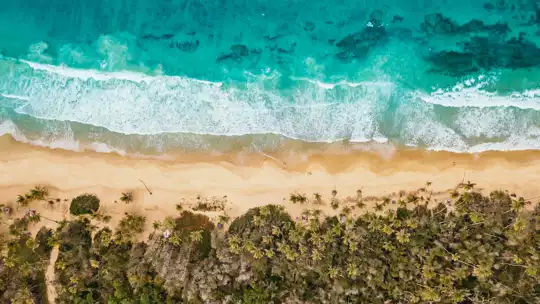
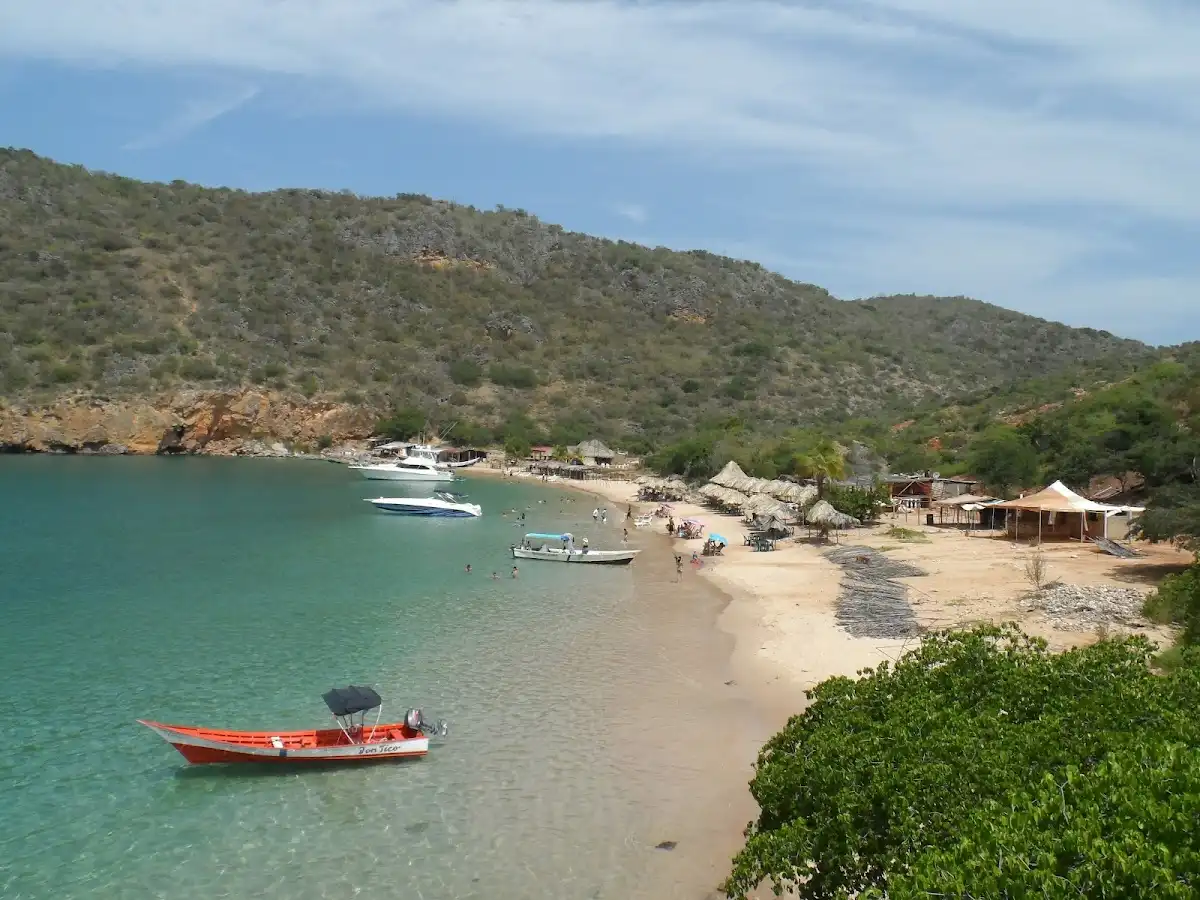
The real decision at Mochima National Park is whether to base yourself in the village of Mochima or in Santa Fe, and the answer depends on how much you want to do versus lounge. Mochima village is quiet and puts you at the boat docks, while Santa Fe has more food and nightlife but pricier boats. The park sits in the northeast of Venezuela, along the Caribbean coast between Puerto La Cruz and Cumaná. Skip the crowded Puerto La Cruz beaches and go straight to the islands by peñero, because the small open boats are the only way to reach the best coves, and you negotiate the price per boat, not per person. Go on a weekday, since weekends fill the sand. Hiking is short and hot, wildlife is mostly pelicans, frigatebirds and dolphins, and the water is clear. Unlike the heavily developed Morrocoy National Park, Mochima feels steeper, rockier and far less manicured.

Discover everything you want to know in the 📖 Venezuela Travel Guide.
Safety warning

The current risk level for Venezuela is high. Check the advice before going.


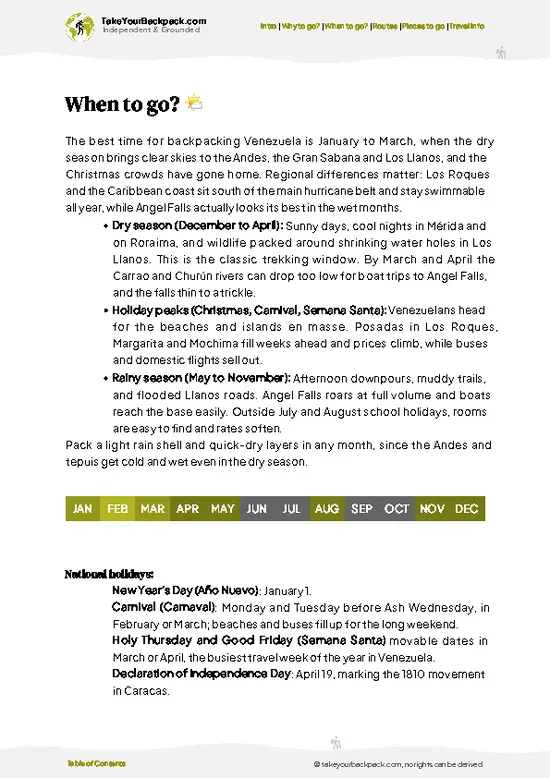
example page 0 from our offline Travel Guide for Venezuela
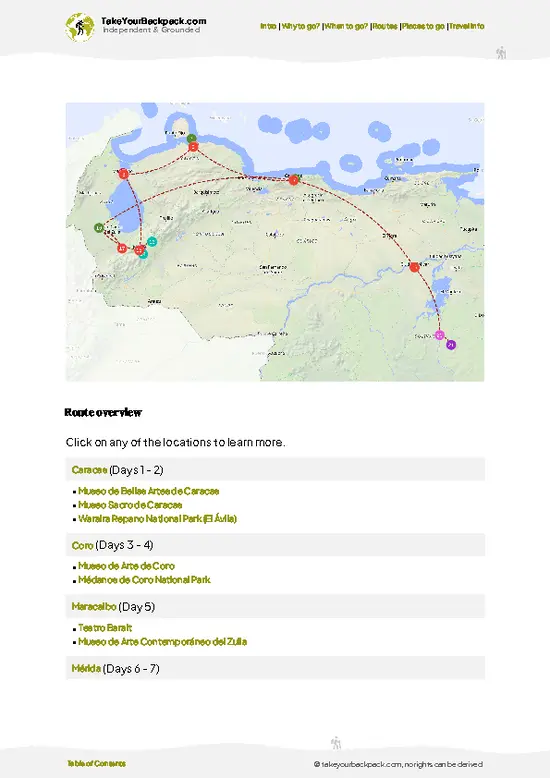
example page 1 from our offline Travel Guide for Venezuela
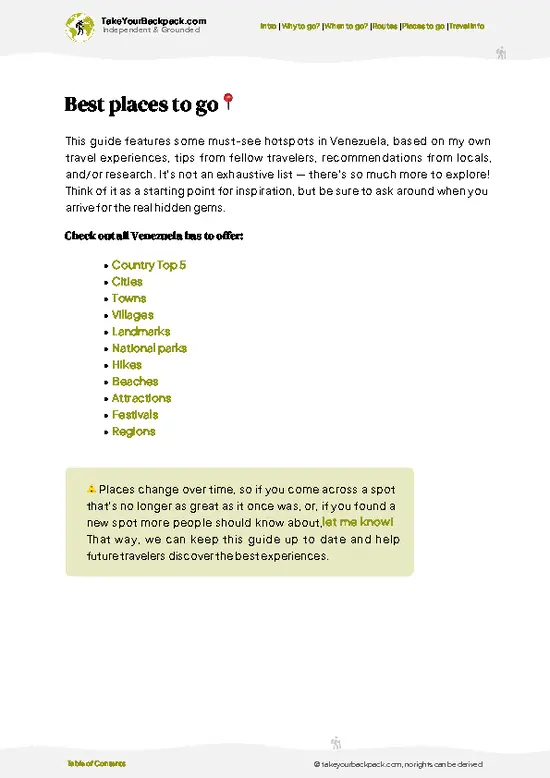
example page 2 from our offline Travel Guide for Venezuela
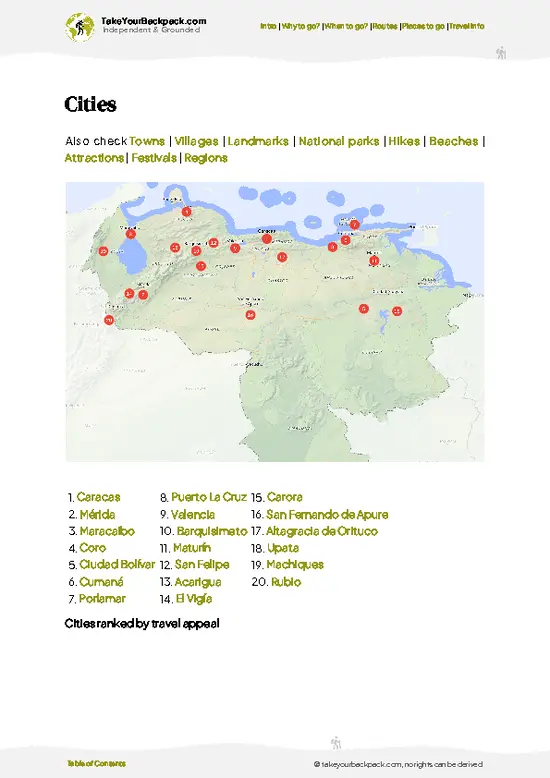
example page 3 from our offline Travel Guide for Venezuela
example page 4 from our offline Travel Guide for Venezuela
example page 5 from our offline Travel Guide for Venezuela
example page 6 from our offline Travel Guide for Venezuela
example page 7 from our offline Travel Guide for Venezuela
Loading the map 🌍
CLICK TO FILTER
cities
towns
villages
landmarks
national parks
hikes
beaches
attractions
festivals
regions
SHOW COUNTRY’S BESTSHOW ALL

✨ Why go?
Ranked #4 national park in Venezuela
Why visitors keep coming back

Mochima National Park suits backpackers who like to plan a day around a boat captain and a handful of empty coves. The big draw is the island-hopping from the village docks: you split a peñero with other travelers and choose your own stops, such as Playa Blanca or Playa Colorada, instead of following a tour schedule. That flexibility is why independent travelers outnumber package groups here. A second reason is the snorkeling and diving right off the rocks, where reef fish and sea urchins sit in shallow, clear water within a few strokes of shore. Gear is rentable in the village, so you don’t need your own. Finally, the mix of mountain and sea gives you steep coastal ridges that drop straight into bays, which feels very different from flat sandy Caribbean parks. You can walk to a lookout in … read more 👉
Mochima National Park suits backpackers who like to plan a day around a boat captain and a handful of empty coves. The big draw is the island-hopping from the village docks: you split a peñero with other travelers and choose your own stops, such as Playa Blanca or Playa Colorada, instead of following a tour schedule. That flexibility is why independent travelers outnumber package groups here. A second reason is the snorkeling and diving right off the rocks, where reef fish and sea urchins sit in shallow, clear water within a few strokes of shore. Gear is rentable in the village, so you don’t need your own. Finally, the mix of mountain and sea gives you steep coastal ridges that drop straight into bays, which feels very different from flat sandy Caribbean parks. You can walk to a lookout in the morning, swim at midday and be back at a simple posada by late afternoon without ever needing a vehicle beyond the initial drive to the coast.

💡 HighlightsWhat this place is best known for

  1. Playa Blanca: The best-known beach in the park, with pale sand, calm turquoise water and a few shaded palapas. Boats from Mochima village reach it quickly, and weekdays are far quieter.
  2. Isla de Plata: A low island with a gentle slope and a long, shallow beach, good for easy swims and a relaxed lunch.
  3. Playa Manare: A more secluded stretch for travelers who want fewer people and a quieter swim.
  4. Mochima village: A small fishing hamlet with a simple waterfront and boat docks. Watching the peñeros load in the morning is part of the experience.
  5. Bahía de Santa Fe: A relaxed bay town with seafood restaurants and an easygoing beach, a useful alternative base for evening meals.
  6. Pelican and frigatebird viewing: Both birds are common along the coast, and you often see them diving for fish from the boat between
… read more 👉
  1. Playa Blanca: The best-known beach in the park, with pale sand, calm turquoise water and a few shaded palapas. Boats from Mochima village reach it quickly, and weekdays are far quieter.
  2. Isla de Plata: A low island with a gentle slope and a long, shallow beach, good for easy swims and a relaxed lunch.
  3. Playa Manare: A more secluded stretch for travelers who want fewer people and a quieter swim.
  4. Mochima village: A small fishing hamlet with a simple waterfront and boat docks. Watching the peñeros load in the morning is part of the experience.
  5. Bahía de Santa Fe: A relaxed bay town with seafood restaurants and an easygoing beach, a useful alternative base for evening meals.
  6. Pelican and frigatebird viewing: Both birds are common along the coast, and you often see them diving for fish from the boat between island stops.
Together the highlights fill two to three days if you take a boat to a different set of beaches each day, though one long boat day covers the main ones.
Spotted a mistake or missing something? Contact us.
🌤️ When to go?Choosing the right time of year

The best window for Mochima National Park is December to April, when rain is scarce and the sea is calm enough for easy boat hops between beaches.
  • Dry Season (December to April): Mostly sunny, highs of 29 to 32°C (84 to 90°F), nights around 23 to 25°C (73 to 77°F). Water is clearest for snorkeling. Carnival, Semana Santa and Christmas bring packed beaches and higher boat and posada prices.
  • Early Rainy Season (May to July): Short afternoon downpours, similar temperatures, far fewer people. Mornings are usually clear and boat operators often cut prices.
  • Late Rainy Season (August to November): Heavier showers can cloud the water and occasionally cancel boats. Humidity is high, but beaches are nearly empty.
  • Daylight: Days stay close to 11 to 13 hours all year, so plan to be back from beaches by mid-afternoon.
… read more 👉
The best window for Mochima National Park is December to April, when rain is scarce and the sea is calm enough for easy boat hops between beaches.
  • Dry Season (December to April): Mostly sunny, highs of 29 to 32°C (84 to 90°F), nights around 23 to 25°C (73 to 77°F). Water is clearest for snorkeling. Carnival, Semana Santa and Christmas bring packed beaches and higher boat and posada prices.
  • Early Rainy Season (May to July): Short afternoon downpours, similar temperatures, far fewer people. Mornings are usually clear and boat operators often cut prices.
  • Late Rainy Season (August to November): Heavier showers can cloud the water and occasionally cancel boats. Humidity is high, but beaches are nearly empty.
  • Daylight: Days stay close to 11 to 13 hours all year, so plan to be back from beaches by mid-afternoon.
Book a weekday visit and avoid national holidays, when Mochima fills up and prices rise.


source: climatestotravel.comJANJanuary: excellent for travelingFEBFebruary: excellent for travelingMARMarch: excellent for travelingAPRApril: highly recommended for travelingMAYMay: fair for travelingJUNJune: fair for travelingJULJuly: fair for travelingAUGAugust: fair for travelingSEPSeptember: fair for travelingOCTOctober: fair for travelingNOVNovember: fair for travelingDECDecember: highly recommended for traveling
venezuela-national-park-mochima-national-park
© Google |

✈️ The backpacker research shortcutVenezuela Travel Guide

An offline-friendly backpacking guide with optimized travel routes, ranked highlights, transport advice, and the best areas to stay.
example page 0 from our offline Travel Guide for Venezuela
example page 1 from our offline Travel Guide for Venezuela
example page 2 from our offline Travel Guide for Venezuela
example page 3 from our offline Travel Guide for Venezuela
example page 4 from our offline Travel Guide for Venezuela
example page 5 from our offline Travel Guide for Venezuela
example page 6 from our offline Travel Guide for Venezuela
example page 7 from our offline Travel Guide for Venezuela
The digital guide (290 pages) contains:
✅ 91 highlights, ranked by travel appeal
✅ Optimized 5, 10 & 15-day travel routes
✅ Cities, national parks, landmarks, beaches
✅ How to get around
✅ Offline-friendly for travel without Wi-Fi
👉 Click to see all 30+ guide features

📅 Plan smarter in minutes, not weeks
✅ Month by month travel advice
✅ Festivals & national holidays
✅ Budget expectations

🗺️ Go to the right places, skip the overrated ones
✅ Honest pros & cons of destinations
✅ Top hikes, parks & viewpoints
✅ Lesser-known places most travelers miss
✅ Clear “worth it vs skip it” guidance

🛏️ Travel smoothly without rookie mistakes
✅ Best areas to stay
✅ Transport systems explained simply
✅ Common scams & safety advice
✅ SIM cards, money & practical tips

🌍 Understand the country, not just visit it
✅ Culture & traditions
✅ 52 Essential phrases & customs
✅ Festivals worth planning around
✅ Traveler-friendly historical context
✅ Insights that make places more meaningful

📱 Built for real travel conditions
✅ Fully downloadable PDF
✅ Works completely offline
✅ Optimized for phone use
✅ Useful in remote areas & buses
✅ Everything in one place
Stop searching, start planning
Get instant access to your full guide. 30‑day money-back guarantee.
+ Add another guide for just

By proceeding you agree to our terms.
Sent to your inbox immediately after payment • 100% Secure Checkout
Best Backpacking Travel Advisor 2025 tourism awardBest Backpacking
Travel Advisor
2025
What others say about Take Your Backpack Guides:
⭐⭐⭐⭐⭐
Fantastic, amazing amount of information!
⭐⭐⭐⭐⭐
My goodness this is amazing, it's what I've been looking for hats off too you!
⭐⭐⭐⭐⭐
I think this is absolutely BRILLIANT
⭐⭐⭐⭐
Very complete and informative. It's still missing places, but I gotta to commend you
⭐⭐⭐⭐⭐
This is truly amazing, thank you, can't wait to explore it with my kids!
⭐⭐⭐⭐⭐
Awesome resource, thank you!
⭐⭐⭐⭐⭐
This is amazing! Can't wait to explore the ones I haven't seen
⭐⭐⭐⭐
I love this! Well done, great idea.
⭐⭐⭐⭐⭐
Thanks for taking the time to make this gem!
⭐⭐⭐⭐⭐
This might be the best website I've ever seen.
⭐⭐⭐⭐⭐
Congratulations, and thank you so much for your work; it's incredibly valuable.
⭐⭐⭐⭐
In all seriousness I think you did a great job pointing out the important spots
⭐⭐⭐⭐⭐
10/10 very good
⭐⭐⭐⭐⭐
As someone who's only just starting to visit regularly this is awesome, thank you.
⭐⭐⭐⭐
Thank you very much! I'm going to visit my dad, it's going to be very useful!
⭐⭐⭐⭐⭐
This is really cool! We'll be travelling for the first time and this definitely come in handy.
⭐⭐⭐⭐⭐
You are now our minister of culture, congratulations 👨‍💼
⭐⭐⭐⭐⭐
Just wanted to tell you that this is a pearl! Going to follow your recommendations.
⭐⭐⭐⭐⭐
This is so cool. I'll definitely be using the resource for my travels soon.
⭐⭐⭐⭐⭐
This is very impressive! Good work.
⭐⭐⭐⭐⭐
This is an amazing and informative site. Very well done!

🛏️ Where to stay?Where staying makes the most sense

Most backpackers sleep in Mochima village or in Santa Fe, with Puerto La Cruz and Cumaná as the bigger bases on either side of the park.
There are no hotels inside the park proper, but simple camping is possible on some beaches such as Playa Blanca and Playa Manare, and a few islands have basic rustic setups. Bring water and food, and pack out trash.
Mochima village is small and quiet, with family-run posadas at roughly US$15 to 40 a room, a pier where boats leave for the beaches, and a few simple restaurants. Santa Fe is more beach-focused, with a lively seafront, more posadas (US$15 to 45), dive … read more 👉
Most backpackers sleep in Mochima village or in Santa Fe, with Puerto La Cruz and Cumaná as the bigger bases on either side of the park.
There are no hotels inside the park proper, but simple camping is possible on some beaches such as Playa Blanca and Playa Manare, and a few islands have basic rustic setups. Bring water and food, and pack out trash.
Mochima village is small and quiet, with family-run posadas at roughly US$15 to 40 a room, a pier where boats leave for the beaches, and a few simple restaurants. Santa Fe is more beach-focused, with a lively seafront, more posadas (US$15 to 45), dive operators and easy boat tours. It suits travelers who want sand at the doorstep.
Puerto La Cruz has the widest range, from US$10 to 20 hostels and budget hotels to mid-range options, plus the bus terminal and the ferry port for Margarita. Cumaná, about an hour or so from Mochima by road, is cheaper and good if you plan to continue east toward Paria.
In peak holiday weeks, reserve ahead, especially in Santa Fe and Mochima.

👛 Costs (as of 19 October 2026)Typical daily expenses

A backpacker should plan on roughly US$48 to 120 a day at Mochima National Park, including a mid-range posada bed and boat trips.
CategoryBudget RangeLocal Reality
Park entranceUS$0 to 2Access to beaches is largely free, though some islands or managed spots may charge a small fee.
Accommodation (high season)US$15 to 40Posadas in Mochima and Santa Fe; basic camping is cheaper but needs your own gear.
Accommodation (low season)US$10 to 30Prices drop outside holidays and negotiation is common.
Boat toursUS$10 to 25Shared or private boats to beaches such as Playa Blanca and Playa Manare, priced per boat or per person.
FoodUS$8 to 15Fried fish, arepas and set lunches in village restaurants. Seafood costs more.
Local transportUS$2 to 8Shared taxis and buses between Puerto La Cruz, Cumaná and the park villages.
… read more 👉
A backpacker should plan on roughly US$48 to 120 a day at Mochima National Park, including a mid-range posada bed and boat trips.
CategoryBudget RangeLocal Reality
Park entranceUS$0 to 2Access to beaches is largely free, though some islands or managed spots may charge a small fee.
Accommodation (high season)US$15 to 40Posadas in Mochima and Santa Fe; basic camping is cheaper but needs your own gear.
Accommodation (low season)US$10 to 30Prices drop outside holidays and negotiation is common.
Boat toursUS$10 to 25Shared or private boats to beaches such as Playa Blanca and Playa Manare, priced per boat or per person.
FoodUS$8 to 15Fried fish, arepas and set lunches in village restaurants. Seafood costs more.
Local transportUS$2 to 8Shared taxis and buses between Puerto La Cruz, Cumaná and the park villages.
ActivitiesUS$5 to 30Snorkel gear rental is cheap, diving costs more.
Total Daily BudgetUS$48 to 120Per person, per day, in high season.
⚠️ Prices can change and everyone travels differently, so take this as a rough guide. Hope it helps you plan your adventure!

🥾 TrailsPlan your hike in Mochima: routes, terrain, and sights

Mochima National Park has almost no signed, numbered trail network, so hiking here means short coastal and ridge walks tied to the villages and beaches, combined with boat hops. Terrain is dry tropical scrub and cactus on rocky slopes that drop into turquoise bays, with mangrove at the edges. Expect heat, loose stone and almost no shade, so start early and carry at least 2 liters of water per person.
  • Mochima village to Playa Blanca and nearby coves: A walk of roughly 1 to 2 hours return along the shoreline and low hillside paths, easy to moderate, with sun exposure and a few rocky scrambles. You
… read more 👉
Mochima National Park has almost no signed, numbered trail network, so hiking here means short coastal and ridge walks tied to the villages and beaches, combined with boat hops. Terrain is dry tropical scrub and cactus on rocky slopes that drop into turquoise bays, with mangrove at the edges. Expect heat, loose stone and almost no shade, so start early and carry at least 2 liters of water per person.
  • Mochima village to Playa Blanca and nearby coves: A walk of roughly 1 to 2 hours return along the shoreline and low hillside paths, easy to moderate, with sun exposure and a few rocky scrambles. You pass fishing boats, pelicans and small beaches where you can swim.
  • Santa Fe coastline and the Playa Colorada area: Easy walks of 30 to 60 minutes between beaches, mostly flat sand and rock, good for snorkel gear and sunset views over the water.
  • Island shore walks (Isla Arapo, Playa Manare and Playa Cautaro): Short, easy strolls of 20 to 45 minutes after a boat drop-off. Terrain is sand and coral rubble, and the water is clear enough for snorkeling right off the beach.
Wildlife is the quiet bonus. Brown pelicans, frigatebirds and boobies work the bays, dolphins sometimes follow the boats, and lizards and iguanas sun on the rocks. Bring sandals with grip, a hat, sunscreen and a dry bag, since boat landings are often wet.
Getting here is straightforward. Buses and shared taxis run from Puerto La Cruz and Cumaná to Mochima village and Santa Fe, and boats leave from the Mochima pier and Santa Fe for the islands, usually priced per boat and shared between passengers. Weekends and holiday periods fill the beaches and the piers, while weekdays are calm. A small entrance or boat-landing fee is sometimes collected by local operators, typically a few dollars, and payment is usually in bolivars or US dollars cash. Go early, agree the return pickup time with your boatman, and keep cash in small bills.
⚠️ Hiking info can sometimes be outdated or inaccurate. Before you hit the trail, check the latest conditions with locals. If you do spot anything that's off, I'd love to hear from you, so I can update it for fellow travelers.

🛡️ SafetySafety Tips and Common Scams in Mochima

Mochima National Park is straightforward for hikers and beachgoers, and most problems come from sun, sea and petty theft rather than wildlife or terrain.
Trails near the coast are short and dry, but the exposed hills have little shade, so carry at least 2 liters of water, a hat and reef-safe sunscreen. Rainy-season downpours make dirt tracks slick, so wear shoes with grip.
Boat trips are the main hazard. Use licensed boatmen from the main piers, confirm the pickup time and make sure life jackets are aboard. Rough seas can shut down departures, so keep a day of flexibility.
Snorkeling is calm, but watch for sea urchins and avoid touching coral. Sand flies (purrujas) bite hard at dawn and dusk, so bring repellent.
Venezuela’s wider security situation calls for care. Do not leave bags unattended … read more 👉
Mochima National Park is straightforward for hikers and beachgoers, and most problems come from sun, sea and petty theft rather than wildlife or terrain.
Trails near the coast are short and dry, but the exposed hills have little shade, so carry at least 2 liters of water, a hat and reef-safe sunscreen. Rainy-season downpours make dirt tracks slick, so wear shoes with grip.
Boat trips are the main hazard. Use licensed boatmen from the main piers, confirm the pickup time and make sure life jackets are aboard. Rough seas can shut down departures, so keep a day of flexibility.
Snorkeling is calm, but watch for sea urchins and avoid touching coral. Sand flies (purrujas) bite hard at dawn and dusk, so bring repellent.
Venezuela’s wider security situation calls for care. Do not leave bags unattended on beaches, carry only the cash you need, travel in daylight and arrange transport between towns before dark.

FAQCommon questions from travelers

Two to three days is enough for Mochima National Park if you want a mix of beach hopping and snorkeling. Day one can cover Playa Blanca and Playa Manare by boat from Mochima village, while day two suits Santa Fe or a dive. Add a third day if you want a quieter beach or hiking on the coastal hills.
Yes, Mochima National Park is easy without a car. Buses and shared taxis run from Puerto La Cruz to Santa Fe and Mochima village in roughly 1 to 1.5 hours, and Cumaná is about an hour away. Inside the park, small boats from the piers are the way to reach beaches, usually US$10 to 25 per person or boat.
Entrance to Mochima National Park is generally free or very low cost, roughly US$0 to 2 where a fee is collected. No special permit is usually needed for day visits, although camping on beaches may require registration with the park authority, Inparques. Boat fees and beach services are paid separately in cash.
⚠️ Things can change over time, so always validate details locally before you go.

Other Venezuelan national parks near Mochima

Explore more nearby:


💡 Not sure where to go next?
Create a personalized itinerary for Venezuela including Mochima and the places that fit your trip.

Generate my itinerary

👉 Discover all national parks

Or checkout all Venezuela has to offer (think cities, towns, villages, national parks, hikes, beaches, festivals)
Country photo of Venezuela

We 💚 feedbackWhat to keep in mind

Most first-time visitors overlook how strong the midday sun is on the open boats, which have little shade and no cover once you’re out between islands. Mochima National Park looks gentle, but a long day of reflection off the water burns skin quickly. I would bring a long-sleeved shirt, a hat and plenty of drinking water, and book the earliest boat you can find.

✍️ Help improve this page!
The information on this page is based on in-depth research, insights shared by experienced travelers, and feedback from the local travel community in Venezuela. While every effort is made to keep the information accurate and current, conditions can change — so if you spot anything incorrect or outdated, please get in touch.


🙋‍♂️ Give feedback

👋 Meet the founderWho’s Behind Take Your Backpack?

Johan, backpacker and founder of TakeYourBackpackHi, I’m Johan (Netherlands 🇳🇱), the creator of TakeYourBackpack. Over the past 3 decades, I’ve backpacked through 90+ countries across six continents, gaining extensive experience with independent travel, long-term trips, and overland routes.

This site is built on a combination of firsthand travel experience and carefully curated insights from other backpackers. Many guides are based on places I’ve personally visited, while others bring together tips, observations, and practical advice shared by trusted travelers I’ve met along the way.

The goal is to provide realistic, experience-driven guidance — not generic itineraries — so you can explore destinations with better context, clearer expectations, and more confidence.