v2.webp)
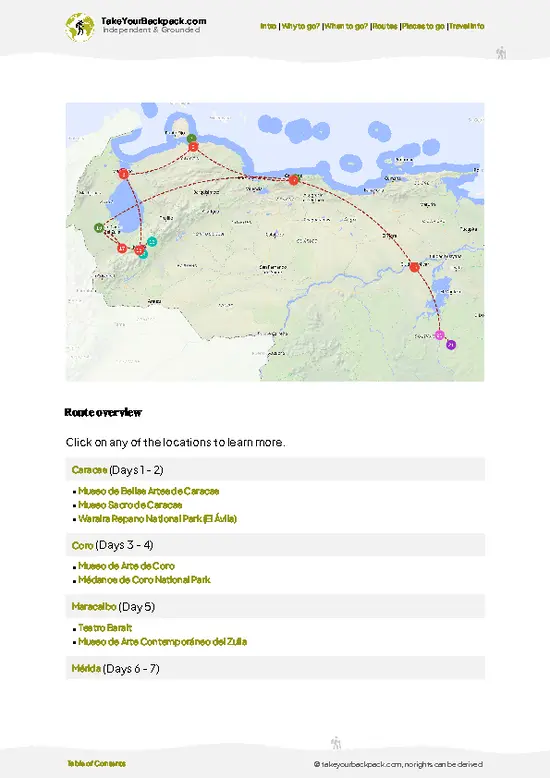
- Pico Bolívar: The country’s highest peak, at about 4,978 meters, with a serious multi-day climb that needs a guide.
- Pico Humboldt: Neighboring peak of roughly 4,940 meters, known for its jagged ridgeline and the route to Laguna Verde.
- Laguna Verde: A glacial lake at the foot of Humboldt, popular as a camping base for climbs.
- Laguna Coromoto: A high alpine lake on the approach to the peaks, reached by a long uphill hike.
- Los Nevados village: A small mountain settlement at roughly 2,700 meters, reached by foot or on a rough road, with stone houses and simple lodging.
- Páramo de Mucubají area: Open highland with frailejón plants, trails and lakes, one of the easiest places to experience the park’s landscape.
- Pico Espejo: The upper cable car station site at about 4,765 meters, the top station of the
- Pico Bolívar: The country’s highest peak, at about 4,978 meters, with a serious multi-day climb that needs a guide.
- Pico Humboldt: Neighboring peak of roughly 4,940 meters, known for its jagged ridgeline and the route to Laguna Verde.
- Laguna Verde: A glacial lake at the foot of Humboldt, popular as a camping base for climbs.
- Laguna Coromoto: A high alpine lake on the approach to the peaks, reached by a long uphill hike.
- Los Nevados village: A small mountain settlement at roughly 2,700 meters, reached by foot or on a rough road, with stone houses and simple lodging.
- Páramo de Mucubají area: Open highland with frailejón plants, trails and lakes, one of the easiest places to experience the park’s landscape.
- Pico Espejo: The upper cable car station site at about 4,765 meters, the top station of the Mukumbarí cable car.
- Andean condor viewing: The park is home to a reintroduced condor population, seen soaring over high ridges.
Spotted a mistake or missing something? Contact us.

 Best Backpacking
.jpg) Hi, I’m Johan (Netherlands 🇳🇱), the creator of TakeYourBackpack. Over the past 3 decades, I’ve backpacked through 90+ countries across six continents, gaining extensive experience with independent travel, long-term trips, and overland routes.
Hi, I’m Johan (Netherlands 🇳🇱), the creator of TakeYourBackpack. Over the past 3 decades, I’ve backpacked through 90+ countries across six continents, gaining extensive experience with independent travel, long-term trips, and overland routes.