×

Vietnam🇻🇳 | best landmarksDiscover the 6 Best landmarks Across Vietnam

Vietnam stacks its landmarks like a country-sized obstacle course, and every region plays by different rules. In the north, limestone seascapes, hill-tribe terraces and the capital’s old temples reward early starts and chilly mornings. The center trades in imperial citadels, tombs and ancient trading-port streets, with entry tickets that sting a little more. The south swings toward Khmer pagodas, war-era tunnels and river-delta markets that open before sunrise. Costs range from free temple courtyards to US$10 to 20 tickets at the headline sites, so your budget bends with your choices. Independent travel works well here: overnight buses, trains and cheap motorbike rentals reach almost everything, and crowds thin fast once you leave the tour-bus circuit. Pick the kind of landmark that fits your pace, then go chase it.

By Johan Kruseman 🇳🇱 | Updated October 18, 2026
Explore the best national parks in Vietnam

Why go?Key Factors That Shape the Experience

Vietnam packs an unusual amount of history into a long, narrow strip of land, and that shape drives everything about its landmarks. A thousand years under Chinese rule, centuries of Champa and Khmer influence, an imperial dynasty, French colonial rule and the American War all left physical marks, so a single country delivers layers of very different civilizations instead of one dominant story. Geography adds the drama: karst peaks, mountain passes, rice terraces, river deltas and a 3,260 kilometer coastline give natural landmarks as much weight as built ones.

Infrastructure makes it all easy to reach. A single north-south rail line, frequent domestic flights, sleeper buses and a thriving homestay network mean independent travelers can string sites together without a tour. Entry fees stay … read more 👉
Vietnam packs an unusual amount of history into a long, narrow strip of land, and that shape drives everything about its landmarks. A thousand years under Chinese rule, centuries of Champa and Khmer influence, an imperial dynasty, French colonial rule and the American War all left physical marks, so a single country delivers layers of very different civilizations instead of one dominant story. Geography adds the drama: karst peaks, mountain passes, rice terraces, river deltas and a 3,260 kilometer coastline give natural landmarks as much weight as built ones.

Infrastructure makes it all easy to reach. A single north-south rail line, frequent domestic flights, sleeper buses and a thriving homestay network mean independent travelers can string sites together without a tour. Entry fees stay modest by regional standards, and a meal beside the ticket gate often costs under US$3.

Some things deserve a clear-eyed look before you commit. Climate splits the country into zones, so a landmark that glows in sunshine in one region can vanish into fog or typhoon-driven closures in another. Heat and humidity make midday sightseeing at open-air sites punishing. Many historic buildings were damaged by war or rebuilt, so expect restoration and reconstruction rather than untouched ruins. Popular sites fill with tour groups between roughly 9 a.m. and 3 p.m., and touts and ticket scams cluster around the biggest names. Temples and memorials also carry real cultural weight, which means covered shoulders and knees and a quiet voice. Go in with that knowledge and Vietnam repays you with variety no neighbor can match.
Behind the Scenes of Selection
The list of best unique sites in Vietnam is created based on history or culture, wow factor, atmosphere, quirks, and memorability. If you feel a unique site is missing in this list, please let us know.

When to go?When to Plan Your Trip

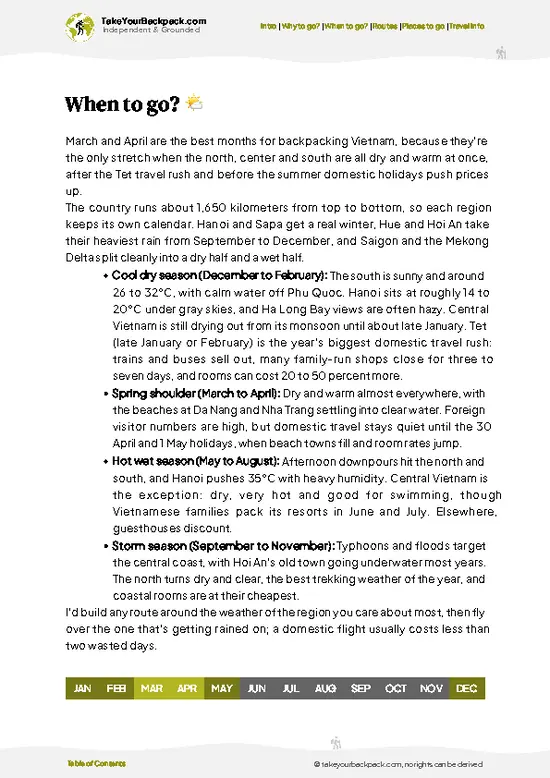
Best Months and Regional Weather: March to April and October to November give the most reliable landmark weather across Vietnam, with comfortable temperatures and the lowest odds of typhoon disruption. Vietnam stretches about 1,600 kilometers, so no single month is perfect everywhere, and regional timing matters more than any national average.

North: The north shines in March to May and September to November, with daytime highs of 20 to 30°C. Winter (December to February) brings gray drizzle and nights that can drop to 5 to 10°C in Hanoi and near freezing in the highlands, which dulls coastal and mountain views. Summer is hot, humid and wet, with typhoon season peaking July to September and boat closures a real risk.

Center: The center is driest from February to August, with highs of 28 … read more 👉
Best Months and Regional Weather: March to April and October to November give the most reliable landmark weather across Vietnam, with comfortable temperatures and the lowest odds of typhoon disruption. Vietnam stretches about 1,600 kilometers, so no single month is perfect everywhere, and regional timing matters more than any national average.

North: The north shines in March to May and September to November, with daytime highs of 20 to 30°C. Winter (December to February) brings gray drizzle and nights that can drop to 5 to 10°C in Hanoi and near freezing in the highlands, which dulls coastal and mountain views. Summer is hot, humid and wet, with typhoon season peaking July to September and boat closures a real risk.

Center: The center is driest from February to August, with highs of 28 to 35°C. Heavy rain and flooding hit from September to December, especially October and November around Hue and Hoi An, so skip those months for open-air sites.

South: The south is best from December to April, the dry season, with steady 30 to 35°C heat and little rain. May to November brings afternoon downpours, usually an hour or two, that you can plan around by starting early.

Crowds and Prices: Peak periods that change decisions are Tet (late January or February, dates shift yearly), when many businesses close for several days and transport sells out, and the July to August domestic school holidays on the coast. Hotel prices can rise 20 to 50 percent at popular destinations then. Shoulder months of March and October keep prices lower and queues shorter, so book those if your schedule bends.

unique site hoppingOptimizing Your Multi-Stop Itinerary

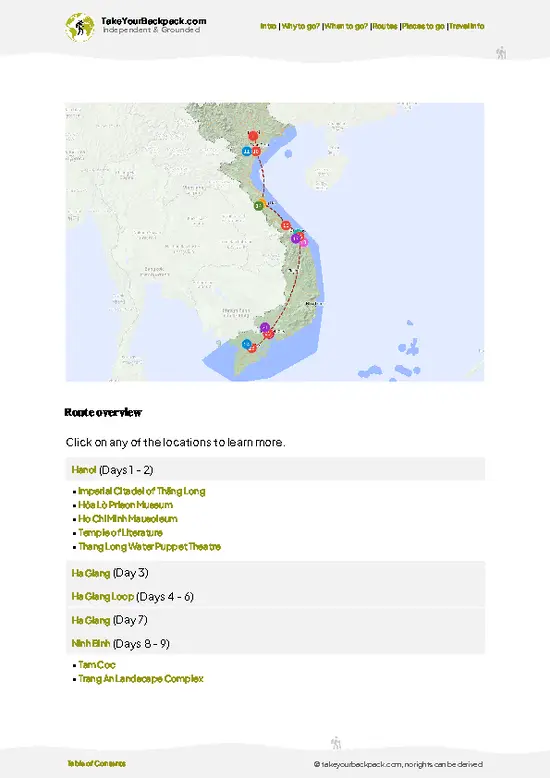
How Many Days to Allow: A trip linking several landmarks in Vietnam needs 14 to 21 days, and 10 days is the floor if you accept long travel days and fewer stops. The country runs north to south in a thin line, so the route almost designs itself around three clusters: the north (Hanoi and its surroundings), the center (Da Nang, Hue, Hoi An) and the south (Ho Chi Minh City and the Mekong Delta).

Direction and Transport: Either direction works, but going north to south lets the center’s dry months line up with a spring trip, and flying home from Ho Chi Minh City is easy. Hanoi to Hue takes about 12 to 16 hours by train or 1 hour by plane. Hue to Da Nang is 2.5 to 3 hours by road or rail, and Da Nang to Hoi An about 45 minutes. Da Nang to Ho Chi Minh City flies in roughly 1 hour 20 minutes, while … read more 👉
How Many Days to Allow: A trip linking several landmarks in Vietnam needs 14 to 21 days, and 10 days is the floor if you accept long travel days and fewer stops. The country runs north to south in a thin line, so the route almost designs itself around three clusters: the north (Hanoi and its surroundings), the center (Da Nang, Hue, Hoi An) and the south (Ho Chi Minh City and the Mekong Delta).

Direction and Transport: Either direction works, but going north to south lets the center’s dry months line up with a spring trip, and flying home from Ho Chi Minh City is easy. Hanoi to Hue takes about 12 to 16 hours by train or 1 hour by plane. Hue to Da Nang is 2.5 to 3 hours by road or rail, and Da Nang to Hoi An about 45 minutes. Da Nang to Ho Chi Minh City flies in roughly 1 hour 20 minutes, while the train takes 17 to 20 hours. Sleeper buses save a hotel night but cost sleep, so use them for one leg at most.

Time Per Stop: Give 2 to 3 days to each of the major hubs, one extra day for any site that needs a full day of hiking or boating, and half a day for single-attraction stops. Day trips from a hub, such as a 2 to 3 hour ride to a nearby site, fit neatly into that allowance.

Planning Mistakes: The classic error is cramming too many one-night stops, which turns the trip into a blur of bus stations. Pick fewer bases and radiate out. Another is ignoring regional weather: a late-autumn trip through the center invites flood-related closures, so swap in the north or south that month. Travelers also forget that Tet can freeze transport for days, and that overnight trains and buses sell out a week ahead in peak season. Book key legs early, keep one buffer day before an international flight, and leave one open day for weather.

The ListHighly Recommended landmarks of Vietnam

1 Ban Gioc Waterfall

border river, limestone cliffs, terraced pools, rural landscape

Stand at the edge of Vietnam and China, where wide cascades thunder over layered rock, surrounded by quiet countryside and karst formations.

2 My Son Sanctuary

Champa ruins, jungle setting, red brick towers, ancient carvings

Walk among mossy temple remains in a secluded valley, tracing the legacy of a lost civilization through intricate stonework and quiet forest paths.

vietnam-unique-site-my-son-sanctuary
© Google |

3 Củ Chi Tunnels

underground passages, wartime relics, trap displays, forest cover

Crawl through narrow tunnels beneath dense trees, learning firsthand how resistance fighters lived, moved, and survived during conflict.

4 Datanla Waterfall

pine forest, natural slides, adventure park, canyon scenery

Descend through pine woods to a series of falls, where you can try canyoning, ride a toboggan, or simply watch water rush through narrow gorges.

5 Kê Gà Lighthouse

granite islet, colonial lighthouse, rocky coastline, fishing boats

Cross tidal flats to reach a solitary lighthouse, climb its spiral stairs, and scan the horizon dotted with small boats and rugged boulders.

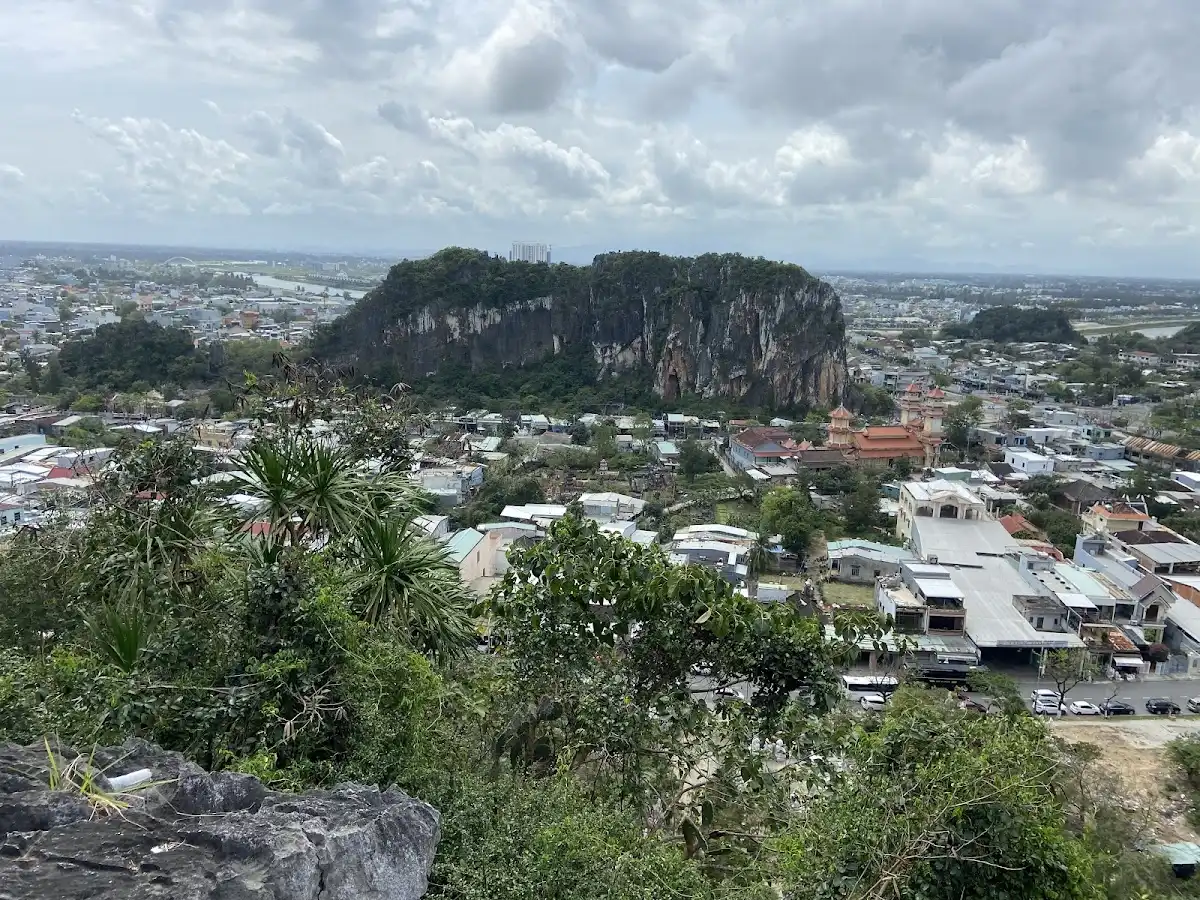
6 Marble Mountains

limestone caves, pagodas, stone steps, coastal panorama

Climb carved stairways through temple complexes and cool grottoes, emerging onto ledges with broad views over Da Nang and the sea.

vietnam-unique-site-marble-mountains
© Google |
Loading the map 🌍

Expert viewPro Tips for Exploring the Best

How Many Landmarks to Visit: Aim for 8 to 12 landmarks over two to three weeks. That number lets you do roughly one major site every second day, with room to wander, eat and recover from heat. Past 12, sites start to blur, and your legs and your wallet pay for it. Heat above 32°C and humidity wear you down faster than distance does, so plan one anchor site each morning and leave the afternoon for a street-food lunch and a long nap.

Choosing by Travel Style: If you love history, put the imperial and war-era sites first, since they come with the best context and the strongest stories. Nature seekers should lean toward karst bays, mountain passes and terraced valleys, where the payoff is a dawn view with mist lifting off the water or hills. Culture-focused travelers get the most from pagodas, … read more 👉
How Many Landmarks to Visit: Aim for 8 to 12 landmarks over two to three weeks. That number lets you do roughly one major site every second day, with room to wander, eat and recover from heat. Past 12, sites start to blur, and your legs and your wallet pay for it. Heat above 32°C and humidity wear you down faster than distance does, so plan one anchor site each morning and leave the afternoon for a street-food lunch and a long nap.

Choosing by Travel Style: If you love history, put the imperial and war-era sites first, since they come with the best context and the strongest stories. Nature seekers should lean toward karst bays, mountain passes and terraced valleys, where the payoff is a dawn view with mist lifting off the water or hills. Culture-focused travelers get the most from pagodas, temples and old-town streets, many of them free or under US$2, where incense smoke and chanting fill the air. Mix two kinds per week and you avoid fatigue from seeing the same thing repeatedly.

What It Costs: Plan US$25 to 45 a day for a comfortable backpacker budget including dorm or basic private room, meals, local transport and one paid site. Entry fees range from free to about 40,000 to 200,000 VND (US$1.50 to 8) at most sites, with the biggest imperial and cave attractions running 200,000 to 500,000 VND (US$8 to 20). Boat trips and cruises add US$30 to 100 or more depending on length. A local guide costs US$15 to 40 for a half day and pays for itself at sites with little signage, where the stories behind the walls make the difference. Motorbike rental runs US$5 to 10 a day, and a Grab ride across town costs US$1 to 4.

Safety and Scams: Traffic is the biggest risk: cross streets at a steady walking pace and let motorbikes flow around you. Ticket-gate touts and unofficial guides can inflate prices, so buy tickets only at the official window and check the posted fee. At boat and cave sites, agree the full price before boarding. Mountain roads turn slick in rain, and fog drops visibility to a few meters, so skip motorbike rides on passes in bad weather. Carry a rain jacket, a liter or two of water and sunscreen, because shade at open-air sites is scarce.

Cultural Etiquette: Temples and memorials call for covered shoulders and knees, and a light scarf in your daypack solves it. Remove shoes before entering prayer halls, keep your voice low and never point your feet at an altar or touch a monk’s head or robes. At war memorials and the mausoleum, quiet behavior and no hands in pockets are expected, and photography is often restricted. Drones are tightly regulated, and flying one near sensitive sites can lead to confiscation. Ask before photographing people, especially in highland villages, and a small purchase or smile usually opens the door.

Smart Habits: Start at opening time, usually 6 to 8 a.m., when light is soft, lines are short and the air is cooler. Carry small bills in dong for fees and offerings, since cards are rarely accepted at gates. Download an offline map and keep your passport copy handy. One short note from experience: bring a dry bag in the wet season, because a sudden downpour at a hilltop site can soak a daypack in minutes.

✈️ The backpacker research shortcutVietnam Travel Guide

An offline-friendly backpacking guide with optimized travel routes, ranked highlights, transport advice, and the best areas to stay.
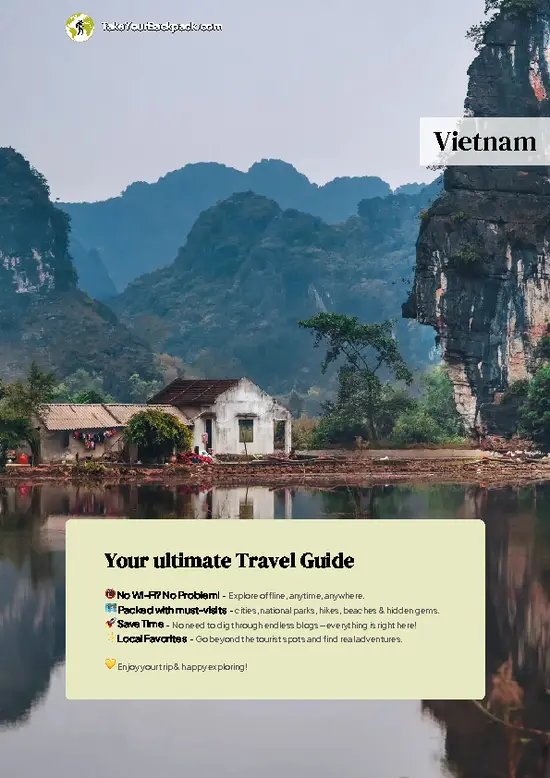
example page 0 from our offline Travel Guide for Vietnam
example page 1 from our offline Travel Guide for Vietnam
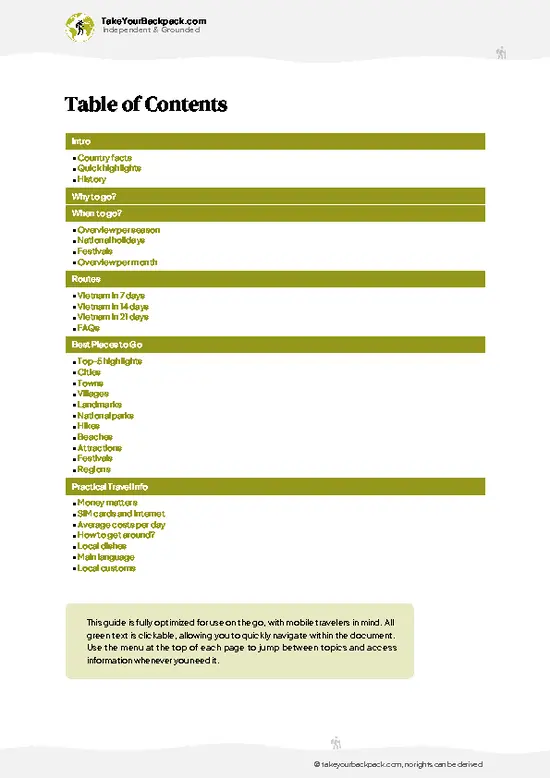
example page 2 from our offline Travel Guide for Vietnam
example page 3 from our offline Travel Guide for Vietnam
example page 4 from our offline Travel Guide for Vietnam
example page 5 from our offline Travel Guide for Vietnam
example page 6 from our offline Travel Guide for Vietnam
example page 7 from our offline Travel Guide for Vietnam
The digital guide (422 pages) contains:
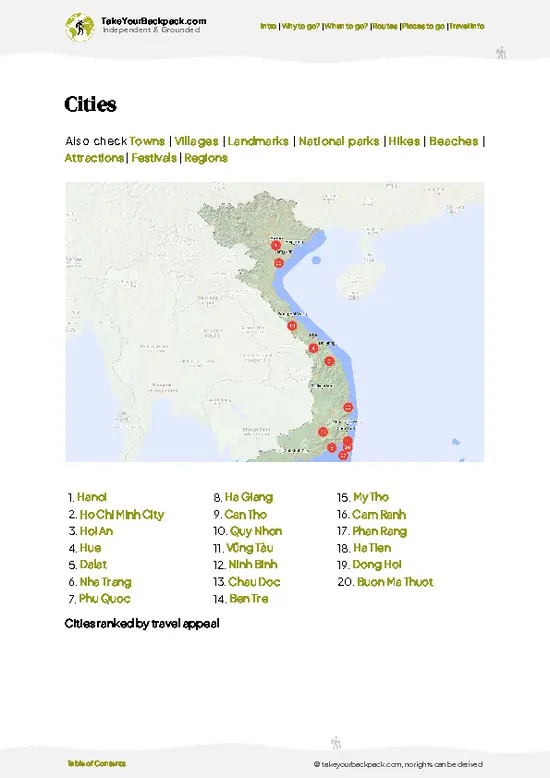
✅ 118 highlights, ranked by travel appeal
✅ Optimized 7, 14 & 21-day travel routes
✅ Cities, national parks, landmarks, beaches
✅ How to get around
✅ Offline-friendly for travel without Wi-Fi
👉 Click to see all 30+ guide features

📅 Plan smarter in minutes, not weeks
✅ Month by month travel advice
✅ Festivals & national holidays
✅ Budget expectations

🗺️ Go to the right places, skip the overrated ones
✅ Honest pros & cons of destinations
✅ Top hikes, parks & viewpoints
✅ Lesser-known places most travelers miss
✅ Clear “worth it vs skip it” guidance

🛏️ Travel smoothly without rookie mistakes
✅ Best areas to stay
✅ Transport systems explained simply
✅ Common scams & safety advice
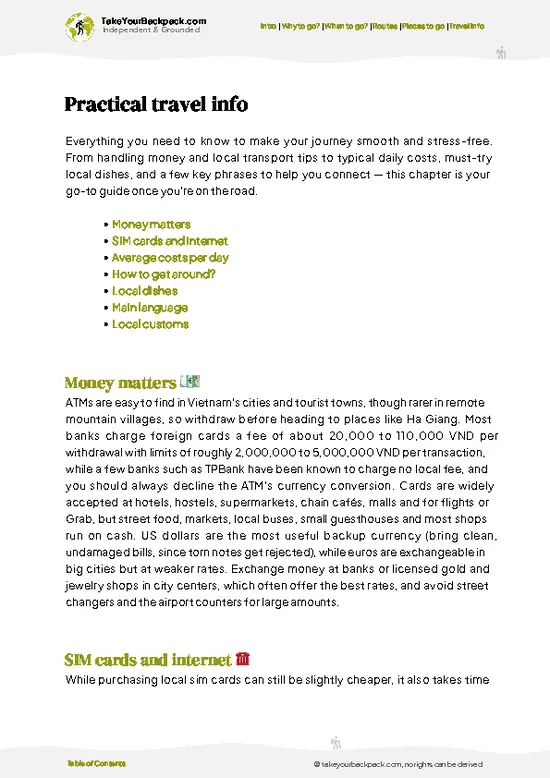
✅ SIM cards, money & practical tips

🌍 Understand the country, not just visit it
✅ Culture & traditions
✅ 52 Essential phrases & customs
✅ Festivals worth planning around
✅ Traveler-friendly historical context
✅ Insights that make places more meaningful

📱 Built for real travel conditions
✅ Fully downloadable PDF
✅ Works completely offline
✅ Optimized for phone use
✅ Useful in remote areas & buses
✅ Everything in one place
Stop searching, start planning
Get instant access to your full guide. 30‑day money-back guarantee.
+ Add another guide for just

By proceeding you agree to our terms.
Sent to your inbox immediately after payment • 100% Secure Checkout
Best Backpacking Travel Advisor 2025 tourism awardBest Backpacking
Travel Advisor
2025
What others say about Take Your Backpack Guides:
⭐⭐⭐⭐⭐
Fantastic, amazing amount of information!
⭐⭐⭐⭐⭐
My goodness this is amazing, it's what I've been looking for hats off too you!
⭐⭐⭐⭐⭐
I think this is absolutely BRILLIANT
⭐⭐⭐⭐
Very complete and informative. It's still missing places, but I gotta to commend you
⭐⭐⭐⭐⭐
This is truly amazing, thank you, can't wait to explore it with my kids!
⭐⭐⭐⭐⭐
Awesome resource, thank you!
⭐⭐⭐⭐⭐
This is amazing! Can't wait to explore the ones I haven't seen
⭐⭐⭐⭐
I love this! Well done, great idea.
⭐⭐⭐⭐⭐
Thanks for taking the time to make this gem!
⭐⭐⭐⭐⭐
This might be the best website I've ever seen.
⭐⭐⭐⭐⭐
Congratulations, and thank you so much for your work; it's incredibly valuable.
⭐⭐⭐⭐
In all seriousness I think you did a great job pointing out the important spots
⭐⭐⭐⭐⭐
10/10 very good
⭐⭐⭐⭐⭐
As someone who's only just starting to visit regularly this is awesome, thank you.
⭐⭐⭐⭐
Thank you very much! I'm going to visit my dad, it's going to be very useful!
⭐⭐⭐⭐⭐
This is really cool! We'll be travelling for the first time and this definitely come in handy.
⭐⭐⭐⭐⭐
You are now our minister of culture, congratulations 👨‍💼
⭐⭐⭐⭐⭐
Just wanted to tell you that this is a pearl! Going to follow your recommendations.
⭐⭐⭐⭐⭐
This is so cool. I'll definitely be using the resource for my travels soon.
⭐⭐⭐⭐⭐
This is very impressive! Good work.
⭐⭐⭐⭐⭐
This is an amazing and informative site. Very well done!

🛏️ Where to stay?Accommodation Highlights

Vietnam has one of Southeast Asia’s densest hostel scenes, with dorm beds typically running 120,000 to 250,000 VND (about US$5 to 10) a night and private rooms in family-run guesthouses from around 300,000 VND (US$12). In Hanoi, the Old Quarter puts you within walking distance of Hoan Kiem Lake and the Ta Hien beer street, but scooter horns and late bars carry on well past midnight. In Ho Chi Minh City, Pham Ngu Lao around Bui Vien in District 1 is the cheapest and loudest base, where you should keep a hand on your phone, while Hoi An’s rice-field homestays near An Bang beach and Da Nang’s An Thuong area by My Khe beach trade nightlife for quiet nights and a short bike or Grab ride to the sights. … read more 👉
Vietnam has one of Southeast Asia’s densest hostel scenes, with dorm beds typically running 120,000 to 250,000 VND (about US$5 to 10) a night and private rooms in family-run guesthouses from around 300,000 VND (US$12). In Hanoi, the Old Quarter puts you within walking distance of Hoan Kiem Lake and the Ta Hien beer street, but scooter horns and late bars carry on well past midnight. In Ho Chi Minh City, Pham Ngu Lao around Bui Vien in District 1 is the cheapest and loudest base, where you should keep a hand on your phone, while Hoi An’s rice-field homestays near An Bang beach and Da Nang’s An Thuong area by My Khe beach trade nightlife for quiet nights and a short bike or Grab ride to the sights.

If you enjoy meeting fellow travelers, consider choosing hostels with high ratings for atmosphere. On the other hand, if you prefer having your own space, a hotel might be a better option.

VietnamSee More of Vietnam

👋 Meet the founderWho’s Behind Take Your Backpack?

Johan, backpacker and founder of TakeYourBackpackHi, I’m Johan (Netherlands 🇳🇱), the creator of TakeYourBackpack. Over the past 3 decades, I’ve backpacked through 90+ countries across six continents, gaining extensive experience with independent travel, long-term trips, and overland routes.

This site is built on a combination of firsthand travel experience and carefully curated insights from other backpackers. Many guides are based on places I’ve personally visited, while others bring together tips, observations, and practical advice shared by trusted travelers I’ve met along the way.

The goal is to provide realistic, experience-driven guidance — not generic itineraries — so you can explore destinations with better context, clearer expectations, and more confidence.