How Many Regions to Choose: Pick
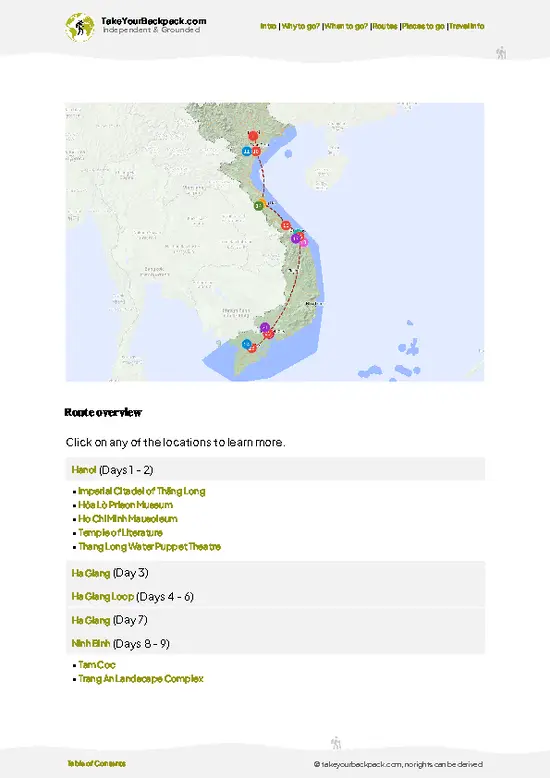
three regions for a trip of two to three weeks, or two for ten days. Vietnam is long, and every extra region costs a full travel day of 8 to 17 hours on buses or trains. Three lets you trade a day of motion for three or four days of actual wandering, plus the good stuff: slow coffee at a plastic stool on a curb, a market stall bowl of noodles at 7 a.m., a motorbike loop where the road bends around a rice paddy.
Matching Regions to Your Style: Choose by what you want to do.
Trekkers and riders should lean toward the mountain north, where the payoff is terraced valleys, homestay dinners with rice wine, and winding passes that justify every hour on the bike.
Culture and food seekers do best along the central coast and in the big cities, where you graze street …
read more 👉 How Many Regions to Choose: Pick three regions for a trip of two to three weeks, or two for ten days. Vietnam is long, and every extra region costs a full travel day of 8 to 17 hours on buses or trains. Three lets you trade a day of motion for three or four days of actual wandering, plus the good stuff: slow coffee at a plastic stool on a curb, a market stall bowl of noodles at 7 a.m., a motorbike loop where the road bends around a rice paddy.
Matching Regions to Your Style: Choose by what you want to do. Trekkers and riders should lean toward the mountain north, where the payoff is terraced valleys, homestay dinners with rice wine, and winding passes that justify every hour on the bike. Culture and food seekers do best along the central coast and in the big cities, where you graze street stalls from morning to midnight and walk lantern-lit lanes at dusk. Beach and slow-pace travelers fit the south coast and islands, with warm water and hammock afternoons. River and market lovers should reserve time for the delta, where dawn boats trade fruit and the food is sweeter and fresher than anywhere else. Try mixing one active, one cultural, and one relaxed region so the trip stays balanced.
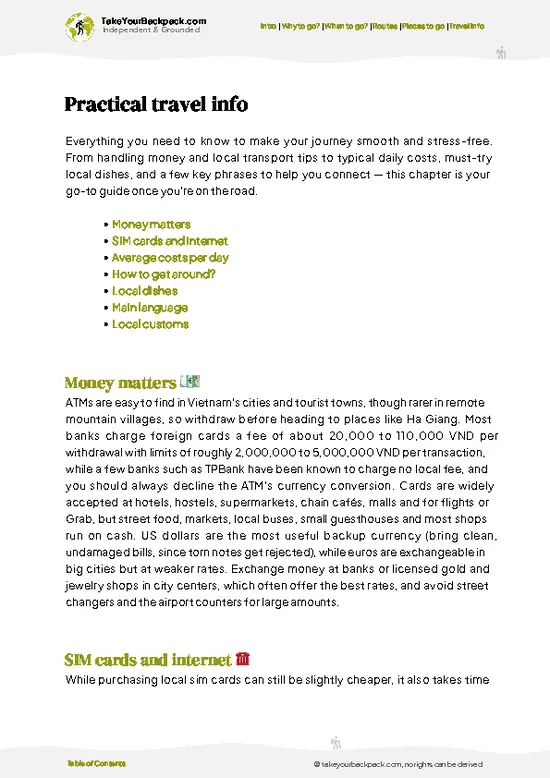
What It Costs: Backpackers can live on US$25 to 40 a day: dorm beds at US$5 to 9, street meals at US$1.50 to 3, local beer under US$1.50. Midrange comfort runs US$50 to 90 with private rooms and a few tours. Typical extras to budget: entry fees for major sites at roughly US$3 to 12, bay cruises from about US$40 to 150 depending on boat and nights, a guided trek at US$25 to 60 per person for a day, and motorbike rental at US$6 to 12 a day. Transport between regions adds up to US$10 to 30 for a sleeper bus or US$25 to 60 for a flight. Pay in dong, and use ATMs in town rather than at airports, where fees run higher.
Safety and Culture on the Ground: Traffic is the real hazard. Crossing a street means walking at a steady pace, never darting, so motorbikes flow around you, and you will get the hang of it fast. Ride a rented bike only with a valid license and proper insurance, since many policies exclude unlicensed riders, and always wear a helmet. Watch bags near the road, because snatch thefts from passing bikes happen in big cities. Agree on taxi prices or use ride-hailing apps such as Grab to avoid inflated fares.
Dress modestly at pagodas and temples, covering shoulders and knees, and take off your shoes where others do. Do not touch people’s heads, and do not stick chopsticks upright in a rice bowl. Ask before photographing people, especially in minority villages, where a smile and a small purchase open conversations. In the mountains, roads close in heavy rain and mobile signal drops, so tell your homestay your route. On the coast, check storm forecasts and respect beach flags, since currents can be strong. Bargain with a grin, not an argument. A fair price lands in a minute, and the shopkeeper usually throws in a laugh or an extra piece of fruit.

 Best Backpacking
 Hi, I’m Johan (Netherlands 🇳🇱), the creator of TakeYourBackpack. Over the past 3 decades, I’ve backpacked through 90+ countries across six continents, gaining extensive experience with independent travel, long-term trips, and overland routes.